Perito Moreno Mini Trekking vs Big Ice: Which Glacier Hike?
Perito Moreno mini trekking vs big ice, compared: time on ice, age limits, difficulty, price tiers and who each glacier hike actually suits.
By Patagonia Tourism Guide · First published 9 Aug 2026 · Updated 1 Aug 2026
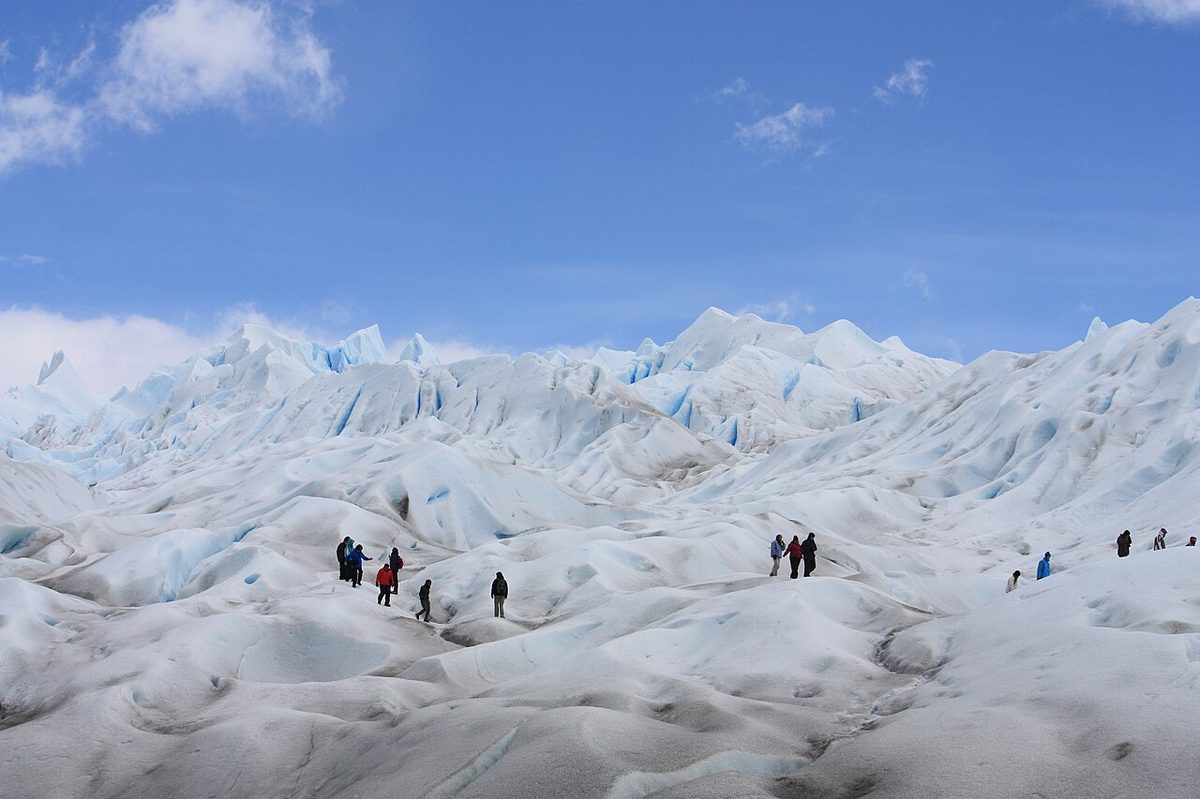
0 — 2 km Fig. 1 · Hikers in crampons compared for Perito Moreno mini trekking vs big ice glacier tours · Photo: Adiel lo / CC BY-SA 3.0 via Wikimedia Commons
You have decided you want to walk on Perito Moreno Glacier. Good. It is one of the few places on earth where a regular traveler can strap on crampons and step onto an active ice field after a morning drive. Now comes the only real question left: Mini Trekking or Big Ice?
This is the comparison I wish someone had laid out plainly for me before I started reading a dozen tour pages that all blur together. So here is the honest version of Perito Moreno mini trekking vs big ice, with the time on the ice, the age limits, the difficulty, the price gap, and a clear verdict on who should pick which.
Short verdict: Most travelers should choose Mini Trekking. It puts you on the ice for around an hour and a half, suits a broad age range (roughly 8 to 65, verify), and is the easier, cheaper, more forgiving full-day option. Choose Big Ice only if you are fit, aged about 18 to 50, and genuinely want a long, demanding day deep on the glacier.
This guide is for anyone standing at that fork: you are reasonably set on a glacier walk and you want a candid, specifics-first comparison rather than two separate sales pages. If you are not yet sure you want to trek at all, jump to the no-trek alternative near the end, or step back to the full El Calafate and Perito Moreno glacier guide first.
Both ice treks are run by a single concessionaire, Hielo y Aventura, so the core experience and the safety rules are the same no matter which booking site you use. That is worth knowing before you start price-shopping: you are choosing between two products, not twenty.
Perito Moreno Mini Trekking vs Big Ice at a Glance
Here is the head-to-head before the detail. Treat every figure as “around,” and verify ages and prices with the operator close to your trip, because Argentina pricing and seasonal rules change often.
Mini Trekking
Big Ice
Time on the ice
Around 1.5 hours
Around 3 to 3.5 hours
Total day (with transfer)
Around 9 to 10 hours
Around 11 to 12 hours
Approach to the ice
A few minutes’ walk from the boat
About 2 hours of forest/moraine hiking each way
Difficulty
Easy to moderate
Moderate to high
Age range (verify)
Around 8 to 65
Around 18 to 50
Boat crossing
Yes, around 20 minutes each way
Yes, around 20 minutes each way
Lunch
Bring your own; eaten at the lodge
Bring your own; eaten on the glacier
Group on the ice
Small group, two guides
Small group (often up to ~10), two guides
Price tier (verify)
Mid-range full-day adventure
Noticeably higher than Mini Trekking
Season (verify)
Roughly mid-July to May
Roughly September to April
Best for
First-timers, families, mixed fitness, anyone who wants to step on the ice once
Fit, experienced hikers who want the deepest, longest ice day
Swipe to see all columns
Table 1
If you only skim one thing, skim that table. The single biggest difference is time on the ice: Mini Trekking gives you around 90 minutes, Big Ice gives you around three to three and a half hours, and almost everything else (the harder approach hike, the stricter age range, the higher price, the lunch on the glacier) follows from that.
What Mini Trekking and Big Ice Have in Common
Before the differences, it helps to understand how much these two tours share. They are siblings, not opposites.
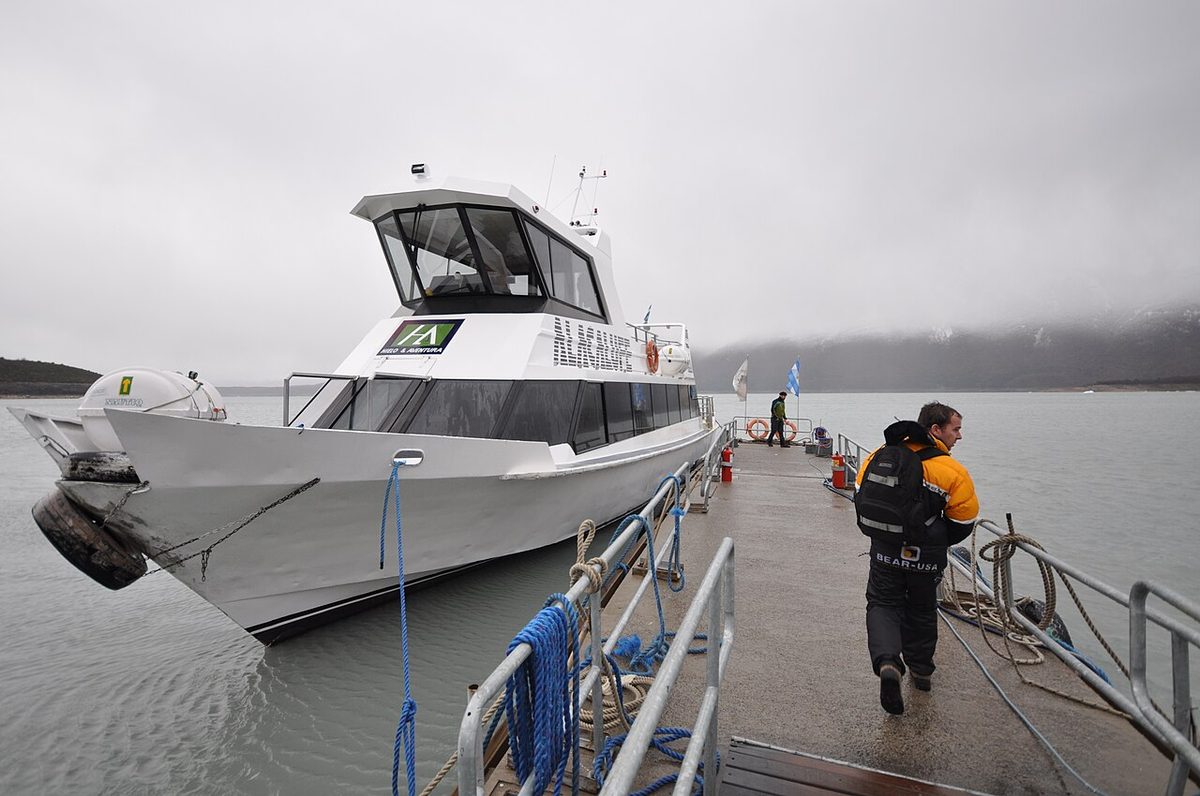
Both start the same way. You either get picked up in El Calafate (transfer is usually optional) or drive yourself to the port at Puerto Bajo de las Sombras inside Los Glaciares National Park, roughly 80 km and about an hour and a half from town. Both then put you on a boat for a short crossing, around 20 minutes, of the Brazo Rico arm of Lago Argentino, sailing toward the southern face of the glacier. Sit on the right-hand side of the boat for the best views, or step out onto the deck once you are moving.
Both hand you crampons, a helmet and a safety briefing, then send you onto the ice in a small group led by two guides, one at the front setting the pace and one sweeping the back. Both keep you in a single file on a guide-chosen route. You do not wander off for solo photos; the guides will move you along, and it is genuinely for safety, not just crowd control. And both, in the lovely tradition of this glacier, tend to end the ice section with a toast of whiskey poured over ice chipped straight from Perito Moreno.
A few shared practicalities that catch people out:
Lunch is not included on either tour, and there is nowhere to buy food at the glacier. Pack your own from El Calafate.
The national park entrance fee is separate from the tour price on both. You usually pay it on arrival; bring cash as a backup because card connections can be patchy.
Both visit the walkways, though typically only if you take the transfer option, and walkway time on a trek day is shorter and more structured than an independent visit.
So the choice is not really about boats, crampons or guides. It is about how long you want to be on the ice, how hard a day you want, and whether you clear the age and health rules. Let me take each tour in turn.
Mini Trekking is the classic first glacier walk, and for good reason. It is the version most people picture when they imagine standing on Perito Moreno, and it is the one I would point the majority of travelers toward.
Here is the shape of the day, based on how the tour consistently runs. You are collected in El Calafate first thing, often around 7 to 8 am, and driven about an hour and a half to the park, usually with a viewpoint stop over Lago Argentino. You pay the park fee on arrival. Many tours then give you about an hour at the famous walkways before the trek, which is your chance to see the glacier face from the balconies. Then it is on to the port, the 20-minute boat crossing, and a short walk to a lodge where you drop your bag, use the bathroom and split into language groups.
From the lodge it is roughly a ten-minute walk to the edge of the ice, where guides strap on your crampons and give you a quick lesson. Then you are on the glacier for around an hour and a half. The terrain is uneven but firm, with cracks, blue pools and small ice formations, and the guides help you over anything tricky. It is not technical. Most reasonably mobile people find it very manageable, even fun. You finish with the whiskey toast, walk back, take the boat across, and return to El Calafate, usually by around 5 pm.
Choose Mini Trekking if:
You want to walk on Perito Moreno but do not need the hardest version.
You are traveling with older kids, parents, or a group of mixed fitness.
You want a real glacier walk that still leaves you with energy for the rest of your trip.
You are doing serious hiking elsewhere (Fitz Roy, Torres del Paine) and want the glacier to be a highlight, not an ordeal.
The cost matters and you would rather not pay the Big Ice premium.
Think twice if you mainly want long, slow time at the walkways with a camera, in which case an independent walkway visit gives you more, or if you are outside the age or health limits, in which case look at the no-trek alternative below.
Honestly, for most readers, Mini Trekking is the right answer. Around 90 minutes on the ice is enough to feel the crampons bite, peer into a crevasse, hear the glacier groan under you, and come away with the memory intact. The ice does not get dramatically more beautiful in hour three; it gets more remote, which is a different thing.
Big Ice in Detail
Big Ice is not “Mini Trekking but longer and better.” It is a genuinely more demanding expedition for a narrower group of people, and it is worth understanding that before you book it for status.
The day starts the same way, with an early transfer or self-drive to Puerto Bajo de las Sombras and the boat crossing. The difference begins on the far side. Before you touch the ice, you hike for around two hours through Patagonian forest and along the glacier’s rocky moraine, between ancient lenga and ñire trees, with the ice teasing you through the branches. You reach a refuge to leave your pack, use the bathroom and gear up with crampons and a harness.
Then comes the main event: around three to three and a half hours trekking deep into the glacier. This is where Big Ice earns its name. You go past where the Mini Trekking groups turn around, into a landscape of turquoise meltwater lagoons, vertical walls of blue ice, deep crevasses and sinkholes that drop into the glacier. You stop and eat lunch sitting on the ice itself, which is as surreal as it sounds. Then you retrace the route: a couple of hours back through the forest, the boat across the lake past the glacier’s southern wall, and, on the transfer option, a visit to the walkways before heading back to town. Door to door it is a long day, commonly around 11 to 12 hours.
Choose Big Ice if:
You are genuinely fit and comfortable with several hours of walking on uneven terrain.
You are within the age range (roughly 18 to 50, verify) and clear the health rules.
More time on the ice is exactly what excites you, and the two-hour approach hike sounds like part of the appeal rather than a chore.
You want the glacier to be the centerpiece of your El Calafate stay and you have a recovery buffer the next day.
The higher price does not make you wince.
Skip Big Ice if you are choosing it to one-up the Mini Trekking crowd, if you have knee, balance, heart or endurance concerns, or if you have a tight transfer the morning after with no margin to be tired and sore. It is a brilliant day for the right body and the wrong day for the wrong one.
Strip away the shared boat, crampons and guides, and the real differences come down to five things.
Time on the ice. Mini Trekking is around 1.5 hours; Big Ice is around 3 to 3.5 hours. This is the headline. If maximizing ice time is your single priority, Big Ice wins by definition.
The approach. On Mini Trekking you are on the ice within minutes of the lodge. On Big Ice you earn it with about two hours of forest and moraine hiking each way. That approach is scenic, but it is also four-ish hours of walking on top of the ice trek. Your legs will know the difference.
How deep you go. Mini Trekking stays near the accessible edge of the glacier. Big Ice pushes into the interior, where the blue caves, big crevasses and sinkholes are. If you have seen photos of someone dwarfed by a wall of glowing blue ice or standing beside a deep turquoise pool, that is usually Big Ice territory.
Who can go. Mini Trekking opens to a broad range, commonly cited as around 8 to 65 (some sources say 10 or 12 as the minimum, so verify). Big Ice is restricted to roughly 18 to 50, with a mandatory medical form. That alone decides it for a lot of families and older or younger travelers.
Price. Big Ice costs meaningfully more than Mini Trekking. Exact figures move with Argentina’s inflation and exchange rate, and quotes online vary widely, so I will not pin a number to it, but expect Mini Trekking to sit at a mid-range full-day adventure price and Big Ice to be a clear step up. Check current rates with the operator before you commit.
Everything else, the lake crossing, the gear, the small group, the two guides, the whiskey toast, the bring-your-own lunch, the separate park fee, is effectively the same.
Age, Fitness and Eligibility
This is the part people skip and then regret at the dock. The ice treks happen in a real mountain environment with crevasses, boats, weather and group safety rules, so the operator enforces age and health limits. Do not assume you qualify; check before you pay.
On age, the widely reported ranges are around 8 to 65 for Mini Trekking and around 18 to 50 for Big Ice. I have seen the Mini Trekking minimum quoted as 8, 10 and even 12 across different sources, which is exactly why you should confirm the current minimum directly with Hielo y Aventura if you are traveling with a child near the cutoff. Children also need the physical capacity to walk for the full duration on uneven ground.
On health, the operator’s terms list categories that exclude people from these treks. Reported restrictions include pregnancy at any stage, obesity above a defined body-mass threshold, cardiovascular disease or reduced cardiac capacity, stents, bypasses, pacemakers or similar, severe vertigo, certain chronic respiratory conditions, recent surgery, use of anticoagulants, and disabilities that limit mobility, balance or coordination. Big Ice typically requires a medical form for each passenger. These lists can change, so read the current terms and, if you are unsure, email the operator and describe your situation honestly. It is far better to find out now than at the refuge.
Fitness-wise: Mini Trekking is achievable for most reasonably mobile adults and active kids; you walk at a leisurely pace with some gentle ups and downs. Big Ice genuinely demands a good base level of fitness, because you are looking at roughly four hours of approach hiking plus three-plus hours on the ice. If you would struggle with a long, hilly day hike at home, Big Ice will be a slog.
The good news is you do not need technical mountaineering kit. The operator supplies the glacier gear, crampons, helmet and, for Big Ice, a harness. What matters is warmth, weatherproofing and the right footwear.
Wear and pack:
Closed, sturdy footwear. Trekking boots are ideal and are effectively required for Big Ice; sneakers are not accepted on Big Ice. Crampons strap over your boots, so no sandals or open shoes anywhere on the ice.
Layers. A thermal or warm base layer plus a fleece or insulating mid-layer. Patagonian weather flips fast.
A waterproof, windproof outer shell. The wind off the ice is real.
Gloves, a warm hat and a buff or scarf. Your hands will touch cold ice.
Sunglasses and sunscreen. Glare off the glacier is intense even on cloudy days; sunglasses are essentially mandatory.
Your own packed lunch, snacks and water. Remember, no food is sold at the glacier.
A small daypack for layers and lunch, plus a phone or camera (and a strap, so you do not drop it down a crevasse).
Cash for the park entrance fee in case card payment fails, and your passport or ID for the ticket category.
For the broader Patagonia kit logic, layering strategy and safety habits, see the primer on camping in Patagonia. It is the piece I would read before any active day down here.
How and When to Book
Two booking truths matter most.
First, book ahead. Ice trekking at Perito Moreno regularly sells out, sometimes weeks in advance in peak season (roughly December to February), because a single operator controls capacity. If a glacier walk is a must-do on your trip, reserve it early and build your El Calafate dates around it, not the other way round. Big Ice has smaller daily capacity than Mini Trekking, so it tends to fill first.
Second, you are always buying the same on-ice experience. Whether you book directly with Hielo y Aventura or through a reseller, the trek itself is run by the same concessionaire. Resellers mainly differ on transfer logistics, language guarantees and cancellation terms, so compare those rather than assuming one sells a “better” trek.
On timing within the season: Mini Trekking runs across a longer window (roughly mid-July to May), while Big Ice is generally a warmer-months tour (roughly September to April). Verify current operating dates, because seasons shift year to year. For choosing your overall window, the best time to visit Patagonia breaks the months down, and morning departures tend to mean calmer wind and softer light on the ice.
Let me make this as plain as I can, by traveler type.
First-time visitor, average fitness: Mini Trekking. It is the right balance of access, effort and cost.
Family with kids or teens: Mini Trekking, assuming the children meet the age minimum (verify) and can handle 90 minutes on uneven ice. Big Ice’s 18-plus rule rules out under-18s entirely.
Older travelers within the range: Mini Trekking. The gentler approach and shorter ice time are kinder on knees and stamina.
Fit, experienced hiker aged 18 to 50 who wants the big day: Big Ice. This is exactly who it is built for, and you will likely love it.
Photographer chasing the deep-blue interior shots: Big Ice, because that is where the dramatic caves, lagoons and crevasses are, though be warned the pace is guide-led and not built around your tripod.
Anyone outside the age or health limits, or on a tight budget: Skip both treks and read the next section. You can still have a superb glacier day.
Hikers already doing Fitz Roy or the W Trek: Mini Trekking, so the glacier complements your big hikes instead of competing with them for energy.
If you are torn between the two and you genuinely clear Big Ice’s requirements, ask yourself one question: does the idea of four hours of approach hiking on top of the ice trek sound like a bonus or a burden? If it is a bonus, Big Ice. If it is a burden, Mini Trekking, and no regrets.
The No-Trek Alternative: Walkways and Boat
Here is the thing the tour pages will not tell you: you do not have to walk on the ice at all to have a real Perito Moreno experience.
If you are outside the age or health limits, traveling with very young children, watching your budget, or simply not drawn to crampons, the walkways plus a short boat ride are a genuinely excellent day. The walkways are a network of balconies facing the glacier where you can watch the ice calve into the lake for hours, and a short Nautical Safari-style boat ride brings you close to the towering face from water level. Together they cost a fraction of an ice trek and demand far less of your body.
I would not frame this as a consolation prize. The walkways are one of the best-designed glacier viewing systems anywhere, and plenty of travelers who could trek choose them on purpose. If accessibility is part of your planning, the Perito Moreno wheelchair accessible guide covers the reduced-mobility areas in detail, and the broader idea of a great trip without hard hiking is the whole point of Patagonia without hiking. For the full menu of ways to see the glacier, including boat-only and combined options, the El Calafate and Perito Moreno glacier guide lays them all out.
There is also a middle option worth knowing about: an intermediate trek, sometimes marketed as a longer Mini Trekking variant, that gives more time on the ice than the standard Mini without the full commitment of Big Ice. Availability and rules vary, so ask the operator whether it is running for your dates.
Frequently Asked Questions
Is Big Ice better than Mini Trekking?
Not for everyone. Big Ice gives more time on the ice (around 3 to 3.5 hours versus 1.5) and reaches deeper, more dramatic terrain, but it is harder, pricier and limited to roughly ages 18 to 50. Mini Trekking is the better all-round choice for most travelers, families and mixed-fitness groups. “Better” depends entirely on your fitness, age and budget.
Is Mini Trekking Perito Moreno worth it?
For most people, yes, if a glacier walk is on your wish list and the cost fits your budget. Around 90 minutes on the ice with crampons is a memorable, genuinely unusual experience. It is not essential, though. If you mainly want to see and hear the glacier, the walkways alone are enough, and far cheaper.
Is the Big Ice trek worth it?
It is worth it for fit travelers aged roughly 18 to 50 who actively want a long, demanding day deep on the glacier and do not mind paying a premium. You reach turquoise pools, ice walls and crevasses the shorter tour skips. If you are unsure about the fitness or the price, Mini Trekking delivers most of the magic for less.
What is the age limit for Big Ice and Mini Trekking?
Big Ice is generally limited to around ages 18 to 50, with a mandatory medical form. Mini Trekking is open to a broader range, commonly cited as around 8 to 65, though the minimum is sometimes listed as 10 or 12. Because these limits change and sources differ, confirm the current ages directly with the operator before booking.
How long do you spend on the ice?
On Mini Trekking you spend around 1.5 hours actually walking on the glacier. On Big Ice you spend around 3 to 3.5 hours on the ice, plus roughly two hours of approach hiking each way through the forest and moraine. Both are full-day tours once you add transfer, boat and walkway time.
Is the Big Ice trek suitable for beginners?
Yes, if you are reasonably fit and comfortable with hiking; you do not need prior ice or mountaineering experience, since guides fit your crampons and teach you on the spot. What you do need is the stamina for a long day and clearance of the age and health rules. If you rarely do long hilly walks, start with Mini Trekking.
Is the boat included, and is lunch included?
The boat crossing across Brazo Rico is included in both Mini Trekking and Big Ice, around 20 minutes each way. Lunch is not included in either, and there is nowhere to buy food at the glacier, so pack your own from El Calafate. The national park entrance fee is also separate from the tour price on both.
Do you need to book in advance?
Yes, especially in peak season (roughly December to February). A single operator controls capacity, so ice trekking sells out, sometimes weeks ahead. Big Ice has fewer daily spots than Mini Trekking and fills first. If a glacier walk is a priority, reserve it early and plan your El Calafate dates around the booking.
Can you do the glacier treks in winter?
Mini Trekking runs across a longer season (roughly mid-July to May), so limited winter operation is possible, while Big Ice is generally a warmer-months tour (roughly September to April). Winter brings snow, shorter days and changeable conditions, and exact operating dates shift year to year, so verify current availability with the operator before planning a cold-season trek.
Final Thoughts
If you take one thing from all this, take the verdict at the top: most people should book Mini Trekking, and only a specific kind of traveler should book Big Ice.
I am not being cautious for its own sake. The Mini Trekking day is the one that fits the widest range of bodies, ages and budgets, and around 90 minutes on Perito Moreno is more than enough to leave you grinning. Big Ice is a superb, harder, more expensive day for fit travelers aged roughly 18 to 50 who want the glacier to be the main event, not a stop on the way to somewhere else. Neither is a mistake. The mistake is booking the long, costly version because it sounds more impressive, then spending the back half of the day wishing you had chosen the shorter one.
And if the crampons are not for you at all, the walkways and a short boat ride remain one of the best value experiences in Patagonia. Whatever you choose, verify the current ages, prices and operating dates before you pay, pack warm layers and a real pair of shoes, bring your own lunch, and go listen to the ice. It is worth the trip.