How to Visit Perito Moreno Glacier: A Complete Practical Guide
How to visit Perito Moreno Glacier from El Calafate: walkways, boat tours, ice trekking, transport, park tickets, timing, and what to expect.
By Patagonia Tourism Guide · First published 7 Aug 2026 · Updated 1 Aug 2026
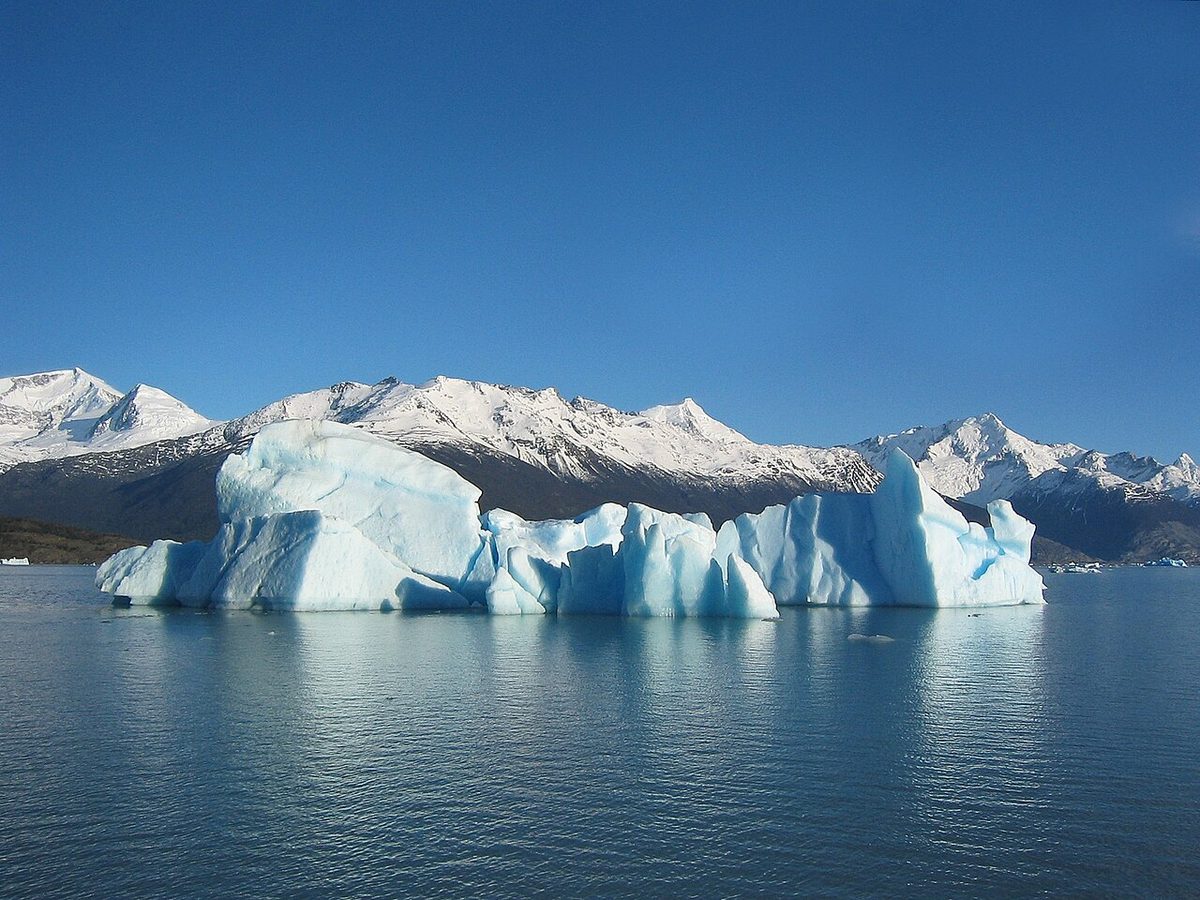
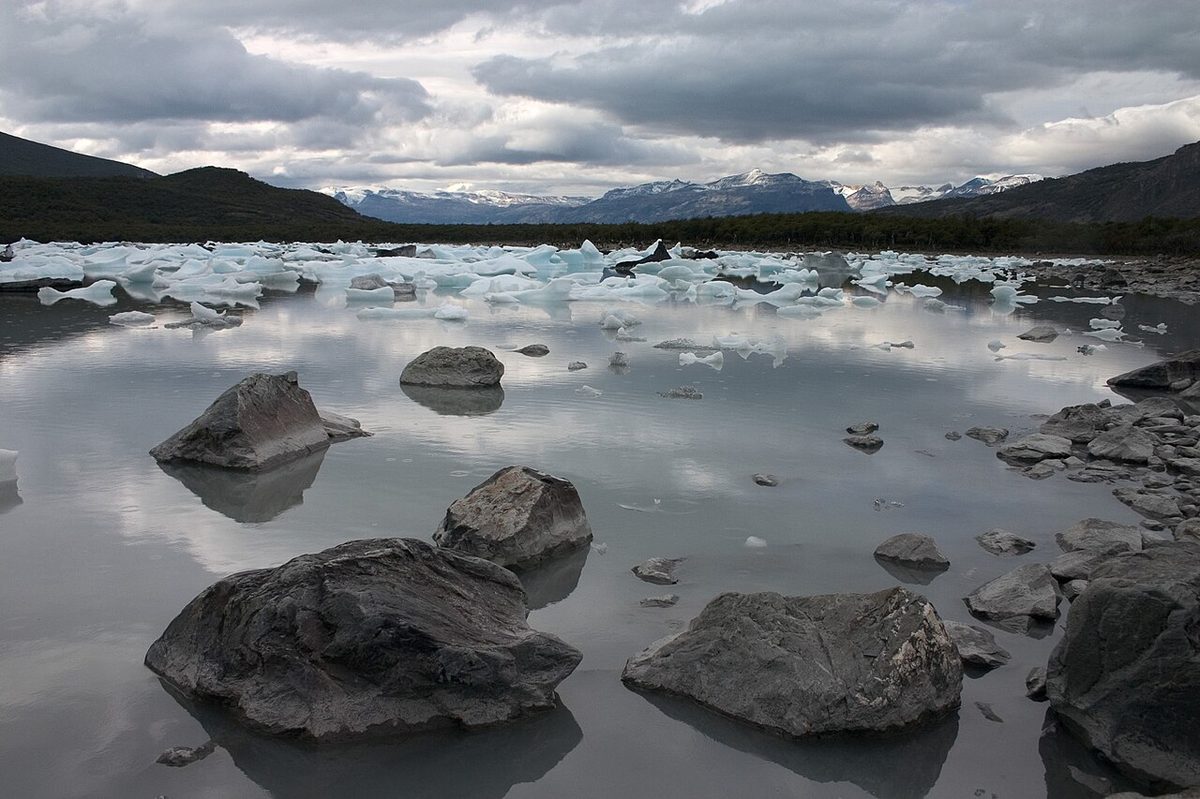
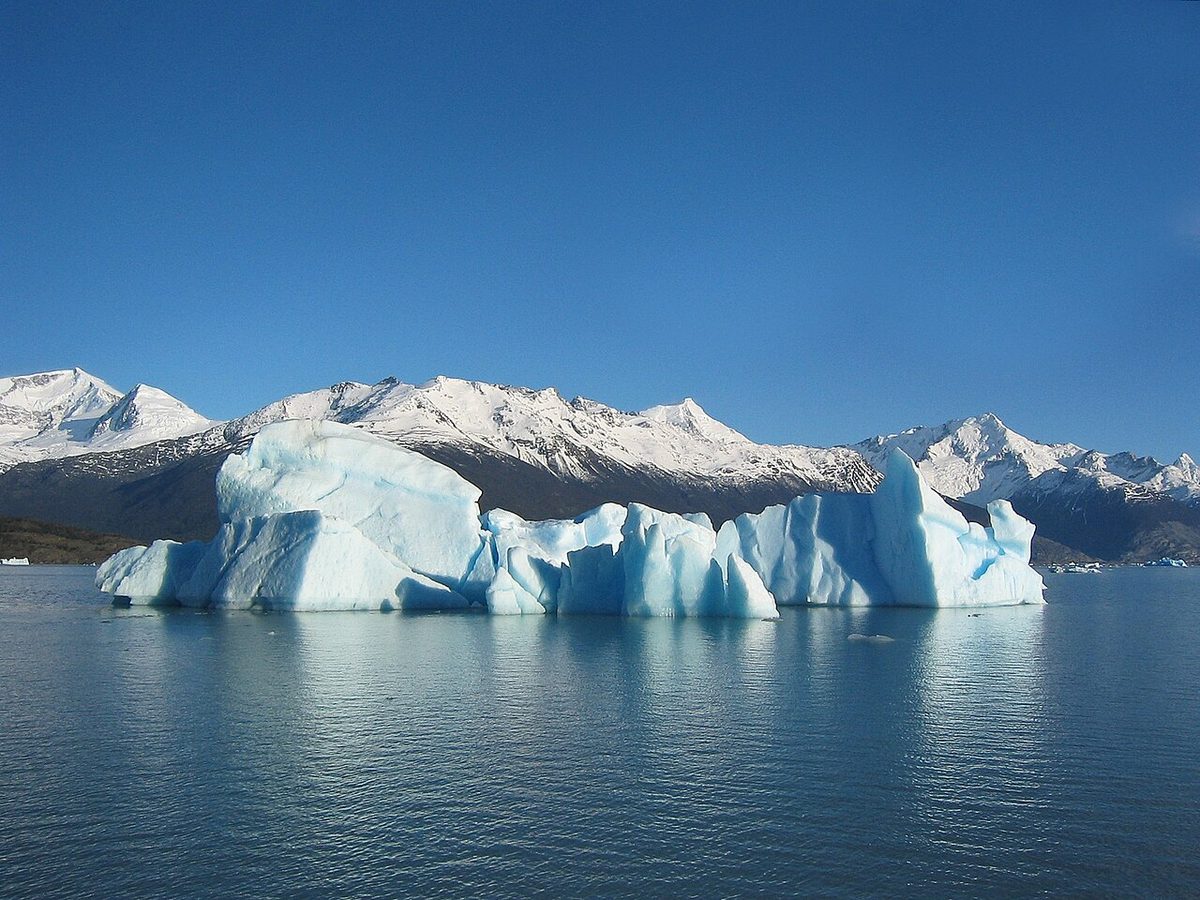
0 — 2 km Fig. 1 · How to visit Perito Moreno Glacier: the blue ice face rising over Lago Argentino in Patagonia · Photo: IlyaHaykinson / CC BY 2.0 via Wikimedia Commons
The first time I stood on the walkways at Perito Moreno Glacier, a slab of ice the size of a building peeled off the face and hit Lago Argentino with a sound I felt in my chest. Nobody around me said a word for a few seconds. Then everyone exhaled at once. That is the moment you are planning for, and the good news is that getting there is far simpler than the scale of the place suggests.
So here is how to visit Perito Moreno Glacier in plain terms. Base yourself in El Calafate, travel the roughly 80 km out to Los Glaciares National Park by shuttle bus, rental car, taxi, or organized tour, and spend your time on the walkways facing the ice. That alone is a complete visit. If you want more, add a short boat tour to the glacier face or a guided ice trek.
This guide is for the first-time visitor who has already decided to go and now wants the mechanics: how to actually get from town to the ice, what to do once you arrive, how long it takes, whether you need a tour, and how to time the day. It is the parent to our wider how to visit Perito Moreno glacier, narrowed down to the single question of how you pull the day off.
The Three Ways to Visit Perito Moreno Glacier, At a Glance
There are exactly three ways to experience the glacier, and almost every itinerary is some combination of them. The walkways are the foundation. The boat and the ice trek are add-ons that change your angle and your effort level, not your access.
I want you to read this table before you book anything, because the single most common mistake is paying for a big adventure tour out of a fear that the basic visit is somehow not enough. It is enough. Spend extra only when the experience genuinely matches how you like to travel.
Way to experience it
Effort
Time
Who it’s for
Walkways / balconies (pasarelas)
Easy to moderate; stairs and ramps
2-3+ hours at the ice
Almost everyone: first-timers, families, photographers, non-hikers, limited mobility
Short boat tour (Safari Nautico)
Easy
~1-1.5 hrs on the water, added to a walkway day
Anyone wanting the glacier face from water level without a full adventure
Mini Trekking (ice walk)
Moderate; crampons, ~1 hr on ice
Full day, ~9.5-10 hrs with transfer
Reasonably fit travelers, roughly ages 8-65, who want to stand on the glacier
Big Ice (long ice trek)
High; ~3 hrs on ice
Long full day, ~12 hrs
Fit, experienced walkers, roughly ages 18-50
Swipe to see all columns
Table 1
The honest default for most people: a full day on the walkways, optionally with a short boat ride if the budget allows. If walking on a glacier has always been a dream and you meet the fitness rules, Mini Trekking is the upgrade worth the money. Big Ice is a different beast for a narrower crowd. We compare the two ice options in detail in our Mini Trekking vs Big Ice guide, so I will keep the trekking section here brief.
Where Perito Moreno Glacier Is and How Far It Is from El Calafate
Perito Moreno Glacier sits inside Los Glaciares National Park in Santa Cruz province, in southern Argentine Patagonia. The launch pad is the town of El Calafate.
Visit Argentina puts the glacier around 80 km from El Calafate by Ruta Provincial 11, roughly 1 hour 30 minutes by car. In practice the drive splits into two halves: about an hour to reach the national park entrance gate, then another 30 minutes or so on a paved but winding road through the park to the walkway parking area near the ice.
That road in is part of the experience. The lake widens, the steppe gives way to southern beech forest, and then the glacier appears across the water before you have even parked. There are a few marked viewpoints along the final stretch if you are driving yourself, and they are worth a quick stop.
One thing to keep straight: Perito Moreno Glacier is not the same place as Perito Moreno National Park, which is a separate protected area much farther north. When you book buses, tours, or beds, make sure everything points to the glacier near El Calafate, inside Los Glaciares.
How to Get to Perito Moreno Glacier from El Calafate
This is the heart of “how to visit,” so let me lay out the four realistic options and who each one suits. The decision is rarely “can I get there” — the road is good and the glacier is genuinely accessible. The real question is how much independence you want versus how little you want to think.
Option 1: Shuttle bus (the simple budget choice)
Regular shuttle buses run from the El Calafate bus terminal straight into the park. This is the standard independent option, and for a walkway visit it is hard to beat on value.
Departures typically start in the morning, around 7:30 to 9am, with a return in the late afternoon around 4pm. There is usually also a later departure around 1pm that returns in the evening around 7:30pm. That later slot is less popular, which often means fewer people on the balconies. Expect to pay something around 30 USD for a round trip, though prices move with Argentina’s inflation, so treat that as a ballpark and confirm locally.
Companies such as CalTur and Chalten Travel run the route, among others. Buy your ticket the day before at the terminal or through your accommodation, especially in the December-to-February peak.
The trade-off: you are tied to fixed return times, and the bus is transport only. It does not include a guide, stops at extra viewpoints, or the park entrance fee. For most people heading to the walkways, that is exactly what they want.
Option 2: Rental car (the freedom choice)
A rental car gives you the thing money usually cannot buy here: control of your timing. You can arrive the moment the gate opens, before the tour coaches roll in around 9:30 to 10am, and you can linger late into the afternoon after the crowds thin out.
A day’s rental runs somewhere around 40 to 80 USD depending on the car, the season, and how far ahead you book. For a group of four, that often works out similar to four bus tickets while giving you far more flexibility. There is general parking near the balconies plus closer spaces for accessibility needs.
A few cautions. Ask about fuel availability before you set off, because El Calafate occasionally runs short. Return the car with a full tank or expect a steep refill charge. And if you visit outside summer, check conditions: the national park’s visitor recommendations note that winter travel can require approved chains or studded tires for snow, frost, and ice.
Option 3: Taxi or private transfer
A taxi or private transfer hits a sweet spot for families, photographers, small groups, and anyone with mobility concerns who wants flexible timing without driving. You set the pace, arrive early or late to dodge crowds, and skip the parking logistics.
Plan on roughly 80 to 100 USD round trip, depending on the driver and your bargaining. Agree clearly up front on the total price, how long you get at the glacier, and waiting time. If you want the driver to wait while you do a boat ride or ice trek, the cost climbs because of the extra hours, so that combination usually does not make sense.
Option 4: Organized tour
A guided day tour from El Calafate is the lowest-effort route. You get picked up or meet at a set point, ride in with a guide, and return in the late afternoon. Standard glacier day tours run around 8 to 9 hours and typically include hotel pickup. This is the natural choice if you are adding a boat ride or ice trek, traveling solo and wanting structure, or simply do not want to think about logistics.
Before you book, check four things: how much walkway time is actually included, whether the park entrance fee is part of the price (usually it is not — more on that next), whether the boat is included or an optional add-on, and the cancellation policy.
A tip I picked up from experienced Patagonia travelers and have used myself: you can often book an ice-trekking or boat experience and meet the group inside the park rather than taking the operator’s bus from town. Tell them you will make your own way there and ask for the transfer to be deducted. That lets you control your walkway time and still join the activity.
The Walkways: The Default Way to See Perito Moreno
For most visitors, the walkways are the visit. They are not a budget consolation prize. They are one of the best-designed glacier viewing systems anywhere, and they put you a few hundred meters from a working glacier face with almost no physical demand.
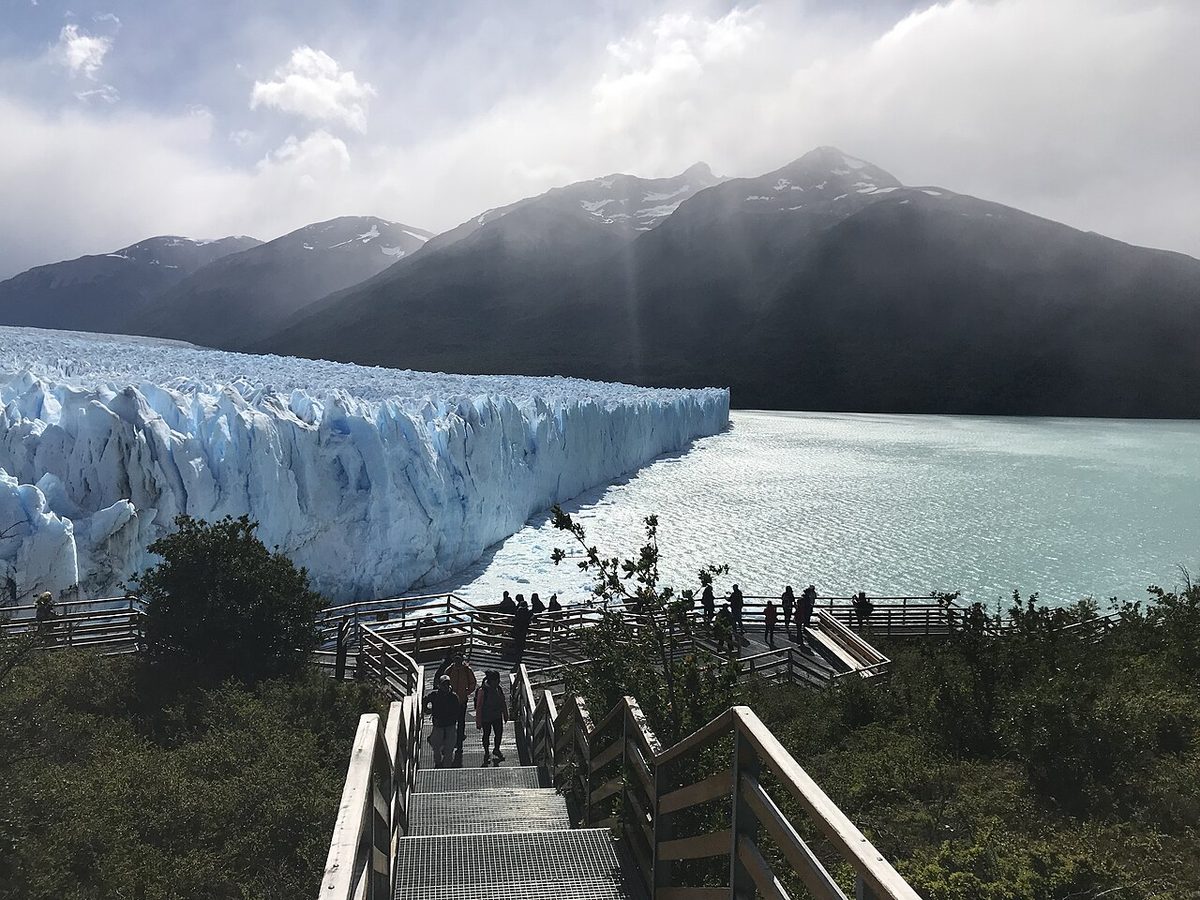
The walkway network spreads across the Magallanes Peninsula directly opposite the ice, with around 4.7 km of metal and wood boardwalk leading to a series of balconies at different heights. The routes are colour-coded and connect into a loose figure, so you can wander between viewpoints, double back to a favorite spot, and choose how much you walk. There is a map at the top where you arrive; take a photo of it before you set off.
Here is how the layout actually works on the ground. From the main parking area you can either start walking the lower trail straight toward the closer balconies — a stretch of roughly 1.5 to 2 km — or hop on a free internal shuttle that carries you up to the upper section and let you work your way back down. The upper and middle balconies tend to give the widest panoramas; the lowest decks put you closest to the calving face across the channel. If you are short on time, the consensus among regulars is that the central and lower viewpoints deliver the strongest views, so prioritize those.
The surface matters more than people expect. Parts of the boardwalk are open metal grating, and the national park specifically recommends trekking-appropriate footwear because of the grates and the risk of slipping. Wind and wet metal are real here. Leave the smooth-soled shoes in town.
There are bathrooms, a gift shop, and a restaurant near the main car park. Be warned that the restaurant is pricey, and at most sites like this you can only eat purchased food at its tables. Bring your own snacks, water, and a packed lunch to enjoy on one of the benches with the glacier as your soundtrack — it is the better experience anyway.
How Much Time You Need on the Walkways
Give yourself at least 2 to 3 hours at the balconies, and more if you like to sit and watch. This is not a checklist attraction where you tick off every viewpoint and leave.
The glacier rewards patience. It often announces itself with a crack like distant thunder before anything moves. A small chip falls, then nothing for twenty minutes, then a slab the size of a truck collapses into the lake. If you race the loop in forty-five minutes, you will probably miss the calving that everyone remembers. The shuttle buses give you a generous window — often around four to five hours in the park — precisely because slow watching is the point.
If you are on an ice-trekking tour instead, your walkway time is usually compressed to around an hour at the end of the day. That is fine if the trek is your priority, but if the balconies are what you came for, do not assume an adventure tour gives you hours there.
Are the Walkways Enough Without a Boat or Trek?
Yes. For a large share of visitors, the walkways alone are a complete, deeply satisfying Perito Moreno experience.
You do not need to get on the water to justify the day. You do not need crampons to have a real encounter with the ice. From the balconies you get the scale, the colour, the sounds, and a strong chance of seeing calving. Add a boat or a trek because you specifically want that perspective, not out of fear that the standard visit falls short. It does not.
Boat Tours: Seeing the Glacier Face from the Water
A boat tour solves exactly one thing, and it solves it beautifully: perspective. From the walkways you see the glacier as a vast wall across the channel. From a boat you sit beneath it, and the face suddenly reads as taller, more textured, more physical. The blues sharpen. The caves and fractures stand out in a way they never quite do from above.
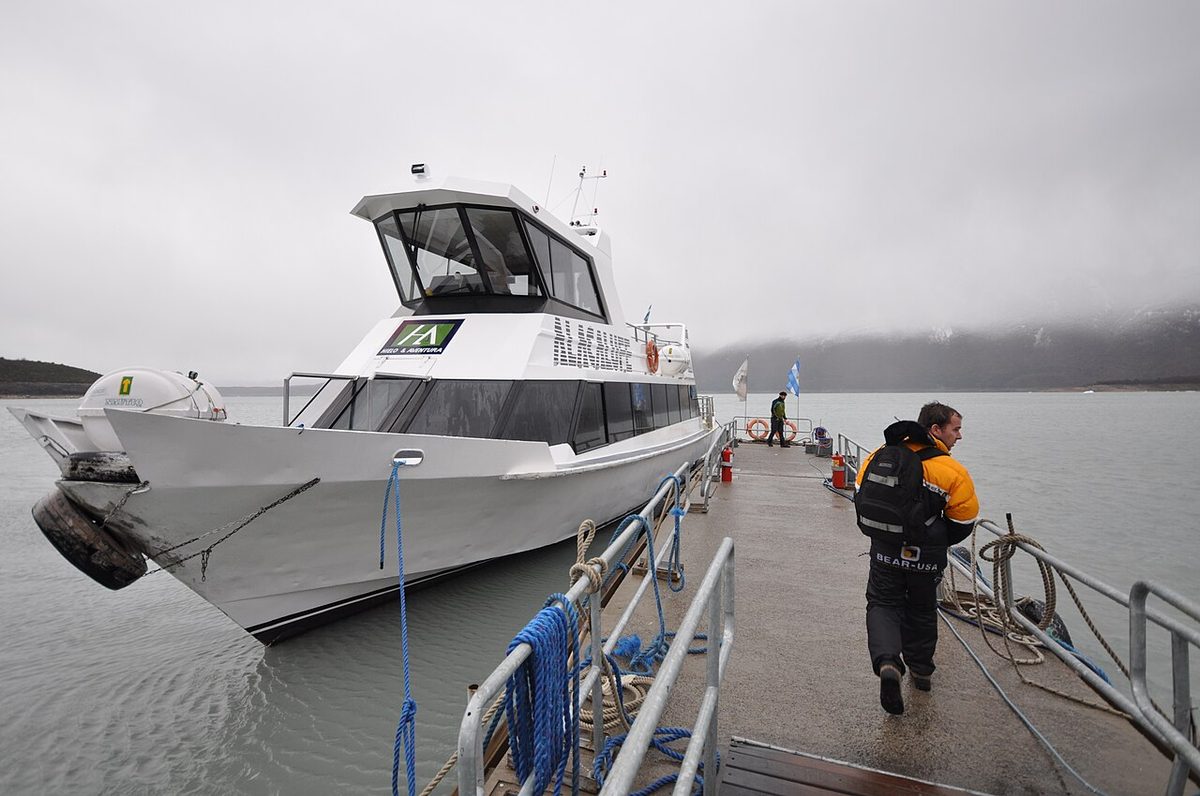
The most common option is a short navigation often branded a Nautical Safari or similar. These run roughly 90 minutes and approach the glacier’s face on the lake, giving you floating icebergs up close and a decent chance of watching ice break off into the water. Many trips finish with the local ritual of a whisky chilled with glacier ice.
You can book a boat ride two ways. Many full-day glacier tours from El Calafate bundle it in or offer it as an upgrade. Or you can arrange it on arrival at the small booth in the lower parking area marked “Navegacion,” which slots you onto a departure that fits your day. Some boats leave from a jetty near the walkways; ice-trek-linked crossings depart from Puerto Bajo de las Sombras, about 6 km before the main car park.
Choose a short boat ride if you want a closer, water-level angle without committing to a full adventure day, if you are traveling with people who cannot or do not want to ice trek, and if the weather is reasonable. Skip it if your budget is tight, if visibility is poor, if you would simply rather spend the extra hours on the balconies, or if you are already doing a trek that includes a crossing.
There is also a separate, full-day boat experience that sails Lago Argentino toward the Upsala and Spegazzini glaciers, usually departing from a different port. That is a wonderful second-day outing but it is not part of a standard Perito Moreno visit — we cover it in the Todo Glaciares tour guide.
This is the third way, and the only one that puts you on top of the ice. There are two versions, and crampons are mandatory — you cannot walk on the glacier without a licensed guide.
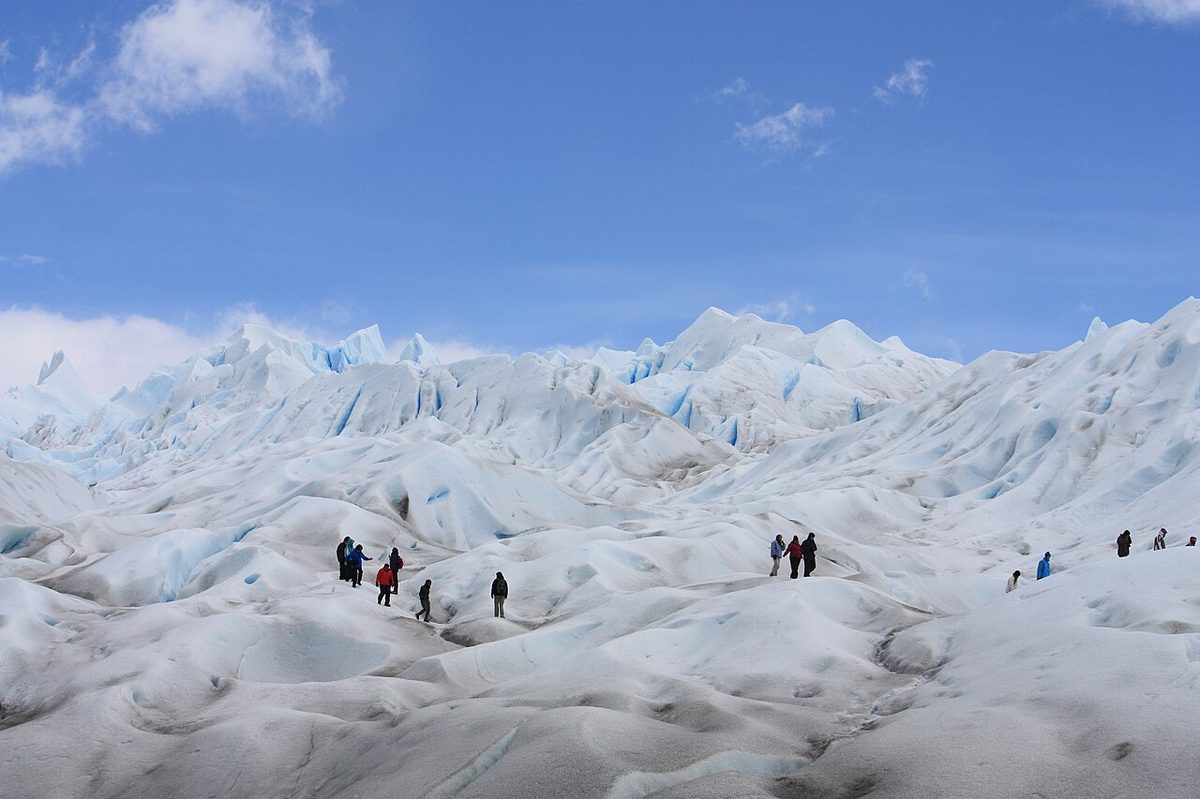
Mini Trekking is the classic first-timer’s ice walk. It is a full-day outing of roughly 9.5 to 10 hours including transfer, with a short boat crossing, a walk along the shore and forest to the glacier’s edge, and around an hour actually on the ice learning how crampons grip and peering into blue crevasses. It suits reasonably fit travelers, roughly ages 8 to 65, and is the right call for most people who simply want to stand on the glacier once.
Big Ice is the demanding version: a long day of around 12 hours with roughly 3 hours on the ice, deeper into the glacier, with age limits of about 18 to 50 and a real fitness requirement. It is excellent for the right person and miserable for the wrong one. It is not “Mini Trekking but better” — it is a different product for experienced, fit walkers.
Both treks must be booked ahead, both include transport unless you arrange to meet the group in the park, and both come with strict age and health rules covering things like pregnancy, cardiovascular conditions, and severe vertigo. If you are unsure whether you qualify, ask the operator directly before paying. For the full side-by-side on cost, difficulty, ice time, and who should choose which, see our dedicated Mini Trekking vs Big Ice comparison.
Park Tickets, Entrance Fees, and Opening Hours
Perito Moreno is inside a national park, so the park entrance ticket is separate from any transport or tour you book. This is the detail that trips people up, so plan for it.
As of recent official sources, the foreigner daily rate for Los Glaciares National Park has been around 45,000 ARS — roughly 40 USD, though the dollar value shifts constantly with inflation. There is typically a multi-day pass at around double the daily rate, and the park’s access fee page also lists reduced rates for residents and students plus a 50% discount on a second consecutive day used within 72 hours. You present a passport or DNI to establish your category.
Crucially, the entrance fee is almost never included in tours or bus tickets. You pay it at the gate on arrival — cash or card, though carrying some pesos as a backup is wise in case a card machine is down — or buy it online in advance. Argentina updated national park access fees effective June 1, 2026 under Resolution 132/2026, so check the official APN fee page close to your trip rather than trusting any blog’s number, including this one.
Opening hours run roughly 8am to 6pm in summer and 9am to 4pm in winter, and you can usually stay in the park for about two hours after the last entry time. The exact hours shift by season, so confirm before you go, especially for a winter visit.
Best Time of Day and Season to Visit
Two timing questions matter: which season, and which hours.
For the season, Visit Argentina names September through March as the best broad window, with the glacier open all year and landscapes changing by season. It notes snow from May to August and strong winds in November and December. Summer (December to February) brings the longest days, the warmest weather, and the fullest range of tours, but also the biggest crowds. The shoulder months — October, November, March, early April — trade a little weather certainty for noticeably thinner crowds. For the month-by-month picture across the whole region, use our best time to visit Patagonia guide.
The time-of-day question has a satisfying answer once you understand the trade-off. The glacier’s main face is roughly east-facing, so morning light is often the most flattering for photos. But calving happens more in the afternoon, as the day warms and the ice loosens — so the most dramatic collapses tend to come later. And crowds peak in the middle of the day, roughly 10am to 2pm, when the tour coaches are all there at once.
So the strategy that gives you the best of everything: arrive early for soft light and an empty boardwalk, or stay into the late afternoon for warmer-temperature calving and the crowds clearing out. The midday rush in between is the part to avoid if you can. A rental car or taxi gives you the freedom to bookend the day this way; the standard bus puts you there for the middle hours.
The thing people remember about Perito Moreno is not a photo. It is a sound.
Standing on the balconies, you hear the glacier work before you see it. Sharp cracks ricochet across the channel like rifle shots. Then, with no warning, a column or slab breaks free from the 60-plus-meter face and falls into Lago Argentino, throwing up a wave and a roar that arrives a beat after the splash because sound lags across that distance. It is genuinely startling the first time, and the whole boardwalk tends to gasp together.
Calving can happen any time of year, but you improve your odds with warm afternoons and patience. There is no schedule and no guarantee — some hours are quiet — but the waiting is part of why the place gets under your skin.
Perito Moreno is also famous for periodic ruptures, when the advancing ice has historically dammed an arm of the lake and the rising water eventually bursts through an ice bridge in a spectacular collapse. These events are irregular and cannot be timed to a trip, so do not plan around catching one.
A responsible note on the science, because a lot of older travel writing gets this wrong. For decades Perito Moreno was described as one of the few stable or advancing glaciers on Earth. Recent research published in Communications Earth & Environment reports that it has shifted into accelerated thinning and retreat, with frontal lowering rates jumping from about 0.34 meters per year in 2000-2019 to around 5.5 meters per year in 2019-2024. The glacier is still magnificent and absolutely worth visiting. It is simply no longer accurate to call it frozen in time. Go see it with respect for what it is now, not the postcard version from twenty years ago.
Guided Tour vs Visiting Independently
You do not need a tour to see Perito Moreno. You can travel out by bus, car, or taxi, pay your park ticket, and spend the day on the walkways entirely on your own. The walkways require no guide and no special skills.
A tour earns its keep in three situations: when you want a boat ride or ice trek (those need operators anyway), when you would rather not handle any logistics, or when you are traveling solo and prefer the structure and the running commentary. Independent travel wins when you want to control your timing — arriving early, staying late, dodging the midday crush — and when you are watching your budget, since the bus plus a self-bought ticket is the cheapest route to the ice.
My honest take: if the walkways are your goal, go independently by bus or car and keep the flexibility. If an ice trek is the centerpiece of your day, book the tour and let the operator handle the moving parts. There is no wrong answer here, only the one that fits how you like to travel. For where to base yourself and how the glacier slots into a wider trip, see our day-by-day El Calafate plan and where to stay in Patagonia guides.
Accessibility
Perito Moreno is one of the more accessible major glaciers in the world, which is part of what makes it special. Visit Argentina describes wide walkways set at various heights with areas accessible for people with reduced mobility, and reports from visitors describe a lift serving the main viewing deck plus closer parking for accessibility needs. You can reach a genuine, close-up glacier view without any boat or trek.
That said, accessibility details change, and the full boardwalk does involve distance and some gradient. If step-free access is essential to your visit, verify the current ramp, lift, accessible-bathroom, and transport drop-off situation before you commit. We keep a focused breakdown in our Perito Moreno wheelchair accessibility guide.
How to Visit Perito Moreno Glacier: FAQ
How do you get to Perito Moreno Glacier from El Calafate?
You travel about 80 km west on Ruta Provincial 11, roughly 1.5 hours by car. Your four options are a shuttle bus from the El Calafate terminal (cheapest, around 30 USD return), a rental car (most flexible), a taxi or private transfer (around 80-100 USD), or an organized tour with pickup. The walkways need no guide.
How much time do you need at Perito Moreno Glacier?
Plan on at least 2 to 3 hours on the walkways, and more if you enjoy waiting for calving. A standard shuttle gives you around 4 to 5 hours in the park, which is ideal. A full glacier day from El Calafate, including the drive each way, runs about 8 to 10 hours depending on whether you add a boat or ice trek.
Do you need a tour to visit Perito Moreno Glacier?
No. You can visit independently by bus, rental car, or taxi, pay the park entrance at the gate, and explore the walkways on your own. You only need an operator for boat tours, kayaking, or ice trekking, since walking on the glacier requires a licensed guide. For walkways alone, going independently is cheaper and more flexible.
What is the best time of day to visit Perito Moreno Glacier?
Early morning offers the softest light on the east-facing ice and the emptiest boardwalk. Late afternoon brings warmer temperatures, which means more calving, and thinning crowds as the tour buses leave. The busiest, least pleasant window is midday, roughly 10am to 2pm. If you have your own transport, bookend your visit around that rush.
How much does it cost to visit Perito Moreno Glacier?
The park entrance for foreigners has recently been around 45,000 ARS (roughly 40 USD) per day, separate from transport. Add around 30 USD for a return shuttle, or more for a car, taxi, or tour. Boat tours and ice treks cost considerably more. Argentina’s prices move fast with inflation, so check the official park fee page before you travel.
Can you walk on Perito Moreno Glacier?
Yes, on a guided ice-trekking tour with crampons. Mini Trekking gives you around an hour on the ice and suits most reasonably fit travelers aged roughly 8 to 65. Big Ice offers about 3 hours for fit walkers aged roughly 18 to 50. You cannot walk on the glacier without a licensed guide, and both treks have age and health restrictions.
Are the walkways enough, or do you need the boat or ice trek?
The walkways are enough for many visitors and deliver the full scale, colour, sound, and calving chances of the glacier. Add a short boat tour if you want the glacier face from water level, or an ice trek if standing on the glacier is a personal dream. Choose extras for the specific experience, not because the walkways feel inadequate. They do not.
Is Perito Moreno Glacier wheelchair accessible?
Parts of the walkway area are designed for reduced mobility, with wide boardwalks at various heights and a lift reported to the main viewing deck, so a close glacier view is achievable without a boat or trek. Accessibility details can change, so verify current ramp, lift, bathroom, and transport access before booking. Our wheelchair accessibility guide covers the specifics.
Final Thoughts
If you take one thing from this guide, let it be this: visiting Perito Moreno is simpler than it looks, and the simplest version is genuinely one of the great travel experiences in Patagonia.
Get yourself to El Calafate, choose your ride out — bus if you want easy and cheap, a car or taxi if you want to own your timing — pay the park ticket, and give the walkways the hours they deserve. Arrive early or stay late, bring a packed lunch and warm layers, and then do the hardest part of all: stop walking, sit on a bench, and wait. The glacier will tell you when something is about to happen.
Add the boat or the ice trek if your gut says yes and your budget allows. But never let a fear of missing out push you into the most expensive option by default. I have stood there with crampons on and I have stood there in my own boots with a thermos, and both days were unforgettable. The ice does not care which ticket you bought.