Plan Buenos Aires to Patagonia: AEP vs EZE airports, which gateways fly direct, the long-bus option, connection cautions, and the smartest booking order.
By Patagonia Tourism Guide · First published 17 Sep 2026 · Updated 27 Sep 2026
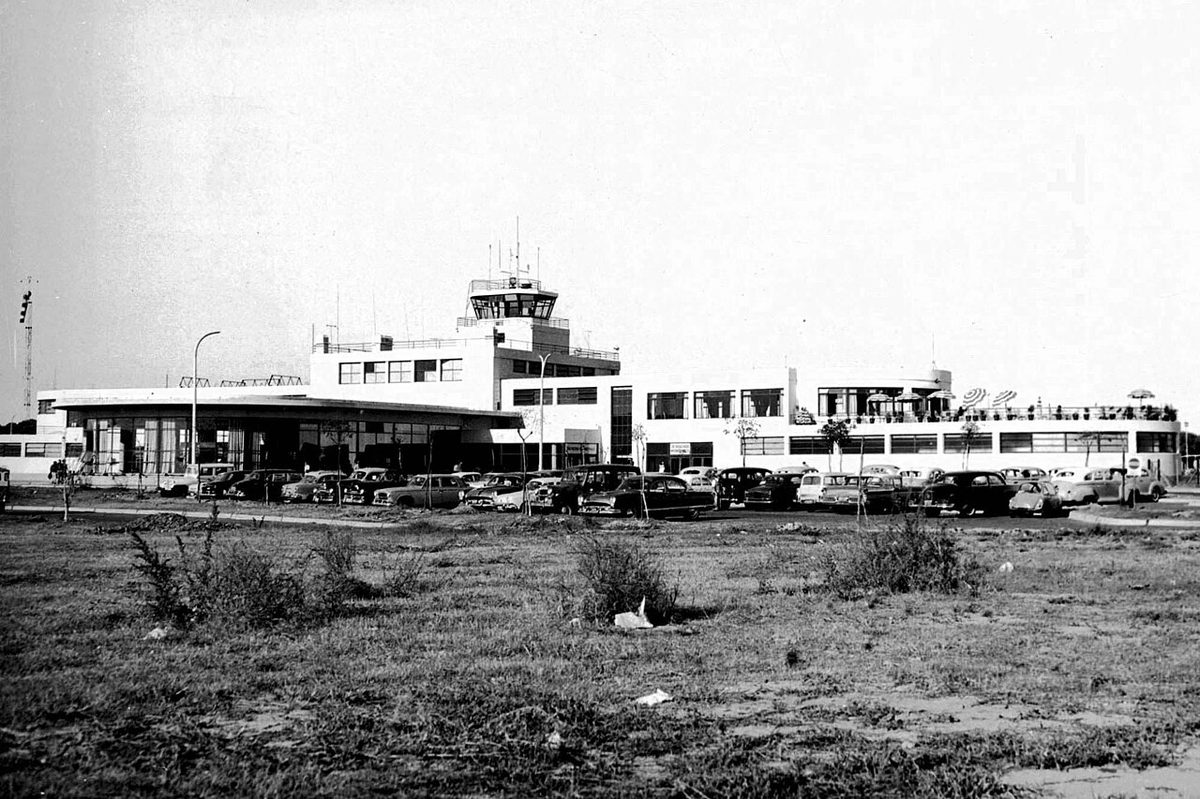
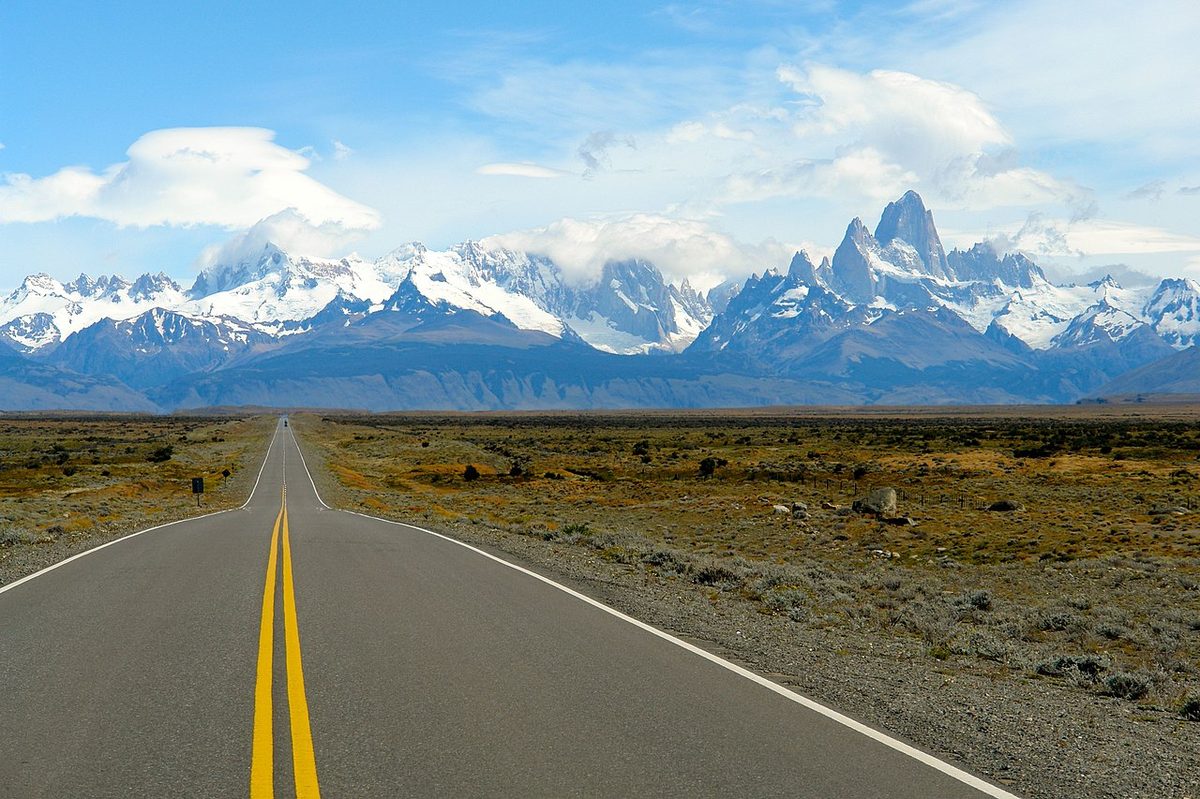
0 — 2 km Fig. 1 · Photo: Unknown authorUnknown author / Public domain via Wikimedia Commons
The mistake I almost made on my first trip south was assuming Buenos Aires had one airport. I landed from abroad at a huge airport an hour outside the city, exhausted, and had a domestic flight to El Calafate booked for “the next morning, Buenos Aires.” It was a different airport. On the other side of the city. I got lucky because I’d left a buffer night. Plenty of people don’t, and they spend their first morning in Argentina watching a Patagonia flight leave without them.
So let me save you that. Getting from Buenos Aires to Patagonia is genuinely easy once you understand one thing: there are two airports, and they are not the same place.
Here’s the short answer. Most travelers fly Buenos Aires to Patagonia from Aeroparque (AEP), the small domestic airport on the city waterfront, not Ezeiza (EZE), the international airport an hour out. From AEP you can fly direct to El Calafate, Ushuaia, Bariloche, Trelew, and Comodoro Rivadavia in roughly two to four hours. Buses exist but take 18 to 28 hours.
This guide is for the traveler who has landed in (or is about to land in) Buenos Aires and now needs to actually get to the Patagonia they came for. I’ll cover the airport trap in detail, which gateways you can reach direct, when the long bus is worth it, the best entry point for different kinds of trips, and the order to book things so nothing collapses. I’ll hedge prices and schedules because Argentina changes both faster than almost anywhere, and I’ll point you at official sources to verify before you pay.
If you’re still deciding where in Patagonia to go, start with the how to get to Patagonia pillar guide, which maps every gateway to every region. This article zooms in on the single most common leg of the whole journey: the hop south from the capital.
Buenos Aires to Patagonia at a glance
Before the detail, here’s the picture I wish someone had handed me. These are the main routes south, with the realistic mode, time, and the one note that matters most for each. Treat times as typical, not promises, and verify current schedules close to your dates.
Route
Best mode
Typical time
Notes
Buenos Aires to El Calafate
Fly (AEP)
~3h 15m–3h 20m
Gateway for Perito Moreno and El Chalten
Buenos Aires to Ushuaia
Fly (AEP)
~3h 35m–3h 40m
Far south; treat as its own flight leg
Buenos Aires to Bariloche
Fly (AEP)
~2h 10m–2h 20m
Bus is 22–24h; fly unless you love the steppe
Buenos Aires to Trelew
Fly (AEP)
~2h
Whales, Puerto Madryn, Peninsula Valdes
Buenos Aires to Comodoro Rivadavia
Fly (AEP)
~2h 20m
Central Patagonia, oil-coast hub
Buenos Aires to Puerto Madryn (PMY)
Fly (AEP)
~2h
Fewer frequencies than Trelew; compare both
Buenos Aires to El Calafate by bus
Bus
~28–36h+
Long and rarely worth it for this distance
Buenos Aires to Bariloche by bus
Bus
~22–24h
The one long bus that some people genuinely enjoy
Swipe to see all columns
Table 1
The single most important row in that table isn’t a route. It’s the airport in parentheses: AEP. Get that right and the rest is logistics. Get it wrong and you miss a flight. So let’s start there.
Aeroparque vs Ezeiza: the airport that trips everyone up
Buenos Aires has two commercial airports, and they do completely different jobs.
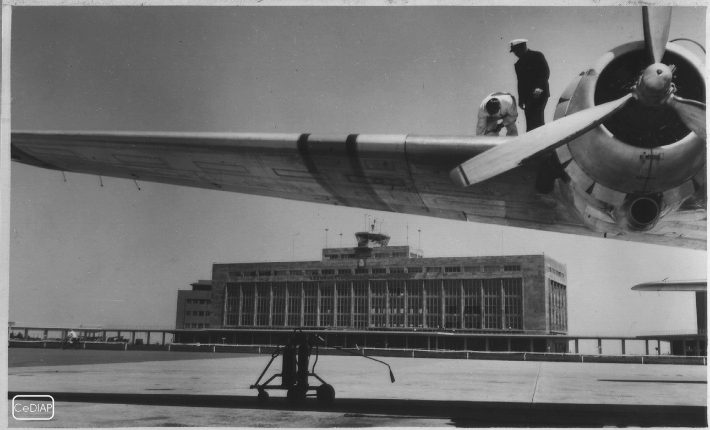
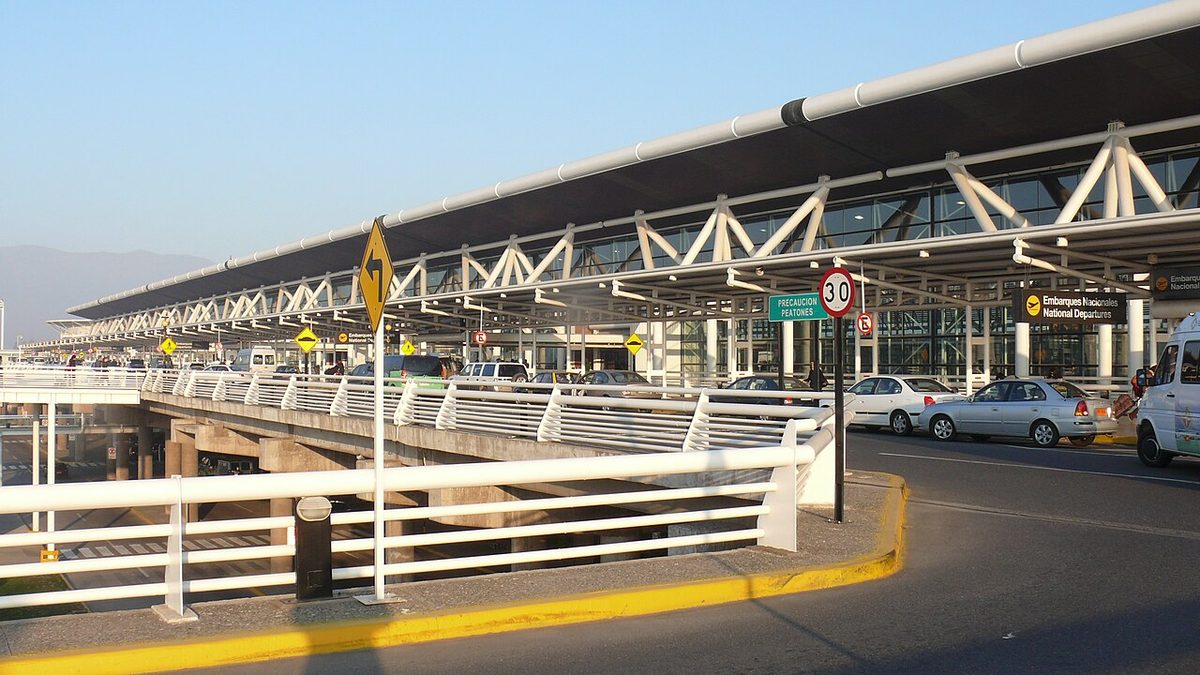
Ezeiza (EZE) — officially Ministro Pistarini International Airport — is the big international hub. It sits roughly 35 km southwest of the city, about a 45-minute to one-hour drive in normal traffic, longer at rush hour. If you flew in from Europe, North America, or anywhere outside South America, you almost certainly landed here.
Aeroparque (AEP) — Jorge Newbery — is the domestic workhorse. Per Aeropuertos Argentina, it sits right on the Rio de la Plata waterfront, only about 2 km from downtown Buenos Aires, and it’s the country’s busiest domestic airport. Almost every flight from Buenos Aires to Patagonia leaves from here.
That’s the whole trap in one sentence: you usually arrive internationally at EZE and depart for Patagonia from AEP, and the two are on opposite sides of a city of fifteen million people.
The connection you must not underestimate
There is no train, no metro, and no quick airside shuttle between Ezeiza and Aeroparque. The airports are roughly 50 km apart, and getting between them means a taxi, an Uber, or a transfer service through Buenos Aires traffic — a journey that runs from about 45 minutes to well over an hour depending on the hour.
Now stack what has to happen before you even start that drive: clear immigration at Ezeiza (which can be slow), wait for checked bags, find ground transport, cross the city, then check in again for a domestic flight. Travel guidance for the city, including the Palo Santo airport guide, recommends giving yourself at least four to five hours between an international arrival and a domestic departure. I’d go further.
My rule is blunt: don’t connect EZE to AEP to Patagonia on the same day if you can avoid it. Sleep a night in Buenos Aires. You get a buffer against delayed long-haul flights, lost bags, and traffic, and you get a night in one of the great cities of the Americas instead of a stressful dash across it. If you absolutely must connect same-day, build in far more time than feels reasonable and put the domestic flight in the afternoon or evening, never first thing.
The exception worth knowing: a handful of domestic flights, and some Patagonia services on the low-cost carriers, do occasionally operate from Ezeiza. So always check which airport your specific ticket uses — AEP and EZE are both written on the booking, and the codes are easy to skim past. For the wider picture of every domestic field you might land at down south, our rundown of which airport to fly into guide breaks them down one by one.
Fig. 2 · Photo: Unknown authorUnknown author / Public domain via Wikimedia Commons
Flying Buenos Aires to Patagonia: which gateways go direct
This is the good news. From Aeroparque you can fly direct to most of the Patagonia gateways that matter, and the flights are short by South American standards. You are not connecting through a third city; you’re stepping onto a two-to-four-hour flight and arriving in the region.
Here’s who flies and where. The main carrier is the flag airline Aerolineas Argentinas, with the low-cost airlines JetSmart and Flybondi competing on the busier routes (and sometimes operating from EZE, so check). Frequencies and fares move constantly, so confirm on the Aerolineas Argentinas site or an aggregator close to your dates.
Buenos Aires to El Calafate (FTE)
This is the flight most first-time Patagonia travelers take, because El Calafate is the gateway to Perito Moreno Glacier and the jumping-off point for El Chalten and Fitz Roy. The flight from Aeroparque runs around 3 hours 15 to 3 hours 20 minutes, and Aerolineas Argentinas operates it most heavily, with JetSmart and Flybondi often undercutting on price.
El Calafate’s airport — Comandante Armando Tola (FTE) — sits about 21 km east of town, so you’ll want a shuttle, transfer, or taxi for the last stretch. For everything about the field itself, see our rundown of arrivals and transfers guide. From El Calafate, El Chalten is a separate three-hour land transfer, not a flight.
Buenos Aires to Ushuaia (USH)
For the end of the world — Tierra del Fuego, the Beagle Channel, Antarctica departures — you fly to Ushuaia. The direct flight from Buenos Aires runs around 3 hours 35 to 3 hours 40 minutes, with Aerolineas Argentinas, Flybondi, and JetSmart all flying nonstop on the busier dates.
Treat Ushuaia as its own flight leg, not a casual add-on. It’s far south, the flights fill up in summer and around Antarctica season, and overland alternatives are long and involve a sea crossing. If Ushuaia is on your list, our ready-made Ushuaia schedule guide helps you decide how many days it actually deserves before you build the route around it.
Buenos Aires to Bariloche (BRC)
For the lake district — Nahuel Huapi, the Seven Lakes, Villa La Angostura — Bariloche is the gateway, and the flight is the shortest of the major Patagonia hops at roughly 2 hours 10 to 2 hours 20 minutes. This is the one route where the bus is a real cultural option for some travelers (more below), but for most people the flight is the obvious call.
Buenos Aires to Trelew (REL) and Puerto Madryn (PMY)
For whales, penguins, and Peninsula Valdes, you’re aiming for the Chubut coast. Trelew (REL) is the workhorse, with a flight of around 2 hours from Buenos Aires, and it’s often more frequent than Puerto Madryn (PMY) itself. Compare both: Puerto Madryn is closer to the town if flights line up, but Trelew usually has more options and is only about an hour’s drive away. If southern right whales are the reason you’re coming, pair this with our breakdown of boat versus shore viewing guide and time the trip to the season.
Buenos Aires to Comodoro Rivadavia (CRD)
Less touristy, but useful: Comodoro Rivadavia is the central-Patagonia hub on the Atlantic, with a flight of about 2 hours 20 minutes from Buenos Aires. It’s an oil-economy city rather than a postcard, but it’s a practical entry point for the central coast and some Ruta 3 road trips. There are also occasional red-eye flights to Comodoro and Trelew from Aeroparque, worth a look if you don’t mind landing in the small hours.
A note on all of these: I’m giving you flight times, not gospel schedules. Argentina’s domestic network reshuffles routes and frequencies with the seasons and the economy. Verify the current timetable, the operating airport, and the fare before you commit.
When the bus from Buenos Aires actually makes sense
Argentina has a deservedly famous long-distance bus culture — reclining “cama” and “suite” seats, meals served at your seat, the steppe rolling past for hours. So yes, you can take a bus from Buenos Aires to Patagonia. The question is whether you should.
For most of these distances, the honest answer is no. Buenos Aires to Bariloche is roughly 22 to 24 hours by bus. Buenos Aires to the deep south — El Calafate, Rio Gallegos — is well over a day, often 28 to 36 hours or more with connections. When the flight is two to three hours and the bus is an entire day or two, the flight usually wins on time, and frequently isn’t much more expensive once you value the day you’d lose.
So when does the bus genuinely make sense?
You actively want the overland experience. The Buenos Aires to Bariloche run is the classic, and some travelers love the slow reveal of the landscape, the cama seat, the sense of crossing a continent. If that’s you, it’s a legitimate choice, not a compromise.
You’re on a tight budget and flexible on time. Bus fares can undercut flights, especially if you book ahead. On a long, slow trip with weeks to spare, the math can favor the bus.
Flights are sold out or absurdly priced for your dates, which happens around peak holidays.
You’re breaking the journey anyway — stopping in, say, the Atlantic coast or a Pampas town — so a bus leg fits the rhythm of the trip.
What I’d avoid is using a 24-hour bus to “save money” on a short trip, then arriving wrecked the morning of a glacier tour or a trek. The day you lose and the state you arrive in have a cost too. For the full picture of bus travel once you’re actually in the region — which is where buses really shine — see our Patagonia buses guide. Within Patagonia, short bus legs like Puerto Natales to El Calafate are often the smart move, even when the long haul from Buenos Aires isn’t.
Fig. 3 · Photo: Thebaldball / CC0 via Wikimedia Commons
Best entry point for your kind of trip
“Where should I fly?” only has a good answer once you know what you came for. Here’s how I’d match the entry point to the trip.
If you want glaciers and the classic south
Fly Buenos Aires to El Calafate. It unlocks Perito Moreno Glacier, El Chalten and Fitz Roy, and the cross-border route toward Torres del Paine. For most first-time southern Patagonia trips, this is the single most useful flight you can book. From here you continue by land to El Chalten, and many travelers later cross into Chile by bus.
If you want Torres del Paine
This is the one case where you should seriously consider not routing through Buenos Aires at all. Torres del Paine sits in Chile, and the cleanest access is often via Santiago to Punta Arenas or Puerto Natales — see our guide to flights south from Santiago guide for that side. That said, plenty of people reach Torres del Paine from the Argentine side by flying Buenos Aires to El Calafate and then taking the bus across the border to Puerto Natales. If your trip combines Argentine and Chilean Patagonia, compare both. Our breakdown of the two sides guide helps you decide which country anchors the trip.
If you want whales and wildlife
Fly Buenos Aires to Trelew (or Puerto Madryn) for Peninsula Valdes, the southern right whales, the penguin colonies, and the sea lions. This is a completely different Patagonia from the mountain south — Atlantic coast, big skies, steppe — and it deserves its own days rather than being squeezed onto a glacier itinerary.
If you want the lake district
Fly Buenos Aires to Bariloche for Nahuel Huapi, the Seven Lakes, and the soft-adventure north. Do not fly to El Calafate for Bariloche, or vice versa — they’re nearly 1,500 km apart and serve different trips entirely.
If you want Tierra del Fuego
Fly Buenos Aires to Ushuaia, and give it real days. It’s the launch point for Antarctica and the southernmost city in the world, and the flight there is part of the appeal.
To see how far apart all these places actually are — because the map flattens distances that take a day to cross — keep our orientation guide to Patagonia open while you plan. And for the whole region in one place, the guide to planning a Patagonia trip is the overview to start from.
Should you rent a car, or fly and transfer?
A question I get a lot: can’t I just rent a car in Buenos Aires and drive south? You can. You almost certainly shouldn’t.
The distances are enormous, the most interesting driving is within Patagonia rather than on the long haul down from the capital, and you’d burn days of your trip on the Pampas before the scenery even starts. The far smarter play is to fly into your Patagonia gateway and rent a car there — in Bariloche for the Seven Lakes, on the Chubut coast for Peninsula Valdes, or in El Calafate for glacier-country flexibility.
Where a rental genuinely shines is the regional road trip, not the approach from Buenos Aires. Our rundown of rental costs and one-way fees guide covers where self-driving pays off, the gravel-and-wind realities, and the cross-border permits you need if you plan to drive between Argentina and Chile. Pick up the car where the good roads are, not 1,500 km north of them.
The order to book it all
Booking out of order is how people end up with a cheap flight and no plan. Here’s the sequence I’d use for a Buenos Aires-to-Patagonia trip.
Choose your season. Patagonia’s weather and the operating schedule of buses, boats, and some flights swing hard with the time of year. Lock the rough dates first.
Choose your Patagonia region and gateway. El Calafate, Ushuaia, Bariloche, or the wildlife coast — pick the trip, then the airport that serves it.
Book any scarce, route-defining items. Torres del Paine refugios, peak-season lodging in small towns, and high-demand tours sell out long before flights do. Secure those before you lock transport around them.
Book the international flight into Buenos Aires (usually EZE).
Decide your Buenos Aires buffer. I almost always build in at least one night between the international arrival and the domestic Patagonia flight. Book that accommodation now.
Book the domestic flight Buenos Aires to Patagonia from AEP — and double-check the airport code on the ticket.
Book onward regional transport: transfers from the Patagonia airport, the El Calafate-to-El Chalten bus, cross-border buses, regional rental cars.
Add buffer days around weather-dependent activities and any border crossing.
Recheck everything — flight times, airport, bus schedules, border hours — in the week before you travel.
The logic is simple: the things that sell out or break the trip come first, and the cheap, flexible bits come last. A bargain flight booked before you understand the airports and the buffer isn’t a deal. It’s a constraint you’ll be working around for the rest of the trip.
Fig. 4 · Photo: Sicnag / CC BY 2.0 via Wikimedia Commons
A few honest cautions
Some hard-won notes that don’t fit neatly elsewhere.
Argentina’s prices move. The exchange rate and domestic airfares shift enough that any number I quote will age. Treat fares as patterns, not quotes, and check current prices yourself. Carry some flexibility in the budget.
Low-cost carriers can use Ezeiza. JetSmart and Flybondi are great for the wallet, but a few of their Patagonia services operate from EZE rather than AEP. That changes your whole connection plan, so read the departure airport on the booking, not just the route.
Baggage rules bite on the low-cost airlines. The cheap headline fare often excludes checked bags, and Patagonia means duffels and trekking gear. Price the bag in before you decide a low-cost flight is actually cheaper.
Summer sells out. December through February is peak. Flights, buses, and small-town beds all fill. Book the scarce things early and don’t assume you can sort the domestic flight on arrival.
The map lies about distance. Places that look adjacent — El Calafate and Bariloche, the glaciers and the whales — are often a full travel day apart. Plan around gateways and real transfer times, not how close two dots sit on a screen.
Fig. 5 · Photo: Martin St-Amant (S23678) / CC BY-SA 3.0 via Wikimedia Commons
Final thoughts
The journey from Buenos Aires to Patagonia is one of the easier parts of a Patagonia trip, as long as you respect the one thing that catches people out: the two airports. Land internationally at Ezeiza, fly south from Aeroparque, and give yourself a buffer between the two — ideally a night in the city. After that, it’s a short, scenic flight to whichever Patagonia you came for.
Pick the gateway that matches your trip, book the scarce things first and the flights second, and hedge every price and schedule against an Argentina that likes to change them. Do that, and you’ll spend your first morning down south actually in Patagonia, not stranded in a taxi watching your flight leave without you.
Which airport do I fly from in Buenos Aires to Patagonia?
Almost all domestic flights to Patagonia leave from Aeroparque Jorge Newbery (AEP), the small airport on the city waterfront about 2 km from downtown — not Ezeiza (EZE), the international airport roughly 35 km out. Always check the airport code on your ticket, though, because a few low-cost Patagonia services occasionally operate from Ezeiza.
How long is the flight from Buenos Aires to Patagonia?
It depends on the gateway. Buenos Aires to Bariloche is the shortest at around 2 hours 10 minutes; Trelew is about 2 hours; Comodoro Rivadavia around 2 hours 20 minutes; El Calafate roughly 3 hours 15 to 3 hours 20 minutes; and Ushuaia, the farthest, about 3 hours 35 to 3 hours 40 minutes. Verify current schedules before booking.
How much time should I leave between an international flight and my Patagonia flight?
If you arrive at Ezeiza and your Patagonia flight leaves from Aeroparque, leave at least four to five hours — and ideally an overnight in Buenos Aires. You have to clear immigration, collect bags, cross roughly 50 km of city traffic, and check in again. A single delayed long-haul flight can wreck a tight same-day connection.
Can I take a bus from Buenos Aires to Patagonia?
Yes, but it’s long. Buenos Aires to Bariloche is around 22 to 24 hours; the deep south is well over a day, often 28 to 36 hours or more. Argentina’s long-distance buses are comfortable, with reclining cama seats and meals, but for most travelers the two-to-three-hour flight is worth the cost. The bus makes most sense if you want the overland experience or you’re on a slow, tight-budget trip.
Can I fly direct from Buenos Aires to El Calafate?
Yes. Aerolineas Argentinas flies it most often, with JetSmart and Flybondi competing on price, and the direct flight from Aeroparque runs about 3 hours 15 to 3 hours 20 minutes. El Calafate’s airport sits roughly 21 km from town, so arrange a shuttle or transfer for the final stretch. It’s the standard gateway for Perito Moreno Glacier and El Chalten.
Is it better to fly into Buenos Aires or Santiago for Patagonia?
Fly into Buenos Aires for Argentine Patagonia — El Calafate, El Chalten, Bariloche, Ushuaia, and the wildlife coast. Fly into Santiago for Chilean Patagonia, especially Torres del Paine via Punta Arenas or Puerto Natales. For trips that combine both countries, compare open-jaw routes; our Santiago to Patagonia and Argentina vs Chile Patagonia guides cover the trade-offs.
Do I need to change airports in Buenos Aires?
Usually yes. International arrivals land at Ezeiza, while domestic Patagonia flights depart from Aeroparque, and there’s no quick airside link between them — only a taxi, Uber, or transfer across about 50 km of city. Plan for it, leave plenty of time, and prefer an overnight in Buenos Aires over a tight same-day airport-to-airport dash.