Plan Puerto Natales to El Calafate: direct buses, driving, transfers, the Cerro Castillo border crossing, timing by season, and how it fits an itinerary.
By Patagonia Tourism Guide · First published 22 Sep 2026 · Updated 20 Oct 2026
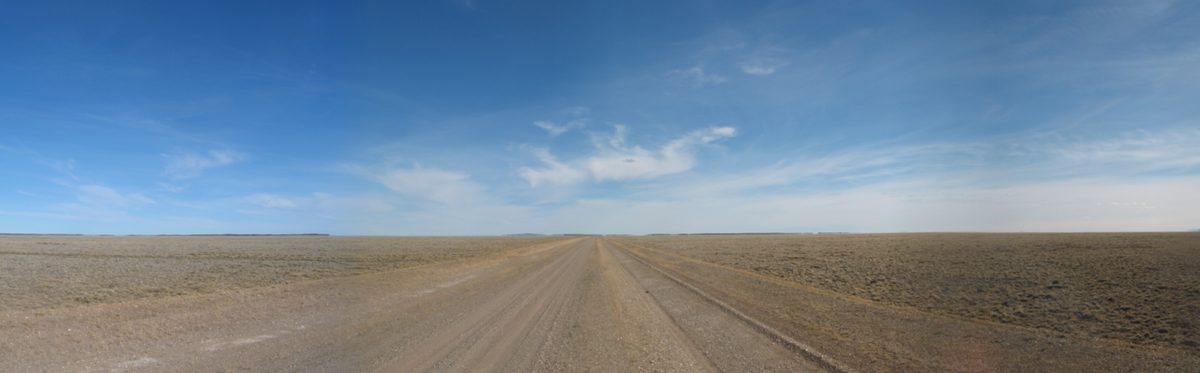
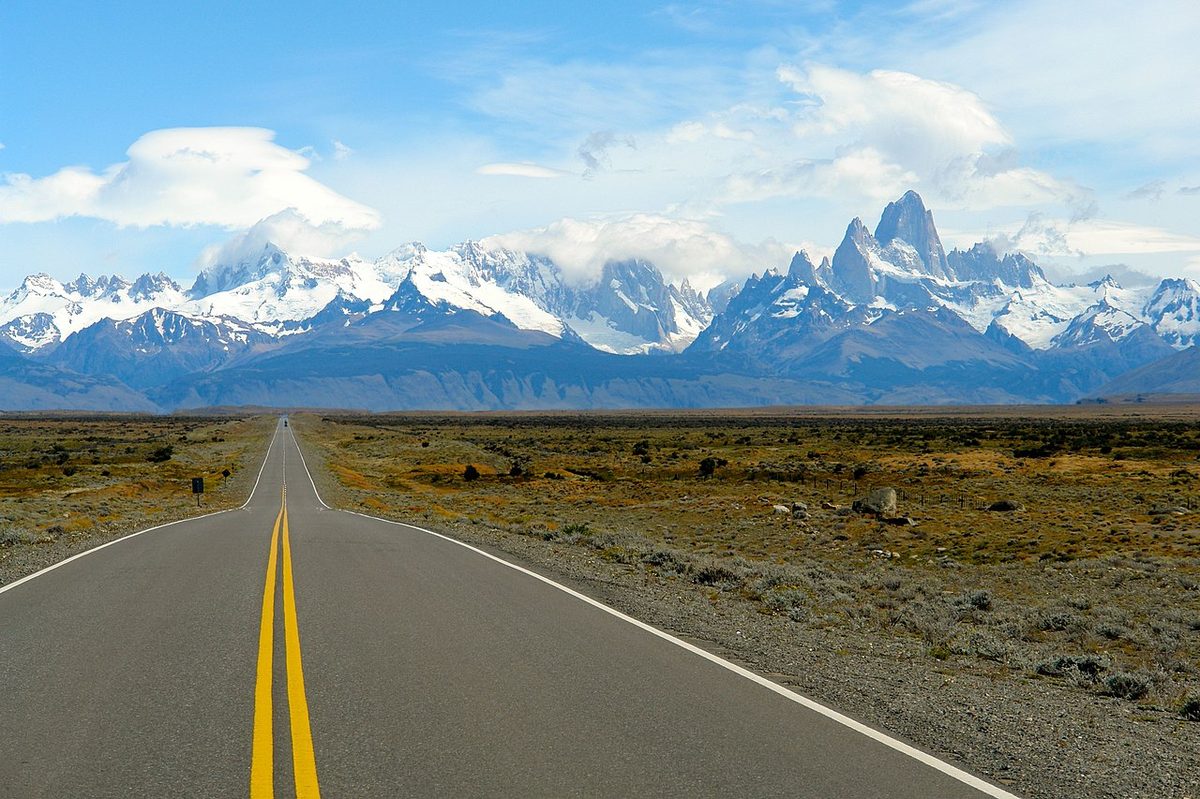
0 — 2 km Fig. 1 · Photo: Giacomo Miceli / Public domain via Wikimedia Commons
The thing nobody warns you about on this drive is the sheep. You leave the Argentine border post on a rutted gravel track, somewhere past the last paved kilometer of Ruta 40, and a flock just stands there on the road like they own it, which out here they basically do. Cattle grids rattle under the wheels. A guanaco watches from a fence line. It feels less like crossing between two countries and more like wandering through someone’s enormous, windblown back paddock. Then the road turns to pavement, and you’re in Chile.
That is the Puerto Natales to El Calafate journey in a nutshell: a long, open, weirdly beautiful crossing of the Patagonian steppe, bookended by two of the most spectacular places in the region. Here is the short version.
The Puerto Natales to El Calafate route runs roughly 270 km (170 mi) and crosses the Chile-Argentina border at Cerro Castillo / Cancha Carrera. Direct buses take around 5 to 6 hours including border formalities, run by Bus-Sur, Turismo Zaahj, Cootra, and Marga Taqsa. Driving or a private transfer takes a similar time. Verify schedules before you book.
This guide is for the traveler stitching together the two classic anchors of southern Patagonia: Torres del Paine on the Chilean side and the Perito Moreno Glacier on the Argentine side. You’ve decided to do both, and now you need to get between them without losing a day to a bad connection or a border surprise. I’ll cover every option, what the crossing is actually like, how timing and direction matter, and where this leg slots into a real itinerary. As always, I’ll hedge the prices and schedules and point you at the operators, because this is a cross-border route in two currencies and the details drift.
If you’re still assembling the bigger picture, our pillar guide on how to get to Patagonia frames where this leg fits among flights, buses, and borders across the whole region.
Puerto Natales to El Calafate at a glance
Before the detail, here’s the whole decision on one screen. This is the table I’d want first, because the honest truth is that the four options land closer together on time than you’d expect. What separates them is cost, flexibility, and how much you want to be in charge.
Option
Typical time
Cost band (verify)
Notes
Direct bus
~5–6 h incl. border
$ (cheapest)
Bus-Sur, Zaahj, Cootra, Marga Taqsa; book ahead in summer
Self-drive (rental car)
~4–5 h + ~1 h border
$$ + rental & permit
Most flexible; needs cross-border paperwork and fuel planning
Private transfer
~4–5 h + border
$$$
Door to door, your own schedule, best for groups/families
Shuttle / shared van
~5–6 h
$–$$
Smaller vehicle, sometimes hotel pickup; less frequent
Swipe to see all columns
Table 1
A few honest caveats on that grid. The distance you’ll see quoted bounces around between roughly 260 and 280 km depending on which route and which mapping tool, and the Australis Patagonia blog puts it at about 270 km taking 4 to 6 hours depending on method. The border adds about an hour in normal conditions, more in peak summer when several buses and a line of rental cars hit Cancha Carrera at once. And every single one of these options is at the mercy of weather, border hours, and the queue ahead of you. Build in slack.
For most travelers, the bus is the right answer, and it’s the option I’d default to unless you specifically want a car at the other end. It’s the cheapest way across, it’s comfortable, and crucially the drivers handle the border choreography so you just follow the person in front of you with your passport out.
Several companies run the route, and they’re all broadly similar. The names you’ll see again and again:
Bus-Sur — the most established operator on this corner of Patagonia, in the cross-border transport business since the 1950s, with multiple daily departures and modern double-deckers. (Bus-Sur)
Turismo Zaahj — consistently the highest-rated for punctuality, departing Puerto Natales around 7:00 a.m. daily in the high season, with a second afternoon departure on some days. (Turismo Zaahj)
Cootra — a long-running cooperative operator, typically with an early-morning departure.
Marga Taqsa — an Argentine company that also covers the route, often competitively priced.
Schedules and frequency
Departures cluster in the morning, with a smaller number of afternoon services, and frequency rises and falls with the season. Australis lists roughly 3 to 6 buses daily depending on the time of year, with first departures around 6:30–7:00 a.m. and last departures somewhere in the early-to-mid afternoon. Turismo Zaahj’s own page shows, for the October-to-April high season, a daily 7:00 a.m. departure from Puerto Natales plus a second 3:00 p.m. run on Mondays, Wednesdays, and Fridays — and a much thinner winter timetable of only a few days a week.
That seasonality is the catch. In low season (roughly May to September) you may find a bus only every couple of days in your direction, so do not assume there’s a service the morning you want one. And one quirk worth knowing: bus timetables for this route are usually only published a few months ahead, so if your trip is far off, you’re checking patterns, not booking yet.
Ticket prices sit in the budget band — commonly quoted somewhere around USD 30 to 50 one way, depending on operator, season, and seat class — but treat any figure as approximate and confirm at the time. You can compare across companies on aggregators like Busbud, then book there or directly with the operator.
What the bus is actually like
Better than you might fear. Sandra at Minimalist Journeys, who rode Bus-Sur across this border, describes a clean modern double-decker with reclining semi-cama seats, air conditioning, an onboard toilet, and — genuinely surprising for the middle of the steppe — fast free Wi-Fi. Each passenger got a water bottle and a packaged snack on boarding.
You’ll choose between semi-cama and cama seats. On a trip this short the difference is marginal — slightly more recline and legroom on cama — and frankly not worth a big price jump in my view. What is worth doing is choosing your actual seat when you book. Front-row or the seats just behind the stairwell give you nobody in front and a clean view forward.
Buses on this route generally don’t make a meal stop, though there’s usually a short break at the La Esperanza service station roughly two hours out of El Calafate for toilets. Bring snacks and water, and don’t count on buying lunch.
Terminals
In Puerto Natales, buses leave from the Terminal Rodoviario on Avenida España 1455, on the edge of town. In El Calafate, they use the main Terminal de Ómnibus at Saint-Exupéry 87, up the hill from the main street — the same terminal as the El Chaltén buses, which makes onward connections easy. One small thing that trips people up: in El Calafate there’s a bus station usage fee (a few thousand Argentine pesos, paid at a separate counter, often not included in your ticket) and you’ll want to keep the receipt. Arrive at least 30 minutes before departure to sort that and check in.
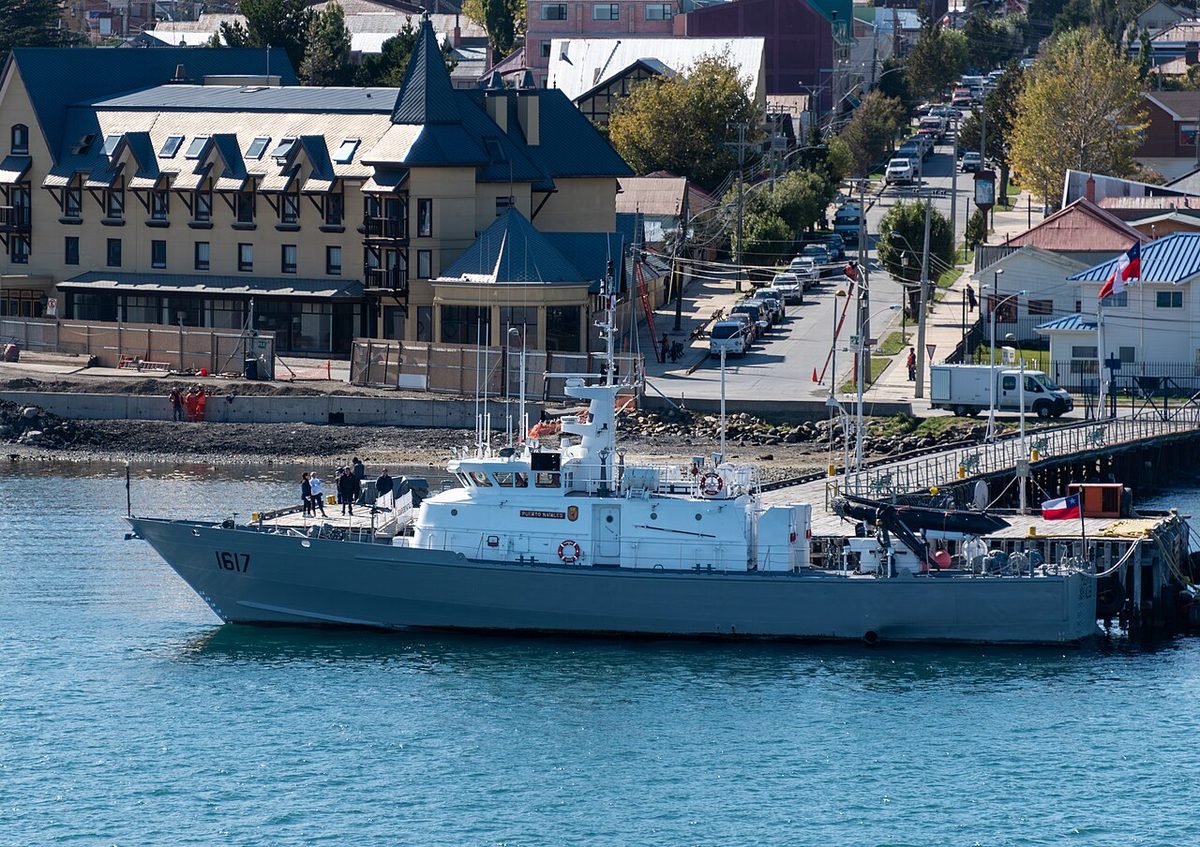
Fig. 2 · Photo: Gordon Leggett / CC BY 4.0 via Wikimedia Commons
For the Chilean-side gateway itself — where to sleep, where to eat, gear shops — our primer on eating and sleeping in natales covers the town you’re leaving (or arriving in).
Driving Puerto Natales to El Calafate yourself
A rental car can be the best version of this trip, or an expensive headache, and which one depends almost entirely on whether you sorted the cross-border paperwork in advance. Get that right and you’ve got total freedom to stop for photos, wildlife, and the silence. Get it wrong and you’re having an argument at a remote border post in the middle of nowhere.
The route
From Puerto Natales you head north and east on Ruta 9 in Chile, then cross the border and join Argentina’s Ruta 40. The driving distance is around 265 km, and the moving time is roughly 4 to 5 hours before you add the border. Road conditions are mostly good pavement, but expect a short gravel section on either side of the border posts, strong Patagonian wind that shoves the car around, and guanacos near the road.
One genuinely useful detail from the road-trippers at Trans-Americas Journey, who drove this exact crossing: once you’re through the Argentine post, there’s a fork. Taking the old gravel alignment, now provincial road RP7, is the shortest line to El Calafate but includes a notoriously rough, washboarded dirt stretch. Staying on Ruta 40 via La Esperanza instead is about 80 km (50 mi) longer but mostly paved and far gentler on the car. They wished they’d taken the paved detour. If you’ve got a small rental and no appetite for punishment, that’s worth knowing.
Fuel and the practical stuff
This is empty country, so fuel discipline matters. Fill up completely in Puerto Natales before you leave — there’s no fuel near Torres del Paine on the Chilean side, and the first reliable station in Argentina is a half-hour or so past the border at the Ruta 40 / Ruta 7 junction (and historically pricier and cash-only). There’s a station at La Esperanza if you take the Ruta 7 line. El Calafate itself has normal YPF fuel once you arrive. Carry water, layers, and snacks, and don’t plan to drive this in the dark.
Cross-border rental permits
This is the part you cannot improvise. If you want to take a rental car between Chile and Argentina, you must arrange the border authorization with the rental company in advance, in writing. Ask them, before you pay:
Can this specific vehicle cross into the other country, and at which crossings?
What documents will I carry (the notarized permit, vehicle papers, insurance valid in both countries)?
How much does the permit cost and how long does it take to issue?
Is one-way drop-off in the other country allowed (often it isn’t, or costs a lot)?
That last point matters here. Many travelers want to drop the car on the far side, and one-way cross-border rentals are frequently restricted or expensive — which is one big reason the bus wins for a lot of people. Our notes on border crossings by car guide goes deeper on permits, insurance, and gravel, and the Chile-Argentina border crossing in Patagonia guide covers the documentation side in full.
Private transfers and shuttles
If the bus times don’t fit, you’re a group, or you simply want door-to-door ease, a private transfer does the same route in a car or van on your schedule, with hotel pickup and drop-off. You’ll pay considerably more than a bus seat — this is the premium option — but split across three or four people with luggage it can be reasonable, and it removes the terminal faff at both ends. It’s the choice I’d make traveling with family or anyone who doesn’t want to wrangle a 6:30 a.m. departure.
Shared shuttles sit in between: smaller than a coach, sometimes with pickups, less frequent than the scheduled buses. They show up on booking platforms alongside the bus options. As with everything cross-border, confirm whether the quoted time includes the border or is optimistically measuring only the driving.
Whatever you book, the same rule applies as for the bus: nobody can promise the border won’t add time. Treat the arrival hour as a target, not a guarantee.
Fig. 3 · Photo: Rjcastillo / CC BY-SA 4.0 via Wikimedia Commons
The Cerro Castillo border crossing, explained
The crossing is the heart of this journey and the part most worth understanding before you go. It has a confusing number of names, so let me untangle them: the pass is officially Paso Río Don Guillermo. The Chilean post sits at Cerro Castillo, a tiny settlement on the edge of Torres del Paine. The Argentine post is at Cancha Carrera, out on the steppe. People use all three names — Don Guillermo, Cerro Castillo, Cancha Carrera — for the same crossing. They’re not different borders.
It is a remote, two-stage crossing, and importantly not open 24 hours. According to Australis, high-season hours (roughly October to April) run about 8:00 a.m. to 10:00 p.m., dropping to around 8:00 a.m. to 8:00 p.m. in winter — which is exactly why bus departures cluster in the morning and stop by mid-afternoon. Verify current hours before you travel; the official Chilean Pasos Fronterizos site and Argentina’s pasos internacionales page are the places to check border status.
How it works going west (Argentina to Chile)
Most first-timers do it in this direction — Calafate to Natales heading into Torres del Paine — so here’s the sequence, drawn from travelers who’ve done it:
Argentine exit at Cancha Carrera. The bus turns off Ruta 40 onto gravel, rattles over cattle grids, and stops at a small immigration building in the middle of nowhere. Everyone gets off with passports (luggage usually stays on the bus) and clears Argentine exit control. Two counters, one waiting room, basic toilets.
No-man’s-land. A short drive — about 15 minutes — of gravel and farmland between the two countries. You know you’ve reached Chile when the road turns to pavement.
Chilean entry at Cerro Castillo. A more substantial building. Here you get your PDI tourist card (keep it until you leave Chile), then everyone takes all their luggage off the bus for the biosecurity check.
The whole thing typically runs about an hour in normal conditions — roughly 20 minutes a side — but can stretch to two or three hours in peak summer when buses and cars stack up. Going the other way (Chile to Argentina) the order flips, and Argentine entry at Cancha Carrera is the quick, almost comically rustic stop.
Chile’s biosecurity rules — take these seriously
This is the single most important thing to get right, and it catches careless travelers. Chile’s agricultural service, SAG, runs some of the strictest biosecurity controls in South America to keep pests out of its farmland. Entering Chile, you must declare all food, plant, and animal products, and your bags go through an X-ray machine at Cerro Castillo.
Fresh fruit, vegetables, meat, dairy, honey, seeds, and nuts are prohibited. Commercially sealed, processed snacks are generally fine. The practical move: eat or ditch any fresh food before the border, and complete the SAG sworn declaration online within 48 hours of crossing (at djsimple.sag.gob.cl). Travelers report that muesli bars, packaged cookies, and tea sailed through while someone’s apple got binned. Declare honestly, and don’t risk a fine over a banana. For the full cross-border checklist, see our Chile-Argentina border crossing guide.
One detail that trips people up: there is no time difference at this border. Magallanes keeps UTC-3 all year, the same as Argentina, so a crossing’s hours mean the same thing on both sides. Check the local time on arrival so you don’t miscalculate a connection.
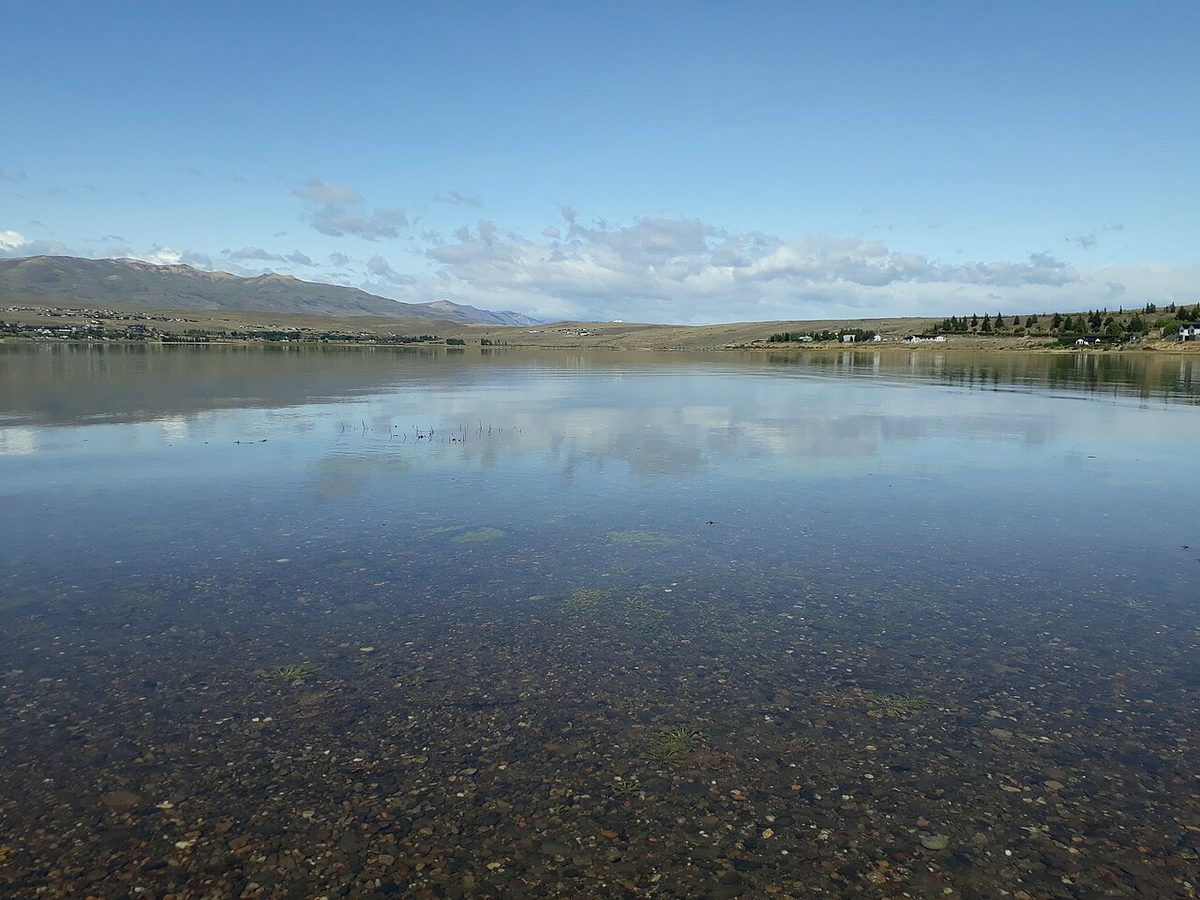
Fig. 4 · Photo: Fernando de Gorocica / CC BY-SA 4.0 via Wikimedia Commons
Timing, frequency, and which direction to go
A few timing decisions shape this leg more than the choice of operator.
Season changes everything
In the high summer season (roughly November to March) you’ve got the most buses, the latest border hours, and the busiest crossing. Book ahead — Australis flags advance booking as wise in peak months, and popular morning departures fill. In shoulder and winter seasons, the timetable thins out dramatically, sometimes to a bus every few days in your direction, and border hours shorten. The mistake is copying a January plan into July; rebuild it from current schedules.
Does direction matter?
A little, in two ways. First, scenery and seats: travelers report the views are better on the right-hand side of the bus heading south (Calafate to Natales), with the distant ranges of Los Glaciares and Torres del Paine on that side. Book a right-side seat if you can.
Second, logistics. Most people travel El Calafate to Puerto Natales when heading into a Torres del Paine trek, which is the natural flow if you fly into Argentina first. But plenty go the other way, finishing in Calafate to catch a flight home from its better-connected airport. Either works. What you should not do is schedule a same-day onward flight or a trek start immediately after the crossing — give the border room to be slow.
How long does it really take, door to door?
Plan a half-day, gone. Even the “5 hours” figure assumes a smooth border. With terminal check-in, the crossing, and getting from a terminal to your accommodation at the other end, this realistically eats most of a travel day. That’s not a complaint — it’s how you should budget it. Don’t stack anything important on the same afternoon.
How this leg fits a classic Patagonia itinerary
Here’s the good news: this crossing exists precisely because it connects the two greatest hits of southern Patagonia, so it slots in cleanly.
The canonical southern route runs something like: fly into El Calafate, see the Perito Moreno Glacier and maybe day-trip or overnight to El Chaltén for Fitz Roy, then take this crossing west to Puerto Natales and into Torres del Paine for the W Trek or day hikes — or run it in reverse and fly out of Calafate at the end. The Torres del Paine trip planner and our piece on how to get to Torres del Paine handle the Chilean side from here.
A couple of planning notes. If your route also touches Punta Arenas (Chile’s bigger southern airport gateway), the standard hop is the transport guide between the two towns bus, a separate and very easy leg. And if you’re weighing whether to fly any of these distances instead, the comparison of the main southern hubs guide lays out which gateways actually connect — short version, there’s no quick flight between Natales and Calafate, so this overland crossing is the route.
To see how the whole thing fits together geographically, our Patagonia map is the quickest way to understand why two places so close on paper take half a day and a border to connect.
Fig. 5 · Photo: Fabienkhan / CC BY-SA 2.5 via Wikimedia Commons
Frequently asked questions
How long does the bus from Puerto Natales to El Calafate take?
Around 5 to 6 hours including the Chile-Argentina border crossing. The driving portion is roughly 4 hours, with about an hour at the border in normal conditions — longer in peak summer when several buses and cars cross at once. Operators like Bus-Sur and Turismo Zaahj quote about 5 hours, but treat arrival times as estimates that depend on the border and weather.
Is there a direct bus, and which companies run it?
Yes, the route is direct with no change of bus. The main operators are Bus-Sur, Turismo Zaahj, Cootra, and Marga Taqsa. Departures cluster in the morning with some afternoon services, and frequency ranges from around 3 to 6 buses a day in summer down to just a few days a week in winter. Verify current schedules before booking, as timetables are usually published only a few months ahead.
What is the border crossing between Puerto Natales and El Calafate?
It’s Paso Río Don Guillermo, with the Chilean post at Cerro Castillo and the Argentine post at Cancha Carrera — all names for the same two-stage crossing. It’s open roughly 8 a.m. to 10 p.m. in high season and shorter hours in winter, and it is not a 24-hour border. That’s why buses run mornings and early afternoons. Check official border-status pages close to your travel date.
Can I take a rental car across the border?
Yes, but you must arrange a cross-border permit with the rental company in advance, along with insurance valid in both countries and the vehicle papers. Don’t try to organize it at the border. One-way drop-off in the other country is often restricted or expensive, so confirm that too. Fill the tank in Puerto Natales, as fuel is scarce until well into Argentina.
What can’t I bring across into Chile?
Chile’s SAG biosecurity rules prohibit fresh fruit, vegetables, meat, dairy, honey, seeds, and nuts. Your luggage is X-rayed at Cerro Castillo, and you must complete an online sworn declaration within 48 hours of crossing. Commercially sealed, processed snacks are generally allowed. Declare anything you’re unsure about — undeclared prohibited items can mean a fine.
Which direction should I travel, and where should I sit?
Either direction works. Most people go El Calafate to Puerto Natales heading into Torres del Paine, then often fly home from Calafate later. For the best views heading south, book a seat on the right-hand side of the bus. Avoid scheduling a flight or trek start immediately after the crossing in case the border runs slow.
Is it better to take the bus or drive?
For most travelers the bus wins: it’s the cheapest option, the drivers manage the border, and there’s no permit paperwork or one-way drop-off problem. Drive only if you want flexibility to stop along the way and you’ve arranged the cross-border permit. A private transfer is the comfortable middle ground for groups who want door-to-door service on their own schedule.
Final thoughts
Of all the legs in a southern Patagonia trip, this is one of the most rewarding to get right, because it’s the seam that joins the glaciers of Argentina to the granite towers of Chile. The route itself is straightforward — a long, beautiful drive across the steppe and a remote little border in the middle of a sheep paddock. The only things that genuinely catch people out are the border hours (so travel in the morning), the SAG food rules (so don’t pack an apple), and the assumption that “5 hours” means you can do something else that afternoon (you can’t).
Book the bus unless a car earns its keep at the far end. Choose a morning departure. Keep your passport and your patience handy at Cerro Castillo. And treat every time and price here as a starting point to confirm — this is a cross-border route in two currencies, and the details move. Do that, and you’ll cross between two of the best places in Patagonia without losing the trip to logistics.