Plan Punta Arenas to Puerto Natales: buses, direct airport transfers, car, travel time, terminal logistics, and the onward connection to Torres del Paine.
By Patagonia Tourism Guide · First published 23 Sep 2026 · Updated 27 Sep 2026
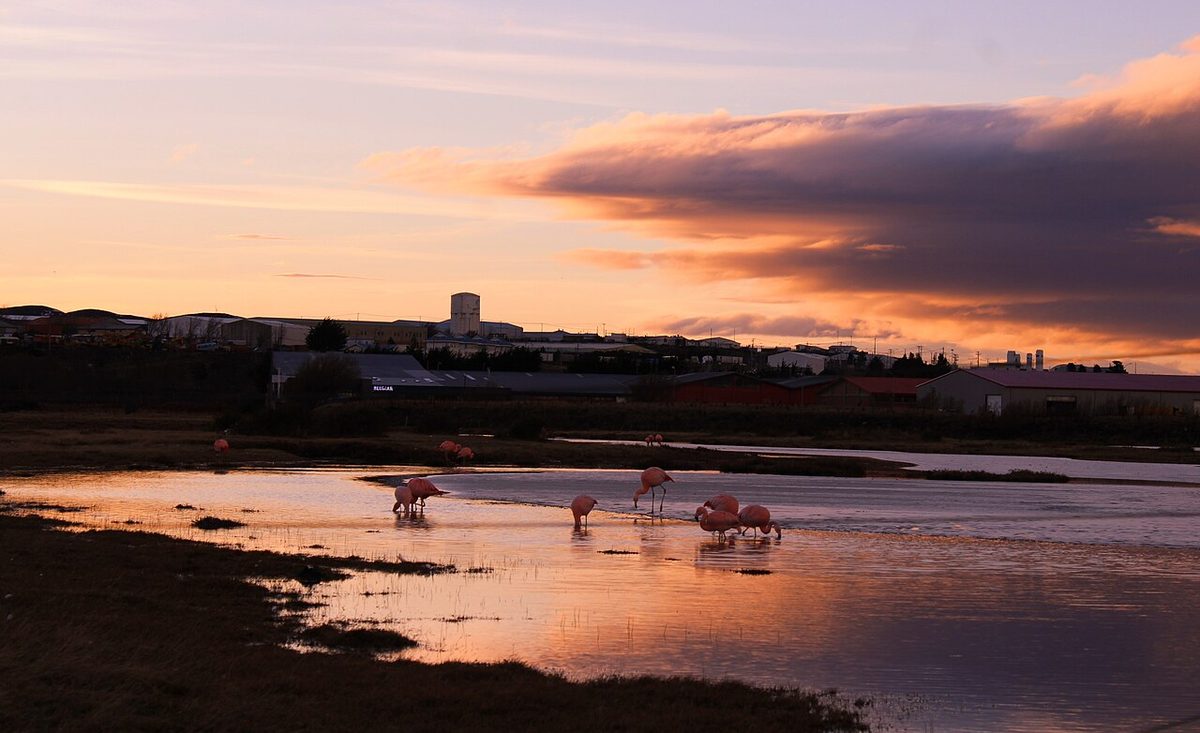
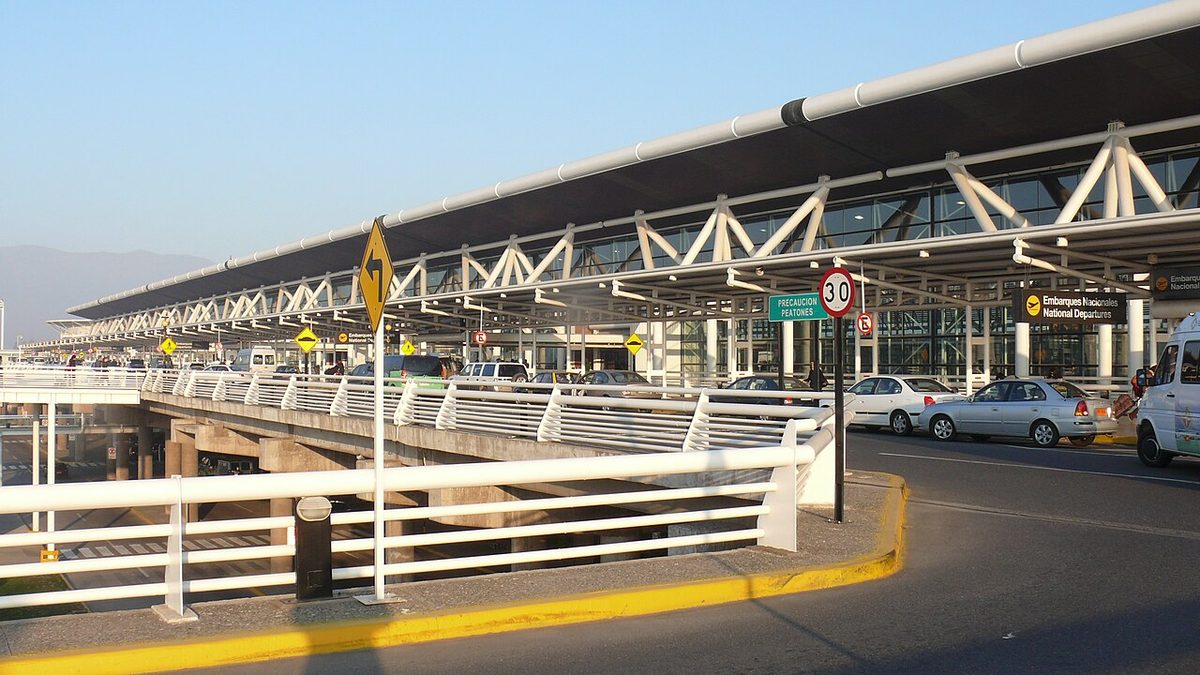
0 — 2 km Fig. 1 · Punta Arenas waterfront on the Strait of Magellan, the southern gateway for the Punta Arenas to Puerto Natales route · Photo: Rachyr / CC0 via Wikimedia Commons
The first time I made the trip from Punta Arenas to Puerto Natales I overthought it for weeks, then did the whole thing in an afternoon for the price of a sandwich back home. I flew into Punta Arenas, walked out of the terminal into that flat, hard Patagonian light, found my bus, and three hours later I was watching the Última Esperanza mountains come up over the water as we rolled into Puerto Natales. No drama. No border. No special skill required. If you are nervous about this leg, let me take the worry off the table now.
Here is the short version. Getting from Punta Arenas to Puerto Natales is one of the easiest moves in all of Patagonia: a paved 3-hour bus ride of around 250 km, with frequent daily departures from companies like Buses Fernández, Bus Sur, and Buses Pacheco for roughly USD 11 to 13 one way. Many buses stop at Punta Arenas airport (PUQ), so you can go straight from your flight to Natales without entering the city. Always verify current schedules and prices.
This guide is for the traveler heading to Torres del Paine or the wider south of Chilean Patagonia, who has landed (or is about to land) in Punta Arenas and now wants a clear, honest plan for the next leg. I’ll cover the bus in detail, the direct airport transfer, renting a car, the slightly confusing terminal logistics, and how to keep moving onward into the national park. I hedge every price and schedule on purpose, because operators tweak times by season and the exchange rate moves; treat my numbers as a pattern and reconfirm before you pay. For the big-picture version of all this, our how to get to Patagonia pillar zooms out to the whole region.
One thing to settle up front: this is not a border crossing. Punta Arenas and Puerto Natales are both in Chile, both in the Magallanes region, connected by a single good road (Ruta 9). Nobody checks your passport between them. If you are coming the other way, from El Calafate in Argentina, that is a border day and a different animal entirely, covered in our Chile-Argentina border crossing guide. But Punta Arenas to Natales is pure domestic Chile, which is exactly why it’s so painless.
Punta Arenas to Puerto Natales at a glance
Before the detail, here’s the whole decision on one screen. Most people should just take the bus, but it helps to see the trade-offs side by side. Costs are rough bands and schedules shift with the season, so confirm current figures with the operator before booking.
Option
Typical time
Cost band (one way)
Notes
Scheduled bus (Fernández, Bus Sur, Pacheco)
~3 to 3h15m
~USD 11–13
Frequent, paved, easy; the default choice
Bus direct from PUQ airport
~2h45m–4h
~USD 11–15
Skip Punta Arenas city entirely; verify the bus stops at the airport
Private transfer (airport or hotel to door)
~2h30m–3h
Premium (per vehicle)
Comfortable, flexible, good for groups/luggage; book ahead
Rental car
~3h driving
Daily rate + fuel
Best if you want Torres del Paine day trips; useless if you’ll trek and park it
Shared van / minivan
~3h
~USD 11–20
Door pickups sometimes available; less frequent than buses
Swipe to see all columns
Table 1
A few honest notes on that grid. The single fastest door-to-door option is a private transfer straight from the airport, because it skips the detour into central Punta Arenas and any wait at the terminal. The cheapest and most flexible is the scheduled bus, which is what the overwhelming majority of travelers take and what I’d recommend unless you have a specific reason not to. The rental car only earns its keep if you plan to use it inside or around Torres del Paine; if you’re doing the W Trek or O Circuit, a car just sits in a lot in Natales while you walk.
If you remember one thing, remember this: the bus is the right answer for most people, and it’s so frequent that you don’t need to stress about catching one exact departure.
Punta Arenas to Puerto Natales by bus
The bus is the backbone of this route, and Chile makes it genuinely simple. As the Australis Patagonia blog notes, buses in Chile are very straightforward compared with much of South America, and this corridor is among the most reliable in the country. Several companies run it, the road is fully paved, and the trip takes around 3 hours, sometimes a touch over three depending on stops.
The distance is roughly 250 km (about 155 miles), almost all of it across open Patagonian steppe. Don’t expect dramatic scenery for most of the ride. You get coirón grasslands, the odd lagoon, sheep, guanacos if you’re lucky, big skies, and serious wind. The payoff comes near the end, when the snow-capped peaks of the Última Esperanza (“Last Hope”) region rise ahead and the road drops toward the fjord at Puerto Natales. That last stretch is lovely. The middle two hours are a chance to nap.
The main bus companies
Three operators have run this route reliably for years. The schedules below are illustrative of how the day is shaped, not a live timetable; treat them as a pattern and check the current grid when you book.
Buses Fernández — the workhorse, with the most departures, historically running something like hourly or close to it across the day (roughly 7:00 a.m. through 9:00 p.m. in peak season). One of the longest-established names on the route. Fares have sat around CLP 7,000 (roughly USD 11) one way.
Bus Sur — multiple daily departures, comfortable coaches, and useful onward connections (they also run Natales–Torres del Paine and the cross-border service to El Calafate). Per TorresDelPaine.com’s Bus Sur route page, high season (September to April) sees around eleven daily departures, dropping to roughly seven in winter (May to August).
Buses Pacheco — fewer departures (a couple of times a day historically), but another solid option, especially if their timing fits your flight.
Across all three, Rome2Rio and Busbud both list the average ride at a little over three hours and fares starting around USD 9 to 13, which matches what I’ve paid. Between the three companies you’re rarely looking at more than a couple of hours’ wait for the next bus in season.
What the bus is actually like
These are proper long-distance coaches, not cramped minibuses. Expect heating (you’ll want it), reasonably reclining seats, a toilet onboard, large luggage holds underneath, and on some services USB ports and WiFi. Bus Sur’s coaches, per their route page, include heating, sanitized restrooms, semi-reclining seats, USB charging, and big luggage compartments. Your trekking backpack is no problem; it goes in the hold.
The ride is smooth because the road is paved the whole way. I’ve done it half-asleep, I’ve done it watching the steppe roll past, and I’ve done it chatting with other trekkers swapping W Trek notes. It’s an easy, civilized three hours.
You can buy tickets at the company offices in Punta Arenas, online in advance through the operators or resale platforms, or — outside peak weeks — often just turn up. Here’s my honest take on timing:
In high season (roughly December to February, plus the broader September–April window), book ahead, especially if your plans hinge on a specific departure or you’re connecting from a flight. Buses fill, and you don’t want to discover the next seat is three hours away when you’ve got a refugio booking to make in Natales.
In shoulder and low season, you have more slack. Frequencies drop (Bus Sur shifts to about seven departures a day in winter), but demand drops too, so walking up is usually fine.
Either way, build a little buffer if you’re connecting from a flight into PUQ. Flights run late, weather happens, and you don’t want a missed bus turning into a missed first night in the park.
For how this bus fits into the wider Chilean and Argentine network, our overland transport breakdown guide lays out the routes that actually make sense versus the ones that quietly eat a day.
Punta Arenas airport to Puerto Natales: skipping the city
This is the move a lot of first-timers don’t realize they can make, and it saves real time. If your goal is Torres del Paine, you frequently do not need to set foot in Punta Arenas at all. Several buses on this route stop at Presidente Carlos Ibáñez del Campo International Airport (PUQ) on their way north, so you can walk out of arrivals, board, and head straight for Natales.
The airport sits about 20 to 23 km north of central Punta Arenas, already on the road toward Puerto Natales, which is exactly why the airport-stop option works so neatly. Going from PUQ direct, the ride to Natales is commonly quoted at around 2h45m to 4 hours depending on the source and whether the service runs nonstop. As the Australis blog puts it plainly: if you’re going directly to Puerto Natales from the airport, it may not be necessary to travel into Punta Arenas, because some buses stop at the airport en route — but you should confirm this when you book your ticket. That caveat matters. Not every departure calls at the airport, so verify it for your specific bus.
Your realistic options from PUQ:
Direct bus from the airport — Bus Sur and others run airport-stop services; TorresDelPaine.com’s airport route page describes a Bus Sur service covering the roughly 250 km in about 3.5 to 4 hours. Cheapest way to skip the city.
Private transfer, airport to your door in Natales — the most comfortable and flexible, typically advertised at around 2h30m to 3 hours to your accommodation. Worth it for groups, families with luggage, or anyone arriving tired. Book in advance.
Taxi/transfer into Punta Arenas first, then a bus — only makes sense if you actually want to spend time in Punta Arenas (it’s a worthwhile city, with Isla Magdalena penguins nearby) or your timing doesn’t line up with an airport-stop bus.
If you want the full breakdown of every regional airport and how they connect, our guide to Patagonia’s airports guide covers PUQ, Puerto Natales’ own small airport, and the rest. And if you’re flying down from the capital first, the Santiago to Patagonia guide covers that leg — typically a flight of around three and a half hours from Santiago to Punta Arenas, often on LATAM or Sky.
Short answer: probably not just for this leg, but maybe for the bigger trip. The drive itself is easy — Ruta 9 is paved, well-signed, and direct, about 3 hours of straightforward driving. The question isn’t whether you can drive it (you easily can), it’s whether a car improves your whole trip.
A rental car is worth it if:
You plan to explore Torres del Paine independently, doing day hikes from different sectors, chasing light for photos, or staying at scattered lodges. A car turns the park from a fixed-schedule bus experience into a flexible one.
You’re a family or small group with luggage and value door-to-door freedom over bus timetables.
You want to stop along the way — at the Mylodon Cave (Cueva del Milodón) just outside Natales, for instance.
A rental car is not worth it if:
You’re doing a multi-day trek (the W or O) and the car would just sit parked in Natales for four or five days while you walk point-to-point.
You’re nervous about Patagonian wind, which is real and can shove a high-sided vehicle around.
You only need to get from A to B once, in which case the bus is cheaper and stress-free.
If you do rent, fill up in Punta Arenas or Natales (fuel is sparse out on the steppe), don’t trust map drive times blindly in high wind, and confirm exactly what the rental covers. Our Patagonia rental car guide goes deep on the gravel, wind, fuel, and paperwork realities — and crucially on cross-border permits if you later plan to drive into Argentina, which you must arrange in advance, never at the border.
Terminal logistics: the one quirk to know
Here’s the single thing that trips people up, so let me be clear about it. Punta Arenas does not have one central bus terminal. Instead, each company operates from its own office in town, and you board at whichever company you’ve booked. As the Australis blog warns directly: with no centralized bus terminal in Punta Arenas, to board you must go directly to the office of the transport company you’re using. The offices cluster around the central area (several are on or near Avenida Colón), but they are not all in one building.
What this means in practice:
Know which company you’re traveling with and where its office is before your departure day. Don’t assume there’s a single station you can wander into.
If you’re connecting from PUQ, the airport-stop option sidesteps this entirely — you board at the airport, not at a city office.
Give yourself a few extra minutes to find the right office, especially with luggage.
Puerto Natales, by contrast, has a proper central bus terminal — the Terminal Rodoviario, on Avenida España (around #1455). This is where your bus arrives and, conveniently, where you’ll catch the onward bus into Torres del Paine. Having everything in one building in Natales makes the next step easy.
From the Rodoviario, central Puerto Natales is small and walkable, and most accommodation is a short walk or cheap taxi away. This is the town where you’ll sort out the rest of your park logistics, which our rundown of natales hostels and gear rental covers in full — gear rental, food shopping, briefings, and where to sleep.
For most people on this route, Puerto Natales is a means to an end, and the end is Torres del Paine. The good news: the connection is well-organized, and it runs from the same Terminal Rodoviario your Punta Arenas bus drops you at.
Buses from Natales into the park are frequent in season, run by operators including Bus Sur, Buses Gómez, and Turismo Zaahj, among others. The park sits roughly 80 to 110 km from Natales depending on which entrance, and the bus calls at the key stops in sequence:
Laguna Amarga — the main eastern entrance, around 2 hours from Natales, and the drop-off for the Base Torres day hike and the start of the W from the east.
Pudeto — around 3 hours from Natales, where the catamaran crosses Lake Pehoé toward Paine Grande (essential for many W Trek itineraries).
Administración (CONAF) — the park’s administrative center, and a common start/end point.
In high season buses typically run in a morning wave (often the first departures around 6:30 to 7:30 a.m.) and an afternoon wave (commonly early-to-mid afternoon), with return buses timed to match. If you catch an early bus, you can reach Laguna Amarga by mid-morning — enough to start hiking the same day. The schedule thins considerably in winter, so check current times.
A few practical notes for the park leg:
Buy your park entrance ticket in advance online through the official CONAF/Pasoplaza system before you arrive. You generally can’t just pay at the gate anymore, and a missing reservation can stop you boarding or entering. Verify the current process and price close to your travel date.
Match your bus to your itinerary, not the other way round. If your first night is at Paine Grande, you need a bus that connects to the Pudeto catamaran. Plan the lodging, then the transport.
Book trek accommodation first. Refugios and campsites sell out months ahead in summer. Don’t lock buses or flights around a W or O until your nights inside the park exist.
For the full park-access picture, including tours and transfers, see our guide to reaching the park guide, and for the park itself — what to do, how long to stay, when to go — the Torres del Paine planning guide is the place to start. To see how all these towns and routes sit relative to each other, our Patagonia map helps the geography click.
The route runs year-round, but the experience changes with the season, and a little sequencing thought saves a lot of hassle.
High season (roughly December to February): maximum bus frequency, but also maximum demand. Book the Punta Arenas–Natales bus ahead if it’s pegged to a flight, and book your onward park transport and lodging well in advance. Days are long, which gives you room to arrive and still move.
Shoulder season (October–November, March–April): my favorite window. Frequencies are still good, crowds thinner, prices often softer. The September–April “high season” timetable on most operators still applies through much of this, so you keep plenty of departure choice.
Winter (May–August): the route still runs, but frequencies drop noticeably (Bus Sur, for example, to around seven departures a day), some park services scale back, and weather can disrupt the onward leg into Torres del Paine. Verify everything — buses, park access, lodging — against current operating information. Never copy a January plan into July.
On sequencing, my rules of thumb:
Don’t schedule the long onward leg the instant you land. If your flight gets into PUQ in the afternoon, it’s often calmer to take a bus to Natales, sleep there, and head into the park fresh the next morning rather than racing a same-day connection.
Give the park leg a buffer. Wind and weather can scrub or delay things in Torres del Paine far more than on the paved Punta Arenas–Natales road.
Build in a Natales night anyway. You’ll want it for gear, food, and a proper briefing before a trek. It’s not wasted time; it’s the setup that makes the trek work.
If you’re piecing together the whole southern circuit, the onward hop from Natales toward Argentina is its own leg — our Puerto Natales to El Calafate guide covers that border-crossing bus, typically around five hours including immigration.
Final thoughts
I’ll be honest: of all the connections in Patagonia, this is the one I worry about least. The Punta Arenas to Puerto Natales leg is paved, frequent, cheap, and genuinely hard to get wrong. Take a bus, sit back for three hours of steppe, and step off in the gateway town for Torres del Paine. The only quirk worth remembering is that Punta Arenas has no single terminal — you board at your company’s office, or better yet, at the airport if your bus stops there.
Everything else is forgiving. The buses run often enough that a missed one isn’t a disaster. The road doesn’t care about the weather the way the mountains do. And the onward connection into the park leaves from one tidy terminal in Natales. Spend your planning energy on the things that actually need it — your park reservations, your trek nights, your weather buffer — and let this leg be the easy part it is.
Just do me the favor I keep insisting on: reconfirm current schedules, fares, and the park entrance process before you travel. Operators adjust seasonally, prices drift with the exchange rate, and the park’s ticketing rules have changed before. A two-minute check beats a bad surprise at the office door.
Frequently asked questions
How long is the bus from Punta Arenas to Puerto Natales?
The bus takes around 3 hours, sometimes a little over three depending on stops, covering roughly 250 km on a fully paved road. A direct service from Punta Arenas airport is often quoted at around 2h45m to 4 hours. Verify the current schedule with your operator, as times shift slightly by season.
How much does the Punta Arenas to Puerto Natales bus cost?
Fares are typically around USD 11 to 13 one way (roughly CLP 7,000–7,600), with some listings starting near USD 9. Prices vary by company, season, and the exchange rate, so treat any figure as approximate and confirm the current price when you book.
Can I go directly from Punta Arenas airport to Puerto Natales?
Yes. Several buses, including Bus Sur services, stop at Punta Arenas airport (PUQ) on their way north, so you can skip the city entirely. Private transfers also run airport-to-door in about 2h30m to 3 hours. Confirm that your specific bus actually stops at the airport when you book, as not every departure does.
Which bus company is best from Punta Arenas to Puerto Natales?
Buses Fernández, Bus Sur, and Buses Pacheco all run the route reliably. Buses Fernández historically has the most frequent departures; Bus Sur offers comfortable coaches and useful onward connections to Torres del Paine and El Calafate. Pick whichever timing best fits your flight and onward plans.
Do I need to book the bus in advance?
In high season (roughly December to February, and across the September–April window), booking ahead is wise, especially if the bus connects from a flight or to a trek booking. In shoulder and low season, frequencies drop but so does demand, and walking up is usually fine. When in doubt, book ahead.
Is there a bus terminal in Punta Arenas?
No single central terminal. Each company operates from its own office in town, often clustered near Avenida Colón, and you board at the one you’ve booked. Puerto Natales, by contrast, has a proper central terminal (the Terminal Rodoviario on Avenida España), where buses arrive and onward park buses depart.
How do I get from Puerto Natales to Torres del Paine?
Frequent buses run from the Terminal Rodoviario in Puerto Natales into the park, stopping at Laguna Amarga (around 2 hours) and Pudeto (around 3 hours). They run in morning and afternoon waves in season. Buy your park entrance ticket online in advance, and match your bus to your first night’s lodging inside the park.
[Busbud — Bus Punta Arenas to Puerto Natales](https://www.busbud.
Image Credits
Punta Arenas waterfront on the Strait of Magellan, the southern gateway for the Punta Arenas to Puerto Natales route — Rachyr / CC0 via Wikimedia Commons