Plan Torres del Paine with tickets, Puerto Natales transport, best hikes, W Trek options, where to stay, weather, winter rules, and routes.
By Patagonia Tourism Guide · First published 5 Jun 2026 · Updated 1 Aug 2026
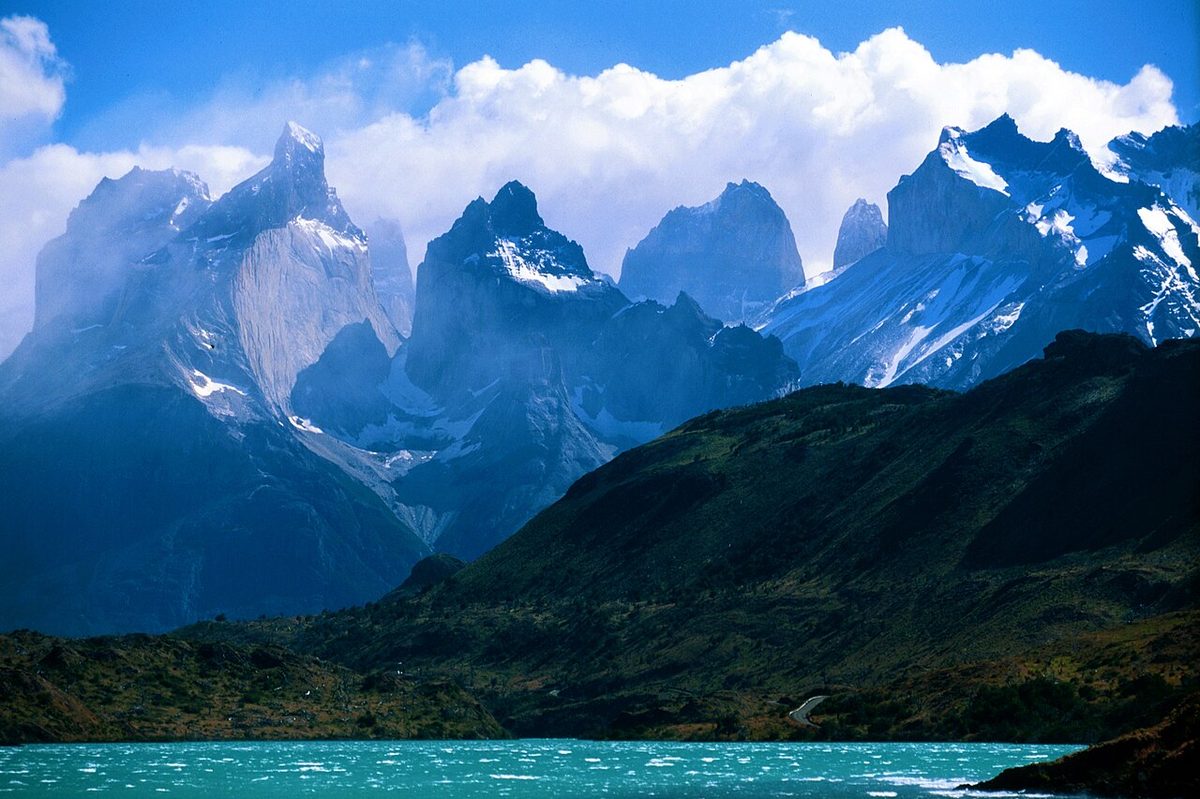
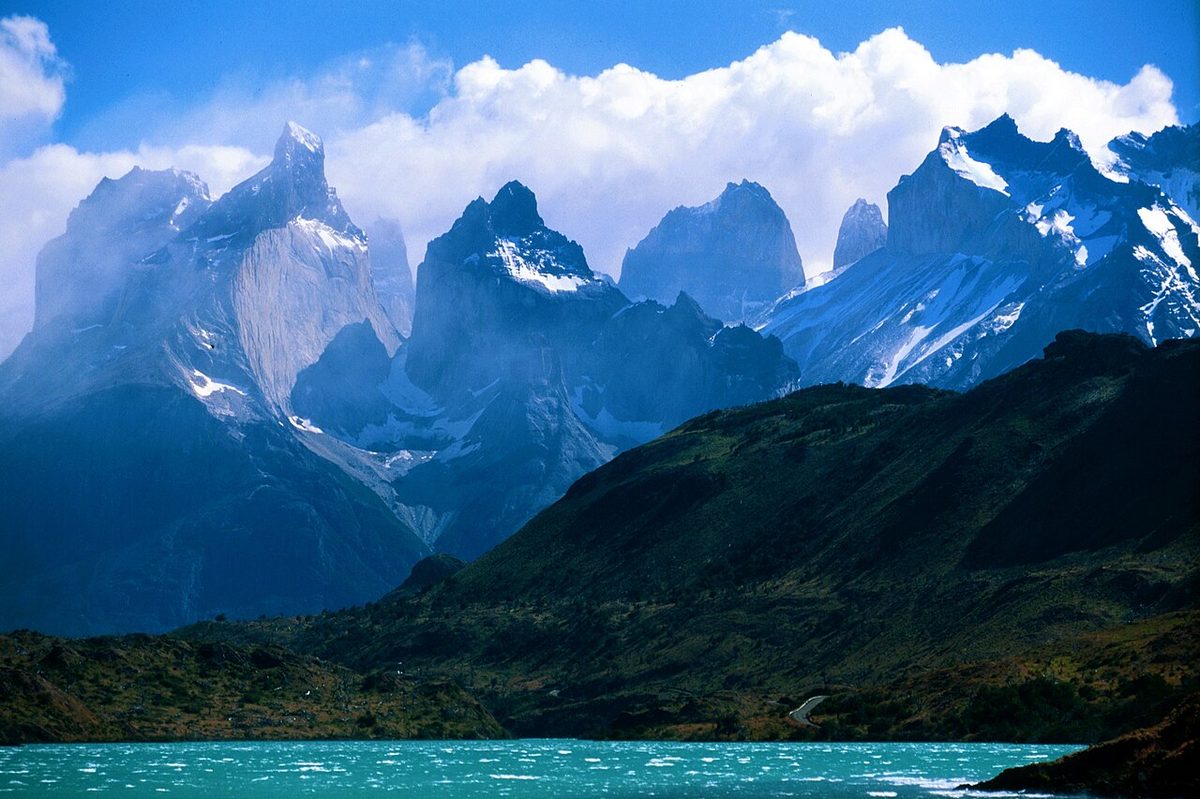
0 — 2 km Fig. 1 · Dramatic mountains in Torres del Paine, Chilean Patagonia · Photo: Winky from Oxford, UK / CC BY 2.0 via Wikimedia Commons
Torres del Paine is the part of Patagonia that people tend to underestimate after seeing one photo.
The photo is usually simple: granite towers, blue lake, maybe a guanaco, maybe a glacier, maybe clouds moving fast enough that the whole mountain looks alive. Then the planning starts, and the simple image turns into questions. Should you stay in Puerto Natales or inside the park? Do you need a ticket in advance? Is one day enough? Can you visit without hiking the W Trek? How hard is Base Torres? Can you drive yourself? What happens in winter? How do you combine Torres del Paine with El Calafate and El Chalten?
This Torres del Paine travel guide answers those practical questions before they turn into expensive booking mistakes.
For most first-time visitors, Torres del Paine is best with 3 to 5 days if you are day hiking or sightseeing, and 5 to 8 days if you are doing the W Trek, O Circuit, or a slower in-park stay. Puerto Natales is the main gateway town. You should buy park tickets through official channels, reserve scarce accommodation early, check current CONAF rules before travel, and choose your visit style before you book transport.
Torres del Paine can be a one-day scenic tour, a self-drive photography route, a day-hiking base, a full W Trek, a serious O Circuit, a wildlife trip, a winter guided adventure, or a luxury lodge stay. Those are all valid trips. They are not the same trip.
Most travelers visit Torres del Paine from Puerto Natales, the closest practical gateway town. You can reach Puerto Natales from Punta Arenas, Santiago seasonally when flights line up, or overland from El Calafate in Argentina. From Puerto Natales, you can visit the park by bus, rental car, private transfer, guided day tour, or trek-specific transport.
The easiest first-time plan is:
Stay 1 night in Puerto Natales before the park.
Spend 2 to 4 days in Torres del Paine.
Return to Puerto Natales for 1 night after the park, especially if you have a flight or border crossing next.
If you are doing the W Trek, reserve refugios or campsites first, then build flights and transfers around those dates. If you are not trekking, decide whether you want a Puerto Natales base, an in-park hotel, a Rio Serrano base, a rental car, or guided day trips.
Use this quick filter:
If you want…
Best Torres del Paine plan
Main caution
One big scenic day
Guided tour or rental-car loop from Puerto Natales
Long day and less trail time
Easy viewpoints and short walks
2 to 3 days, Puerto Natales or Rio Serrano base
Weather can still block views
Day hikes without camping
3 to 5 days, inside park or Puerto Natales
Transport timing matters
Base Torres hike
Full day, best with early start
Winter/shoulder rules and weather
W Trek
4 to 5 trekking days plus Puerto Natales prep
Book refugios/campsites early
O Circuit
7 to 9 trekking days plus buffers
Seasonal access and booking complexity
Wildlife and photography
3 to 5 days, flexible vehicle or guided specialist
Torres del Paine National Park is in Chilean Patagonia, in the Magallanes region of southern Chile. It sits north of Puerto Natales and west of the Argentina-Chile border, close enough to combine with El Calafate and El Chalten but remote enough that you need to plan the logistics carefully.
Chile Travel describes Chilean Patagonia through fjords, forests, ice fields, Punta Arenas, Puerto Williams, the Carretera Austral, and Torres del Paine. Torres del Paine is the most famous national park in that wider region, and for many travelers it is the main reason to cross into Chilean Patagonia at all.
The nearest useful town is Puerto Natales. Chile Travel’s Puerto Natales page positions the city as the gateway for Torres del Paine. In practice, that means Puerto Natales is where many travelers sleep before and after the park, buy food, rent gear, organize buses, meet guides, and recover from treks.
The nearest larger city and airport hub is Punta Arenas. Some travelers fly to Punta Arenas, take a bus or transfer to Puerto Natales, and then continue to the park. Some travelers cross from El Calafate in Argentina, especially on a classic southern Patagonia itinerary that includes Perito Moreno Glacier, El Chalten, and Torres del Paine.
That geography matters because Torres del Paine is not a simple “arrive in the city and walk to the trailhead” destination. The park is a destination inside a destination. You plan the gateway first, then the park.
How Many Days Do You Need in Torres del Paine?
You can visit Torres del Paine in one day. You need more than one day to feel like you actually visited it.
Here is the realistic breakdown.
Time in/around the park
Best for
What it feels like
1 day
Scenic overview from Puerto Natales
Good if time is tight, but rushed
2 days
One big hike plus one scenic day
A strong short visit
3 days
Best minimum for day hikers
Enough for weather and variety
4 to 5 days
W Trek or deeper day-hike trip
Classic active visit
6 to 8 days
Slower W Trek, O Circuit start, lodge stay, photography
Better buffers
9+ days
O Circuit, wildlife, photography, winter-specific travel
A serious park-focused trip
Swipe to see all columns
Table 2
One Day
One day works if you are already in Puerto Natales and want to see the park without sleeping there. A guided tour or rental-car loop can cover major viewpoints, lakes, waterfalls, and short walks. It is worth doing if the alternative is skipping Torres del Paine entirely.
But one day is not enough for a proper hiking trip. It is also vulnerable to weather. If your one day is cloudy, windy, or wet, you may still have a memorable time, but you will not have the same relationship with the park as someone who had several mornings and evenings inside it.
Two to Three Days
Two to three days is the minimum I like for non-trekking travelers. It gives you time for one major hike, one scenic drive or viewpoint day, and a little flexibility.
With three days, you can base in Puerto Natales and take day trips, stay near Rio Serrano with easier park access, or spend at least part of the time inside the park. If you can afford it, being closer to the park improves the experience because Torres del Paine is especially beautiful early and late, when day tours from town are not always in the right place.
Four to Five Days
Four to five days is the classic W Trek length. It is also a good amount of time for day hikers who do not want to sleep in refugios or campsites. You can hike Base Torres, visit the Grey Glacier area, explore viewpoints, and add a slower day for weather.
If you are deciding between the W Trek and day hiking, read the dedicated Torres del Paine W Trek and O Circuit Guide. The W is famous, but it is not the only good way to visit the park.
Six Days or More
Six or more days make sense if Torres del Paine is the center of your trip. This is where you can slow down, do the W Trek with less stress, attempt the O Circuit in season, stay at a lodge, add photography or wildlife time, or build in real weather buffers.
This is also the amount of time that starts to feel luxurious in Patagonia. Not luxurious because of the hotel, necessarily. Luxurious because you are no longer trying to force every view into one perfect day.
The best time to visit Torres del Paine for most travelers is November through March, with December through February offering the strongest summer access and March offering one of the best crowd-to-weather tradeoffs.
Summer is the easiest season for first-time visitors. Trails, transport, tours, refugios, campsites, and park services are generally at their broadest. Days are long. The W Trek and day hikes are most practical. The downside is demand: lodging, campsites, refugios, buses, rental cars, and guided activities can sell out or become expensive.
March is one of my favorite months for Torres del Paine if you have flexibility. It is cooler, but crowds often ease, the light is beautiful, and the park can feel less pressured than January.
October, November, and April can work for shoulder-season travelers, but you need to check conditions carefully. Trails may be affected by snow, wind, rain, closures, or reduced services.
Winter is possible, but it is not a casual version of summer. The park has seasonal rules, guide requirements, closures, and shorter days. If you want a winter visit, build a winter-specific itinerary and verify official notices before booking.
Torres del Paine Tickets, Rules and Current Park Notices
The park’s entry moved to a route-based system in 2026; for the step-by-step on buying how far in advance to book entry and the current rules, see the dedicated guide.
Do not treat Torres del Paine ticket and access information as evergreen. This is one of the most important parts of the trip to verify close to travel.
Buy or verify your park entrance through official channels before arrival.
Keep your ticket/pass accessible on your phone and consider having an offline copy.
Carry your passport or ID used for the booking.
Check current entry points, opening hours, route status, weather notices, fire rules, drone rules, camping rules, and seasonal restrictions.
If trekking, confirm your refugio/campsite reservations before entering the park.
Current CONAF Notice Checked May 26, 2026
The CONAF page checked on May 26, 2026 included several important winter and shoulder-season notices:
Base Torres required an authorized guide from April 27 through August 30, 2026.
The W mountain circuit was listed as closed during June and July.
Grey and Pehoe lake navigation crossings for visitor route connections were listed as suspended.
The O Circuit was listed as closed until October 31, 2026.
Those dates can change by season. The point is not to memorize them forever. The point is to understand that Torres del Paine access is managed, seasonal, and rule-dependent. If you read a blog post from two years ago and book around it without checking CONAF, you are taking on unnecessary risk.
How to Get to Torres del Paine
For every route and operator in detail, see the full guide on Torres del Paine transport options from Puerto Natales, Punta Arenas and El Calafate.
The main ways to get to Torres del Paine are through Puerto Natales, Punta Arenas, or El Calafate.
Puerto Natales to Torres del Paine
Puerto Natales is the main gateway. This is where most independent travelers start.
From Puerto Natales, you can reach Torres del Paine by:
Public bus in season.
Guided day tour.
Rental car.
Private transfer.
Trek-specific transfer arranged around refugio/campsite bookings.
Chile Travel’s W Trek guide describes Puerto Natales as the starting point and says the bus trip to Laguna Amarga takes about 2 hours. That timing is a useful baseline, but the exact route, gate, weather, road conditions, and transfers can change the day.
Public buses are best for trekkers and budget travelers using common entry points. Rental cars are best for scenic flexibility, photographers, non-hikers, families, and travelers staying outside the main bus rhythm. Guided tours are best for one-day visitors or anyone who wants the logistics removed.
Punta Arenas to Torres del Paine
Punta Arenas is a larger regional gateway with more flight options than Puerto Natales in many seasons. The usual route is:
Punta Arenas -> Puerto Natales -> Torres del Paine
Some tours or transfers may connect Punta Arenas directly with park areas, but most independent travelers should think of Punta Arenas as the flight gateway and Puerto Natales as the park gateway.
This matters for itineraries. If your flight lands in Punta Arenas late in the day, do not assume you will be hiking in Torres del Paine the next morning without checking bus and transfer timing. Build a night in Puerto Natales when needed.
El Calafate to Torres del Paine
El Calafate in Argentina is the most common cross-border pairing. A classic route is:
El Calafate -> El Chalten -> El Calafate or direct connection -> Puerto Natales -> Torres del Paine
This works well in a 10 to 14 day southern Patagonia itinerary. Visit Argentina notes that El Calafate has its own airport and is a gateway to Perito Moreno Glacier. That makes it a natural partner for Torres del Paine.
The important detail is that crossing from Argentina to Chile is not just a scenic bus ride. It is an international border crossing. Schedules, documents, luggage rules, weather, and seasonal frequency matter. Do not put a major park booking immediately after a fragile same-day connection unless you have verified the route.
Where you stay changes the whole Torres del Paine trip.
There are four main strategies:
Base
Best for
Pros
Cons
Puerto Natales
Budget, logistics, food, gear rental, day tours
Most services and accommodation choice
Long park day trips
Inside the park
Hikers, photographers, lodge trips, early starts
Best location and atmosphere
Expensive, scarce, must book early
Rio Serrano / Serrano area
Scenic comfort near park edge
Good compromise between access and lodging
Still needs transport planning
Refugios/campsites
W Trek, O Circuit, trekking routes
Necessary for multi-day treks
Fixed dates, limited capacity, rules
Swipe to see all columns
Table 3
Puerto Natales
Puerto Natales is the practical base. It has hotels, hostels, restaurants, grocery stores, gear rental, tour agencies, bus offices, and the tired energy of a town where half the people are either about to hike or just finished.
Stay in Puerto Natales if you want:
Lower costs than in-park hotels.
More restaurant and lodging options.
Easier access to buses and tours.
A place to prepare for the W Trek.
A recovery night after the park.
The downside is distance. Day trips from Puerto Natales are long. If you want sunrise, sunset, quiet trails, and less time in transit, staying closer to or inside the park is better.
For many travelers, Puerto Natales is where the trip becomes practical: buy food, rent gear, confirm buses, check the weather, and sleep before or after the park.
Inside the Park
Staying inside Torres del Paine gives you the best access. It is also the most competitive and expensive option.
Choose inside-park lodging if:
This is a special trip and location matters.
You want early starts without long transfers.
You are prioritizing photography.
You want guided lodge activities.
You are doing a trek that requires refugios or campsites.
Book early for peak season. In-park lodging is not something I would leave to late improvisation unless you are traveling in a quieter period and have backups.
Rio Serrano and Serrano Area
The Rio Serrano area can be a strong compromise. It is outside or near the park edge depending on the property and route, with scenic views and better access than Puerto Natales for some itineraries. It suits travelers who want comfort and nature without paying for the most central in-park lodge options.
You still need transport. A beautiful hotel in the Serrano area does not automatically solve trailhead logistics.
Refugios and Campsites
Refugios and campsites are the core of W Trek and O Circuit planning. They are not just accommodation. They are route infrastructure.
If you are doing the W or O, book these first. Your trekking dates, direction, transport, meals, packing list, and Puerto Natales nights all depend on them. The W Trek and O Circuit guide should be treated as a separate planning project.
Torres del Paine is not only for multi-day trekkers. The park rewards several travel styles.
See the Towers
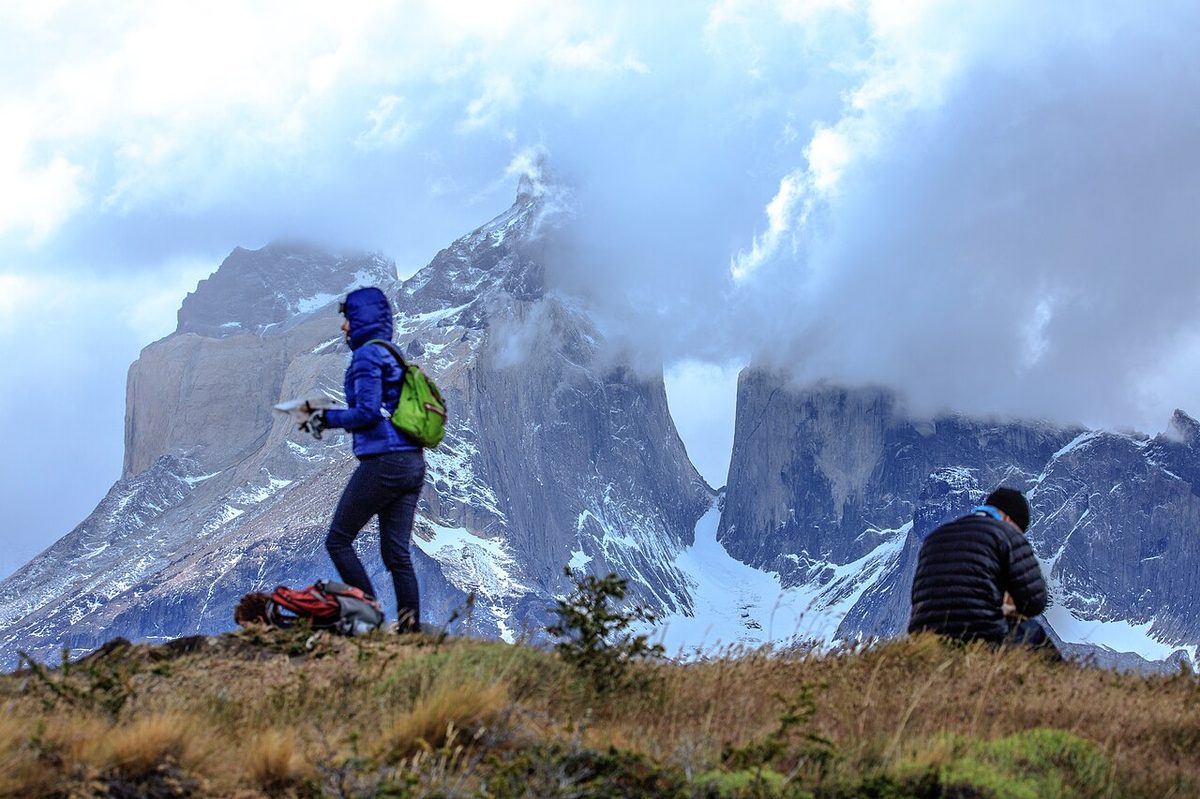
The Torres themselves are the park’s symbolic center. Some people see them from viewpoints, some hike to Base Torres, and some spend days hoping for a clear morning. The towers are famous enough that it is easy to make the whole trip about them, but do not forget that the park has more than one view.
Hike to Base Torres
The Base Torres hike is the most famous day hike in the park. It is long, exposed in places, and weather-dependent. In summer, fit hikers commonly do it independently when conditions and rules allow. In winter and shoulder periods, guide requirements can apply, as the May 26, 2026 CONAF notice showed.
Do not treat Base Torres as a casual stroll. Start early, carry layers, check conditions, and be willing to turn around.
Treat Base Torres as a weather-window hike, not a guaranteed achievement. The viewpoint is famous, but a safe turnaround is still a successful decision.
Drive or Tour the Viewpoints
If you do not want a hard hike, Torres del Paine can still be spectacular. Scenic drives and tours can include lake viewpoints, waterfalls, guanaco areas, views toward the Paine Massif, and short walks.
This is the best version for many families, photographers, older travelers, mixed-ability groups, or anyone who wants the landscape without committing to a trek.
Visit Salto Grande and Mirador Cuernos
Salto Grande and Mirador Cuernos are among the most useful short-walk areas for non-trekkers and day visitors. They give a strong scenic payoff without requiring a full trekking day. Wind can be serious here, so do not let the short distance fool you into dressing lightly.
These shorter stops are worth keeping in the plan even if you are fit enough for harder hikes, because they give you useful options when wind, clouds, or timing change the day.
Explore the Grey Glacier Area
The Grey sector gives access to glacier views, lake scenery, boat trips when operating, kayaking in some guided contexts, and W Trek connections. It is one of the best parts of the park for travelers who want ice without doing the full W.
Boat and lake operations are weather and season dependent. Check current status before building a route around a crossing.
Watch Wildlife
Torres del Paine is one of the best places in Patagonia to see guanacos, condors, foxes, rheas, and, with patience and expert guidance, pumas. Wildlife is not a guarantee, and it should never become a chase. If animals are a major reason for the trip, use the broader Patagonia wildlife and whale watching guide to compare pumas, whales, penguins, and coastal wildlife before choosing dates.
If puma tracking is a priority, book with a reputable guide who follows ethical distance and park rules. The best wildlife moments often happen slowly and quietly, not from a bus window at full speed.
The best hike in Torres del Paine depends on your fitness, weather, transport, accommodation, and whether you are trekking or day hiking.
Here is the planning-level view:
Hike or route
Best for
Difficulty
Planning note
Base Torres
Iconic towers view
Hard day hike
Check current guide rules and weather
Mirador Cuernos
Short scenic walk
Easy to moderate
Good for non-trekkers
Mirador Condor
Viewpoint near Pehoe area
Moderate short hike
Wind can be intense
Grey Glacier area
Glacier views and W Trek section
Moderate to hard depending route
Boat status matters
French Valley
W Trek hikers and strong day hikers
Hard
Access and transport are key
W Trek
Classic multi-day trek
Moderate to hard
Requires reservations
O Circuit
Longer backcountry circuit
Hard
Seasonal, more remote, reservation-dependent
Swipe to see all columns
Table 4
Base Torres
Base Torres is the hike most people ask about first. It is famous for a reason. The view of the towers above the glacial lake is one of the defining images of Patagonia.
It is also a long day with real weather exposure. If you are staying in Puerto Natales, the logistics are longer. If you are staying inside the park near the trailhead, the day becomes cleaner but usually more expensive.
Use Base Torres as a goal, not a guarantee. If conditions are poor, the smarter choice may be another hike or a scenic route.
The W Trek
The W Trek links several of the park’s signature areas over roughly 4 to 5 days for many travelers. It is popular because it gives a strong multi-day experience without the full length of the O Circuit.
But the W Trek is not just a hiking trail. It is a booking system, a lodging system, a meal plan, a transport plan, and a weather plan. If you want to do it, start with availability. Do not book flights first and hope the refugios fit.
The O Circuit
The O Circuit is longer, more remote, and more demanding. It includes the back side of the massif and requires more days, more commitment, and careful seasonal planning. It is not the default first-time Torres del Paine trip unless you are a strong trekker and want that kind of experience.
Not every Torres del Paine day needs to be heroic. In fact, some of the best days are the ones where you stop trying to prove fitness and simply watch the weather move across the park.
Good lower-effort options can include short walks near waterfalls, lake viewpoints, Mirador Cuernos, and other accessible lookout areas depending on transport and conditions. These are especially useful for families, photographers, and travelers visiting after a hard trek elsewhere in Patagonia.
Use this list as a filter, then choose hikes around the weather and the transport you actually have.
Yes. Torres del Paine without hiking can still be excellent.
You can:
Take a full-day scenic tour from Puerto Natales.
Rent a car and visit viewpoints at your own pace.
Stay at a lodge with guided scenic excursions.
Visit waterfalls and lake viewpoints.
Watch wildlife from roads and safe pullouts.
Take boat trips when operating.
Do short walks instead of full hikes.
Pair the park with Puerto Natales food, fjord views, or nearby day trips.
This matters because many Torres del Paine guides over-center the W Trek. The W is not mandatory. If your knees, schedule, budget, weather, or travel style do not fit a multi-day trek, you can still have a strong park experience.
Use these route shapes as planning models, not rigid scripts.
One Day: Scenic Overview from Puerto Natales
Best for: travelers short on time.
Morning: Leave Puerto Natales early by guided tour or rental car.
Midday: Visit major viewpoints, lakes, waterfalls, and short walks.
Afternoon: Continue scenic loop or add a short trail if weather allows.
Evening: Return to Puerto Natales.
This is a long day, but it is worth doing if your itinerary only has one park day. If you have the choice, add another day.
Two Days: Viewpoints Plus One Hike
Best for: travelers who want more than a tour but not a trek.
Day 1: Scenic drive, Salto Grande, Mirador Cuernos, wildlife areas, lake viewpoints.
Day 2: Base Torres, Grey area, or another major day hike depending on conditions.
This is a strong short route if you sleep near the park or accept long Puerto Natales transfers.
Three Days: Best Short Park Visit
Best for: day hikers and first-time visitors.
Day 1: Scenic route and easy viewpoints.
Day 2: Major hike such as Base Torres if conditions allow.
Day 3: Grey area, Mirador Condor, wildlife, or weather-buffer route.
Three days is the minimum I would choose for a first visit if Torres del Paine is one of the main reasons for the trip.
Five Days: W Trek
Best for: hikers who want the classic multi-day route.
Day 0: Puerto Natales prep night.
Days 1 to 5: W Trek route, direction based on bookings.
Day 6: Puerto Natales recovery or onward transfer.
Do not skip the prep night unless you know exactly what you are doing. It gives you time to buy food, check gear, confirm tickets, and solve small problems before they become trail problems.
Five to Six Days: Day-Hike Version
Best for: travelers who want hiking without refugio/campsite logistics.
Day 1: Arrive Puerto Natales.
Day 2: Scenic tour or self-drive overview.
Day 3: Base Torres or major hike.
Day 4: Grey area or lake/glacier day.
Day 5: Shorter viewpoint hike and wildlife.
Day 6: Return or buffer.
This is one of my favorite ways to visit Torres del Paine if you have the budget for good lodging and transport. It gives you flexibility without tying every night to a trek reservation.
Winter Route
Best for: travelers who understand winter limitations.
A winter route should be guided or built with direct current local information. Focus on scenic areas, weather windows, safe access, lodge-based excursions, photography, and short hikes where permitted. Do not assume summer hiking routes are open.
How to Combine Torres del Paine with Argentina
The classic cross-border Patagonia route is:
El Calafate -> El Chalten -> Puerto Natales -> Torres del Paine
or the reverse.
This works well because El Calafate is the gateway to Perito Moreno Glacier, El Chalten is the gateway to Fitz Roy hiking, and Puerto Natales is the gateway to Torres del Paine. It is the backbone of many 10 to 14 day Patagonia itineraries. Use the El Calafate and Perito Moreno Glacier Guide before deciding whether to keep the glacier stop simple or add boat tours and ice trekking.
Torres del Paine packing is about wind, rain, sun, and decision-making.
Bring:
Windproof and waterproof shell.
Warm mid-layer.
Base layers for hiking.
Hat, gloves, and buff or neck gaiter.
Sunglasses and sunscreen.
Broken-in hiking shoes or boots.
Daypack with rain protection.
Water bottle.
Snacks and lunch for long days.
Offline maps.
Battery pack.
Trekking poles if you like them.
Headlamp if trekking or starting early.
Copies of park ticket, lodging reservations, and ID.
For treks, your list changes depending on whether meals, bedding, tent, or sleeping bag are included. Do not copy a generic packing list without matching it to your booking.
The first mistake is thinking one day is enough because the park looks compact on a map. One day is enough to glimpse it, not to understand it.
The second mistake is booking flights before W Trek accommodation. For trekkers, the beds and campsites define the route.
The third mistake is staying in Puerto Natales without understanding the daily transfer time. Puerto Natales is useful, but it is not inside the park.
The fourth mistake is treating winter like summer. Winter Torres del Paine has different rules, different risks, and different rewards.
The fifth mistake is trying to combine Torres del Paine, El Chalten, Bariloche, Ushuaia, and the Carretera Austral in two weeks. That is not an itinerary. It is a list of regrets with bus tickets.
The sixth mistake is assuming the W Trek is required. It is not. The best Torres del Paine trip is the one that fits your time, fitness, season, and budget.
The seventh mistake is ignoring official sources. Current park notices matter more than a beautiful blog post.
Suggested Internal Reading Path
If Torres del Paine is part of your Patagonia trip, use these guides in order:
If you are pairing Torres del Paine with Argentina, use the El Chalten and Fitz Roy Hiking Guide before deciding how many hiking days to protect on the Fitz Roy side.
You need at least one day for a scenic overview, 2 to 3 days for a better short visit, 4 to 5 days for the W Trek or a strong day-hiking trip, and 7 to 9 days for the O Circuit or a deeper park-focused itinerary.
Is Torres del Paine worth visiting if you do not hike?
Yes. Torres del Paine is worth visiting without major hiking. Scenic drives, guided day tours, lake viewpoints, waterfalls, wildlife watching, short walks, boat trips when operating, and lodge-based excursions can make a strong trip for non-hikers.
Can you visit Torres del Paine as a day trip from Puerto Natales?
Yes, you can visit Torres del Paine as a day trip from Puerto Natales by guided tour, rental car, private transfer, or seasonal bus connections. A day trip is worthwhile if time is limited, but 2 to 3 days is much better.
Do you need a ticket for Torres del Paine?
Yes, Torres del Paine requires a park entrance ticket or pass. Use official sources such as CONAF and Pases Parques, and check current rules before travel. Keep your pass accessible and carry the identification used for booking.
Do you need a guide for Torres del Paine?
You do not always need a guide in Torres del Paine. Many summer day hikes and treks can be done independently by prepared travelers with valid reservations and tickets. Guides may be required in winter or for specific routes and dates, and they are useful for safety, wildlife, logistics, and low-stress trips.
What is the best month to visit Torres del Paine?
The best months for most travelers are December, February, and March. January has excellent access but high demand. November and April can work for shoulder-season travelers, while winter requires a specific plan and current rule checks.
Should I stay in Puerto Natales or inside Torres del Paine?
Stay in Puerto Natales for budget, food, gear rental, buses, and logistics. Stay inside or near the park for better access, early starts, photography, trekking, and a deeper park experience. The best choice depends on budget, transport, and how many days you have.
Is the W Trek necessary?
No. The W Trek is not necessary to enjoy Torres del Paine. It is a great option for hikers who want a multi-day trek, but day hikes, scenic drives, viewpoints, Grey Glacier, and lodge-based excursions can be just as satisfying for the right traveler.
Can you drive in Torres del Paine?
Yes, many travelers visit Torres del Paine by rental car, especially for scenic viewpoints and flexible day trips. Check rental terms, road conditions, fuel planning, insurance, cross-border permissions if coming from Argentina, and current park rules before relying on a car.
How do you combine Torres del Paine with El Calafate and El Chalten?
The classic route is El Calafate, El Chalten, Puerto Natales, and Torres del Paine, or the reverse. It works well in 10 to 14 days, with 14 days giving a much better pace and more weather buffer.
Official Sources and Image License Notes
This article uses official destination and park sources for planning facts:
Images are sourced from Wikimedia Commons under their respective licenses (CC BY, CC BY-SA, or public domain). Each photo links to its source page and author on Wikimedia Commons. Hero image: Winky from Oxford, UK / CC BY 2.0 via Wikimedia Commons.
Also on this pillar — Torres del Paine9 sheets · See all