Torres del Paine in Winter: Rules, Hikes & What’s Open
Torres del Paine winter guide: what's open vs closed, the CONAF guide rules, weather, pumas, what to pack, costs, and who should visit June–August.
By Patagonia Tourism Guide · First published 20 Jul 2026 · Updated 1 Aug 2026
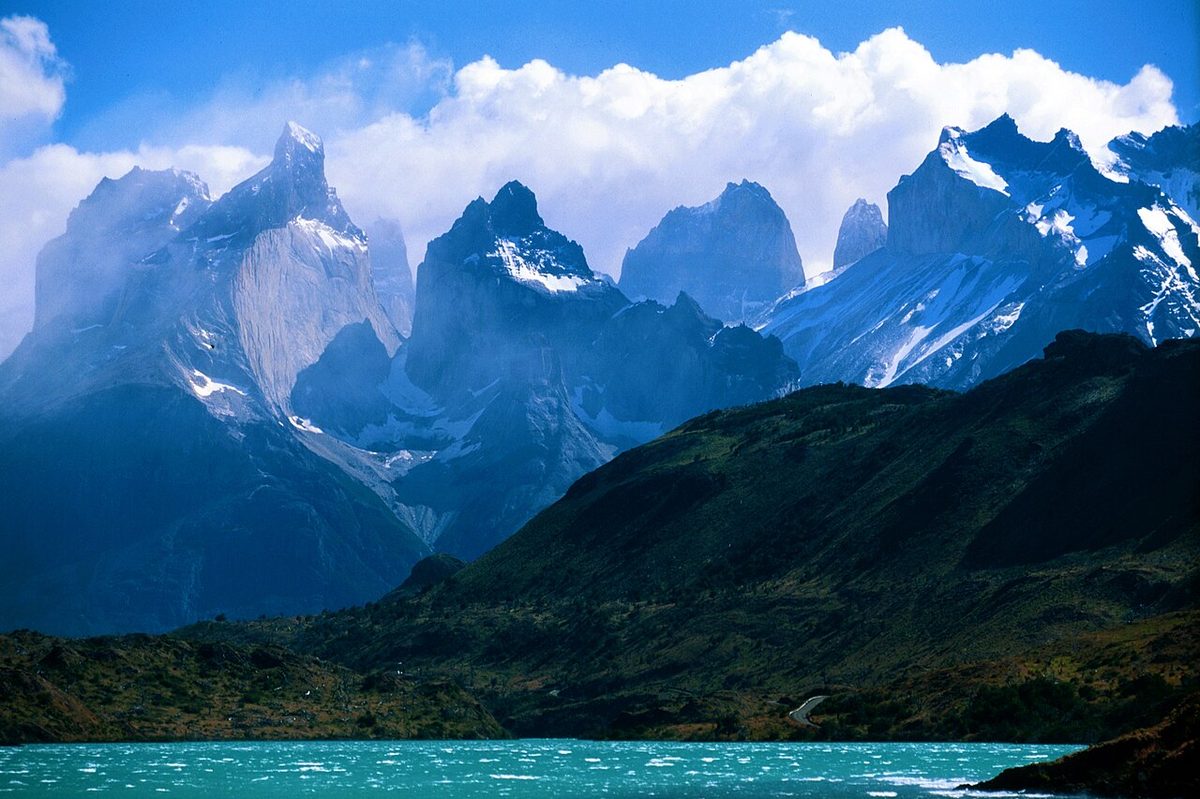
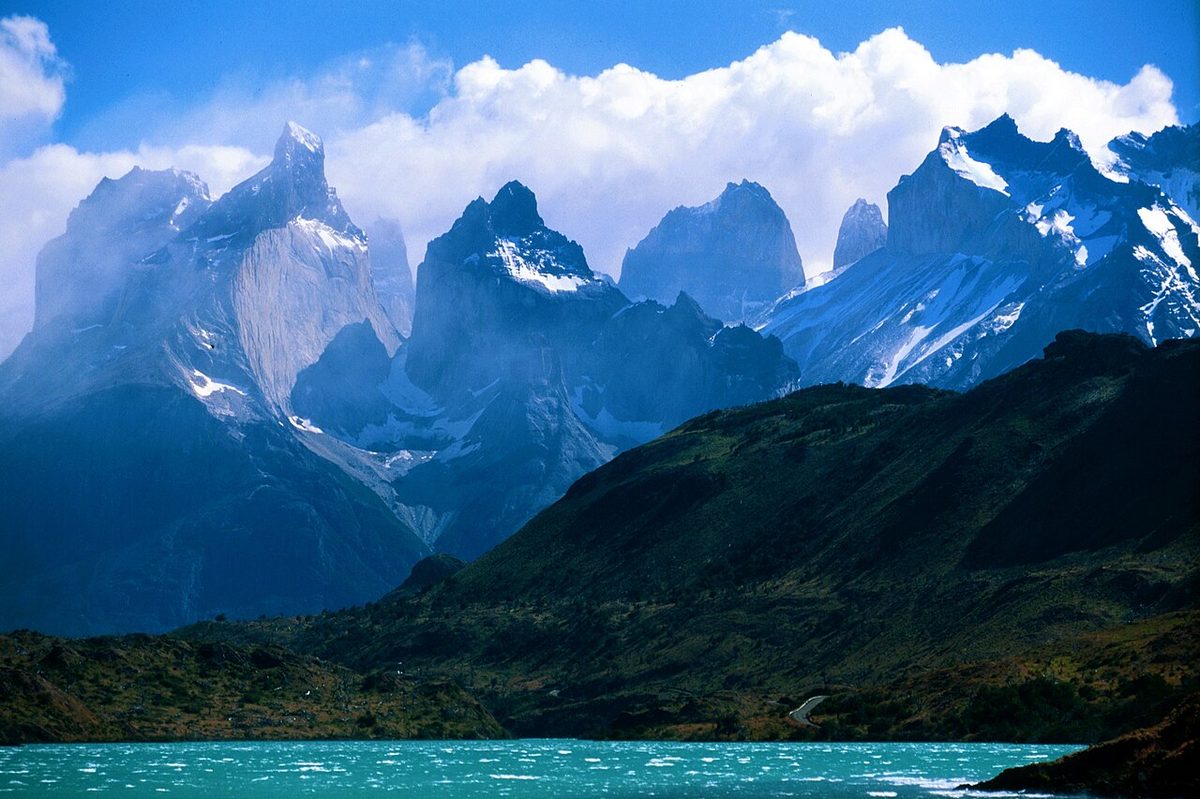
0 — 2 km Fig. 1 · Torres del Paine towers dusted with snow under a clear winter sky · Photo: Diego Delso / CC BY-SA 3.0 via Wikimedia Commons
The first time someone described Torres del Paine in winter to me, they didn’t talk about the cold. They talked about the silence.
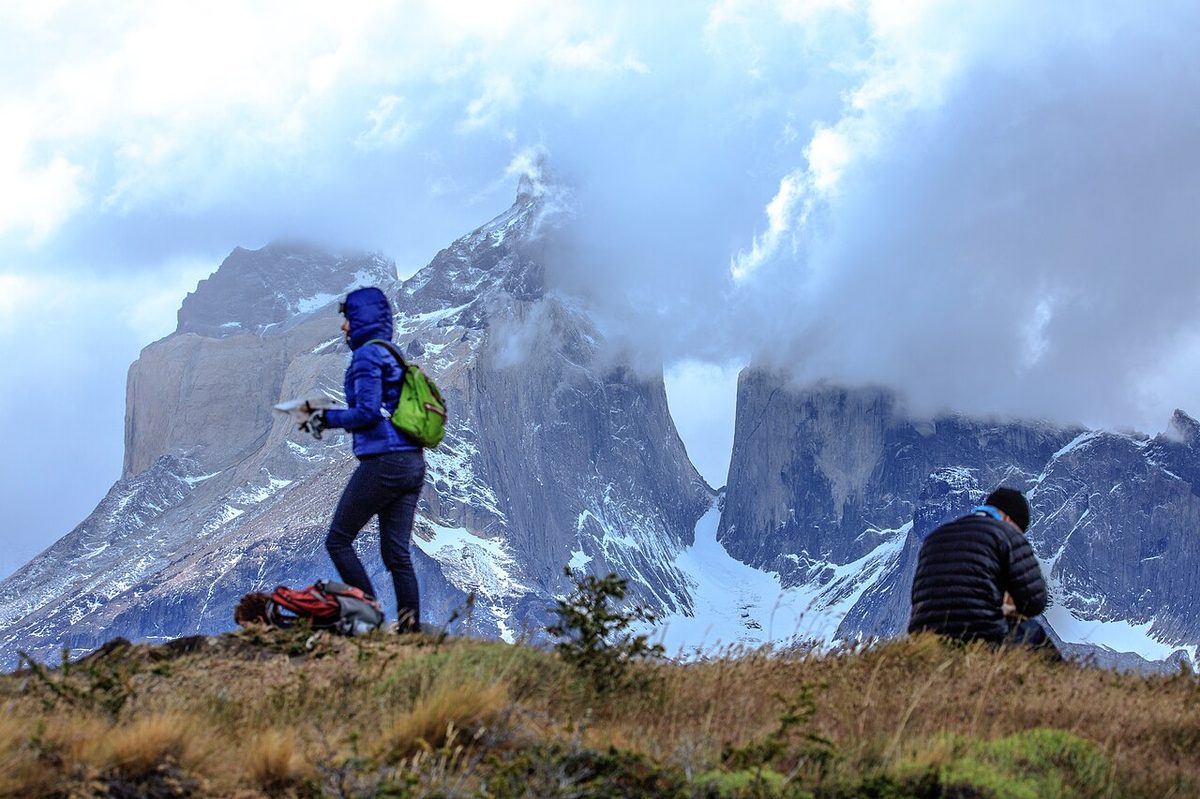
No buses idling at Laguna Amarga, no line of brightly colored daypacks snaking up to the towers, no need to fight for a clear photo at Salto Grande. Just snow on the granite, ice cracking under their boots, and a guide pointing at puma tracks in fresh powder. Torres del Paine winter sounded like a completely different park from the one I knew in January. It is. And it comes with rules you have to take seriously.
Torres del Paine winter (roughly May to September) is quieter and beautiful but restricted. The park stays open, yet a certified guide is required for key hikes like Base Las Torres, the W and O circuits are limited or closed, and days are short. Confirm current CONAF rules before you book.
This guide is for you if you are weighing a winter trip and want the honest version: what you can actually do, what is off-limits, how cold it really gets, what to pack, and whether your specific trip makes sense in June rather than January. If you are still choosing a season at all, I would read this alongside Best Time to Visit Patagonia and the broader Patagonia in winter guide before committing. And if Torres del Paine is your main target, the full rundown of Torres del Paine is the parent hub that ties all of this together.
Torres del Paine in Winter, at a Glance
Here is the quick version of what is open, closed, and rule-bound in winter. Treat it as a planning map, not a guarantee. CONAF adjusts these notices every season, and sometimes mid-season, so the only safe move is to verify current status before you go.
Thing you want to do
Winter status (roughly May–Sep)
Notes / caution
Enter the park
Open year-round
Buy/verify entry via official channels; hours roughly 8am–7pm
Drive the main road yourself
Open
Studded tires or chains advised, 4×4 recommended, no fuel in/near park
Certified guide mandatory roughly late Apr–late Aug per CONAF
French Valley / Grey day-hikes
Guided, conditions permitting
Snow/ice can close upper sections
W Trek (self-guided, multi-day)
Restricted / guided-only; closed Jun–Jul
Run only as guided winter programs; not a DIY trek
O Circuit
Closed
Listed closed until Oct 31, 2026
Lake catamaran crossings (Grey/Pehoé)
Suspended for connections
Grey III runs but does not stop at Refugio Grey
Refugios & campsites
Mostly closed
Paine Grande is the notable refugio that stays open
Hotels / lodges
Mostly closed
Explora is the luxury lodge that stays open all winter
Puma tracking & photography
Excellent
Often the best season; ethical, guided only
Swipe to see all columns
Table 1
If you remember one line from this whole article, make it this: in winter you do not “wing” Torres del Paine. You plan it, you usually hire a guide for the real hikes, and you check the official notices first.
What Torres del Paine Is Really Like in Winter
I want to set expectations honestly, because the photos sell a fantasy and the forums sell a horror story, and the truth sits between them.
The cold is real but manageable. Daytime highs hover around 5°C (41°F), and overnight lows sit around -3°C (27°F), though Patagonia loves to surprise you. People have logged readings as low as -7°C and occasionally well below that, and once in a while a freakishly mild 15°C day. None of that is dangerous if you dress for it. With a proper layering system, the cold becomes a backdrop, not an obstacle. It is the kind of cold you can hike in comfortably as long as you keep moving and keep dry.
The wind, weirdly, is often your friend in winter. Summer in Torres del Paine can mean gusts of 100 to 120 km/h that knock you sideways at a lake viewpoint. Winter tends to be calmer. That calm is what produces the postcard you have seen but rarely get in person: the Cuernos or the towers mirrored in a glassy, wind-still lake. I have heard more than one guide say the stillest, most reflective lake days of their year happen in the cold months.
The single biggest practical difference is daylight. In deep winter you get roughly 8 hours of it. Around the solstice the sun comes up close to 9am and is gone before 6pm. That sounds limiting, and it is, but there is an upside: no brutal pre-dawn alarms. A “sunrise” shoot is a civilized 9am affair.
The trade-off is pace. When you only have eight usable hours, a long hike becomes a brisk one. Winter Torres del Paine quietly demands a decent level of fitness, not because the trails are harder, but because you have to cover them faster to beat the dark. CONAF is strict about this: hiking without daylight is prohibited, and rangers mean it. Plan conservative routes and build in buffer.
Snow: less than you think, where you don’t want it
Here is the counterintuitive part. There is often less snow on the trails than people imagine. Most of the classic routes sit at relatively low altitude, so they tend to stay walkable. The snow that does fall mostly piles up where you would rather it didn’t, on the higher sections of the French Valley and the final approach to the base of the towers. That is exactly why crampons or microspikes come into the conversation, and why guides matter.
Several operators will also tell you, a little sadly, that reliable deep snow is becoming rarer thanks to climate change. So you might get a magical white-blanketed park, or you might get a crisp, frost-rimed, mostly-brown one with snow only on the peaks. Both are beautiful. Neither is guaranteed. Go for the solitude and the light, and treat heavy snow as a bonus rather than a promise.
The CONAF Winter Rules and the Guide Requirement
This is the section to read twice. Torres del Paine is a managed national park, and winter access is the most tightly managed part of the calendar. The rules below come from CONAF’s official Torres del Paine page, checked on June 2, 2026. They will change. Your job is to re-check them.
As of that check, CONAF’s winter notices included:
A certified, authorized guide is mandatory for the Base Las Torres trail, running from April 27 through August 30 inclusive. You cannot legally walk to the base of the towers solo in that window. CONAF publishes the list of authorized guides.
The W mountain circuit is closed during June and July. Outside those two months, the only operational route in the massif is Base Las Torres, and only with an authorized guide.
The O Circuit (Macizo Paine) is closed, with the closure brought forward, listed as shut until October 31, 2026.
Lake navigation crossings for visitor connections on Lago Grey and Lago Pehoé are suspended. The Grey III boat keeps running on Lago Grey but does not stop at Refugio Grey, which breaks the usual trekker connections.
CONAF directs winter visitors to a dedicated winter-conditions regulation (“Reglamento para actividades turísticas en condiciones invernales”) and asks you to download and follow it.
On top of those, expect mandatory trekking poles and crampons to be enforced at park entrances when trail conditions warrant. As a real example of how fluid this is: in the 2025 season, Reserva Las Torres reported that CONAF lifted the guide requirement at the Base Torres viewpoint from September 1, but kept the mandatory poles-and-crampons rule “until further notice.” That is the whole point: a rule can change on a specific date, and even loosen mid-season as conditions ease.
Why the guide rule exists (and why I don’t fight it)
It is tempting to read “guide required” as a money grab. It isn’t. Short daylight, ice on exposed sections, sudden weather, and the genuine risk of getting lost or hurt with help hours away are exactly the conditions that turn a manageable summer hike into a serious winter one. CONAF is blunt that most fatal accidents in the park have happened to people walking alone and leaving the trail. A guide carries the right gear, knows when to put crampons on, knows when to turn around, and keeps you on the marked route. In winter, that is worth the cost.
Self-guided vs guided: the simple rule of thumb
The clean mental model most operators use: you can hike self-guided roughly October through April; from May through September you hire a guide for the real trails. Short, signed walks near the road may not require one, but anything that matters, the towers, the French Valley, the W highlights, is a guided affair in winter. If a DIY trek is the entire reason for your trip, winter is not your season. Read the Base Torres hike guide and the breakdown of every major trail for how those routes work in the warmer months.
What Stays Open and What Closes in Winter
Let me lay out the practical map, because “the park is open” is technically true and also misleading.
What stays open:
The park itself, year-round, with entry through official channels.
The main vehicle road, so you can drive yourself or take a tour through the scenic heart of the park.
Scenic day tours from Puerto Natales (more on those below).
Guided Base Las Torres, in the permitted window.
Guided day-hikes into the French Valley and around the Grey peninsula when conditions allow.
Horse riding with authorized operators.
The Grey III boat on Lago Grey (without the Refugio Grey stop).
Paine Grande, the one refugio that famously keeps its doors open through winter.
What closes or shuts down:
The O Circuit, entirely.
The W as a connected, self-guided multi-day trek (and fully closed in June–July).
The lake catamaran connections that trekkers normally rely on.
The large majority of refugios and campsites, most of which reopen around September or October.
Most hotels and lodges. Explora is the well-known exception that operates all winter.
So the honest summary is: the scenery is fully open, the infrastructure is mostly closed, and the big treks are off the table or guided-only. Puerto Natales remains your reliable base for food, gear rental, transport, and a warm bed before and after. For the logistics of actually getting there in the off-season, see which route into the park to take, and sort your entry through the Torres del Paine tickets guide before you arrive.
Day Hikes and Tours You Can Still Do
Plenty of people assume winter means “look but don’t touch.” Not true. You just do it differently.
The scenic full-day tour
If you want the park without the permit gymnastics, the full-day minibus tour from Puerto Natales is the easy answer, and it is a genuinely good winter experience. Pickups run around 8:00 to 8:30am, and you are back in town by early evening, a little later (around 7:30pm) in the depths of June to August.
A typical loop takes in Cerro Castillo as the gateway, the Lake Sarmiento viewpoint, Laguna Amarga (flamingos plus the towers), then through the Laguna Amarga gate to Lake Nordenskjöld, Salto Grande waterfall, Lake Pehoé, and out to Lago Grey, where you get free time, a beach walk, and, if the wind cooperates, icebergs drifting in from the Grey Glacier. The walking is minimal, just short strolls to viewpoints, so it suits almost any fitness level. Lunch usually isn’t included; bring your own or grab something at the café stop.
If you want to actually hike, winter day-hikes are absolutely possible with a guide. The Base Las Torres day is the headline, a long, demanding push to the granite towers above their glacial lake, made more serious by ice near the top and the short daylight. The French Valley delivers some of the most dramatic winter scenery in the park, with hanging glaciers and the occasional distant avalanche rumbling off the slopes. Guided walks around the Grey sector get you glacier and lake views without committing to a full trek.
Because the refugios between these areas are closed, your winter “trek” often looks different from summer: many days start with a transfer from your hotel or lodge to a trailhead, you hike the highlight, and you come back to a warm bed rather than a dormitory. Some people actually prefer it that way.
Quieter walks and the offbeat routes
One underrated winter perk: guides have time for the less-famous trails because nobody is funneling them onto the busy ones. Lower-elevation routes across the pampas, gentle valley walks, and lookout strolls all become options. I have read first-hand accounts of winter visitors having the entire French Valley to themselves, coming across condors perched on the ground within twenty meters, and walking past thousand-year-old Aonikenk rock paintings on quiet eastern trails. That is the texture of winter that summer simply cannot offer.
The W and O Circuits in Winter
Let me be direct, because this is where people get tripped up.
The O Circuit is closed in winter. Don’t plan around it. It reopens later in spring (the 2026 notice lists it closed until October 31). The back side of the massif is remote, exposed, and not a winter proposition for general visitors.
The W Trek is a different and more nuanced story. As a self-guided, refugio-to-refugio adventure, it is not available in winter, and in June and July the mountain circuit is flat-out closed. But several specialist operators run guided winter W programs that string together the W’s greatest hits, the towers, the French Valley, the Grey area, using lodge or open-refugio bases and trailhead transfers instead of the usual camping chain. You hike the iconic legs with a guide, sleep somewhere warm, and skip the closed connections.
So if your dream is “I want to hike the W in winter,” the realistic version is: a guided winter program covering the W’s best sections, not the classic independent five-day trek. It is a wonderful trip. It is just a different trip, and a pricier one. For how the W and O work in their normal season, lean on the Torres del Paine travel guide, which covers the full trekking picture.
Wildlife and Photography in the Cold Months
This, for me, is the strongest reason to consider winter at all.
Pumas come down
Winter is widely considered one of the best times to see pumas in Torres del Paine, and there is a logical reason. As snow settles on the high ground, guanaco herds, the pumas’ main prey, move below the snowline into more accessible areas, sometimes near park infrastructure. The pumas follow. Their golden coats stand out vividly against snow, and with shorter days they tend to be more active during daylight. Guides also point out that fresh tracks are far easier to read in snow.
I’ll add the same caution I always do: puma tracking should be ethical and guided. Keep your distance, follow your guide, and never let a sighting turn into a chase. The best encounters happen slowly and quietly. If wildlife is the whole point of your trip, it is worth pairing this with the wider wildlife resources in the Torres del Paine travel guide to set realistic expectations.
If you shoot, winter hands you three gifts. First, snow-dusted towers, the Cuernos and the Torres wearing white, lit by low, soft winter sun. Second, calm air, which means the mirror-still lake reflections that summer’s wind almost never allows. Third, empty viewpoints, so you can actually set up a tripod at Salto Grande or Pehoé without a crowd in the frame. Add a 9am sunrise you don’t have to suffer for, and golden light that lingers low across short days, and you have a photographer’s quiet dream. Condors on the ground, foxes against snow, frost on the calafate bushes, it all adds up.
What to Pack for Torres del Paine in Winter
Winter packing is a different discipline from summer packing. The mantra everyone repeats is “layers, then more layers,” and it is correct. Here is what I would not leave town without.
Clothing:
A thermal base layer top and bottom (merino or quality synthetic).
A warm insulating mid-layer (fleece and/or a down or synthetic puffy).
A genuinely waterproof, windproof shell jacket and waterproof over-trousers.
Waterproof, insulated hiking boots, well broken in.
Gaiters for snow and slush.
A warm hat, plus a buff or neck gaiter.
Insulated, waterproof gloves, ideally with a thin liner pair underneath.
Warm socks (wool), with spares kept dry.
Traction and safety gear:
Trekking poles, often mandatory and genuinely useful on ice.
Crampons or microspikes, often mandatory; on guided trips the operator usually supplies them and tells you when to put them on.
A headlamp, because daylight is short and margins are thin.
Hand and toe warmers for stationary moments (puma stakeouts get cold).
The easily forgotten stuff:
Sunglasses and SPF 50, snow glare is brutal even when it is cold.
A thermos of something hot, it transforms a winter lunch stop.
An insulated water bottle so it doesn’t freeze.
A power bank; cold drains phone and camera batteries fast.
Offline maps downloaded in advance.
If you’re driving: studded tires or chains, and a full tank before you reach the park, because there are no fuel stations inside or near it. Drive slowly for ice and for wildlife on the road. For a deeper, all-season kit breakdown, see Patagonia hiking, camping, gear and safety.
Fewer Crowds and Lower Costs
Now the part that genuinely surprises people: winter can be both emptier and cheaper.
In peak summer, Torres del Paine sees hundreds of hikers a day on the popular routes, and lodging, refugios, buses, and rental cars sell out or spike in price. In winter, much of that pressure simply evaporates. With most travelers visiting in spring and summer, you can find yourself nearly alone on a trail, or, as more than one winter visitor has described, effectively the only hikers in the entire park that day. That solitude is the product, not a side effect.
Costs follow. Off-season accommodation in Puerto Natales is typically cheaper, and you are not competing for scarce beds. The honest caveat is that the guiding requirement adds a cost that summer day-hikers can avoid, so a guided winter program is not “budget” in the backpacker sense. But for a comparable level of comfort and access, your money often stretches further in June than in January, and the experience feels more exclusive. If budgeting the whole trip, the season choice is one of your biggest levers, which is again why how Patagonia’s seasons break down is worth reading before you lock dates.
Who Should Go in Winter, and Who Shouldn’t
After all of that, here is my candid filter.
Winter suits you if:
You are a photographer chasing snow, reflections, and empty viewpoints.
You value solitude over convenience and crowds-free trails sound like the dream, not a downside.
You want the best shot at seeing a puma, and you are happy to do it ethically with a guide.
You have already “done” summer Patagonia and want a completely different face of the park.
You are a reasonably fit hiker who is fine hiring a guide and following strict rules.
You want lower lodging costs and a more exclusive feel.
Winter is probably the wrong call if:
You are a first-timer whose heart is set on a self-guided W or O Circuit. That is a summer trip.
You have one short, inflexible window and cannot absorb a weather day.
You are a budget DIY trekker, the guide requirement changes your math.
You need long hiking days and big daily distances.
You are unwilling to follow strict CONAF rules, closures, and gear mandates.
If you read that and felt a pull toward winter anyway, that is usually a good sign. The people who love Torres del Paine in winter tend to be the ones who wanted the quiet version all along.
Torres del Paine Winter FAQ
Is Torres del Paine open in winter?
Yes. Torres del Paine National Park is open year-round, including the winter months of roughly May to September, with official hours around 8am to 7pm. However, “open” does not mean “fully operational.” Many trails require a guide, several routes and lake crossings are closed or suspended, and most refugios and lodges shut for the season. Always check current CONAF notices first.
Can you hike the W Trek in Torres del Paine in winter?
Not as a self-guided trek. The mountain circuit is closed in June and July, and the lake-crossing connections trekkers rely on are suspended. Specialist operators run guided winter W programs that cover the route’s highlights, the towers, French Valley, and Grey area, using lodge bases and trailhead transfers instead of the normal camping chain. Confirm current options with CONAF and your operator.
Do you need a guide to hike Torres del Paine in winter?
For the major trails, yes. CONAF requires a certified guide for Base Las Torres in winter (roughly late April through late August), and the W is guided-only in this period. The simple rule operators use: self-guided is allowed around October to April, and from May to September you hire a guide. Some short, signed walks near the road may be exceptions. Rules change yearly, so verify.
How cold does Torres del Paine get in winter?
Expect daytime highs around 5°C (41°F) and overnight lows around -3°C (27°F). Patagonia can swing further, with readings reported down to -7°C or lower, and the occasional mild day near 15°C. The cold is very manageable with a proper layering system. A bigger factor than temperature is the short daylight, around 8 hours in deep winter, and ice on exposed trail sections.
Can you see pumas in Torres del Paine in winter?
Yes, and winter is often one of the best times. As snow settles on high ground, guanaco herds move to more accessible areas and pumas follow, sometimes near park infrastructure. Their golden coats stand out against snow, fresh tracks are easy to read, and shorter days mean more daytime activity. Puma tracking should always be ethical, guided, and at a respectful distance.
Is there a lot of snow on the trails in winter?
Often less than you would expect. Most classic routes sit at relatively low altitude and tend to stay walkable. The snow that does fall mainly accumulates on the higher sections, like the upper French Valley and the final approach to the towers, which is exactly where crampons or microspikes become necessary. Reliable deep snow is also becoming less common due to climate change.
Do you need crampons in Torres del Paine in winter?
Frequently, yes. Crampons or microspikes are often mandatory and enforced at park entrances when trails are icy, along with trekking poles. On guided trips, the operator usually provides them and shows you when to put them on, typically for icy sections like the towers’ base viewpoint and the French Valley. Because the requirement can change mid-season, confirm the current rule before you travel.
Can you drive yourself in Torres del Paine in winter?
Yes, the main park road stays open and you can drive it or take a tour. But winter driving needs care: studded tires or chains are advised, a 4×4 is recommended, and you must fill your tank before arriving, as there are no fuel stations in or near the park. Drive slowly for ice on the road and for wildlife, and check road conditions before you set out.
Final Thoughts
I will not pretend winter is the easy, default way to see Torres del Paine. It isn’t. The rules are real, the days are short, the big DIY treks are off the table, and you will almost certainly pay for a guide to do the hikes that matter. If you want maximum freedom and the simplest logistics, go in summer and read the Torres del Paine travel guide instead.
But if the idea of an empty French Valley, mirror-still lakes, snow on the towers, and puma tracks in fresh powder makes you lean in, winter might be the most memorable version of this park you could choose. It trades convenience for intimacy. You give up the long days and the open trails, and you get a national park that, on the best days, feels like it belongs only to you and the condors.
Whatever you decide, do the one thing that protects the whole trip: check the current CONAF and Pases Parques notices before you book anything. The towers will still be there. The rules might not be the same as they were last year, or even last month.
Sources
CONAF — Parque Nacional Torres del Paine (official winter notices: Base Torres guide requirement Apr 27–Aug 30, W closed June–July, O closed until Oct 31, 2026, lake crossings suspended, winter-conditions regulation, studded-tire recommendation)
Pases Parques (official park tickets and current visit conditions)