Self-Guided vs Guided W Trek: Cost, Safety and Booking Tradeoffs
A self guided W Trek saves money but you own bookings, transport and weather calls. Compare cost, safety and the guided middle ground before you book.
By Patagonia Tourism Guide · First published 26 Jul 2026 · Updated 1 Aug 2026
0 — 2 km Fig. 1 · A guided group of hikers on the W Trek in Torres del Paine, Chilean Patagonia · Photo: Solange Muñoz / CC BY-SA 3.0 via Wikimedia Commons
The first time I looked at booking the W Trek, I had two browser tabs open: a guided trip that cost more than my flights, and a campsite reservation page in Spanish that kept timing out. That moment is the whole decision in miniature. One option costs money. The other costs your time, your attention, and your willingness to own every detail when the weather turns.
So here is the honest version. A self guided W Trek means you keep the savings and the control, but you also keep the responsibility: every booking, every bus and boat connection, your food, and the call to turn around when Patagonia stops cooperating. A guided W Trek costs much more and buys back logistics, safety support, shoulder-season and winter access, and someone who reads the mountain for you. Neither is braver. They are different trades.
This guide is the comparison I wanted that night: what each path really costs, what you stay on the hook for, when a guide is actually required by park rules, and which choice fits your season, your experience, and your appetite for admin. If you are still deciding between the W and the longer loop, start with the Torres del Paine W Trek and O Circuit guide. If you are weighing the whole park, the Torres del Paine travel guide is the wider map.
Self-Guided vs Package vs Guided at a Glance
There are not two options here. There are three. Most articles pit “do it yourself” against “join a tour” and skip the middle category that solves the real pain point for a lot of travelers: the booking system, not the trail.
Option
What you handle
Cost level
Safety support
Best for
Main tradeoff
Self-guided
Everything: bookings, park pass, transport, food, gear, weather calls
Lowest
You are your own support; rangers and other hikers nearby in season
Independent, experienced hikers who want budget control and flexibility
All the admin and all the decisions are yours
Self-guided package
You hike alone; an operator pre-books beds/camps, transport, catamaran, meals, permits
Middle
Logistics handled, but no guide walking with you
Independent hikers who hate the booking scramble or are short on time
You pay a service premium and lose some cost control
Guided
Almost nothing: the operator runs bookings, transport, meals, pacing, and walks with you
Highest
Certified guide with first-aid training and a radio
First big trek, first solo trip, mixed-experience groups, winter/shoulder dates
Highest cost, fixed group rhythm, less independence
Swipe to see all columns
Table 1
If you read only one thing in this article, read that table twice. The question is rarely “which is best.” It is “how much risk, cost, and admin do I want to carry myself?” Your honest answer points to one of these three.
What a Self Guided W Trek Really Means
People hear “self-guided” and picture route-finding across a trackless wilderness. That is not the W Trek in summer. The trail is well marked, heavily signed, and busy enough that you will rarely be alone. On a clear day on the final climb to the Base Torres viewpoint, you can share the path with hundreds of other hikers. Getting physically lost is not the main risk.
The real work of a self guided W Trek is the system around the walking. When you go self-guided, you personally own:
Every overnight reservation, across more than one operator.
Your park entry ticket and entry rules.
Transport: the bus from Puerto Natales, the shuttle to the trailhead, the catamaran when it runs, and the bus back from a different exit point.
Food: whether you carry it, buy meal packages, or do a hybrid.
Gear: what you bring, rent, or buy.
Weather judgment and the discipline to turn around.
Recovery when a connection is missed or a sector is full.
That list is why “self-guided” is not the same as “easy.” The trail asks for fit legs. The plan asks for patience, attention to detail, and a tolerance for things changing. If you enjoy logistics, this is genuinely satisfying, and you keep a lot of money. If logistics make you anxious, that stress will follow you onto the trail.
One framing I keep coming back to, borrowed from how the parent pillar puts it: in peak season, the trail itself is not the hard navigation problem. The booking and connection system is. Solve the system and the walking is mostly a matter of fitness and weather. For the day-by-day shape of the route once you have committed, the W Trek itinerary guide lays out the standard 4, 5, and 6-day versions.
Who Self-Guided Suits
Self-guided is a strong fit if you have done multi-day hikes before, you read weather and trail signs comfortably, you want to control spending, and you are not rattled by booking across multiple websites. It suits couples and friends who split the planning, and confident solo hikers who like their own pace. It is the budget-friendliest way to walk the W, full stop.
It is a weaker fit if this is your first big trek, if the booking system already feels overwhelming, or if your dates fall in the shoulder or winter window when the rules change. None of that is a character flaw. It is just matching the method to the person.
What a Guided W Trek Buys You
A guided W Trek is expensive, and the easy internet take is that it is therefore unnecessary. That is too glib. You are not only paying someone to point at the trail. You are buying four things that are genuinely hard to assemble yourself.
First, end-to-end logistics. The operator books every night, arranges transport and the catamaran, handles permits, and sorts meals. The fragmented reservation problem simply disappears. For a traveler who is short on time or who finds the booking system baffling, that alone can justify the cost.
Second, safety support. Reputable guides hold wilderness first-aid certification, refresh it regularly, and carry a first-aid kit and a radio. In a park where official rescue can take hours, a trained person beside you who can stabilize a situation and call for help is not a small thing. It matters most in bad weather, on the big climbs, and for hikers with less experience reading their own limits.
Third, access you cannot get alone. In the shoulder and winter season, a certified guide is not a luxury. It is the legal requirement for certain trails, which I cover below. If you want to walk the W outside the main season, guided is often the only compliant way to do it.
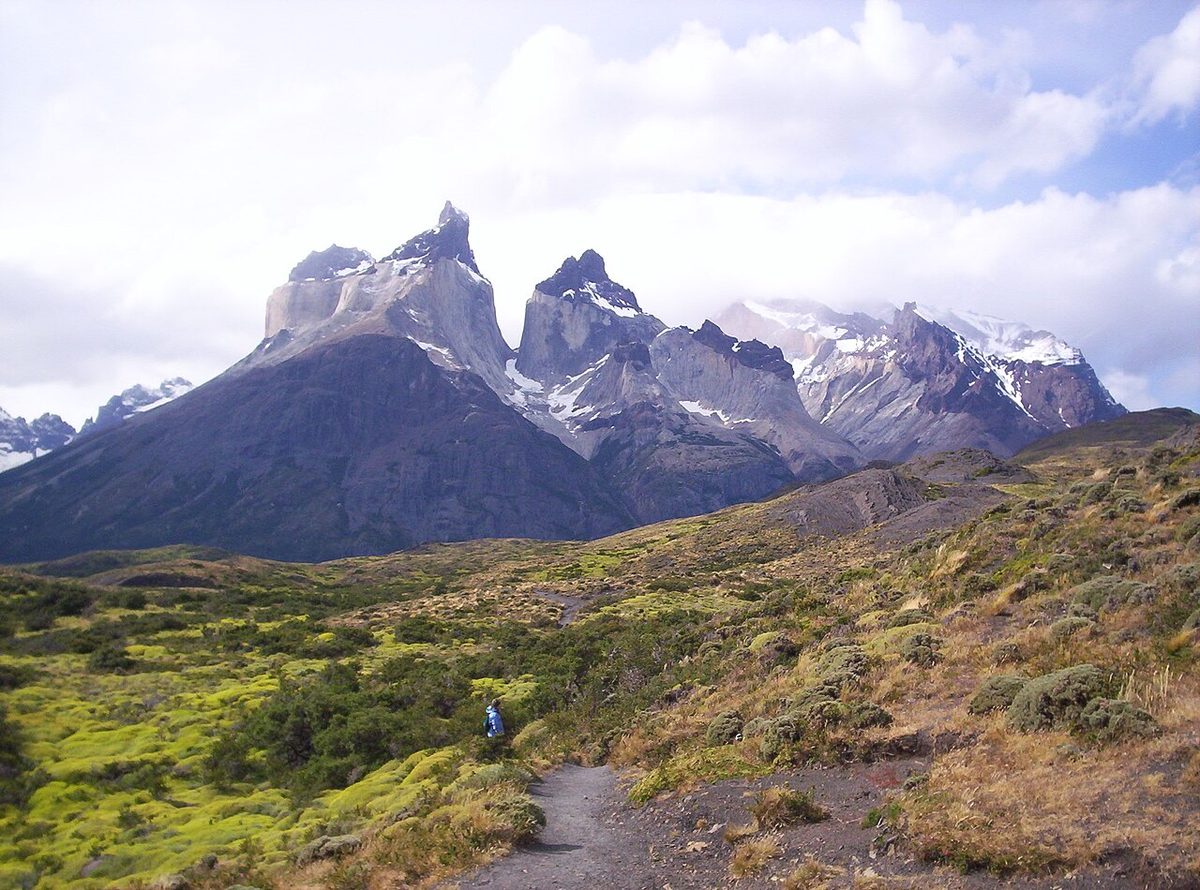
Fourth, interpretation. A good local guide turns a beautiful walk into an understood one: the geology of the Cuernos, the wildlife, the human history of the estancias, the legends of the massif. Some hikers do not care about that. Others find it is what they remember most.
The tradeoffs are real too: the highest price, a fixed group pace that may be slower or faster than yours, and less spontaneity. If your idea of a great trek is choosing your own rhythm and lingering where you like, a tightly run group can chafe. For broader safety and gear context that applies whichever way you go, the Patagonia hiking, camping, gear and safety guide is worth a read before you book.
Here is the category that gets skipped, and it is the one I would point most undecided hikers toward. A self-guided package means you hike independently, on your own schedule, with no guide walking beside you, but an operator handles the logistics: reservations across the different sectors, transport, the catamaran ticket, meals, and park permits.
It exists because the single most common complaint about the W is not the difficulty. It is the booking scramble. Beds and campsites open months ahead, sell out fast, and live across more than one platform. A package buys you out of that mess while keeping the freedom and a chunk of the savings of going independent.
A self-guided package is worth considering if:
You want to hike on your own but dread the reservation process.
You are short on planning time before the trip.
You cannot find an available combination of nights and want help assembling one.
You will happily pay a service premium to remove friction.
It is probably not worth it if you are very budget sensitive, you genuinely enjoy detailed logistics, or you are confident booking directly with the operators and verifying every detail yourself. The honest summary: a package is the freedom of self-guided with the booking headache outsourced, at a price between doing it all yourself and a fully guided trip. Whichever route you pick, understanding how the beds and camps actually work helps, so skim the W Trek refugios and campsites guide before you commit.
How Much Does Each Option Cost?
Prices in Torres del Paine move with season, operator, accommodation type, meals, currency, and how you book, so treat every number here as “around” and verify current rates before you pay. With that warning loud and clear, here is the honest shape of the spending.
A self guided W Trek is the cheapest way to walk the route. The big line items are the park pass (around 49 USD for more than three days, per recent rates), the return bus from Puerto Natales (around 20 to 25 USD), the catamaran across Lake Pehoe when you use it (around 30 USD one way), and your nightly accommodation. Simple campsites with your own gear run roughly 10 to 25 USD per person per night depending on the sector; refugio beds and fully equipped camping cost considerably more. Add food, and gear rental if you need it (Puerto Natales rentals have run around 150 to 160 USD per person for five days). Independent budget breakdowns have put a 4-day W somewhere around 300 to 400 USD per person carrying your own gear and food, rising toward 700 USD or more if you book refugios with full board. Those figures are a few seasons old; use them for proportion, not as a quote.
A self-guided package sits in the middle. Operators commonly start these around 950 USD per person and up, bundling transport, the catamaran, meals, permits, and your reservations, often in premium tents or refugios. You pay a premium over doing it yourself, but you skip the booking war.
A guided W Trek is the priciest tier. Quoted prices commonly land somewhere in the 1,300 to 3,300 USD per person range, with some premium and small-group trips higher still. What is included varies a lot, so compare carefully: meals, accommodation type, transport, the catamaran, and guiding should all be itemized.
Two cautions worth more than any single number. Do not compare a stranger’s bare campsite price from three seasons ago with your full-board refugio package and conclude you are being robbed. You are buying different products. And budget for the things people forget: a night in Puerto Natales before and after, gear, and travel insurance. To put the trek inside your wider trip math, use the Patagonia trip cost and budget guide.
Safety and When a Guide Is Required
This is the part where self-guided stops being a preference and becomes a rules question. In the main summer season, prepared hikers walk the W without a guide every day, legally and safely. Outside that season, the park can require one.
As a general pattern, self-guided trekking on the W is permitted roughly from October to the end of April. Outside that window, a certified guide is required for key trails. The exact dates move year to year with conditions, and the shoulder months of September and April are exactly where people get caught out, so this is the single most important thing to verify directly before you book shoulder or winter dates.
For 2026 specifically, the rule tightened early. CONAF Magallanes advanced the winter season to April 27, 2026, ahead of the usual May 1. From that date through August 30, 2026, you cannot enter the Base Torres trail or the “W” mountain circuit without a certified specialized guide, mandatory technical equipment (microspikes or crampons, trekking poles, and a headlamp), and technical clothing for extreme cold and wet. The 2026-27 summer season is set to begin September 1, 2026, when restrictions may be lifted or modified. The year before, the guide requirement for Base Torres was lifted from September 1, 2025, while poles and crampons stayed mandatory for a while longer, which tells you two things: the rule is reviewed annually, and the cutoff dates shift. Always check the current CONAF notice and verify with the operator or CONAF before you commit to shoulder-season dates.
The O Circuit has its own rhythm: it closes for winter and reopens around spring, and while it is open you generally do not need a guide for it, though that too can change. If the backside loop is on your radar, the O Circuit Patagonia guide covers its seasonal access in more depth, and the Torres del Paine in winter guide explains what the cold-season park actually looks like.
Beyond the legal line, the safety logic is straightforward. CONAF is clear that Torres del Paine is a protected wild area where help in the mountains can take hours. That is not boilerplate. It is the difference between “I am tired” and “I need to make a conservative decision now.” A guide raises your safety margin most for first-timers, solo hikers without recent multi-day experience, and anyone on shoulder dates. Strong, experienced hikers in the heart of summer carry that margin themselves.
The Navigation Reality (Why Most Summer Hikers Do Not Get Lost)
Let me be specific about the fear that drives a lot of guided bookings, because it is mostly misplaced in summer. The W is well signed and well trodden. There is no technical terrain on it: no rope work, no rappelling, no scrambling that requires skills. On big days the path toward the Towers can carry something like a thousand people. You are not going to wander off a quiet trail into the void.
What actually goes wrong on a self guided W Trek is rarely navigation. It is the connections and the weather. Missing the catamaran because your bus ran late. Arriving at a sector to find the check-in line eats an hour. A French Valley day that doubles in length because the wind comes up. A forecast that turns a planned viewpoint into a bad idea. These are planning and judgment problems, not map-reading problems.
So if you are leaning self-guided mainly because you are confident you can follow a trail, that is the right instinct but the wrong reason to feel secure. Download an offline map, yes. But put more energy into transport timing, conservative day plans, and weather buffers than into navigation worry. For an honest read on how strenuous the days actually are, the W Trek difficulty guide is the reality check, and the guide to renting versus carrying gear covers the layers and kit that keep weather from becoming a safety problem.
How to Choose, by Traveler Type, Season, and Experience
The cleanest way to decide is to stop thinking about identity (“am I a self-guided kind of hiker?”) and start matching three factors: who you are, when you are going, and how much admin you want.
By Experience
If this is your first multi-day trek, or your first solo trip, a guided trip or at least a self-guided package removes a lot of ways to get overwhelmed. You will learn faster and stress less. If you have hiked multi-day routes before and read weather comfortably, fully self-guided is well within reach and saves the most money. The honest in-between: experienced hiker who is time-poor or booking late often lands best on a self-guided package.
By Season
Peak summer (December to February) is prime self-guided territory: long days, maximum services, busy trails, no guide required for the W. The catch is demand, so book early. March can be a sweet spot of access and autumn light with fewer crowds, still self-guided. October, November, and April need more caution, and the shoulder dates can flip into guide-required territory, so verify the rule. Winter is effectively a guided proposition for the marquee trails, with technical gear required. Season, more than anything, can make the choice for you. If your dates are flexible, settle them with the best time to visit Patagonia before you book trek nights.
By Group
Solo and confident: self-guided or a package. A pair or small group that enjoys planning: self-guided is rewarding and the per-person cost drops because you share gear and tents. A group with genuinely mixed fitness or experience: a guide smooths the pace and the decisions, and keeps the slowest member safe rather than struggling. Families and first-timers traveling together often get the most peace of mind from guided.
By Temperament
This is the quiet one. Some people relax when they control every detail. Others relax when someone else holds the plan. Be honest about which you are. A self-guided trek you spend anxiously second-guessing is worse value than a guided trek you actually enjoy, even though it costs less on paper.
Common Mistakes When Choosing
The mistakes I see are less about the trail and more about how people decide.
The first is treating self-guided as automatically braver and guided as a cop-out. They are planning styles, not character grades. Plenty of strong hikers book guided in winter because it is the rule, and plenty of nervous first-timers go self-guided in summer and do beautifully.
The second is underestimating the booking effort. Self-guided is cheap in money and expensive in attention. Reservations open months ahead, sell out fast, and span multiple operators. If you will not give that the hours it needs, either start very early or buy a package.
The third is booking flights or fixing rigid dates before checking trail accommodation and the seasonal guide rule. On the W, the beds and the rules shape the route, not the other way around.
The fourth is ignoring shoulder-season rules. A date in late April or September that looks self-guided on an old blog can legally require a guide and technical gear this year. Check the current CONAF notice every time.
The fifth is comparing prices without comparing products. A guided package and a bare campsite are not the same purchase, and pretending they are leads to bad decisions in both directions.
The sixth is skipping the Puerto Natales buffer to save money, then arriving at the trailhead tired with gear rentals unresolved. The gateway town is staging, not waiting. The gateway town for Torres del Paine covers why that night matters, and the Torres del Paine tickets guide walks through buying your park entry correctly.
If I strip this down to a recommendation, it looks like this. Experienced hikers in the heart of summer who do not mind logistics: go self-guided and keep the money. Anyone short on time or allergic to the booking system, but still wanting independence: take a self-guided package. First big trek, first solo trip, mixed-ability group, or shoulder and winter dates: go guided, and in winter understand it is largely required anyway.
Whatever you choose, two things stay true. Book early, because the constraint is almost always availability, not your fitness. And keep your weather judgment conservative, because the most experienced person in the park will still tell you the mountain decides. For the full route context and the booking sequence in one place, circle back to the Torres del Paine W Trek and O Circuit guide and, for getting to the trailhead in the first place, how to get to Patagonia.
In the main summer season, roughly October to the end of April, prepared hikers walk the W Trek self-guided with reservations, a park pass, and proper gear. Outside that window a certified guide can be required, especially in winter and the September and April shoulder. Always verify the current CONAF rule before booking shoulder or winter dates.
Is the W Trek safe to do self-guided?
Yes, for reasonably fit, prepared hikers in season. The trail is well marked and busy, and route-finding is not the main risk. The real hazards are weather, wind, transport timing, and overestimating your pace. Carry layers, keep day plans conservative, turn around when conditions justify it, and remember that mountain rescue can take hours.
How much does a guided W Trek cost?
Guided W Trek prices commonly fall somewhere around 1,300 to 3,300 USD per person, with premium and small-group trips higher, while self-guided packages often start near 950 USD. Doing it fully self-guided is cheaper, sometimes a few hundred dollars plus food. Inclusions vary widely, so compare meals, transport, and accommodation type, and verify current rates with the operator.
Can a beginner do the W Trek self-guided?
A fit beginner can, but it asks more of you. You handle every booking, transport connection, food decision, and weather call yourself. If this is your first multi-day hike, a self-guided package removes the booking stress while keeping your independence, and a fully guided trip adds safety support and pacing. Train with a loaded pack before you go.
Is it cheaper to do the W Trek self-guided?
Yes, clearly. Self-guided is the cheapest way to walk the W because you avoid guiding fees and service premiums, choose camping over refugios, and carry or buy your own food. The savings come at the cost of your time and attention, since you own all the planning and logistics. Verify current park, transport, and accommodation prices before budgeting.
Can you do the W Trek without a guide in winter?
Usually no, not on the marquee trails. In winter the park typically requires a certified guide and technical gear for trails like Base Torres and the W mountain circuit. For 2026, that regime ran from April 27 through August 30, with summer access resuming September 1. Cutoff dates shift yearly, so confirm the current CONAF notice before planning winter dates.
What is a self-guided W Trek package, and is it worth it?
A self-guided package means you hike independently while an operator pre-books your accommodation, transport, catamaran, meals, and permits. It is worth it if the reservation system overwhelms you or you are short on planning time and want to keep your own pace. It is less worth it if you are very budget conscious or happy booking directly and verifying every detail yourself.
Will I get lost on the W Trek without a guide?
It is very unlikely in season. The W is well signed and heavily trafficked, sometimes hundreds of hikers a day on the busiest segments, with no technical terrain. Carry an offline map as a backup, but put your planning energy into transport timing, conservative day lengths, and weather buffers, which is where self-guided trips actually run into trouble.
Final Thoughts
The self-guided versus guided W Trek question is really a question about what you would rather spend: money, or time and attention. A self guided W Trek hands you the savings and the control along with every booking, connection, and weather call. A guided trip hands those headaches to someone else, adds a trained safety margin, and opens the shoulder and winter season, for a price. The package in the middle quietly solves the booking problem most people actually struggle with.
There is no virtue ranking here. Match the method to your experience, your season, and your honest tolerance for logistics, book early because availability is the real constraint, and keep your weather decisions conservative. Do that, and any of the three can be the right trip. Get those wrong, and the most expensive guided package in Patagonia will not save the week.