Patagonia Solo Travel: Safety, Hostels, Buses & Trekking Partners
Patagonia solo travel guide: how safe it really is, best towns and hostels, buses without a car, finding trekking partners, costs, and solo trail safety.
By Patagonia Tourism Guide · First published 27 Jun 2026 · Updated 1 Aug 2026
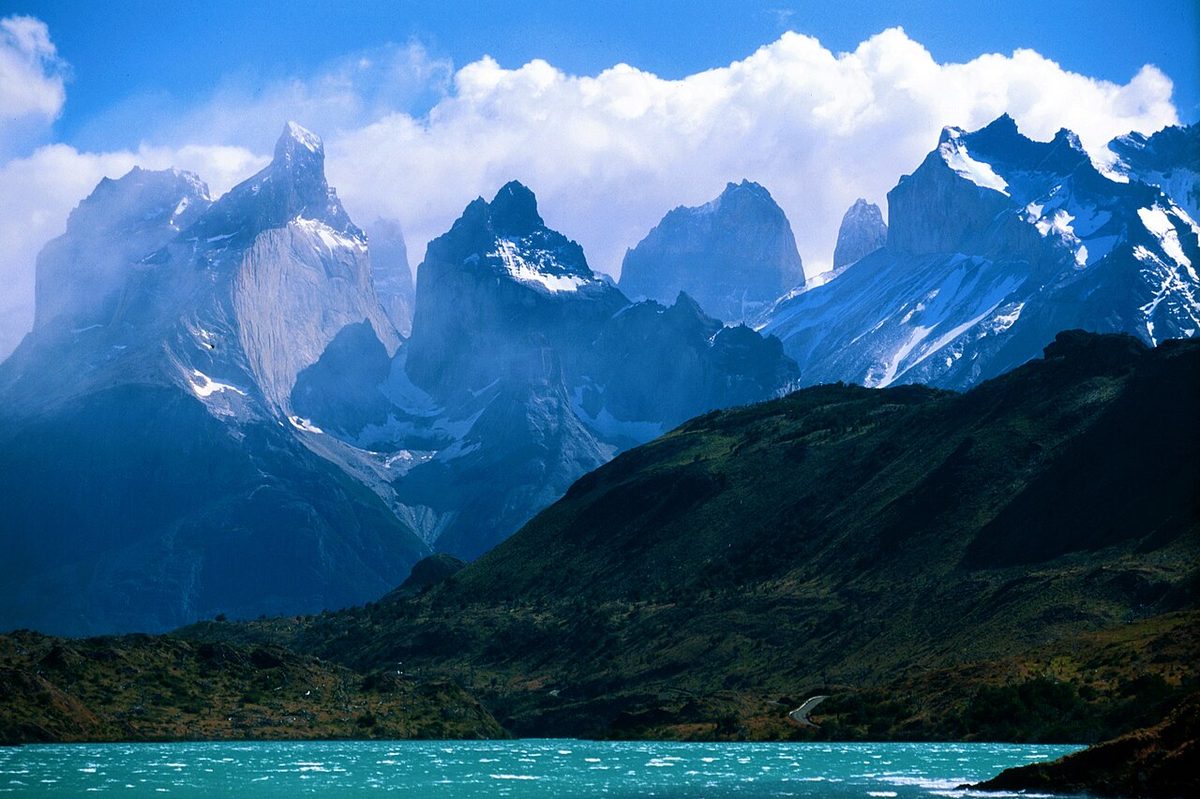
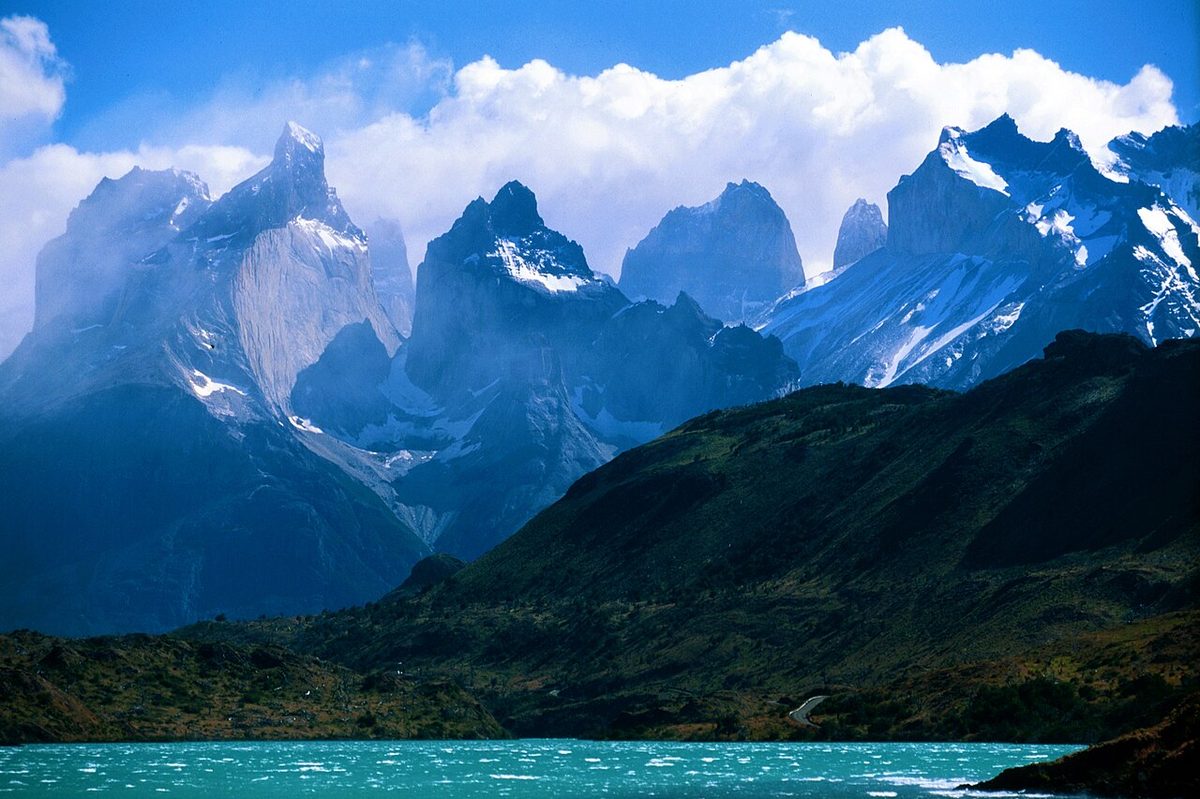
0 — 2 km Fig. 1 · A lone solo traveler hiking a mountain trail in Patagonia · Photo: Winky from Oxford, UK / CC BY 2.0 via Wikimedia Commons
The first time I stood at the El Chalten trailhead at 7am, alone, watching a dozen other solo hikers shoulder their packs in the cold, I realized something that took me a few trips to fully trust: in Patagonia, “solo” rarely means “alone.” You travel by yourself, but you are constantly surrounded by people doing exactly the same thing, on the same routes, staying in the same hostels, catching the same buses.
That is the quiet secret of Patagonia solo travel. It looks like one of the most intimidating places on Earth to go on your own. In practice, it is one of the easiest and safest.
Short answer: Patagonia is one of the easier, safer regions in South America to travel solo on mainstream routes. The real risks are environmental, not criminal. Wind, cold water, sudden weather, and remote trails hurt far more travelers than crime ever does. The best solo bases are El Chalten, Bariloche, Puerto Natales, Ushuaia, and El Calafate.
This guide is for you if you are planning a first solo trip and want the candid version: how safe it actually is, where to base yourself, how to get around without a car, how to find people to hike with, which treks are fine alone and which are not, what it costs, and how to stay safe on the trail. If you are still mapping the bigger picture, start with the main how to plan Patagonia from scratch and come back here for the solo logistics.
Best Towns for Solo Travel in Patagonia at a Glance
Before we get into safety and logistics, here is the shortlist I give friends. These are the towns with the strongest hostel scenes, the easiest bus connections, and the highest density of other solo travelers, which is what makes solo Patagonia work.
Town
Country
Best for solo travelers
Social scene
El Chalten
Argentina
Free day hikes from town, easiest solo hiking in Patagonia
If you only have time for two bases, I would pick El Chalten and Puerto Natales. Between them you get the best of Argentine day hiking and Chile’s most famous multi-day trek, and both are full of people in exactly your situation.
Is Patagonia Solo Travel Safe, Really?
Let me separate the two questions that usually get tangled together: crime safety and environmental safety. They have very different answers.
Crime: lower than you fear
By South American standards, Patagonia is remarkably calm. Crime rates across the southern regions of Argentina and Chile are notably lower than in the big cities, and serious crime against tourists on the mainstream routes is rare. The small trekking towns feel almost suspiciously relaxed. In Puerto Natales, I have watched people leave a laptop on a cafe table to go order and not think twice. That is not a behavior you bring home, but it tells you something about the baseline.
The honest caveat is that your trip almost certainly starts in a big city. Most travelers fly into Buenos Aires or Santiago first, and those are normal large cities with normal big-city petty crime. Use the same instincts you would in any major capital: carry your bag in front in crowds, do not flash your phone on the street, use registered taxis or ride-hailing apps (Uber is well established in both countries), and stay in populated areas at night. Once you are south in Patagonia proper, that vigilance can relax a lot.
Environment: this is what actually hurts people
Here is the part the glossy tour pages underplay. The dangerous thing in Patagonia is the place itself, not the people.
The wind is not a rumor. It can knock you off balance on an exposed ridge and turn an easy walk into a fight. Weather changes fast and hard, and “summer” does not mean warm the way northern travelers expect. Glacial rivers and lakes are cold enough to cause trouble in minutes. Trails can be long, remote, and far from any phone signal. The genuine risks of solo Patagonia are hypothermia, exposure, a twisted ankle three hours from the trailhead, a river crossing that is higher than it looks, and a weather window you misjudged.
None of this should scare you off. It should just change where your caution goes. You are not watching your wallet in a refugio. You are checking the forecast, packing layers in your daypack even when the morning is calm, and telling someone your plan. I go deep on this in the Patagonia hiking, camping, gear and safety guide, which is essential reading before any solo trek.
So who is solo Patagonia right for?
It is genuinely excellent for first-time solo travelers who stick to established routes, for hikers and nature lovers, for people who like meeting others organically rather than through nightlife, and for anyone who wants a big, wild trip without a big, wild risk profile. It is less ideal if you are set on truly remote, off-grid routes as a beginner, or if you need guaranteed warm weather and a fixed plan that weather cannot touch.
Solo Female Travel in Patagonia
I get asked about this constantly, so let me be direct: Patagonia is one of the more comfortable places in the world for solo female travel, and most women report feeling safe in both Argentine and Chilean Patagonia. Harassment is uncommon, the towns are calm even after dark, and the trails carry a real community feeling where people look out for each other.
Argentina in particular is frequently ranked among the better countries globally for solo female travelers. You may still get the occasional piropo (a flirtatious street comment) in cities, and Argentina’s gaucho-rooted culture carries a faint old-school machismo, but most women find it has softened a lot and rarely tips into anything threatening. On the trails and in the southern towns, whether you are male or female mostly stops mattering.
A few practical notes that make solo female travel here smoother:
Dorms are usually single-sex. Most Patagonia hostels offer single-sex dorms as standard. The big exception is the refugios on the W Trek in Torres del Paine, which tend to be mixed dorms (with single-sex bathrooms). They are so social that this is rarely an issue, and they are one of the best places to meet other women hiking the same route.
Some lodges pair solo women. A few places, like EcoCamp in Torres del Paine, will pair two solo female travelers in a shared cabin, which dodges the dreaded single supplement and gives you a built-in trail buddy.
Use tracked transport in cities. Ride-hailing apps over hailed street taxis, pre-booked airport transfers when you arrive somewhere new and tired.
The usual instincts still apply. Trust your gut, share your location with someone back home, and do not walk alone in unfamiliar city areas late at night. None of this is Patagonia-specific. It is just travel.
The broader point women keep telling me, and that I have seen myself, is that Patagonia offers a sense of safety and community that is genuinely rare in solo travel. You do not have to wait for a companion to see this place.
Best Towns and Hostels for Solo Travelers
The town you base in matters more than almost anything else for a solo trip, because the right town hands you a social scene and easy logistics for free. Here is how I think about the main bases.
El Chalten, Argentina
If I could send a first-time solo traveler to exactly one place, it is El Chalten. It is Argentina’s trekking capital, and the magic is that the famous trails start right from town. You wake up, walk out the door, and you are on the path to Laguna de los Tres or Laguna Torre with a hundred other people. No tour, no transfer, no car. The hostels here are built around hikers, with shared kitchens and common rooms where plans for tomorrow get made over dinner. For solo hiking in Patagonia, nothing is easier or more sociable. Plan the trails with the El Chalten and Fitz Roy hiking guide.
Puerto Natales, Chile
Puerto Natales is the staging town for Torres del Paine, which means it is full of people about to do, or just back from, the W Trek. That makes it the single best place in Patagonia to find a trekking partner. There is a famous free planning seminar in town (Erratic Rock’s base camp talk, traditionally at 3pm) that draws solo hikers like a magnet, and it is where a lot of trail friendships start. Hostels here rent gear, store your extra bag, and buzz with route talk.
Bariloche, Argentina
Bariloche is northern Patagonia with full-size-town comforts: lakes, chocolate, breweries, day hikes, and a genuine hostel party scene if you want one. It is the easiest base logistically, with the most services and the broadest social mix, and it works year-round (it is a ski town in winter). It does not combine neatly with the southern icons, but as a solo base in its own right, it is excellent and forgiving.
El Calafate, Argentina
El Calafate is the gateway to Perito Moreno Glacier and a major transport hub for the south. The social scene is a notch quieter than El Chalten, but it is an easy, low-effort base with good hostels, an airport, and bus links in every direction. Many solo travelers use it as a comfortable hinge between El Chalten and Torres del Paine.
Ushuaia, Argentina
Ushuaia, the end-of-the-world city, skews a little more toward couples and cruise travelers, but it still has solid hostels and a steady flow of solo travelers heading to Tierra del Fuego National Park, Beagle Channel boats, or Antarctica departures. Go for the atmosphere and the far-south bucket-list feeling.
For how to choose and book across all of these, the where to stay in Patagonia guide breaks down hostels, refugios, and when a private room is worth it.
Getting Around Patagonia Solo Without a Car
You do not need to rent a car to travel solo in Patagonia, and most solo travelers I meet never do. The bus network on the classic routes is excellent, and for one person, it is far cheaper and less stressful than driving long, windy, remote roads alone.
Buses are the backbone
Long-distance buses in Patagonia are comfortable, clean, well-organized, and usually bookable online in advance. I have done both daytime and overnight sleeper buses here and never once felt unsafe; theft and harassment on them are not the problem they can be elsewhere on the continent. Reputable operators on the Argentine side include companies like Andesmar and Cootra for cross-border legs; locally you will see a rotating cast of regional lines.
The routes that matter for a southern solo trip:
El Calafate to El Chalten (around 3 hours)
El Calafate to Puerto Natales, crossing into Chile
Punta Arenas to Puerto Natales (around 3 hours)
Puerto Natales to Torres del Paine (around 2 hours, with roughly two departures a day, traditionally early morning and early afternoon)
Treat those times and frequencies as approximate and always check current schedules, because they shift by season. Book ahead in peak season (December to February); popular legs sell out. For the full transport picture, including flights and border crossings, use how to get to and around Patagonia.
When a car or tour makes sense solo
A rental car only really earns its keep solo if you are doing something off the bus grid, like the Carretera Austral or parts of Tierra del Fuego, and even then the cost falls entirely on you with no one to split it. For most solo itineraries, buses plus the occasional booked day tour (for places like Perito Moreno) is the cheaper, simpler answer.
The Navimag ferry: a solo traveler’s secret weapon
One option that deserves its own mention is the Navimag ferry through Chile’s southern fjords, between Puerto Montt and Puerto Natales. It takes around four days and three nights and is less a cruise than a floating hostel: shared cabins, basic food, spectacular scenery. It is famously social, packed with solo travelers, and people routinely step off having already found someone to hike Torres del Paine with. If your route and budget allow it, it is one of the most enjoyable ways to arrive in the deep south alone.
Finding Trekking Partners in Patagonia
This is the question behind the question. People worry about solo travel in Patagonia mostly because they picture themselves alone on an empty mountain. In reality, finding people to hike with is almost effortless if you put yourself in the right places.
Here is the playbook that has never failed me:
Stay in hiker hostels and use the common room. In El Chalten, El Calafate, and Puerto Natales, the shared kitchen at dinner is a partner-matching machine. Mention you are hiking Laguna de los Tres tomorrow and you will have company by morning.
Check the hostel notice boards. Many hostels still have physical or WhatsApp boards where people post “looking for someone to share a transfer to the trailhead” or “anyone doing the W starting Thursday?”
Go to the Erratic Rock seminar in Puerto Natales. That daily Torres del Paine planning talk is half logistics, half speed-dating for trekking partners.
Just show up at the El Chalten trailheads. The day-hike routes are busy enough that you fall into step with people naturally. You do not need to arrange anything in advance.
Talk to people on the Navimag and on buses. Shared multi-day transport breaks the ice for you.
The key distinction: for popular day hikes you barely need to try, because the trails are crowded and you can simply attach yourself to the flow. For multi-day treks, it is worth actively lining up a partner the night before, both for company and for the genuine safety margin of not being alone on a longer route.
Treks You Can Do Solo vs Ones You Shouldn’t
Not every Patagonia trek is equally solo-friendly. The difference is mostly about how busy, how supported, and how technical the route is. Here is my honest breakdown.
Trek / route
Solo-friendly?
Why
El Chalten day hikes (Laguna de los Tres, Laguna Torre, Laguna Capri)
Yes, easily
Busy trails, ranger patrols, return to town each night
Torres del Paine W Trek (with refugios)
Yes
Well-marked, very social, food and beds along the way
Perito Moreno Glacier walkways and boat trips
Yes
Infrastructure, crowds, guided ice-trek options
Torres del Paine O Circuit (full loop)
With experience
Remote back section, fewer people, more commitment
Huemul Circuit (El Chalten)
Not for solo beginners
River crossings, Tyrolean traverses, severe exposure
The headline: the W Trek with refugios is very doable solo and is one of the great solo experiences in Patagonia, because you are never really alone and you sleep in beds with food provided. The day hikes around El Chalten are even easier. But the Huemul Circuit, the more remote routes, and anything in winter are not beginner solo territory. Those need a partner, a guide, or both. There is no shame in joining a small group for the hard stuff; I have done it and been glad. For the full trek-by-trek detail on Chile’s flagship route, see the Torres del Paine W Trek and O Circuit guide, and check the guide to picking a travel month so you hit the season that keeps these routes open and friendly.
Patagonia is not cheap, and the uncomfortable truth of solo travel is that some costs fall entirely on you with no one to split them. But solo travelers also have powerful ways to keep the budget down, and dorm-based hikers here genuinely travel for a fraction of what couples in hotels pay.
Rough numbers to plan around, all of which you should treat as “around” and verify close to travel:
Dorm beds: roughly $25 to $45 per person per night in high season (December to February), dropping to around $18 to $32 in the November and March shoulder seasons.
Daily budget: a bare-bones self-catering, bus-and-dorm trip can come in near $50 a day. A realistic budget solo day is more like $80 to $120. Mid-range with some tours and private rooms runs $150 to $200+.
Park entry: Los Glaciares (El Chalten area) has run around 45,000 Argentine pesos for non-residents (roughly US$42 in early 2025); Torres del Paine’s CONAF ticket runs around 21,000 Chilean pesos and up in high season. Fees change often, so check before you go.
The single-supplement trap, and how to dodge it
The classic solo penalty is the single supplement: book a hotel room or an organized tour as one person and you often pay around 150% of the per-person sharing price for the privilege of being alone. The fix is straightforward. Stay in dorms instead of private rooms, look for lodges that pair solo travelers (the EcoCamp shared-cabin setup is the poster child), and if you do want a tour, choose operators that offer a room-matching or share service rather than charging the full supplement. Booking your own buses and beds instead of an agency package can easily cut your costs in half and gives you more freedom of movement.
For a full breakdown of what a trip actually costs and where the money goes, use the Patagonia spending estimates.
Staying Connected and Safe on the Trail Solo
When you travel solo, your phone and your habits are your safety net. Here is how I handle both in Patagonia.
Connectivity and eSIMs
Mobile coverage is strong and stable in the towns: Puerto Natales, Punta Arenas, El Calafate, El Chalten, Bariloche, and the like all have solid 4G. The moment you head into the backcountry, deep into Torres del Paine, or onto remote roads, the signal disappears. Plan for that.
An eSIM is the easiest way to stay connected without hunting for a SIM card on arrival. Because Patagonia straddles two countries, decide whether you need an Argentina plan, a Chile plan, or both. Most modern phones hold multiple eSIM profiles at once, so you can install both before you fly and switch as you cross the border. Providers like Airalo connect to the main local networks; around 3 to 5 GB a week is plenty for town use. Crucially, treat offline preparation as a safety requirement, not a convenience: download offline maps, your bus tickets, and accommodation details before you leave town, because for long stretches you will have no signal to load them.
A handful of non-negotiable habits keep solo hiking in Patagonia genuinely safe:
Register before you hike. In El Chalten, stop at the national park office in town to register before your first hike. It is free, takes about five to ten minutes, and the rangers give you current trail and safety information. Day hikes need no permit or guide, but the registration matters.
Buy your Torres del Paine ticket in advance. CONAF requires an admission ticket bought ahead (a QR code, no cash inside the park), and as of January 2026 a new Mountain Trail Safety Protocol governs the trails. Some restrictions, like mandatory trekking poles or crampons in winter conditions, come and go, so always check the current CONAF Torres del Paine notices before you arrive.
Tell someone your plan. Share your route and expected return time with your hostel or a friend whenever you head out alone, especially on anything beyond a busy day hike.
Respect the weather window. Check the forecast, start early, and do not push for the summit viewpoint in bad conditions just because you came all this way. The mountain will be there next season.
Stay on marked trails. Most incidents happen when people leave the route. Stick to the authorized path and the permitted hiking hours.
Pack for cold even on warm mornings. Layers, a hat, and a windproof shell in the daypack, every time.
Do those things and the environmental risks that are the real danger in Patagonia drop dramatically. For the deeper safety and gear layer, the guide to trekking gear and risks is the companion read.
Final Thoughts: Just Go
If you are sitting on the fence about a solo Patagonia trip, here is the nudge. This is, in my experience, one of the best places in the world to travel alone for the first time. The crime risk that makes people nervous about South America barely registers on the mainstream routes. The community of other solo travelers is dense and warm. The logistics are forgiving: comfortable buses, hiker hostels, trails that start from town.
The one thing you do have to take seriously is the environment, and that is a relief in a way, because it is the part you can prepare for. Pack the layers. Check the forecast. Register before you hike. Tell someone where you are going. Do that, and Patagonia rewards solo travelers with something it rarely gives groups: long, quiet stretches of some of the most extraordinary scenery on the planet, on your own terms, at your own pace, with new friends turning up exactly when you want them.
Frequently Asked Questions About Solo Travel in Patagonia
Is Patagonia safe to travel alone?
Yes. Patagonia is one of the safer regions in South America for solo travel on mainstream routes, with crime rates well below the big cities and calm, welcoming towns. The real risks are environmental, not criminal: wind, fast-changing weather, cold water, and remote trails. Prepare for the outdoors, stay on marked routes, and you will be fine.
Is Patagonia safe for solo female travelers?
Generally, yes. Most women report feeling safe in both Argentine and Chilean Patagonia, harassment is uncommon, and the towns are calm even at night. Argentina ranks among the better countries worldwide for solo female travel. Use normal city-level caution in Buenos Aires or Santiago, but in the southern trekking towns the atmosphere is relaxed and community-minded.
Can you hike Patagonia alone without a guide?
For most popular trails, yes. El Chalten’s day hikes and Torres del Paine’s W Trek are busy, well-marked, and easily done solo without a guide, though you must register in El Chalten and buy a CONAF ticket for Torres del Paine. Remote or technical routes like the Huemul Circuit, and any winter hiking, are not beginner solo territory and call for a partner or guide.
What is the best place in Patagonia for solo travelers?
El Chalten is my top pick: trails start right from town, the hostels are built around hikers, and it is full of other solo travelers. Puerto Natales is the best base for finding W Trek partners, and Bariloche is the easiest all-round town with the broadest social scene. Most solo travelers combine El Chalten and Puerto Natales.
How do you meet people and find trekking partners in Patagonia?
It is easy. Stay in hiker hostels and use the common kitchen, check hostel notice boards and WhatsApp groups, and go to the Erratic Rock planning seminar in Puerto Natales. The El Chalten day-hike trails are busy enough that you meet people just by walking them. The Navimag ferry and long bus rides also break the ice for you.
Can you do the W Trek solo?
Yes, the W Trek is one of the best solo treks in Patagonia. It is well-marked, very social, and the refugios provide beds and food along the way, so you are never truly alone or unsupported. Book your refugios or campsites and your CONAF ticket in advance, check current trail rules, and you can comfortably do it on your own.
Do you need a car to travel solo in Patagonia?
No. The bus network on the classic routes is comfortable, affordable, and bookable online, and most solo travelers never rent a car. Buses connect El Calafate, El Chalten, Puerto Natales, Punta Arenas, and Torres del Paine. A rental car only makes sense solo for off-grid routes like the Carretera Austral, where you also carry the full cost alone.
How much does solo travel in Patagonia cost?
Budget on around $80 to $120 a day as a realistic solo figure, or closer to $50 if you self-cater, sleep in dorms, and take buses. Dorm beds run roughly $25 to $45 a night in high season. The main solo penalty is the single supplement on hotels and tours, which you can dodge by using dorms, shared cabins, and room-matching services.