W Trek Difficulty: Fitness, Distances, Elevation and Trail Conditions
An honest look at W Trek difficulty: per-segment distances, elevation gain, hours, what makes it hard, who can do it, and a 6-8 week training plan.
By Patagonia Tourism Guide · First published 25 Jul 2026 · Updated 1 Aug 2026
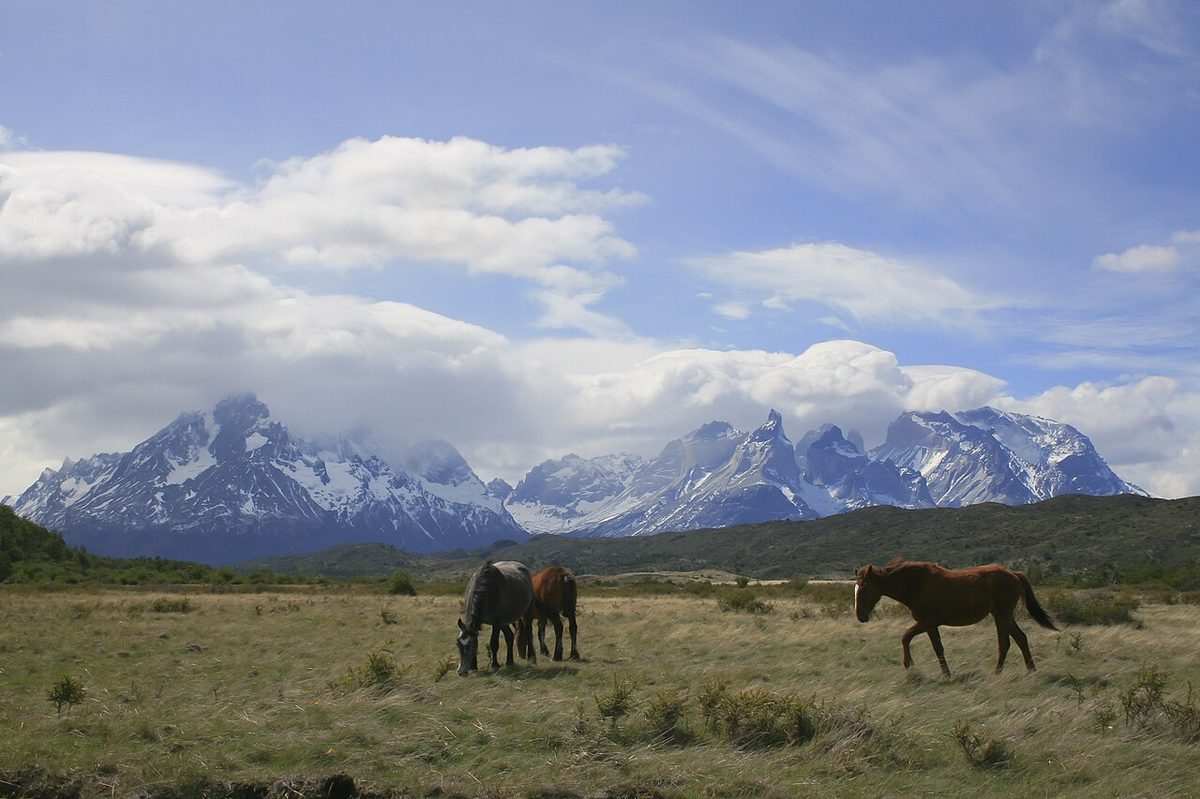
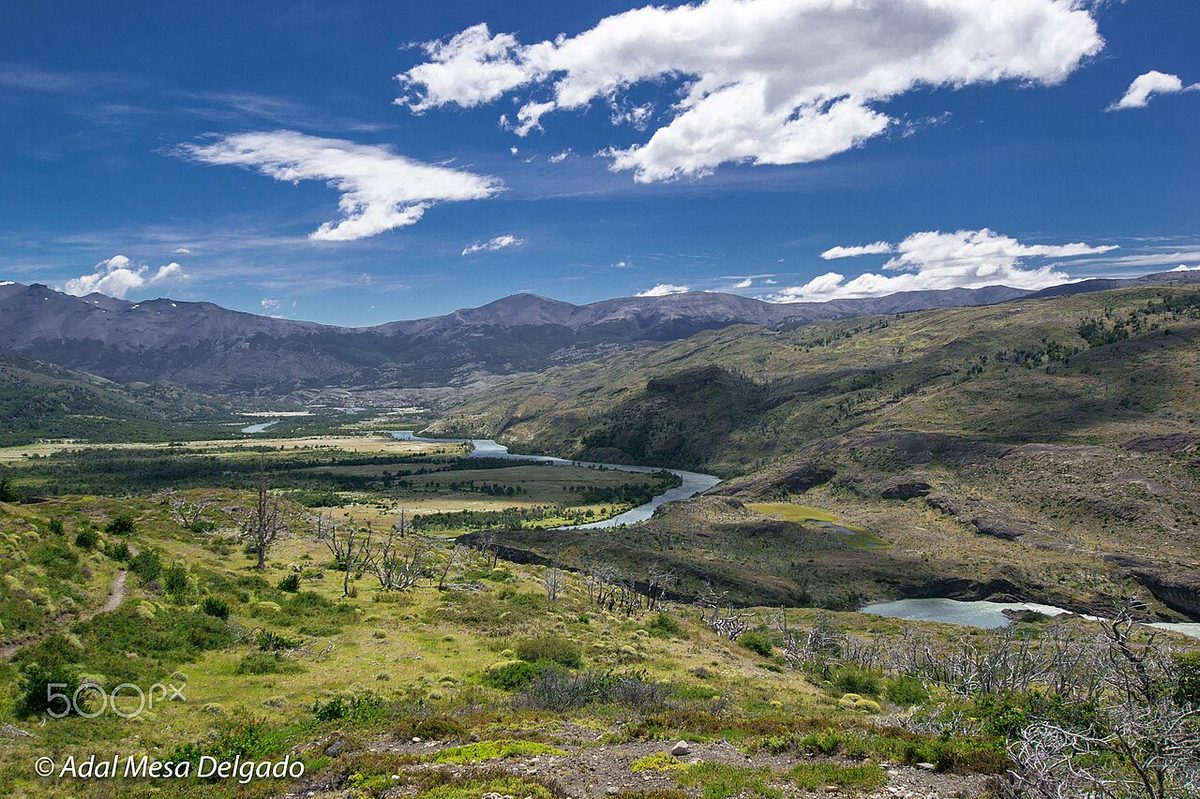
0 — 2 km Fig. 1 · The granite towers above the glacial lake at the end of the hardest day of the W Trek in Torres del Paine · Photo: Diego Delso / CC BY-SA 3.0 via Wikimedia Commons
The first time I underestimated the W Trek, it was not a mountain that humbled me. It was day three. My legs were fine, the view was extraordinary, and I still did not want to get out of my sleeping bag and walk for another seven hours because I had already done that twice in a row and my feet had opinions about it.
That, in one sentence, is the honest version of W Trek difficulty. It is not a technical climb. It is the same long, beautiful, windy day, repeated until it adds up.
So here is the direct answer: the W Trek is moderately hard. It involves no climbing skills, ropes, or altitude in normal summer conditions, but it does mean around 70 to 80 km over four to six days, roughly 6 to 8 hours of walking a day on uneven ground, wind, and a pack on your back. A reasonably fit person who trains can usually do it.
This guide is the prep page I wish I had read first: exactly how hard each segment is, what actually makes the W demanding (and what does not), who can realistically pull it off, and a training plan to get you there. If you are still choosing between routes, start with the parent guide, the Torres del Paine W Trek and O Circuit guide, and the broader getting around Torres del Paine. If you only want one big day instead of the full trek, the Base Torres day hike covers the W’s single hardest section on its own.
W Trek Difficulty at a Glance
Here are the numbers, segment by segment, hedged on purpose. Different sources and GPS units measure these trails slightly differently depending on where they start, and Patagonia’s weather can turn an “easy” rating into a hard day in an hour. Treat these as a realistic range, not a promise.
Segment
Approx distance
Approx elevation gain
Approx hours
Difficulty
Base Torres (Central/Chileno to mirador and back)
~16–22 km round trip
~750–900 m
~7–10 h
Hard — the crux
Cuernos / Lago Nordenskjöld (Central to Los Cuernos to Italiano)
~11–13 km one way
Low, rolling
~4–5 h
Easy–moderate
French Valley to Mirador Francés (Italiano up and back)
~3 km each way
Steep, rocky
~2.5–3 h round
Moderate–hard
French Valley to Mirador Británico (Italiano up and back)
~5.5–6 km each way
Steep, rocky
~3–4 h round from Italiano
Hard
Paine Grande to Italiano (flat connector)
~7.5 km
Mostly flat (muddy)
~2 h
Easy
Grey Glacier (Paine Grande to Refugio Grey and back)
~11 km each way (+2 km to viewpoints)
Rolling, some climb
~7–9 h round
Moderate
Swipe to see all columns
Table 1
A few things jump out of that table. The whole W is below the altitude where thin air becomes a problem. The highest point you reach is the Base Torres viewpoint at around 850 to 900 m. (The famous 1,200 m John Gardner Pass belongs to the O Circuit, not the W.) Most days are genuinely moderate. The difficulty is concentrated in two places, Base Torres and the upper French Valley, and spread thin everywhere else as fatigue and wind.
What “W Trek Difficulty” Really Means
When people ask “is the W Trek hard,” they are usually picturing the wrong kind of hard. They imagine exposure, scrambling, a dangerous edge. The W is almost none of that.
The trail is well marked and busy. In peak season you are rarely out of sight of other hikers. There is no point on the standard W route where you need a rope, a helmet, or mountaineering skill. The hardest physical move you make is climbing a steep boulder field with your hands occasionally on rock, and even that is a walk-up, not a climb.
So the difficulty is not technical. It is cumulative and environmental. This is exactly how the parent W Trek guide frames it, and I would not change a word: the W is hard enough to respect and accessible enough that many reasonably fit travelers can do it, which is precisely why people underestimate it.
Here is what actually makes it hard, roughly in order of how often it catches people out.
Consecutive Days Are the Real Test
Any one day of the W is doable for a moderately fit person. The challenge is doing it again tomorrow, and the day after that.
On a five-day W you walk four to five days back to back, 6 to 8 hours each, on a body that slept in a bunk room or a tent and ate trail food. By day three the small things stack up: a hot spot becomes a blister, tired quads complain on every descent, and the motivation that felt limitless on day one needs a little more coaxing.
This is why training for the W is less about peak fitness and more about repeatability. You are not training to walk 18 km once. You are training to walk it, recover overnight, and walk it again.
Wind Is the Signature Difficulty
Patagonia’s wind is not background weather. It is an active obstacle, and it is the single variable most likely to turn an easy-rated segment into a slog.
Gusts on the W commonly hit serious speeds, and the exposed sections, the Base Torres moraine, open ridgelines, and the lakeshore stretches along Nordenskjöld and Grey, are where it bites hardest. A headwind can turn a flat 7.5 km connector into an hour of leaning forward and bracing with poles. It can also knock you off balance on uneven ground, which is the real safety concern. Several sources note gusts that can reach around 100 km/h and occasionally far higher, so plan around it: keep low on exposed ridges, do not stop for a photo mid-gust, and use poles.
Terrain: Uneven, Not Dangerous
The W is not a groomed path. Expect rock, roots, mud, river crossings on bridges, and the infamous Base Torres moraine, a kilometre of loose boulders near the top of that climb.
None of it is exposed scrambling, but uneven footing all day is its own kind of tired. It works your ankles and stabilizer muscles, and it punishes the descents, especially knees. The downhill off the Base Torres moraine and the rolling return from Grey catch more people out than the climbs do, because gravity plus tired legs plus loose rock is an unforgiving combination.
Pack Weight Changes Everything
How heavy your pack is may be the biggest single difficulty lever you control.
Carry a full self-supported load, tent, sleeping bag, mat, stove, and food, and you are looking at roughly 12 to 18 kg. Every climb, every gust, and every descent is harder. Book refugios with meals instead, and you can drop to a 6 to 8 kg daypack, which honestly changes the trek from a backpacking trip into a series of supported day hikes. Worldly Adventurer suggests practising with a pack around 10 kg before you go, which is a sensible target for a lighter supported setup.
There is also a built-in mercy here: on the two hardest segments you can usually leave your big pack behind. You drop it at the Italiano ranger station before heading up French Valley, and at Central or Chileno before the Base Torres climb, so you tackle the steep bits with only a daypack.
Fixed Bookings Are a Hidden Difficulty
This one is not about your legs. On the W, every night is reserved ahead of you, so there is a quiet pressure to keep moving even when conditions turn.
The parent guide makes this point and it is worth repeating: when your accommodation is ahead of you, sunk costs can start making your safety decisions. That is a difficulty factor in its own right. Build conservative choices where you can, and remember that turning back from a viewpoint is always allowed.
Mental Fatigue Is Real
The grind of waking up to a grey forecast and walking anyway is part of the W. Some of the most memorable days are also the wettest and windiest. Knowing that going in, rather than expecting postcard weather every morning, is half the mental battle.
If the W has a crux, this is it. The hike up to the base of the towers is rated hard by almost everyone, and the one or two sources that call it “moderate” usually have a lot of mountain miles already in their legs.
From the Central or Chileno sector it is roughly a 7 to 10 hour round trip with around 750 to 900 m of ascent. The sting is the final kilometre: a steep boulder-field moraine that climbs around 300 m or more over very little horizontal distance, often straight into the wind, with several false summits to break your heart before the real one. Going down it is arguably worse on the knees than going up.
On the W you usually tackle this from a sector base with a light daypack, which helps a lot, and many trekkers aim to sleep at Refugio Chileno so they can climb for sunrise. I will not duplicate the full breakdown here, because the Base Torres hike guide covers the route section by section, the sunrise logistics, and the all-important start-early rule. If you read one companion piece before your trek, make it that one.
French Valley and Británico: The Second Test
The middle arm of the W, the climb up the Valle del Francés, is the other place difficulty concentrates, and it is the segment most likely to expand on you.
From the Italiano ranger station, the trail to Mirador Francés is short but steep, around 3 km of rocky, sometimes slippery climbing, about an hour to an hour and a half up. Many day-trippers stop here, and on a bad-weather day that is a perfectly good call.
If the weather is playing fair and your legs are willing, you continue to Mirador Británico, the amphitheatre of granite peaks at the head of the valley. That adds roughly another 3 km each way of steep, rocky trail with stream crossings, and turns the valley into a 3 to 4 hour round trip from Italiano on its own. Combine that with the sector transfer on either side and this becomes one of the longest single days on the W, comfortably 18 to 20 km and up to 9 hours when you tally a Paine Grande or Cuernos leg onto it.
The good news, again, is that you leave your big pack at Italiano. The bad news is that the valley is notorious for foul weather; both of the times one well-known guide hiked it, she got rain and wind the whole way up. Treat Británico as optional and weather-dependent, not mandatory.
Cuernos and Nordenskjöld: The Easy Middle
Not every day on the W is a battle. The walking sections along Lago Nordenskjöld, between the Central area, Los Cuernos, and the Italiano junction, are the gentlest part of the route.
These are rolling lakeside trails with constant views of the Cuernos del Paine and the milky blue lake, rated easy to moderate. Los Cuernos to the Central sector is around 11 to 13 km over 4 to 5 hours; Los Cuernos to Italiano is shorter, around 5.5 km. On paper, and on a calm day, these are the kind of segments where you relax and enjoy the scenery.
The asterisk is the wind. These exposed lakeside stretches catch the full force of a Patagonian blow, and a strong headwind can turn a moderate three-hour walk into an exhausting one. The terrain is easy; the weather decides the rest.
Grey Glacier: Moderate but Exposed
The western arm out to Grey Glacier is rated moderate. From Paine Grande it is around 11 km each way to Refugio Grey, with another couple of kilometres to the best glacier viewpoints and a pair of suspension bridges over ravines.
The trail rolls, with some climbing, but nothing severe; most hikers do the round trip in 7 to 9 hours with breaks. What makes it count is exposure and length: long, often windy, sometimes wet, with that big payoff of icebergs and the glacier wall at the end. One blogger who hiked it called it her favourite section of the whole W, and I would not argue.
The flat connector between Paine Grande and the Italiano junction, around 7.5 km, is the easiest walking on the route: mostly level, occasionally muddy, about two hours. It is the segment where your legs get a genuine break, wind permitting.
Here is something most difficulty pages skip: the same trail is meaningfully harder or easier depending on how many days you spread it across. Compression, not distance, is the real difficulty multiplier.
The 5-Day W: The Baseline
Five days is the standard, and it is standard for a reason. It splits the route into sane daily chunks, each one a reasonable 6 to 8 hours, with Base Torres and French Valley tackled on dedicated mornings with a light pack. This is the version most first-timers should aim for, and it is the difficulty level everything else on this page is measured against. The W Trek itinerary guide lays out the day-by-day shape.
The 4-Day W: Compressed and Harder
A four-day W is absolutely possible, but it is not a five-day W with better time management. It is a genuinely harder trip.
Cutting a day means longer days, fewer weather buffers, and harder calls about how far up French Valley or out to Grey you push. Expect at least one big “double” day in the 20 km range that runs 7 to 9 hours. The extra difficulty comes mostly from time pressure rather than new terrain: you have less margin to wait out bad weather, rest a sore knee, or simply go slowly. Choose four days only if you are fit, availability forces it, and you accept the reduced flexibility.
The 6-Day W: The Gentlest Version
If you have any doubt about your fitness, your knees, or the weather, six days is the kindest choice. It is the lowest difficulty per day: shorter legs, more buffer to sit out a storm, and the option to split a long sector or add a relaxed Grey night.
The only real downside is that you need one more night of scarce, expensive accommodation. But if this is your one big Patagonia trek, that extra day often buys more enjoyment than squeezing in another destination would. For nervous beginners, older travellers, or mixed-fitness groups, I would take the slow W every time.
Who Can Realistically Do the W Trek?
The honest test is simple. Can you comfortably walk 15 to 20 km on uneven ground, and could you get up and do it again the next morning? If yes, with some training and good gear, you can almost certainly do the W. This matches what the parent guide concludes: for an average fit person, the answer is usually yes, with preparation, realistic pacing, and good gear.
A few specifics:
Beginners with no backpacking experience can do the W if they train, keep the pack light by booking refugios and meals, and ideally give themselves six days. Plenty of people call it their first multi-day trek and finish proud.
Active older travellers and fit teenagers do the W regularly. The keys are a realistic pace, a supported (lighter-pack) setup, and not chasing every optional viewpoint.
Mixed-fitness groups can make it work by choosing the slower itinerary, leaving big packs for side trips, and agreeing in advance that the strongest hiker’s ambition does not set the group’s pace.
And the honest “maybe rethink, or get help” signals:
Knee problems on long descents. The moraine and the Grey return are hard on knees; poles and training help, but go in clear-eyed.
No recent history of multi-hour walking, and no willingness to train for it.
A plan to carry a full camping load with zero hill or loaded-pack practice.
Strong aversion to cold, wet, and wind, which Patagonia guarantees in some measure.
If several of those apply, you still have great options: go guided, use a porter or duffel-transfer service, walk fewer kilometres per day, or skip the multi-day trek entirely and string together day hikes in Torres del Paine or the gentler easy hikes instead. Choosing day hikes is not a failure; it is sometimes the smartest fit.
You do not need to be an athlete to hike the W. You need an aerobic base, legs that tolerate long descents, and a body rehearsed at walking two longish days in a row with a pack. Most coaches and operators suggest at least 8 to 12 weeks for a beginner, and 3 to 6 months if you are starting from the couch. The plan below assumes you already walk a bit; stretch it out if you are starting from scratch.
The single most valuable session is a day hike with the exact pack you will carry, adding weight gradually. Everything else supports that.
Weekly ingredients:
Cardio base, 3 to 4 times a week. Brisk hill walking, jogging, cycling, swimming, or stair climbing, building from around 30 minutes to 60 to 75 minutes. This is the engine that gets you through 6 to 8 hour days.
One long hike a week, on uneven terrain, carrying your real pack. Build the distance steadily: 8 km, then 12, then 16, then 20-plus. Add roughly 1 to 2 kg to the pack each week until you reach your target weight.
A back-to-back weekend in the second half of the plan. Two longish hikes on consecutive days is the closest thing to a W rehearsal, because it teaches your legs to recover overnight and go again. This is the difference-maker.
Strength, twice a week. Squats, lunges, step-ups, deadlifts, and calf raises for the legs; planks and core work for pack stability; rows or resistance bands for the back. Strong legs and back turn a brutal descent into a manageable one.
Downhill and eccentric work, specifically. Descents wreck untrained quads and knees, and the W has plenty. Train downhill deliberately, walk down hills rather than only up, and plan to use poles.
A sample build:
Weeks
Focus
1–2
Establish the habit: 3 short cardio sessions, one 8 km hike with a light pack, one strength session.
3–4
Add load: cardio 3–4x, long hike to 12 km with a heavier pack, strength 2x, start downhill reps.
5–6
Build endurance: long hike to 16 km at target pack weight, add the first back-to-back weekend.
7
Peak: a 20 km hike on rough ground with full pack, plus a second back-to-back weekend.
8
Taper: lighter, shorter walks to stay loose; rest the last few days. Do not cram.
Swipe to see all columns
Table 2
Two non-negotiables: break in your boots on these hikes, not in the park, and use the long walks to find hot spots and dial in your socks and blister care. New boots and a fresh blister on day one of the W is a miserable, avoidable way to start. For the full kit, the W Trek packing list and the broader what to carry on a Patagonian trek are the ones to read before you finalize your bag.
How to Reduce the Difficulty
If the W sounds like a stretch, you have a lot of levers to pull. The trek is only as hard as the version you choose.
Book refugios with meals instead of camping. This is the biggest single lever. It can take you from a 12 to 18 kg load down to a 6 to 8 kg daypack. The W Trek refugios guide and the W Trek food page explain the bed-and-board options.
Use a porter or luggage transfer where it is offered, so you carry only a daypack between sectors.
Leave your big pack at the Italiano ranger station for French Valley and at Central or Chileno for Base Torres. You hike the steep bits light either way.
Take six days, walk fewer kilometres, and skip the optional extras. Stop at Mirador Francés instead of pushing to Británico; skip the furthest Grey viewpoints if you are spent.
Go guided, or use supported self-guided. A guide handles logistics and safety judgment, which is especially valuable in shoulder season or for mixed groups. The self-guided W Trek guide weighs the trade-offs.
Use trekking poles, broken-in footwear, and an early start on the big days. Poles save your knees on descents and steady you in wind.
Pick the friendliest season. December through February gives the warmest, longest, clearest days (also the windiest and busiest); March trades some weather risk for gorgeous light. The best time to visit Patagonia guide goes deeper.
A Note on Winter and the Guide Rule
Difficulty is not only about your fitness. In winter, the rules themselves change.
The park is open year-round, but self-guided W trekking is generally only permitted from around October to April. In the winter season, roughly May through September, CONAF requires a certified guide, many refugios close, and microspikes or crampons, trekking poles, and a headlamp can be mandatory. As an example of how specific and changeable this gets, a CONAF notice for the 2026 season listed a guide requirement window for the Base Torres trail running from late April into late August, with the W mountain circuit closed in June and July, lake navigation suspended, and visitors directed to winter activity regulations. The 2025 precedent saw the Base Torres guide requirement lifted around September 1, with poles and crampons still mandatory.
Those dates shift every year, so verify the current rules on CONAF, Pases Parques, or Reserva Las Torres before you book anything. If a cold-season trek is your plan, read the dedicated visiting the park in winter guide, which goes deeper on what is open, what gear is required, and why winter is the riskiest time to see the towers. If the W in any season is not the right fit, the alternatives to the W Trek guide lays out gentler ways to experience the same scenery.
It is moderately hard. The W is not technical mountaineering in normal summer conditions, with no climbing skills or altitude problems, but it involves around 70 to 80 km over four to six days, 6 to 8 hours of walking daily on uneven terrain, wind, and a pack. The difficulty is cumulative. A reasonably fit person can do it with preparation.
How much elevation gain does the W Trek have?
Cumulative ascent across the full W is roughly 2,500 to 3,500 m depending on your route, side trips, and which GPS you trust. No single section is at altitude, though. The highest point you reach is the Base Torres viewpoint at around 850 to 900 m. The 1,200 m John Gardner Pass is on the O Circuit, not the W.
How many kilometres a day is the W Trek?
Most days run around 11 to 22 km, taking roughly 6 to 8 hours of walking with breaks. A useful benchmark from experienced W hikers: if you can comfortably walk about 18 km in a day on uneven ground, and feel able to repeat that over several days, you will find the W doable. The exact daily distances depend on your itinerary and sector bookings.
What is the hardest day of the W Trek?
Base Torres is the hardest, a 7 to 10 hour round trip with around 750 to 900 m of ascent and a brutal final kilometre over a boulder-field moraine. The climb to Mirador Británico in the French Valley is the second hardest, especially when combined with a sector transfer, which can make for an 18 to 20 km, up to 9 hour day.
Can a beginner do the W Trek?
Yes, with conditions. Beginners with no backpacking experience complete the W regularly, but it helps enormously to train for a couple of months, keep your pack light by booking refugios and meals, and consider spreading the route over six days. The trail is well marked and busy, so navigation is not the challenge. Fitness and repeatable long days are.
How do you train for the W Trek?
Build an aerobic base with cardio three to four times a week, then do one long hike weekly carrying the pack you will use, adding weight gradually. The key sessions are back-to-back long hikes on consecutive days, which rehearse overnight recovery, plus leg and core strength work and deliberate downhill training. Give yourself 6 to 12 weeks, and break in your boots beforehand.
Is the W Trek harder than the O Circuit?
No, the O Circuit is harder. The O includes the entire W plus the remote northern backside of the Paine massif and the serious 1,200 m John Gardner Pass, usually over 7 to 9 days. It is longer, more weather-exposed, more camping-dependent, and has fewer easy exits. The W is the more accessible of the two routes.
Does skipping camping make the W Trek easier?
Significantly. Booking refugio beds with meals instead of carrying a tent, sleeping bag, stove, and food can drop your pack from around 12 to 18 kg to a 6 to 8 kg daypack. That changes the trek from a backpacking trip into a series of supported day hikes, which is the single biggest thing you can do to make the W easier, short of taking more days.
Final Thoughts
The W Trek is not the hardest trek in the world, and it is not the easy stroll some marketing implies either. It sits in a sweet spot: hard enough that finishing means something, accessible enough that an ordinary fit person who trains and packs smart can get there. The difficulty is honest and predictable, consecutive long days, wind, uneven ground, and a pack, rather than hidden or technical.
So respect it without fearing it. Train for repeatability, not heroics. Keep your pack as light as your budget allows, take the slower itinerary if you have any doubt, and treat the optional viewpoints as bonuses rather than obligations. Do that, and the W rewards you with some of the best scenery on the planet, earned one beautiful, windy day at a time.
Images are sourced from Wikimedia Commons under their respective licenses (CC BY, CC BY-SA, or public domain). Each photo links to its source page and author on Wikimedia Commons.