W Trek Alternatives: Day Hikes, Shorter Routes and Other Patagonia Treks
W Trek alternatives for sold-out dates, tight budgets and mixed groups: Torres del Paine day hikes, partial-W routes, El Chaltén and lodge-based trips.
By Patagonia Tourism Guide · First published 29 Jul 2026 · Updated 1 Aug 2026
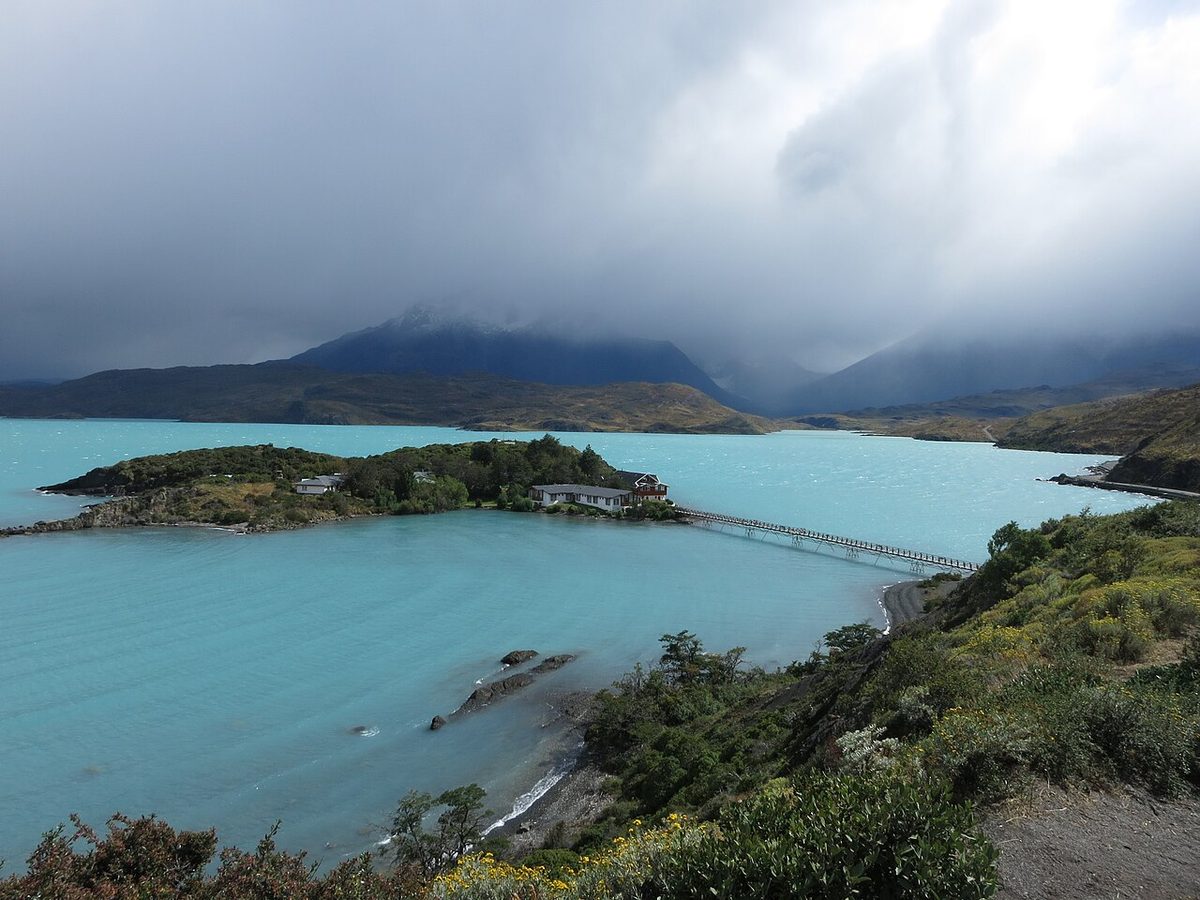
0 — 2 km Fig. 1 · Lago Pehoe and the Paine Massif in Torres del Paine, a scenic W Trek alternative reachable by day hike · Photo: Solange Muñoz / CC BY-SA 3.0 via Wikimedia Commons
The email arrives at the worst possible moment: you finally pick your dates, you open the booking sites, and Chileno is gone, Francés is gone, and the only “available” night on the whole route is a campsite that does not connect to anything. I have watched friends spiral over this. They decide that if they cannot do the full W, the trip is ruined. It is not.
If you want W Trek alternatives, you have more good options than the panic suggests: Torres del Paine day hikes you can do straight from Puerto Natales, partial-W routes that skip the booking chain, the longer O Circuit if you actually want more trail, El Chaltén across the border with no refugio system at all, and lodge-based trips for travelers who would rather sleep in a bed. The right one depends entirely on your constraint.
So that is how this guide is built: not as a ranked list of “cool hikes,” but as a way to pick an alternative by the thing that is actually blocking you. Sold out? Budget? A group that hikes at five different speeds? Or you just do not want to lock every night to a reservation? Find your constraint, find your trip.
This is a companion to the parent Torres del Paine W Trek and O Circuit guide, which makes the case I want to repeat up front: day hiking is not a failure, the W is not “Torres del Paine Lite,” and the O is not automatically the more authentic choice. The best route is the one that lets you enjoy the park instead of fighting your own expectations.
W Trek Alternatives at a Glance
Here is the whole menu in one table. Treat the numbers as planning estimates, not promises. Distances, days, prices, and which campsites are open all shift between sources and seasons, so confirm everything against current operator and CONAF information before you commit.
Alternative
Effort
Typical days
Booking needed?
Best for (by constraint)
Day hikes from Puerto Natales
Easy to hard (pick per day)
1 to 4
No trail beds; just bus/boat/park pass
Sold out, budget, mixed fitness, low commitment
Day hikes from an in-park base
Easy to hard
2 to 5
Lodge/campground only
Low commitment, comfort, families
Partial / “broken” W
Moderate to hard
2 to 4
Only the 1 to 2 nights you can actually get
Sold out, want most of the W anyway
El Chaltén (Fitz Roy)
Moderate to hard day hikes
2 to 4
None for trails (free registration)
Sold out, budget, flexibility, no reservations
Cerro Castillo / other quiet treks
Moderate to hard multi-day
3 to 5
Light or none, varies
Want solitude, hate crowds
O Circuit
Hard
7 to 9
Yes, full chain
You want more trail, not less
Lodge-based trip
Easy (your choice)
2 to 5
Lodge + tours
Budget is fine, logistics are the problem
Non-hiking (boat, horse, drive)
Very easy
1 to 3
Tours only
Injury, kids, non-hikers, weather days
Swipe to see all columns
Table 1
A quick note on how to read that “best for” column. If your blocker is availability, your strongest plays are day hikes, a partial W, or El Chaltén. If it is money, day hikes from Puerto Natales and El Chaltén win on cost. If it is mixed fitness, day hikes let everyone pick their own day. If it is commitment, anything that does not chain your nights together is your friend. And if your “problem” is that the W feels too tame, the O Circuit is the alternative in the other direction.
Before the alternatives, it helps to be honest about which problem you are actually solving, because the fix is different for each one.
The W is sold out. This is the most common reason and the most fixable. The W and O run on a reservation system split across two operators, Las Torres and Vertice, and the smallest campsites, Francés, Los Cuernos, and Chileno, are the pinch points that vanish first. The full guide to W Trek refugios explains who runs what. The point for now: a sold-out route does not mean a sold-out park. Day hikes and partial routes need far fewer beds, or none.
The W is too expensive. Refugio beds, full board, gear rental, transport, and a couple of Puerto Natales nights add up fast even without a guide. The full cost breakdown for Patagonia breaks the numbers down. Day hikes with your own food and a Puerto Natales hostel are dramatically cheaper than the supported W.
Your group has mixed fitness. This is the one nobody likes to say out loud. Maybe one person can crush Base Torres and one cannot, or you have kids, or someone is nursing a knee. A linear multi-day trek forces everyone onto the same day. Day hikes do not. People can split up, choose their effort, and still meet for dinner.
You do not want the commitment. Some travelers simply do not want their whole week governed by where the next reservation is. On a booked trek, your bed is always ahead of you, which quietly pressures people into hiking in weather they would rather sit out. If that pressure sounds miserable to you, that instinct is worth respecting.
If you are still genuinely torn between doing the W and not, read the W Trek difficulty breakdown first. Sometimes the honest answer is that the W is fine for you and you should just grab whatever nights exist. Other times it confirms that a lower-commitment plan is the smarter trip.
Torres del Paine Day Hikes
This is the heart of the rescue plan. You can string together some of the park’s most spectacular views without booking a single trail bed, sleeping in Puerto Natales (or an in-park base) and riding the bus in. The big thing to know: buses from Puerto Natales do not just stop at the entrance, they travel through the park, so you can reach most of these trailheads with no rental car. The deeper menu lives in which trails are worth the effort and the gentler set in gentle trails in Torres del Paine; here is the shortlist that makes day-tripping work.
Yes, you can do the towers as a day hike. It is the same iconic granite-and-turquoise viewpoint the W is built around, roughly 18 to 22 km round trip and about seven to nine hours from the Welcome Center, with a steep finish. It is the busiest trail in the park, so manage expectations on solitude. Take the first morning bus from Puerto Natales, then the shuttle from Laguna Amarga to the Welcome Center (around 4,500 CLP, cash only, verify). Note the rangers close the upper section past Refugio Chileno in the afternoon, often around 16:00, so an early start is not optional. Full detail is in the Base Torres hike guide.
Mirador Cuernos and Salto Grande
This is the best bang-for-effort day in the park. From the Pudeto pier it is about a 20-minute walk to the powerful Salto Grande waterfall, then a mostly flat out-and-back of roughly two hours total to Mirador Cuernos, with the Cuernos del Paine looming over Lago Nordenskjöld the whole way. The catch is wind: it can be fierce enough that rangers close the trail, so check a wind forecast before you go.
Mirador Cóndor
A short, steep classic from the shores of Lago Pehoé, around 45 minutes up, that delivers one of the most photographed panoramas in Patagonia: the whole Paine Massif rising over the lake. Trailheads sit near Camping Pehoé and Hostería Pehoé, both bus-accessible. It is the perfect “we only have a few hours” hike.
Grey Glacier viewpoints
The other end of the W done as a day. From Pudeto you take the catamaran (around 30 minutes, book ahead) to Paine Grande, then hike roughly 11 km to the Grey Glacier lookouts, with floating blue icebergs on Lago Grey for most of the walk. It is less steep than the towers but a long day because of the boat timing, so watch the return sailing. If your budget and dates allow a night at Refugio Grey, it becomes far more relaxing and opens up the suspension bridges toward John Gardner Pass.
Cerro Ferrier and the quieter walks
For a completely different angle on the park, Cerro Ferrier is a steep three-hour-ish out-and-back near Guardería Grey that almost nobody does, with a sweeping view over Pehoé, Grey, and the massif. There are also short waterfall and lakeshore walks and simply scenic drives for low-energy days. None of these need a trail reservation.
A practical reality check: doing all of these from Puerto Natales means a lot of early buses and back-and-forth, because the town is around two and a half hours from the park. That is exactly why the next section matters.
Where to Base Yourself
Your base decides how much of the park you can realistically reach, and it is the lever most people forget to pull. There are three honest options.
Puerto Natales. The cheapest and most flexible base. You get hostels and hotels at every budget, gear rental, supermarkets, and bus connections, but you pay for it in driving: roughly two and a half hours each way, and the early-bus schedule rules your mornings. Ideal if your constraint is money and you only want one or two big day hikes. The guide to Puerto Natales covers where to sleep near the bus terminal.
Río Serrano (the park’s edge). A cluster of hotels and lodges sits just outside the southern park entrance, a few kilometers from the gate. You trade Puerto Natales’ cheap beds and restaurants for a much shorter morning drive and the ability to be at trailheads early without a pre-dawn bus. This is the sweet spot for travelers who want day hikes and comfort.
Inside the park. In-park lodges and a couple of campgrounds (Pehoé, Serrano) put you closest of all, which means the least transport friction and the best odds of catching good light. It is the most expensive choice and these places book up early, but for some travelers it is exactly the right use of money. The full set of trade-offs is in choosing a base for Torres del Paine and the broader choosing a base town in Patagonia.
The rule of thumb: the further your base is from the trailheads, the more your day is eaten by buses and boats, and the fewer hikes you can stack. If you are day-tripping seriously, paying for a closer base often buys back more hiking time than it costs.
Partial and “Broken” W Routes
Here is the option most “alternatives” articles skip, and it is often the best of all: do most of the W, just without the full booking chain.
The trick relies on two facts. First, the two largest and most available sleeps on the route are Paine Grande and Torres Central, so even when the small camps are gone, those two often have space. Second, the flat middle stretch along Lago Nordenskjöld between Italiano and Torres Central is, frankly, the least interesting part of the W. Skip it and you lose very little scenery.
So a clean partial W looks like this:
Two nights at Paine Grande. Day one, catamaran over from Pudeto and hike the Grey Glacier viewpoints. Day two, hike up into the French Valley toward Mirador Francés (or Británico if you are fit and the weather holds), then back to Paine Grande.
One night at Torres Central. Take the boat back, transfer across to the Las Torres side, and the next morning hike up to Base Torres and out.
That itinerary gives you Grey, the French Valley, and the Towers, the three signature arms of the W, using only the beds you can actually get, plus the catamaran and the in-park Bus Sur transfers between stops. You can also run a lighter version entirely as day trips from an in-park base or even from Puerto Natales, hitting Grey one day and the Towers another. It is less elegant than a continuous trek on paper. In practice it is a genuinely great trip that sidesteps the sold-out problem. The full mechanics of routing and connections are in the day-by-day W Trek plan guide, and if you would rather hand the puzzle to someone else, hiking the w without a guide packages can assemble whatever combination is still available.
If your dates are flexible, the best W Trek alternative might be a different mountain entirely.
El Chaltén and Fitz Roy (no reservation system)
This is the answer I give most often to travelers facing a sold-out W. El Chaltén, across the border in Argentina, is a small town built for trekking where the trailheads start right from the streets and there is no refugio-booking system to defeat you. The marquee hike, Laguna de los Tres at the base of Mount Fitz Roy, is around 20 to 21 km round trip with a brutal final climb, doable in a long day straight from town. Laguna Torre is the other classic. You do not pre-book beds; you just register at the national park office before your first hike and walk.
One honest caveat: El Chaltén used to be entirely free to hike, but recent reports indicate an entrance fee was introduced for the trekking area, and the details have been in flux, so verify the current fee and rules at the local visitor center before you go. Even with a fee, the freedom from a reservation chain is the whole point. The complete picture, including which hikes suit which day, is in the El Chaltén and Fitz Roy hiking guide, and pairing it with Torres del Paine is exactly what the guide to sequencing a Patagonia trip is for.
Cerro Castillo and quieter multi-day options
If what you actually want is a multi-day trek but without the W’s crowds and booking stress, Cerro Castillo is the standout. It is a roughly 49 km, three-to-four-day circuit in Chilean Patagonia near Coyhaique, with jagged peaks that earn the comparison to Torres del Paine and a fraction of the people. Logistics are lighter, though you still sign in with CONAF and pay a park fee (hedge the amount and verify). Further south, the Dientes de Navarino on Isla Navarino near Puerto Williams is billed as the world’s southernmost trek, a serious four-to-five-day route for experienced hikers only.
The O Circuit (the alternative for people who want more)
Not everyone looking for a W Trek alternative wants something easier. Some look at the W, see the crowds, and want the quiet backside instead. That is the O Circuit: the full loop around the Paine Massif, roughly 110 to 130 km over seven to nine days, walked anticlockwise, adding the remote northern sectors and the high crossing of John Gardner Pass to the standard W. It is harder, longer, and more weather-exposed, and it still needs a full chain of reservations, so it solves the “crowds” problem but not the “sold out” one. If that is your itch, the O Circuit Patagonia guide is the deep dive, and you will want the packing checklist for the w as a baseline for gear.
Lodge-Based and Non-Hiking Options
Sometimes the constraint is not hiking at all. Maybe someone in the group cannot do long days, maybe the weather has turned, or maybe you simply want Torres del Paine without trek logistics running your life.
A lodge-based trip is the answer when budget is fine but planning is the problem. Hotels like Río Serrano and Hotel Lago Grey, plus glamping camps and estancias around the park, bundle guided day hikes, scenic drives, and meals so you do not manage a single campsite. It is expensive, but for the right traveler it is the best use of the money, because it converts a complicated self-supported puzzle into a simple booking.
And you do not have to hike to be moved by this place. The honest list of non-hiking ways to experience the park:
A Grey Glacier navigation boat that takes you right up to the ice face, no walking required.
Río Serrano rafting trips down toward the Serrano glacier.
Horseback riding across the steppe with the massif as a backdrop.
Scenic drives and wildlife watching; the open eastern sectors are some of the best places in Patagonia to see guanacos and, with luck, pumas.
These are also perfect “weather day” fallbacks when the wind has shut the trails. For travelers building a whole trip around comfort rather than mileage, the broader Torres del Paine travel guide maps out how the non-trekking side of the park fits together.
Do not give up on the park. In rough order: (1) check an availability aggregator and the operators directly for cancellations, and consider turning up at the Puerto Natales offices a few days before your dates; (2) build a partial W around Paine Grande and Torres Central, the two camps most likely to have space; (3) day-hike the highlights from Puerto Natales or an in-park base; or (4) if your dates flex, pivot to El Chaltén, which has no booking system at all. Any of these is a real Patagonia trip, not a consolation prize.
If money is the constraint
Day hikes from Puerto Natales with your own food and a hostel bed are the cheapest way to stand under the towers. El Chaltén is the budget multi-day equivalent across the border. Skip refugio full board, skip the guide if the trails are well marked, and put the savings toward an extra day rather than an extra destination. Run the numbers in the rundown of Patagonia trip expenses before you book anything.
If your group has mixed fitness
Base yourselves somewhere central and do day hikes. The strong hikers can take on Base Torres or Grey while others do Mirador Cóndor or Salto Grande, and everyone reunites for dinner. Nobody gets dragged up a mountain they did not want to climb, and nobody has to sit out the whole trip because one day was too hard.
If you want low commitment
Anything that does not chain your nights together. Day hikes and lodge-based trips both let you read the weather each morning and decide, instead of marching to wherever the next reservation sits. This is also the safest mindset in Patagonia, because it removes the sunk-cost pressure to hike in conditions you should sit out.
If the W feels too tame
Go the other way. The O Circuit gives you the quiet backside and John Gardner Pass; Cerro Castillo and the Dientes de Navarino give you solitude well off the main tourist track. Just be honest that “more” means more days, more weather exposure, and, for the O, the same reservation chain you may have been trying to escape.
One last thing, because the parent guide says it best and it bears repeating: none of these is a lesser trip. The wind, the light, and the granite do not check whether you slept in a refugio. Pick the plan that fits the trip you can actually do well, and time it right by reading choosing which month to travel before you lock dates.
W Trek Alternatives FAQ
What can I do in Torres del Paine if the W Trek is sold out?
Quite a lot. Check an availability aggregator and contact the operators directly for cancellations, build a partial W around the larger Paine Grande and Torres Central camps, or day-hike the highlights (Base Torres, Grey Glacier, Mirador Cuernos) from Puerto Natales or an in-park base. If your dates are flexible, pivot to El Chaltén, which has no reservation system at all.
Can you do Torres del Paine without the W Trek?
Yes, easily. Many travelers experience the park entirely through day hikes, lodge stays, and boat or horseback trips, never sleeping on the trail. You can stand under the towers, see Grey Glacier, and walk to Mirador Cuernos as separate day trips. It is often the smarter choice if availability, budget, mixed fitness, or weather flexibility is your main concern.
Can you hike to Base Torres as a day hike?
Yes. The hike to the famous towers viewpoint is around 18 to 22 km round trip and roughly seven to nine hours from the Welcome Center, with a steep final section. Take the first morning bus from Puerto Natales so you clear the afternoon ranger cutoff past Refugio Chileno. It is the same view the multi-day trekkers get, just done in one long day.
Is El Chaltén a good alternative to the W Trek?
For many travelers, yes, especially if the W is sold out and your dates are flexible. El Chaltén’s trails start from town with no refugio-booking system, so you simply register and walk. The Laguna de los Tres hike to Mount Fitz Roy is world-class as a single day. Verify the current trekking-area entrance fee, as the rules have changed recently.
What are the best day hikes in Torres del Paine?
The standouts are Base Las Torres for the towers, the Grey Glacier viewpoints, and Mirador Cuernos with Salto Grande for the best effort-to-reward ratio. Mirador Cóndor is a short, steep panorama over Lago Pehoé, and Cerro Ferrier is a quiet, steep climb with a unique angle on the park. All are reachable by bus and boat without a rental car.
Can you do a shorter version of the W Trek?
Yes. A partial or “broken” W uses only the nights you can actually book, typically two at Paine Grande (for Grey and the French Valley) and one at Torres Central (for the towers), skipping the flat, less scenic middle stretch. You can also run it as separate day hikes. You keep the three signature arms of the W without the full reservation chain.
Can you visit Torres del Paine without hiking?
Yes. A Grey Glacier navigation boat brings you up to the ice with no walking, and you can raft the Río Serrano toward the Serrano glacier, ride horses across the steppe, take scenic drives, and watch wildlife in the open eastern sectors. Lodge-based trips bundle these into a comfortable, low-effort way to experience the park.
Is Torres del Paine or El Chaltén better for hiking?
Neither is better; they suit different trips. Torres del Paine is built around multi-day treks and a reservation system, with bigger logistics and a park fee. El Chaltén is built around free-flowing day hikes from town with no bookings. If you want a structured multi-day adventure, choose Torres del Paine; if you want flexibility, lower cost, and no reservations, choose El Chaltén.
Final Thoughts
The W Trek earns its fame, but it is not a gate you have to pass through to “really” see Patagonia. I have had days on Mirador Cuernos, alone with the wind and the Cuernos across the lake, that beat plenty of refugio nights I have spent shoulder to shoulder with other hikers. The towers do not look any less staggering because you walked up in a day and slept in a bed in Puerto Natales.
So if the W is sold out, too pricey, too rigid, or just not the shape of trip your group can do well, do not force it. Pick the alternative that fits your constraint, book the few things that actually need booking, leave room for the weather to do what it wants, and go. The park will still be there, and it will still take your breath away. When you are ready to slot whichever option you choose into the bigger picture, start with the Torres del Paine W Trek and O Circuit guide and the Torres del Paine planning guide.