Best Hikes in Torres del Paine: Trails Ranked by a Hiker
The best hikes in Torres del Paine ranked: Base Torres, French Valley, Grey Glacier, plus easy walks. Distance, time, difficulty, season and day-hike tips.
By Patagonia Tourism Guide · First published 16 Jul 2026 · Updated 1 Aug 2026
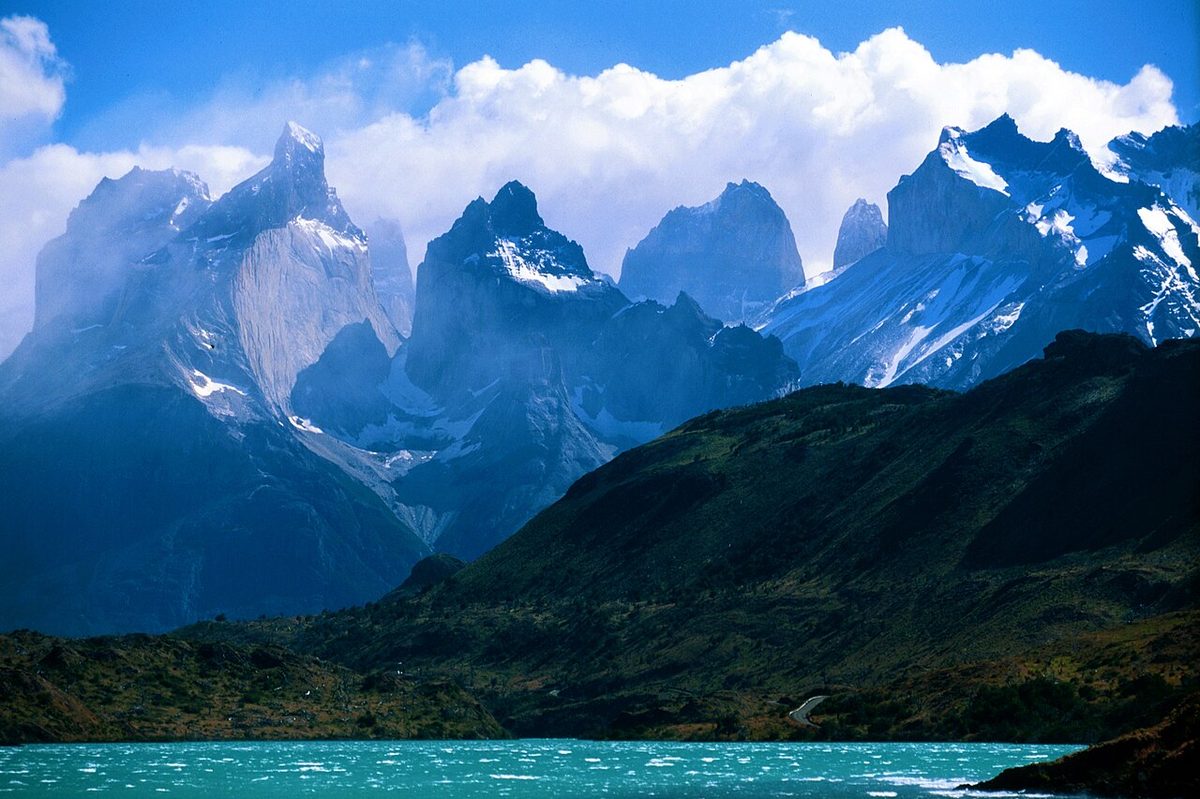
0 — 2 km Fig. 1 · The granite towers above the glacial lake at the end of the Base Torres hike, the most iconic of the best hikes in Torres del Paine · Photo: Murray Foubister / CC BY-SA 2.0 via Wikimedia Commons
The first time I walked up the Ascencio Valley toward the towers, I was so sure the clouds would never lift that I almost turned around. They lifted for about eleven minutes. I have thought about those eleven minutes more than almost anything else from that trip.
That is Torres del Paine in one story: huge payoff, real effort, and weather that decides the day. The park has dozens of trails, and the hard part is not finding a good hike. It is choosing the best hikes Torres del Paine has for your fitness, your days, and the sky you get.
The best hikes Torres del Paine has to offer are the three big ones: Base Torres (Mirador Las Torres), the French Valley (Valle del Francés), and Grey Glacier. Base Torres is the iconic hard day hike to the towers; French Valley and Grey are highlights of the W Trek. For shorter days, Mirador Cóndor, Salto Grande and Mirador Cuernos give huge views for little effort.
This guide is for anyone deciding how to spend their walking time in the park, whether you have one day or eight. I will rank the iconic trails, give you the honest distance, time and difficulty for each, flag which you can do as a day hike and which need the multi-day trek, and help you match a trail to your legs and the season. If Torres del Paine is still just a maybe on your map, start with the breakdown of the park’s sectors and trails for the bigger picture first.
Best Hikes Torres del Paine: Comparison Table
Here is the whole range at a glance. Treat the numbers as “around” figures; sources and signs disagree by a kilometer or two, and your time depends on weather, crowds and how long you stand there staring.
Hike
Distance / time
Difficulty
Payoff
Day hike or trek?
Base Torres (Mirador Las Torres)
~18–22 km / 7–9 hrs
Hard
The three granite towers above a glacial lake
Day hike (long) or W/O
French Valley (Valle del Francés)
~11–26 km / 5–10 hrs
Hard
Hanging glaciers, avalanches, the amphitheatre
W Trek segment
Grey Glacier / Mirador Grey
~11–24 km / 3–9 hrs
Moderate (long)
Blue icebergs and the glacier face
Day hike via catamaran, or W/O
Mirador Cuernos (via Salto Grande)
~5 km / ~2 hrs
Easy
The Cuernos over Lago Nordenskjöld
Day hike
Mirador Cóndor
~4 km / ~1–1.5 hrs
Easy
Panorama over Lago Pehoé and the massif
Day hike
Salto Grande
~1 km / ~20 min
Easy
A thundering turquoise waterfall
Day hike
Lago Grey beach
~5 km / ~2 hrs
Easy
Icebergs on a black-sand beach
Day hike
Cerro Ferrier (Mirador Ferrier)
~3–6 km / ~3 hrs
Hard (steep)
A high, unusual view over lakes and ice field
Day hike
W Trek
~70–80 km / 4–5 days
Moderate–hard
All three highlights, linked
Multi-day trek
O Circuit
~110+ km / 7–9 days
Hard
The W plus the remote backside and John Gardner Pass
Multi-day trek
Swipe to see all columns
Table 1
A quick orientation before we go trail by trail. The park sits roughly 112 km from Puerto Natales, about two to three hours by road, and many hikes are reachable by bus and the Lago Pehoé catamaran rather than a rental car. Buy your park entry in advance through official channels, and check current rules close to your trip, because access here is seasonal and managed. More on both below.
The Iconic Hikes in Torres del Paine, Ranked
If you only remember three names, remember these. They are the hikes the park is famous for, and they earn it.
1. Base Torres (Mirador Las Torres)
This is the one on the postcard, and the one almost everyone asks about first. You hike up the Ascencio Valley, past Refugio Chileno, through forest, and then up a brutal final climb over a boulder field to a glacial lake with the three towers rising straight out of the rock behind it. When the weather plays along, it is one of the great mountain views on earth.
It is also a hard day. Figure on around 18 to 22 km round trip and roughly seven to nine hours of walking, sometimes ten if you are unhurried or the wind is fighting you. The total ascent to the lake is around 900 metres, and the last 45 minutes up the moraine is steep, rocky and slow. Trekking poles help a lot, especially coming down.
You can do Base Torres as a day hike. If you are staying inside the park near the Las Torres sector, the day is cleaner. From Puerto Natales it is a long day: take the first bus, transfer at Laguna Amarga to the Welcome Center, and watch the clock, because rangers commonly close the trail above Chileno around 16:00. Sunrise at the towers is legendary, but for day hikers from town it is hard to reach in time; that magic is usually reserved for people sleeping at Chileno or Central.
Is it worth it? Yes, with one caveat I will keep repeating: treat the view as a hope, not a guarantee. I have met people who hiked all the way up into a wall of cloud and saw nothing but their own breath. They still mostly said they would do it again. If your weather window is bad and you have other days, it is completely reasonable to save this one. For the full breakdown, see the dedicated Base Torres hike guide. Best season is roughly November through March; in winter and shoulder months an authorized guide is required (more on that under safety).
2. French Valley (Valle del Francés)
The French Valley is the wild green heart of the W, and my personal favorite stretch of the whole park. You climb off the lakeshore at Italiano into a hanging valley ringed by Paine Grande, the Cuernos and a glacier that calves with a crack like distant thunder. If you are patient, you will see chunks of ice peel off the mountain and avalanche down while you eat your lunch.
Here is the honest part: this is not a roadside day hike. The French Valley is a segment of the W Trek, reached on foot from Paine Grande or the Cuernos/Francés sector, not from a parking lot. From the Italiano area it is around 7 km return to Mirador Francés (about two hours) and around 11 km return to the higher Mirador Británico (about four to five hours). Add the mostly flat approach from Paine Grande, roughly 7.6 km each way, and a full day to Británico and back runs something like 22 to 26 km and nine to ten hours. The climb above Italiano is steep, which is why I rate it hard.
A couple of practical notes. The push to Británico only makes sense in clear weather; in cloud you grind up for views you will not get, and Mirador Francés is genuinely beautiful on its own, so turning around there is no failure. Note too that the Británico campground has been closed to hikers in recent seasons (climbers with a permit only), so plan around the day-use trail. To actually reach this valley you will almost certainly be on a multi-day route, which is its own planning project, covered in the W Trek and O Circuit guide.
Grey is the ice end of the park, and it is the one I would steer you toward on a gray, moody day, because the icebergs glow blue and the low light suits them. From Refugio Paine Grande you walk roughly 11 km to Refugio Grey plus about another kilometer to the lookout, overlooking Lago Grey and its fleet of floating bergs the whole way. As a full day from Paine Grande and back, that is around 24 km and about nine hours.
The good news is that it is far gentler than Base Torres. The climb is gradual with only a few short steep bits, so I rate it moderate rather than hard. The catch is logistics: you reach the Paine Grande trailhead via the Pudeto–Paine Grande catamaran, which puts you on a tight schedule for the return boat. If a shorter day suits you, Mirador Grey sits about halfway, roughly 11 km return and three hours, and still delivers a wide view of the glacier in the distance.
My real advice: if you can swing a night at Refugio Grey, do it. Staying over lets you walk past the refugio to the suspension bridges (about 40 minutes further) for a much closer, more dramatic look at the ice, and it removes the boat-clock stress entirely. It also opens the door to an ice trek or a kayak among the bergs if either is on your list. Grey is part of the W, but unlike French Valley you can also reach it relatively independently as a long day via the catamaran.
4. Mirador Cuernos (via Salto Grande)
I am ranking this fourth among the icons because the payoff-to-effort ratio is absurd in the best way. From Pudeto you walk a flat 10 to 20 minutes to Salto Grande, a powerful turquoise waterfall, then continue along Lago Nordenskjöld to Mirador Cuernos, a roughly 5 km round trip of about two hours that is almost entirely flat. The reward is a head-on view of the Cuernos del Paine rising over a blue lake with black-sand beaches, looking straight across the water at the mouth of the French Valley.
It is easy enough for most ages and fitness levels, which makes it perfect for a weather-buffer day, a recovery day after Base Torres, or anyone who wants the scenery without the suffering. The one warning is wind: this exposed shoreline gets ferocious gusts, and rangers sometimes close the trail when it is dangerous. Check the forecast, and do not let the short distance trick you into leaving your shell behind.
Easy and Short Hikes in Torres del Paine
Not every day needs to be heroic. Some of my favorite mornings in the park were short walks where I stopped trying to prove anything and just watched the light move. These are the best easy hikes in Torres del Paine, and they are gold for families, mixed-ability groups, photographers, and anyone visiting without a car. If short and scenic is your whole plan, the easy hikes in Torres del Paine guide goes deeper.
Mirador Cóndor
Possibly the best view-per-minute hike in the park. It is a short, steep climb of around 1 to 2 km each way from the Pehoé campsite or Hostería Pehoé, roughly 45 minutes to an hour and a half, topping out at a rocky lookout over Lago Pehoé and the entire Paine massif. The wind up here is no joke, but the panorama is the kind of thing people travel across the world for, and most never realize it is a quick walk off the main road.
Salto Grande
If you only have a few minutes, the Salto Grande waterfall is a roughly one-kilometer, ten- to twenty-minute flat stroll from the Pudeto area, and it is worth it even on a cloudy day when the mountains are hidden. It pairs naturally with the Mirador Cuernos walk above, so most people do them together.
Lago Grey Beach
A flat, easy walk of about 5 km round trip (around two hours) from Guardería Grey out to the beach where icebergs that have drifted down the lake run aground on black sand. It is also where the Grey glacier sightseeing ferry departs, so it works well as a low-effort way to get close to ice if a full glacier hike is more than you want. It can be brutally windy on the exposed shore.
Cerro Ferrier, the short-but-steep curveball
I am slipping this in here because it is short in distance but absolutely not easy. Mirador Ferrier is a roughly 3 to 6 km round trip of about three hours, but it climbs around 700 metres almost straight up from Guardería Grey, where you register before starting. The reward is a high, unusual panorama over Lago Grey and Lago Pehoé with the Southern Patagonian Ice Field shimmering in the distance, a completely different angle from the famous trails. It is one of the windiest spots in the park, so save it for a calmer, clearer day and bring more water than you think you need, since there is none on the route.
Two of the park’s best experiences, French Valley and Grey, live on the multi-day trekking routes, so it is worth understanding the big picture even if you are mostly day hiking.
The W Trek
The W Trek is the classic, named for the W-shape it traces through the park’s three main arms: Base Torres, the French Valley and Grey Glacier. Chile Travel describes it as a 70 km route usually done over five days, linking exactly those three highlights. Most reasonably fit hikers can do it with preparation; it is not technical mountaineering, but it is consecutive long days, wind, and fixed accommodation that you must reserve in advance.
The W is the right call if you have four to six trekking days and want the marquee scenery in one continuous trip. It is the reason a lot of people come to Patagonia at all.
The O Circuit
The O Circuit (also called the Paine or Macizo circuit) adds the remote backside of the massif, sectors like Serón, Dickson and Los Perros, plus the serious John Gardner Pass, on top of the W. Plan on roughly seven to nine trekking days. It is harder, quieter, more weather-exposed and more committing, and it is tightly seasonal.
Both routes are a booking system as much as a trail: refugios and campsites, transport, meals and direction all have to line up, and spaces sell out months ahead in summer. I will not rehash all of that here, because the W Trek and O Circuit guide treats it as the separate planning project it deserves to be. The key point for this page: you do not have to commit to the W or O to see the best of the park. You can stitch together day hikes instead.
Best Hikes by Difficulty and Time Available
Let me make this practical. Pick your constraint, then pick your trail.
If you have a couple of hours and want a big view for little effort: Mirador Cóndor or Salto Grande plus Mirador Cuernos. Both are easy, both are stunning, both are achievable for most fitness levels.
If you have a half day and decent fitness: Mirador Grey (around three hours plus the catamaran) for ice, or Cerro Ferrier (around three hours but very steep) for a panorama you will not get anywhere else.
If you have one full, strong day: Base Torres. It is the hardest single day hike here and the most iconic. Go early, watch the cutoff times, and be ready to turn around.
If you have several days and want the marquee scenery without booking a trek: base yourself inside the park or near the edge and string together Base Torres, a Grey day via the catamaran, and the easy Cuernos and Cóndor walks. This is, honestly, my favorite way to experience the park if the budget allows, because it keeps you flexible around the weather instead of locking every night to a reservation.
If the continuous trek itself is the goal: the W (four to five days) or the O (seven to nine). For deciding between day hiking and trekking, the Torres del Paine trip planner and the trek guide both lay out the trade-offs.
Which of French Valley or Grey is “better” is the eternal debate. French Valley has the more dramatic, enclosed mountain theatre; Grey has the ice and the easier walking. On a clear, calm day I would pick French Valley. On a moody gray day, Grey wins every time.
Best Time of Year to Hike Torres del Paine
The short version: roughly November through March is the prime hiking window, with December to February offering the broadest access and longest days, and March a personal favorite for its autumn colors, thinner crowds and softer light.
Summer (December to February) gives you the most daylight, the fullest transport and refugio services, and the highest odds of completing every trail, at the cost of crowds and higher prices. The Base Torres trail in particular can feel like a procession in January. October, November and April are shoulder seasons that can be beautiful but demand more flexibility, since snow, wind and reduced services can close or complicate the higher routes.
Winter is a different animal entirely. Several of the signature trails, including the French Valley and the Base Torres viewpoint, routinely close under snow, and the backside of the O shuts down when the rangers leave. If you are even considering a cold-season trip, read the Torres del Paine winter guide and build a winter-specific plan rather than assuming summer routes are open. For the wider seasonal call across all of Patagonia, the guide to picking a travel month guide compares months in detail.
One constant in every season: the weather changes fast and the wind is almost guaranteed. Locals joke about four seasons in a day, and they are barely joking. Plan your hardest hike for your best-looking weather window, and keep an easy walk in your back pocket for the day the massif disappears.
Packing here is about wind, sudden rain, strong sun, and good decisions. Even on the short easy trails, the exposure can be serious. My baseline daypack for any of these hikes:
A windproof, waterproof shell. Non-negotiable.
A warm mid-layer plus a moisture-wicking base layer.
Hat, gloves and a buff or neck gaiter, even in summer.
Sunglasses and sunscreen; the UV is intense and the wind hides it.
Broken-in hiking boots or trail shoes.
Trekking poles, especially for Base Torres and Ferrier descents.
At least a liter of water; several trails (Ferrier, parts of Base Torres) have no reliable water, though French Valley and Grey have streams.
Snacks and lunch for the long days; only some sectors sell food.
Offline maps and a power bank.
Your park entry confirmation and the ID used to book it.
For a head-to-toe checklist that covers footwear, layering systems and safety kit for all of Patagonia, lean on the Patagonia hiking, camping, gear and safety guide. Match your pack to the actual hike: a Cóndor stroll and a French Valley day are not the same problem.
Safety, Permits and Turning Around
Three things keep you safe in this park: respecting the weather, respecting the rules, and being willing to quit. CONAF, the agency that runs the park, reminds visitors that this is a protected wild area where help can take hours to arrive in an emergency. That is not a formality; it is the reason a conservative decision beats a heroic one every time.
A few specifics that matter for hikers, current as of this fact-check and subject to change:
Guide requirements. CONAF has required an authorized guide on the mountain trails, including Base Torres and the W circuit routes, from April 27 through August 30, 2026. Dates shift yearly, so verify before you go.
Seasonal closures. The W mountain circuit has been listed as closed in June and July, and the O/Paine Massif Circuit closed until October 31, 2026. The French Valley and Base Torres viewpoint regularly close under winter snow.
Lake crossings. The Grey and Pehoé navigation connections can be suspended in winter, which breaks routes that depend on the catamaran.
Daily cutoffs. On Base Torres, rangers commonly close the upper trail above Chileno around 16:00. Start early enough to clear it.
You also need a valid park ticket to hike, bought in advance through the official portal, with the matching ID at the gate; the Torres del Paine tickets guide covers the route-based system and how to buy. And because the trailheads are spread across the park and many are reached by bus and boat rather than car, plan your transport before your hike, not after; the bus and transfer options to the park guide untangles the buses, transfers and catamaran timing.
Always check the official CONAF page close to travel. A blog from two years ago, including parts of this one if you read it late enough, is not a substitute for current park notices.
Torres del Paine Hikes FAQ
What is the best hike in Torres del Paine?
Base Torres (Mirador Las Torres) is the most iconic and the one most worth prioritizing if you only do one, ending at the granite towers above a glacial lake. The French Valley and Grey Glacier are the other two standouts, both part of the W Trek. For a fraction of the effort, Mirador Cóndor and Mirador Cuernos deliver enormous views.
How long is the Base Torres hike and how hard is it?
Base Torres is around 18 to 22 km round trip and takes roughly seven to nine hours, occasionally ten. It climbs about 900 metres, with a steep, rocky boulder field in the final stretch, which is why it rates as hard. It is not technical, but it demands real fitness, an early start, and trekking poles for the descent.
Can you do Torres del Paine as day hikes without the W Trek?
Yes, and many travelers do. Base Torres, Grey Glacier (via the catamaran), Mirador Cuernos, Mirador Cóndor and Cerro Ferrier can all be done as day hikes from inside the park or, with longer travel, from Puerto Natales. The main exception is the French Valley, which sits mid-route on the W and effectively requires a multi-day trek to reach.
What are the best easy hikes in Torres del Paine?
The best easy hikes are Mirador Cóndor (around 45 minutes to 1.5 hours for a panorama over Lago Pehoé), Salto Grande and Mirador Cuernos (a roughly two-hour flat walk to the Cuernos and a waterfall), and the Lago Grey beach walk to see icebergs. They suit families and anyone wanting big scenery without a hard climb, though all are very windy.
Do you need a guide to hike Torres del Paine?
In peak summer, prepared hikers can do most day hikes and the W independently with a valid ticket and reservations. Outside summer it changes: CONAF has required an authorized guide on the mountain trails, including Base Torres, roughly late April through August. Always check the current CONAF rules for your dates, because guide requirements and closures shift each season.
What is the best time of year to hike Torres del Paine?
Roughly November through March is the prime window, with December to February giving the longest days and fullest services, and March offering autumn color, fewer crowds and gentler light. Winter closes several signature trails under snow and adds guide requirements, so it needs a specialized plan rather than a normal summer itinerary.
Is French Valley or Grey Glacier the better hike?
It depends on the day. French Valley offers a more dramatic, enclosed mountain amphitheatre with hanging glaciers and avalanches, but it is harder and only rewarding in clear weather. Grey Glacier is gentler and centered on blue icebergs and the glacier face, and it actually looks best under moody gray skies. On a clear, calm day, pick French Valley; otherwise, Grey.
Final Thoughts
If I had to hand you a plan, it would be simple. Protect one strong day for Base Torres and go on the clearest morning you get. Build in a Grey day for the ice, ideally with a night at the refugio so the boat clock stops bossing you around. Keep Cóndor and Cuernos as your easy, reliable joy on the days the wind wins. And if you have the time and the legs, let the W carry you through the French Valley, because that green amphitheatre is something I still think about.
The mistake I see most often is treating Torres del Paine like a checklist to be completed at all costs. It is not. It is a place that rewards patience and punishes ego. Walk the hikes that fit your body and your weather, turn around without guilt when the mountain says so, and let the towers show themselves on their own schedule. When they do, even for eleven minutes, you will understand why people come back.
For everything around the hiking, the park entry, transport, where to sleep and how it all fits a wider trip, work back up to the walkthrough of Torres del Paine logistics.
Trail distances and times are approximate and compiled from multiple field reports; they vary by route, signage, weather and pace. Always verify current trail status, closures and guide requirements with CONAF before you hike.