The first time I planned a W Trek, I spent more anxious hours on food than on the route itself. The food part was a fog: buy full board, carry everything, you can cook, you can’t cook, the supermarket is tiny, the refugio food is overpriced. Here is the practical bible I wish I’d had.
Sorting out your W Trek food comes down to one decision repeated each night: do you eat what the refugio serves, or feed yourself? You can buy full board, half board, or a box lunch; carry and cook your own; buy snacks as you go; or mix all of it. A hybrid usually wins. The one hard rule: you can only cook in designated camp shelters, and at Chileno stoves are banned outright.
This guide is for anyone who has more or less settled on the W Trek in Torres del Paine and now has to feed themselves across four or five demanding days. If you are still choosing between the W, the O Circuit, and day hikes, start with the parent guide first, then come back here to handle meals.
W Trek Food at a Glance
Here is the whole decision in one table. Costs are rough per-person, per-day figures for 2026-27 and move with season, operator, and currency, so treat them as ballpark and confirm before you book.
| Option | What’s included | Approx cost/day | Added pack weight | Best for (hedged) |
|---|---|---|---|---|
| Full board | Breakfast, box lunch, hot dinner at the refugio | ~$140 pp/night of meals | Near zero | Comfort-first hikers, refugio sleepers, people who hate logistics |
| Half board | Breakfast + dinner; you sort lunch | ~$90 pp/night of meals | Light (you carry lunch/snacks) | Most people, honestly; the sweet spot |
| Box lunch only | One packed trail lunch (sandwich, fruit, nuts, chocolate) | ~$40 each | Near zero for that meal | Cook dinner yourself but skip making lunch |
| Self-catering | Whatever you carry and cook in camp shelters | ~$5-10 pp | High (~600-800 g food/day + stove/fuel) | Budget hikers, campers, special diets, control freaks (lovingly) |
A few honest takeaways before the detail. Full board is genuinely expensive but it makes the trek almost frictionless and your pack feather-light. Self-catering is dramatically cheaper but it is the heaviest, fiddliest option and it runs straight into the Chileno stove ban. Half board, or a half-board-plus-carried-lunch hybrid, is where most well-prepared hikers I know land. There is no single right answer, only the one that fits your budget, your back, and how much you want to think about dinner after a 17-kilometre day.
Prices throughout this article reflect what operators were publishing for 2026-27 as of June 2026. Always verify current rates and inclusions with Las Torres Patagonia and Vertice Patagonia before you pay.
How to Plan Your W Trek Food
Plan your W Trek food in the same order you plan everything else on this route: accommodation first, then meals, then groceries, then weight. Do it backwards and you will overpack, overspend, or get caught at Chileno with a stove you legally can’t light.
The W is a linear trek through Torres del Paine, and it is run by two companies, not one. That split matters for food. The east side and the towers, Central, Chileno, Francés, and Cuernos, are operated by Las Torres Patagonia (you may still see the old name Fantástico Sur). The west side, Paine Grande and Grey, is operated by Vertice Patagonia. Each sets its own meal prices, its own inclusions, and its own rules, including which sites offer gluten-free food. So your food plan is not one decision. It is a chain of nightly decisions tied to who runs the sector you booked.
Work through it like this:
- Lock your W Trek itinerary and reservations first, because available beds and platforms decide your route.
- For each night, decide: refugio meals or self-cater?
- Note any night where cooking is banned or you have no cooking gear, and pre-book meals there.
- Only then buy groceries and gas in Puerto Natales for the nights you’re feeding yourself.
Get that sequence right and the rest of this article is just filling in the details.
The Three Ways to Eat on the W
Boiled down, you have three levers and you can pull them in any combination, night by night:
- Reserve meals. Add breakfast, a box lunch, dinner, half board, or full board when you book your bed or campsite. Easiest, priciest, lightest pack.
- Carry and cook. Bring your own food and a gas stove, and cook in the designated camp cooking areas. Cheapest, heaviest, most freedom, most rules to respect.
- Buy on the spot. Grab snacks, an à la carte burger or pizza, or basics from the camp mini-markets. Convenient backup, never a reliable full plan.
Most experienced W hikers I’ve compared notes with do not choose one. They reserve dinner where cooking is banned or annoying, carry breakfasts and trail lunches that need no stove, and buy a beer and a hot meal somewhere along the way as a treat. That hybrid is exactly what the parent pillar recommends, and it’s right.
W Trek Meals Compared: Full Board vs Half Board vs Self-Catering
Let’s get specific about each option, because the brochure words hide real trade-offs.
Full Board
Full board means the refugio feeds you completely: dinner the evening you arrive, breakfast the next morning, and a box lunch to carry out. As of 2026-27, Las Torres sites priced full board at around $140 per person per night of meals (rising to roughly $190 over Christmas and New Year). Vertice sits in a similar range. It is a lot of money, and over four nights it adds up fast.
What you get for it is real, though. Your pack drops by a full day’s food and you skip cooking and cleaning after a hard day in the wind. If you’re sleeping in refugio beds rather than camping, and budget is not the constraint, full board is the path of least resistance. Pair it with the bed and gear choices in the W Trek refugios guide.
Half Board
Half board covers dinner and breakfast, and leaves lunch to you. Las Torres priced it around $90 per person per night for 2026-27. This is my quiet favourite for most people. You get the heavy, morale-restoring hot dinner and a real breakfast without cooking, you save meaningfully versus full board, and the only thing you carry is a light trail lunch and snacks, which you’d want to control anyway. It’s the most flexible value play on the W.
Box Lunch and Individual Meals
You don’t have to buy a package. Most sites sell meals à la carte: roughly $40 for breakfast, $40 for a box lunch, and $70 for dinner at Las Torres in 2026-27. That lets you build a custom plan, say, cook your own dinners but buy a box lunch on the day you can’t be bothered to assemble one. Full board usually carries a small discount over buying all three separately, so do the arithmetic for your specific nights.
A box lunch, in my experience and across the operators, is typically a sandwich or wrap, a piece of fruit, some nuts, and a chocolate bar or cereal bar. Filling enough, rarely exciting, and easy to supplement with your own snacks.
Self-Catering
Self-catering means you carry your food and a gas stove and cook in the camp shelters. It is by far the cheapest approach. One detailed account I trust spent only around $82 USD between four people on food for an eight-day O Circuit, which works out to roughly $20-27 per person for the whole trek. The W is shorter, so your food cost can be even lower. For a deeper look at going fully independent, see the self-guided W Trek guide.
The catch is weight, effort, and rules. You carry every calorie, you cook in cramped shared shelters after long days, and you cannot cook at all at Chileno. More on all of that below.
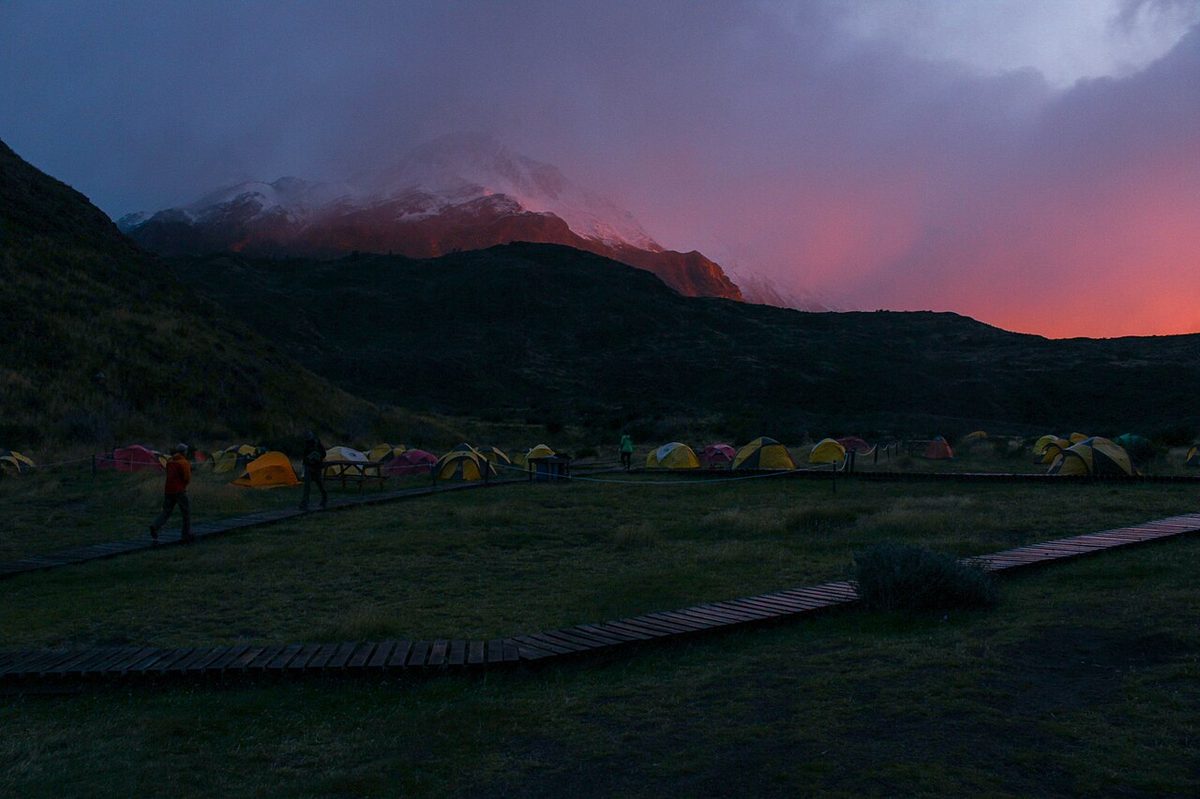
A Realistic Day-by-Day W Trek Meal Plan
Here’s a meal plan mapped to a classic 4-to-5-day W, written for a hybrid hiker who carries breakfasts and lunches, cooks some dinners, and pre-books meals where cooking is banned or impractical. Adjust to your direction and bookings; this assumes the common east-to-west or west-to-east sectors.
Multi-day hiking in Torres del Paine is a high-output activity. On a big day, French Valley or the towers, you’re realistically burning somewhere around 3,000 to 4,000 calories, and you want to eat toward that. Lean carb-heavy, with steady protein and some fat, and don’t ration on the climbs. These numbers are approximate and depend on your size, pace, and pack weight, so use them as a floor to aim past, not a ceiling.
Day 1 (arrival / shorter hike). Big breakfast in Puerto Natales before the bus. Carried trail lunch: tortilla wraps with cheese and salami, plus trail mix. Dinner: a hot cooked meal in camp (couscous with a stock cube and chorizo) if your sector allows cooking, or a reserved dinner if it’s a no-cook night.
Day 2 (Grey or French Valley, long). Breakfast: instant oats with powdered milk and sugar, plus coffee. On-trail snacks every couple of hours: cereal bars, nuts, dried fruit, chocolate. Lunch: crackers with peanut butter or cheese. Dinner: pasta with a tomato-sauce sachet and parmesan, soup to start.
Day 3 (transit / central section). Breakfast: oats or muesli. Box lunch or carried wraps. Dinner: quick-cook rice with lentils or a dehydrated soup; this is a good night to buy a beer and a slice of pizza from a camp restaurant if one’s open.
Day 4 (towers approach, often via Chileno). This is the night to pay attention. If you’re staying at Chileno, you cannot use a stove, so pre-book a meal there or carry cold, no-cook food (wraps, cheese, salami, bars). Breakfast: oats. Lunch: trail snacks.
Day 5 (sunrise towers, then exit). Pre-dawn start, so keep a snack and a warm drink ready the night before. Eat a real breakfast after you descend, or a reserved one, then exit. Celebrate in Puerto Natales with the first proper meal that isn’t carb-on-carb.
The throughline: the high-effort days demand the most fuel, and at least one night (Chileno) effectively forces a no-cook plan. Build the rest around those facts. For how these days actually walk, cross-check the W Trek itinerary and the W Trek difficulty guide.
Cooking Rules on the W Trek, Sector by Sector
This is the section that saves people from a bad surprise. Cooking is allowed on the W, but only within tight limits, and one whole sector bans stoves completely.
The universal rules across Torres del Paine:
- You may only cook in the designated cooking shelters at official campsites, usually a simple roofed structure with tables.
- Only gas canister stoves are permitted. No open fires, ever. No alcohol burners, no liquid-fuel stoves, no wood or solid-fuel stoves.
- No cooking inside your tent, along the trail, or at viewpoints. Even boiling water for soup waits until you reach camp.
These aren’t arbitrary. Careless cooking and fires have burned huge swathes of this park, which is why the rules are strict and enforced. Treat them as non-negotiable.
The Chileno Exception (Stoves Banned)
The single most important cooking fact on the W: at Chileno, stoves are prohibited entirely. Las Torres Patagonia states it plainly on their Chileno page, citing the high risk of forest fire in that narrow, wooded valley below the towers. Some hikers have reported being allowed to cook there in practice, but the official rule is no stove use at all, and you should plan as if it’s strictly enforced, because it can be.
That means if you self-cater and your itinerary puts you at Chileno the night before the towers, you have three real options: pre-book a meal at Chileno (they sell breakfast, box lunch, dinner, half board, and full board), carry cold no-cook food for that night, or restructure to sleep at Central instead and start your sunrise hike from there. Don’t discover this at check-in.
Cooking by Sector
Here’s how cooking and on-site food shake out across the main W sectors. Operator and stock can change season to season, so verify before you rely on it.
| Sector | Operator | Cook with your stove? | On-site food |
|---|---|---|---|
| Paine Grande | Vertice | Yes, in shelter | Well-stocked mini-market + fuel, restaurant, bar |
| Grey | Vertice | Yes, in shelter | Well-stocked mini-market + fuel, restaurant, bar |
| Francés | Las Torres | Yes, in shelter | Snacks at check-in, small à la carte |
| Cuernos | Las Torres | Yes, in shelter | Snacks, restaurant (pizza/sandwiches), bar |
| Central | Las Torres | Yes, in shelter | Snacks, restaurant, bar |
| Chileno | Las Torres | No — stoves banned | Snacks, small à la carte, beer + coffee |
Paine Grande and Grey are the most useful resupply and cooking points; their mini-markets even sell gas canisters. Chileno is the place to plan around. For the bigger picture of what each refugio offers beyond food, see the W Trek refugios guide.
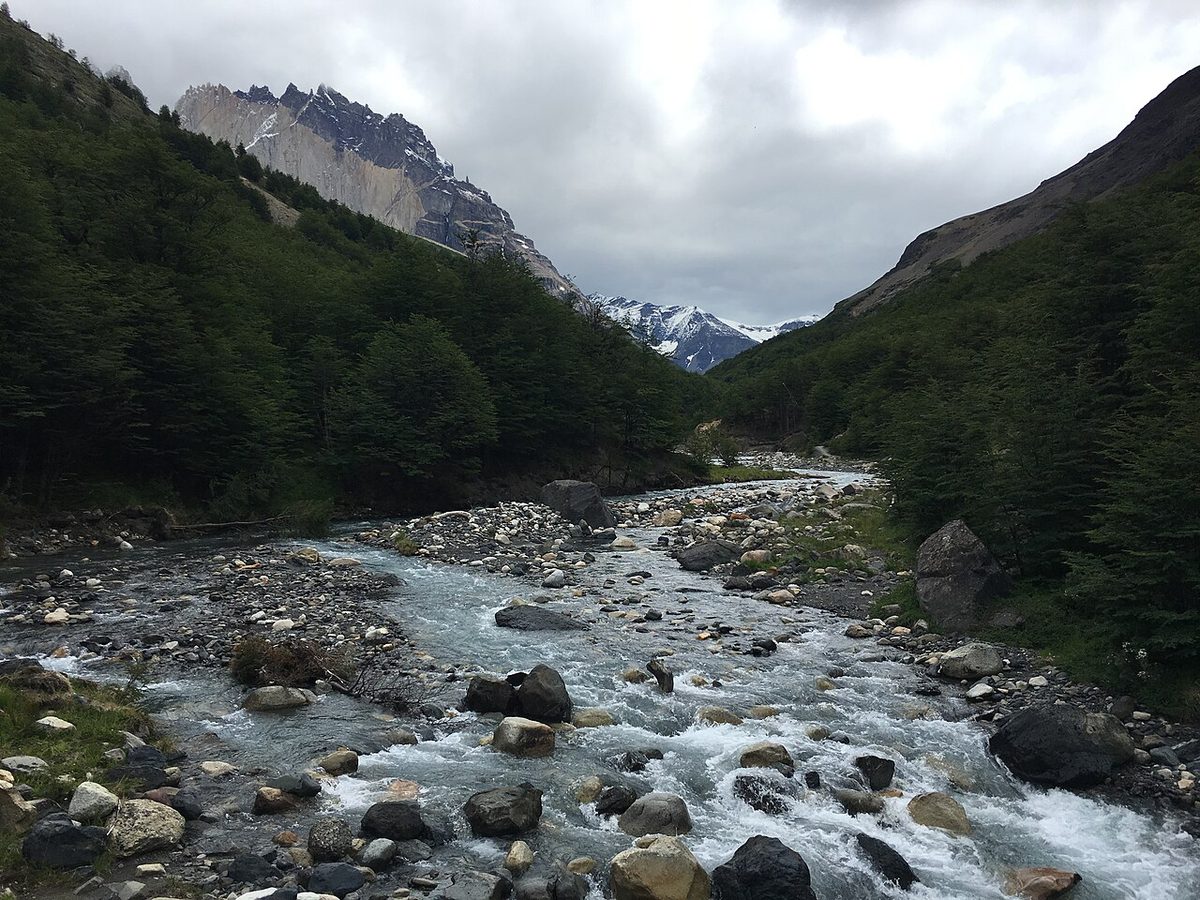
Groceries: Where to Buy W Trek Food in Puerto Natales
If you’re self-catering, your food fate is decided in Puerto Natales, the gateway town for the trek. Plan to do your shop here the day before you head into the park. For the wider town, see the Puerto Natales travel guide.
The two main supermarkets are Unimarc and Supermercado Don Bosco, both with the basics, pasta, rice, lentils, oats, canned tuna and beans, bread, tortillas, chocolate, cookies, tea, coffee. Be warned: the Unimarc here is not large, and selection and quantity are genuinely limited compared with a city supermarket. For dried fruit, nuts, and trail mix in bulk and cheaply, locals point you to Superfrut and Itahue Frutos Secos. For specialized trekking meals and, crucially, cooking gas, the outdoor shops like RentalNatales stock canisters and gear.
Where to find what in Puerto Natales:
- Unimarc / Supermercado Don Bosco — pasta, rice, oats, canned goods, bread, snacks, the everyday staples.
- Superfrut / Itahue Frutos Secos — dried fruit, nuts, trail mix in bulk, best range and prices in town.
- RentalNatales and other outdoor shops — gas canisters, freeze-dried meals, stoves, rental gear.
A Pro Tip: Consider Shopping in Punta Arenas
If you’re routing through Punta Arenas, the regional flight hub, before Puerto Natales, do a chunk of your food shop there. Punta Arenas is larger, is a duty-reduced zone, and has a far wider, cheaper range than the single Unimarc in Puerto Natales. Carry the non-perishables down and you’ll eat better for less. For how the towns connect, see how to get to Patagonia.
Buying Food on the Trail
You can top up inside the park, but treat it as a backup, not a plan. Paine Grande and Grey have well-stocked mini-markets (pasta, biscuits, tomato puree, snacks, and fuel) at a premium; the other sectors mostly sell snacks and a small à la carte menu of pizza, burgers, and sandwiches. Hot meals can sell out by late afternoon in high season, so arrive early if you’re counting on one. Most sites take cards, but carry some cash as backup.
A Self-Catering Shopping List for the W
If you’re feeding yourself, keep it simple, light, and calorie-dense. Here’s a proven template you can scale to your number of days and people. Decant everything into ziplock bags and bin the original packaging, every gram counts, and bring full packs only if you’ll eat them.
Breakfasts: quick-cook oats mixed with powdered milk and sugar (just add hot water), muesli or granola, tea and instant coffee.
Trail lunches: tortillas or bread rolls with cheese and cured salami or chorizo (cured meat survives without refrigeration), crackers with peanut butter, hard cheese.
Snacks (pack a lot): mixed nuts, dried fruit, trail mix, cereal and energy bars, dark chocolate, something salty like crackers or chips.
Dinners (cook in camp shelters): quick-cook rice or couscous with a stock cube and a spice mix, pasta with tomato-sauce sachets and parmesan, instant noodles, dehydrated soup packets, lentils, or freeze-dried meals if you brought them.
Extras: electrolyte tablets or powder, a few magnesium tablets (your legs will thank you by day three), and a small treat for the summit nights.
Note on cured meats: chorizo and salami are cured and hold up fine unrefrigerated; eat anything like bacon early. And remember the camp mice, they will chew through bags and tents for anything edible, so seal food in containers or hang it. For how this fits the rest of your kit, use the W Trek packing list and the broader Patagonia hiking, camping, gear and safety guide.
How Much Food Weight Per Day?
A sensible self-catering target is roughly 600 to 800 grams of dry food per person per day, plus your stove and fuel. That covers a hot breakfast, a trail lunch, generous snacks, and a cooked dinner without you hauling a pantry. Go heavier and you’ll feel it on every climb; go much lighter and you’ll bonk on the big days.
A few weight realities. Fresh and canned food is heavy water weight, so lean on dried staples, oats, pasta, couscous, cured meat, hard cheese, nuts. Freeze-dried trekking meals are the lightest option by far, but they’re expensive and you usually have to bring them from home since selection in Puerto Natales is thin. One gas canister is enough for most W trips for one or two people if you mostly boil water rather than slow-cook; Paine Grande and Grey sell canisters if you run low, but don’t bank on availability. And the simplest weight saving of all: every refugio meal you pre-book is a day of food you don’t carry.
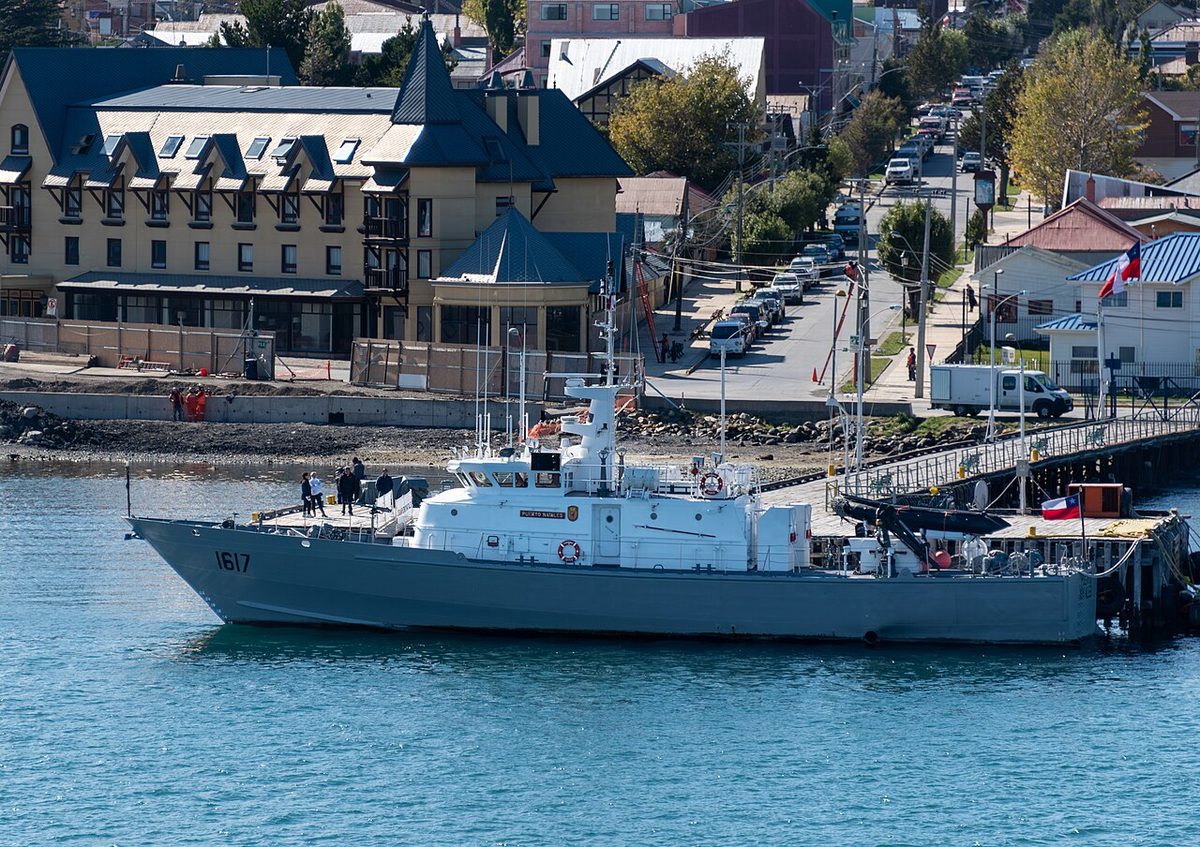
Water and Refilling on the W
Good news on water: you barely need to carry any. Clean sources are everywhere on the W, glacier-fed streams, rivers, and taps at every campsite, and most hikers drink straight from them without filtering. The water is cold, clear, and generally very safe.
Be sensible about where you collect it. Choose flowing water, step off the main trail, and avoid spots downstream of campsites or near animals. If you’d rather be cautious, especially near busy camps, a small filter or purification tablets weigh almost nothing and buy peace of mind; that’s a personal call rather than a strict requirement. Carry one bottle or a bladder and refill through the day rather than lugging litres from camp. Add electrolytes on hot, high-output days to replace what you sweat out.
Dietary Needs: Vegetarian, Vegan and Gluten-Free
You can eat well on the W with dietary restrictions, but you have to plan, and one detail trips people up.
Vegetarian and vegan meals are available at every site that offers meal plans, usually simple vegetable stews or pasta. Request them when you book, and as early as you can, since special meals can be limited.
Gluten-free is the catch. Gluten-free meals are only offered at the Vertice-operated sites (Paine Grande and Grey). Las Torres, which runs Central, Chileno, Francés, and Cuernos, does not offer gluten-free meals. And even where GF is available, park kitchens can’t guarantee against cross-contamination. If you have celiac disease or a serious allergy, the safest plan is to carry and cook your own food, which also gives you full control over ingredients. Self-catering, despite the weight, is genuinely the best option for strict diets.
Can You Bring Food Into Chile?
If you’re flying in or crossing from Argentina, Chile’s biosecurity rules will shape what food you can bring. Bags are scanned on arrival and you must declare food on your customs form. Failing to declare can mean fines even for permitted items.
What you generally cannot bring: fresh or dried meat, dairy (milk, cheese, butter, yoghurt), fresh fruit and vegetables, and seeds or grains. What’s generally allowed if commercially sealed and declared: freeze-dried meals, vacuum-packed snacks, protein and energy bars, instant oatmeal, and powdered soup. Rules change, so check the current SAG (agriculture) and Aduana (customs) guidance before you travel.
One specific warning if you’re coming from El Calafate or elsewhere in Argentina by land: fresh food gets confiscated at the border. Don’t try to carry trek groceries across, buy them in Chile instead, in Punta Arenas or Puerto Natales.
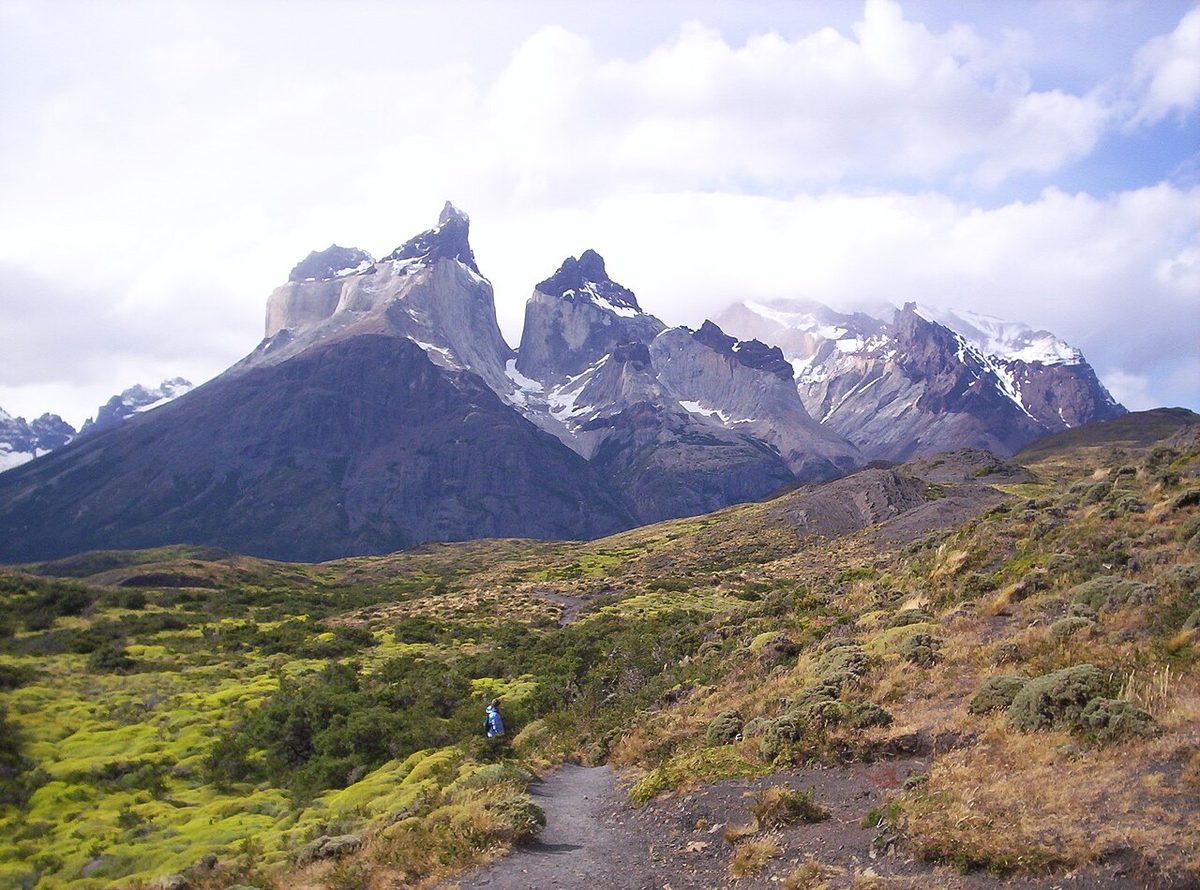
The Real Cost: Catered vs Self-Catered
Here’s the money comparison stripped down, per person, for a 4-night W, in rough 2026-27 terms. Verify current rates before budgeting; these move with season and currency.
| Approach | Rough food cost (4 nights) | Notes |
|---|---|---|
| Full board every night | ~$560 pp | Lightest pack, zero cooking, highest cost |
| Half board every night | ~$360 pp | Hot dinners + breakfasts; carry light lunches |
| Hybrid (cook + one or two box lunches/dinners) | ~$80-200 pp | Most flexible; saves a lot, keeps some comfort |
| Self-catering (own food + stove) | ~$20-40 pp | Cheapest by far; heaviest pack, all the rules |
The spread is enormous, several hundred dollars per person, which is why food is one of the bigger swing factors in your overall trek budget. Self-catering can save a four-person group well over a thousand dollars across a trip, money some hikers would rather spend on more days in Patagonia. But it costs you in pack weight and effort, and it doesn’t solve the Chileno night. Full board buys back all of that friction at a steep price. The hybrid threads the needle: cook the cheap, easy dinners, pre-book the no-cook or hard nights, buy the occasional hot meal as a morale boost.
Don’t compare a self-caterer’s $25 grocery bill with someone’s $560 full-board package and feel cheated. You’re buying different products. Slot whichever you choose into the wider Patagonia trip cost and budget guide, and remember to budget your park tickets separately via the Torres del Paine tickets guide.
Common W Trek Food Mistakes
A few errors I see again and again, all avoidable:
- Overpacking food. The classic. Hauling cans, full pasta packs, and a week of “just in case” snacks makes every climb worse. Decant, portion, and trust the camp mini-markets as backup.
- Forgetting the Chileno stove ban. Self-caterers who don’t plan a no-cook or pre-booked meal for Chileno get caught out. Plan that night first.
- Assuming you can buy gas everywhere. Some camps sell canisters; not all, not always. Buy fuel in town and carry enough. Remember you cannot fly with gas canisters, so always buy them in Chile.
- Booking meals too late. Meals can sell out even when beds and platforms are still available. Reserve food when you reserve the night.
- Ignoring dietary fine print. Gluten-free isn’t available at Las Torres sites, only Vertice. Strict diets should self-cater.
- Trying to carry food across the Argentine border. It gets taken. Shop in Chile.
- Under-fuelling on the big days. The towers and French Valley are not the days to ration snacks. Eat more than feels necessary.
W Trek Food FAQ
Can you cook on the W Trek?
Yes, but only with a gas canister stove and only in the designated cooking shelters at official campsites. Open fires, alcohol and liquid-fuel stoves, and cooking in your tent or on the trail are all banned. The major exception is Chileno, where stoves are prohibited entirely due to forest-fire risk, so plan a no-cook or pre-booked meal there.
Is the food at the W Trek refugios good?
It’s simple, filling, and fine, not gourmet. Expect bread, cereal, eggs and coffee for breakfast; a sandwich or wrap with fruit, nuts and chocolate for the box lunch; and a hot pasta, rice or stew dish with bread for dinner. There’s no menu to choose from; everyone gets the same set meal, which changes day to day with supplies.
Is full board worth it on the W Trek?
It depends on your budget and style. At roughly $140 per person per night it’s expensive, but it makes the trek almost effortless and drops your pack weight by a full day’s food. If you’re sleeping in refugios and money isn’t the limit, it’s worth it. Budget hikers and campers usually do better self-catering or going half board.
Where do you buy food for the W Trek?
Puerto Natales is the main shop, the day before you start. Use Unimarc or Supermercado Don Bosco for staples, Superfrut or Itahue Frutos Secos for cheap bulk nuts and dried fruit, and outdoor shops like RentalNatales for gas and freeze-dried meals. If you pass through Punta Arenas first, shop there too; it’s bigger and cheaper than Puerto Natales.
Is the water safe to drink on the W Trek?
For most hikers, yes. Glacier-fed streams, rivers, and campsite taps along the W are cold, clear, and generally safe to drink straight, no filtering needed. Collect flowing water away from camps and animals. If you want extra caution, a light filter or purification tablets add peace of mind, but most people skip them.
Are there vegetarian and gluten-free options on the W Trek?
Vegetarian and vegan meals are available at every site with meal plans; just request them early when booking. Gluten-free is trickier: it’s only offered at the Vertice-operated sites (Paine Grande and Grey), not at the Las Torres sites, and cross-contamination isn’t guaranteed anywhere. Celiacs and serious allergy sufferers should self-cater for safety.
How much food do you need for the W Trek?
If self-catering, aim for roughly 600 to 800 grams of dry food per person per day, plus stove and fuel, enough for a hot breakfast, trail lunch, snacks, and a cooked dinner. Lean on dried staples over heavy cans. Every refugio meal you pre-book removes a day’s food weight from your pack.
How much does food cost on the W Trek?
It ranges hugely. Self-catering can cost as little as $20-40 per person for the whole trek. Half board runs around $90 per person per night, and full board around $140, so catered meals can total several hundred dollars per person over four nights. A hybrid of cooking plus a few bought meals lands in between.
Final Thoughts
Food on the W is one of those problems that feels enormous before the trip and tiny once you’re out there. The honest summary: decide your nights first, plan around the Chileno stove ban, and don’t be precious about mixing approaches. I’ve cooked couscous in a windy shelter at Grey and I’ve happily paid for a hot dinner at Cuernos after a brutal day, and both were the right call on the day.
If you want my default: book half board or a couple of dinners where cooking is awkward, carry your own breakfasts and trail lunches, buy a beer and a slice somewhere, and keep your pack light. Spend the savings on an extra night in the park, not on hauling a kitchen up French Valley. Now go finish your packing list, confirm where you’re sleeping in Torres del Paine, and if the W ends up not fitting, look at the W Trek alternatives or the longer O Circuit. The wider Torres del Paine travel guide ties it all together.
Sources
- Las Torres Patagonia — Chileno Camp (prices and stove ban)
- TorresHike — Food in Torres del Paine
- Worldly Adventurer — Food Guide for Torres del Paine
- Worldly Adventurer — How to Hike the W Trek Self-Guided
- Vertice Patagonia — FAQ
- CONAF — Torres del Paine National Park
- SAG Chile — agricultural import rules
Last fact-check: June 3, 2026.
Image Credits
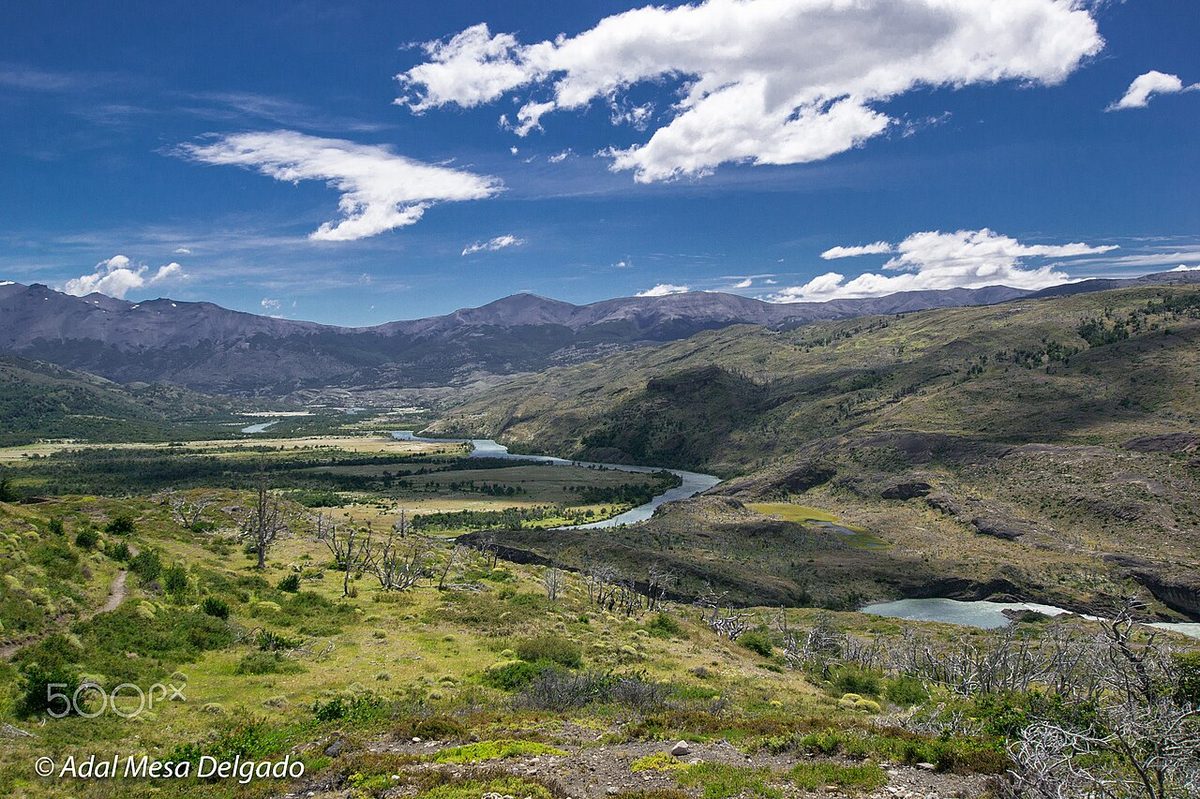
- A hiker on the W Trek in Torres del Paine carrying a pack of food and supplies — Adal Mesa Delgado / CC0 via Wikimedia Commons
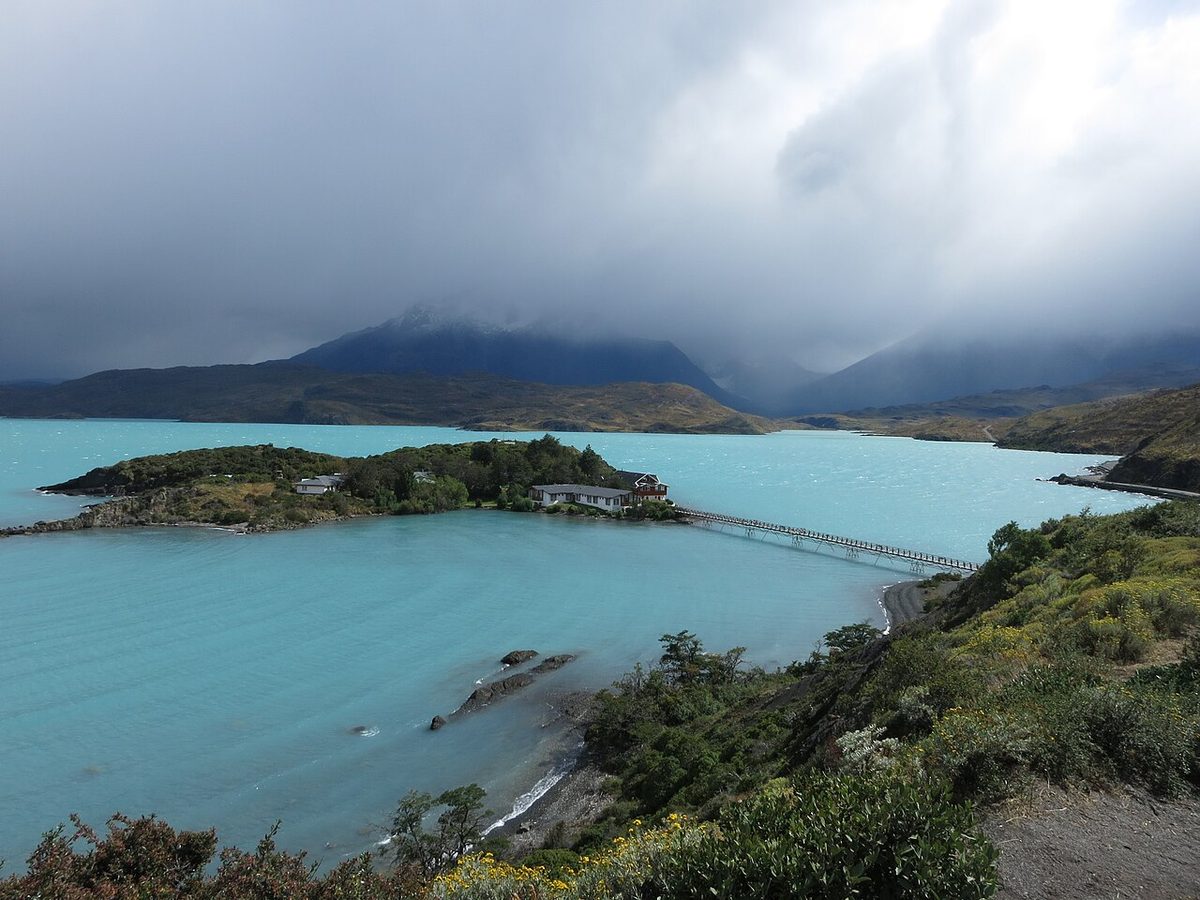
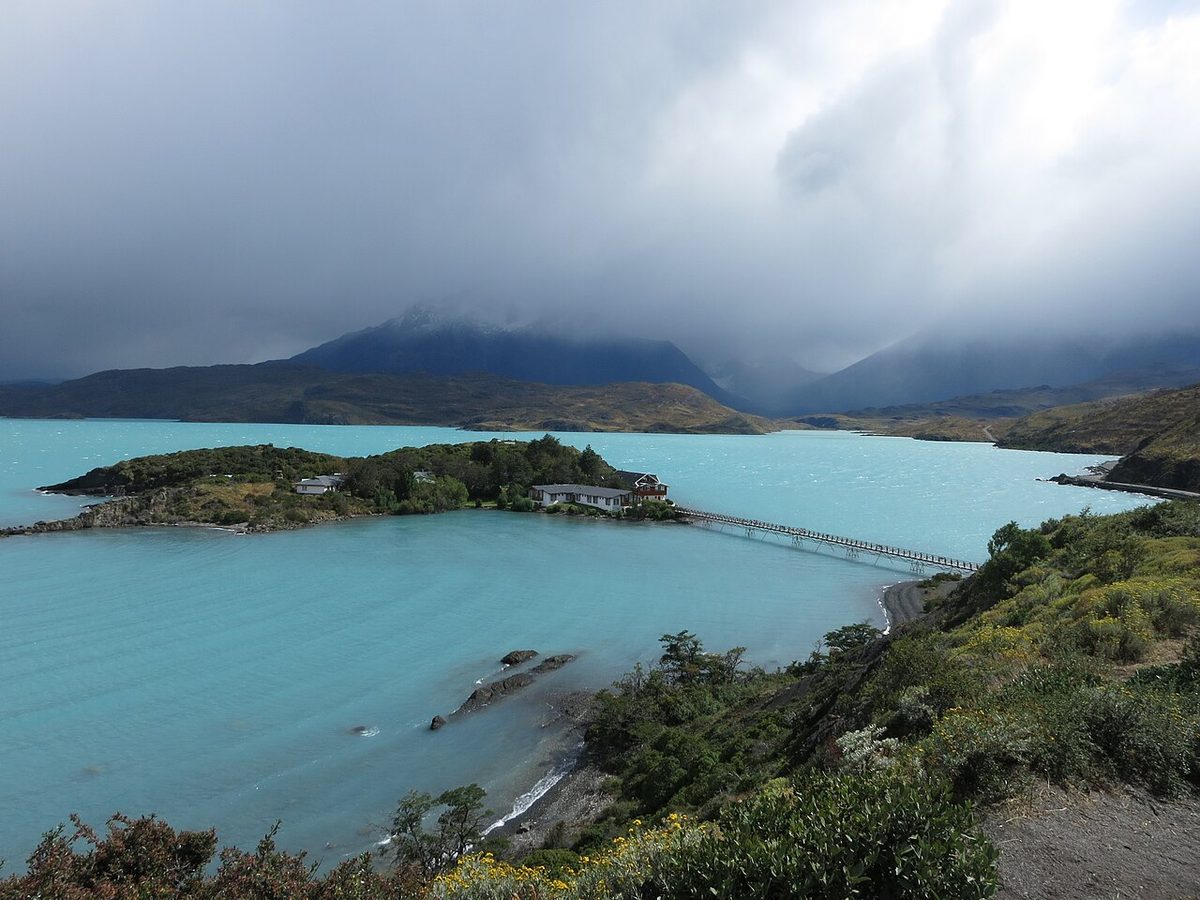
- A refugio and dining shelter on the W Trek in Torres del Paine where hikers eat meals — Alexis Alvarez / CC BY-SA 4.0 via Wikimedia Commons
- A campsite cooking shelter in Torres del Paine National Park used for preparing trekking meals — Fredlyfish4 / CC BY-SA 4.0 via Wikimedia Commons
- Puerto Natales, the Patagonian gateway town where W Trek hikers buy groceries and gas — Gordon Leggett / CC BY 4.0 via Wikimedia Commons
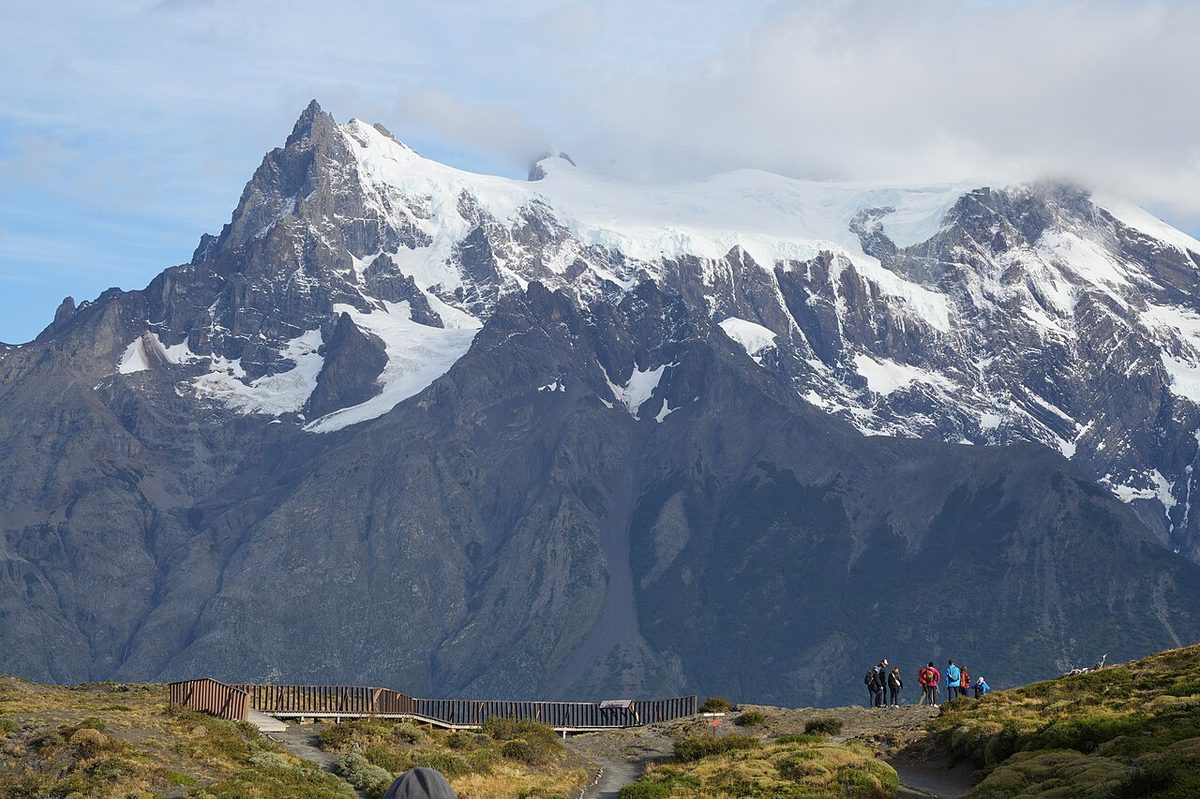
- Cuernos del Paine peaks above Lake Nordenskjold seen from the W Trek route — Jorge Morales Piderit / Public domain via Wikimedia Commons