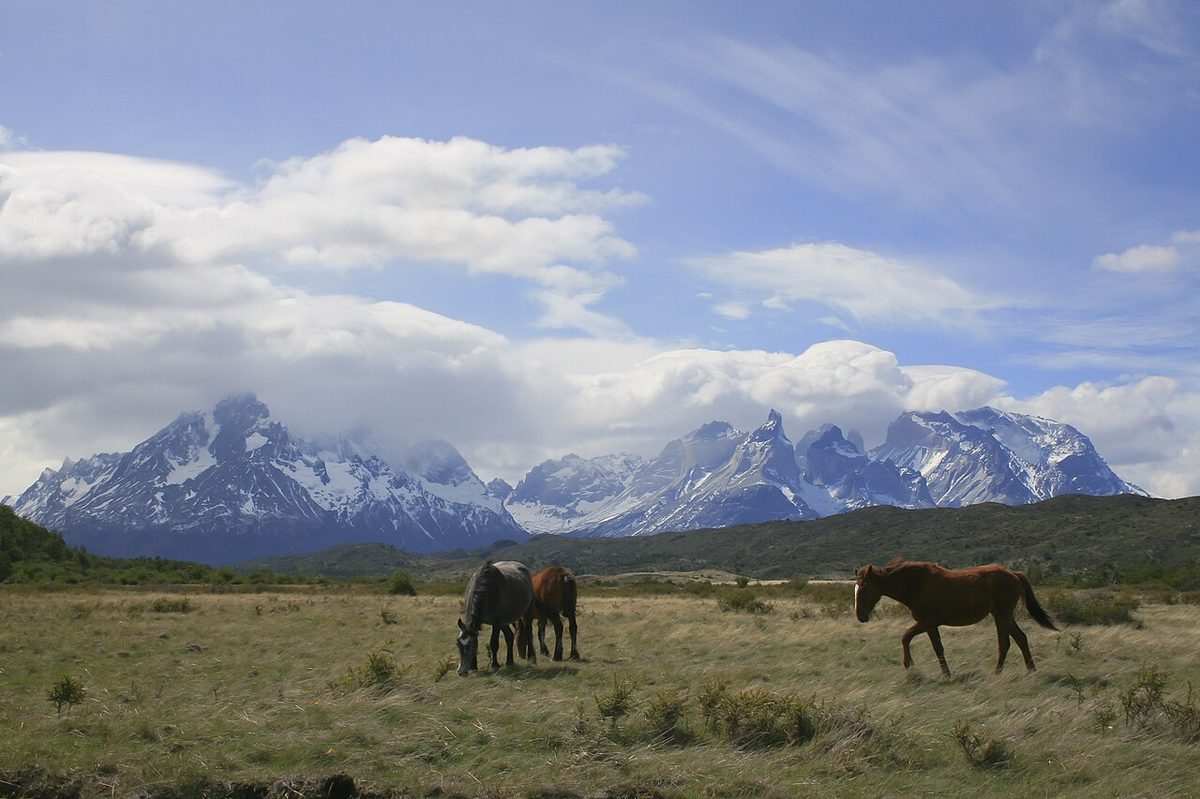
W Trek Packing List: Clothing, Food, Gear and What to Rent
A usable W Trek packing list for Torres del Paine: layered clothing, footwear, the big three, food, electronics, and what to rent vs buy vs bring.
By Patagonia Tourism Guide · First published 24 Jul 2026 · Updated 1 Aug 2026
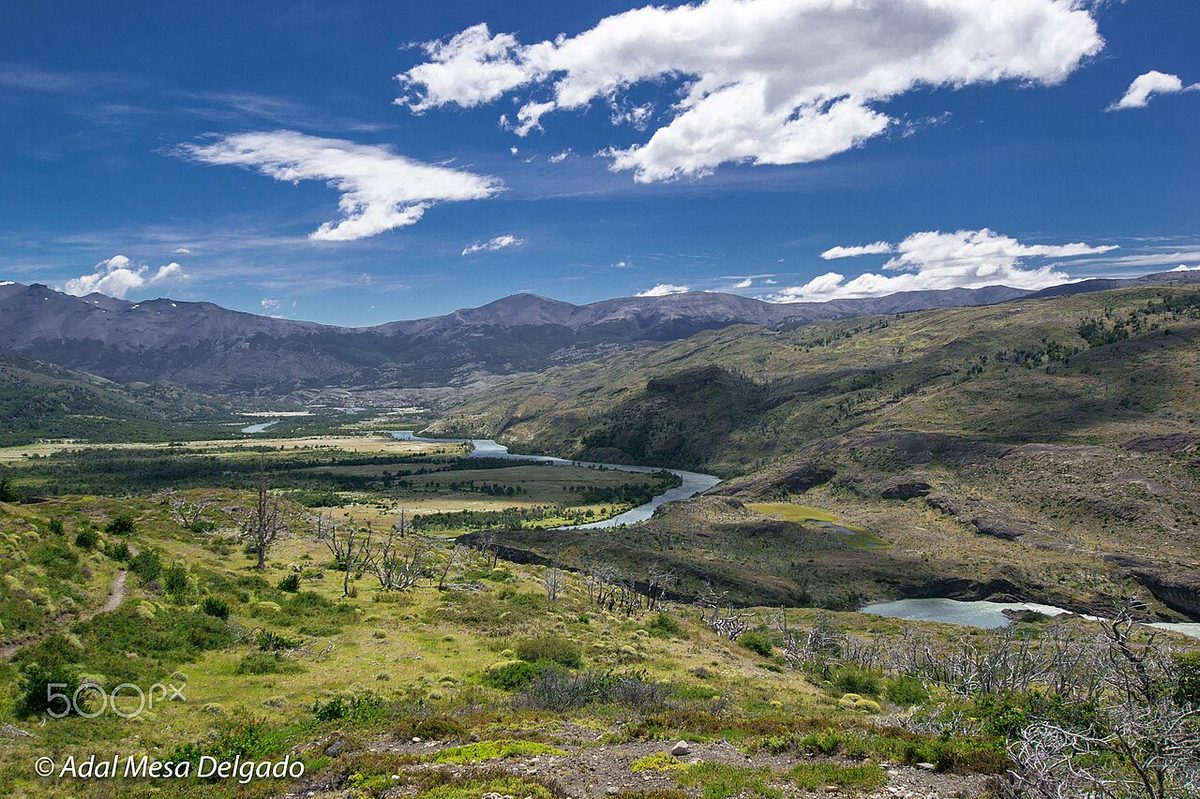
0 — 2 km Fig. 1 · A backpacker with a full pack hiking the W Trek in Torres del Paine · Photo: Adal Mesa Delgado / CC0 via Wikimedia Commons
The first time I packed for the W Trek, I packed for a brand called Patagonia instead of a route called the W. I brought a sleeping bag I did not need for two of my nights, forgot how heavy four days of food actually feels, and stuffed in cotton T-shirts that I never wore once. Then it rained sideways on day three, and I finally understood what everyone meant.
So here is the honest version. Your W Trek packing list is not one list. It is a decision tree, and the first branch is what you booked. A refugio bed with full board is a light, simple pack. Self-supported camping with your own food is a heavy, serious one. Get that right and everything else falls into place.
This guide gives you the layers, footwear, the big three, food gear, electronics, toiletries, documents, and the part most lists skip: exactly what to rent in Puerto Natales, what to buy at home, and what to leave behind.
Last fact-check: June 3, 2026. Park rules, refugio inclusions, gear-rental stock, and prices change. Confirm current details with CONAF, Chile Travel, your refugio operator, and your rental shop before you pay or pack.
At a Glance: Bring, Rent, Buy or Skip
Here is the fast version. The detail and the reasoning come further down, but if you only scan one thing, scan this.
Item
What to do
Why
Waterproof shell, boots/shoes, base layers
Bring or buy at home
Fit and break-in matter too much to leave to chance
Backpack
Bring or buy at home
Must fit your torso; test loaded before you go
Sleeping bag, sleeping pad
Rent in Puerto Natales or reserve in-park
Bulky, route-specific, and only needed if camping or in a “simple bed”
Tent
Rent in Puerto Natales or reserve with your campsite
Patagonia wind wrecks weak tents; rentals are built for it
Stove, pot, fuel
Rent in Puerto Natales (buy fuel locally)
Cannot fly with fuel; only worth it if self-catering
Trekking poles
Rent or bring
Useful but easy to rent cheaply
Food
Buy in Puerto Natales or book refugio meals
Fresh food is confiscated at the Chilean border
Cotton clothing, jeans, a poncho, heavy boots you have not worn
Skip
Cotton stays wet; ponchos sail in the wind
Gaiters, tripod, books, drone
Usually skip
Weight you will not use; drones are restricted
Swipe to see all columns
Table 1
The single most useful sentence on this whole page: do not buy a single item until you know whether you booked refugios with meals or are camping self-supported. The parent pillar makes the same point, and it is the difference between a 7 kg pack and an 18 kg one.
How to Build Your W Trek Packing List
Every good W Trek packing list starts with one question, not a gear store. What did you book?
The W Trek is roughly 70 km over four to five days, and it is a linear route, not a loop, so you sleep in a chain of reserved refugios or campsites. Chile Travel confirms reservations are mandatory before you enter the park. What those reservations include decides your entire pack. There are three common setups.
Refugios with full board. You sleep in a dorm bed and eat breakfast, a box lunch, and dinner at the lodges. This is the lightest, simplest pack. You carry clothes, a daypack, toiletries, electronics, documents, and your daily layers. No tent, no stove, no food weight, and often no sleeping bag. Many hikers manage this in a 30 to 40 litre pack.
Refugios or camping with a mix. Maybe you booked a “simple bed” without bedding, or you are camping a couple of nights and using refugios for others, and buying some meals while carrying others. Now you may need a sleeping bag, and your food and pack grow accordingly. A 40 to 50 litre pack is more realistic.
Fully self-supported camping. You carry a tent (or reserve a pre-pitched one), sleeping bag, pad, stove, fuel, cookware, and all your food. This is the heaviest, most demanding pack, usually 55 to 70 litres. It is also the cheapest and most flexible, and it is what self-guided W Trek hikers most often do.
If you have not locked your accommodation yet, sort that first using the W Trek refugios guide, then come back here. Packing before you know your bookings is how people carry a sleeping bag they never unzip, or arrive at a freezing dorm without one.
The Printable W Trek Checklist
Here is the checklist in the form that actually helps: every item mapped to whether you booked refugios with meals or are camping self-supported. Copy it into your notes app and tick as you pack. (If an item says “yes” for both, you need it either way.)
Item
Refugio + meals?
Camping self-supported?
Waterproof, windproof hooded shell
Yes
Yes
Insulated puffy jacket
Yes
Yes
Fleece or active mid-layer
Yes
Yes
2 base-layer hiking tops (non-cotton)
Yes
Yes
Thermal top and bottoms
Yes
Yes
Hiking pants
Yes
Yes
Rain pants
Recommended
Yes
Hat, beanie, buff, gloves
Yes
Yes
Broken-in boots or trail shoes
Yes
Yes
Camp shoes/sandals
Yes
Yes
Hiking socks (2-3 pairs)
Yes
Yes
Daypack (for side trails)
Optional
Optional
Backpack 30-40L
Yes
No
Backpack 50-70L
No
Yes
Pack liner or dry bags
Yes
Yes
Sleeping bag
Only if not included
Yes
Sleeping pad
No
Yes
Tent
No
Yes (own or reserved)
Stove, pot, fuel, spork
No
Yes
Trail food and snacks
Snacks/lunches
All meals
Headlamp + spare batteries
Yes
Yes
Power bank
Yes
Yes
Sunglasses, sunscreen, lip balm
Yes
Yes
Toiletries + quick-dry towel
Yes
Yes
First-aid and blister kit
Yes
Yes
Passport, PDI slip, booking confirmations
Yes
Yes
Cash (Chilean pesos)
Yes
Yes
Water bottle/bladder
Yes
Yes
Swipe to see all columns
Table 2
Now the reasoning behind each block.
The Clothing Layering System for Patagonian Wind and Rain
Clothing is where the W Trek punishes guessing. The official TorresDelPaine.com what-to-wear guidance opens with the phrase you will hear constantly: you can get all four seasons in one day. I have had sun, rain, hail, and a wind that nearly took my hat in a single afternoon. The answer is a layering system, not more clothes.
Base layer
Your base layer sits against your skin and moves sweat away from it. Choose synthetic or merino wool. Never cotton. Cotton holds water, stops drying, and chills you the moment you stop walking, which on this trek is often. Bring two short-sleeve or long-sleeve hiking tops to rotate, plus one thermal top (and thermal bottoms) you keep clean and dry for sleeping and for the cold pre-dawn start to the towers.
Mid-layer
A fleece or light active-insulation layer is your workhorse warmth. It needs to work while you move, not just at camp, and it should dry fast. A zip fleece is more useful than a thick sweater because you can dump heat on a climb and add it back at a windy viewpoint.
Insulation
A puffy jacket is non-negotiable for camp, refugio evenings, sunrise, and any unplanned stop. Synthetic insulation handles damp better; down is warmer for its weight but hates moisture, so keep it in a dry bag. Cold sleepers should bring more than they think.
Shell
Your waterproof, windproof shell is the most important garment you own here. Bring a real hooded rain jacket, ideally something genuinely wind-resistant. Skip the poncho. In Patagonian wind a poncho becomes a sail and you get soaked anyway. This is the layer that lives in your daypack even when the morning looks calm, because the morning lies.
Rain pants
Competitors argue about these; I do not. For a multi-day W Trek with real wind and the chance of cold, sideways rain, bring rain pants. On a dry summer day you may never use them. On the wrong day they are the difference between uncomfortable and hypothermic. Look for a pair with lower-leg zips so you can pull them on over your shoes.
Lower body
Hiking pants for most days, with thermal bottoms or leggings underneath when it is cold. Many hikers stay in pants all trek for wind and sun protection. Shorts are optional and genuinely useful on hot, calm days, but they are a bonus, not a plan.
Extremities and sun
Bring a warm beanie, a sun cap, a buff, and gloves. Your hands get cold fast when you stop for photos. The buff doubles as sun protection and, with a guide’s trick, helps keep a hat on in wind. For sun, the official guidance recommends UV sunglasses and a high-factor sunscreen (think SPF 45 or higher); add SPF lip balm. The southern sun off snow and water is stronger than the grey sky suggests.
This W Trek clothing layers system is deliberately repetitive across body zones: wick, insulate, block wind and water. If you want the broader regional version of this, the gear and safety pillar covers clothing for every Patagonia trip type.
Footwear and Socks
You need two pairs of shoes and nothing more: trekking footwear and camp shoes.
For the trail, both boots and trail shoes work, and the choice is personal. Boots give ankle support on rocky, muddy, uneven trail and suit heavier packs and less-experienced hikers. Trail shoes are lighter, dry faster, and many seasoned hikers swear by them even when it pours. I have watched it rain for twelve hours straight on the W, and everyone’s feet were wet regardless of footwear, so I weight fast-drying over waterproofing for trail shoes. Whatever you choose, the one rule that matters is do not break in new footwear on the trek. The official advice is to test your shoes at least a week beforehand. Blisters can ruin five days.
Bring two to three pairs of proper hiking socks (synthetic or wool, not cotton) and a clean dry pair for sleeping. Camp shoes or sandals matter more than they sound. After six hours of walking you will want your boots off the moment you reach the refugio, and you do not want to wear them into the showers or to dinner. Pack the lightest pair you can tolerate.
The Big Three: Pack, Sleep System and Shelter
This section is only for campers. If you booked refugios with everything included, skip to electronics; you already have your sleep sorted.
Backpack
Size by booking type, as above: roughly 30 to 40 litres for refugio-with-meals, around 50 litres if you carry your own sleeping bag, and 55 to 70 litres for full self-support with food. Whatever the size, line the inside with a heavy-duty bag or use dry bags. Guides warn that in hard, windy rain a pack rain-cover can simply blow off, so the internal liner is your real waterproofing. A small packable daypack is worth bringing too, because on the side trails to the base of the towers, French Valley, and Grey Glacier you can often leave your big pack at the refugio and carry only water, snacks, and a layer.
Sleep system
If you are camping, or you booked a “simple bed” without bedding, you need a sleeping bag. Here is the catch worth repeating: refugio bedding is sometimes included only if you select and pay for it, and even then it is never guaranteed, so confirm with your operator and err toward bringing or renting a bag. Aim for a synthetic bag rated for genuine cold; the official guidance suggests synthetic fill works best in damp Patagonia, and many hikers carry something around the 0 degrees Celsius mark or warmer (cold sleepers go lower). Add an insulated sleeping pad; the ground is cold and damp, and a pad with real insulation matters as much as the bag.
Shelter
If you are bringing your own tent, it must handle wind that can reportedly gust to around 100 km/h. A flimsy ultralight tent can fail here. You want a sturdy three-season (or stronger) tent with strong poles and good guylines. This is exactly why many campers reserve a pre-pitched tent through their campsite operator instead: the in-park rental tents are built like bunkers for these conditions, with serious guy lines, and someone else pitches them. More on that rent-versus-bring call below.
Cooking and Food Gear
Food is the heaviest single thing most self-supported hikers carry, so this is where weight discipline pays off. If you booked full board, you carry almost nothing here beyond snacks; if you are self-catering, read on, and read the dedicated W Trek food guide for menus and quantities.
Two hard rules shape your food planning. First, you cannot bring fresh meat, fruit, vegetables, or nuts across the Chilean border; you sign a declaration and it gets confiscated, so do not stock up in Argentina. Sealed dehydrated meals are generally fine. Second, per CONAF you can only use a stove in the designated cooking areas at campsites, never on the open trail, because careless cooking has caused serious fires here. That means no hot lunches mid-trail; plan cold lunches and cook only at camp.
Buy your food in Puerto Natales, which has a supermarket, or stock up earlier in Punta Arenas, which is bigger and cheaper. For gear, a tiny canister stove, one or two small pots, a mug, a bowl, and a spork cover it. Buy fuel canisters locally, since you cannot fly with them, and confirm the valve type matches your stove. Typical self-catering food runs to porridge for breakfast, cheese and crackers or salami for cold lunches, and soup plus pasta, rice, or couscous for dinner, padded with bars, chocolate, and dried fruit.
Electronics
Keep this short and charged. There is no power on the trail. Refugios have outlets but they are limited and shared, and some sell Wi-Fi while the trail itself has no signal.
Phone, fully charged, with offline maps and your booking confirmations saved.
A power bank, ideally around 20,000 mAh, which can keep a phone and camera going for the whole trek.
Headlamp with charged or spare batteries, essential for the pre-dawn towers hike and refugio dorms.
Camera or action camera if you want one. The scenery earns it.
Charging cables and the right plug adapter for Chile.
Leave the tripod, laptop, and drone. Drones are restricted in the park, a tripod is dead weight for most hikers, and you will be too tired to edit anything at night.
Go small and shared. You are five days from a pharmacy, and there is nowhere on the trail to buy a band-aid or ibuprofen.
For toiletries: a small toothbrush and toothpaste, a quick-dry travel towel, biodegradable soap or a small shower gel, deodorant, sunscreen, SPF lip balm, a roll of toilet paper, wet wipes, hand sanitizer (refugio bathrooms often lack soap), and any personal items. Earplugs and an eye mask are worth their tiny weight; dorms and campsites get noisy and bright.
For first aid: a compact kit plus blister care (this is the most likely injury by far), painkillers, any personal medication, and electrolytes if you use them. CONAF is blunt that this is a remote protected area where mountain rescue can take several hours, so pack to handle small problems yourself. The W Trek difficulty guide goes deeper on managing your body over consecutive days.
Documents and Money
Small, light, and easy to forget, which makes them the most stressful things to leave behind.
Bring your passport and your PDI, the slip you receive when you enter Chile. Refugios may ask for the PDI, and travelers have reported being charged the local tax without it, so keep it safe and accessible. Carry printed or offline copies of every refugio and campsite confirmation, plus your park entry details and travel-insurance information.
Bring cash in Chilean pesos. There are no ATMs in the park. You will likely need cash for the catamaran crossing and for extras like a beer, a hot meal, or mini-market snacks at the refugios, even though they usually take cards too. Carry more than you expect to spend. For the bigger picture on what the whole trip costs, the Patagonia spending estimates is the place to plan.
What the Refugios Actually Provide
A surprising amount of packing anxiety disappears once you know what is waiting for you. Inclusions vary by operator and sector, so confirm yours, but in general the refugios on the W Trek provide:
A dorm bed (bunk-style). Bedding or a sleeping bag is sometimes available, but usually only if you select and pay for it, and it is never guaranteed.
Meal plans: full board, half board, or individual breakfasts, box lunches, and dinners you can add to your booking.
Hot showers and bathrooms, though soap is often missing.
A small shop or mini-market selling snacks, chocolate, drinks, and sometimes basics like eggs or bread, at trail prices.
Limited, shared power outlets, and sometimes paid Wi-Fi.
Designated cooking areas if you are self-catering.
What they do not provide: ATMs, gear rental on the spot for items you forgot, or any guarantee of a warm room. The W Trek refugios guide breaks down sectors and inclusions in detail, and the Puerto Natales travel guide covers where to sort everything before you start.
What to Rent vs Buy vs Bring
This is the section the other lists gloss over, and it is where you save the most money and weight.
Buy at home or bring from home: anything fit-critical. Your boots or trail shoes, your waterproof shell, your base layers, and your backpack all need to fit you and be tested before the trek. Renting your first-ever experience with a critical item on the morning of a five-day hike is asking for blisters or a leaking jacket. Break in footwear at home.
Rent in Puerto Natales: the bulky, route-specific stuff. Sleeping bags, sleeping pads, tents, stoves, cookware, and trekking poles are all easy to rent and not worth flying with for one trek. Puerto Natales is the gateway town, and shops there know exactly what the park demands. Rental Natales is the most consistently recommended dedicated shop, and others operate seasonally, so it is worth reserving ahead in peak season because tents can sell out. Get everything from one shop to simplify pickup and return.
Or reserve gear with your in-park booking. Las Torres Patagonia and Vertice Patagonia let you add a tent, mat, and sleeping bag to your campsite reservation. This costs more than renting in town, but the tents are sturdier in wind and already pitched when you arrive, and you do not carry them between sectors. For many campers that is worth the premium.
A few realities to plan around. Rental gear is charged per day for the whole trek, even if you only camp some nights. It is often heavier and bulkier than your own gear; a rented sleeping bag can weigh over 2.5 kg. And you should always test rented gear before you leave town: pitch the tent, check the stove lights, confirm the fuel level. The gear and safety pillar has the full rent-versus-buy framework if you are deciding for a longer Patagonia trip.
There is no single magic number, because, again, it depends on what you booked. But here are honest targets.
A refugio-with-full-board pack can be genuinely light, often somewhere around 7 to 10 kg, because you are carrying clothes, layers, electronics, and water but no shelter, sleep system, or food weight. A self-supported camping pack climbs fast once you add a tent, sleeping bag, pad, stove, fuel, and four to five days of food, commonly landing somewhere in the 12 to 18 kg range depending on how disciplined you are.
The useful rule of thumb from the backpacking world is to keep a loaded pack under roughly 20 percent of your body weight. If you weigh 70 kg, that is about 14 kg. You will not always hit it as a self-supported camper, but it is a target that forces good decisions.
The two biggest weight levers are food and your sleep system. Buying refugio meals removes the heaviest thing in most packs. Renting a sleep setup or reserving an in-park tent removes the bulkiest. If your pack feels brutal, those are the two places to cut, not your shell or your warm layers.
Common W Trek Packing Mistakes
I have made several of these myself, and watched others make the rest on the trail.
Packing cotton. It stays wet and makes you cold. Synthetic and wool only.
Bringing a poncho instead of a real shell. The wind defeats ponchos.
Wearing new boots. Break them in at home, every time.
Over-catering. Carrying too much food is the classic way to make every day heavier than it needs to be. Plan portions, do not pack your whole pantry.
Carrying a sleeping bag you did not need, or arriving without one you did. This comes straight from not checking your booking inclusions.
Renting blind. Not pitching the rental tent or testing the stove before leaving town.
Trying to bring fresh food across the border. It gets confiscated. Buy in Puerto Natales.
Forgetting the PDI slip. Keep your passport and PDI together and accessible.
Treating summer as warm and dry. Summer means better access, not calm weather.
If you want the wider list of planning errors beyond gear, the parent W Trek and O Circuit guide covers booking and route mistakes too.
Seasonal and Winter Adjustments
The standard W Trek packing list above assumes the main season, roughly November through March. Outside that window, two things change: the weather gets colder and the rules get stricter.
For shoulder season (October, November, late March, April) bring warmer insulation, better gloves and a hat as default items, and a more conservative mindset. For winter, the trek becomes a different undertaking entirely, and current park rules become central rather than optional. As of CONAF notices checked in late May 2026, the W mountain circuit was listed as closed during June and July, the Base Torres sector required an authorized guide from April 27 through August 30, 2026, and the O Circuit was closed through October 31, 2026. Those dates are season-specific and will change, so always recheck official notices before you plan a cold-season trek, and consider a guided trip.
It depends on your booking. If you camp, yes. If you book a “simple bed” in a refugio, you usually bring your own bag. Some full-board refugio bookings include bedding, but only if you select it, and it is never guaranteed. When unsure, bring or rent a synthetic bag rated for cold, and confirm inclusions with your operator before the trek.
Do I need hiking boots, or are trail shoes okay?
Both work, and it is personal. Boots give ankle support on rocky, muddy terrain and suit heavier packs. Trail shoes are lighter and dry faster, which many hikers prefer even in rain. The rule that actually matters is to break in whatever you choose at home, at least a week beforehand, because new footwear causes blisters that can ruin five consecutive hiking days.
Can I rent gear in Puerto Natales for the W Trek?
Yes. Puerto Natales is the gateway town, and shops there rent tents, sleeping bags, pads, stoves, cookware, and poles, all suited to park conditions. Rental Natales is the most consistently recommended dedicated shop. Reserve ahead in peak season, since tents can sell out, and confirm current rates directly. Test any rented gear before you leave town.
Should I bring my own tent or rent one?
For most hikers, rent or reserve one. Patagonian wind can gust to around 100 km/h and can destroy flimsy ultralight tents. The tents you reserve through your campsite operator are sturdier, already pitched on arrival, and you do not carry them between sectors. Renting in Puerto Natales is cheaper but you carry and pitch it yourself. Bring your own only if it is genuinely storm-worthy.
Do I need rain pants on the W Trek?
I would bring them. On a calm, sunny summer day you may never use them, but the W Trek regularly delivers cold, sideways rain and serious wind, and rain pants can be the difference between uncomfortable and dangerously cold. Choose a pair with lower-leg zips so you can pull them on over your footwear without stopping to undress.
Can I bring food into Torres del Paine?
You can bring sealed dehydrated meals, but you cannot bring fresh meat, fruit, vegetables, or nuts across the Chilean border, especially if arriving from Argentina, as these are confiscated at customs. Most hikers buy food in Puerto Natales, which has a supermarket, or stock up earlier in the bigger, cheaper supermarkets of Punta Arenas before heading to the park.
How much should my W Trek backpack weigh?
It depends on your setup. A refugio-with-meals pack can be around 7 to 10 kg. A fully self-supported camping pack with tent, sleep system, stove, and food often runs 12 to 18 kg. A good target is keeping your loaded pack under roughly 20 percent of your body weight. The fastest ways to cut weight are buying refugio meals and renting your sleep system.
Is the water safe to drink on the W Trek?
Refugio tap water is generally considered potable, and many streams along the route run clear from glacial sources. Plenty of hikers drink trailside water untreated, while cautious trekkers carry a filter bottle or purification as a precaution. Bring a refillable bottle or bladder either way, since you will refill often, and decide your own comfort level on filtering.
Final Thoughts
The best W Trek packing list is not the longest one. It is the one matched to what you booked, light enough that you enjoy the walking, and warm and dry enough that a bad-weather day does not become a bad-weather emergency. Decide your accommodation first, build your clothing layering system around wind and rain, rent the bulky things in Puerto Natales, buy the fit-critical things at home, and leave the cotton and the tripod behind.
Do that, and the trek gets to be what it should be: five days of some of the best scenery on Earth, with a pack you stop thinking about by lunchtime on day one. For the route, days, and booking order, head back to the Torres del Paine W Trek and O Circuit guide and the Torres del Paine travel guide.