Patagonia Gear Rental Guide: Where to Rent in Puerto Natales, El Chalten and Bariloche
Patagonia gear rental compared: Puerto Natales, El Chalten and Bariloche shop prices observed July 2026, minimum rental days, and rent-vs-buy math.
By Patagonia Tourism Guide · First published 9 Oct 2026 · Updated 20 Nov 2026
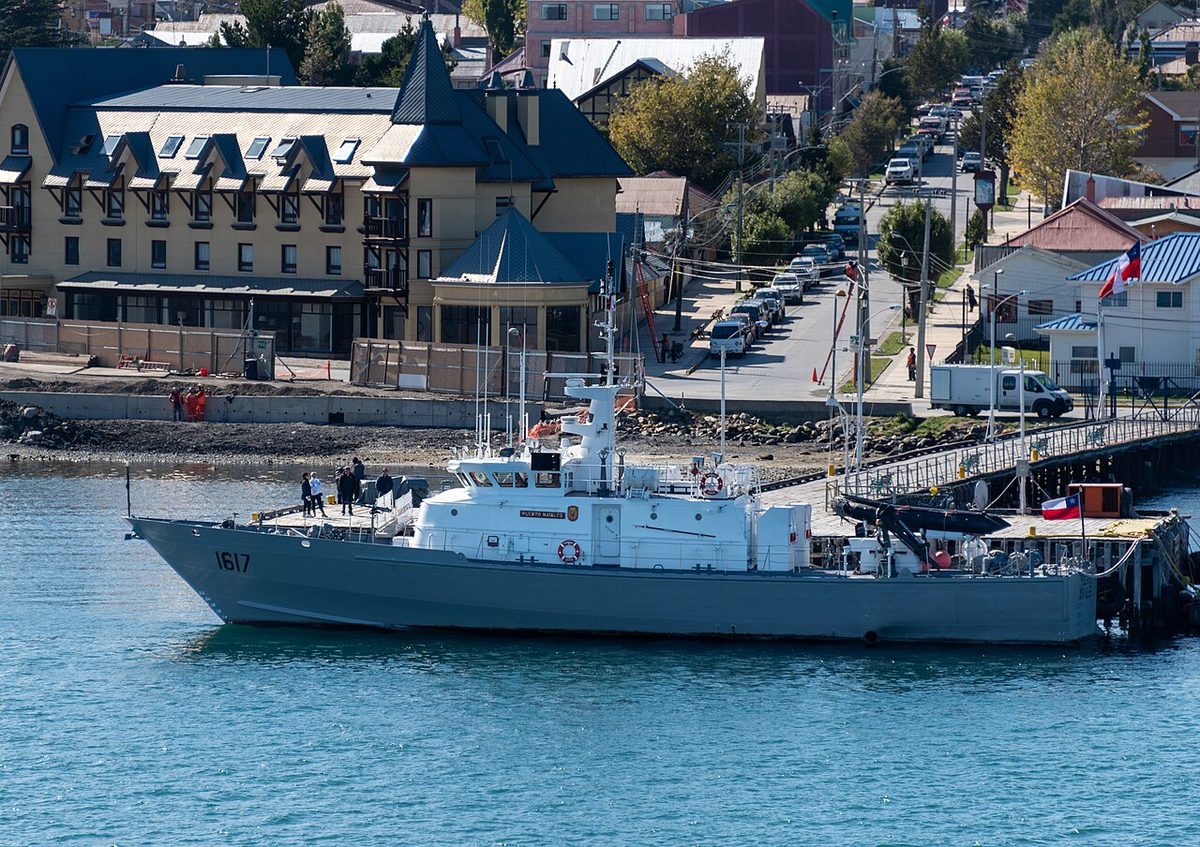
0 — 2 km Fig. 1 · The Puerto Natales waterfront in Chile, with a Chilean Navy patrol boat moored at the pier below hotels and town streets · The Puerto Natales waterfront in Chile, with a Chilean Navy patrol boat moored at the pier below hotels and town streets. Photo: Gordon Leggett / CC BY 4.0 via Wikimedia Commons
This article contains advertising. Booking links on this site can be turned into paid links automatically by our partner Travelpayouts: if you book through one, we earn a commission from the provider, at no extra cost to you. It never affects what we recommend. Affiliate disclosure
An hour in a Puerto Natales shop with an empty pack costs far less than renting a sleeping bag at a campsite inside Torres del Paine because you skipped that hour.
Rent in town, not in the park. Puerto Natales is where Patagonia gear rental has real depth: Niko’s Two Adventure lists a sleeping bag at USD 8 a day and a two-person tent at USD 14, against USD 38 and USD 58 a night at Vértice’s Paine Grande for foreigners not resident in Chile. El Chaltén is a day-hiking rental town rather than a trekking one. Bariloche is mostly a winter ski economy. And check the minimum rental period before you plan a one-day rental: Rental Natales, a small owner-operated shop, sets three days for a walk-in and four for an online booking.
A note on the numbers. Rental rates move and shop rosters change. Treat all of this as a planning range, then ask the shop for a current rate and minimum period.
The two numbers nobody publishes
Every gear-rental page tells you where the shops are. Two other things decide what you pay.
One: the in-town versus in-park multiple
Rent a tent, bag and mat in Puerto Natales, or rent them at the campsites inside Torres del Paine and save the carry. The second costs about four times as much.
Item
Puerto Natales, per day
Inside Torres del Paine, per night
Multiple
Sleeping bag
USD 8 (Rental Natales)
USD 38 (Vértice Grey, Paine Grande)
4.75×
Tent, 2-person
USD 14 (Niko’s Doite Himalaya)
USD 58 (Vértice 4-season, max 2)
4.1×
Sleeping mat
USD 6 (Rental Natales)
USD 16 (Vértice foam)
2.7×
All three
USD 28
USD 112
4.0×
Swipe to see all columns
Table 1
Rates observed 29 July 2026. Vértice’s dollar rates apply to foreigners not residing in Chile presenting a passport and valid entry card; residents pay peso rates that differ. Rates move — reconfirm.
Over five nights, renting your sleep system in the park rather than in town swings roughly USD 420 for one person using a tent alone (USD 560 for tent, bag and mat at Grey against USD 135 for five daily rentals at Niko’s), which buys a tent outright. Two people sharing a tent save USD 315 each. Grey’s own four-season tent is USD 58 a night for up to two people, for foreigners not resident in Chile. The counter-argument is weight, costed below.
Two: minimum rental periods
Rental Natales requires a minimum of four days for an online booking and three days for a walk-in (their FAQ, observed 29 July 2026). Niko’s Two Adventure requires a reservation before you arrive in town at all.
Apply that to a one-day Base Torres walk. The accredited-guide rule for Base Torres and the W ended on 16 September 2026, but microcrampons and trekking poles stay required, so check the park’s current notices before you set out. Poles and microspikes for that day are USD 8 plus USD 10 — except the minimum is three days, so the real bill is USD 54 for a single day on the trail. At that price, buying cheap poles at home makes sense.
So ask two things before renting: what is the minimum period, and does the tour I have booked already supply poles and traction? See the Torres del Paine winter guide and the Base Torres hike.
Rent, buy or bring
Rental rates below are the Puerto Natales and El Chaltén figures observed 29 July 2026; retail is a rough band for mid-quality gear bought new outside Patagonia. Break-even is retail divided by the daily rate.
Item
Rent, USD/day
Retail, USD
Break-even
Verdict
Trekking poles
5–8
60–120
~8–20 days
Rent
Sleeping bag
8 a day Natales / 8 a night Chaltén
150–300
~19–38 days
Rent
Tent, 2-person
14 a day (Niko’s) / 25 a night (Connect Patagonia, one to three people)
250–500
~10–36 days
Rent, see weight note
Sleeping mat
5–6
60–200
~10–40 days
Rent
Microspikes
7–10
60–90
~6–13 days
Rent — minimums bite
Head torch
4–5
30–60
~6–15 days
Bring
Rain shell
8–10
200–500
~25–50 days
Bring
Boots
10
150–300
~15–30 days
Bring — never rent
Swipe to see all columns
Table 2
Rental rates observed 29 July 2026; retail bands are indicative, not observed prices. All figures move.
Converted into trips:
Up to about ten nights, one trek. Rent the hardware, and use the table above to weigh small items such as microspikes, which can pay for themselves sooner. Do not buy a tent for a single W.
Two to four weeks in two or three towns. Rent per town, but budget to pay the minimum period twice. Second-hand then competes — Rental Natales sells used gear — and you can resell before you fly.
A month or more, or you already hike at home. Bring your own bag and mat; rent the tent and the traction.
Any trip where you will hike again within two years. Buy the shell and boots regardless of the arithmetic.
The weight penalty is the hidden price, and nobody quotes it because only one shop publishes the specification. Niko’s lists a Doite Himalaya 2-person at 2.8 kg, a Doite Pro Aconcagua 3-person at 4.8 kg and a −5 °C bag at 1.5 kg (observed 29 July 2026), against the 1.4 kg two-person tent used as the ultralight benchmark in the packing list. Renting the two-person tent adds 1.4 kg against that benchmark — annoying on a five-day W, a real cost on the O Circuit. Hence the hybrid: rent the tent and cook set, bring your own bag and mat.
Puerto Natales: the main Patagonia gear rental hub
The rental capital of Patagonia, almost all within six walkable blocks. Land at Punta Arenas, take the bus to Puerto Natales, and rent there rather than at the airport.
Rental Natales — Herman Eberhard 370
The most complete published price list in Patagonia.
USD per day, observed 29 July 2026 — rates move, so confirm before booking:
Sleep: bag (−7 / −10 / −15 °C) 8 · liner 4 · mat 6
Full kits run USD 90 a day for two people, or USD 59 without the tent — against USD 112 a night for the same items in the park. If you want a tent alone, ask. Stocked brands include Osprey, Petzl, Leki, Kahtoola and Terra Nova, real quality signals in a rental fleet, and they claim every item is washed after each rental. Hours are 09:00–22:00 October to April, 10:00–13:00 and 15:00–20:00 May to September, so in summer you can step off the evening bus and still start early; confirm the winter hours before you go.
Note the temperature ratings: −7, −10 and −15 °C bags all at USD 8, and all overkill for a summer trip, where the packing list benchmark is a 0 °C bag plus a liner.
Niko’s Two Adventure — Phillipi 528
The shop to cite for hard specifications, because it publishes models and weights.
Item
CLP/day
USD/day
Tent, 3-person, Doite Pro Aconcagua, 4.8 kg
15,000
17
Tent, 2-person, Doite Himalaya, 2.8 kg
12,000
14
Sleeping bag, −5 °C, 1.5 kg
6,000
8
Sleeping mat
3,000
5
Trekking poles, pair
5,000
7
Stove and cooking kit
8,000
10
Swipe to see all columns
Table 3
Rates observed 29 July 2026, quoted by the shop in both currencies.
Doite is the Chilean make long regarded as the best local brand: heavy, but proven in Magallanes wind. Deposit is 50 percent of the gear’s value in cash, refunded on undamaged return, with the rental paid at the end by days actually used.
Trek briefings in town: confirm the time and place
Erratic Rock combines a guide service, hostel, information seminar and rental shop, and the seminar is the talk to look for, on the park, the routes, the rules, packing and weather. Confirm the time, the venue and the current address with Erratic Rock in Puerto Natales before you plan around it. Its Base Camp shop also rents poles and camping gear and sells fuel canisters — a useful walk-in fallback when the minimum-days rule bites. Yagan House is another place in town to ask about a trek briefing and trekking equipment; check with them what is on offer, and at what price.
dopatagonia is another name to ask, quoting USD 7 a day for poles, microspikes, gaiters, a two-person tent, a bag or a pad (as of July 2026). Confirm the rate and where you collect the gear. Kallpamayu, Arturo Prat 297 matters because Las Torres Patagonia sends visitors there for the poles, crampons and gaiters it does not rent.
Renting inside Torres del Paine
Vértice Patagonia runs Grey, Paine Grande, Dickson and Los Perros, and lets you add gear to an online booking.
Vértice item (Grey / Paine Grande)
USD per night
4-season tent, maximum 2 people
58 / 58
Sleeping bag, per person
38 / 38
Foam mattress, per person
16 / 16
Swipe to see all columns
Table 4
Published 2026–27 rates observed 29 July 2026, for non-resident foreigners with passport and entry card. Rates move.
Three cautions. Availability is not guaranteed — operator FAQs say plainly that campsite stock cannot be promised. Las Torres and Fantástico Sur sites sell no individual gear online: you book a “premium campsite” package with or without a sleeping bag, and Las Torres rents no poles, crampons or gaiters anywhere in the park. And damage liability is live money — Vértice’s published replacement values, per a booking specialist’s summary, are CLP 500,000 for a tent, CLP 150,000 for a bag and CLP 90,000 for a mat, secured by a card hold. The concession publishes gusts to 110 km/h, so use every guyline: see Patagonia trekking safety.
Do refugios mean you can leave the sleeping bag at home?
Sometimes, and the operator decides it.
Operator
What the bed includes
Need a bag?
Las Torres / Fantástico Sur (Torres Central and Norte, Francés, Cuernos)
Full bedding kit — sheets, pillow, blanket or sleeping bag — in the reservation
No
Vértice (Grey, Paine Grande, Dickson)
You choose: cheap tier is mattress cover and pillow only (USD 46 Grey, USD 66 Paine Grande), bedding kit a USD 48–68 per person per night add-on
Yes, unless you pay
Swipe to see all columns
Table 5
Bedding options as listed for the 2025/26 and 2026–27 seasons, observed 29 July 2026.
An all-Fantástico-Sur refugio W needs no bag at all. Add one Vértice night on the cheap tier and you do — your own, an USD 8 a day rental from town (minimum periods apply), or a bedding kit at USD 48 a night at Paine Grande or USD 68 at Grey, 6 or 8.5 times a day’s rental. Book the beds first, then decide the bag, using the W Trek refugios guide. Bring a liner either way.
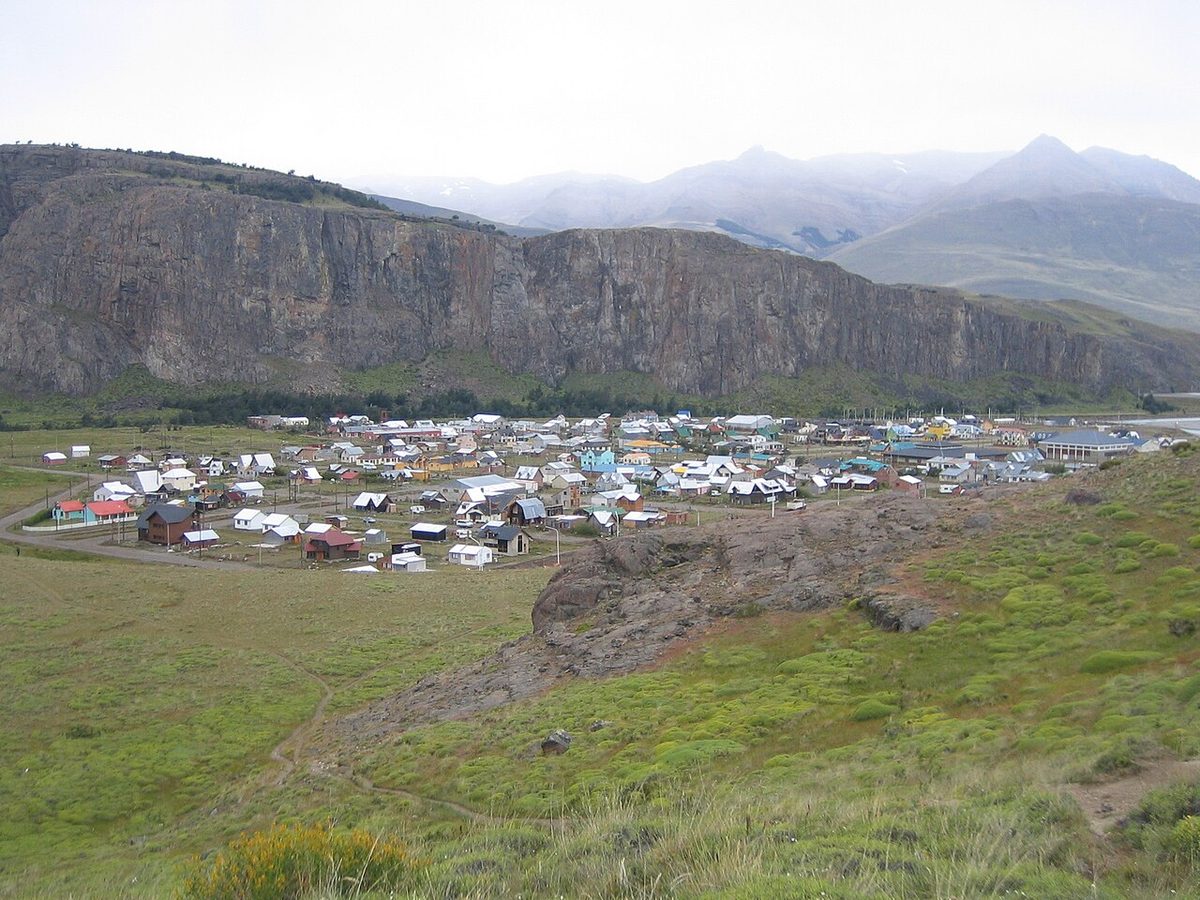
Fig. 2 · The whole village of El Chalten spreads across the valley floor, seen from a grassy hillside below a long cliff band. Photo: Public domain via Wikimedia Commons
El Chaltén: a day-hiking rental town, not a trekking one
The trails start in the village, so the rental economy is built for day hikes, one bivouac and the Huemul Circuit — not eight days of self-supported camping. Routes: El Chaltén and Fitz Roy hiking guide.
Connect Patagonia, Avenida Llao Llao 95 publishes the fullest list, in USD and billed two ways. Per night: tent for one to three 25, bag 8, pad 5, headlamp 5, cook kit 8. Per day: backpack 10, poles 5, microspikes 8. Confirm these with the shop, along with its rates for rain jacket and pants 10, gaiters 5 and, for the Huemul, harness 10, dry bags 5 and a helmet. Agree your pickup time, and ask about payment and the deposit, when you book.
Also renting: BajoZero, San Martín 685, which sells and rents equipment.
Item
Puerto Natales
El Chaltén
Difference
Sleeping bag
USD 8 a day
USD 8 a night
same amount, billed differently
Tent
USD 14 a day (two-person), USD 17 a day (three-person)
USD 25 a night (one to three people)
not like for like
Trekking poles
USD 7–8
USD 5
−29 to −38%
Cook kit
USD 10 a day (stove and cooking kit)
USD 8 a night (cooking set)
check fuel and contents
Microspikes and gaiters
USD 4–10
Microspikes USD 8 a day; gaiters USD 5, confirm with the shop
check when booking
Swipe to see all columns
Table 6
Rates move, so confirm them when you book.
So compare the billing as well as the price: Connect Patagonia charges bags, tents and cook kits by the night, while Niko’s in Puerto Natales charges by the day. Food is what is genuinely expensive, up to twice El Calafate or Bariloche.
What you cannot count on: a tent from any given shop, a full W-scale camping kit, and, at the worst moment, Huemul hardware. Ask the rangers for the current Huemul checklist, then bring your own. Payment is cash-heavy in pesos with essentially one ATM that runs dry in high season — see atms, cards and exchange rates.
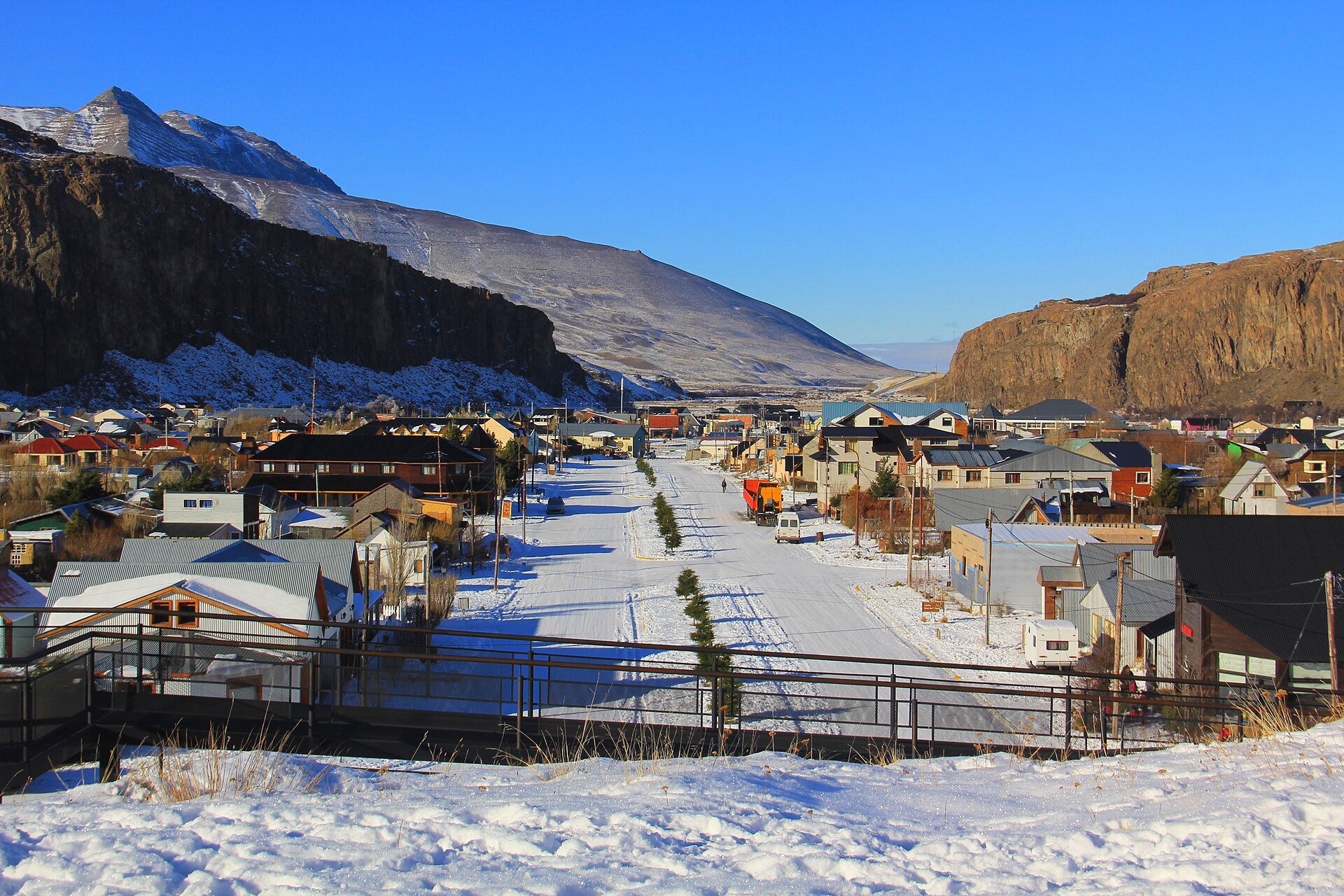
Fig. 3 · Midwinter snow lies on El Chaltén’s Avenida Rojo in this early-July photo. Photo: Jose Galleguillo / CC BY-SA 4.0 via Wikimedia Commons
Bariloche and the Lake District
In winter, Bariloche has plenty of gear-rental shops, both downtown and at the base of Cerro Catedral. Two seasons, two rosters.
Summer.Rental VIP (rental.patagoniashowroom.ar) lists a sleeping bag at AR$9,900 and a two-person tent with two bags and two mats at AR$42,900. Confirm the rental period and service conditions before you book, because the figures do not state one. Patagonia Bike Trips, John O’Connor 290 rents tents and other camping equipment; ask for its current rates.
Refugio Frey (Club Andino Bariloche) has the hut rule worth memorising: it rents sleeping bags with advance notice, and you must bring your own tent to bivouac in summer. In winter you need crampons or snowshoes. Ask for the current bag rate when you give notice. Routes are in the Bariloche hiking guide.
Parque Nacional Nahuel Huapi requires free mandatory trekking registration, so check what your route calls for when you register. Even someone who came only for a walk, based in a hotel, may need to rent in town.
Winter. At the Cerro Catedral base: Escuela Xtreme, Catedral Ski Rental, Néstor Ski S.A. and Posadas Aurelio. Downtown has rental shops too.
Take ski rates from the operators. Peso prices change, so ask each shop and the resort for current figures. The structure does not rot: renting in town is cheaper but you carry skis up the hill; renting at the base costs more and buys swaps when gear or snow disappoint; helmet, goggles and lockers are charged separately, so budget three lines rather than one; and July is peak on the school calendar, while late June and early August are the value windows. More in skiing at cerro catedral.
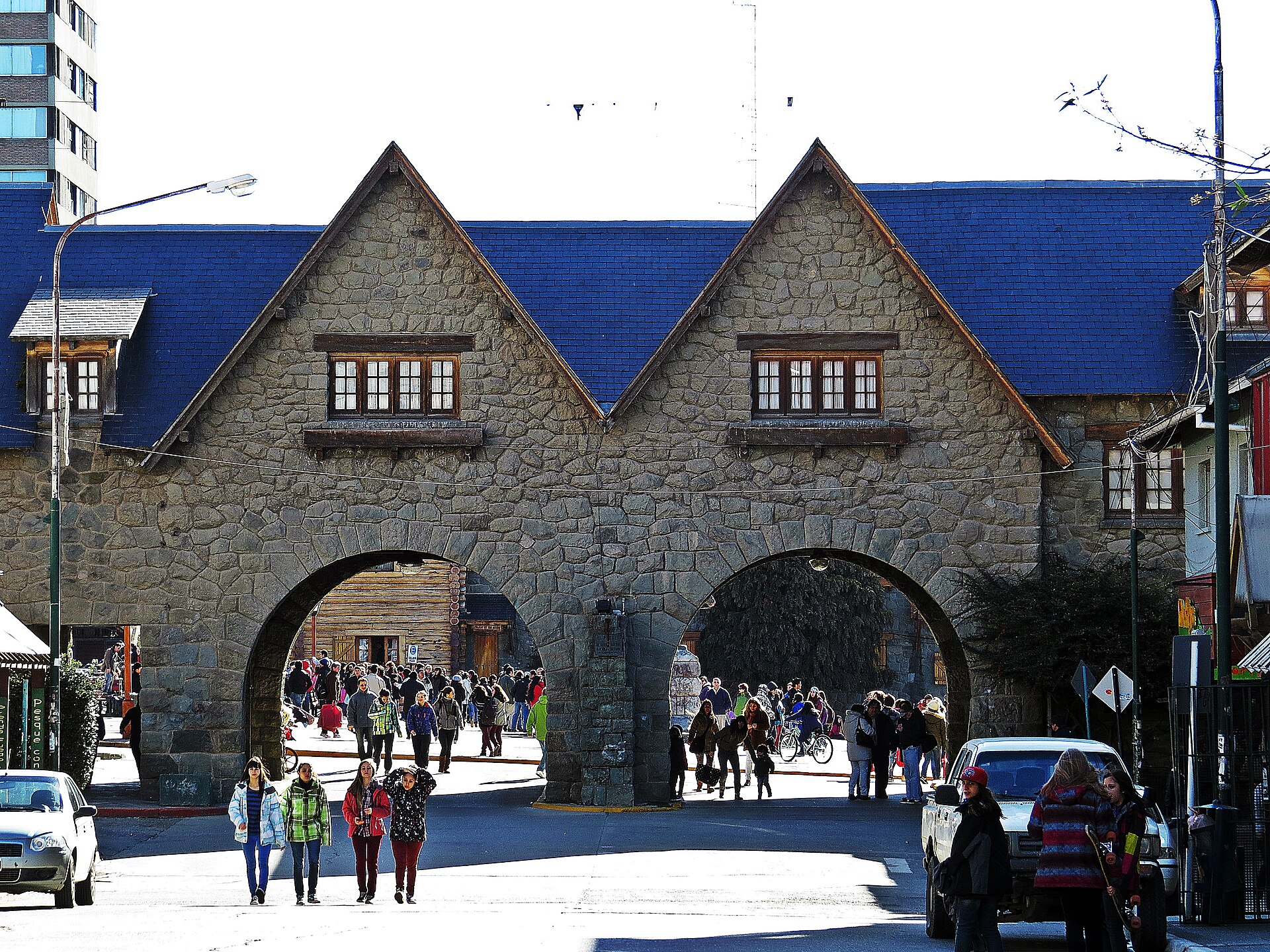
Fig. 4 · The stone arcades of the Centro Cívico mark a distinctive point in central Bariloche. Photo: Francisco Esteban Leuman / CC BY-SA 3.0 via Wikimedia Commons
El Calafate, Ushuaia, Coyhaique and Punta Arenas
In El Calafate, ask shops directly about rental and current prices before you count on hiring there. Ushuaia has ten equipment and clothing rental businesses in the municipal tourism directory. Coyhaique has one verified option that fits the trip shape: Austral Bikes rents camping gear by the week, drop-off in Coyhaique or Villa O’Higgins, no prices published — and the town has the route’s only major supermarket, so it doubles as the resupply stop. See the guide to driving route 7. Punta Arenas is the airport, not the gear shop.
Can you take Argentine rental gear into Chile? Ask; do not assume. Each shop sets its own conditions for taking gear across the border, so put the question to the shop and get the answer before you rent. See Patagonia buses.
What is genuinely not worth renting
Boots. Never. Four reasons, each sufficient alone. Break-in is not optional — the rule in the packing list is 30 to 50 km over about two weeks, on hills, with your real pack, and a rented boot has zero break-in with your foot. Stock is a lottery: as one Chilean operator puts it, do not set off from home expecting to rent boots or you might end up hiking in your socks; January is when your size has gone. Hygiene has a hard limit — a bag can be washed, but a boot’s footbed and lining cannot be, and a macerated foot on day two of a five-day trek ends the trip. And since June 2026 it is a compliance item: Torres del Paine’s winter regulation names calzado de trekking caña alta, high-ankle footwear, so your boots must fit and satisfy a ranger. Rental Natales does rent boots at USD 10 a day — the lost-luggage rescue, not a plan.
Rain shells. Bring one. Rentable at USD 8 to 10 a day and still the wrong call. You need it every day, not just trek days — bus, catamaran, town, viewpoint — so a fortnight of rental buys a decent jacket. A waterproof rating is a pressure test, not a forecast: wind and hipbelt pressure drive water through a tired membrane whose water-repellent finish is long gone. The hood is the failure point and you cannot assess one in a shop. And fit under a pack decides whether the hem balloons and the chest pocket clears the hipbelt. The layering logic is in how to layer for Patagonian weather.
Also skip renting socks and anything you sleep in. Always add a liner to a rented bag: hygiene first, warmth second.
Fig. 5 · Coyhaique’s central plaza in Chile, the resupply town on the Carretera Austral where camping gear can be rented by the week. Photo: Lin linao / CC BY-SA 4.0 via Wikimedia Commons
Fuel canisters, the part nobody writes about
You cannot fly with gas. Compressed-gas cartridges are prohibited dangerous goods in both checked and cabin baggage as a general rule. Bring the stove, buy the gas on arrival, and check your airline’s own dangerous-goods page.
Where to buy. Rental Natales sells butane-propane canisters at 110 g for USD 5, 230 g for USD 6 and 450 g for USD 10 (as of July 2026); check current prices when you collect your gear. Base Camp sells canisters too.
The valve-compatibility trap. This is the most consequential thing on this page, so here is the risk. Two incompatible families circulate in South America. Screw-thread canisters — the EN417 pattern used by MSR, Jetboil, Primus and most modern stoves — thread onto the burner. Pierceable cartridges, widely sold in Argentina, do not: they need a clamp-on stove that punctures the seal. A pierceable cartridge will never fit a screw-thread stove, and canister weight tells you nothing about which valve you are getting. Ask each shop which valve types it stocks rather than guessing, because a wrong guess means a cold trek. Photograph your stove’s burner and valve before you leave home, ask the shop plainly whether their cartridges screw on, and keep a fallback: rent a local stove with a canister you know fits.
How much, and why gas is the only option. Reckon on one 230 g canister per three days per person for boil-only cooking, so a five-day W for two needs roughly one 450 g plus one 230 g. In Torres del Paine, as in Chile’s other protected parks, using fire or a heat source in an unauthorised area carries 61 days to three years of imprisonment plus a fine of 11–50 UTM under Ley 20.653, so use your stove only in designated cooking areas; in the northern zone of Los Glaciares, gas stoves are allowed only in authorised camping areas, under supervision. Park campsites give you a cooking shelter but no stove and no utensils — see Patagonia camping.
The leftover. Check your airline’s dangerous-goods rules before you pack a part-used canister, and ask the shop about disposal when you buy it. In order of preference: burn it off with a bigger last dinner; hand it to another trekker or leave it on the hostel gear shelf; or return it to the shop that sold it. Do not puncture it yourself, and do not abandon it at a campsite, which is littering: see leave no trace in practice.
Deposits, ID and damage
Four models operate within six blocks of each other.
Shop
Deposit
Documents held
Rental Natales
Card hold sized to the gear, released on return
No passport or licence
Niko’s Two Adventure
50% of the gear’s value, in cash
Not stated
dopatagonia
“No deposit required”
Photos of ID and booking
Connect Patagonia, El Chaltén
“Varies by item”; cash or transfer only
Not stated
Vértice, in-park
Card hold against replacement values
Passport and entry card for USD rates
Swipe to see all columns
Table 7
Policies as published, observed 29 July 2026. Policies change — confirm at pickup.
So: bring a real credit card with headroom for a hold, never leave your passport, and photograph the gear at pickup and at return. Expect a fleet heavier and more used than what you would buy, and inspect it in the shop — count pegs, flex every pole section, check the fly for pinholes, prefer lever-lock poles, and have them light the stove in front of you.
Winter rentals and Torres del Paine’s mandatory equipment list
Torres del Paine’s winter equipment requirement is now a written regulation with eight named items, and the list got longer in June 2026.
The rule set is CONAF’s Reglamento para actividades turísticas en condiciones invernales, Parque Nacional Torres del Paine (Corporación Nacional Forestal, Región de Magallanes y Antártica Chilena, June 2026). Its mandatory list, verbatim: “Bastones, Linterna frontal, Lentes, Guantes, Calzado de trekking caña alta, Ropa de abrigo e impermeable, Polainas, Micro crampones o crampones” — poles, head torch, eye protection, gloves, high-ankle trekking footwear, warm and waterproof clothing, gaiters, and microspikes or crampons. It hangs the requirement on Chilean standard NCh 2985 Of2006, and access is denied to providers who do not comply. Against CONAF’s May 2025 wording, the 2026 text adds high-ankle footwear and tightens linterna to linterna frontal.
Three date windows circulated. For 2026 the accredited-guide requirement on Base Torres and the W ran 27 April to 15 September 2026 and ended on 16 September; microcrampons and trekking poles remain required. The regulation’s own text gave 1 May to 30 August as a referencial, indicative, period, and the park’s special-permits page gave 1 May to 30 September; neither matches the dates that applied in 2026. Since CONAF sets operative dates by notice each year, check conaf.cl in the week you travel.
The guide rule attaches to named routes, not the whole park: the W circuit and Base Torres, plus Mirador Ferrier and Portería Sarmiento to Laguna Amarga in the written regulation. The W’s separate 1 June to 31 July 2026 closure has passed, and no accredited guide is needed on the W or Base Torres now that this season’s rule has ended. The O Circuit was closed until at least 31 October 2026, and its reopening depends on a park evaluation, so read the park’s daily report before you travel. See whether you need a guide.
What a compliant winter kit costs to rent
Five of the eight mandatory items are straightforward day rentals in Puerto Natales: poles, head torch, gaiters, microspikes and the warm-and-waterproof clothing layer. From Rental Natales’ published list, observed 29 July 2026 — poles USD 8, microspikes USD 10, gaiters USD 4, headlamp USD 4, rain jacket USD 8 — that is USD 34 a day for the five. Gloves make a sixth at USD 4 to 6; add a beanie at USD 3 and an insulated jacket at USD 7 to be genuinely warm rather than merely compliant and you are at about USD 50 a day.
Now apply the minimum period. With a three-day walk-in minimum, the shortest realistic compliant winter rental is about USD 102 for the core five, or roughly USD 150 for the warmer version — for what may be a single day on the trail. That is the number to budget.
Two items you cannot rent your way out of: eye protection and high-ankle boots. Both are on CONAF’s list and both are fit-critical.
Microspikes versus crampons trips people up. The regulation says micro crampones o crampones. Microspikes satisfy the requirement for trail use; true crampons need a stiff-soled boot, which is exactly why a rented boot fails here. If your route needs rigid crampons, arrange them through your operator.
Winter changes the shops, too: Rental Natales opens 10:00–13:00 and again 15:00–20:00 May to September, El Chaltén’s roster thins, and Bariloche flips to a ski economy. In El Chaltén the national park makes poles and crampons obligatory on snow and ice and requires trekking registration May to September.
Frequently asked questions
Do I need to book Patagonia gear rental in advance?
For the big three — tent, bag, mat — yes; walk in for accessories. Rental Natales sets a four-day minimum online and three days for walk-ins; Niko’s requires a reservation before you arrive. In El Chaltén, one to two days’ notice suffices in December to February. Inside Torres del Paine, campsite gear exists but availability is explicitly not guaranteed.
Is it cheaper to rent gear in town or inside Torres del Paine?
Much cheaper in town. On rates observed 29 July 2026, a sleeping bag was USD 8 a day in Puerto Natales against USD 38 a night at a Vértice campsite, a tent USD 14 against USD 58, and a mat USD 6 against USD 16 — roughly three to five times as much in the park. Over five nights at Grey, tent, bag and mat cost one person near USD 420 more than five daily rentals at Niko’s in town, and two people sharing a tent each save USD 315.
Should I rent hiking boots in Patagonia?
No. Boots need 30 to 50 km of break-in with your own foot, sizing is a lottery in peak season, and a boot’s lining cannot be sanitised the way a bag can. Since June 2026, high-ankle trekking footwear is also a named item on Torres del Paine’s winter regulation, so your boots must fit and pass a ranger’s check.
Can I fly with gas canisters for my stove?
No. Compressed-gas cartridges are prohibited in both checked and cabin baggage as a general dangerous-goods rule. Bring the stove and buy gas locally — around USD 5 to 10 a canister in Puerto Natales as of July 2026. First photograph your stove’s valve and ask the shop to confirm their cartridges fit, because screw-thread and pierceable cartridges both circulate here.
Before you book
Where you sleep decides whether you need a bag at all. How long you rent decides whether the minimum-period rule doubles or triples your bill. What you carry decides whether the cheap option is actually cheap. Rent the hardware in town, bring the boots and the shell, buy the gas on arrival, and reconfirm every figure here before you hand over a card. Cost the trek with the W Trek cost guide and pick your route with the best day hikes in Patagonia.
Avenida San Martin, the main street in El Chalten, Argentina, where most of the village's equipment rental shops and outdoor stores are found — Public domain via Wikimedia Commons
The central plaza in Coyhaique, Chile, the Carretera Austral's resupply town and the one place on the route renting camping gear by the week — Lin linao / CC BY-SA 4.0 via Wikimedia Commons