Patagonia Packing List: Layers, Rain Gear, Footwear and Daypack Essentials
A Patagonia packing list built on the rules rangers enforce: CONAF's winter gear mandate, shell specs, footwear, refugio bedding, and what to leave at home.
By Patagonia Tourism Guide · First published 2 Oct 2026 · Updated 1 Aug 2026
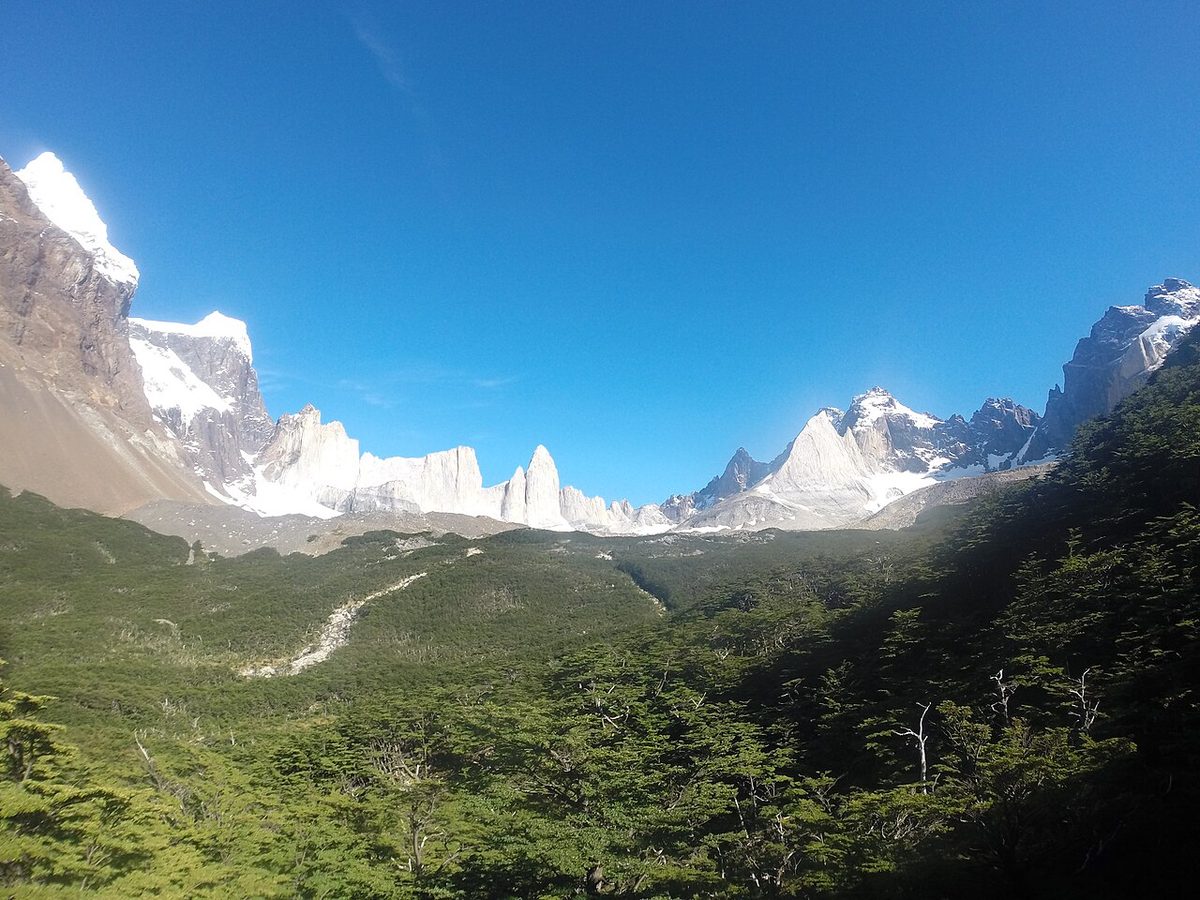
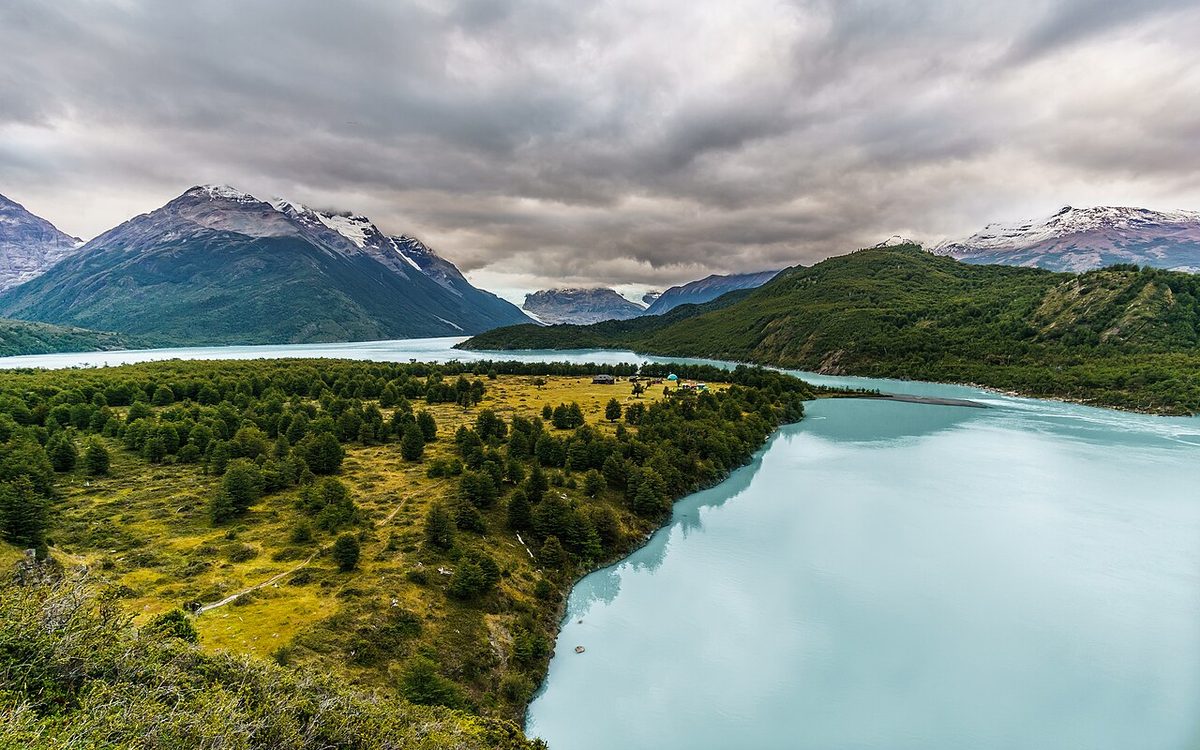
0 — 2 km Fig. 1 · Valle del Frances in Torres del Paine, the exposed middle arm of the W circuit where a Patagonia packing list is tested by wind-driven rain · Photo: Prandium01 / CC BY-SA 3.0 via Wikimedia Commons
Most Patagonia packing list articles are shopping lists. This one starts somewhere less comfortable: with the gear a ranger can legally turn you away for not carrying.
The short version. A working kit is four decisions, not eighty items: a three-layer clothing system (snug base layer, 100-weight fleece, synthetic insulation to hike in plus a down jacket for standing still), a hard shell jacket and overtrousers built for wind-driven rain rather than drizzle, broken-in footwear matched to your load, and a 20–35 litre daypack that always carries spare warmth, a head torch, food and water. Then two things almost no other list mentions: inside Torres del Paine’s winter regime, poles, traction and a head torch are a rule rather than a preference, and whether you need a sleeping bag at all depends on which company’s refugio you booked.
One framing note. On 17 November 2025, five hikers died of hypothermia near the top of John Garner Pass on the O Circuit; the account belongs in reading Patagonian weather before you walk. For packing purposes one detail matters. The forecast that morning was for winds up to 100 km/h, and gusts were subsequently reported at 193 km/h — roughly twice that. No weather station, instrument or agency has been identified as the source of the 193 km/h figure, so treat it as a reported number, not a measurement. But the gap is the argument of this whole article: you pack for the conditions the forecast missed.
The core kit that never changes
Everything below travels whether you are trekking, day hiking or driving. Rental rates are indicative Puerto Natales daily prices as of July 2026, in USD, and they move — the shop-by-shop picture is in where to rent tents and sleeping bags.
Item
Spec that matters
Rent or buy
Hard shell jacket
Taped seams, stiff hood brim, pit zips
Rent ~USD 8/day
Waterproof overtrousers
Full-length side zips
Rent with the jacket
Base layers, 2 tops
Snug; merino 150–200 g/m²; one sleep-only
Buy
100-weight fleece
Warm when damp; needs a shell over it
Buy
Synthetic insulated hoody
The layer you hike in
Rent ~USD 7/day
Down jacket
700-fill minimum, hydrophobic; camp only
Rent
Footwear
Broken in over 30–50 km; deep open lugs
Boots ~USD 10/day
Socks, 3–4 pairs plus one sleep-only
Merino blend, mid-cushion, never cotton
Buy
Warm hat, buff, gloves plus a dry spare
Wind chill, not air temperature
Buy
Sunglasses on a strap, brimmed cap, lip balm
The strap; the wind takes them
Buy
Head torch plus spare batteries
On every official list
Rent ~USD 4/day
Trekking poles
Legally required below
Rent ~USD 8/day
Pack liner and pack cover
The liner is what keeps you dry
Dry bags or bin liners
Towel, padlock, earplugs, flip-flops, blister kit, whistle, rubbish bag
Refugios supply none of it
Buy; towel ~USD 3/day
Swipe to see all columns
Table 1
Two of those need justifying. A rain cover is a wind problem rather than a solution, because gusts lift them off — so line the pack from inside as well. And the whistle is on the official Nahuel Huapi carry list and almost no blog list.
The official Patagonia packing list: what CONAF and Parques Nacionales require
This is what page one misses. Both countries publish equipment requirements, and in Chile rangers check them at the gates.
Status as of 30 July 2026. Torres del Paine’s rules moved repeatedly between September 2025 and April 2026, so verify with CONAF and pasesparques.cl in the week you pack, not the month you book.
The park’s winter regime ran 27 April to 30 August 2026; the summer regime resumes 1 September 2026. CONAF brought the start forward from the usual 1 May because of “las variables condiciones climáticas.” The June 2026 regulation calls its own annual window merely “referencial”, which is why CONAF fixes operative dates each year by notice — and why you should never trust an undated “winter season” range.
Within that window CONAF requires an accredited specialised guide on the W circuit and the Base Torres trail, plus microcrampones, bastones and linterna frontal. The regulation additionally lists Mirador Ferrier and the Portería Sarmiento–Laguna Amarga trail. Ratios are one guide per four on trekking-grade routes, registration at the access porterías is obligatory, and entry cutoffs are fixed — 09:00 for Base Torres.
The W was closed outright from 1 June to 31 July 2026, so its guide requirement applied in practice in May and August only. The O Circuit is closed for winter until 31 October 2026.
CONAF lifted the emergency guide requirement on the O from 1 January 2026, replacing it with a mountain-trail protocol built on an early-warning system using “umbrales técnicos predefinidos” for wind, precipitation and temperature, coordinated with SENAPRED and the national met service. The numeric thresholds are not published. Self-guided walking is permitted again — see hiking without a guide.
The list itself, verbatim. CONAF’s winter notice names “bastones, micro crampones o crampones, linterna, lentes, guantes, ropa de abrigo e impermeable, polainas” — poles, microspikes or crampons, torch, eye protection, gloves, warm and waterproof clothing, gaiters. That is not a suggestion box. When CONAF lifted the guide requirement for the Base Torres viewpoint on 1 September 2025, the poles-and-crampons requirement stayed in force “until further notice” and was enforced by rangers at park entrances. Whether it carries into the 2026/27 summer from 1 September 2026 we could not confirm — no later notice restating or lifting it turned up — so check before leaving poles at home.
Argentina publishes requirements too, and one is absolute. Parque Nacional Los Glaciares asks for “ropa cómoda, abrigo e impermeable y calzado apto para trekking” and, on snow and ice, states flatly: “Es obligatorio el uso de bastones y crampones.” Registration is required for climbing, remote areas, and — per APN — the El Chaltén trails from May to September; the form asks “los elementos con los que cuenta”, so a rescue team knows what you carry.
One place a ranger checks hardware item by item. The free Huemul Circuit permit, issued at the El Chaltén visitor centre, involves a safety briefing, a declared return date and a check for a climbing harness, two carabiners (one aluminium, one steel), a trail map, roughly 20 m of thin rope or paracord, and a stove. Search and rescue triggers if you are 48 hours overdue. Bring your own carabiners; the town’s shops empty the moment a weather window opens.
Layers, in fabric numbers rather than adjectives
“Layers are key” is the most-repeated and least-useful sentence in Patagonian travel writing. Here is what the layers need to be.
Base layer: fit first, fibre second. REI’s guidance is that a base layer needs a comfortably snug fit everywhere to wick at all — a loose one is just a slightly warm shirt. Merino around 150–200 g/m² is the usual summer-trekking recommendation here; synthetics dry faster but hold odour. No cotton. The rule that outranks the fibre: two base tops, one you hike in and one you only ever sleep in. Damp base layers are how people get cold at three in the morning.
Mid layer: 100-weight fleece, and it is not an outer layer. Fleece stays warm when damp and dries fast — but wind goes straight through it, which is precisely why a Patagonian kit needs a hard shell rather than a soft one.
Insulation: two pieces, two jobs. Down loses efficiency when damp; synthetic keeps warmth when damp. So a light synthetic hoody is what you move in — one trip report puts it at about 75% of hiking time — and a down jacket, 700-fill minimum with a hydrophobic treatment, is what you put on when you stop. Lean synthetic on the wet Chilean side, down on the drier Argentine side.
Legs and extremities. Softshell or quick-dry trousers by day, one thermal bottom for sleeping only, and overtrousers with full-length side zips, because you will be getting them on over your boots while being shoved sideways. A warm hat is the most-forgotten item of all: people pack for air temperature, and Patagonia charges in wind chill. Australis puts that effect at up to 6 °C (30 °F) colder than ambient — which is how a pleasant 13 °C afternoon becomes a hypothermia risk. Add a buff, windproof gloves plus a second dry pair, and a brimmed cap under the hood.
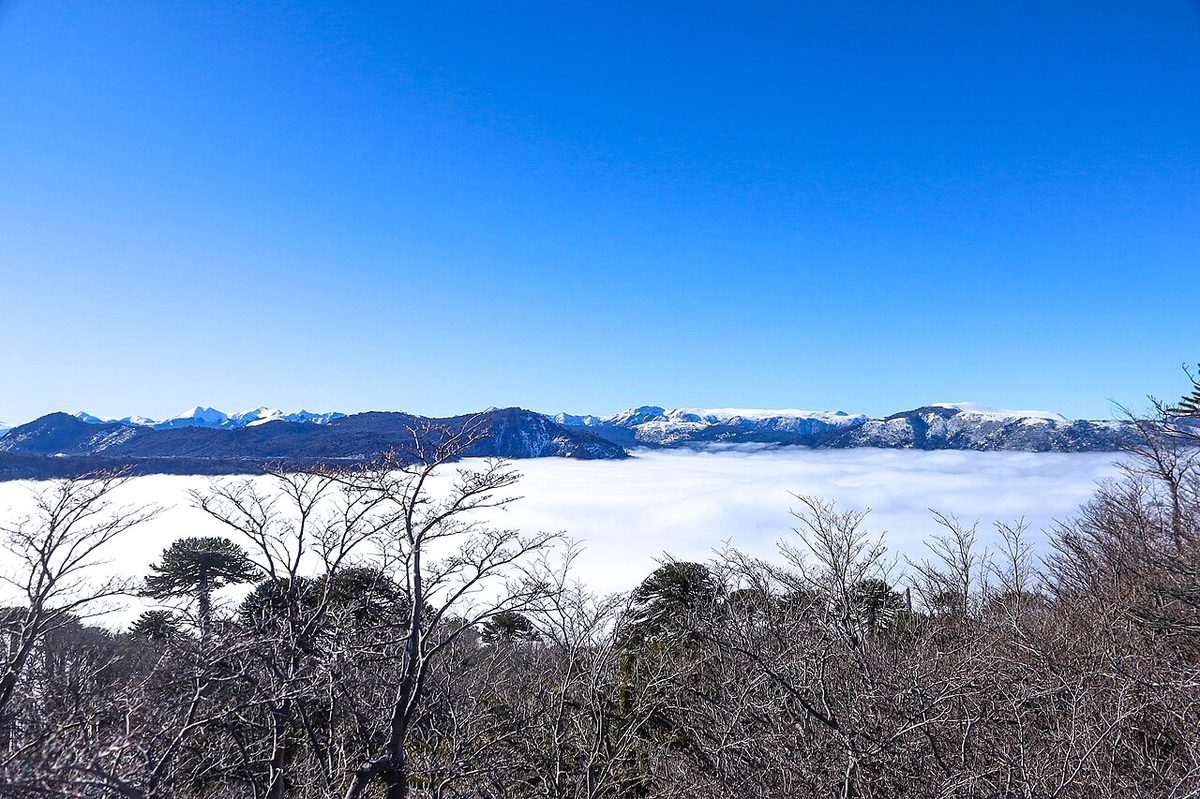
Fig. 2 · Lenga forest on a Torres del Paine trail, the sheltered sections where a fleece mid layer works before the shell goes back on above treelinePhoto: Camilacfu / CC BY-SA 4.0 via Wikimedia Commons
Shells: why Patagonia changes the spec
Your rain jacket is the one item that can work everywhere else and fail here, and the reason is mechanical.
Hydrostatic head, with the scale. Commonly used ratings in the outdoor press put true waterproofing as starting near 5,000 mm, with 10,000 mm the practical floor for a trail-worthy jacket: 10–15K for drizzle, 15–20K for moderate rain, 20–28K for heavy rain, with 20K-and-up recommended for notoriously wet climates. Patagonia is a 20K-class environment.
The point nobody makes: hydrostatic head is a pressure test. Wind pressure and pack-strap pressure drive water through a marginal membrane, which is exactly why water-resistant softshells, tired DWR finishes and ultralight 2.5-layer shells fail here while surviving elsewhere. Prefer three-layer construction for durability under a hipbelt.
Hood design is the real failure point, and it is invisible on a spec sheet. At 80–100 km/h a hood needs a stiffened brim that will not fold into your eyes, plus a rear volume adjuster and a two-point face cinch, so the hood turns with your head instead of your head turning inside it.
Pit zips are not a luxury either. You generate serious heat climbing the Base Torres moraine or the last pitch to Laguna de los Tres, and opening the front zip both lets the wind in and turns the jacket into a sail. Two-way pit zips are the only way to dump heat while keeping your core covered. Add Velcro storm cuffs rather than elastic — with poles your hands are raised for hours and water tracks down elastic into the sleeve — plus chest pockets above the hipbelt line. And no umbrella, worth saying only because a page-one competitor lists one. At these wind speeds it is not useless, it is a hazard.
Footwear: boots or trail runners, honestly
In shoulder season and winter this is a rules question, not a preference: CONAF’s winter list includes micro crampones o crampones and polainas, APN makes poles and crampons obligatory on snow and ice, and some El Chaltén routes call for calzado de vadeo — wading footwear.
Where you have a real choice: both boots and trail runners are defensible on the W if you are refugio-based with a light daypack — the membrane matters more than the ankle height. Choose boots when the load passes roughly 15 kg, when the trail is rough, or when there is snow or scree: the O, the Huemul, anything outside December to February.
Membrane or drainage — pick one and commit. A laminated membrane resists the pressure of a flexed foot better than a generic in-house one, and crossings can reach mid-shoe. But any waterproof shoe that floods stays flooded, so non-membrane trail runners that drain and dry fast are legitimate if you accept wet feet and carry dry sleep socks. Gore-Tex is not automatically correct. Lugs beat brands in Patagonian mud: gear sites suggest 5 mm minimum depth with open, self-cleaning spacing — a rule of thumb rather than a standard, but shallow tread packs solid.
Break-in, with a test you can run. Put 30–50 km on the boots over about two weeks before you fly, on hills, carrying the pack you will actually carry. Then: if you feel a hot spot on a two-hour training walk, it will be a blister on an eight-hour trekking day. Carry hydrocolloid plasters and zinc-oxide tape — tape the hot spot, don’t nurse the blister.
Gaiters are low or mid for mud and grit, full when there is snow, which is when CONAF names them: a rent-don’t-buy item at roughly USD 4/day in Puerto Natales as of July 2026. Socks are merino or blend, mid-cushion, with a liner underneath to cut friction — and non-negotiable however you rotate them, one pair that only ever goes on in camp. Add sandals or Crocs for crossings and showers.
The daypack, and the must-carry list inside it
Sizing, cross-referenced. For village- or hotel-based day hiking, 20–30 L with a hipbelt — that covers Base Torres, Laguna de los Tres and Laguna Torre. Basing in a refugio and doing side trips, 18 L is plenty. Hut-to-hut on the W, 35–40 L. Independent camping, 55–70 L, or 30 L with porters. Winter, 40–60 L.
Build the contents from the official lists first. They are strikingly consistent.
Source
Official carry list
APN Los Glaciares (El Chaltén)
Agua, algo para comer, abrigo extra, anteojos de sol, linterna, protector solar — water, food, extra warm layer, sunglasses, torch, sunscreen
APN Nahuel Huapi (Bariloche)
Map, compass, head torch and batteries, extra food and water, dry spare clothes in a plastic bag, sunglasses and sunscreen, hat, first-aid kit, pocket knife, stove, rubbish bag, whistle
CONAF Torres del Paine, winter
Bastones, micro crampones o crampones, linterna, lentes, guantes, ropa de abrigo e impermeable, polainas
Swipe to see all columns
Table 2
Nahuel Huapi’s is the most complete official list on either side of the border, and its own warning deserves quoting: “En muchos sectores no hay señal.”
What we would add, with reasons:
Shell and overtrousers, always, even on a blue-sky morning, plus an insulated layer you are not wearing. The November 2025 deaths were exposure, in November, on a summer route. Hat and gloves in January as well as July, and 500 kcal more food than you plan to eat.
1.5–2 L of water. Stream water around El Chaltén is widely treated as potable when collected well away from trails and camps — regional practice, not a guarantee. One popular 2026 list calls streams “generally safe untreated” without sourcing it; treat or filter if in doubt.
A head torch, on every official list, because entry cutoffs push you into the afternoon and CONAF’s own material puts the nearest hospital, in Puerto Natales, at 1.5 to 2 hours away.
A satellite messenger or PLB, plus offline maps downloaded in town and a power bank. The messenger is mandated nowhere, but the distress alert in November 2025 reached Chilean authorities via a Garmin SOS watch rather than a phone, and Nahuel Huapi warns that many sectors have no signal. If you buy one non-clothing item because of this article, buy this.
Fig. 3 · Mirador Britanico viewpoint in Torres del Paine, the long exposed day hike that decides how much spare warmth belongs in your daypackPhoto: Carlabedrapo / CC BY-SA 3.0 via Wikimedia Commons
What changes by season
The counter-intuitive part first: summer is the windiest season in Torres del Paine, not winter. Reserva Las Torres, the park concession, publishes typical winds of 20 km/h rising to gusts of up to 110 km/h and names summer as the windiest season; Australis separately claims gusts up to 110 mph (180 km/h) and notes that winter brings long spells of clear, cold, windless weather. Those are two publishers’ figures, not one — but either way, do not downgrade the shell for a December trip.
Summer, December to February. Published temperatures differ enough that you should see the spread: Australis gives a park summer average near 13 °C with lows around 1 °C, while Reserva Las Torres publishes 18 °C. Kit implication: no shell downgrade, and the down jacket still travels.
Shoulder, October–November and March–April. More rain, more mud, some snow risk, fewer people. Add microspikes if snow is lingering. The November 2025 disaster was a shoulder-season event on a route that had just reopened — this is not the season to travel light.
Winter, roughly May to August. Park highs near 5 °C and lows near −3 °C, and this is when the kit stops being a preference. CONAF’s guide-and-gear requirement applied within the 27 April – 30 August 2026 window, and the Pehoé and Grey lake navigations were suspended. In Argentina, poles and crampons are obligatory on snow and ice, vehicles need chains, and Los Glaciares’ north zone requires registration from May to September even on signed trails. Pack sizing runs 40–60 L, with thicker socks, gaiters, thermals and mountain gloves. See Patagonia weather by month, the best time to hike and Torres del Paine in winter.
The UV correction, because most lists get this backwards. The standard claim is that the ozone hole makes Patagonia the world’s worst UV environment, so pack SPF 50 and relax. Chile’s Dirección Meteorológica de Chile says something different about the baseline: national UV runs on a north-high, south-lower gradient, and Punta Arenas maxima tend to be more moderate despite the long summer days. The ozone-hole effect is episodic rather than ambient — the Universidad de Magallanes atmospheric lab reported column ozone around 200–230 Dobson units over Magallanes on 9 October 2025, with a UV index of 5–7. So the real risk is long exposure, plus reflection off snow, ice and water, plus wind that hides the heat. A brimmed hat, wrap sunglasses on a strap, lip balm and reapplying beat chasing an SPF number.
What changes by region
Four rule sets, four kits.
Torres del Paine and Puerto Natales (CONAF). Reservations are mandatory for every night before you start, and the multi-day international entry ticket ran around USD 56 for the 2026/27 season — see Torres del Paine tickets and Patagonia park fees. There is no open fire anywhere, ever: CONAF prohibits lighting “cualquier fuente de calor (parrillas, fogatas, cocinillas a gas, cigarros, etc.)” outside enabled areas, with penalties under Law 20.653 article 22 running up to CLP 2,000,000 or three years. Cooking is authorised only with non-vegetal-fuel stoves in enabled campsite areas, and camping only in áreas habilitadas — so you need no stealth-camping kit. Drones are prohibited without prior CONAF authorisation.
El Chaltén and Los Glaciares north (APN). Trails start in the village, which makes this the purest day-hiking kit in Patagonia: one 20–30 L pack does the whole area. APN puts Fitz Roy at 25 km and 8–9 hours, Cerro Torre at 18 km. Zona Norte trail access cost ARS 50,000 a day for non-resident foreigners under tariffs in force since 1 June 2026, sold online only and by card only — cash is not accepted. See the El Chaltén and Fitz Roy hiking guide.
The Carretera Austral (Aysén). 1,240 km, much still gravel, 29–35 hours of driving. Coyhaique has the only major supermarket, and ATMs exist only in Chaitén, Futaleufú, Coyhaique, Chile Chico, Cochrane and Villa Cerro Castillo. So this is a vehicle kit, not a trekking kit: warm layers for cold ferry decks, eye mask and earplugs, dust-tolerant stuff sacks, bulk food from Coyhaique, cash in advance. See the Carretera Austral guide and Patagonia money.
Bariloche and Nahuel Huapi (APN). Mandatory free trekking registration, the full carry list above, no fires — only calentadores — no pets, patchy signal. At Refugio Frey a tent is required, you need a sleeping bag unless you pre-arrange a rental, there are no showers, and you bring your own toilet paper and rubbish bags. In winter the 3–4 hour walk-in becomes roughly six harder hours with crampons or snowshoes. More in staying in Bariloche’s refugios.
Ushuaia and Tierra del Fuego. Combustion devices only in camping areas, with online camping registration mandatory since 20 November 2023. And note that drones are prohibited across Argentina’s national parks, not just Chile’s: motorised overflight inside protected areas is banned under Law 22.351. Leave it at home rather than plan on permission.
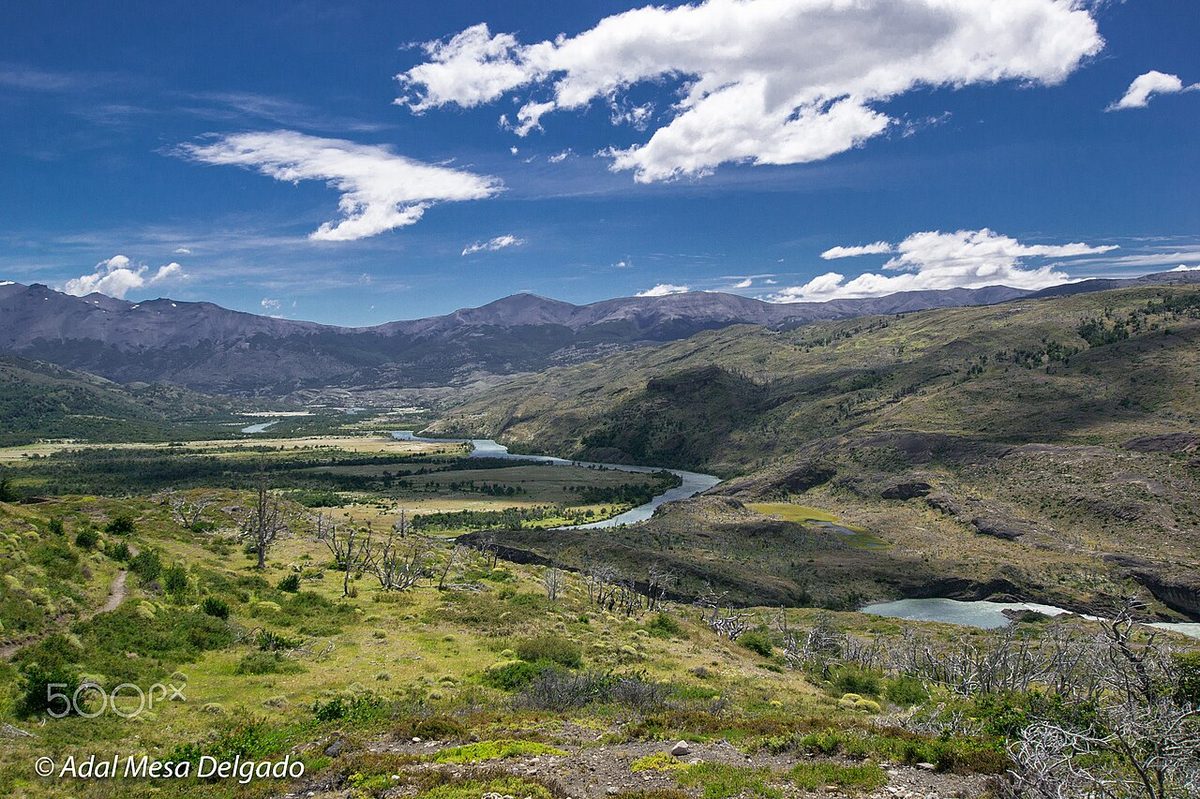
Fig. 4 · Rio Paine flowing through Torres del Paine National Park, where stream crossings and mud shape the footwear and gaiter choices on a packing listPhoto: Adal Mesa Delgado / CC0 via Wikimedia Commons
Refugios: the distinction that decides whether you carry a sleeping bag
If you read nothing else here, read this. Whether you need a sleeping bag on the W depends not on the season or the route but on which company runs the refugio you booked.
Full bedding kit: sheets, pillow, blanket or sleeping bag
No
Vértice — “made bed”
Paine Grande, Grey, Dickson
Mattress cover, pillow, sheets and blanket
No
Vértice — “simple bed”
Paine Grande, Grey, Dickson
Mattress cover, pillow and pillowcase only — no blanket, no bag
Yes
Swipe to see all columns
Table 3
Book the cheaper Vértice tier without reading what it contains and you are sleeping in your clothes. Vértice lets you add a tent, bag and mat to an online booking; Las Torres sites offer premium campsite packages instead. Availability is guaranteed nowhere.
You are financially liable for rented in-park gear, which given the wind is a live risk: Vértice publishes replacement values of CLP 500,000 for a tent, CLP 150,000 for a sleeping bag and CLP 90,000 for a foam mat, secured against a credit card.
Bring regardless of tier: a sleeping bag liner (100–250 g, rentable in Puerto Natales for about USD 4/day as of July 2026), which turns a simple bed into a warm one and adds a few degrees to any bag; a padlock; a microfibre towel; earplugs; flip-flops; and a bag for wet clothes.
What refugios already supply, so you can stop packing it: bedding at the tier you booked, hot showers, cooked meals if pre-booked, a small shop with basics, and campsite cooking shelters — but with no stoves and no utensils, so a self-caterer still carries stove, pot and spork. Indicative 2026/27 rates ran USD 46–66 a night for a mattress-only dorm bed and USD 115–230 for a made bed; see W Trek refugios and Patagonia camping.
Fuel, food and laundry: the legality layer
Fuel. You cannot fly with gas canisters, so buy on arrival. In Puerto Natales as of July 2026, a 230 g canister sold for around USD 6 and a 450 g for around USD 10. Thread standards and gas mixes vary between shops, so bring the stove and buy the gas. Only non-vegetal-fuel stoves are legal in Torres del Paine and Los Glaciares, in designated areas. On quantity, one experienced W and O trekker’s conservative estimate is one 230 g canister per three days per person, boil-only — and they call that more than they use.
Food across the Chilean border. Chile’s Servicio Agrícola y Ganadero requires a sworn declaration — declaración jurada — for all products of plant or animal origin, completable in advance. Roasted or salted nuts and dried grains are permitted, as are frozen, cooked or preserved vegetables. Fresh fruit, unwashed fresh vegetables, meat and dairy are not. In packing terms: your bar-and-roasted-nut trail bag crosses the border; the apple, the sandwich and the cheese do not. Declare rather than gamble — we found no published fine schedule, so don’t take a blog’s word for the penalty. Border mechanics are in crossing between Chile and Argentina.
Resupply and laundry, which is what actually decides how many shirts you pack. El Chaltén’s groceries run up to twice El Calafate or Bariloche prices with a thinner selection, and the town has one ATM prone to running dry in high season, so buy trail snacks and freeze-dried meals before you arrive. On the Carretera Austral, resupply is Coyhaique or not much. Both staging towns have lavanderías and hostel laundry — plan on a 24-hour turnaround rather than same-day, and schedule it on a rest day between treks. We could not verify per-kilo prices from a source worth citing, so we publish none. The planning figure is two to three changes of clothes per week, not one a day.
What people over-pack
This is the section the rest of the internet skips, because nothing here earns a commission.
Shirts. One to hike in and one to sleep in covers the W; two for the O. Laundry exists.
Cotton and denim. Heavy, cold when wet, slow to dry.
Heavy leather boots, when a mid-weight fabric boot is lighter, more breathable and dries faster.
Over-rated sleeping bags. A 0 °C bag plus a liner is enough for mid-February in Torres del Paine; the −7 °C to −14 °C bags on the rental racks are unnecessary for a summer trip, and heavier for it.
Fuel. Most people carry roughly double what they burn.
An umbrella. Actively hazardous.
Camp luxuries. An e-reader instead of paperbacks, one camera body, decanted toiletries, a microfibre towel instead of a bath towel.
Duplicate first-aid kits. One compact kit per group, one blister kit per person.
Water treatment you have not tested. If you use a UV pen, check your bottle’s mouth fits it.
Gear bought new for one trip. Swoop’s own advice is to rent or borrow rather than buy something you’ll never use again — unusually honest for a company selling trips. Puerto Natales rents essentially the whole hardware list, with full one-person camping kits at USD 33–56/day as of July 2026.
What people forget
A warm hat. A second, dry pair of gloves. A pack liner, because most people bring only the rain cover the wind removes. A sunglasses retainer strap. A padlock for refugio lockers — a combination beats a key you can lose. Earplugs, for dorms and for tent fabric cracking all night. Dry sleep socks. Blister tape you know how to use, applied before there is a blister. SPF lip balm. A quick-dry towel. A whistle. Small cash. Spare batteries. Offline maps. A rubbish bag. Flip-flops for the showers.
Do I need hiking boots for Patagonia, or will trail runners do?
Trail runners are defensible on the W if you’re refugio-based with a light daypack, and on the El Chaltén day hikes in summer. Choose boots when your load passes roughly 15 kg, when the trail is rough or muddy, or when there’s snow or scree — the O Circuit, the Huemul, anything outside December to February. Deep open lugs and 30–50 km of break-in matter more than the brand.
How big a daypack do I need for Patagonia?
For village- or hotel-based day hiking, 20–30 L with a hipbelt. Basing in a refugio and doing side trips, 18 L is enough. Hut-to-hut on the W, 35–40 L; independent camping, 55–70 L, or around 30 L if porters carry; winter, 40–60 L.
Do Torres del Paine refugios provide sleeping bags?
It depends on the operator. Las Torres Patagonia and Fantástico Sur refugios include a full bedding kit, so you need no bag. Vértice refugios at Paine Grande, Grey and Dickson give you a choice at booking: a “made bed” includes sheets and a blanket, a “simple bed” is a mattress cover and pillow only. Check which tier you booked.
Can I fly with gas canisters, and where do I buy fuel?
No — canisters are prohibited in both checked and cabin baggage. Bring the stove and buy the gas on arrival. Puerto Natales shops sold 230 g canisters for around USD 6 and 450 g for around USD 10 as of July 2026. Thread standards vary, so check compatibility. Only non-vegetal-fuel stoves are legal in Torres del Paine and Los Glaciares, in designated areas.
Do I really need microspikes and trekking poles?
Inside Torres del Paine’s 2026 winter window of 27 April to 30 August, microspikes or crampons, poles and a head torch were part of CONAF’s stated requirement, and rangers check at the porterías. In Argentina’s Los Glaciares, poles and crampons are obligatory on snow and ice. Outside those conditions poles are a strong recommendation rather than a rule. But CONAF kept a poles-and-crampons requirement at park entrances even after lifting a guide rule in September 2025 — so verify rather than assume summer means no traction.
The one-line version
Buy the shell and the footwear properly, rent or borrow the hardware, pack half the clothes you first wrote down — and check CONAF the week you travel, because the rule set that governs your kit moved three times in the year to April 2026.
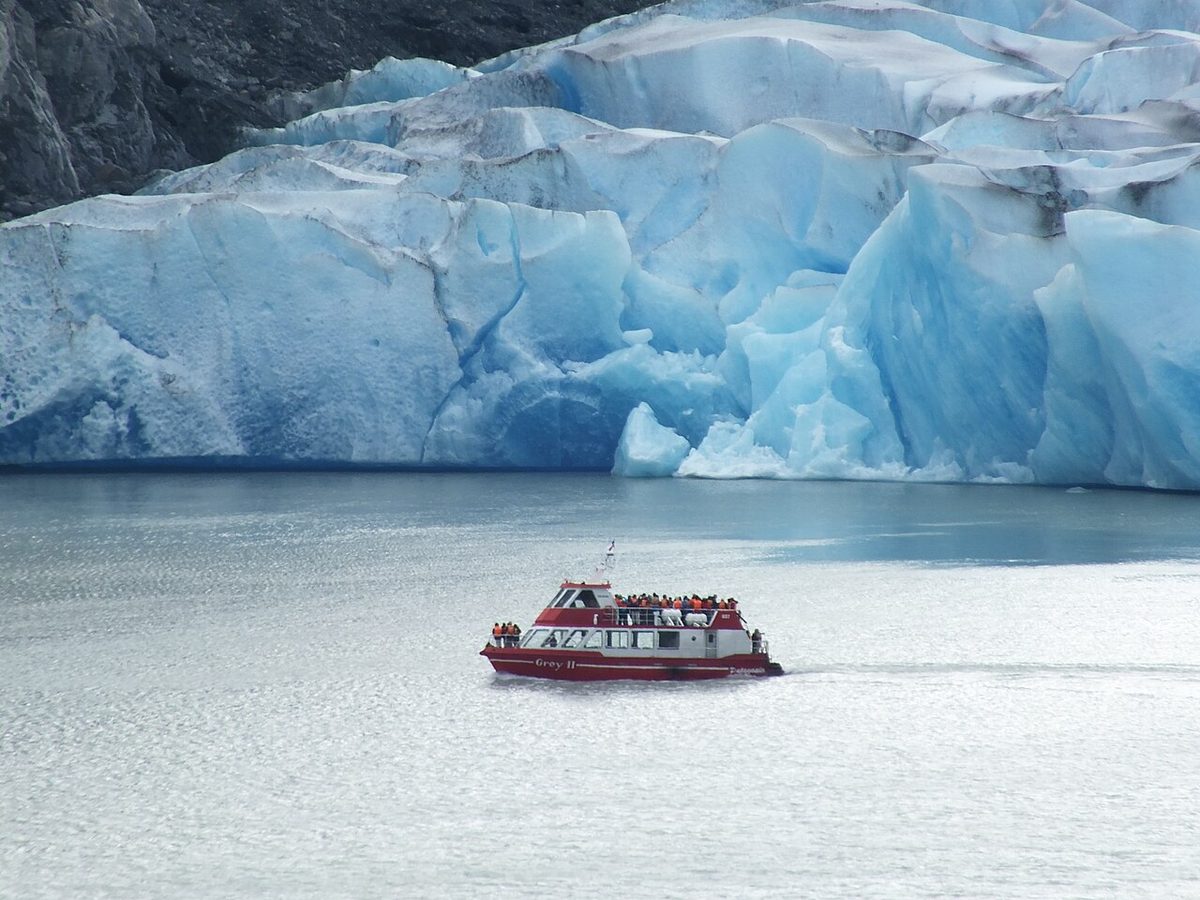
Valle del Frances in Torres del Paine, the exposed middle arm of the W circuit where a Patagonia packing list is tested by wind-driven rain — Prandium01 / CC BY-SA 3.0 via Wikimedia Commons
Lenga forest on a Torres del Paine trail, the sheltered sections where a fleece mid layer works before the shell goes back on above treeline — Camilacfu / CC BY-SA 4.0 via Wikimedia Commons
Rio Paine flowing through Torres del Paine National Park, where stream crossings and mud shape the footwear and gaiter choices on a packing list — Adal Mesa Delgado / CC0 via Wikimedia Commons