The best time to hike Patagonia is December to March for access, with November and March for fewer crowds. Get the wind truth and booking windows.
By Patagonia Tourism Guide · First published 4 Jul 2026 · Updated 1 Aug 2026
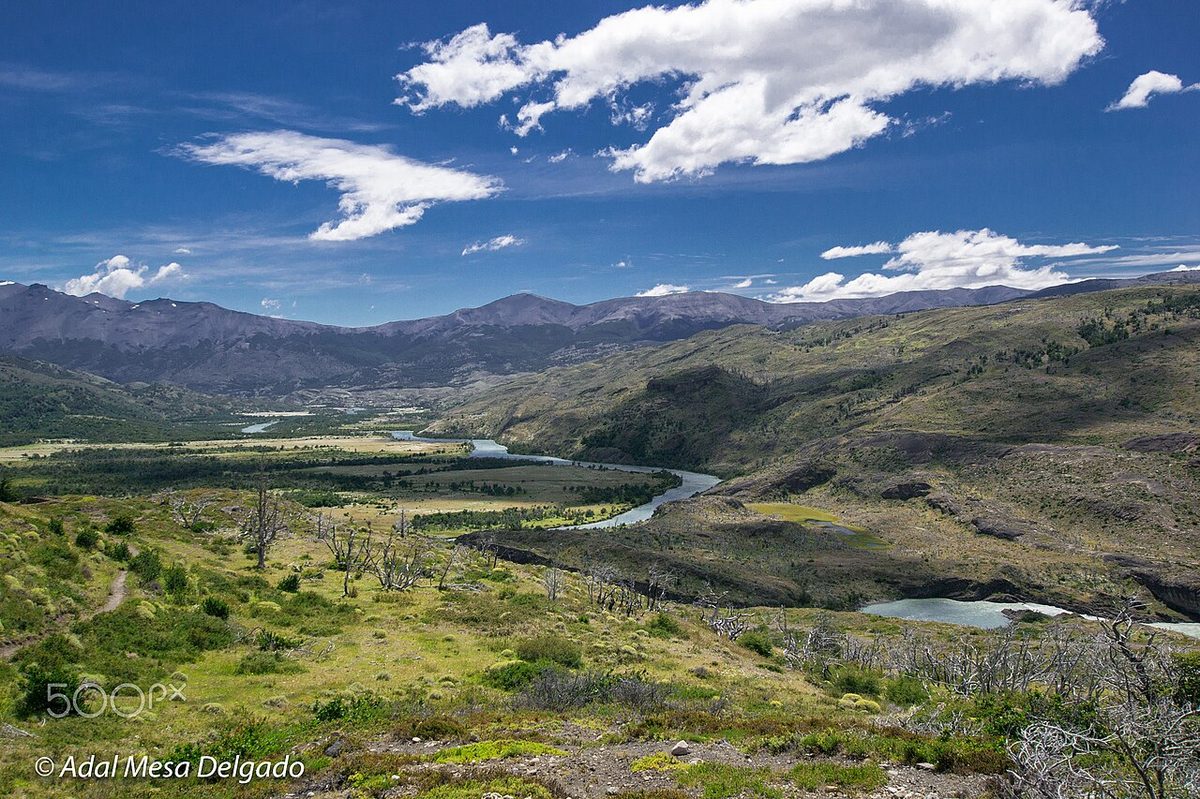
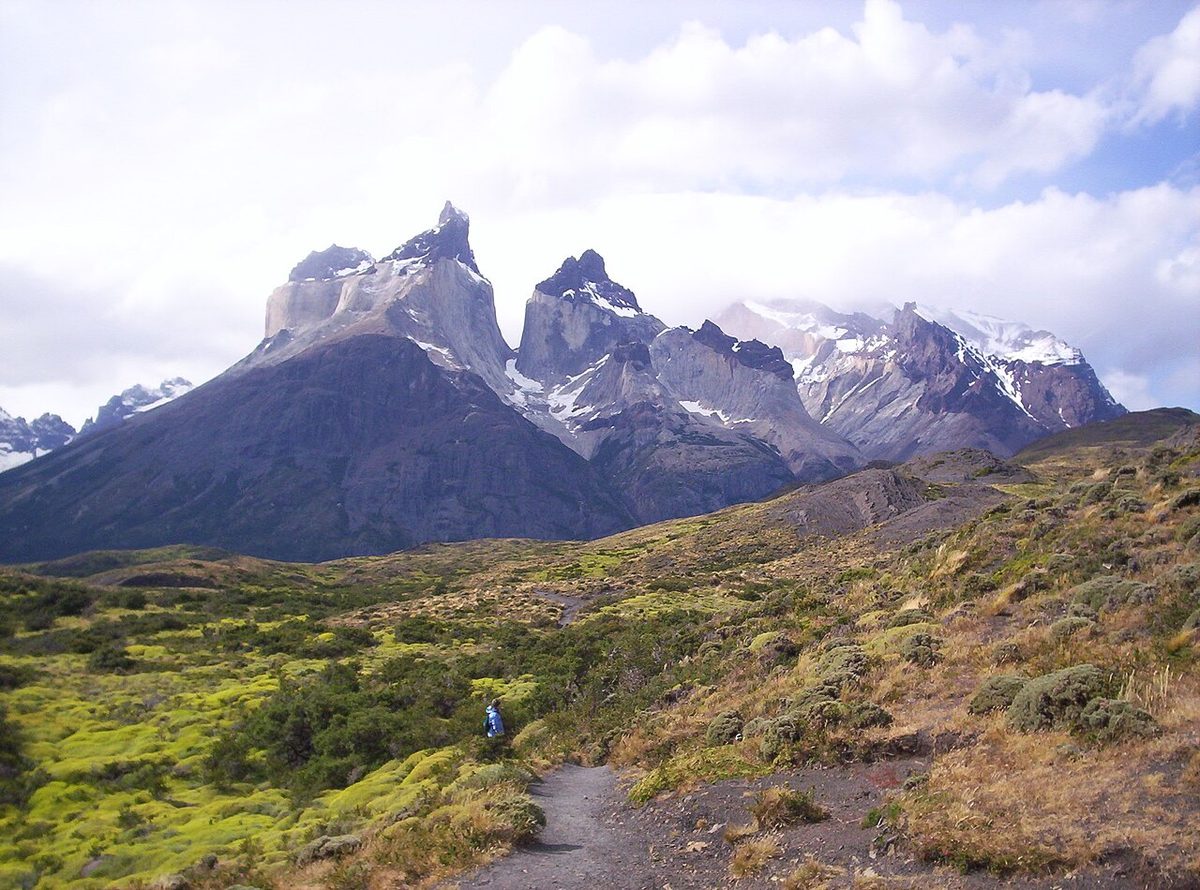
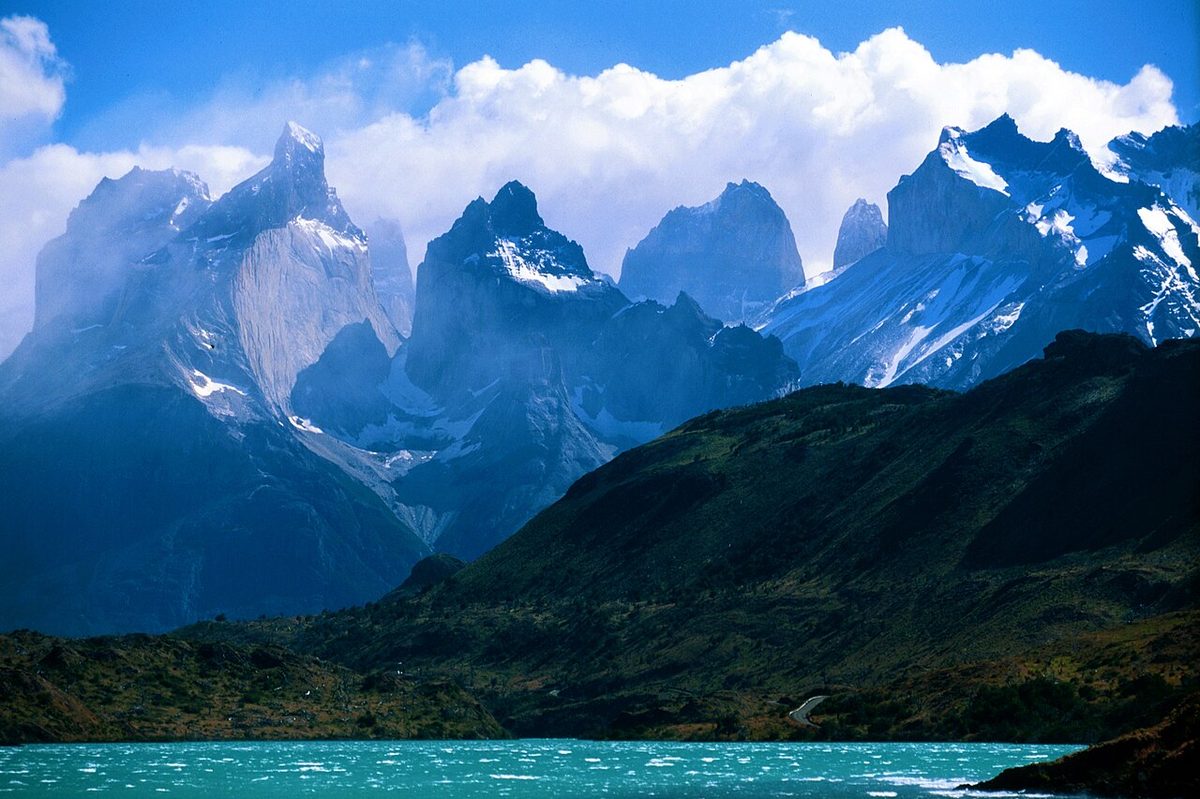
0 — 2 km Fig. 1 · Hikers on the W Trek below the granite towers, the best time to hike Patagonia being December to March · Photo: Adal Mesa Delgado / CC0 via Wikimedia Commons
The first time I hiked in Patagonia, I planned the whole trip around a flight deal and not a single thought about wind. I got lucky. The second time, I got the wind, and I learned more in three days of being shoved sideways above Laguna de los Tres than I had in months of reading. So let me save you my second trip.
The best time to hike Patagonia is roughly December to March, when trails are open, refugios are running, and daylight is long. December to February gives you the easiest access and the most reliable services; November and March give you thinner crowds and, often, less wind. The honest catch is that wind peaks in those same summer months, so no single window is perfect.
This guide is for hikers, not general sightseers. If you are still deciding whether to go to Patagonia at all, or weighing it against a beach holiday, start with the broader best time to visit Patagonia pillar instead, then come back here once you know you want to trek. If your dates are already locked, skip to the month-by-month table and read your month honestly.
One thing I want to flag up front, because it changes everything: “Patagonia” is too big for one calendar. The W Trek in Chile, the day hikes around El Chalten in Argentina, and the advanced Huemul Circuit each have their own season, their own booking pressure, and their own relationship with the wind. I will keep splitting them apart, because that is the single most useful thing I can do for your plan.
The best time to hike Patagonia, at a glance
Use this table to sanity-check a month before you fall for a flight price. Every figure is approximate and weather-dependent. Patagonia does not read forecasts, and it will happily give you all four seasons in one afternoon.
Month
Trail access
Wind
Crowds
Verdict for hikers
October
Opening up; lingering snow + mud on high trails
Building, gusty
Low
Shoulder gamble; fine with flexibility
November
Most main routes open; O Circuit opening ~Nov 1
Often the windiest
Low-medium
Good if you accept wind and book ahead
December
Full access; long days arriving
Strong
Medium-high
Strong all-rounder, early December especially
January
Full access; peak daylight (~17–18h)
Strong, peak
Very high
Easiest access, hardest to book, busiest
February
Full access; often calmest, driest summer month
Easing slightly
High
The peak-season sweet spot
March
Still good early-to-mid; O Circuit closing ~end of month
Easing
Medium
My favourite balance of access vs calm
April
Tapering; days short; high routes risky
Calmer
Low
Lower walks only; verify everything
May–Sept
Most trails closed; W Trek guide-only
Low but cold
Very low
Winter trip, not a trekking trip
Swipe to see all columns
Table 1
If you only take two rows from that table, take February and March. February is the best compromise inside peak season. March is the best balance if you have any flexibility at all. And if you only remember one sentence, remember this: in Patagonia, the best month on paper becomes the worst month in practice if you book it too late.
The Patagonia trekking season, explained
The core Patagonia trekking season runs from around November through March, with October and April as shoulder months that work for some routes and not others. That window exists for one simple reason: it is when the infrastructure is open. Refugios and campsites operate, transfer buses and catamarans run, ranger stations are staffed, and the high passes are mostly clear of snow.
Step outside it and the mountains do not become impossible, but the support system disappears. Most huts and campsites close, the O Circuit shuts entirely, many trails ice over, and daylight collapses. By June you are down to short, cold days and a Torres del Paine W Trek that legally requires a licensed guide. Argentina’s Los Glaciares does not run a winter trekking product at all, so El Chalten essentially closes for serious hiking.
Inside the season, the trade-offs shift week to week. Here is the shape of it:
Summer (December to February): Longest daylight, warmest temperatures, everything open. Also the busiest, priciest, and windiest. This is the brochure season for good reason, and the booking-stress season for the same reason.
Shoulder (October to November, and March to April): Fewer people, lower prices, calmer winds on average, and the spring flowers or autumn colour that make the photos. The cost is more weather uncertainty, some routes not fully open, and services ramping up or winding down.
Winter (May to September): A different trip entirely. Skiing in Bariloche, guided winter days in Torres del Paine, solitude and snow. Not a multi-route trekking holiday.
The mistake I see most often is treating shoulder season as “summer with a discount.” It is not. October and April are genuinely good for the right hiker on the right trail, but they punish rigid, one-shot itineraries. If you have nine days and one dream hike, lean toward the heart of the season. If you have three weeks and a flexible spirit, the shoulders can be the best trip of your life.
For the full picture of how each calendar month feels across the whole region, the Patagonia weather by month guide goes deeper on temperatures and rainfall than I will here.
The wind truth nobody puts on the brochure
Here is the thing operators tend to soften: in Patagonia, wind is not a footnote to the weather. It is the weather. And it is at its strongest during the exact months that are otherwise best for hiking.
The prevailing westerlies, the famous Roaring Forties, slam into the Andes more or less constantly through the warmer half of the year. In sheltered valleys you might feel a steady 20 to 40 km/h breeze. Climb onto an exposed ridge or out to a glacial lagoon and that can jump to 60, 80, even over 100 km/h in gusts. On a bad day above Laguna de los Tres or on the open stretches of the W, sustained wind in the 80 to 100 km/h range is not a freak event. It is Tuesday.
Wind tends to peak from roughly November through February, and November is the month I hear named most often as the windiest. February is frequently the calmest and driest of the summer months, which is one reason I rate it so highly. The shoulder months on either side, late February into March and again in autumn, generally feel gentler, though “gentler” in Patagonia still means you keep a hand on your hat.
Two practical habits matter more than the calendar:
Hike the exposed sections early. Wind in this region builds through the day. Mornings, roughly 6 to 11am, are usually the calmest and the clearest, which is also why they give the best odds of an unclouded Fitz Roy or a clean view of the Torres. By mid-afternoon the gusts and cloud build, and that is when the genuinely dangerous moments happen on ridges and passes.
Respect the “impassable in high wind” sections. Some terrain, like the high passes on the Huemul Circuit, simply should not be attempted when it is blowing hard. People get knocked off their feet. Build a buffer day so you can wait out a bad window rather than gambling on it.
None of this should scare you off. I have had glorious, near-windless afternoons in the middle of January and a full sideways gale in calm-reputation March. The point is to plan for wind as a default, pick a month with your eyes open, and never treat a good forecast as a promise. The Patagonia hiking, camping, gear and safety guide covers how to dress and pack for it, which matters as much as when you go.
Patagonia hiking month by month
This is the planning-level view for hikers specifically. Treat it as a way to choose your risk profile, not as a forecast for your week.
October
October is the door creaking open. Spring is arriving, days are lengthening past 12 hours, the wildflowers start, and prices and crowds are low. But high trails can still hold snow and mud, some refugios and transfers are only just starting, and the weather is genuinely variable. The W Trek’s main route is increasingly walkable, while the O Circuit usually is not fully open yet. October suits experienced, flexible hikers and anyone happy to swap certainty for solitude. I would not pin a once-in-a-lifetime, tightly scheduled trek to it.
November
November is the real start of the trekking season for most routes. The O Circuit typically opens around the first of the month, refugios come online, and daylight is generous and growing. The catch is wind, which is often at its yearly worst now, and lingering snow on the highest sections. It is a wonderful month for spring energy and fewer crowds than midsummer, but you still need to book major lodging well ahead, because Torres del Paine refugios for November can fill many months out.
December
December is the opening act of high summer, and one of my favourite months. The days stretch toward 17 hours, every route is open, and the whole region feels awake. Early December is the sweet spot: strong access and daylight before the Christmas and New Year holiday surge lands on flights, buses, and refugios. Late December gets busier and pricier as local school holidays begin. Wind is strong but the access is unbeatable. Book ahead and December rarely disappoints.
January
January is the obvious answer, and sometimes the right one. It brings peak daylight, the warmest temperatures, and the fullest range of open services. If your dates are fixed by school holidays, or you simply want the highest chance that everything you need is operating, January delivers. But it is also the busiest and most expensive month, the wind is at full strength, and the popular trails and refugios are under the most pressure of the year. I would hike in January happily, but I would book the trip-defining pieces the moment reservations open and accept the crowds as the price of the easiest access window.
February
February is, for my money, the peak-season sweet spot. You keep almost all of January’s benefits, long days, full access, warm-ish temperatures, but it is frequently the calmest and driest summer month, and the crowds ease a little as Chilean and Argentine holidaymakers head home. It is a superb month for the W Trek, the O Circuit, El Chalten, and the Huemul. If I were booking a single peak-season trek and wanted the best odds of decent weather, February is where I would start. You still must book early. February is not a month to improvise the core of a short trip.
March
March may be the best month overall if you have any flexibility. The brutal summer wind starts to ease, the lenga forests begin turning red and gold from roughly mid-month, the crowds thin noticeably, and last-minute refugio space becomes far easier to find. The trade-off is that the season is winding down around you: the O Circuit typically closes near the end of March, some refugios and transfers taper off late in the month, and the weather grows more variable. Early-to-mid March still feels like the tail of summer; late March is a genuine shoulder-season pivot. It is the month I recommend most often to independent hikers, and it pairs beautifully with the deeper what March looks like in Patagonia breakdown.
April
April is beautiful and unforgiving. The autumn colour can be extraordinary and the trails blissfully quiet, but days are short, nights are cold, snow can return to higher elevations, and the season is closing. The O Circuit is generally done, refugios and transfers are reducing, and multi-day plans need careful verification. April works for lower-elevation walks and slower, flexible trips with warm layers and room to adjust. It is not my pick for a first-timer chasing the big classic treks.
May through September
This is winter, and it is a different trip. Most trails close, the O Circuit is shut, and the Torres del Paine W Trek is only permitted with a licensed guide. Los Glaciares runs no winter trekking, so El Chalten effectively closes for serious hiking. What winter does offer is skiing around Bariloche, guided winter day-hikes to the base of the Torres, snow-quiet landscapes, and photography you cannot get in summer. If that is your goal, the Patagonia winter guide is the place to plan it. If multi-day trekking is your goal, this is not your season.
The W Trek and O Circuit: season and booking windows
Torres del Paine is where timing stops being about weather and starts being about logistics. The W Trek and the longer O Circuit (the full loop) depend on a chain of campsites, refugios, transfers, and park rules, and if any link is missing, the trek does not happen, no matter how good the forecast is.
Season. The W Trek’s main hiking window runs roughly October to April, with December to February as the easiest. The O Circuit has a shorter season, typically around November 1 to the end of March, because the remote back side of the loop and its high pass need to be clear of snow and staffed. Some experienced trekkers narrow the “everything reliably open” window to mid-November through mid-March. Outside that, you are gambling on closures.
Booking is the real deadline. This is the part that catches people out. Refugio and campsite reservations for the next summer season generally open around April, and prime December-to-February dates can sell out within weeks, sometimes days. The accommodation is now run by two private operators you book directly: Vertice Patagonia (Paine Grande, Grey, Dickson, and Los Perros) and Las Torres Patagonia (Torres Central and Norte, Chileno, Cuernos, Francés, and Serón). The old free CONAF campsites at Italiano and Paso have been closed since the pandemic and remain unavailable, so do not build a plan around them. Always verify current rules, fees, and closures through CONAF before you commit, because park regulations change between seasons.
The practical sequence for the O Circuit and W Trek is the reverse of a normal trip. You do not book flights and then find a trek. You secure the campsites and refugios first, in the right order along the route, then build your flights and transfers around the dates you actually got. I have watched friends get the perfect February dates and others scramble into a patchy itinerary because they waited until June. Do not be the second group.
In short, for Torres del Paine multi-day treks: aim for December to early March, book the moment reservations open in April, and treat the O Circuit’s end-of-March closure as a hard wall.
El Chalten and Fitz Roy: a longer window, but you chase the weather
El Chalten, just over the border in Argentina, plays by friendlier rules. Because the headline hikes, Laguna de los Tres for Fitz Roy and Laguna Torre for Cerro Torre, are day walks from town, you do not need to pre-book a chain of refugios. That gives El Chalten a longer accessible window, roughly October to April, with December to February the warmest and most stable, and November, March, and April very walkable for the main day hikes if you accept cooler, shorter days.
The catch in El Chalten is not access. It is the view. Fitz Roy and Cerro Torre generate their own weather, and the peaks can be buried in cloud while the town sits in sunshine, or the reverse. This is why I beg people not to give El Chalten a single day and call it done. Give it a weather buffer. Stay three to five nights if Fitz Roy is the heart of your trip, and treat any clear morning as the day to go.
Timing within the day matters as much as the month here. Mornings, roughly 6 to 11am, give the calmest winds and the best odds of a clear summit, which is why you see headlamp-lit lines heading up to Laguna de los Tres before dawn. Afternoons bring the strongest gusts, the most cloud, and the highest chance of a storm rolling in. If you want the iconic sunrise glow on Fitz Roy, that early start is not optional.
Because El Chalten is so view-dependent and so much less booking-intensive than Torres del Paine, it is the most forgiving major hiking base on the calendar. You can go in the shoulder months with far less risk than a shoulder-season O Circuit, as long as you bring patience and layers. The El Chalten trail guide sequences the trails and tells you which to prioritise on a short clear window.
Advanced routes: the Huemul Circuit’s narrow window
If you are an experienced backcountry hiker, the Huemul Circuit out of El Chalten is one of Patagonia’s great rewards, a roughly four-day, 60-plus-kilometre loop with jaw-dropping views over the Southern Patagonian Ice Field. It is also where the season gets genuinely tight, and where the wind stops being an inconvenience and becomes a go or no-go safety call.
The Huemul’s window is narrow: around November to March, with December to February the realistic core. Early November can still have snow on the passes, and by late March the weather window slams shut fast. Shoulder-season attempts in November or April risk unexpected snowfall on exposed, committing terrain.
The deciding factor is not temperature, it is wind on the high passes, especially Paso del Viento (the name literally means “wind pass”) and Paso Huemul. These are impassable in strong wind, full stop. Smart Huemul hikers watch the four-day forecast obsessively, and in particular the wind on day two, and they build slack into the trip so they can wait for a calm window rather than walk into a dangerous one. This route also demands strong navigation, river crossings, and Tyrolean traverses, plus a free permit and a ranger sign-in and sign-out, where they will send a search party if you do not check back. This is not a route to attempt on a tight schedule or in marginal conditions.
The lesson the Huemul teaches applies to every advanced route in Patagonia: pick the heart of the season, December to February, and build in buffer days so the mountain, not your flight home, decides when you cross the passes.
Shoulder-season strategy: how to make October, November, March and April work
I love shoulder-season Patagonia, but it rewards a specific kind of planning. If you want the thinner crowds, lower prices, and softer light of October, November, March, or April, here is how I would stack the odds:
Buy time, not just a ticket. The single best shoulder-season move is extra days. Weather windows are less reliable, so a three-day buffer turns “we got skunked by cloud” into “we waited and nailed it.” The longer your trip, the less any single bad day matters.
Pick view-flexible bases. El Chalten and El Calafate are forgiving in the shoulders because the day hikes and the Perito Moreno Glacier do not depend on a booked refugio chain. A shoulder-season O Circuit, by contrast, can be derailed by a single closure.
Verify, do not assume. In October and April especially, check current refugio open dates, transfer schedules, and park notices directly before you build the route. Last-season’s blog post is not good enough; this is exactly when things open late or close early.
Lean late-spring or early-autumn, not the edges. Late November is stronger than early November; early-to-mid March is stronger than late March. The closer you sit to summer, the more the season has matured.
Done right, the shoulders give you the Patagonia of the photographs, glowing lenga forests in March, empty trails in October, without the peak-season crush. Done carelessly, they give you closed huts and a covered mountain. The difference is almost always the buffer days.
Your hiking month should change your pack, not just your dates. A few quick implications, with the detail living in the gear and safety guide:
Midsummer (December to February): Long days mean you can start late and still finish in light, but the wind and strong sun are the real story. A genuinely windproof shell, sun protection, and a buff for the gusts matter more than heavy insulation. Nights are still cold, so a warm layer stays in the pack.
Shoulder months (October, November, March, April): Pack for a wider swing. Colder mornings and nights, the real chance of snow or sleet on high trails, and shorter daylight that makes a headlamp and an earlier start essential. This is the time to bring the warmer sleeping bag and the extra layer you might skip in January.
Any month: Three-season layering, a properly windproof and waterproof shell, and the assumption that you will meet sun, rain, and gale in a single day. Patagonia’s reputation for “four seasons in an afternoon” is earned, and the wind makes a mild temperature feel far colder on an exposed ridge.
The through-line: the calendar tells you how much daylight and warmth you get, but the wind dictates your shell and your timing in every month. Plan the layers around the gusts, not the thermometer.
So what is the best month to hike Patagonia?
If you made me choose one month, I would say February for peak-season certainty and the calmest summer weather, and March if you want the best all-around balance. Here is how I actually decide:
You want the easiest possible access and don’t mind crowds or wind: December or January. Everything is open, days are longest, just book early.
You want the best odds inside the main season: February. Calmest and driest summer month, slightly thinner crowds, full access.
You want the best overall trip and have some flexibility: March. Easing wind, autumn colour, fewer people, easier last-minute lodging, with a watchful eye on the late-March wind-down.
You hate crowds more than you fear wind: November or late March. Spring energy or autumn calm, fewer people, but plan around the gusts and book ahead in November.
You’re chasing the O Circuit specifically: mid-November to mid-March, booked the day reservations open.
You’re chasing Fitz Roy: December to March for stability, but honestly any clear morning in the October-to-April window can deliver if you give El Chalten enough nights.
For most hikers, February is the strongest single month: full trail access, long daylight, and often the calmest, driest summer conditions, with slightly fewer crowds than January. If you have flexibility, March is the best all-around balance thanks to easing wind, autumn colour, and thinner crowds. November is a good lower-crowd choice if you accept the season’s strongest wind.
When is the best time to hike the W Trek?
The W Trek’s easiest window is December to February, when daylight is longest and every refugio and transfer is running, with the broader season stretching roughly October to April. The catch is booking: refugios and campsites for peak dates open around April and sell out within weeks, so secure your accommodation first and build flights around it.
When is the O Circuit open and when does it close?
The O Circuit, the full loop, has a shorter season than the W Trek, typically running from around November 1 to the end of March, because its remote back side and high pass must be clear of snow and staffed. Many trekkers aim for the safer mid-November to mid-March window. Always confirm current dates with CONAF and the booking operators before you plan.
What is the windiest month for hiking in Patagonia?
Wind peaks across the summer, roughly November through February, and November is the month most often singled out as the windiest. Gusts can exceed 100 km/h on exposed ridges and glacial lagoons. February tends to be the calmest summer month, and the shoulder months in autumn generally feel gentler, though Patagonia never truly goes windless.
Is November a good time to hike Patagonia?
November can be excellent for spring scenery, thinner crowds, and lower prices, and most main routes including the O Circuit are open. The trade-offs are real, though: it is often the windiest month, high trails can still hold snow, and you must book major refugios well ahead. Late November is generally a safer bet than early November.
When is the best time to hike El Chalten and see Fitz Roy?
El Chalten has a long window, roughly October to April, with December to February the most stable, but the limiting factor is cloud, not access. Fitz Roy makes its own weather, so stay several nights and hike on any clear morning, ideally before 11am when winds are calmest and the peak is most likely to be visible.
Can you hike Patagonia in winter?
You can visit in winter (May to September), but it is not a multi-route trekking season. Most trails close, the O Circuit shuts, and the Torres del Paine W Trek is only permitted with a licensed guide; Los Glaciares offers no winter trekking. Winter suits skiing in Bariloche, guided winter day-hikes, and snow-quiet photography rather than independent multi-day treks.
When is Patagonia least crowded for hiking?
The shoulder seasons, October to November and March to April, are noticeably quieter than peak summer, with the deepest quiet in October and April at the very edges of the season. The trade-off is more weather uncertainty, some routes not fully open, and reduced services. For a balance of quiet and reliability, late March or late November are the sweet spots.
Is December or February better for trekking Torres del Paine?
December offers the longest daylight and the festive energy of the season opening, but it gets busy and windy as holidays arrive. February usually brings the calmest and driest summer weather and slightly fewer crowds, which is why many hikers prefer it. Both require booking refugios early; if weather odds matter most to you, lean February.
Final thoughts
Patagonia taught me that the best time to hike here is not the month with the prettiest average temperature. It is the month that matches your route, your tolerance for wind, and how early you are willing to book. February gives you the best peak-season odds. March gives you the best all-around trip if you can travel outside the holidays. November gives you spring at the cost of the year’s strongest wind. And winter gives you something else entirely, beautiful, but not a trekking holiday.
My honest advice, after getting it wrong and then getting it right: pick December to March for the classic treks, book the Torres del Paine refugios the day reservations open in April, give El Chalten more nights than feels efficient, and build a buffer day for the wind on anything exposed. Do that, and the worst Patagonia can throw at you is a covered peak and a story. Do the opposite, plan late, schedule tight, ignore the wind, and even January can break your heart.
Then check the current notices before you go. Park rules, refugio dates, and closures shift between seasons, and one official update can be the difference between the trek of a lifetime and a long drive to a closed trailhead.