Bariloche in Winter: Skiing, Snow & What to Expect
Bariloche in winter means skiing at Cerro Catedral, snow, and chocolate by the fire. Best months, weather, activities, crowds and what to pack.
By Patagonia Tourism Guide · First published 18 Aug 2026 · Updated 1 Aug 2026
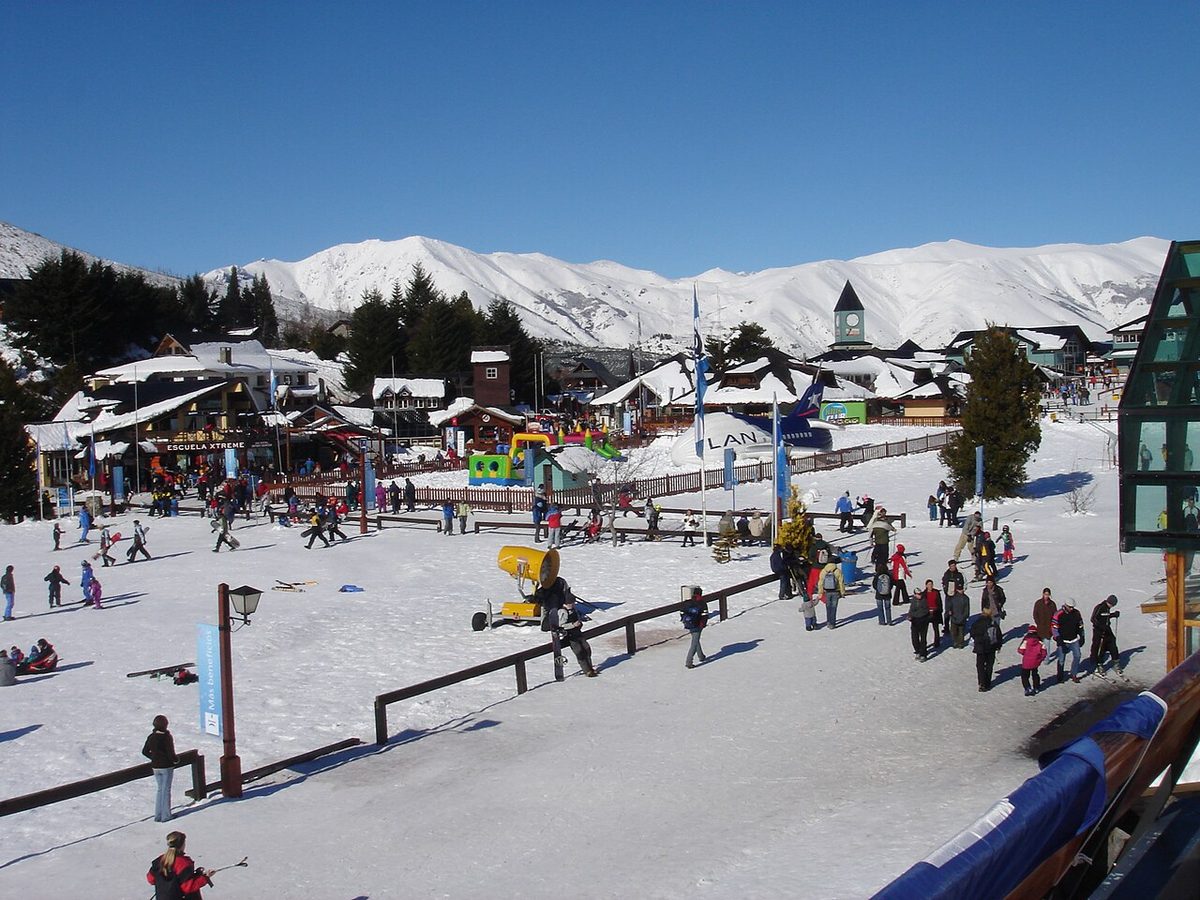
0 — 2 km Fig. 1 · Skiers and snowy slopes at Cerro Catedral, Bariloche in winter · Photo: CarlosJBJ / CC BY-SA 4.0 via Wikimedia Commons
The first time I rode the chairlift up Cerro Catedral on a cold, clear July morning, I understood why Argentines treat this town as a national winter ritual rather than a side trip. Below me, the runs fanned out toward a frozen-edged Lago Nahuel Huapi, the Andes stacked up white behind it, and the base village smelled like woodsmoke and hot chocolate.
Bariloche in winter is Argentina’s premier ski destination, built around Cerro Catedral, one of the largest ski resorts in South America. The snow season runs roughly mid-June to early October, with July as the cold, busy peak. Expect skiing and snowboarding, snowshoeing, sledding, chocolate, fondue, fireplaces, short daylight, and serious crowds during the July school holidays.
This guide is for anyone trying to decide whether to visit Bariloche between June and September, and how to plan it well. It is for skiers and snowboarders, for families weighing a snow holiday, and just as much for travelers who do not ski at all but want a real Patagonian winter. I will be candid about the cold, the queues, and the dates I would actually book.
Here is the fast version before we go deep. Treat every figure as “around” and check current conditions close to travel, because snow, prices, and lift schedules all move year to year.
Aspect
What to expect
Winter season
Around June 21 to September 20 (official); reliable skiing roughly July to September
Peak month
July, especially the late-July to early-August school holidays
Quieter, still-good skiing
Late August and early September
Main ski resort
Cerro Catedral, about 40 km round trip from downtown (25 to 30 minutes each way)
Catedral size
Around 120 km of slopes across roughly 600 hectares, 32 lifts (one of South America’s largest)
Typical July temps
Average near 2 to 3°C; highs around 6 to 7°C; nights often -5 to -11°C
Snowfall
Around 120 cm of snow falls on the town per year; far more up high
Daylight
Short: roughly 9 to 9.5 hours in June and July
Non-ski options
Cerro Otto, snowshoeing, sledding (trineos), cross-country skiing, dog sledding, chocolate and fondue
Getting there
Fly Buenos Aires to Bariloche (about 2 hours), then transfer, bus, taxi or car to the mountain
Driving
Snow chains required when conditions demand; many visitors skip the car entirely
Swipe to see all columns
Table 1
If that table already sold you, skip to skiing at Cerro Catedral. If you are on the fence, keep reading, because winter is the one season in Bariloche where the wrong dates can genuinely spoil the trip.
The Winter Season and Weather: How Cold, How Much Snow
Bariloche sits at about 850 meters above sea level on the shore of Lago Nahuel Huapi, with Cerro Catedral rising to around 2,100 meters just behind it. That combination of lake, foothills, and high Andes is exactly why it gets a proper winter while much of Argentina does not.
The official line from Bariloche tourism puts the winter season at June 21 to September 20. That is the calendar window. The skiing window is narrower and weather-dependent: snow generally falls from May to October, but the dependable ski months are July through September, and in big years you can ski into mid-October.
How cold does it actually get?
Cold, but rarely brutal in town. According to long-term climate data from Climates to Travel, July is the coldest month, averaging around 2.6°C, with daytime highs near 6 to 7°C and nights that usually dip to about -5°C, sometimes -11°C in a cold snap. June and August run a touch milder on average. The record low is genuinely extreme (-25.4°C in July 2017), but that is a rare event, not a typical day.
What this means in practice: down in Bariloche, a winter day is jacket-and-gloves cold, not expedition cold. Up on the mountain, with wind and altitude, it is a different story, and you dress for it.
How much does it snow, and is snow guaranteed?
The town itself gets around 120 cm of snow per year, with much heavier accumulation up at Catedral. June is statistically the wettest month, which is why it often delivers the first real dumps even though the resort may not be fully open yet.
Here is the honest caveat every brochure skips: snow is weather, not a schedule. Early-season (June) and late-season (late September into October) conditions are a gamble. Some Junes are white and skiable; others are thin and brown at the base. If a guaranteed deep snowpack is non-negotiable for you, aim for the heart of the season, mid-July to August, and accept the crowds, or build flexibility into your dates.
Short days, long evenings
Do not underestimate the daylight. Around the June solstice and through July, Bariloche gets only about 9 to 9.5 hours between dawn and dusk, with the sun coming up well after 9 a.m. and setting before 7 p.m. That is part of winter’s charm here, because the long, dark evenings are what make the chocolate shops, breweries, and fondue restaurants feel essential rather than touristy. But it does compress your ski day, so you start early.
Skiing at Cerro Catedral: Terrain, Passes, Rentals and Lessons
Cerro Catedral is the reason Bariloche tops every South American ski list, and it lives up to it. Bariloche official tourism describes it as the largest ski resort in the southern hemisphere, with around 120 km of slopes across roughly 600 hectares and 32 lifts (chairlifts, cable cars, and rope tows) capable of moving tens of thousands of people an hour. The base sits near 1,000 meters and lifts carry you up to around 2,000 meters, with views over Nahuel Huapi and Gutiérrez lakes toward Cerro Tronador.
It is about 40 km round trip from downtown Bariloche, or roughly 25 to 30 minutes each way by road.
The terrain: who is it actually for?
This is a mountain that flatters intermediates and keeps experts honest. Ski-media reviews generally break the marked terrain down to something like 15% beginner, 60% intermediate, 20% advanced, and 5% expert, with around 1,000 meters of lift-accessed vertical. The middle of that range is the sweet spot: if you are a confident blue-run skier or rider, you will have a wonderful week here.
Catedral also has a reputation for excellent tree skiing through the lenga forest and, for strong skiers, genuine off-piste bowls, chutes, and lift-assisted backcountry beyond the marked area. That terrain is real mountain country. If you venture off-piste, go with a guide, check the avalanche and weather picture, and treat it with the same respect you would any serious range.
Beginners are well served too. There is dedicated learner terrain at the base and a long, established ski school, so a complete first-timer can have a productive, low-stress first day.
Lift passes
You buy lift passes (the “pase” for the lifts) separately, and pricing changes constantly, so check the official Catedral Alta Patagonia tariff before you go rather than trusting any blog’s dollar figure, including this one. A few things that tend to hold true:
Multi-day passes are sold for 1, 3, 5, 7, or 10 days and usually work out cheaper per day than single tickets.
Buying online ahead of time often earns a small discount (commonly around 5%) versus the window.
Flexipass packs let you use non-consecutive days, which is gold in Bariloche because the weather is unreliable. You save your good-snow days instead of burning a pass on a whiteout.
Exclusive or priority passes buy you a faster lift line. In peak July that can mean a lot more time skiing and a lot less time standing in a queue.
Check today’s conditions on the official Catedral Alta Patagonia daily report before you commit to a day, especially in shoulder weeks when only some lifts run.
Rentals and clothing
You do not need to bring gear. There is a dense cluster of rental shops at the base of Cerro Catedral and many more downtown along Mitre and San Martín, renting skis, boards, boots, helmets, and even full winter clothing. Demand is highest in July, so book or arrive early in the day.
A practical tip I have heard echoed by locals: the shops furthest from the lifts (toward the bus stop) are often the cheapest, while ski-in convenience next to the base costs a premium. If you are skiing several days, sorting rentals downtown the evening before can save you a chaotic morning on the mountain.
Ski and snowboard lessons
Catedral’s ski school sits at the base and takes all levels, with instructors certified by the Argentine Association of Ski and Snowboard Instructors. Group lessons typically run around two hours and start mid-morning; the school office generally opens by 9 a.m. For an absolute beginner, a packaged option that bundles the transfer, rental, and a lesson removes nearly all the logistics from your first day, which I think is worth it the first time out.
Once you are comfortable, the mountain is yours. For where to base yourself for a ski-focused stay, the where to stay in Bariloche guide breaks down town versus the Catedral base, and the wider finding a bed near the parks guide helps if Bariloche is one stop on a longer route.
Non-Ski Winter Activities in Bariloche
Here is what the ski blogs underplay: you do not have to ski to love Bariloche in winter. Some of my favorite winter days here involved no lift tickets at all. The official tourism site lists a genuinely deep bench of snow activities beyond downhill skiing, and they are perfect for non-skiers, families, and rest days.
Snowshoeing
Strapping on snowshoes and walking into a silent, snow-laden lenga forest is the most underrated winter activity in Bariloche. Guided snowshoe outings run in several spots, including the Nordic ski area and on excursions like Roca Negra on Cerro López, which combines a 4×4 ride with snowshoeing to reach quiet, high viewpoints. You need warm layers and decent footwear, and not much else.
Sledding and trineos
If you are traveling with kids, sledding is the easy win. Piedras Blancas, on the way up Cerro Otto, has thousands of meters of sledding tracks across several circuits, with chairlift access and a sled included on the entry pass; extras like tubing and a zip line can be added on site. There is also a ski and snowboard school here, which makes it a gentle place to learn. Cerro Otto itself has dedicated sledding trails too.
Cross-country (Nordic) skiing
The Centro de Esquí Nórdico offers more than 10 km of cross-country trails winding through centuries-old lenga forest. It is a beautiful, low-adrenaline way to spend a snow day, and the same area runs tracked ATV rides, Defender rides, and snowshoe hikes. If downhill skiing intimidates you, this is a friendlier door into snow sport.
Dog sledding and snowmobiling
For something more memorable, dog sledding runs in the Bariloche backcountry in good snow years, and snowmobile excursions are common. Two stand out on the official list: La Cueva, a snowmobile ride through Cerro Catedral’s lenga forest to a cave venue with a four-course Patagonian dinner (open roughly July to mid-September), and El Refugio de Arelauquen, reached by 4×4 truck and snowmobile to a warm mountain refuge at around 1,300 meters. These are splurges, but they are the kind of evening you remember.
Skiing is concentrated at Catedral, but the winter landscape is much bigger than one mountain.
Cerro Otto
Cerro Otto is the most family-friendly winter outing in Bariloche, and it is close to town. A cable car climbs to about 1,400 meters, where you will find sledding trails, snowshoe paths, a labyrinth, panoramic decks, a suspension bridge, and the legendary slowly-revolving café where you sip hot chocolate while the whole Nahuel Huapi panorama turns past the window. It is not a serious sport destination, and in a low-snow year it is more viewpoint than wonderland, but on a bright, snowy day with kids in tow, it is hard to beat. Go early; the lines get long and slow by mid-afternoon.
Cerro Campanario
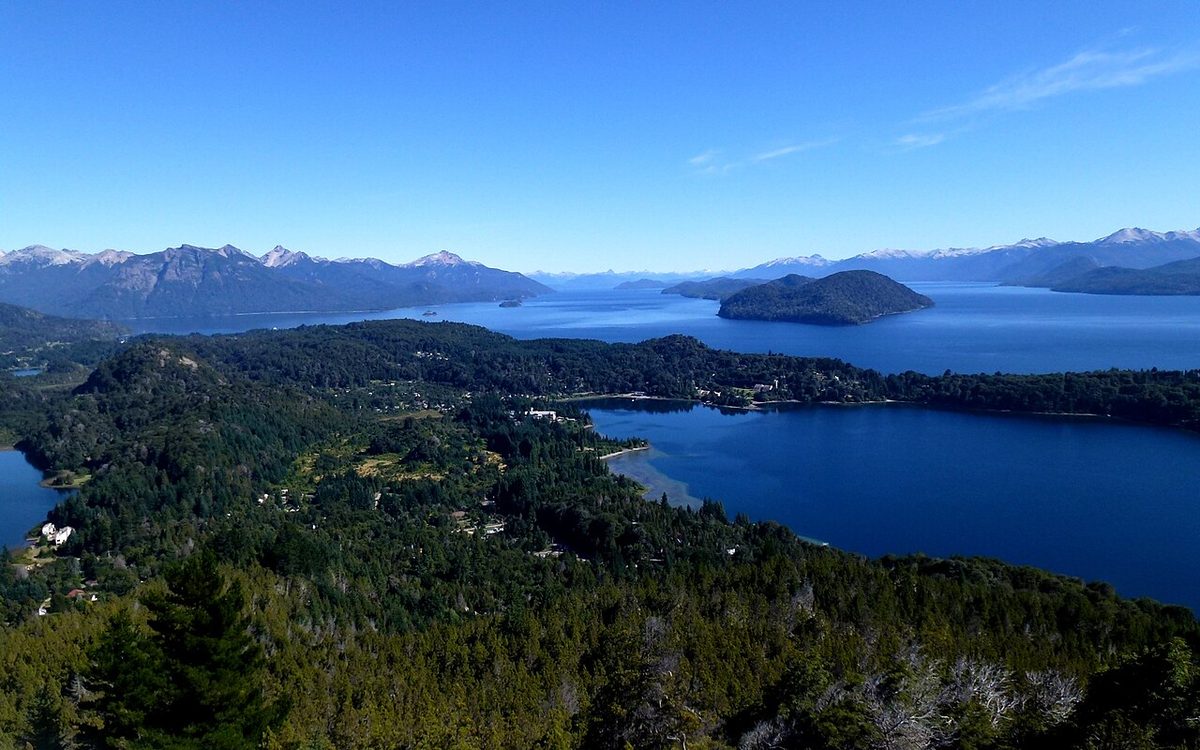
Campanario is technically a year-round viewpoint rather than a winter activity, but it earns its place here. A seven-minute chairlift (or a roughly 30-minute hike) reaches one of the most celebrated panoramas in Argentina, and seeing that lake-and-island view dusted with snow, ideally near sunset, is reason enough to ride up on a clear winter afternoon. There is a snack bar at the top for the obligatory hot chocolate.
Cerro Tronador
Cerro Tronador, the towering peak on the Chilean border, is a glorious summer and shoulder-season excursion, but in deep winter the road to the Pampa Linda area and the black glacier is typically closed or heavily restricted by snow. Do not plan a midwinter Tronador day. If it is high on your list, it belongs in a different season, which is exactly the kind of tradeoff the best time to visit Patagonia guide is built to help you weigh.
Villa La Angostura and Cerro Bayo
If you want a second, smaller ski hill or a quieter mountain-village base, Villa La Angostura sits about an hour north along the lake and has its own resort, Cerro Bayo, which is gentler and more low-key than Catedral. It pairs naturally with a winter version of the lake-district drive, though you should treat the road seriously in snow (more on chains below). For the full picture of getting around the region, lean on the Bariloche region primer.
Food and Après: Chocolate, Fondue and Fireplaces
This, more than the skiing, is what converts people who “do not really do winter.” Bariloche after dark in July is one of the coziest places I know in South America.
The town is famous for chocolate, and in winter it stops being a gimmick and starts being a survival strategy. The big names like Rapa Nui and Mamushka anchor a whole street of chocolatiers, cafés, and ice-cream-and-fondue counters along Mitre. A thick, almost spoonable hot chocolate after a cold day on the mountain is a genuine highlight, not a tourist trap.
Beyond chocolate, winter is fondue and raclette season, and Bariloche’s Swiss-Alpine heritage shows in its menus. Add the Patagonian staples, trout, lamb, smoked meats, local cheeses, and a serious craft-beer scene, and you have a town built for long, slow, firelit dinners. After-ski (the local après) tends to be unfussy: a beer or a hot chocolate at the Catedral base, then the real eating happens back in town.
A small honest note on mountain food: the restaurants up at Catedral are convenient but pricey and fairly basic. Plenty of skiers carry a sandwich and a snack to eat with a view and save their pesos for a proper meal in town. You are paying for the panorama up there, not the milanesa, and that is fine.
For the broader regional food and culture context, the things to do in Bariloche guide rounds out the non-snow side of a winter stay.
If you remember one thing from this whole guide, make it this: when you go matters more than almost anything else.
Winter is high season in Bariloche, but it is not evenly busy. The two weeks spanning late July and early August are Argentina’s winter school holidays, and the country effectively moves to Bariloche. The Fiesta de la Nieve (Snow Festival), usually staged around the end of those holidays, adds another surge. During this window the city runs at full capacity, prices peak, restaurants fill, and the lift lines at Catedral get long and slow, which stings when you remember those lifts are designed to move tens of thousands of people an hour.
I am not telling you to avoid July entirely. The snow is at its most reliable and the atmosphere is electric. But go in with eyes open: book accommodation, rentals, and any tours months ahead, consider a priority lift pass, and budget for peak prices.
If you have flexibility, here is my honest recommendation: aim for late August or early September. The snowpack is usually still excellent, the school crowds have gone home, prices ease, and the days are getting slightly longer. The first weeks of September can be the best value of the whole season for skiing in Argentina, with the obvious risk that late-season snow is less certain. The very end of June is also quieter and cheaper, but you are gambling on whether enough snow has fallen to ski well.
For pacing the days themselves, a winter-tuned Bariloche itinerary helps you balance mountain days, rest days, and weather buffers, and the broader Patagonia itinerary planner keeps Bariloche from eating your whole trip.
How Many Days Do You Need in Winter?
For a ski-focused trip, I would plan four to seven nights. That gives you three to five potential ski days, which is the realistic number you want because Bariloche weather will almost certainly cost you at least one day to wind, cloud, or fresh-snow chaos. A Flexipass shines exactly here: you ski the good days and explore town or Cerro Otto on the bad ones.
If you are not skiing, three to four nights is plenty to fold in Cerro Otto, Campanario, the chocolate-and-fondue circuit, a snowshoe outing, and a day for weather. Either way, build in a buffer. A rigid winter schedule in Patagonia is a recipe for disappointment.
Getting There and Snow Chains
Most travelers fly. Domestic flights connect Buenos Aires to Bariloche in around two hours, and in winter it is by far the most efficient way in, sparing you long, potentially snowy overland drives. Several airlines, including Aerolíneas Argentinas and the low-cost carriers, serve the route, though schedules and fares vary, so book early for July dates.
From the airport or the city, you reach Cerro Catedral by transfer, taxi, a dedicated ski bus (the Catedral service runs roughly hourly; check the timetable), or your own car. Buses in Bariloche require a SUBE transit card, the same one used in Buenos Aires, which you load with pesos at kiosks; you cannot pay the driver in cash. For a ski trip, plenty of people skip the rental car entirely and rely on transfers and the ski bus, which sidesteps the winter-driving headache.
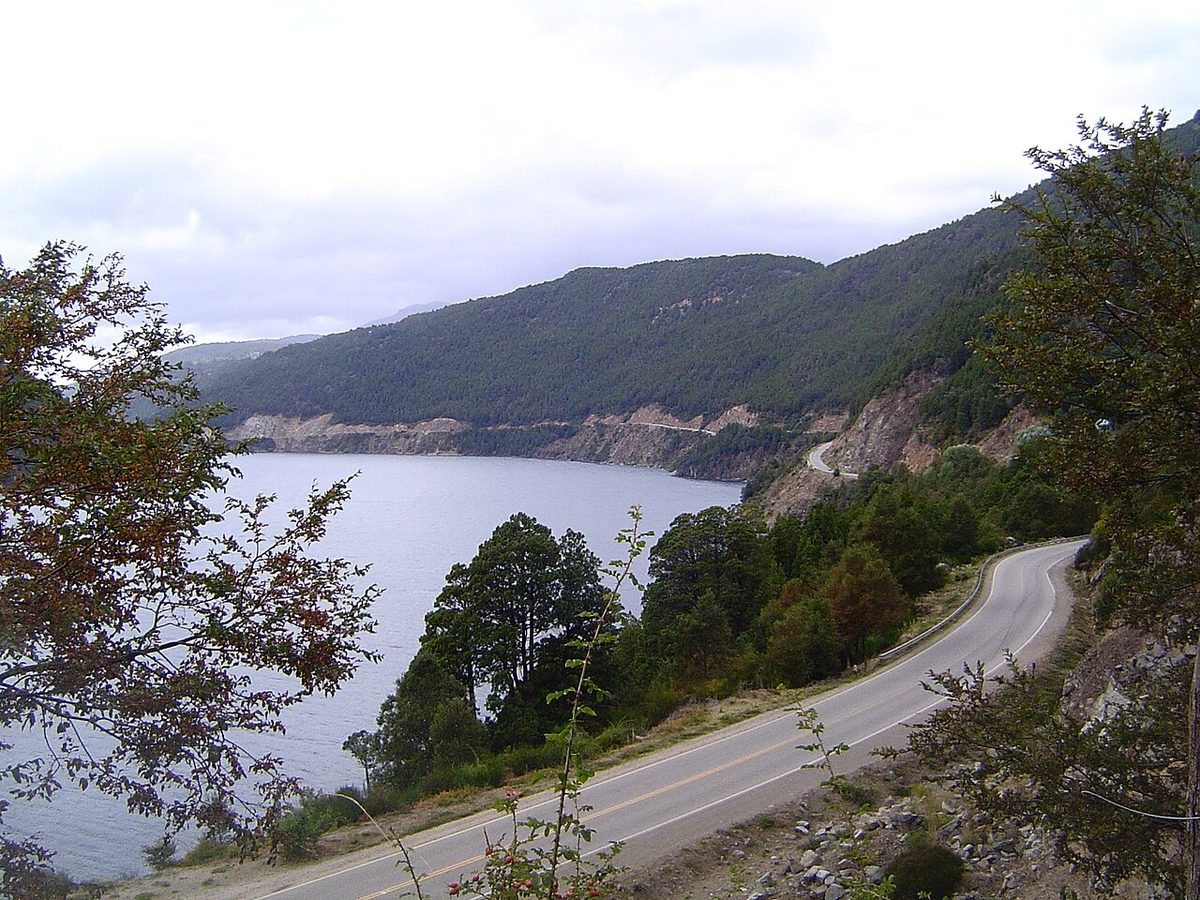
If you do drive in winter, take it seriously. The official guidance is blunt: use antifreeze, avoid hard acceleration or braking, and carry and fit snow chains when conditions require them. On routes like the Seven Lakes drive, chains can be mandatory across the snow season. Ask your hotel or rental company about current road conditions before any longer drive, and never improvise chains for the first time on an icy mountain road. The wider Patagonia in winter guide goes deeper on cold-season road logistics across the region.
What to Pack for Bariloche in Winter
You do not need to overthink it, but you do need real cold-weather kit, especially for the mountain. Layering is the whole game.
Base layers: thermal top and bottoms (merino or synthetic, not cotton).
Mid layers: fleece or a light down/synthetic puffy.
Outer shell: a waterproof, windproof ski jacket and pants for the mountain.
Extremities: warm gloves or mittens, a beanie, a buff or neck gaiter, and thick socks.
Eyes and skin: goggles for skiing, sunglasses for the glare, and high-SPF sunscreen (snow reflection burns you fast even when it is cold).
Feet: waterproof boots with grip for town; ski boots come with the rental.
Town clothes: a warm everyday coat, because the chocolate shops and restaurants are the other half of the trip.
If you are renting clothing at Catedral, you can travel lighter, but I would still bring my own base layers, gloves, hat, and socks for comfort and hygiene. For a full cold-weather checklist that works across the region, see the Patagonia in winter guide; for warmer-season hiking gear if you are extending your trip, the Bariloche hiking guide has you covered.
Who Should Visit Bariloche in Winter (and Who Shouldn’t)
Let me be direct, because winter is the most polarizing season here.
Come in winter if you:
Want to ski or snowboard at a genuinely large, well-equipped resort.
Are learning to ski and want a real ski school and gentle beginner terrain.
Love a cozy, alpine, firelit-town atmosphere with chocolate and fondue.
Are traveling with kids who will adore sledding and Cerro Otto.
Want a different Patagonia, snowy and atmospheric rather than green and hiking-focused.
Can either tolerate July crowds or aim for the late-August to early-September sweet spot.
Think twice if you:
Mainly want to hike the classic Bariloche trails and refuges, which is a summer trip; start with the guide to the refugio circuit guide and a warmer month instead.
Need guaranteed deep snow on fixed early-season or late-season dates.
Dislike cold, short days, or the possibility of losing a day to weather.
Are squeezed for time and trying to combine Bariloche with southern Patagonia icons; the Patagonia itinerary planner will show you why that often does not fit.
Want to drive a lot and would rather not deal with chains and icy roads.
For most people, the verdict is simple. If you want snow, Bariloche in winter is one of the best things going in South America. If you want to hike Refugio Frey in shorts, come back in January.
Bariloche in Winter FAQ
Is Bariloche worth visiting in winter?
Yes, if you enjoy snow. Bariloche in winter is Argentina’s leading ski destination, with Cerro Catedral, abundant non-ski activities like snowshoeing and sledding, and a cozy chocolate-and-fondue town atmosphere. It is less suited to travelers who came mainly to hike or who dislike cold, short days. For snow lovers and skiers, it is genuinely worth the trip.
When is the ski season in Bariloche?
The official winter season runs around June 21 to September 20, but reliable skiing is generally July through September, with the deepest, most dependable snow in mid-July and August. Snow can fall from May into October, so big years allow skiing into mid-October, while the very start and end of the season are weather-dependent gambles.
What is the best month to ski in Bariloche?
July has the most reliable snow but also the biggest crowds, thanks to Argentina’s school holidays and the Snow Festival. If you can, aim for late August or early September: the snowpack is usually still excellent, prices ease, days lengthen slightly, and the lift lines shrink. Early June is cheap but risky for snow cover.
How cold is Bariloche in July?
July is the coldest month, averaging around 2 to 3°C, with daytime highs near 6 to 7°C and nights often dropping to between -5°C and -11°C. Cold snaps can go lower, and the mountain is colder still with wind and altitude. In town it is jacket-and-gloves cold rather than extreme, but you dress seriously for a day at Cerro Catedral.
Is Cerro Catedral good for beginners?
Yes. Cerro Catedral has dedicated beginner terrain at the base and a long-established ski school with certified instructors, so complete first-timers can learn comfortably. Around 15% of the marked runs are beginner-rated, and a packaged lesson bundling transfer, rental, and instruction takes the stress out of your first day. It is also a superb mountain for improving intermediates.
What is there to do in Bariloche in winter besides skiing?
Plenty. You can snowshoe through lenga forest, sled at Piedras Blancas or Cerro Otto, cross-country ski at the Nordic centre, try dog sledding or snowmobiling, and ride the cable car up Cerro Otto for sledding, a suspension bridge, and a revolving café. Add the chocolate shops, fondue restaurants, breweries, and Cerro Campanario’s snowy viewpoint for a full non-ski winter.
Do you need snow chains in Bariloche in winter?
Sometimes, yes. Official guidance is to carry and fit snow chains when road conditions require them, and on routes like the Seven Lakes drive chains can be mandatory across the snow season. If you would rather avoid winter driving, many visitors skip the rental car and use transfers and the hourly Catedral ski bus instead, which sidesteps the issue entirely.
Is December a good time to visit Bariloche for snow?
No. December is early summer in the Southern Hemisphere, so there is no ski season and the high peaks may hold only patchy snow. December is excellent for hiking, lakes, and long daylight, but if snow and skiing are your goal you must come in winter, roughly June through September. Do not plan a December trip expecting a snow holiday.
How do you get from Bariloche to Cerro Catedral?
Cerro Catedral is about 40 km round trip from downtown, roughly 25 to 30 minutes each way. You can take a transfer, a taxi, the dedicated Catedral ski bus (around hourly, so check the timetable), or drive. Buses require a SUBE card loaded with pesos, since you cannot pay cash on board. For a ski trip, transfers and the ski bus are the easiest option.
Final Thoughts
I came to Bariloche the first time as a reluctant winter traveler and left a convert, and I think that happens to a lot of people. The skiing at Cerro Catedral is the headline, and it deserves to be, but what stays with me is the whole shape of a winter day here: an early, cold, bright start on the mountain, a thawing-out hot chocolate, a long firelit dinner while it snows outside.
My honest advice is to be deliberate about two things. Get your dates right, because the gap between a serene early-September ski day and a gridlocked late-July one is enormous. And pack for real cold on the mountain even though the town stays manageable. Do those, keep a flexible day in your pocket for weather, and Bariloche in winter is about as good as a snow trip gets in this hemisphere.