A practical Patagonia money guide for 2026: cash vs cards, ATMs, USD, tipping, and exchange across Argentina and Chile, with Argentina's rules hedged hard.
By Patagonia Tourism Guide · First published 28 Sep 2026 · Updated 1 Aug 2026
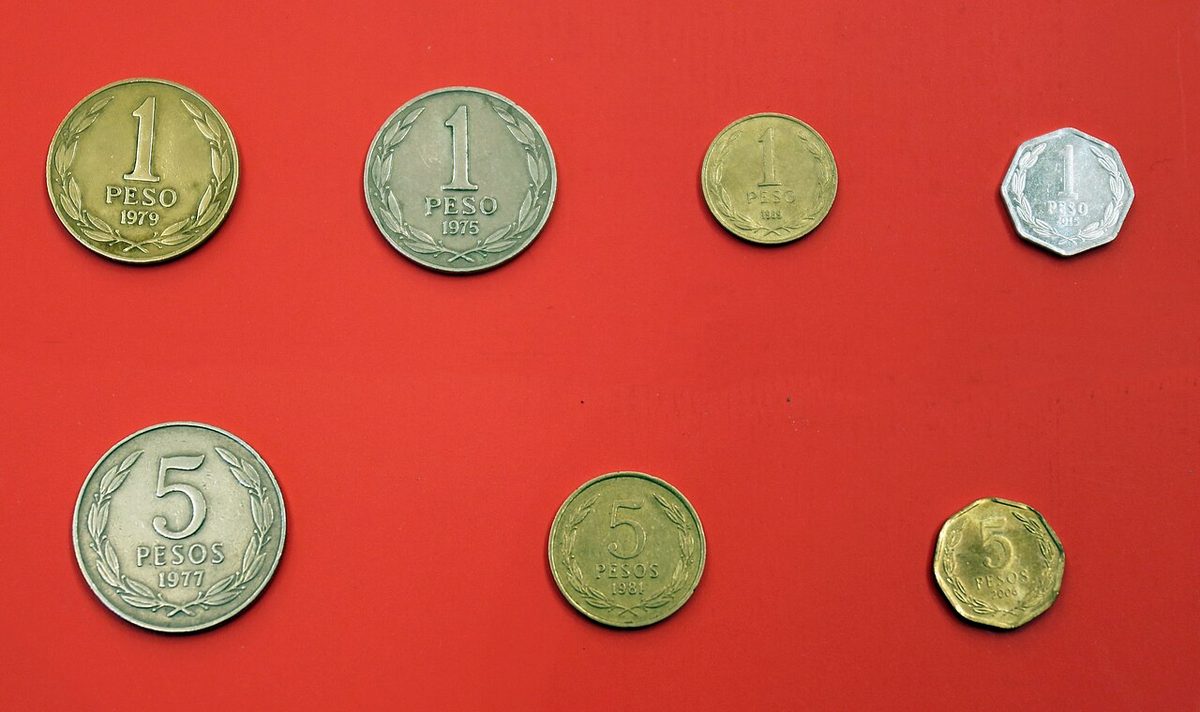
0 — 2 km Fig. 1 · Chilean peso coins; Chile's steadier currency and dependable card acceptance make budgeting simpler · Photo: Banco Central de Chile / CC0 via Wikimedia Commons
The first time I tried to pay for a dorm bed in El Chalten, the one ATM in town had been empty for two days, the hostel’s card machine couldn’t reach the internet, and the only thing that worked was a soft, slightly creased twenty-dollar bill I’d nearly left in Buenos Aires. That night taught me more about Patagonia money than any guide had, and it’s the reason I now plan cash by the leg, not by the trip.
Patagonia money works differently in each country. In Chile, cards are widely accepted and reliable; carry some pesos for remote spots. In Argentina in 2026, a foreign Visa or Mastercard now gets you the legal MEP rate automatically, so cards beat cash for most spending, but carry USD as backup. Argentina’s rules change fast, so verify before you go.
This guide is for the traveler crossing between Argentine and Chilean Patagonia who wants a single, current money plan: what to carry, where cards work, where they don’t, how much cash by region, what tipping looks like, and which old advice is now wrong. I’ll be specific about towns and ATMs, and I’ll hedge the Argentine currency stuff heavily, because it genuinely moves week to week. Treat every figure as a 2026 planning number and reconfirm with your own bank close to your departure.
One thing to settle right away: the Patagonia of your dad’s guidebook, where you smuggled in wads of US dollars and doubled your money at a back-alley exchange in Buenos Aires, is mostly gone. The rules changed in 2025, and the smart move changed with them. If you’ve been reading old “blue dollar” advice, the rest of this will save you from some expensive mistakes.
Patagonia money at a glance: Argentina vs Chile
Here’s the table I wish I’d had taped inside my pack. These are the practical behaviors as of mid-2026, not exchange rates, because the rates are exactly the thing that ages fastest.
Argentina
Chile
Currency
Argentine peso (ARS)
Chilean peso (CLP)
Cards accepted
Widely in towns, but small/remote places often cash-only
Very widely, including small towns; the easy default
Best way to spend
Foreign Visa/Mastercard in pesos (gets MEP rate)
Foreign Visa/Mastercard
USD cash useful?
Yes, as backup and for cash discounts
No for everyday spending; pay pesos or card
ATMs
Work but low limits + very high fees; often unreliable
Work; high per-withdrawal fees
Cash needed for
Small vendors, tips, remote legs, El Chalten backstop
Park entry, tips, Carretera Austral, tiny shops
Volatility
High; rules and rates change fast
Low; predictable
Swipe to see all columns
Table 1
A few honest caveats on that grid. Both pesos use the “$” symbol, which is not the US dollar, so a menu reading “$8.000” is eight thousand Chilean pesos, not eight dollars. Card “wide acceptance” still has holes in both countries the moment you leave a tourist town. And the single biggest difference is volatility: Chile behaves the way you’d expect a normal country to behave, while Argentina rewards travelers who understand its quirks and quietly penalizes those who don’t.
If you’re still pricing the whole trip, this sits alongside our Patagonia trip cost and budget guide, which models the spending these payment methods are paying for.
The big 2026 change in Patagonia money
Let me explain the thing that broke the old playbook, because it reframes everything.
For most of the last decade, Argentina ran multiple exchange rates at once. There was an official rate, and there was the “blue dollar,” the informal street rate, and the gap between them was sometimes nearly double. Tourists who brought US dollars in cash and changed them on the parallel market effectively lived in Argentina at half price. Bringing a thick envelope of hundred-dollar bills was, genuinely, the standard advice.
Then in April 2025, Argentina’s government lifted its currency controls, the cepo cambiario. Since then, the official rate, the legal tourist card rate (the MEP rate), and the blue dollar have converged to within roughly 2 to 3 percent of each other. The arbitrage that defined Argentine travel for years has largely collapsed.
As the Buenos Aires Herald and Argentine Unveiled both lay out, the three rates now sit close together, and a foreign Visa or Mastercard charged in pesos automatically gets the MEP rate, with no setup and no risk.
The practical upshot is a near-reversal of the old advice. You no longer need to carry stacks of cash to win. Your card, used correctly, now gets you a rate that’s as good as or better than what you’d get hunting for a back-alley cambio, and it does it with zero counterfeit risk and nothing to lose to a pickpocket. Cash drops from the main event to a backup.
Two big caveats keep this from being simple. First, Argentine inflation was still running around 33 percent in early 2026, so peso prices and exchange rates move daily. Any number you read, here or anywhere, is a snapshot. Second, none of this is a law of nature. Argentina has changed its currency regime before and could again. So the meta-rule for Argentina is the one I’ll keep repeating: verify the current situation with your own bank in the weeks before you travel, not from a blog post written months earlier, including this one.
Chile, by contrast, didn’t have a 2026 plot twist. It just kept being the predictable one.
Argentina: pesos, cards, USD, and those brutal ATMs
Argentine Patagonia is where most of the money complexity lives, so it gets the most space.
The currency is the Argentine peso, and the largest note in circulation is now the 20,000-peso bill, which tells you how much the currency has been chewed up by inflation. Coins have essentially vanished from daily life. Small amounts get rounded, and almost everything goes on notes or card.
Use a card, and choose pesos every time
For most of your spending in Argentina, a foreign Visa or Mastercard is now the cleanest tool. Pay in pesos and the MEP rate is applied behind the scenes. You get a good rate, you carry less cash, and you don’t have to think about it.
There is one rule you cannot forget, and it’s the mistake I see catch the most people: when the card terminal asks whether you want to pay in pesos or in your home currency, always choose pesos (ARS). If you choose dollars or your own currency, the merchant’s bank does the conversion at its own rate, which is always worse. This is called dynamic currency conversion, and it’s a quiet little tax on travelers who pick the “helpful” option. Pesos, every single time.
Bring at least two cards, ideally on different networks, so that one being blocked or skimmed doesn’t strand you. Visa and Mastercard are accepted far more widely than American Express, so treat Amex as a backup at best. If you want to optimize, US travelers often praise the Charles Schwab debit card because it charges no foreign-transaction fees and reimburses ATM fees worldwide, while Wise and Revolut are popular for good card rates and low fees. None of that is financial advice; it’s just what experienced travelers reach for.
Where Argentine cards stop working
Here’s the catch that turns a card-only plan into a bad day. Argentina is not yet a fully card-friendly country. Small restaurants, neighborhood shops, market stalls, and street vendors frequently take cash only, and in Patagonia’s smaller towns that share is higher than in Buenos Aires.
So before you sit down and order, ask whether they take cards: “Aceptan tarjeta?” Finding out at the end of a meal that it’s cash-only, when you have none, is an avoidable kind of awkward. Some local places also offer a cash discount, often in the 10 to 20 percent range, which can make USD or peso cash genuinely worth carrying.
USD cash still has a real job in Argentina, just a smaller one than before. It covers the card-free vendors, it unlocks cash discounts, and it’s your backstop when an ATM is empty and a machine won’t connect, which, as my El Chalten night proved, happens.
If you bring dollars, bring the right ones. Crisp, new, large-portrait hundred-dollar bills, uncreased and untorn. Argentine exchange houses are genuinely picky, and worn or damaged bills get rejected or take a worse rate. Bring a mix that includes small bills too, because those are gold for tipping.
To change dollars into pesos, use an official exchange house, a casa de cambio, and bring your passport, since they’ll ask for it. The street guys on Calle Florida in Buenos Aires calling “cambio, cambio” were a rite of passage in the blue-dollar era, but with the rate gap now tiny, the upside is a handful of pesos and the downside is counterfeit notes. Skip them. And don’t change money at the airport, where you’ll get the worst rate of all.
Argentine ATMs: the expensive last resort
If you do need pesos from a machine, brace yourself, because Argentine ATMs are punishing for foreign cards. Per-transaction withdrawal limits are low, often somewhere around the equivalent of USD 100 to 200, with a cap of roughly two withdrawals a day. On top of that sits a flat fee that’s frequently USD 10 or more per withdrawal, which on a small allowed amount works out to an effective surcharge in the 10 to 15 percent range, as guides like Revolut document.
That math is why ATMs are the worst way to get pesos in Argentina, not the default. If a fee-reimbursing card like Schwab makes the fee disappear, fine. Otherwise, lean on your card for spending and on exchanged USD for cash, and treat the ATM as the option of last resort. When you do use one, pick a machine attached to a real bank, cover your PIN, and take out as much as the limit allows so you’re not paying that fee twice.
Chile: the predictable one
After Argentina, Chile feels almost relaxing, and I mean that as the highest compliment a money system can earn.
The currency is the Chilean peso, and the headline is simple: cards are widely accepted, including in small towns, and paying by card is usually the easiest and often the cheapest route. As Swoop Patagonia notes, credit and debit cards work throughout Chile, and you can get by on a card plus a modest cash cushion most of the time.
The big difference from Argentina is that US dollars are not used for everyday spending in Chile. Don’t expect to hand over dollars at a supermarket or a cafe. You pay in pesos or by card, and you exchange any USD you brought at a casa de cambio during business hours, with availability thinner outside the bigger towns. The notable exception is inside Torres del Paine, where refugios and hotels will take USD and cards, which I’ll come back to.
Chilean ATMs work fine and dispense pesos, but they carry stiff per-withdrawal fees, often somewhere around 4,500 to 9,000 Chilean pesos depending on the bank, per Wise. Watch the on-screen prompts: some machines flash the fee and let you cancel, and a few networks are cheaper than others. As in Argentina, a few merchants add a card surcharge of roughly 2 to 4 percent, so occasionally cash is marginally cheaper, but the convenience usually wins.
The honest summary for Chile: bring a card you trust, carry some pesos for small purchases and remote stretches, and don’t overthink it. The complexity in a cross-border Patagonia trip is almost entirely on the Argentine side.
This is the part that actually saves your trip, because Patagonia’s cash problem isn’t usually the rate. It’s geography. The famous places are remote, and remote means cards thin out and ATMs get unreliable right where you need them most.
My rule is to plan cash by the leg, topping up in the last real town before each remote stretch, rather than carrying one big wad the whole way.
These two are notorious. The ATMs in El Calafate and El Chalten are frequently empty, often down because of patchy internet, and they charge per withdrawal. El Chalten in particular has very limited cash infrastructure and no proper exchange houses. Swoop flags both towns as problem spots and suggests withdrawing what you need in Buenos Aires, or another big city, before you arrive.
That doesn’t mean cash-only. Most restaurants and many shops in El Chalten do take cards, and on a good day the machines work. But the failure mode, arriving with no cash on the day the one ATM is empty, is real and common. So arrive with a cushion of pesos, plus some USD you can exchange in El Calafate as a fallback. If you’re building the hiking days, our guide to hiking around Fitz Roy covers what those days actually involve.
Torres del Paine
Torres del Paine has its own hard rule: the park entrance fee is cash only, in local currency, and there is no way to get cash inside the park. Once you’re in, you’re in, so sort your cash before you arrive.
Get your pesos in Puerto Natales, the nearest town, or in Punta Arenas before that. Inside the park, the refugios and hotels do accept both USD and cards, and you’ll often pay slightly less for food and drinks by card or dollars than with pesos. But the entry ticket itself won’t wait for a card machine. Confirm the current entry cost and payment details in our tracker for park entry costs guide, and if you’re trekking, the full money picture is in our guide to what the w really costs guide.
The Carretera Austral
If you’re driving Chile’s Carretera Austral, treat cash as essential and load up before you go. Long stretches are genuinely remote, and many small businesses, family guesthouses, and roadside spots don’t take cards. Stock up in the bigger towns, Puerto Varas, Coyhaique, Puerto Natales, or Punta Arenas, before you commit to the gravel. Our planning guide for the ruta 7 drive goes deep on the logistics, and money is squarely one of them.
A few cash habits that pay off everywhere
Break your big notes whenever you get the chance. Small vendors across Patagonia struggle to make change, and a shop may simply not be able to sell you something if all you have is a 20,000-peso note. Use cards in bigger places to harvest small bills as change. Keep a stash of small USD bills, the ones to twenties, specifically for tipping, because travelers consistently report wishing they’d carried more small notes for guides and drivers. And carry only what each day or leg needs, splitting the rest somewhere secure, since petty theft is real in busier areas.
Buses and ferries occasionally levy small cash taxes at stations or ports, on the order of a couple of US dollars in local currency, so keep a little loose change handy. Our guide to booking long-distance buses guide covers the routes where you’ll meet those.
Cards: which to bring and the trap to avoid
A quick consolidation, because cards are now the backbone of Patagonia money and a couple of small choices change the whole experience.
Bring at least two cards, on different networks, kept in different places. Visa and Mastercard are your workhorses in both countries; Amex is a sometimes-backup. A card with no foreign-transaction fee saves you a percentage on every purchase, and a debit card that reimburses ATM fees, like Charles Schwab for US travelers, takes the sting out of the rare unavoidable withdrawal. Wise and Revolut are well-liked for their rates on card spending. Again, that’s traveler consensus, not a recommendation tailored to you.
Tell your banks you’re traveling so a Patagonia purchase doesn’t trip a fraud flag and freeze your card a thousand kilometers from the nearest branch. Carry your banks’ international phone numbers somewhere offline. And keep one card entirely in reserve, untouched, so that if your main card is lost, skimmed, or blocked, you’re inconvenienced rather than stranded.
The one trap to actively avoid is the dynamic-currency-conversion prompt I mentioned: when a terminal or an ATM offers to charge you in your home currency “for convenience,” decline, and pay in the local currency. It quietly costs you every time. This matters in both countries, but it stacks badly with everything else in Argentina, so build the habit now.
Tipping is part of the money plan, because how you tip decides how much cash, and which bills, you need to carry. The norms are similar across Argentina and Chile, with cash being king.
In restaurants, around 10 percent is the standard for good service, stretching toward 15 percent for something exceptional. Watch your bill for two words. A cubierto is a small cover charge, usually for bread and table service, and it is not the tip for your server. A servicio charge means service has already been added, in which case you don’t need to add more. Crucially, in many places, especially in Argentina, you can’t add a tip to a card payment, so keep peso or dollar cash on hand to leave on the table.
For guides, the widely cited guideline from operators like Swoop is from around USD 20 per person per day for a private or small group, or roughly USD 5 per day in a larger group, handed over at the end of the activity. Guides are paid and don’t depend on tips, but they work long seasons and a tip is the normal way to say thanks. Note that you won’t have cash access inside Torres del Paine, so budget those tips before you enter the park.
For hotel staff, a rough guideline is around USD 20 per person per day, more at premium properties, often left at the front desk or in an envelope; ask how each place prefers it. Cruises run higher, commonly USD 50 to 100 per person for the trip. Taxi tipping is not customary in either country, though rounding up is a nice gesture, and city cab fares are always in local currency.
The recurring piece of advice from travelers who’ve done it is simple and worth repeating: bring more small bills than you think you’ll need. Tips for drivers, guides, porters, and hotel staff add up across a trip, and small US bills are described, more than once, as being “like gold” out here. If you’re traveling alone and wondering how the tipping math shakes out for one, our Patagonia solo travel notes touch on it, though the per-day guides above are a fine starting point. Underestimating tip cash is the single most common money regret I hear.
Scams, safety, and small money mistakes
Patagonia is not a high-scam destination, and violent crime against tourists is rare. The money risks here are mostly petty theft and a few self-inflicted wounds. A little awareness handles almost all of it.
Watch the airport-taxi shuffle in Santiago and Buenos Aires, where unofficial drivers can quote inflated or vague fares. Book through the official taxi desk or arrange transport in advance so the price is set before you get in the car. How you reach the region in the first place is covered in our how to get to Patagonia guide.
In Argentina, steer clear of informal money changers now that the rate advantage has evaporated, because the realistic outcomes are a worse rate or counterfeit bills, not a windfall. Use official exchange houses with your passport. And avoid the dynamic-currency-conversion trap at every terminal, which is the one “scam” you do entirely to yourself.
For cards, use ATMs attached to real banks rather than standalone machines in dim corners, cover your PIN, and check your statements during the trip. Skimming exists, and the two-card habit means a cloned or frozen card is an annoyance, not a crisis.
For cash, the basics carry the day. Don’t flash a fat roll, don’t carry your whole trip’s money on you, split your cash and cards between a day stash and a secure stash, and stay alert in crowded bus terminals and city centers where pickpockets work. None of this is Patagonia-specific paranoia; it’s just normal travel hygiene, and it’s enough.
Two last money mistakes worth dodging. Don’t leave a pile of local pesos for the trip home, because both currencies are hard to exchange once you’re back, so spend pesos down before you fly out. And don’t let money cut a corner that matters; skimping on the wrong thing here can cost far more than it saves, which is exactly the logic behind our Patagonia travel insurance guide.
Putting your Patagonia money plan together
If you want the whole thing in one breath: in Chile, lead with a card and keep some pesos for the remote bits. In Argentina in 2026, also lead with a card, choosing pesos at the terminal every time, and carry crisp USD as your backup and for the cash-only corners. Across both countries, plan cash by the leg, top up before El Chalten, before Torres del Paine, and before the Carretera Austral, and keep a stack of small bills for tips.
Then do the unglamorous, essential part. Argentina’s currency situation has changed twice in living memory and could shift again, so take everything here as a mid-2026 snapshot and confirm the current rates, limits, and card behavior with your own bank in the weeks before you leave.
Both, but lead with a card. In Chile, cards are widely accepted and are the easy default, with some pesos for remote spots. In Argentina in 2026, a foreign Visa or Mastercard charged in pesos gets the legal MEP rate automatically, so cards are best for most spending, while USD cash covers cash-only vendors and remote legs. Always carry a cash backup.
Is it better to use US dollars or local currency in Argentina?
Use a foreign card charged in pesos for most purchases, since it now gets a strong legal rate with no risk. Carry US dollars as a backup for places that take only cash and for cash discounts, which are common in small shops. Bring crisp, new, large-portrait hundred-dollar bills, and always choose pesos, not dollars, when a card terminal asks which currency to use.
Are there ATMs in El Chalten and Torres del Paine?
El Chalten has very limited, unreliable ATMs that are often empty or offline, so arrive with cash from a bigger town. Inside Torres del Paine there is no way to get cash at all, and the park entrance fee is cash only in local currency. Withdraw what you need in Puerto Natales or Punta Arenas before you enter, and budget tips in advance.
How much cash should I carry in Patagonia?
Plan cash by the leg rather than carrying one big amount. Top up before remote stretches like El Chalten, Torres del Paine, and the Carretera Austral, where cards thin out. Keep a stack of small US bills for tips, break large notes when you can, and carry only what each day needs while keeping the rest secure. Avoid leaving large peso amounts for the trip home.
How does tipping work in Argentina and Chile?
Tip around 10 percent in restaurants, more for exceptional service, and watch for a cubierto cover charge, which is not a tip, or a servicio charge, which means service is already added. Guides typically receive from around USD 20 per person per day, hotel staff a similar amount, and cruises more. Tipping is usually cash, since cards often can’t add a gratuity, especially in Argentina.
Why is the old blue-dollar advice for Argentina now outdated?
Argentina lifted its currency controls in April 2025, and the official, MEP, and blue-dollar rates have since converged to within a few percent of each other. The huge gap that made carrying cash so rewarding has largely vanished, so a foreign card now matches or beats informal exchange with no counterfeit risk. Inflation keeps rates moving, though, so always verify the current situation before you travel.
Will my regular debit and credit cards work across Patagonia?
Usually yes for Visa and Mastercard, which are accepted in towns across both countries; American Express is less reliable, so treat it as backup. Bring at least two cards on different networks, tell your bank you’re traveling, and keep one card in reserve in case another is lost or blocked. A card with no foreign-transaction fee, and ideally ATM-fee reimbursement, saves real money.