Patagonia travel insurance, decoded: trekking and ice-trek exclusions, evacuation and weather-delay cover, rental-car border permits, reading the wording.
By Patagonia Tourism Guide · First published 1 Oct 2026 · Updated 1 Aug 2026
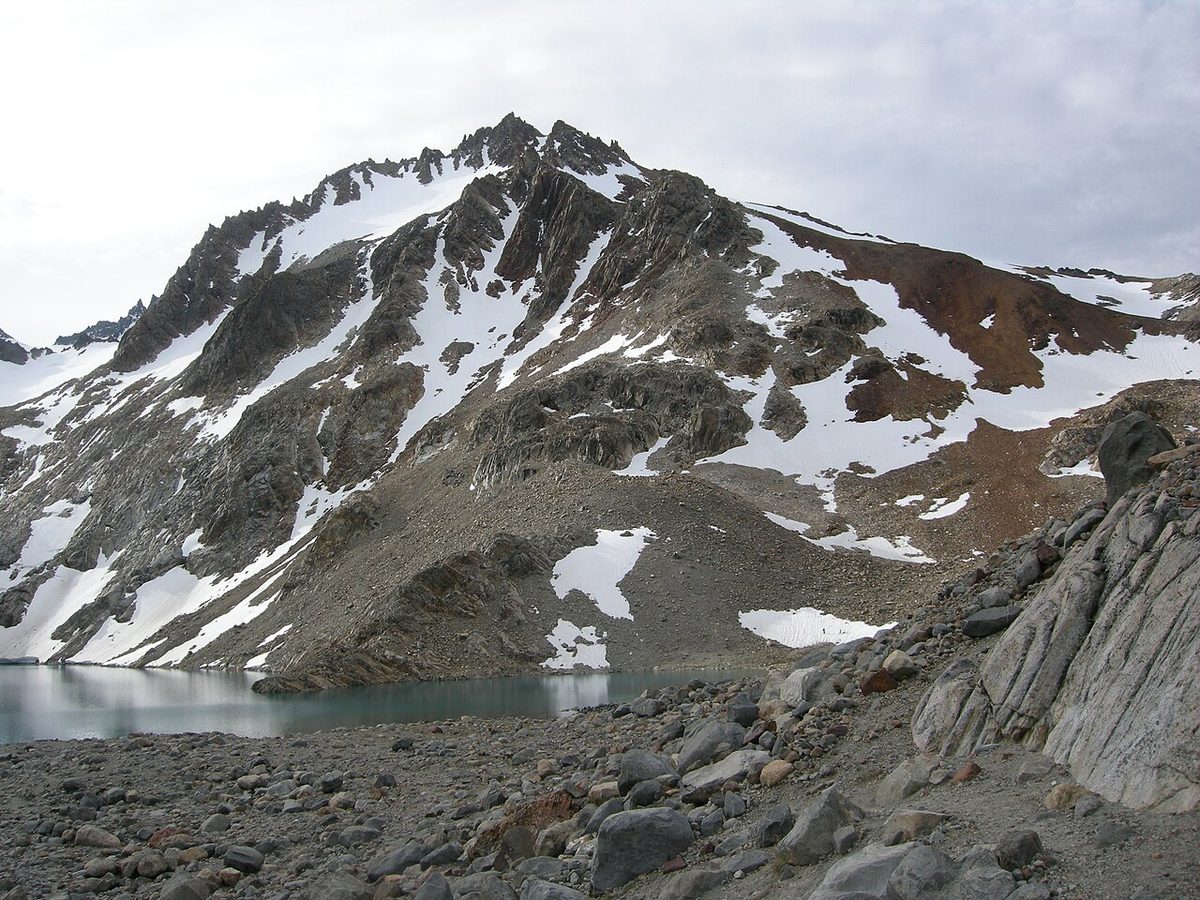
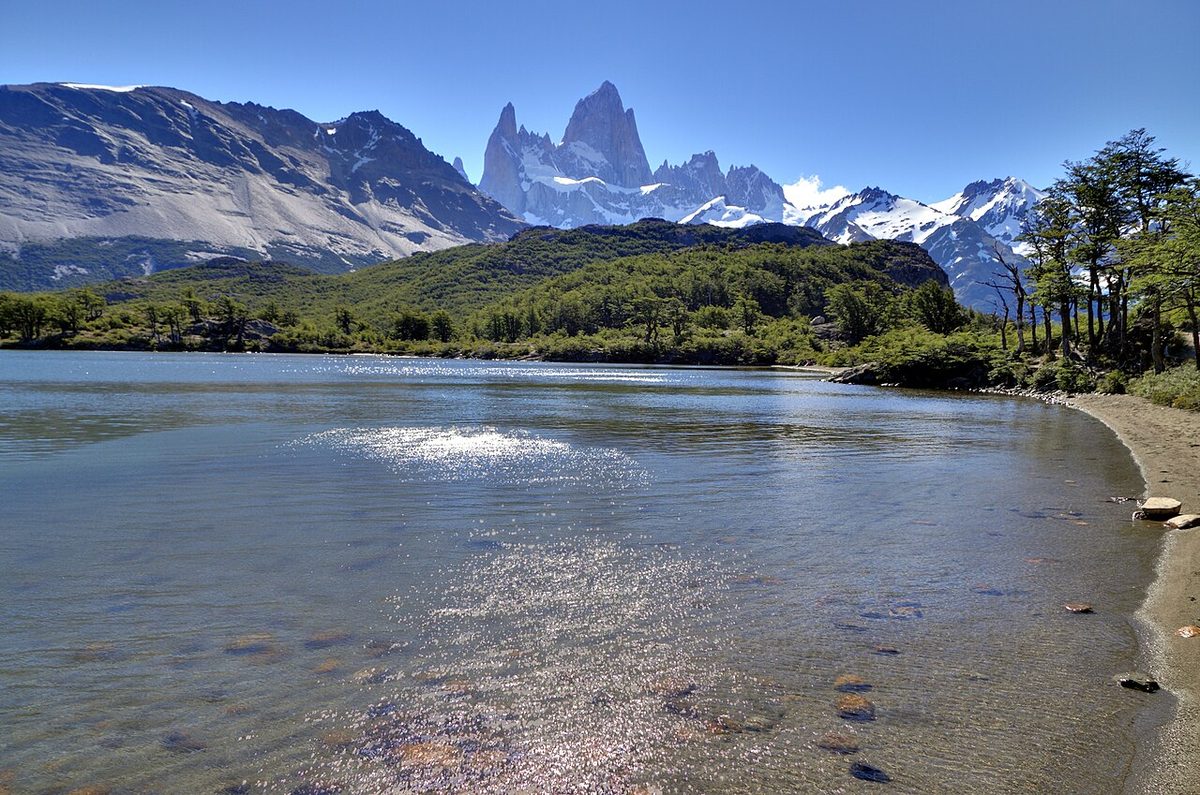
0 — 2 km Fig. 1 · Laguna de los Tres beneath Fitz Roy, a long exposed day hike that argues for proper cover · Photo: Gagea / CC BY-SA 3.0 via Wikimedia Commons
A guide I trekked with once told me about a client who hurt his knee badly below the Base Las Torres lookout. Nothing dramatic, just a slip on wet rock and a bad twist, but he couldn’t walk out. The rescue took most of a day, involved a stretcher, a horse, and a long cold wait, and when it was over he learned his cheap policy didn’t cover trekking above a certain altitude. He paid for the whole thing himself. His bank account took a while to recover.
That story is why I take Patagonia travel insurance more seriously than almost any other line in a trip budget. Not because something usually goes wrong, but because when it does here, the bill and the logistics are both worse than you’d expect.
Patagonia travel insurance should, at minimum, cover emergency medical care, evacuation and repatriation from remote areas, your actual adventure activities (many basic policies exclude high trekking, ice walks, or kayaking), trip cancellation and interruption, and weather-related delays, which are extremely common here. Read the wording, declare your activities, and verify the limits yourself.
This guide is for the traveler who has a Patagonia trip mostly booked and now wants to insure it properly, not just tick a box at checkout. I’ll cover what to look for, which exclusions catch hikers, why evacuation matters more here than almost anywhere, and how to read a policy without a law degree. I won’t tell you to buy a specific product, and I can’t give legal advice. What I can do is show you the categories and the traps, point you at credible sources, and keep telling you to read the wording and check current terms before you rely on any of it.
One thing up front, because it changes the conversation. As of 2025, Argentina requires non-resident foreign visitors to carry travel medical insurance, and Chile strongly recommends it. So in much of Patagonia this isn’t only a smart idea, it’s edging toward a requirement. More on that below, with the caveat that rules and enforcement shift, so verify the current position before you fly.
Patagonia travel insurance at a glance
Here’s the table I wish someone had handed me before my first big trek down here. It maps each coverage type to why it matters specifically in Patagonia and what to check in the wording. Treat the figures as rough 2026 ballparks, not quotes, and confirm everything against the actual policy document.
Coverage type
Why it matters in Patagonia
What to check
Emergency medical
Remote clinics may lack trauma units; private care often wants upfront payment
Medical limit (many aim for ~USD 100,000+), direct billing vs. reimbursement
Evacuation & repatriation
Helicopter rescue or long ground transport to Punta Arenas / Santiago is costly
Evac limit (~USD 50,000–100,000+ often cited), “to home” vs. “to nearest facility”
Adventure activities
Basic plans often exclude high trekking, ice walks, kayaking, horse riding
Named activities, altitude limit, whether an add-on is needed
Trip cancellation
Big nonrefundable costs: refugios, permits, guides, internal flights
Coverage amount, exclusions for adventure activities
Swipe to see all columns
Table 1
A few honest caveats on that grid. The dollar figures move, vary by insurer and country of residence, and mean nothing until you see the actual schedule of benefits. “Adventure activities covered” on a marketing page is not the same as your specific activity appearing on the named list. And the last column matters most, because Patagonia is exactly the trip where the gap between what you assumed and what the wording says becomes an expensive surprise.
Why Patagonia travel insurance is different from a city break
Most travel insurance is bought for trips where, if something goes wrong, you’re a taxi ride from a good hospital and a help line. Patagonia breaks several of those assumptions at once, and that’s what should shape your policy.
The first difference is distance from care. Towns like El Calafate, Puerto Natales, and Bariloche have hospitals, but as Global Rescue notes, they may lack trauma units, specialists, or advanced diagnostics, and serious cases can require evacuation to Buenos Aires, Santiago, or out of the country. The good care is real; it’s just often hundreds of kilometres from where you got hurt.
The second is that you frequently pay upfront. Global Rescue is blunt about it: private clinics in both countries often require upfront cash or card payment even in emergencies. So you want a high enough medical limit, and you want to know whether the insurer can bill the hospital directly or whether you front the money and claim it back. Keep the insurer’s 24/7 assistance number somewhere you can reach offline.
The third is simply that help is slow. Ambulances are delayed outside cities, cell service is patchy, and severe weather can ground air ambulances. In the backcountry, self-evacuation or your trekking partners may be your only option until rescue reaches you. That’s not a reason to stay home; it’s a reason to insure the gap properly and read our Patagonia hiking, camping and gear safety guide before you go.
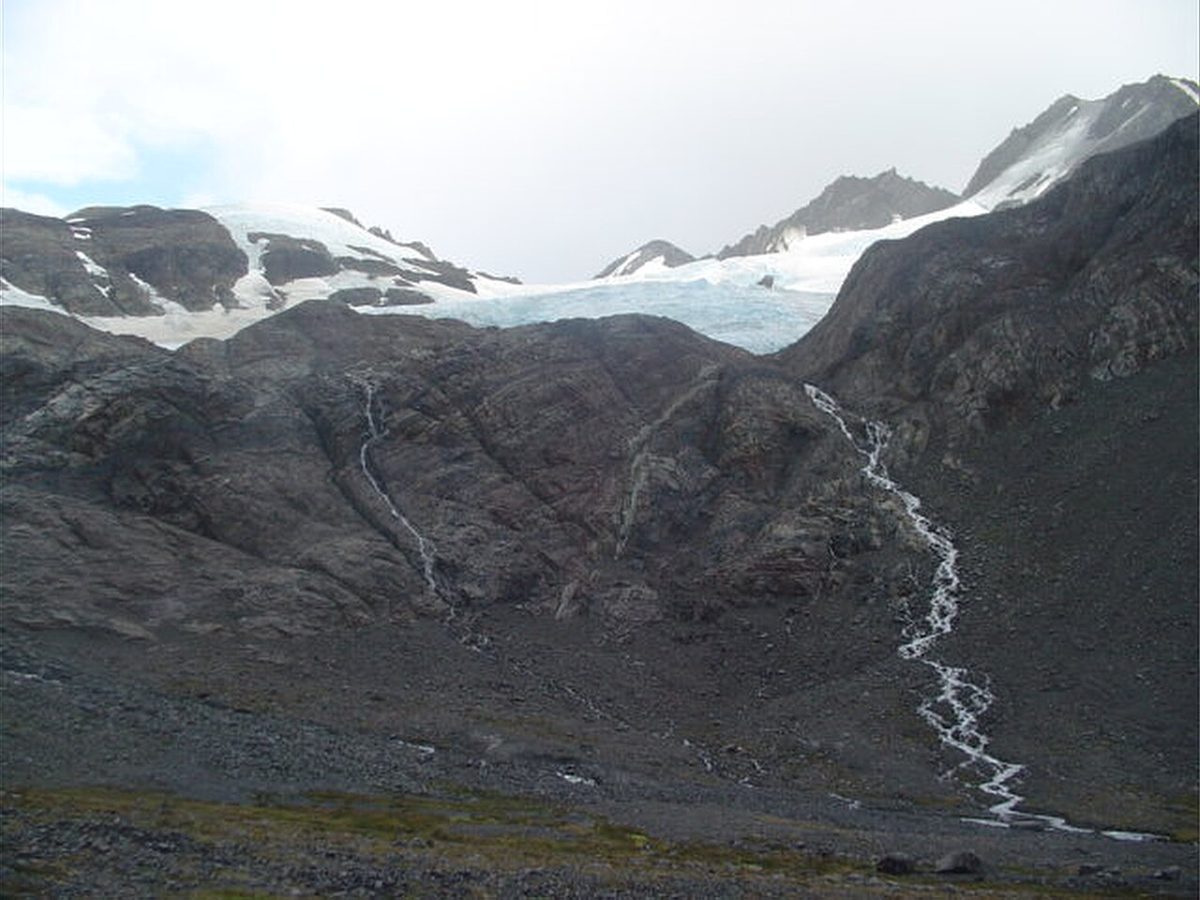
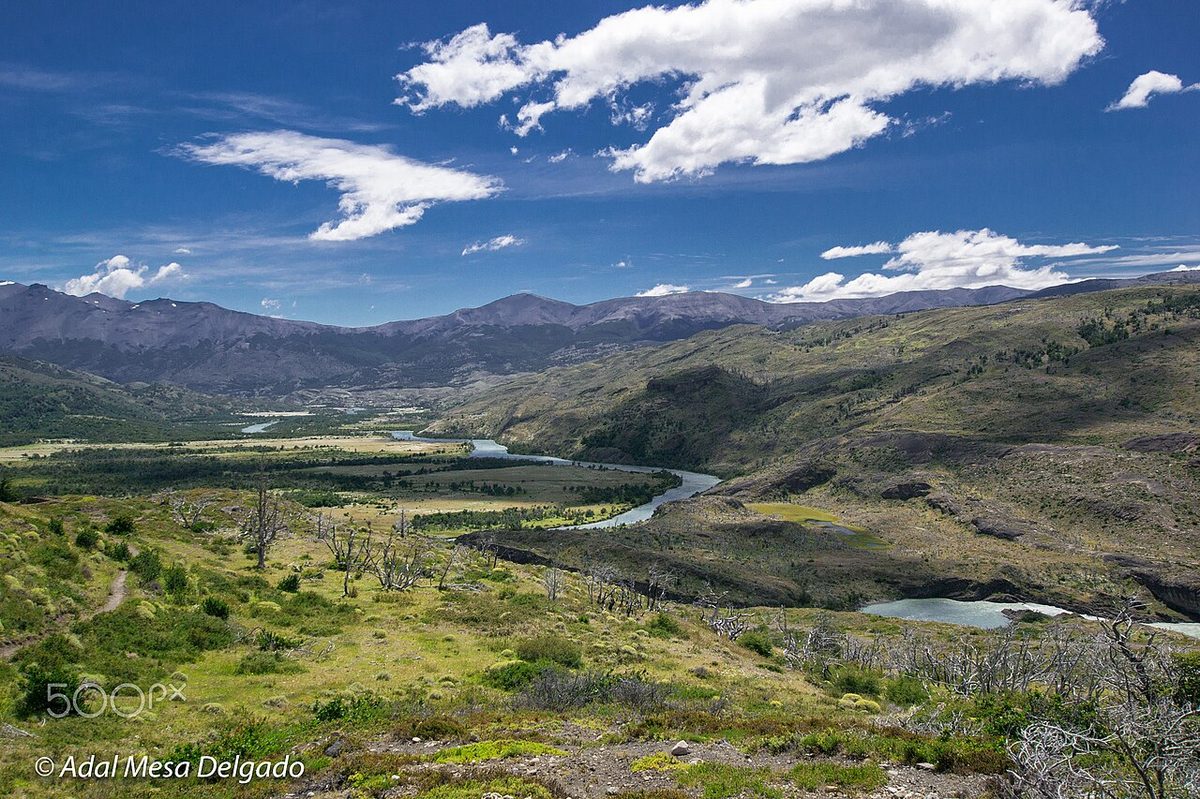
Fig. 2 · A remote glacial valley in Torres del Paine on the back half of the O Circuit, far from any road or clinicPhoto: Albé / CC BY 2.5 via Wikimedia Commons
Is travel insurance now mandatory here?
For Argentina, increasingly yes. Multiple sources, including Global Rescue and Visit Latin America, report that from July 2025 non-resident foreign visitors must hold travel medical insurance covering medical care, hospitalization, emergency evacuation or transport, and repatriation for the full stay, with a minimum often cited around USD 20,000. Proof may be requested at any entry point.
I’d add two cautions. That USD 20,000 minimum is a legal floor for entry, not a sensible target for a remote trekking trip, where evacuation alone can dwarf it. And reporting suggests enforcement has been inconsistent at some borders. So carry proof, but don’t treat the minimum as adequate, and verify the current rule before you travel, since this is recent and may change.
Chile doesn’t mandate it in the same way, but its position is clear enough. The US State Department lists Chile at Level 2, Exercise Increased Caution, and notes that trauma care is uncommon outside urban areas, which makes medical evacuation insurance genuinely useful. Australia’s Smartraveller puts it more bluntly, with the line I keep coming back to: if you can’t afford travel insurance, you can’t afford to travel. Our Patagonia travel requirements guide tracks the entry rules as they evolve; treat it and the official advisories as your source of truth, not this paragraph.
Adventure-activity coverage: the exclusion that catches trekkers
This is the section I’d read twice. It’s where most Patagonia travelers think they’re covered and aren’t.
Here’s the trap. A standard policy usually covers “hiking” in some general sense, and plenty of people stop reading there. But many policies quietly exclude activities they classify as hazardous or adventurous, and the definitions are narrower than you’d guess. Redpoint Travel Protection, in its Patagonia trekking guide, lists exactly what basic policies exclude: trekking above 3,000 metres, ice hiking on the Perito Moreno Glacier, and sea kayaking in places like Lago Grey. None of those feels extreme to a fit traveler. All can sit outside a default policy.
Run your real itinerary against that idea. A glacier mini-trek or Big Ice walk at Perito Moreno is ice trekking, not a stroll. Kayaking among icebergs is a water sport. Horseback riding, which a lot of estancia stays include, is its own named activity on many policies. High passes on the O Circuit, like Paso John Gardner, push toward the altitude band where exclusions kick in. Even scrambling on exposed sections can be treated differently from walking. As Swoop Patagonia puts it, you may want a higher level of coverage if your itinerary includes adventurous activities, and some policies require an additional add-on specifically for trekking.
So the practical move is simple. Write down every physical activity on your trip, including the ordinary-feeling ones, and check each against the policy’s covered-activities list, not its marketing. Altitude limits vary a lot between insurers, so if any part of your route climbs, confirm the ceiling in metres or feet. Where an activity isn’t covered as standard, many insurers sell an adventure-sports or hazardous-activities bundle that removes the relevant exclusions; explainer pages from Squaremouth and World Nomads describe how these add-ons work in general terms.
I won’t tell you which add-on to buy. I will tell you that “I’m only hiking” has done real financial damage in mountain regions, and the fix is boring and free: read the activity list, and confirm anything ambiguous with the insurer in writing before you pay. Our W Trek difficulty guide helps you describe your route honestly, which is half the battle.
If adventure-activity exclusions are the trap, evacuation is the reason the stakes are high in the first place.
Start with what a rescue actually looks like here, because it’s not what most people picture. In Torres del Paine, helicopters frequently can’t fly. Reporting on park logistics, including machupicchu.org and ExperienceChile, notes that high winds and the distance from Punta Arenas often ground helicopters, so rescue from remote sectors can mean transport by horseback or stretcher first. In-park medical facilities are basically first-aid stations at the major refugios; anything beyond minor injuries needs evacuation to real care. Redpoint describes the same reality on the Argentine side, where getting out can mean a trek with ranger assistance, then boat, horse, or helicopter, then an airlift toward Punta Arenas or Río Gallegos.
Now the money. Estimates vary widely and should be treated as rough, but a helicopter evacuation in the Torres del Paine area is often cited around USD 3,000 to 8,000, while a complex medical evacuation, especially one crossing borders or reaching another continent, can run into the tens or even hundreds of thousands in extreme cases. Several explainers and operators land on a similar guideline: evacuation cover around USD 50,000 to 100,000 or more, and medical cover around USD 100,000 or more, with Swoop suggesting USD 50,000 to 100,000 for evacuation as a starting point you should tailor. Those are ballparks to anchor your reading, not promises; the only number that matters is the limit printed in your policy.
There’s a second feature people miss inside “evacuation”: where the policy takes you. As Redpoint’s plan comparison illustrates, budget policies often only cover evacuation to the nearest appropriate facility, while stronger plans cover field rescue from the point of injury and, sometimes, transport home once you’re stable. Professional search-and-rescue operations get expensive fast, and you don’t want to discover the limit while recovering in Santiago.
So look past the headline “evacuation included” and check three things in the wording: the evacuation limit, whether it covers rescue from the point of emergency rather than only hospital-to-hospital transfer, and whether search-and-rescue is named. If you’re doing the longer routes, our refugio and campsite price rundown guide shows where these treks take you, which is exactly the terrain this cover is for.
Trip cancellation, interruption, and Patagonia’s weather delays
Medical and evacuation cover protects your body. This next bundle protects the money you’ve sunk into a trip, and in Patagonia that money is unusually exposed.
The reason is the booking model. A Patagonia trip is full of nonrefundable prepaid commitments: refugio beds reserved months ahead, park permits, guided glacier or ice days, internal flights, transfers. Trip cancellation reimburses prepaid, nonrefundable costs if you can’t travel for a covered reason like injury, illness, or certain emergencies. Interruption cover handles it if something cuts the trip short partway through. Both matter more here because so much is locked in early.
Two refinements. First, covered reasons are a finite list, and “I changed my mind” usually isn’t on it; for more flexibility, look at Cancel For Any Reason (CFAR), which Redpoint and others describe as an early-purchase add-on that typically reimburses a partial percentage and must be bought within a short window after your first deposit. It costs more and rarely pays in full, but it widens the door. Second, check that your cancellation limit actually covers the full trip cost, including flights and hotels booked separately; Swoop flags the trap of a maximum lower than your real outlay.
Then there’s the part that’s almost uniquely Patagonian: weather and travel delay. The wind here is not a footnote. Redpoint’s guide notes gale-force winds exceeding 80 km/h that force trail closures, ferries across Lago Grey and Lago Pehoé that are frequently cancelled, and flights to Punta Arenas or El Calafate that are vulnerable to wind delays. I’ve watched a single windy morning unravel a carefully timed chain of bookings. When a flight slips, you can miss a prepaid refugio night, a guided day, or a bus connection, and those losses cascade.
So in the wording, look for travel delay reimbursement, with a sensible per-day cap and a trigger measured in hours, plus missed-connection cover and, ideally, language around airspace closure and weather disruption. It’s also an argument for building slack into the plan rather than relying on insurance to mop up; our El Chaltén weather guide shows how fast conditions turn, and our booking timeline for Patagonia guide explains which bookings are worth protecting because they sell out and won’t be rebooked cheaply.
Rental cars, the border permit, and what car insurance won’t do
If your Patagonia plan involves a rental car, there’s a whole separate insurance layer here, and it trips people up at the border with depressing regularity.
The headline issue: most rental car insurance does not automatically cover both Chile and Argentina. To cross between the two, and many Patagonia road trips do, the rental’s insurance certificate generally has to list both countries, and you’ll usually need a notarized cross-border authorization to take the vehicle over. Guides on driving the region report this paperwork takes time, often around two weeks’ notice to the rental company, with cross-border permit fees commonly running from around USD 116 for shorter rentals up to a few hundred dollars for longer ones. Some companies only allow SUVs or 4x4s to cross, and arriving at the border without the right documents can mean being turned away or buying expensive last-minute cover.
Then there’s what car insurance excludes even within one country. Collision damage waivers here frequently carry a high excess, and damage from gravel roads, single-vehicle accidents, undercarriage, tires, and windscreens is often partly or wholly excluded, which matters on the ripio (gravel) that defines routes like the Carretera Austral. Read those exclusions before you decline or accept any waiver.
Crucially, understand the division of labor. Your rental car’s insurance, your personal travel insurance, and any credit-card cover used to book the car are three different things with three different scopes. Personal travel insurance generally won’t cover damage to a rental vehicle without a specific rental-car benefit, and the rental’s cover won’t handle your medical evacuation. They’re separate problems; don’t assume one backstops the other.
For the practical mechanics, our honest take on renting a car guide covers gravel, fuel, one-way fees, and what to ask the rental company, and our Chile–Argentina border crossing guide walks through the permit and documentation step by step. Sort those before you build a road trip around a border, not at the checkpoint.
Baggage, gear, and the small print that bites
Gear cover feels minor until it’s the thing that breaks your trip. Theft does happen, even in a generally safe region: Redpoint notes that shared refugios aren’t immune to gear loss and that luggage thefts have been reported at bus terminals like El Calafate’s. Add checked bags mishandled on flights between Argentina and Chile, and your expensive, hard-to-replace kit, the boots, the down jacket, the camera, is genuinely exposed.
The trap in the wording is per-item limits. Baggage cover often caps each individual item well below what a good camera body, lens, or down jacket costs, and sometimes a single overall limit too. If you’re carrying high-value gear, check whether the policy lets you schedule those items for higher cover, and keep receipts or photos, because claims need proof of value. Also check baggage delay separately from loss, since a bag that arrives three days late on a trekking trip is its own emergency.
For the most critical items, insurance is a backstop, not a plan. Carry prescriptions, key documents, and irreplaceable layers in your hand luggage, lock gear in shared lodgings, and don’t rely on a payout to replace boots you need tomorrow morning. Our Patagonia money guide covers protecting cash, cards, and documents.
What’s typically excluded
It’s worth pulling the common exclusions into one place, because the pattern repeats across insurers. None of this is a substitute for reading your own policy; these are the categories I’d expect to find and check.
Activities not on the named list. High-altitude trekking above the policy’s ceiling, ice and glacier trekking, mountaineering, sea kayaking, horseback riding, and similar, unless added via an adventure or hazardous-sports bundle.
Undeclared pre-existing medical conditions. Many policies exclude these unless declared and accepted, sometimes for an extra premium; Swoop specifically flags checking this.
Rental vehicle damage. Usually not covered by personal travel insurance without a specific rental-car benefit, and the rental’s own cover often excludes gravel, single-vehicle, tire, and undercarriage damage.
Acting against official advice. Cover can lapse if you travel against a government advisory or ignore authorities; check how a change to a Level 3 or Level 4 advisory affects your policy, as Swoop recommends.
Alcohol, drugs, and recklessness. Claims linked to intoxication or ignoring posted safety warnings are routinely denied. In a park where rangers close trails for a reason, this matters.
Unattended belongings and unproven value. Items left unattended, or claims without receipts, are common denial reasons.
The general fine print. Sub-limits, deductibles, and caps that quietly shrink the headline figure.
The takeaway isn’t that insurance is a trap. It’s that the exclusions are knowable in advance, and ten minutes reading them is the cheapest risk management on the trip.
How to read a policy without a law degree
You don’t need to become an insurance expert. You need a short, deliberate checklist and the willingness to get answers from the insurer in writing.
Start with the schedule of benefits, the summary table of limits, and read it as a list of ceilings, not promises. Note the medical, evacuation, cancellation, and baggage limits, plus the per-item baggage cap. If any feels low for a remote trip, that’s your first flag.
Next, find the covered-activities section and check every activity on your itinerary by name. Look hard for an altitude limit if your route climbs, and for separate treatment of ice trekking, water sports, and horse riding. If an activity isn’t listed, find out whether an add-on covers it. This single step prevents the most common Patagonia insurance failure.
Then read the exclusions and the definitions. Insurers define terms like “adventure sports,” “mountaineering,” and “remote area” precisely, and those definitions decide claims. Confirm how evacuation is defined, whether it’s from the point of emergency or only hospital-to-hospital, and whether search-and-rescue is included. Check the covered reasons for cancellation, and the delay trigger and per-day cap.
Finally, the logistics. Confirm whether the insurer offers direct billing or requires you to pay and claim, save the 24/7 number offline, and carry both a digital and a printed copy of the policy, as Swoop advises, since you may be asked to show it at the airport or border. If something is ambiguous, ask and keep the reply; verbal reassurance is worth nothing at claim time. And because terms and rules genuinely change, treat every figure here as a 2026 starting point and verify before you rely on it.
In practical terms, yes, and increasingly as a formal requirement. Argentina introduced a travel medical insurance rule for foreign visitors in 2025, Chile strongly recommends cover, and US and Australian advisories urge it for the remote medical and evacuation risk. Beyond the rules, the cost of a backcountry rescue makes going uninsured a genuine gamble. Verify the current entry requirements before you travel.
Does travel insurance cover hiking in Torres del Paine?
It can, but only with the right policy. General “hiking” is often covered, yet many basic plans exclude trekking above a certain altitude, ice walks, or kayaking, which are common on Patagonia itineraries. Check the covered-activities list by name, confirm any altitude limit, and add an adventure-sports bundle if your route needs one. Read the wording rather than trusting a marketing line.
Is travel insurance mandatory in Argentina?
Reporting indicates that from July 2025 non-resident foreign visitors must carry travel medical insurance covering medical care, hospitalization, evacuation, and repatriation for their full stay, with a minimum often cited around USD 20,000, and proof may be requested at entry. Enforcement has reportedly been inconsistent, but carry proof anyway, and treat that minimum as a legal floor, not adequate trekking cover. Confirm the current rule before flying.
How much does emergency evacuation cost in Patagonia?
Estimates vary and should be treated as rough. A helicopter evacuation in the Torres del Paine area is often cited around USD 3,000 to 8,000, while a complex medical evacuation, particularly across borders or to another continent, can reach the tens or hundreds of thousands in extreme cases. Helicopters are frequently grounded by wind, so rescue can start with horseback or stretcher. This is exactly why solid evacuation cover matters.
Does travel insurance cover ice trekking and kayaking?
Often not as standard. Activities like glacier or ice trekking at Perito Moreno and sea kayaking near places like Lago Grey are commonly classed as adventure or hazardous activities and excluded from basic policies. Many insurers sell an add-on that removes those exclusions. List every activity on your trip and check each against the policy, then confirm anything ambiguous with the insurer in writing before you pay.
Does my rental car insurance cover crossing the Chile–Argentina border?
Usually not automatically. Most rental policies cover only the country of rental, so to cross you generally need the insurance certificate to list both countries plus a notarized cross-border authorization, often arranged about two weeks ahead for a permit fee. Some firms only allow SUVs or 4x4s to cross. Your personal travel insurance typically won’t cover rental damage either, so treat these as separate coverages and sort the paperwork in advance.
How much medical and evacuation coverage do I need for Patagonia?
There’s no single right number, but a common planning guideline is medical cover around USD 100,000 or more and evacuation cover around USD 50,000 to 100,000 or more, given how expensive remote rescue and cross-border transport can be. Argentina’s entry minimum is far lower and shouldn’t be your target for a trekking trip. Tailor the limits to your itinerary and confirm them in the policy schedule, not the brochure.