El Chalten Weather: A Hiker’s Honest Season-by-Season Guide
El Chalten weather is volatile: fierce wind, fast clouds over Fitz Roy, clear mornings. Season-by-season guide, the wind explained, reading forecasts.
By Patagonia Tourism Guide · First published 3 Aug 2026 · Updated 1 Aug 2026
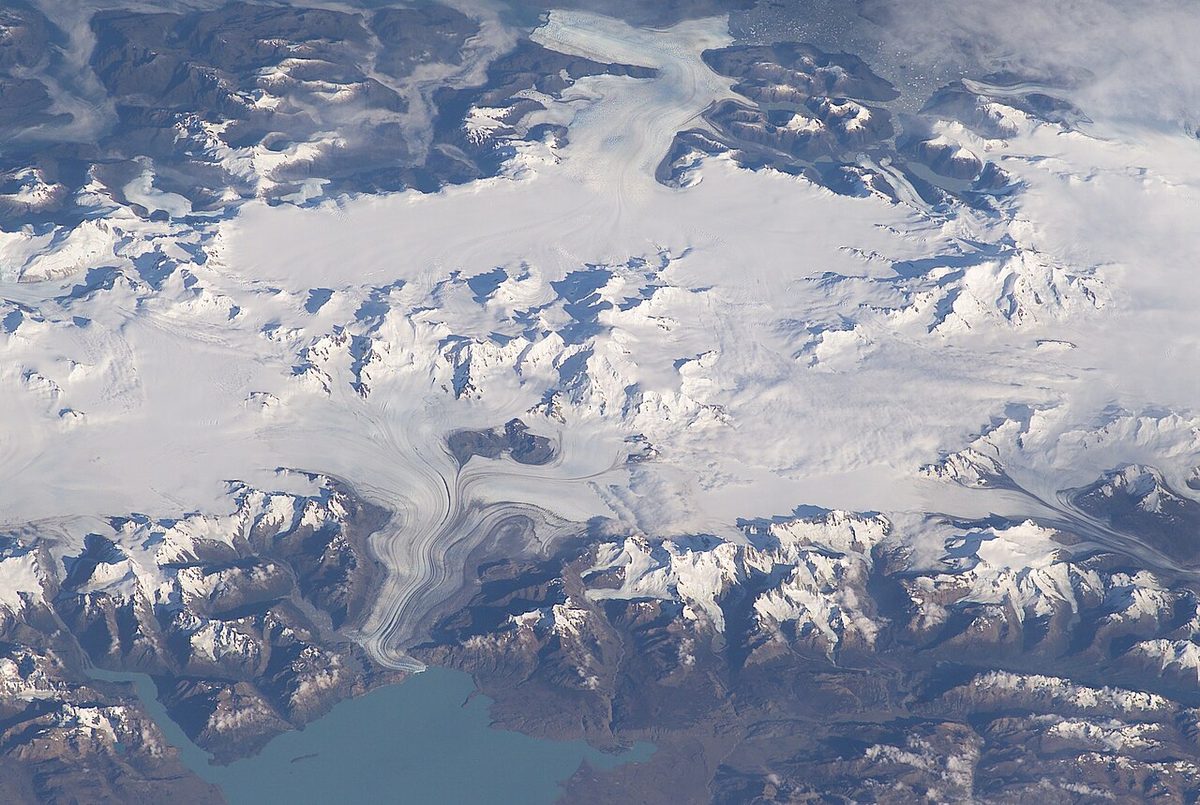
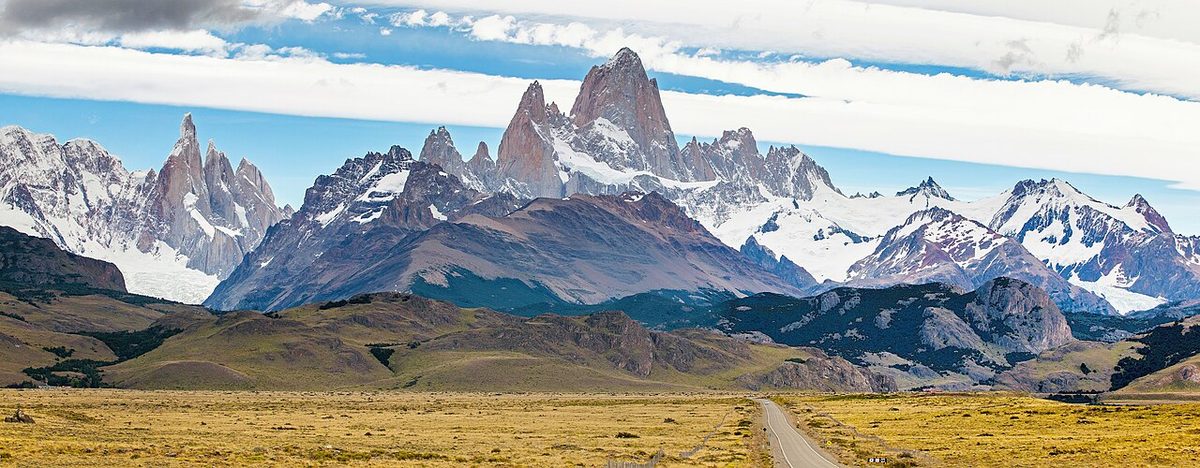
0 — 2 km Fig. 1 · Clouds racing over Monte Fitz Roy near El Chalten in volatile Patagonia weather · Photo: Earth Science and Remote Sensing Unit, Lyndon B. Johnson Space Center / Public domain via Wikimedia Commons
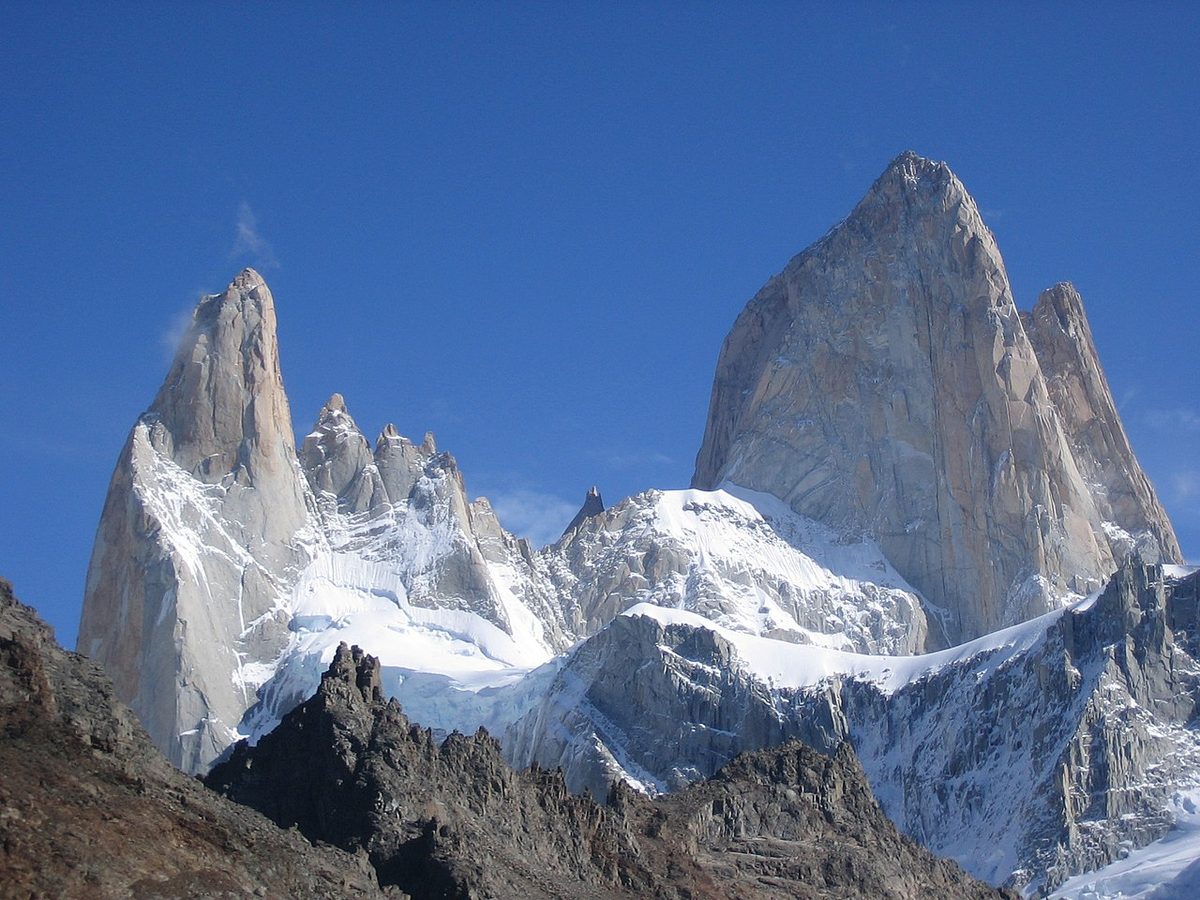
I have stood at the edge of El Chalten on a January morning watching Fitz Roy glow pink, and I have stood in the same spot two days later seeing nothing but grey soup and feeling my hood snap against my ears. Same town, same week, two completely different mountains. That gap is the whole story.
El Chalten weather is famously moody: strong, persistent wind, clouds that race in and bury Fitz Roy for days, sudden temperature swings, and a stubborn habit of giving you the clearest skies right after dawn before the wind builds. The single most useful tactic is to build buffer days into your stay and chase the calm morning window for your biggest hike. Plan for the lottery, not the brochure.
This guide is for anyone trying to time a trip, pack a bag, or read a forecast for the Fitz Roy region. If you are still deciding when to go, or you just landed and the mountain is hidden and you are quietly panicking, this is written for you.
El Chalten Weather at a Glance
Before the detail, here is the honest one-screen version. Treat the numbers as typical ranges, not promises. Patagonia does not read tables.
Season
Months
Typical day / night temp
Wind
Daylight
Crowds
My verdict
Summer
Dec–Feb
High around 15–19°C / low around 5°C
Strongest of the year
Around 16–18 hrs
Peak (busy)
Best odds for warm, long, clear-ish days; book ahead
Autumn shoulder
Mar–Apr
High around 10–15°C / low around 1–5°C
Easing from summer
Around 12–14 hrs
Quieter
My quiet favorite; calmer wind, gold forests, some cold
Winter
May–Sep
High around 4–8°C / low often below 0°C
Variable, can be fierce
Around 8–10 hrs
Very quiet
Beautiful, serious, many services closed; not casual
Spring shoulder
Oct–Nov
High around 12–17°C / low around 1–5°C
Building toward summer
Around 13–16 hrs
Quieter early
Trails reopening, blooms, wind ramps up; good value
Swipe to see all columns
Table 1
Temperature ranges are triangulated from Journey Latin America’s El Chalten seasonal guide and widely published climate averages (warmest month January around 18–19°C high, coldest month July around 4–5°C high with sub-zero nights). The broad ideal hiking season, per Visit Argentina, is October to April.
The short version: there is no perfect month. Summer gives you warmth, daylight, and the best statistical chance of clear views, but also the most wind and the most people. The shoulder months trade a little reliability for calmer air and emptier trails. Winter is gorgeous and quiet but turns El Chalten into a different, more serious trip. Pick your trade-off, then plan around the weather rather than fighting it.
What El Chalten Weather Is Really Like
If I had to summarize El Chalten weather in one word, I would borrow the one the official town tourism site uses: unpredictable. Elchalten.com puts it perfectly: “intense sunshine, a gentle breeze, strong winds, intermittent rains or even surprising snowstorms in summer… sometimes all this can happen in the same day.”
That is not marketing exaggeration. It is the daily reality, and once you accept it, you plan better.
Here is what actually happens on a normal day. Mornings are often the calmest and clearest part. The air can be still at 7 a.m., Fitz Roy sharp against the sky, and you think you have lucked into a perfect day. Then, somewhere between mid-morning and early afternoon, the wind builds. Clouds appear from the west, sometimes from a clear sky, and stack up against the Fitz Roy and Cerro Torre massifs. By afternoon the summits can be completely hidden even though the valley below is dry and bright.
The other pattern that surprises people is how fast it changes. Clouds here move quickly. A summit can be socked in, then open for fifteen minutes, then close again, all within one morning. This is why patience and timing beat raw luck. If you are standing at Laguna de los Tres at midday in cloud, do not assume the day is wasted. Sometimes the curtain lifts for a few minutes. Sometimes it does not. That uncertainty is the price of admission to one of the most beautiful skylines on earth.
A few things are reliably true across all seasons:
Wind is the main character, not the weather report. A “mild” forecast can still mean a hard day if the gusts are up.
Cold can arrive any time. Even in high-summer January and February, elchalten.com notes night temperatures can easily drop to around 5°C (41°F) or lower.
The sun is fierce. Solar radiation at this latitude is high, and the official town site warns it is significant even on cloudy days. You can burn while you shiver.
It gets colder and wetter as you climb west toward the Southern Patagonian Ice Field. It can be drizzling in town while snow falls at the base camps below the peaks.
Argentina’s national parks service reinforces this in its visitor recommendations for Los Glaciares: conditions can change suddenly in any season, so check trail and road status and carry layers, waterproofs, proper footwear, food, and water. That is not bureaucratic boilerplate. It is the operating manual for the place.
If you want this weather reality folded directly into your hiking plan, the El Chalten and Fitz Roy hiking guide is the parent guide this article supports, and it lays out which trail to choose for which forecast.
El Chalten Weather by Season
Let me walk you through the year the way I actually think about it, because “summer is best” is true but lazy. Each season is a different trip.
Summer (December to February)
Summer is the headline season, and for good reason. Days are long, sometimes stretching to around 17 or 18 hours of usable light in December, which is a gift when your hikes run 8 to 10 hours. Temperatures are at their warmest, with typical highs around 15 to 19°C and the warmest month, January, often averaging highs near 18 to 19°C. Rain is relatively limited compared with the shoulder months.
This is your best statistical shot at warm, clear hiking weather and the famous Fitz Roy reveal.
But summer has two catches. The first is wind. This is the windiest stretch of the year. Visit Argentina flags strong summer winds directly, and elchalten.com is blunter: between December 21 and March 20, “days without wind are rare.” You will likely hike in wind. The question is how much.
The second catch is people. December through February is peak season, trails are busy, and lodging fills fast. If your dates are fixed in this window, book accommodation early and read where to stay in Patagonia before everything good is gone.
Summer verdict: if you only get one shot at El Chalten and you want the best odds, come in summer, accept the wind, and build in buffer days.
Autumn shoulder (March to April)
This is my quiet favorite, and I will happily defend it.
By March, the summer wind tends to ease off its peak. Temperatures cool to typical highs around 10 to 15°C, dropping further into April. Daylight shortens to roughly 12 to 14 hours, which is still plenty for the big day hikes if you start early. Crowds thin out noticeably after the February rush.
And then there are the colors. The lenga forests turn gold, orange, and deep red, usually peaking somewhere around the first part of April depending on the year. A clear autumn morning at Laguna de los Tres, with red forest in the foreground and snow dusting Fitz Roy, is one of the best scenes in Patagonia, and you might have it nearly to yourself.
The trade-off is variability and cold. April brings more chance of rain and the first real snow at altitude, nights get colder, and toward the end of the month some lodges and services start to wind down for winter. The steep final climb to Laguna de los Tres can get icy or muddy. Check trail conditions locally before committing.
Autumn verdict: come in March if you want a sweet spot of calmer wind, fewer people, and warm-enough days. Come in early April for the foliage, but pack warmer and accept more weather risk.
Winter El Chalten is beautiful, wild, and genuinely a different undertaking. I would not send a casual hiker here without warning them clearly.
Temperatures fall hard. The coldest months see typical highs around 4 to 8°C, and nights regularly drop below freezing, with the deep-winter months averaging sub-zero lows. Journey Latin America notes winter nights often fall below freezing and that some trails become inaccessible due to snowfall. Daylight shrinks to roughly 8 to 10 hours. Snow and ice are normal on the trails, and many businesses, restaurants, and services in town close or run reduced hours.
Wind does not politely disappear in winter either. It can still be fierce, and combined with cold and short days, the margin for error narrows.
That said, winter has real magic: frozen landscapes, deep quiet, and a town stripped back to its bones. Visit Argentina describes the May-to-September period as a snowy, less-crowded experience, and it is. But it is for prepared travelers who carry the right gear, consider a guide for harder routes, and are happy to do shorter, safer walks when conditions demand. Do not copy a January itinerary into July.
Winter verdict: go if you want solitude and snowscapes and you are equipped and flexible. Skip it if you mainly want to knock out the classic day hikes.
Spring shoulder (October to November)
Spring is the season waking back up. October opens the broad hiking window again. Temperatures climb to typical highs around 12 to 17°C across the two months, daylight lengthens nicely toward summer levels (roughly 13 to 16 hours), and crowds are still lighter than the December-to-February crush, especially early in October.
You also get spring blooms and fresh green returning to the forests, plus better value on lodging than peak summer.
The catches: higher trails can still hold snow into October, weather is unsettled, and the wind starts building back toward its summer ferocity, with November often quite windy. Some early-season days are glorious; others remind you winter only just left.
Spring verdict: a strong-value choice. Come for the reopening trails, longer days, and thinner crowds, but treat the wind and lingering snow as part of the plan.
Everyone tells you El Chalten is windy. Almost nobody tells you why, and understanding why actually helps you plan, because it tells you when the wind eases and where you will feel it worst.
El Chalten sits at roughly 49 degrees south, deep in the band of latitudes sailors named the Roaring Forties, just shy of the Furious Fifties. Across the Southern Ocean at these latitudes there is almost no land to slow the air down. Winds circle the planet west to east, largely unobstructed, driven by the temperature contrast between the warmer mid-latitudes and the cold air spilling off Antarctica. That is why the wind here is more relentless than equivalent latitudes up north: there is simply nothing in the way.
Then geography sharpens it. The moisture-laden westerlies slam into the Andes. Most of the rain dumps on the Chilean side, which is why the Argentine side, including El Chalten, sits in a relative rain shadow and is drier than you might expect. But that same air keeps moving east, spilling over and around the mountains, and the local terrain funnels and compresses it. Narrow valleys and passes act like nozzles, accelerating the flow. On exposed ridgelines and lake shores you can get sudden, violent downslope gusts, sometimes called williwaws, that hit far harder than the “average” wind speed suggests.
So what does that mean in numbers? I will hedge this carefully, because wind is the figure people most love to exaggerate. On a typical hiking day you might experience sustained wind in the range of roughly 25 to 45 km/h with stronger gusts, and it is genuinely manageable with the right clothing and attitude. During strong weather systems, gusts on exposed terrain can climb much higher, and some local sources describe occasional extreme gusts around 100 to 150 km/h or more on the most exposed spots. You will not usually be out in the worst of that, but you should respect that the upper end exists and plan exposed routes around it.
Two practical takeaways from the physics:
Mornings are usually calmer. The wind often builds through the day as the atmosphere heats and the gradient strengthens. This is the single best reason to start early.
Exposure is everything. A forested, valley-bottom trail in 40 km/h wind can feel almost sheltered. A high, open ridge in the same forecast can feel dangerous. Match your route to the conditions, not just the calendar.
This is exactly why gear matters so much here. A genuinely windproof shell is not optional. The gear and trail safety rundown covers the full layering system, and I will summarize the weather-specific kit further down.
How to Read an El Chalten Forecast
Here is the trap almost every first-timer falls into: they open the default weather app, see a cloud-and-rain icon for their one big hiking day, and despair. Or worse, they see a sun icon and assume Fitz Roy will be out. Both readings are nearly useless here.
The reason is that standard consumer forecasts average conditions over large areas and long blocks of time. In Patagonia, what matters is timing, wind, and cloud movement, not a daily icon that smears the whole day into one symbol. Many of the best visibility windows happen early in the morning or in brief gaps between weather systems that a daily summary completely misses.
So this is how I actually check El Chalten weather, and it lines up with how local guides do it.
Use specialist forecasts, and use two of them
The two names you will hear most in town are Windguru and Meteoblue, and serious local forecasters lean on both. Windguru gives you hour-by-hour wind speed, gusts, and direction, which is the data that actually makes or breaks a hike. Meteoblue’s cloud and precipitation maps let you watch cloud coverage moving over Cerro Fitz Roy and Cerro Torre specifically, rather than over a vague regional point.
Cross-check them. If both agree, you can trust the trend more. If they disagree, treat the day as uncertain and keep your options flexible.
Read the hourly wind, not the daily headline
Look at the wind row first. Sustained speed plus gusts plus direction tells you more than any sun-or-cloud icon. A day with a calm early window and a windy afternoon is a perfectly good day if you start at dawn and are off the exposed sections before the gusts peak.
The underlying weather models worth knowing about are the GFS (American) and ECMWF (European). You do not need to be a meteorologist, but understanding that different apps pull from different models explains why two forecasts can disagree, and why comparing them is smarter than trusting one.
Respect the three-day horizon
Patagonian forecasts beyond about three days are guesses dressed as data. They are useful for spotting a general trend, like a multi-day storm rolling in, but the specifics will shift. Treat anything inside roughly 24 to 72 hours as a usable guideline and anything beyond that as a loose sketch. Re-check every morning.
Ask locally
The forecast is one input. The other is the visitor center and your hosts. Park staff know current trail and snow conditions that no app shows, and a hostel kitchen at breakfast in El Chalten is basically a live weather exchange. People rearrange their entire day over coffee based on what the mountain is doing right now. Join that conversation.
This is the heart of planning around El Chalten weather, so I want to be concrete.
Two ideas do most of the work: chase the morning window, and build buffer days.
Chase the morning window
Because the wind and cloud typically build through the day, the early hours are your best friend. The famous photos of Fitz Roy lit up at dawn are not just about light; they are about the fact that the air is often calmest and clearest before the day gets going.
In practice, this means:
Start your big hikes early. For a long day like Laguna de los Tres, an early start gets you to the high, exposed final climb before midday wind peaks, and gives you the best odds of a clear summit view.
If the forecast shows a brief calm window, use it for your most weather-dependent objective, even if that means reshuffling your itinerary.
Carry a headlamp so an early or pre-dawn start is actually safe.
Build buffer days
The biggest mistake I see is people giving El Chalten one hiking day and treating that as a plan. One day is not a plan. It is a bet, and the house edge is the weather.
If Fitz Roy matters to you, give yourself enough nights that a bad day or two does not sink the whole trip. As I argue at length in how many days to spend in El Chalten, three nights is a sensible minimum and four or five is much better. Local guides routinely suggest around five days, and a full week if you can, specifically to maximize your chance of catching one clear morning for the Fitz Roy hike.
The strategy then becomes simple:
Arrive with a priority list, not a fixed daily schedule.
Spend your clearest, calmest forecast morning on your most important and most exposed hike, usually Laguna de los Tres.
Use decent-but-imperfect days for valley hikes like Laguna Torre, which still deliver in moody weather.
The order serves the mountain, not your spreadsheet. If the best weather lands on your last day, that is the day you hike Fitz Roy.
This whole philosophy plugs into the bigger trip. A weather-resilient El Chalten stop is one of the most important pieces of any Patagonia itinerary, and timing it well starts with the best time to hike Patagonia.
Which Hikes Need the Best Weather?
Not all El Chalten trails respond to weather the same way. Some are ruined or even unsafe in high wind and low cloud; others are perfectly good on a grey, blustery day. Matching the hike to the conditions is how you salvage a trip that the forecast seems to be ruining.
Here is how I triage the main routes by weather. Wind and cloud notes here align with how local guides describe each trail’s exposure.
Hike
Needs clear, calm weather?
What the weather does to it
Good bad-weather option?
Laguna de los Tres (Fitz Roy)
Yes, ideally
Final climb is highly exposed; cloud often builds late morning; best visibility early
No, save it for your best window
Loma del Pliegue Tumbado
Yes, strongly
Extremely exposed ridge; little payoff and more risk in high wind or low cloud
No, postpone in strong wind
Laguna Torre
Moderately
Strong valley winds common, but Cerro Torre can clear briefly between systems; atmospheric even when grey
Often yes, a solid moody-day choice
Laguna Capri
Somewhat
Sheltered early; clouds tend to form around Fitz Roy mid-day
Yes, decent shorter option
Mirador de los Cóndores / Águilas
Low
Wind-exposed viewpoints, gusty afternoons, but short
Yes, quick and flexible
Chorrillo del Salto
Low
Forested and protected from wind
Yes, a good storm-day walk
Swipe to see all columns
Table 2
The pattern is clear. When Fitz Roy is buried and the wind is howling, do not burn your legs and your luck on the high exposed routes. Walk a forested valley or a short viewpoint, keep moving, and hold your best objective for the morning the window opens.
What to Pack for El Chalten Weather
Packing for El Chalten is really packing for one day that contains four seasons. The official advice from both Visit Argentina and the national parks service is consistent: bring thermal layers, waterproofs, proper trekking footwear, and sun protection, because conditions change fast.
Here is my weather-driven day-hike list, layered from skin out.
Windproof, waterproof shell jacket. This is the single most important item. The wind alone justifies it, never mind the rain. Choose one with a hood that actually stays put.
Insulating mid-layer. A fleece or light puffy. You will want it at exposed viewpoints even in summer.
Moisture-wicking base layer. Synthetic or merino. No cotton, which stays wet and chills you.
Hiking trousers, ideally quick-drying, with light rain pants if the forecast is wet or very windy.
Warm hat and gloves. Wind strips heat shockingly fast, even in January. Pack them year-round.
Sun hat, high-SPF sunscreen, lip balm, and category 3–4 sunglasses. The southern sun burns through cloud here.
A buff or neck gaiter. Brilliant for blowing wind and dust, and warmth.
Headlamp. For early starts that chase the morning window.
Plenty of water and food, more than you think; wind is dehydrating.
Trekking poles for stability on windy, exposed descents like the Laguna de los Tres return.
In the shoulder seasons (March–April and October–November), add a warmer mid-layer and thin insulated gloves, and bring a full rain kit even on a nice-looking morning. In winter, you are into proper cold-weather mountaineering territory: heavier insulation, thermal leggings, and potentially traction devices for ice, with local advice essential.
Weather does not just affect comfort and views. It affects whether trails and roads are usable at all, and that changes through the year.
In peak summer, the main trails are generally in good condition, though the steep final pitch to Laguna de los Tres is rocky and can be slick after rain. The bigger summer hazard is wind on the exposed sections rather than the trail surface itself.
In the shoulder seasons, watch for two things: mud after rain, and early or late snow at altitude. The upper sections of Laguna de los Tres and Loma del Pliegue Tumbado are the first to get snowy or icy, and that steep Fitz Roy finish becomes genuinely harder and more dangerous when frozen. The national parks service explicitly recommends checking trail status, and I would always ask at the visitor center in March, April, October, and November before committing to the high routes.
In winter, expect snow and ice on the trails as the default. Routes that are a casual day hike in January can require traction, navigation skill, and serious caution in July. Some are effectively off-limits without proper experience or a guide.
Road access is generally reliable. El Chalten connects to El Calafate, roughly 215 km away, by a paved route with year-round bus service, per the official sources. But Patagonian weather can still cause delays, and the gravel Provincial Route 41 toward the Río Eléctrico portal and Lago del Desierto can be rougher in poor conditions. Build a little slack into transfer days, and never schedule a fragile same-day flight connection right after a long bus ride. The broader logistics live in the El Chalten and Fitz Roy hiking guide.
So When Is the Best Time to Visit El Chalten?
If you want the single best-odds answer: late December through March, with a soft spot for March specifically if you want calmer wind and thinner crowds.
But let me match the season to the traveler, because “best” depends on what you are optimizing for.
Best overall weather odds: January and February. Warmest, longest days, most reliable, but windiest and busiest.
Best balance of weather, calm, and quiet: March. The wind has usually eased, days are still long enough, crowds have thinned, and conditions are still good.
Best for autumn color and photography: late March into early April, accepting more cold and weather risk.
Best value and reopening trails: October and November, with building wind and possible lingering snow up high.
Best for solitude and snowscapes (experienced only): the winter months, May to September, with the right gear and flexibility.
Whatever month you choose, the planning logic does not change: the weather is volatile, the wind is the deciding factor, mornings are your friend, and buffer days are the difference between “we saw Fitz Roy” and “we saw where Fitz Roy should have been.” Decide your dates with the best time to visit Patagonia, then protect your window once you arrive.
El Chalten Weather FAQ
Is El Chalten always windy?
Effectively, yes, especially from October to March, when the official town tourism site says days without wind are rare. Wind is the defining feature of El Chalten weather year-round, driven by the Roaring Forties latitudes and the Andes. It is usually manageable with a windproof shell, but expect it on most hiking days and plan exposed routes around calmer morning windows.
What is the best month to visit El Chalten for weather?
For the best statistical odds of warm, clear, long days, January and February win, though they are also the windiest and busiest. March is my balanced pick: the wind eases, crowds thin, and days are still long enough for the big hikes. Whatever month you pick, build in buffer days, because no single day is guaranteed.
Does it snow in El Chalten in summer?
It can. The official town tourism site explicitly mentions “surprising snowstorms in summer” as part of the normal range, and snow can fall at the higher base camps below the peaks even while it only drizzles in town. Summer snow is not the norm, but it is possible, which is exactly why you carry warm and waterproof layers even on a sunny January morning.
How cold does El Chalten get at night?
Even in peak summer (January and February), night temperatures can easily drop to around 5°C (41°F) or lower, per the official town tourism site. In the shoulder seasons, nights get colder still, and in winter they regularly fall below freezing. Pack a warm hat, gloves, and an insulating layer for any season, especially if you are camping near Fitz Roy.
When is Fitz Roy most likely to be clear?
Early morning is usually your best chance, because wind and cloud tend to build through the day. Clear skies are statistically more likely in summer, but cloud can hide the summit in any season, sometimes for days. The reliable tactic is to give yourself several days, watch specialist forecasts like Windguru and Meteoblue, and hike on your calmest, clearest morning.
How accurate are El Chalten weather forecasts?
Treat them as a guideline for roughly the next 24 to 72 hours, not gospel. Patagonian weather changes too fast and too locally for daily app icons to be reliable. Use specialist tools that show hourly wind and cloud movement, cross-check two sources, re-check every morning, and ask at the visitor center about current trail and snow conditions.
Is El Chalten worth visiting if the weather is bad?
Yes, with adjusted expectations. Many trails stay open in rain and wind, and low cloud and mist can make for dramatic, atmospheric scenery. You may need to swap high exposed routes for sheltered, forested ones like Chorrillo del Salto or shorter viewpoints, and wait for a clear-weather window for the big Fitz Roy hike. A good shell and dry layers make rainy days perfectly enjoyable.
How many days do I need in El Chalten to get good weather?
Local guides commonly suggest around five days, and a full week if you can manage it, specifically to maximize your odds of catching one clear morning for Laguna de los Tres. Three nights is a reasonable minimum, but it leaves little buffer. The more days you have, the better your chance of beating the weather lottery.
Final Thoughts
El Chalten taught me to stop arguing with the sky. The first time I visited, I had a tidy plan: Fitz Roy on day one, Cerro Torre on day two, done. Day one was a wall of cloud and a wind that tried to take my hood off. I sulked. Then on what was supposed to be a rest morning, I woke at 6 a.m., glanced outside on a hunch, and the mountain was just there, sharp and pink and perfectly still. I was on the trail twenty minutes later in half-laced boots, and it became the best hiking morning of my life.
That is El Chalten weather in a sentence. It will not hand you the view on your schedule. It will hand it to you on its own, often at dawn, often when you have nearly given up. Your job is just to still be in town, with buffer days in hand and an alarm set, when the window opens.
So come with layers, a real windproof shell, and a flexible mind. Watch the forecast but do not worship it. Start early. Keep a short, sheltered hike in your back pocket for the grey days. And give the place more time than feels efficient. Do that, and the famous El Chalten weather lottery starts to feel a lot less like a gamble and a lot more like patience finally paying off.
Connect Patagonia — El Chaltén weather (local guide): forecast-reading approach (Windguru and Meteoblue, hourly over daily, GFS/ECMWF) and per-trail wind and exposure notes.