Patagonia Camping Guide: Free Camps, Paid Campsites, Refugios and Rules
Patagonia camping in 2026: which free campsites closed and when, who to book each night with, where cooking is actually legal, and what the wind demands.
By Patagonia Tourism Guide · First published 5 Oct 2026 · Updated 1 Aug 2026
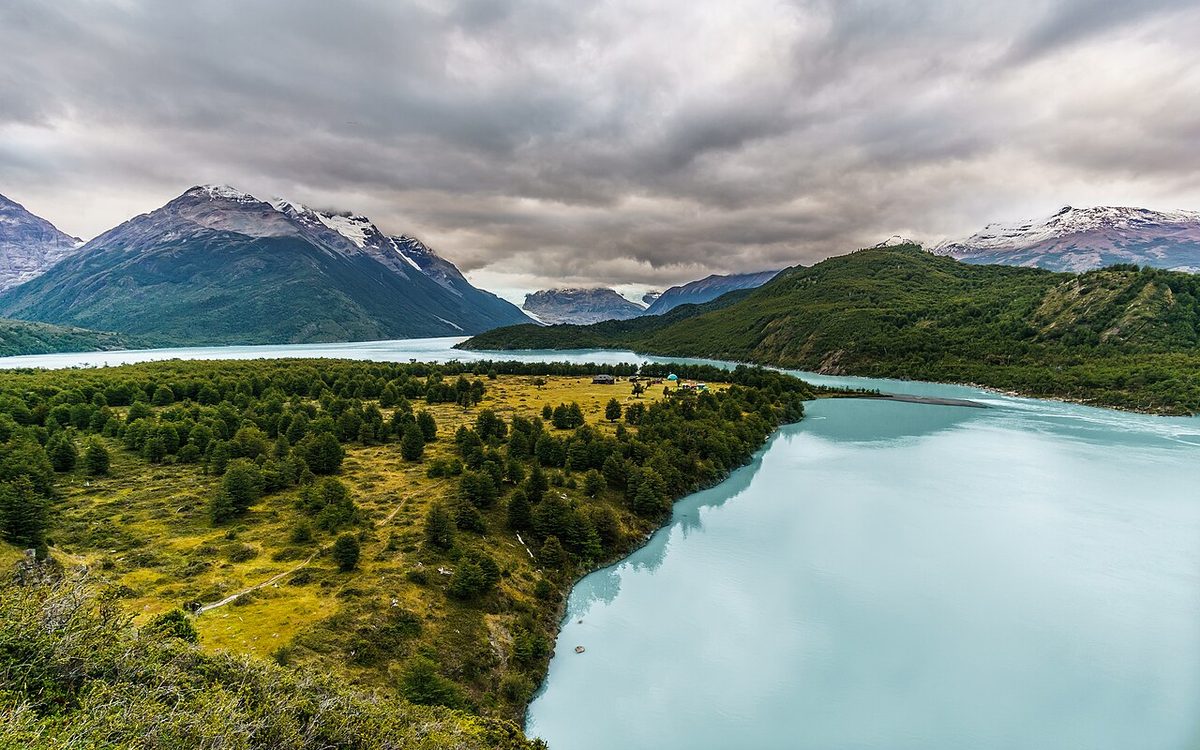
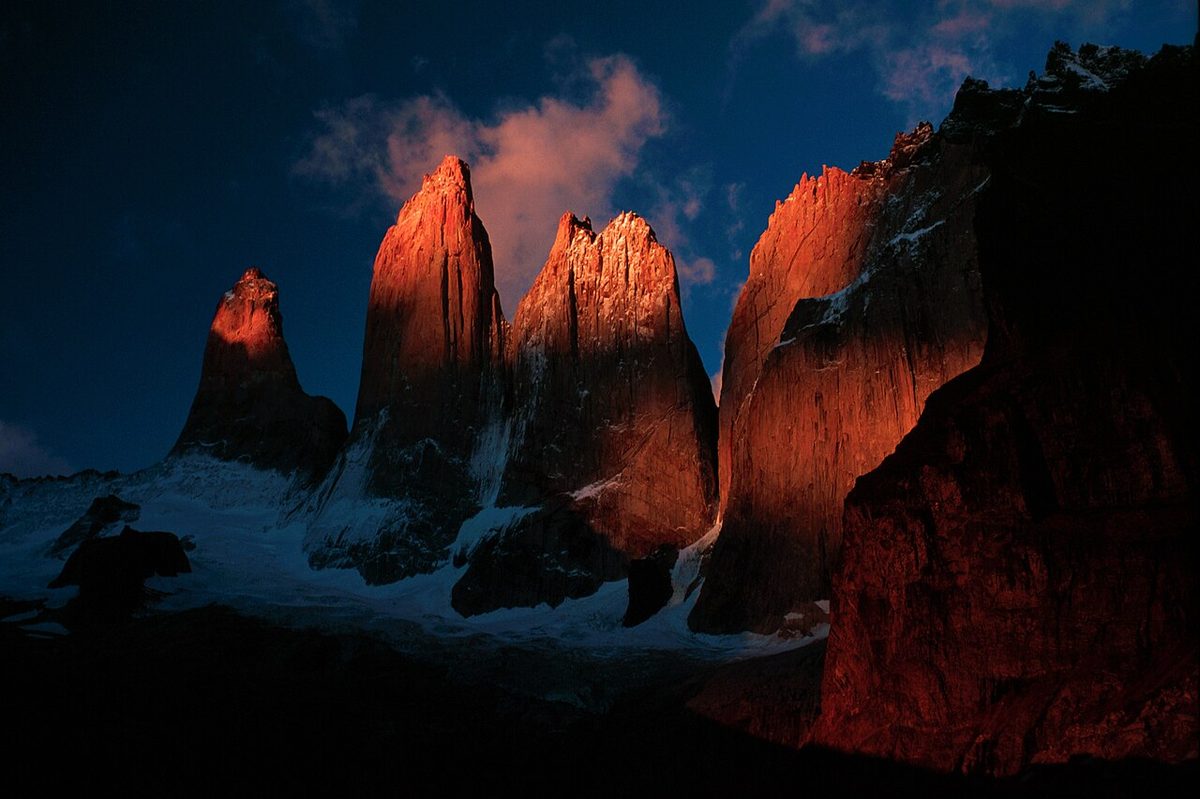
0 — 2 km Fig. 1 · Lago Dickson in Torres del Paine, site of one of the paid Vertice campsites on the O Circuit where every camping night must be reserved in advance · Photo: Pablo Fierro pablofierro / CC0 via Wikimedia Commons
Patagonia camping in 2026 is a booking exercise before it is a camping exercise. There are no free campsites left in Torres del Paine — the three CONAF ones closed in 2018 and are still closed. El Chaltén’s three trekking camps stopped being free between 19 December 2024 and 14 January 2025. Every single night inside Torres del Paine must be reserved before you enter, and rangers check. Genuine free camping does survive, but almost entirely on the Argentine side and only at named sites. Open fire is banned outright in Chile’s protected areas, and enforcement in 2026 has been the harshest on record.
Between 1 January and 19 February 2026, CONAF expelled 50 visitors from Torres del Paine — 40 for smoking, 10 for using a stove outside a designated sector — per La Tercera reporting CONAF figures on 23 February 2026, up from 38 in all of 2025. A separate count published 21 March 2026 gave 34, on a different counting basis.
Everything volatile here is dated, and where a 2026-27 figure could not be confirmed I give the last confirmed number with its date. Pair this with the hiking and camping essentials.
What stopped being free, and exactly when
Every row is a date after which an otherwise good travel article became wrong.
Date
What changed
2018
Torres del Paine’s free CONAF campsites — Italiano, El Paso, Campamento Torres — closed, and Vertice advises travellers not to include them in an itinerary. Still closed July 2026.
20 Nov 2023
Tierra del Fuego NP makes online camping registration mandatory for its free camping areas.
21 Oct 2024
Paid trail access begins in El Chaltén (Los Glaciares north zone) as a pilot. Now standing policy.
19 Dec 2024
Poincenot (Laguna de los Tres) becomes paid and reservation-only.
22 Dec 2024
De Agostini (Laguna Torre) reopens paid and reservation-only.
14 Jan 2025
Laguna Capri becomes paid — the last free trekking camp at El Chaltén.
1 Jun 2026
Argentina’s current park tariffs take effect. El Chaltén day pass ARS 50,000 for non-resident foreigners.
23 Jul 2026
Parque Nacional Perito Moreno (the remote Santa Cruz park, not the glacier) makes its free refugios, domes and camping parcels paid for 2026/27 — reported at ARS 70,000 a night for a foreigner in a refugio plus a ARS 5,000 reservation fee. Only Valle del Río Lácteo stays free.
Swipe to see all columns
Table 1
Two structural changes sit alongside those dates. Chile’s park entry moved to advance online purchase via pasesparques.cl, with a QR code at the gate and no cash sold inside the park; El Chaltén’s trail tickets are online only, card only — cash is not accepted. Any page telling you to pay at the Torres del Paine gate is stale. See current park entrance costs and Torres del Paine tickets.
Read this twice: every night in Torres del Paine must be booked before you enter
Sleeping inside Torres del Paine on the W Trek or the Macizo Paine (O) Circuit means holding a confirmed reservation for every single night before you enter the park. Not most nights. Not the first night. Every night. The park’s reservations page states it as an obligation — “deberá realizar sus reservas de alojamiento de manera obligatoria” — and torresdelpaine.com puts it plainly: “you must book each night of camping, shelter, or campsite in advance; it is mandatory to enter the park.”
Registration is compulsory on arrival at every ranger station — “Es obligatorio registrarse al llegar a todas las estaciones de guardaparques” — and at Paso and Los Perros you register your departure too. Rangers ask at entrances and trail check-stops as well as at camps. Worldly Adventurer, updated 24 February 2026, reports the consequence: on the O Circuit “there have been cases where people have been sent back the way they came because they couldn’t prove that they had a reservation at a campground further along the trek.”
The exemptions, because nobody lists them. Per the park’s own reservations page the rule attaches to overnight trekking on the W and O — not to day-use visits, and not to road-accessible Camping Serrano and Camping Pehoé.
Patagonia camping in Torres del Paine: who runs what, and what it costs
Vertice Patagonia runs the west and north — Refugio + Camping Paine Grande, Grey and Dickson, plus Camping Los Perros. Las Torres Patagonia (formerly Fantástico Sur) runs the east and centre — Torres Central, El Chileno, Los Cuernos, Francés and Camping Serón. There is no shared booking system. Vertice notes CONAF usually announces any opening or closing of El Paso and Italiano in September, so check parquetorresdelpaine.cl that month before building a 2026-27 O Circuit around them.
Two road-accessible paid sites sit outside the trek chain: Camping Pehoé and Camping Serrano / Río Serrano (46 pitches, hot showers, open 1 October to 30 April). Serrano carries a conflict I could not resolve — the official park site routes bookings through cajalosandes.cl while torresdelpaine.com names GreatChile, so these may be two different campsites, and torresdelpaine.com says each pitch “includes a shed and stove”, which sits awkwardly against the park-wide fire ban. Do not assume you may light anything there without written confirmation.
Vertice rates, 2026-2027 season
From Vertice’s own property pages, USD per person per night.
Item
Paine Grande
Grey
Campsite, own gear
USD 13
USD 11
Refugio “single bed”
USD 66
USD 46
Refugio “armed bed” (made up)
USD 114
USD 114
Bedding kit add-on
USD 48
USD 68
Tent (max 2) / bag / mat rental
USD 58 / 38 / 16
USD 58 / 38 / 16
Full board / half board
USD 110 / 76
USD 110 / 76
Swipe to see all columns
Table 2
A “single bed” gives a mattress cover and pillow, so you bring the bag; an “armed bed” is a made-up bunk; the bedding kit is for people who arrive with a bag but want linens. It is priced differently at the two properties, so confirm what your booking includes.
Las Torres published no public 2026-2027 rate card at the URLs I could reach as of 30 July 2026. These 2025–2026 figures will have moved: fully equipped camp (tent, bag, mat; two-person tents raised about 1.6 m on platforms) USD 140 per person; individual camp with your own gear USD 40 low / USD 50 high season; refugios from USD 185. Note the implication: the operator matters more than the choice between a tent and a bed, since own-tent camping is USD 11–13 with Vertice and USD 40–50 with Las Torres. See budgeting for refugios and campsites and where to stay in Torres del Paine.
Opening dates, winter closures and the entry fee
On the 2025/26 pattern: Francés and Torres Central open around 15 September, Chileno, Grey and Paine Grande on 1 October, Dickson, Los Perros, Los Cuernos and Serón on 1 November. Vertice calls Grey open all year on one page and September–April on another — confirm directly.
Winter, as of 30 July 2026. The park is under its winter regime, 27 April to 30 August 2026, and CONAF requires an accredited specialised guide on the W circuit and the Base Torres trail. The W is closed outright 1 June to 31 July 2026, entry only by exceptional authorisation through a CONAF-accredited operator; the O Circuit is closed until 31 October 2026. See what stays open in the off season and trekking without a guide.
Entry fee. The last official tariff table was valid only through 30 April 2026: foreign adult 18+ at CLP 34,000 under three days, CLP 48,500 for longer; Chilean adult CLP 9,900 / 14,200. That table has expired and the 2026/27 figure will differ — Worldly Adventurer quotes CLP 46,200 for a 3+ day pass for 2025/26, already conflicting with CLP 48,500. Pull the live number from pasesparques.cl.
The fire and stove rules — the section that actually matters
Banned anywhere in Torres del Paine: open fire, campfires, fire pits, burning waste, smoking, lighting candles, and any stove using vegetal material as fuel. CONAF’s 16 January 2026 reiteration is explicit that camping stoves are prohibited in unauthorised areas. Permitted:“cocinillas que no usen material vegetal como combustible” — gas or liquid-fuel stoves — and only inside enabled camping or designated areas. Hence the counter-intuitive consequence: a BioLite-style wood-burning stove is illegal because it burns plant fuel, while a gas canister stove is legal in the right spot. Fuel type and location are separate tests, and you must pass both.
Where you may actually cook, site by site
Campsite
Operator
Where cooking is legal
Paine Grande
Vertice
Camper cooking building with sinks; quincho 06:30–22:00. Not in tents, not outdoors.
Grey
Vertice
Dining room attached to check-in, 07:00–22:00.
Dickson
Vertice
Designated cooking room in the main building.
Los Perros
Vertice
Enclosed building attached to check-in, 24/7.
Torres Central
Las Torres
Designated shelter only — three-sided tent, tables, dish sinks.
Serón, Francés
Las Torres
Designated shelter only; Francés has limited cover.
El Chileno
Las Torres
No stove use at all — fire risk. Designated table in the dining room, or buy meals.
Los Cuernos
Las Torres
Not on the stove-permitted list. Ask at check-in.
Between camps
—
Nowhere. No legal place to cook on the trail.
Swipe to see all columns
Table 3
Vertice’s property pages put it flatly: “Cooking is not allowed inside the shelter or tents or outdoors.”Plan cold lunches — the rule most packing lists miss. See W Trek food.
Penalties, with the actual statutes
Ley 20.653 (2 February 2013): 61 days to 3 years’ imprisonment plus a fine of 11 to 50 UTM. CONAF’s 17 February 2026 release cites a UTM of roughly CLP 69,542 at December 2025 rates, putting that fine near CLP 765,000 to 3.48 million — my arithmetic, and the UTM is re-indexed monthly. parquetorresdelpaine.cl states the same law as fines up to CLP 2,000,000; the two official statements differ.
Causing a forest fire with significant ecological damage: 5 years and 1 day to 20 years’ imprisonment, plus expulsion from Chile for foreign nationals.Littering: up to CLP 200,000 under Ley 21.123.Ley 21.600 (the SBAP law) also prohibits fire, drones, pets and hunting in protected areas.
What actually happened in 2025/26: donations of CLP 1 to 5 million to local fire brigades plus a three-year ban from entering Chile — a British visitor caught smoking near Base Torres in March 2026 reportedly faced CLP 5 million and a three-year ban.
About 99% of Chilean forest fires are human-caused, and CONAF’s restoration accounting names three major fires in Torres del Paine — 1985, 2005 and 2011 — totalling 39,000 hectares. CONAF publishes hectares, not causes; the attribution to visitors comes from Horizon Guides, which ties the 2005 fire to a tourist knocking over a gas camping stove in an unauthorised camping area — the offence ten people were expelled for in early 2026. In August 2015 Chile’s Supreme Court upheld the civil liability of the tourist blamed for the 2011–12 fire: a visitor can be pursued years after leaving.
El Chaltén: the change nobody’s article has fully absorbed
The three trekking camps in the north zone of Los Glaciares are paid and reservation-only, run by the Asociación Amigos del Parque Nacional Los Glaciares and booked at amigospnlosglaciares.org.
Camp
Route
Cap
Paid since
Poincenot
Laguna de los Tres, ~11 km from town
120
19 Dec 2024
De Agostini
Laguna Torre, ~9 km
70
22 Dec 2024
Laguna Capri
Fitz Roy route, ~7 km
48
14 Jan 2025
Swipe to see all columns
Table 4
Those caps are small and hard — Capri takes 48 people a night on the most popular trekking route in Argentine Patagonia. The fee was ARS 15,000 per person per night at announcement and was still quoted at ARS 15,000 (about USD 14) in March 2026. This is the number here most likely to have moved: Argentine inflation was around 33% year-on-year at our last check, so a December 2024 peso price surviving unchanged into 2026/27 would be unusual. Pull it live. It is free for El Chaltén residents and under-12s. The fee bought new sanitary modules and 24-hour on-site staff; otherwise facilities are dry toilets only, with no electricity, no showers, no supplies, nothing sold on site. The main amenity is tree cover, which in this valley is a serious amenity.
Each camp sits beside a stream or river, and APN-aligned local guidance treats the water as drinkable. The rule is procedural — collect upstream of camp, and never toilet or wash within 30 m of a water source.Fire is prohibited outright in the north zone: APN permits only gas stoves (calentadores a gas), in authorised camping areas, supervised. Note the contrast inside the same park — elsewhere in Los Glaciares the rule is “Sólo se puede hacer fuego en los fogones habilitados y debés traer la leña”, which applies to the south zone, not El Chaltén. Zero waste is literal:“regresá con tus residuos.” There is no bin at any of the three camps.
Laguna Toro, on the route to Paso del Viento and the ice cap, requires mandatory registration at the visitor centre, as do climbing objectives. Our El Chaltén camping guide goes site by site.
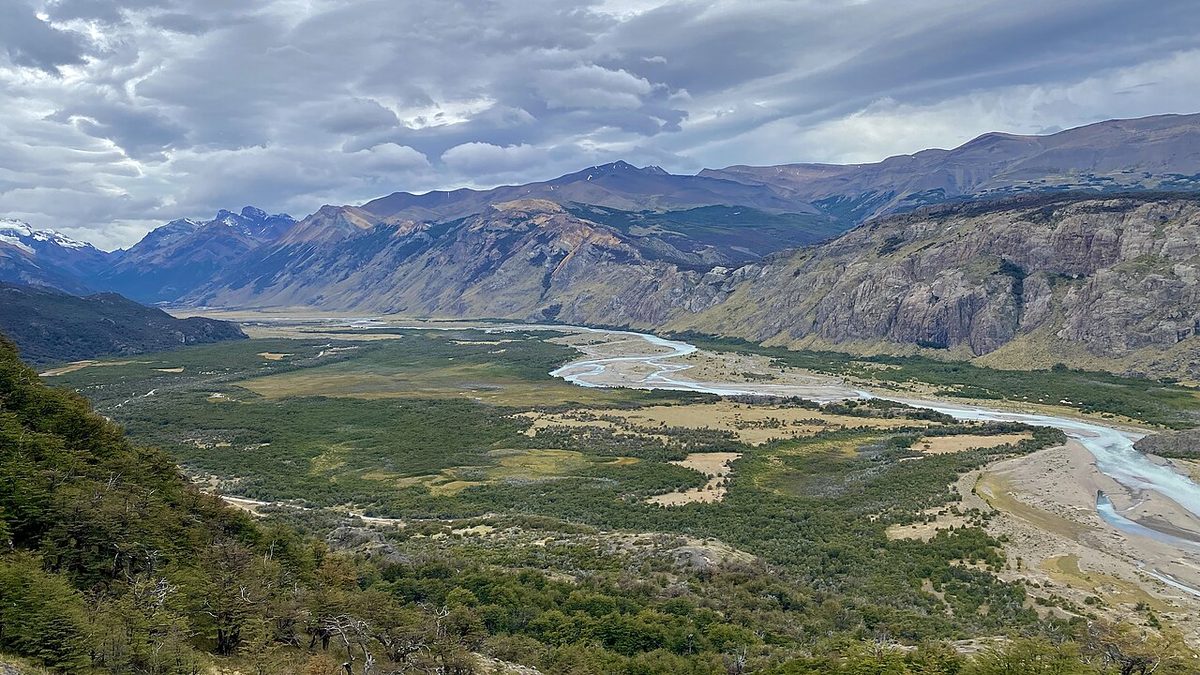
Fig. 2 · The Rio Blanco valley above El Chalten, near Campamento Poincenot, one of three Los Glaciares trekking camps that stopped being free in December 2024Photo: lamblukas / CC BY 2.0 via Wikimedia Commons
The trail access fee is separate from camping. Under APN tariffs in force since 1 June 2026 the daily pass is ARS 50,000 for non-resident foreigners (ARS 25,000 Argentines, 15,000 students, 8,000 Santa Cruz residents, free under 6), with a 50% discount on a second day used within 72 hours. Tickets are online only — web or QR at the three control portals — and payment is by card only; cash is not accepted. Two things I will not state as fact: the portals’ opening hours (one secondary source says 07:00–20:00, unconfirmed against APN), and the claim that campers pay one entry fee regardless of trip length. Ask in town. See El Chaltén and Fitz Roy hiking.
Refugios: what a bed buys, and the cost maths
A refugio in Chile and a refugio in Argentina are different products with the same name.
Torres del Paine. A Vertice refugio gives shared bathrooms with hot showers, heated corridors, a buffet restaurant, a minimarket, a bar and paid Wi-Fi, with celiac, vegan and vegetarian options on advance notice. Check-in 13:00, check-out 09:30.
Argentina. Argentine refugios — Club Andino Bariloche’s network above all — give a bed or mattress in a communal room, and you bring your own sleeping bag. Camping beside the refugio is usually allowed for a small fee, and at Frey has been listed as “a voluntad”, pay what you want. The most recent confirmed prices are November 2024: a bed at Frey ARS 35,000, at Otto Meiling ARS 60,000 plus 14,000 to camp. Those peso figures are 20 months old and have moved. All operate by reservation. See Bariloche hiking.
The maths, on Vertice’s 2026-2027 numbers. Camping with your own gear plus half board is about USD 13 + 76 = USD 89 a night; a made-up refugio bed with half board about USD 114 + 76 = USD 190. Renting a tent at USD 58 plus a bag at USD 38 costs more over four nights than most travellers’ baggage fees. See Patagonia gear rental and W Trek refugios.
Free and wild camping: the honest cross-border answer
Chile: wild camping is illegal inside CONAF and SBAP protected areas, full stop. In Torres del Paine overnight stays are confined to áreas habilitadas marked on the official map. Swoop states it plainly: “wild camping is not permitted anywhere in Torres del Paine.”
Outside protected areas it is a different country. Free camping on unfenced, ungated public land along the Carretera Austral is legal in practice and widely done — one February 2025 account describes camping free for most of a four-week trip, paying only inside Parque Nacional Patagonia. It is not permitted on private land without permission. See driving the Carretera Austral.
Argentina still has genuine acampe libre inside its national parks — at named places, free of charge:
Camping libre “El Huala”, Lago Roca, Los Glaciares south zone (Ruta Provincial 15 km 48, about 2 km from the organised Lago Roca campground): completely free, run by APN, with latrines, fixed tables, fogones and lake access, but no electricity, showers or shop. Almost nobody writes about it, and it is one of the best free nights in Patagonia.
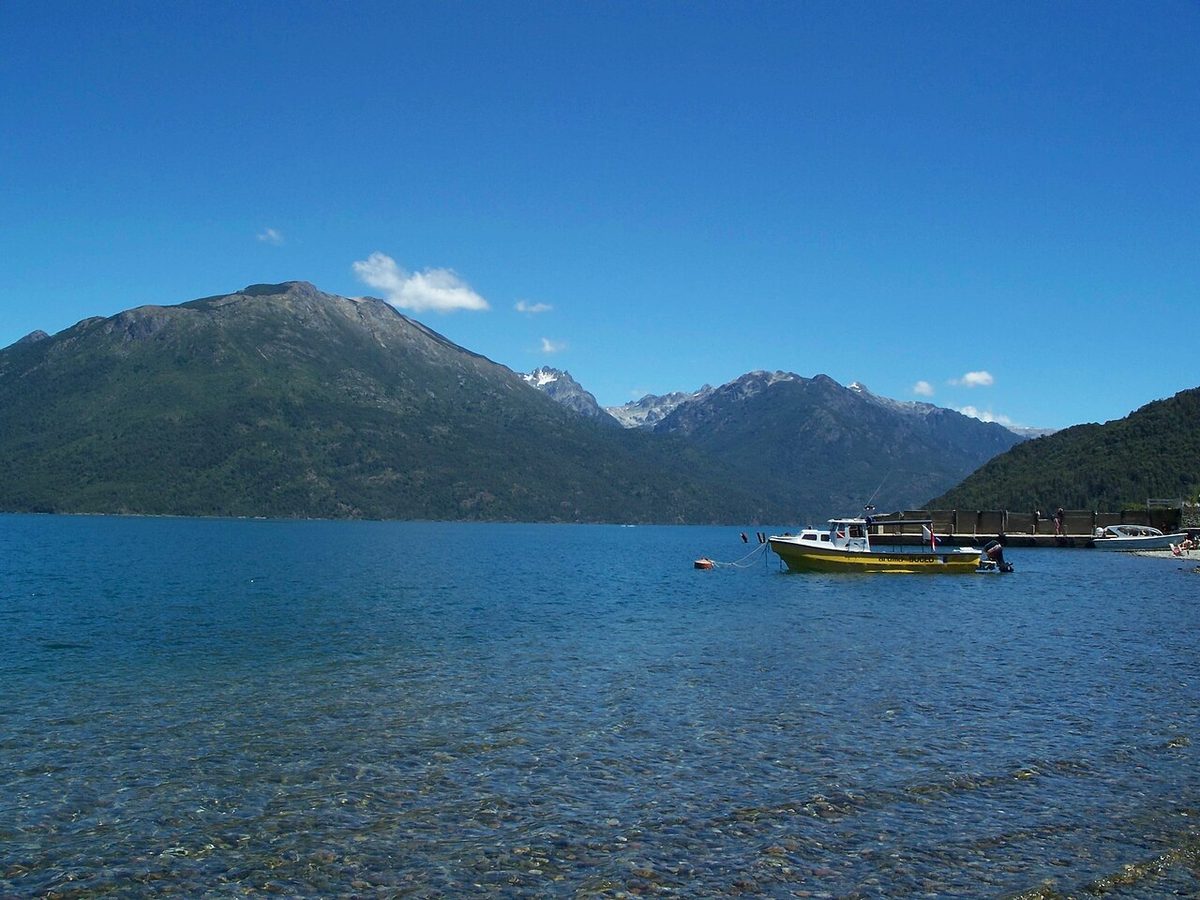
Los Alerces: Playa Blanca and Lago Krugger — free-access camping, no services and no fire.
Tierra del Fuego NP: all four áreas de acampe agreste carry no camping charge. Detail below.
Nahuel Huapi: camping at Refugios Frey, Jakob and Laguna Negra was free or voluntary as recently as November 2024 — unconfirmed for 2026/27.
Seccional Guanaco, Los Glaciares centre zone: camping agreste with latrines, fire prohibited.
Outside parks, on unfenced provincial land, wild camping is broadly legal and normal in Argentina.
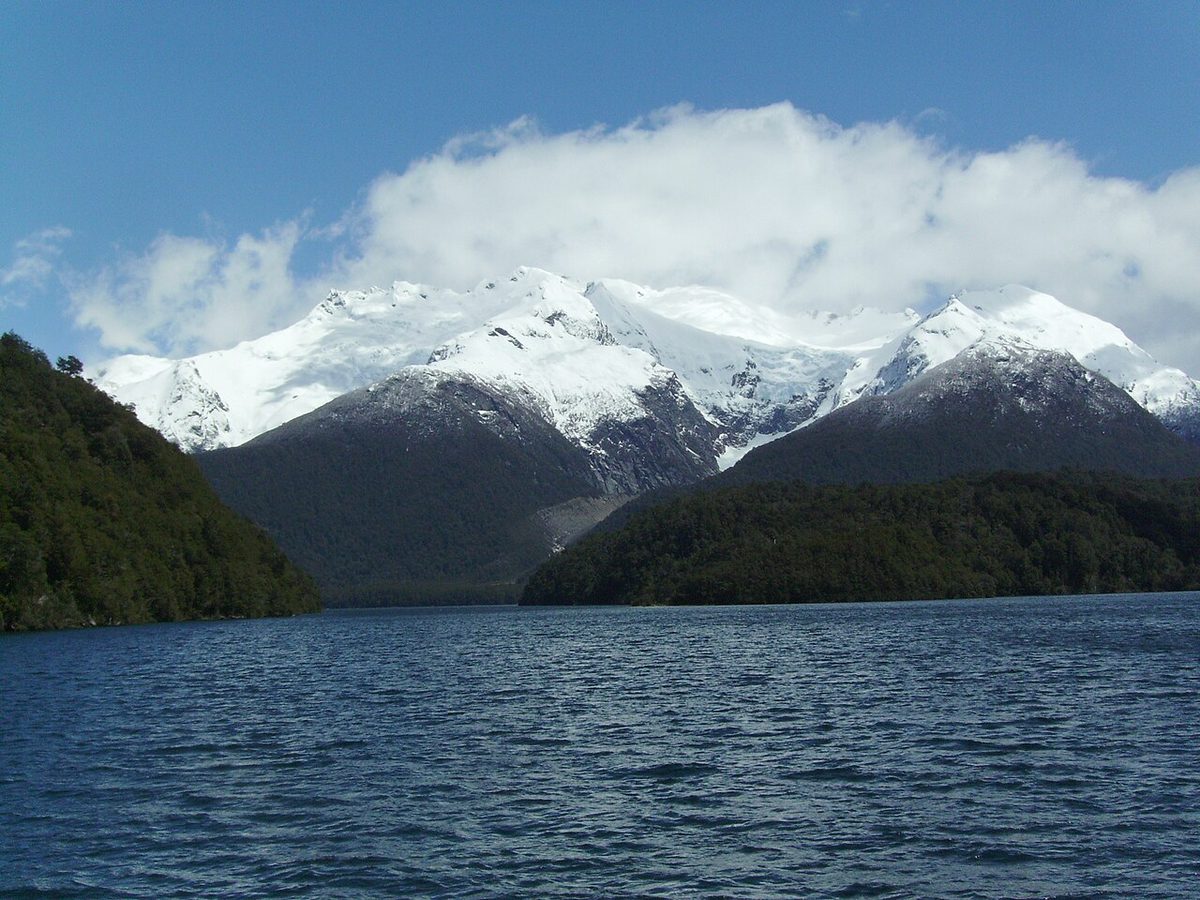
Fig. 3 · Lakes and forest in Los Alerces National Park, Argentina, where free camping survives at Playa Blanca and Lago Krugger but fire is not permittedPhoto: littletroll / CC BY-SA 3.0 via Wikimedia Commons
Camping elsewhere in Patagonia
Nahuel Huapi charges ARS 35,000 from 1 June 2026, and trekking registration is free but mandatory — via nahuelhuapi.gov.ar or clubandino.org. See the Bariloche region primer.
Los Alerces. Day pass ARS 35,000 from 1 June 2026. Nine organised campgrounds and eight rustic agreste sites, plus Playa Blanca and Lago Krugger free; no per-site prices are published and campgrounds are booked by phone. Los Alerces also gives the best mental model for crossing the border: fire is not permitted everywhere, and where it is you must “consult the fire risk index with the National Park service to verify if fires are allowed that day.”Argentina runs a conditional, day-by-day system. Chile’s protected areas run an absolute ban. See Los Alerces National Park.
Tierra del Fuego National Park. Day pass ARS 40,000 for non-resident foreigners on APN’s table effective 1 June 2026, with Tierra del Fuego residents, under-6s, seniors and disabled visitors free. A second-day figure of ARS 60,000 circulates; I could not confirm whether it is current or superseded by the 50% second-day rule APN applies elsewhere, so verify at the gate. Four free áreas de acampe agreste: Río Pipo, Ensenada, Laguna Verde / Cauquenes and Laguna del Caminante. The first three have chemical toilets and nothing else; Laguna del Caminante has none and is an eight-hour hike in. Camping itself is free — “actualmente no se está cobrando acceso. Solo se debe completar el registro” — so you pay only park entry, roughly November to April. One day pass permits two nights’ camping, and online registration has been mandatory since 20 November 2023.
Fire in Tierra del Fuego is not settled, because the two authorities do not agree. APN and Ushuaia Tourism say open fire is prohibited and that “el uso de anafes, garrafas, calentadores u otro elemento de combustión está permitido únicamente en las áreas de acampe” — combustion devices only within camping areas. But the provincial system lists designated fogones inside the park; a 2021 park notice counted 25 at Río Pipo, 10 at Laguna Verde, 7 at Cauquenes and 4 at Ensenada, and the province publishes a weekly report of authorised fire locations plus a daily fire risk index, with fire banned province-wide on HIGH, VERY HIGH or EXTREME days even at authorised sites. Both are official; they cannot both be the whole rule. Plan on gas stoves only, treat any fogón as usable only if the park confirms it that day, and ask at the gate. See visiting the park near Ushuaia.
Carretera Austral and Aysén. Established campgrounds run roughly CLP 5,000 to 10,000 per person per night — per person, not per site (first-hand, February 2025). In Parque Nacional Patagonia, three campgrounds were CLP 8,000 per person, first-come first-served with no pre-booking, as of August 2025 — the opposite problem from Torres del Paine, so arrive early. And in Parque Nacional Cerro Castillo, CONAF’s fire prohibition explicitly covers “cocinillas a gas” — gas stoves included, stricter than Torres del Paine. See Parque Nacional Patagonia.
Gear: wind is the design constraint, not cold
Las Torres Patagonia’s weather page puts wind in the park at anything from an intense breeze of 20 km/h to gusts up to 110 km/h, and — counter-intuitively — summer is the windiest season. Be careful above an average of about 40 km/h (25 mph); above about 56 km/h (35 mph) walking becomes unstable, and gusts commonly exceed forecast by roughly double where terrain funnels them. Full kit lists live in packing layers for wind and rain and what to wear in Patagonia.
Tent. Sturdy three-to-four-season or four-season, freestanding, low-profile, with every guy-line deployed every night. Not fussiness: one experienced trekker’s ultralight tent collapsed overnight in Patagonian gusts. I am deliberately not quoting a wind rating in km/h, because no manufacturer publishes one that means anything here.
Wooden platforms and how to anchor to them
This is the most common gear surprise in Torres del Paine, and I have not seen it covered properly anywhere. Many campsites pitch onto wooden platforms — Las Torres describes its individual camping as ground level or on platforms, and the old CONAF free camps were platform-only. You will not know which you have until you arrive.
On a platform, pegs are useless. Plan for it:
Carry 6 to 8 m of extra 2–3 mm cord or thin webbing to tie corners and guy-lines to platform eyelets, edge boards, or the frame underneath. There is no substitute.
Learn a knot you can tie cold and in the dark — a bowline or a figure-eight on a bight around a board.
Pre-attach a guy-line to every attachment point before you leave home. Threading line through a tensioner in a 60 km/h gust at 20:00 is a miserable, avoidable job.
A freestanding tent matters more on a platform than anywhere else, because you cannot stake out the inner to give it shape. Never screw or drive anything into the boards.
Off-platform, the ground is often thin soil over gravel, or root-bound. Bring Y- or V-section pegs, or long ones at 18–20 cm, weight each with a rock, and carry spares.
Sleeping bag and mat. For the main November–March season lows can reach 0°C, so a bag with a comfort rating between 0°C and −7°C; for March and November, lows to −5°C mean −5°C to −12°C or lower. Synthetic fill beats down here, because down fails wet. For the mat, an insulated inflatable rather than bare closed-cell foam — I found no sourced R-value figure specific to Patagonia and will not invent one.
Stove and fuel. Canister stoves are the norm, and you cannot fly with gas canisters — buy on arrival in Puerto Natales or Punta Arenas. A 230 g butane/propane canister runs about USD 6 in Puerto Natales, is sold as compatible with MSR, Primus and Jetboil but explicitly not with Decathlon stoves, and gives roughly 2.5 hours of cooking; budget about 230 g per person per three days. In-park top-ups exist at Paine Grande, Grey, Francés and El Chileno, at a mark-up; Puerto Natales is where you sort it. And the rule that makes this a rules article rather than a gear article: owning a legal stove does not make it legal to use where you stand.
Fig. 5 · A tent fully guyed out against Patagonian wind, the gear decision that matters most for camping in Torres del Paine and El ChaltenPhoto: Public domain via Wikimedia Commons
Water, waste and toilets
Operators say the water in Torres del Paine is drinkable, and their hedges are the actual advice. Las Torres advises collecting “from secondary streams” rather than the main rivers, which “are bordered by trails, campsites and park ranger stations, and therefore may be polluted.” Never drink stagnant water. Potable water is available at all accommodations in the park. One trekker documented catching giardia on the W from small high streams, assuming “there is only ice and snow above.” So carry a filter, and carry a rule: never collect downstream of a camp, refugio, ranger station, horse trail or grazing land.
All rubbish leaves Torres del Paine, organic waste included. In Los Glaciares APN’s instruction is “regresá con tus residuos”.
Toilets. Torres del Paine’s operating campsites have flush toilets, though field reports are consistent about paper and soap running out. El Chaltén’s camps have dry toilets; Tierra del Fuego’s agreste areas have chemical toilets, except Laguna del Caminante. There are no toilets between camps on the W or the O. Where there is none: a cathole 15–20 cm (6–8 in) deep, at least 60 m (200 ft) from water, camp and trail, with paper packed out, not buried. APN’s guidance says 30 m from water; use 60 m, because 30 m is a minimum for lightly used ground.
When to book what
What
How far ahead
Torres del Paine, December–February
The day reservations open. Vertice’s checklist says 4–6 months; Worldly Adventurer reports peak dates booked out 4–6 months ahead.
Torres del Paine, shoulder season
3–4 months — individual campsites still sell out weeks ahead.
El Chaltén camps
The moment your dates are fixed. Capri caps at 48 people a night.
Valle Chacabuco / PN Patagonia
Cannot be booked. First-come, first-served.
When a new season opens
Usually April to June, Las Torres first, Vertice weeks later.
Swipe to see all columns
Table 5
As of 30 July 2026 I found no confirmed 2026-2027 opening date for either operator, so check vertice.travel and lastorres.com directly rather than trusting any article’s “not yet open” language, including this one. Availability sometimes reopens in September and October, when operators release unsold blocks. All-in W Trek costs for 2026-2027 run USD 600–2,500-plus; see whether Patagonia is expensive.
Frequently asked questions
Is camping free in Torres del Paine?
No. There are no free campsites in Torres del Paine as of July 2026. The three CONAF-run free sites — Italiano, El Paso and Campamento Torres — closed in 2018, and Vertice advises travellers not to include them in an itinerary. Every campsite you can legally sleep in belongs to Vertice Patagonia or Las Torres Patagonia, from around USD 11–13 per person with Vertice to USD 40–50 for own-tent camping with Las Torres in the 2025-26 season. Wild camping is prohibited anywhere in the park.
Do I need to book every night in Torres del Paine?
Yes, if you are sleeping on the W Trek or the Macizo Paine (O) Circuit. The park states reservations are mandatory for both routes, registration at every ranger station is compulsory, and hikers have been sent back the way they came for not proving a booking further along the trek. The exemptions are day-use-only visits and the road-accessible Camping Serrano and Camping Pehoé.
Can you have a campfire in Patagonia?
Not in Chile’s protected areas. Open fire, campfires, fire pits, burning waste, smoking and candles are all banned in Torres del Paine, along with any stove burning vegetal fuel — which makes a wood-burning camp stove illegal there. Gas and liquid-fuel stoves are permitted, but only inside designated cooking areas. In Argentina it is conditional rather than absolute: some parks have enabled fogones, some ban fire entirely, and in Los Alerces you check the day’s fire risk index first.
Is wild camping legal in Patagonia?
It depends which side of the border you are on and whether you are inside a park. In Chile it is illegal inside CONAF and SBAP protected areas, but free camping on unfenced public land outside them — along the Carretera Austral especially — is legal in practice and widely done. In Argentina it is legal inside national parks only at designated free sites, and real ones exist: El Huala at Lago Roca, Playa Blanca and Lago Krugger in Los Alerces, and four acampe agreste areas in Tierra del Fuego NP.
Final thoughts
The version of camping in most people’s heads — arrive, find a spot, light a fire — is illegal in Chile’s protected areas, mostly illegal inside Argentina’s, and policed harder than at any point in Torres del Paine’s history. That is a reason to do the boring hour of admin properly, not a reason to stay in hotels.
Do five things. Book every Torres del Paine night before you enter, and carry the confirmations offline. Learn where you may legally cook at each camp. Carry six metres of cord for the platforms. Filter your water. And check every price and closure on the official page in the week you book.
The Rio Blanco valley above El Chalten, near Campamento Poincenot, one of three Los Glaciares trekking camps that stopped being free in December 2024 — lamblukas / CC BY 2.0 via Wikimedia Commons
Lakes and forest in Los Alerces National Park, Argentina, where free camping survives at Playa Blanca and Lago Krugger but fire is not permitted — littletroll / CC BY-SA 3.0 via Wikimedia Commons
A tent fully guyed out against Patagonian wind, the gear decision that matters most for camping in Torres del Paine and El Chalten — Public domain via Wikimedia Commons
Also on this pillar — Hiking and Safety5 sheets · See all