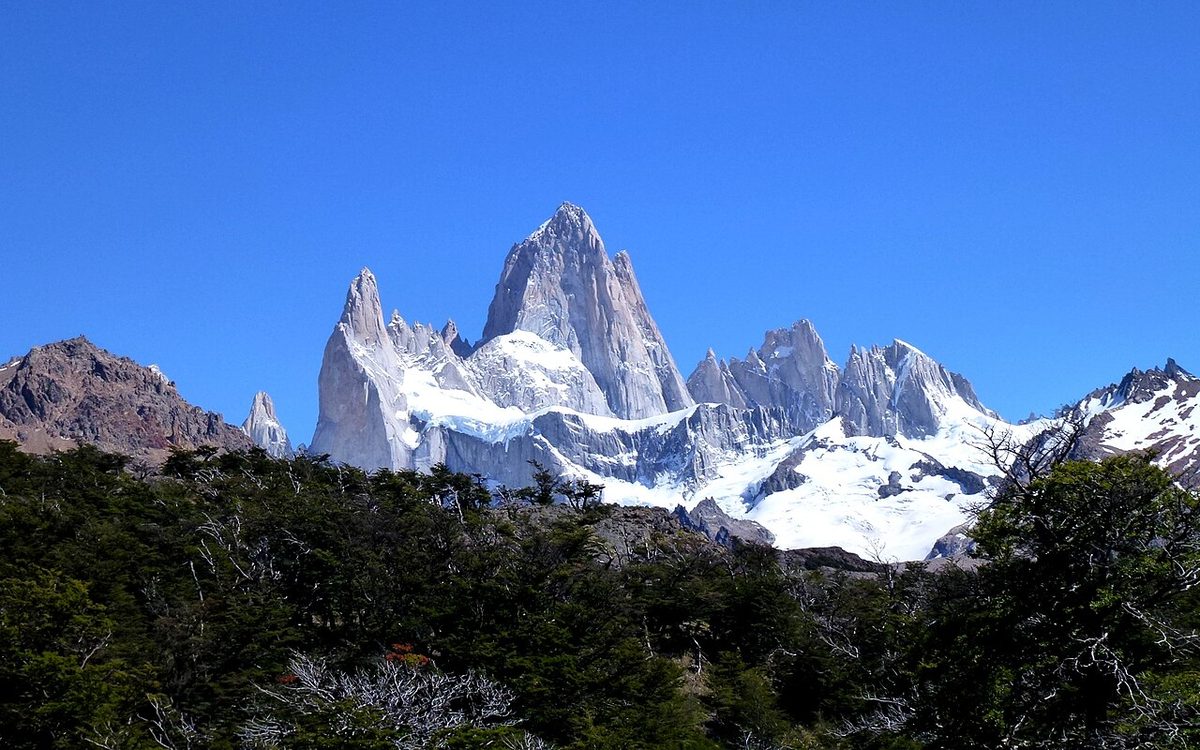
Hiking in Patagonia Without a Guide: Where It Works and Where It Does Not
Hiking Patagonia without guide rules, park by park and month by month for 2026: what is legally mandatory, what is optional, and what you actually save.
By Patagonia Tourism Guide · First published 7 Oct 2026 · Updated 20 Nov 2026
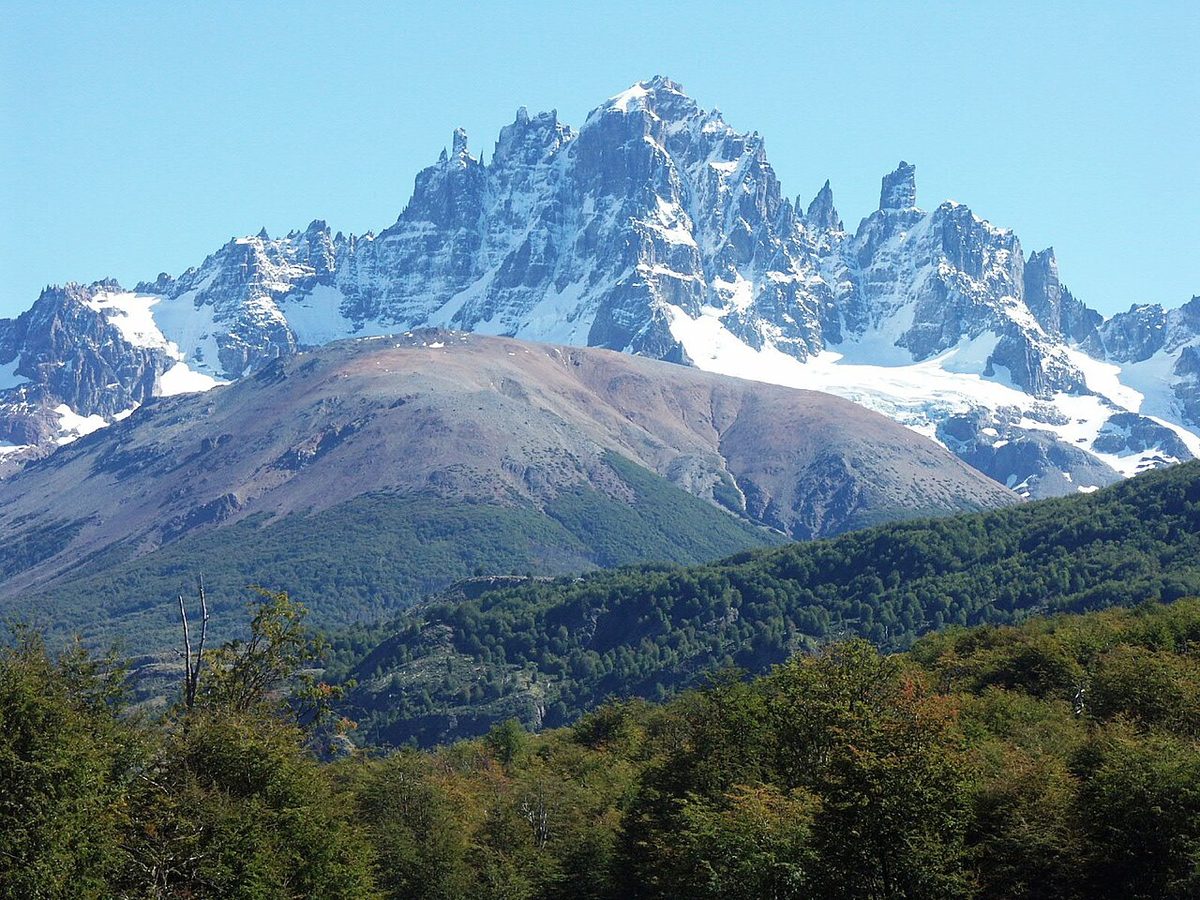
0 — 2 km Fig. 1 · The Cerro Castillo massif in Chilean Patagonia, whose mountain trails are guide-only by resolution and self-guided only by seasonal exception · The Cerro Castillo massif in Chilean Patagonia, whose mountain trails are guide-only by resolution and self-guided only by seasonal exception. Photo: Roberto Araya Barckhahn / CC BY-SA 3.0 via Wikimedia Commons
This article contains advertising. Booking links on this site can be turned into paid links automatically by our partner Travelpayouts: if you book through one, we earn a commission from the provider, at no extra cost to you. It never affects what we recommend. Affiliate disclosure
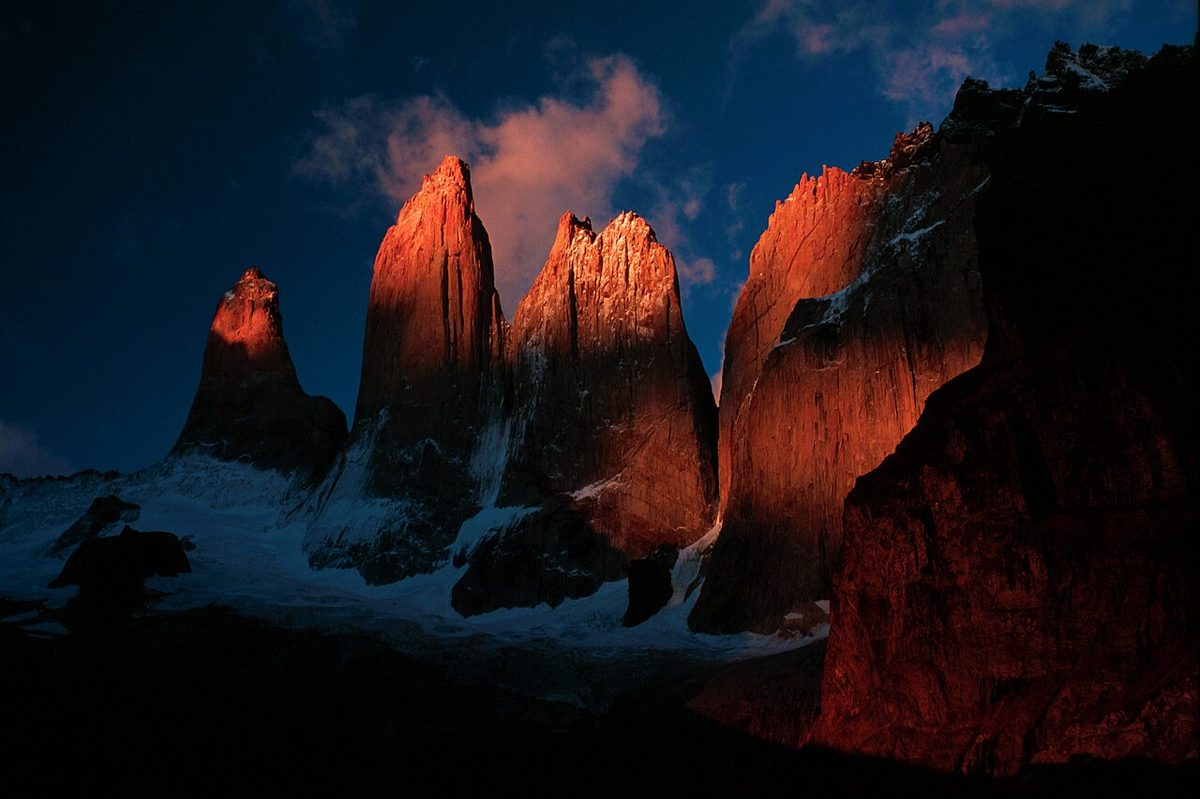
In August 2026, a hiker at Laguna Amarga with a valid park pass and no guide would have been turned back from the Base Torres trail. Turn up in February and nobody asks.
Hiking Patagonia without a guide is legal on almost every trail in both countries, and hiking Patagonia without guide mandates is the normal condition rather than the exception. The mandates attach to named routes: five year-round restricted trails in Torres del Paine, the three mountain trails in Parque Nacional Cerro Castillo, Cerro Alto El Petiso in Los Alerces, and every glacier ice trek anywhere in Patagonia. The 2026 accredited-guide rule on the W circuit and the Base Torres trail ran from 27 April to 15 September and ended on 16 September, though microcrampons and trekking poles remain required. Everything else you may legally walk alone.
If you have been quoted USD 2,000 to 4,000 for a trek, this is the matrix nobody publishes.
Two framing rules dissolve most of the confusion.
A guide mandate in Patagonia almost always attaches to a named route, not to a park. That is the commonest error in circulation. You will read that “Torres del Paine requires guides during the winter months, April to October.” Wrong in both directions: the 2026 window ran from 27 April to 15 September, and it covered two named routes, not the park.
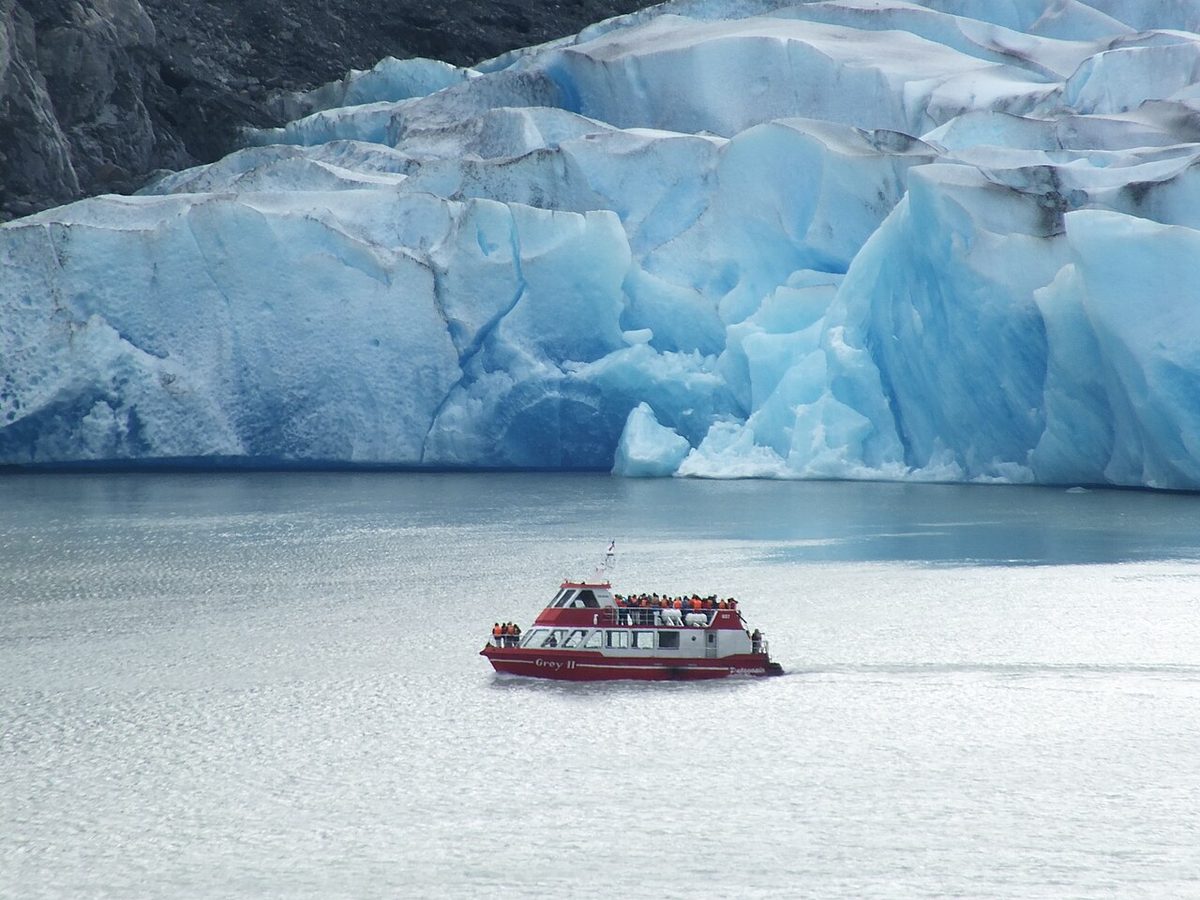
Glacier ice is the one genuinely universal rule. If your boots will touch glacier ice — Perito Moreno, Grey, Exploradores — it is a guided commercial activity everywhere in Patagonia. No self-guided option, no grey area. Wider context sits in our hiking, camping, gear and safety pillar.
What changed in the last twelve months
Patagonia has spent a year arguing with itself about guides. Follow the argument and the rules stop looking arbitrary.
Date
What happened
1 Sept 2025
CONAF lifts the certified-guide requirement for the Base Torres viewpoint, announced 29 August. Mandatory poles and crampons stay “until further notice”
17 Nov 2025
Five hikers die of hypothermia between Campamento Los Perros and the top of John Gardner Pass (~1,200 m) on the Circuito Macizo Paine, the “O”: two Mexicans, two Germans, a British woman. Bodies located 18 November by survivors and other hikers; recovery by air 20–22 November. CONAF closes the O and imposes a mandatory guide
5 Dec 2025
CONAF announces reopening, operable 9 December, under a traceability package: 100 people per day maximum, one-way circulation, compulsory registration at Guardería Coirón, rangers in Dickson, Perros and Paso
1 Jan 2026
CONAF lifts the O guide mandate — always described as transitory — for a Protocolo de Operación de Senderos de Montaña: an early-warning system with predefined technical thresholds for wind, precipitation and temperature, coordinated with SENAPRED and the Dirección Meteorológica de Chile. Self-guided returns, subject to “seguridad, registro y reserva”
27 Apr 2026
Winter regime starts four days early on the stated basis of “las variables condiciones climáticas”. Specialised guide mandatory on the W circuit and the Base Torres trail to 15 September 2026; the requirement ends on 16 September, with microcrampons and trekking poles still required
29 May 2026
Cerro Castillo’s Estero Parada, self-guided since October 2024, loses self-guided access
1 Jun – 31 Jul 2026
The W circuit closes outright, exceptional authorisations aside
Swipe to see all columns
Table 1
The pattern matters more than the whiplash. CONAF has effectively decided that a guide is a proxy for weather judgement, and is replacing the proxy with instruments. Two honest limits: CONAF publishes no resolution number for any 2026 Torres del Paine measure, and it does not disclose the threshold values. You cannot look up the wind speed at which the trail shuts.
One correction on the deaths of 17 November 2025, because it circulates wrongly. Chile’s Servicio Médico Legal found the five died of “una condición crítica de exposición prolongada a frío extremo” — with no injuries attributable to serious falls or direct impacts. All five were hypothermia. The forecast that morning was light rain and wind to 100 km/h; gusts were reported at 193 km/h, though no official measurement has been published and no instrument or agency identified as its source. The alert was delayed because there is no cell coverage there: someone had to walk until they found signal. See hiking in Patagonian wind.
Where a guide is legally mandatory
This is the table to screenshot. Every row comes from an official source.
Where
When
What is required
Source
Torres del Paine — Base Torres
27 Apr – 15 Sep 2026; ended 16 Sep
Accredited specialised guide while the rule ran. Max entry 09:00. One guide per four trekkers. Microcrampons and trekking poles remain required
Same guide while the rule ran. Max entry 10:00. With the closure, the rule applied in May, August and the first half of September
CONAF 25 Apr 2026; park site
Torres del Paine — five restricted trails: Laguna Marco Antonio, Grey–Mirador Zapata, Valle Bader, Campamento Torres–Japonés, Laguna Amarga–Sarmiento
Year round
Guide accredited by both CONAF and the Municipalidad de Torres del Paine. Permits at Guardería Pingo, Guardería Italiano or Laguna Amarga
Permisos especiales 2026
Torres del Paine — Circuito Macizo Paine (O)
Closed until at least 31 Oct 2026; reopening depends on a park evaluation, so check the daily report. Guide not required in the open season since 1 Jan 2026
Self-guided permitted, subject to registration, reservations and the early-warning protocol
CONAF 5 Dec 2025, 5 Jan 2026
Glaciar Grey — ice trek
Oct 2026 – Apr 2027
Commercially guided only, from Grey Base Camp. Min age 14, CLP 265,000 pp, min 2 / max 20
bigfootpatagonia.com
Perito Moreno — ice trekking
Year round
APN: needs “grampones y guías especializados.” Minitrekking ages 8–65, USD 180; Big Ice ages 18–50, USD 280
APN; operator pages
PN Cerro Castillo — Laguna Castillo, Estero Parada, Las Horquetas
Guide-only at 30 Jul 2026. Closed May–Sept
Two are “cerrado por resolución, solo habilitado con guia certificado.” Estero Parada: guide plus regional-office authorisation since 29 May 2026
CONAF Cerro Castillo
PN Los Alerces — Cerro Alto El Petiso
Open season
Registration obligatory and an authorised trekking guide — the only APN trail in Patagonia with a standing guide mandate
APN Los Alerces
Parque Exploradores — ice trek
Open season
Guided-only; the viewpoint trails beside it are not
Park operator
Swipe to see all columns
Table 2
Winter guides must be Sernatur-registered and accredited by the Municipalidad de Torres del Paine, and enforcement runs at the guide, not just the hiker: “El ingreso será denegado a guías o prestadores que no cumplan con lo exigido por el reglamento o la Norma Chilena NCh 2985 Of2006.” Ratios come from the June 2026 regulation — one guide per four on trekking routes, one per ten on the easier senderismo grade. See booking Torres del Paine entry and Torres del Paine in winter.
Cerro Castillo: guide-only by default, self-guided by exception
Cerro Castillo is where the search results fall apart. Here are both readings.
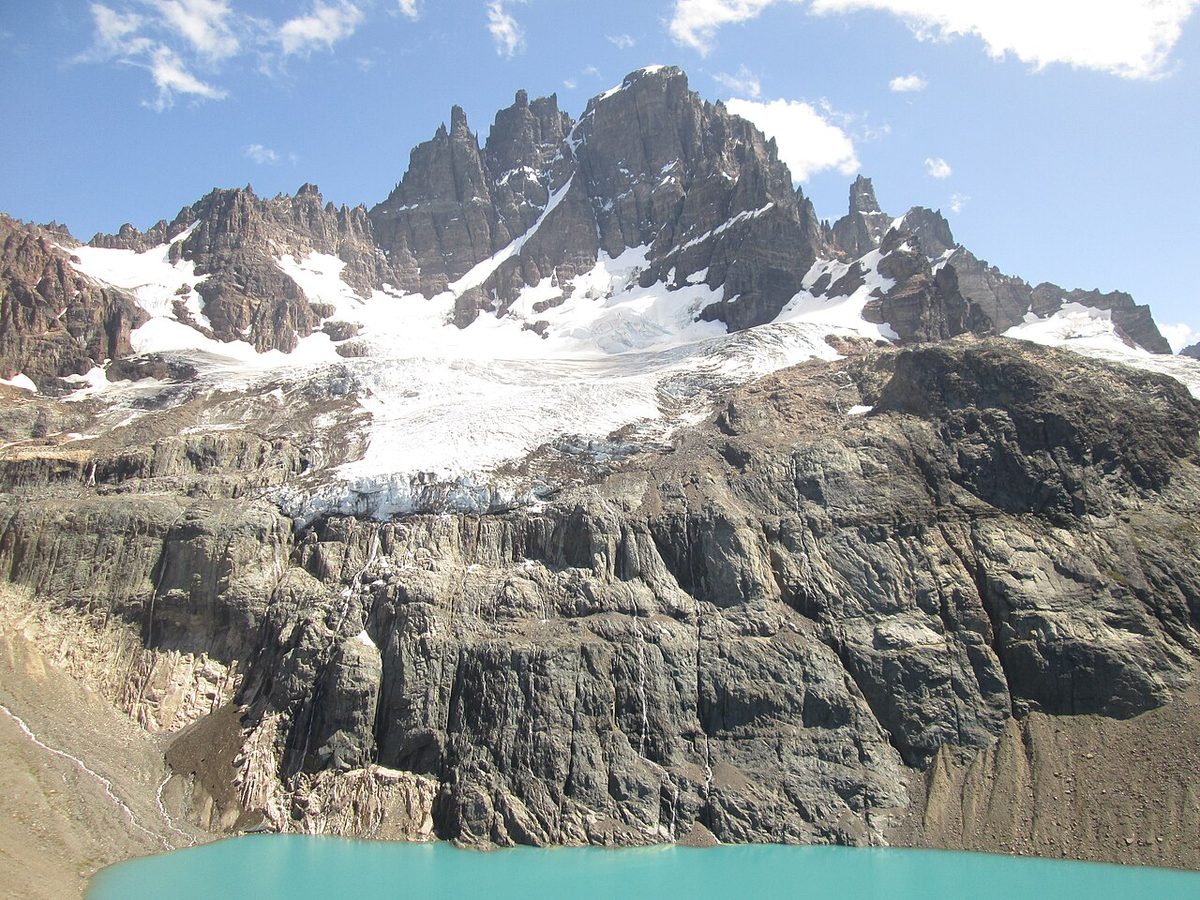
Reading one. CONAF’s park page says Sendero Laguna Castillo is “cerrado por resolución, solo habilitado con guia certificado” — closed by resolution, enabled only with a certified guide. Sendero por Horquetas carries identical wording. Sendero por Estero Parada is “cerrado para autoguiado desde el 29 de mayo de 2026, solo se podrá acceder con guía y previo trámite de autorización en oficina regional.” All three are marked closed May to September, with a December-to-April season.
Reading two. The park’s own pass portal sells one, two and three-day passes, states that self-guided access is permitted and guides are not mandatory, and tells visitors to check the Protocolo Invernal for May to October.
Both are accurate, and the history dissolves the contradiction. The guide-only resolution is the baseline legal state; self-guided access is an exception layered on top, granted season by season. Estero Parada became the park’s first self-guided trail on 17 October 2024; before that you needed a mountain guide or a signed responsibility declaration showing experience. For the 2025-26 high season Mirador Laguna opened and Estero Parada ran self-guided. Then on 29 May 2026 it lost that status again.
The answer dated 30 July 2026: all three mountain trails are guide-only, and the only walk here you can do self-guided today is Sendero Laguna Chiguay — 2.5 km, about two hours, easy, year round.
Fig. 2 · Laguna Cerro Castillo sits below the peak; CONAF lists the trail to it as closed by resolution, open only with a certified guide. Photo: Manxuc / CC BY-SA 4.0 via Wikimedia Commons
Where hiking without a guide is genuinely easy
Most Patagonian hiking is self-guided by default, and hedging that serves operators, not you.
El Chaltén is the strongest self-guided hiking town in South America. APN’s wording for the Zona Norte of Los Glaciares is that hiking and trekking “se pueden realizar de manera autónoma o con guía.” Five headline day hikes start on foot from the village and none needs a guide. What you do need is the trail ticket: ARS 50,000 a day for non-resident foreigners under APN tariffs in force since 1 June 2026, sold online only and by card only — no cash in Zona Norte. Registration at the Centro de Informes Ceferino Fonzo is obligatory for climbing, remote-area trekking, and for the trails themselves from May to September. See the El Chaltén and Fitz Roy hiking guide.
The W Trek in summer. No guide required October to April. Independent accounts converge on signage that makes leaving the path hard, and on never being alone. Navigation is not the difficulty of the W. Booking is.
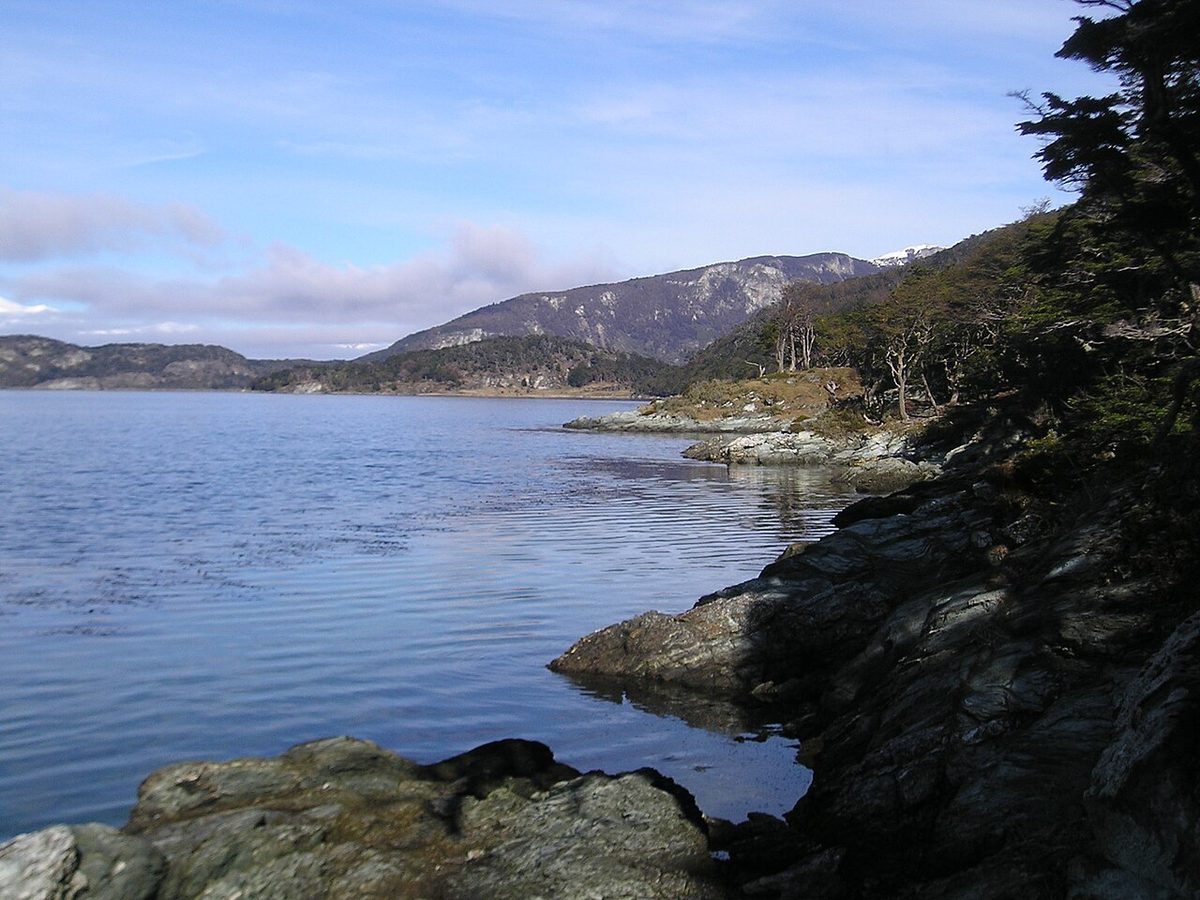
Tierra del Fuego National Park. APN publishes a distance, duration and BAJA/MEDIA/ALTA grade for every trail, all walked independently, and Senda Costera — MEDIA, 8 km, about four hours — is the best independent half-day here. Only two are gated: Cerro Guanaco (ALTA, max entry 12:30) and Laguna del Caminante (ALTA, 24.4 km), which APN expects to be walked by people with mountain training and experience — a competence expectation, not a guide mandate. Registration for those two appears in provincial tourism material but not on APN’s own senderos page, so treat it as prudent and confirm locally. See how to reach the park from Ushuaia.
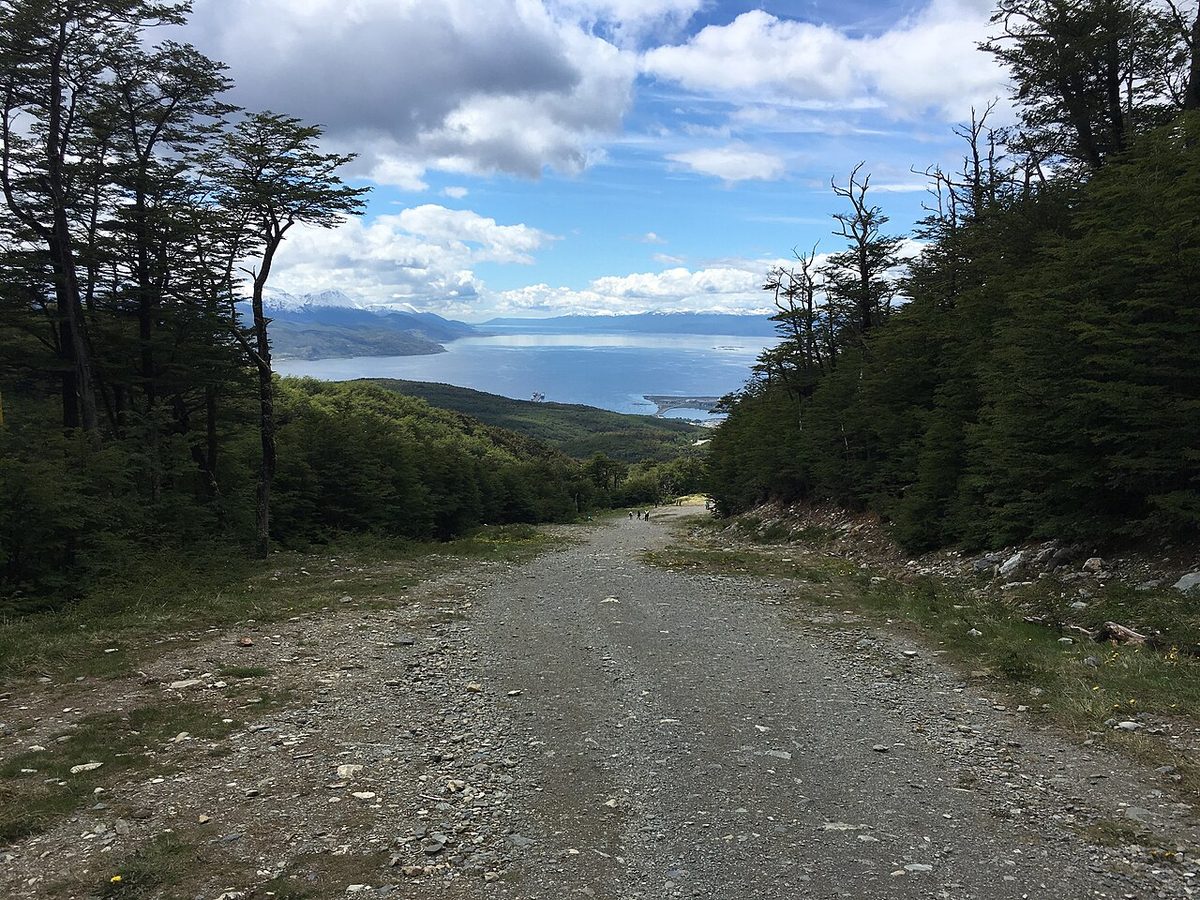
Needing nothing but a ticket: the Perito Moreno boardwalks, Queulat, Laguna Esmeralda and Glaciar Martial above Ushuaia.
Fig. 3 · The Senda Costera in Tierra del Fuego National Park is an 8 km, MEDIA-graded half-day walk that needs no guide. Photo: CC BY-SA 2.5 via Wikimedia Commons
How Argentina’s free registration replaces the guide
Here is the structural point behind all of it. Chile regulates mountain access with guides and gates. Argentina regulates it with registers. Same objective, different instrument, and the Argentine one is free.
Park
Requirement (all free)
Mechanism
Los Glaciares, Zona Norte (El Chaltén)
“El registro… es obligatorio tanto para escalada y trekking en áreas remotas como para recorrer los senderos (de mayo a septiembre).” Rangers brief conditions and post the daily pass wind forecast
Centro de Informes Ceferino Fonzo, or online
Nahuel Huapi (Bariloche)
“Completar el registro de trekking, es obligatorio y gratuito.” Three registers — trekking, escalada, esquí de travesía — and you must “respetar el itinerario declarado”
Park website forms
Tierra del Fuego
Registration for the two ALTA trails per provincial material; online camping registration mandatory since 20 Nov 2023
Online
Los Alerces
Registration at visitor centres for Cerro Alto El Petiso, Laguna Escondida and Laguna del Toro
Visitor centre
Swipe to see all columns
Table 3
The mechanism changes how you should use it. Registration is a search-and-rescue trigger, not a permission slip: it captures a declared itinerary so an evacuation can be organised against something. The Huemul Circuit shows the full loop — you email [email protected] on your return, and failing to confirm within 48 hours dispatches a search. That is a guide’s safety function, unbundled and handed to you for nothing.
Which makes the corollary as important as the rule. The register only works if you use it honestly. Declaring Laguna Torre and walking the Huemul is worse than not registering, because rescuers will search the wrong valley.
Fig. 4 · The Glaciar Martial circuits above Ushuaia in Argentine Patagonia are among many walks needing no guide and no permit beyond an entry ticket. Photo: Fredlyfish4 / CC BY-SA 4.0 via Wikimedia Commons
Where self-guided is legal but a bad idea
The Huemul Circuit, El Chaltén — 69.27 km over four days, high point 1,436 m — is the clearest case of allowed diverging from advisable. APN permits self-guided walking and the permit is free. But:
Two tyrolean traverses, the Río Túnel on day two and Río Túnel Inferior on day four, need real hardware: harness, two locking carabiners with one steel, because aluminium scars under steel-cable friction, a pulley rated for the cable, a sling for the backup anchor, and about 20 m of thin rope to haul the pack separately from your body. El Chaltén rentals sell out in January and February. Whether rangers still physically inspect that kit is contested — one 2026 field account says the in-person check was dropped for a self-submitted online permit, while other guides still describe a check — so arrive equipped either way. See renting gear instead of flying it down.
Paso del Viento at 1,550 m sees winds routinely 100–160 km/h, enough to stop a loaded hiker, and Paso Huemul behaves the same.
The day-three descent to Lago Viedma drops 1,342 m on loose scree, the route’s commonest injury point. And queues at the day-two tyrolean run one to three hours in peak season, which is how people end up on an exposed col in failing light.
Rescue is the volunteer Comisión de Auxilio de El Chaltén, with a 6-to-24-hour response.
The best mitigation is one few readers are offered: hire a guide for day two only. Several El Chaltén guides will take a party through the Río Túnel tyrolean and over Paso del Viento as a single day, removing the most technical section without buying a four-day trip.
The O in shoulder season. Legal self-guided once the park reopens it. But the five deaths came in November too, on Los Perros to John Gardner Pass, to a party already under way, with no cell coverage. Shoulder-season O without a satellite communicator is the highest-consequence legal decision in Patagonian hiking.
Above treeline anywhere, May to September. APN on the El Chaltén trails: “las sendas presentan hielo, barro y nieve… Es obligatorio el uso de bastones y crampones.” A mandate, not advice — a gear law without a guide law. Kit implications in the Patagonia packing list and what to wear in Patagonia.
The W Trek without a guide
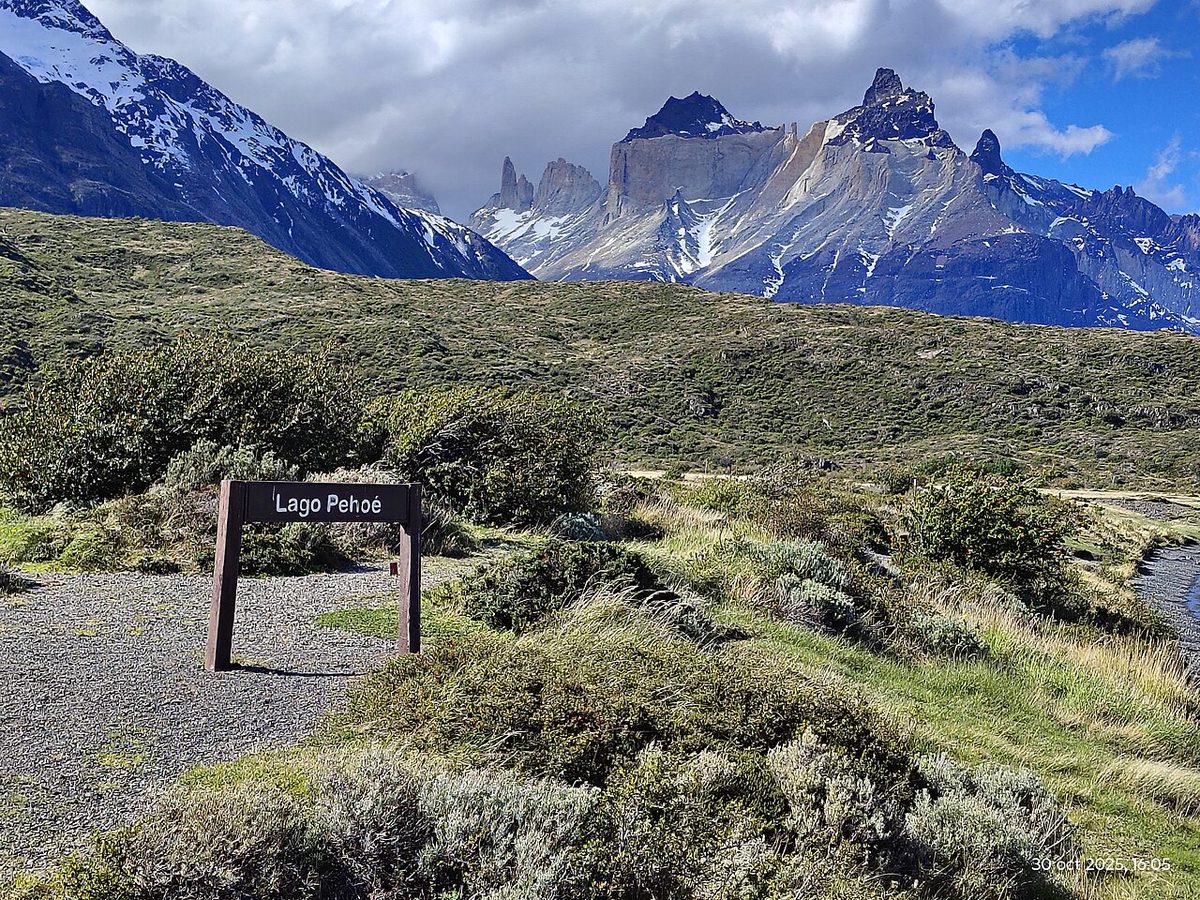
The fact that reframes the whole trek: accommodation reservations are legally mandatory, and the park says so. From the official site: “Para realizar los senderos de montaña W y el Circuito Macizo Paine deberá realizar sus reservas de alojamiento de manera obligatoria” — and “sin ellas no podrá ingresar al área de montaña.” Camping Serrano and Camping Pehoé are the roadside exceptions. Park passes must be bought at least 24 hours ahead.
So the W is not gated by a guide. It is gated by a booking system with two owners and no shared inventory: Vértice Patagonia holds Paine Grande, Grey, Dickson and Los Perros; Las Torres Patagonia holds Central, Chileno, Cuernos, Francés and Serón. Reservations for the October 2026 – April 2027 season opened roughly April to June 2026, Las Torres usually first, in batches by sector. December to February sells out close to a year out, but inventory frees up again in September and October when agencies drop bulk holds — so if December looked full in March, look again in September. See how far ahead to book Patagonia and W Trek refugios.
What actually goes wrong for independent walkers:
Split-operator booking. Four nights across two systems and one gap in the middle. The gap is the trip.
Not pre-booking the return bus to Puerto Natales — one documented consequence was an eight-hour wait at the end of the trek.
Catamaran timing. The last Pudeto–Paine Grande sailing, not your legs, is the real deadline on Valle Francés and Mirador Grey.
Downloading the QR pass inside the park. There is no reliable signal; download it in Puerto Natales.
Booking a “W” for June or July 2026 — a trek that does not legally exist in those months.
Short version: check that it is open before anything else. The Circuito Macizo Paine was closed for winter until at least 31 October 2026, and reopening depends on a park weather and safety evaluation, so read the park’s daily report before you travel. For the 2026-27 season the guide requirement was lifted on 1 January 2026 and self-guided walking is permitted, conditional on the park’s registration, reservation and safety requirements under the new protocol.
What is genuinely uncertain is the operating shape. When CONAF reopened the O on 9 December 2025 it did so under a package announced on 5 December: 100 people per day maximum, one-way circulation and compulsory registration at Guardería Coirón. Whether those measures carry into 2026-27 has not been confirmed — the January 2026 protocol release does not restate them and they do not appear among the park’s current notices. Plan for registration, mandatory reservations and a possible daily cap, and check with CONAF Magallanes before booking anything non-refundable — if a cap of that order returns, the back side of the O becomes the scarcest trekking inventory in Patagonia. The O Circuit guide tracks it.
Fig. 5 · The Paine massif seen on the Circuito Macizo Paine, the O Circuit, where CONAF lifted the mandatory guide on 1 January 2026. Photo: Manolitolaserena / CC BY-SA 4.0 via Wikimedia Commons
What a guide actually buys you
The case for a guide is real, and it is mostly not showing you the way.
Weather judgement is the actual product. CONAF’s own behaviour proves it: when it dropped the mandatory guide on the O, it replaced it with a mandatory meteorological threshold system. What you buy is a go/no-go decision, and on the Huemul passes or at John Gardner Pass that is the difference between a hard day and a rescue. After that come logistics — a self-guided W chains a bus, a shuttle, a catamaran and a return bus, each able to break the chain, and on the five restricted trails the guide effectively is the permit — and escalation, because a guide has a radio, a protocol and a relationship with the guardería where an independent hiker has a volunteer commission and a 6-to-24-hour window.
And the middle option most readers have never been shown: the supported self-guided package. One Puerto Natales operator’s five-day self-guided W bundles transport, park entry, four nights, the catamaran, all meals, an offline navigation app, a day-zero briefing on expected weather and required gear, and an assistance centre reachable on the trail. For a nervous first-timer who does not want someone walking beside them, that is usually the honest answer.
Hiking Patagonia without guide fees: the same W Trek at four tiers
The standard five-day W, priced four ways. Figures are in the currency quoted, and all of them move.
Tier
What you get
Per person
1. Fully independent, camping, own food
Bus, park entry, catamaran, campsites
CLP 222,500 (~USD 236) core, plus roughly CLP 10,000 (~USD 11) of food bought in Puerto Natales
2. Independent, mixed camping and refugio
Adds refugio nights and paid meals
~USD 600–900
3. Supported self-guided package
Transport, shuttle, entry, four nights, catamaran, all meals, offline maps, briefing, assistance centre
USD 1,850–2,100 (camping solo 2,100; camping two-plus 1,850; refuge 1,950)
4. Fully guided
Guide, all logistics, full board, often porters
Advertised from USD 1,500, realistically USD 2,350–3,932
Swipe to see all columns
Table 4
Components, if you would rather build your own number. Park entry is the 2026 figure, camping and refugio full board are 2026-27 rates, the rest 2025-26 season, and increases are likely.
Torres del Paine entry 2026, foreign adult 18–59: CLP 32,400 daily / CLP 48,500 multi-day (two days or more, ten-day cap). Chilean adult CLP 9,400 / 14,200. Free for under-12s, Chilean over-60s and visitors with disabilities.
Catamaran Pudeto–Paine Grande around CLP 42,600 (~USD 45) one way, though other reports put it nearer USD 30; buses from Puerto Natales to the park CLP 18,000 each way; at 2026-27 rates, camping USD 11 at Grey and USD 13 at Paine Grande, and refugio full board USD 110 per person per day.
The honest bottom line: the guide is not the expensive part of a guided trek — the packaging is. Tier one to tier four is roughly a tenfold spread, and the biggest jump is from independent to any package, not from supported self-guided to fully guided. If your reason for hiring someone is nerves rather than law, tier three buys most of the reassurance. Workings in how much the W Trek costs, Patagonia park fees and how much cash to carry.
Language, solo hiking and group size
Spanish is a smaller obstacle than operator content implies and a larger one than blogs admit. Refugios and the trail towns run fine in English. Where it genuinely matters is the official layer: APN’s forms, CONAF’s notices and the Cerro Castillo resolutions are Spanish-only, every rule on this page was read in Spanish, and that is exactly why English-language advice about guide requirements goes stale. Learn the six words that matter at a guardería: sendero, cerrado, guía, registro, clima, viento.
On solo hiking: no park in Patagonia bans it. But both Argentine administrations argue against it in writing, and the reasoning is the useful part. Los Glaciares: “Salí siempre acompañado/a. Si tenés algún inconveniente tu acompañante puede ir a buscar ayuda.” The companion exists to go and fetch help, because there is no signal.
Two people is the meaningful threshold, not four. One to two is a rescue capability; two to six is comfort. Note the money too: a supported self-guided W costs a solo walker roughly USD 250 more than the same trip in a party of two. More in Patagonia solo travel and insuring a Patagonia trip.
Winter rules, and why they are stricter
The winter rules are easier to remember once you see the logic behind them.
Daylight collapses, from roughly 17 usable hours in high summer to about eight. That is why Base Torres has a 09:00 entry cutoff: a full-day hike no longer fits the day.
The trail surface changes category, and both countries answer with gear mandates rather than guide mandates. CONAF’s winter list is bastones, micro crampones o crampones, linterna, lentes, guantes, ropa de abrigo e impermeable, polainas; Los Glaciares makes poles and crampons obligatory May to September.
Rescue capacity shrinks while services close. The Grey and Pehoé catamaran refuge stops are unavailable during the June–July W closure, so a winter itinerary can be legal and still logistically impossible.
Weather stops being unpleasant and becomes non-negotiable. The documented failure mode is a frontal system with viento blanco — whiteout, no visibility — and it happened in November, which is why 2026’s winter began four days early.
The winter rule to get right: in 2026 the guide requirement attached to the W circuit and the Base Torres trail until it ended on 16 September, with Mirador Ferrier and Portería Sarmiento–Laguna Amarga additionally listed in the June 2026 regulation. Lower-difficulty front-country sectors stay self-guided on fixed clocks — Puente Weber–Laguna Verde in by 10:00, Mirador Cóndor by 13:00, Playa Grey and Mirador Cuernos by 14:00, Salto Grande by 15:00.
One last thing about dates. The regulation gives its own window as “Periodo de aplicación referencial: 1 de mayo al 30 de agosto” — referencial, indicative. CONAF sets operative dates each year by notice, which is how 2026 came to start on 27 April. So never trust an undated “winter season” range, this one included. Seasonal trade-offs are in weather and crowds by month.
The decision table
Your plan, and the month
Verdict
El Chaltén day hikes, Oct–Apr
Self-guided. Ticket online, card only
El Chaltén day hikes, May–Sept
Self-guided, but register — poles and crampons obligatory
Torres del Paine W, Oct–Apr
Self-guided. Book beds first — no reservation, no mountain access
Torres del Paine W, May, Aug and 1–15 Sep 2026
Specialised guide was mandatory, in by 10:00; the rule ended on 16 Sep
Torres del Paine W, Jun–Jul 2026
Not available, bar exceptional authorisation via an accredited operator
Base Torres, 27 Apr – 15 Sep 2026
Guide was mandatory, in by 09:00; the rule ended on 16 Sep
O Circuit, Nov–Apr
Self-guided, legal since 1 Jan 2026, once the park reopens it. Check the daily report. Expect registration and reservations; a cap is possible
O Circuit, May–Oct 2026
Closed until at least 31 Oct 2026; reopening depends on a park evaluation
Any glacier ice trek
Guided commercial activity only. No exceptions
Cerro Castillo mountain trails, Dec–Apr
Check the portal and email the park — self-guided is a seasonal exception
Cerro Castillo mountain trails, May–Sept
Guide only. Laguna Chiguay is the one self-guided walk
Tierra del Fuego trails
Self-guided; Cerro Guanaco needs registering and a 12:30 entry
Bariloche day hikes and refugios
Self-guided. Register first — free and mandatory
Huemul Circuit, Nov–Mar
Legal, but only with tyrolean kit and wind discipline. Consider a guide for day two
Almost never. The mandatory list is short: five year-round restricted trails in Torres del Paine, Cerro Castillo’s three mountain trails, Cerro Alto El Petiso in Los Alerces, and every glacier ice trek. The W and Base Torres rule, in force from 27 April, ended on 16 September 2026. Everything else you may legally walk alone.
Can you do the W Trek without a guide?
Yes. The 2026 guide requirement ran from 27 April to 15 September and ended on 16 September, and the June and July closure has passed. You still need microcrampons and trekking poles. Mandatory all year: confirmed accommodation, without which the park will not admit you to the mountain sector.
Can you do the O Circuit without a guide?
Yes, since 1 January 2026, when CONAF replaced the post-tragedy guide rule with an early-warning protocol. But the O was closed until at least 31 October 2026 and reopening hangs on a park evaluation, so see the park’s daily report before you plan around it. Expect registration and mandatory reservations; the December 2025 cap may or may not return.
Do you need a guide for Torres del Paine in winter?
Only on named routes. In 2026 that meant the W circuit and Base Torres from 27 April to 15 September, plus Mirador Ferrier and Portería Sarmiento–Laguna Amarga in the written regulation; the W and Base Torres requirement ended on 16 September. The lower-difficulty front-country sectors stay self-guided on fixed times. “You need a guide in winter” is wrong, and so is any version spanning April to October.
Do I need a permit to hike in Patagonia without a guide?
Usually a ticket or a register, not a guide. Paid tickets apply in El Chaltén’s Zona Norte, Torres del Paine, Queulat and Cerro Castillo; free compulsory registration in Nahuel Huapi, El Chaltén and Los Alerces.
Final thoughts
The useful answer here is not a temperament test. It is a date and a route name.
Most of Patagonia is yours to walk alone, and the parks say so in their own words — APN’s “de manera autónoma o con guía” is about as clear as an agency gets. Where a guide is genuinely required, it is because a named route in a named month was judged to need one, and those judgements changed four times in twelve months.
So do two things. Check your route for your dates on the park’s own site in the week you travel — not on a blog, this one included. And be honest about which product you are buying if you hire someone: weather judgement at John Gardner Pass or on the Huemul passes is money well spent, while reassurance about finding the W was given to you free, in the form of signposts.
Laguna Cerro Castillo below the peak, reached by a trail CONAF lists as closed by resolution and open only with a certified guide — Manxuc / CC BY-SA 4.0 via Wikimedia Commons
The Senda Costera in Tierra del Fuego National Park, an 8 km MEDIA-graded trail and the best half-day walk in Patagonia to do without a guide — CC BY-SA 2.5 via Wikimedia Commons
The Glaciar Martial circuits above Ushuaia in Argentine Patagonia, among the many walks that need no guide and no permit beyond an entry ticket — Fredlyfish4 / CC BY-SA 4.0 via Wikimedia Commons