Best Things to Do in Ushuaia: National Park, Beagle Channel and City Sights
The best things to do in Ushuaia, grouped by type: Beagle Channel, the national park, penguins, hikes, winter snow and king crab, with honest advice.
By Patagonia Tourism Guide · First published 24 Aug 2026 · Updated 1 Aug 2026
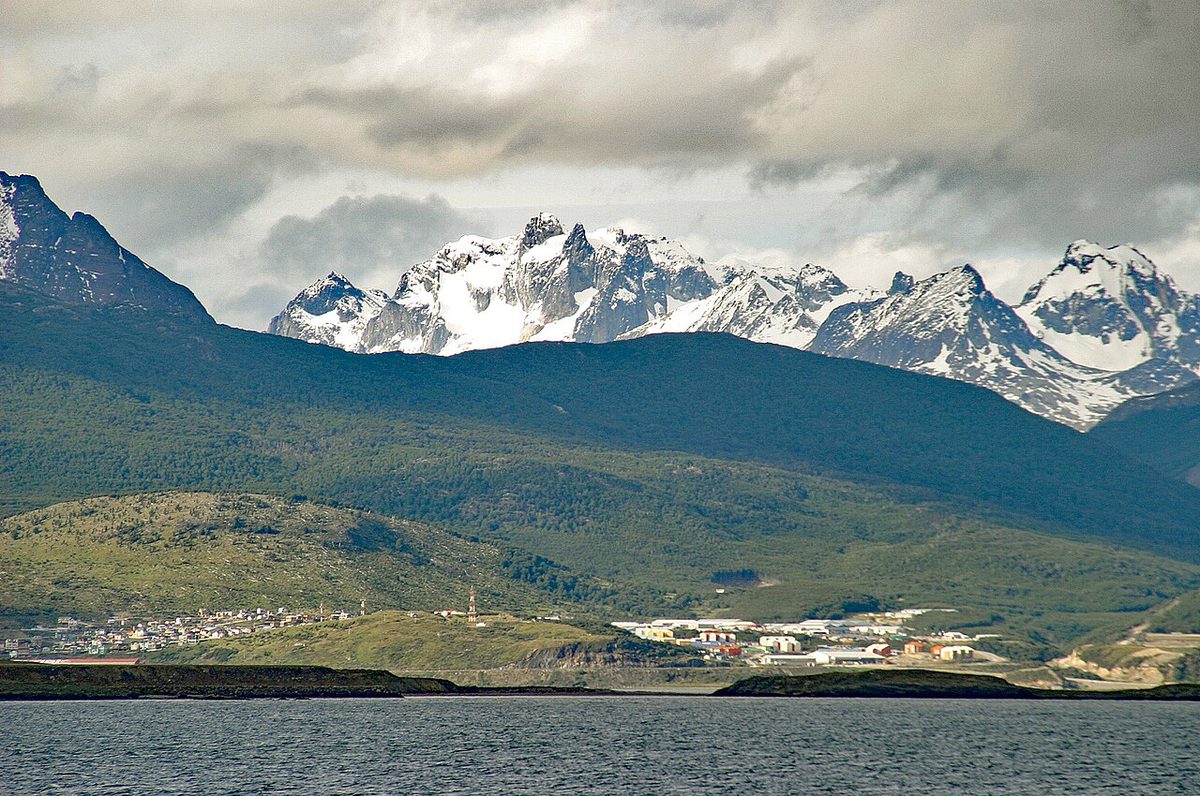
0 — 2 km Fig. 1 · Ushuaia city on the Beagle Channel with the Fuegian Andes behind, the base for the best things to do in Ushuaia · Photo: W. Bulach / CC BY-SA 4.0 via Wikimedia Commons
I have watched plenty of people arrive in Ushuaia with a list of twenty bullet points and a single rainy day, then try to do all of it at once. It rarely ends well.
The skill here is not collecting attractions. It is matching the right activity to the weather you got, the season you came in, and the energy left in your group after a long flight to the end of the world.
The best things to do in Ushuaia are a Beagle Channel cruise past Les Eclaireurs Lighthouse, a day in Tierra del Fuego National Park, a penguin trip to Martillo Island, the Laguna Esmeralda or Martial Glacier hike, king crab in town or out at Puerto Almanza, and in winter, snow at Cerro Castor. Everything else fills in around those.
This guide is for anyone who has decided to come and now wants to plan the actual days, whether you are a first-timer, a hiker, a wildlife traveler, or a family. If you are still deciding whether the far south belongs in your trip at all, start with the Ushuaia and Tierra del Fuego guide, the pillar this article hangs from. To slot these into a day-by-day plan, use the breakdown of a three-day visit. For dates, read Best Time to Visit Patagonia.
Things to Do in Ushuaia at a Glance
Here is the whole menu in one scannable table. “Effort” is my honest read, and seasons are the broad windows, not promises. Times assume you are starting from town.
Thing to do
Type
Effort / time
Best season
Beagle Channel cruise
Water / wildlife
Easy / half day
All year
Penguins at Martillo Island
Wildlife
Easy / full day
Oct–Apr
Tierra del Fuego National Park
Nature
Easy–moderate / half to full day
All year (trails best Nov–Apr)
End of the World Train
Scenic train
Easy / 2–3 hrs
All year
Laguna Esmeralda hike
Hike
Moderate / half day
Nov–Apr
Martial Glacier
Short hike / viewpoint
Easy–moderate / 2–4 hrs
All year (snow in winter)
Cerro Castor and snow
Winter sports
Easy–hard / full day
Jun–Sep
Maritime & Prison Museum
Museum
Easy / 2–3 hrs
All year
Waterfront + San Martin street
Town
Easy / 1–2 hrs
All year
King crab in town
Food
Easy / a meal
All year
Puerto Almanza king crab
Food / coast trip
Easy / half day
All year
Estancia Harberton
History / wildlife
Easy / full day
Oct–Apr
Antarctica expedition
Cruise
Major / 7–14 days
Nov–Mar
Swipe to see all columns
Table 1
If you only do one thing, take a Beagle Channel cruise. If you have one full day, pair a national park morning with a channel cruise in the afternoon. Everything after that is about your interests and the sky.
Water and Wildlife: the Beagle Channel, Penguins and the Lighthouse
If Ushuaia has a signature experience, it is the water. The city sits on the Beagle Channel with mountains rising straight up behind it, and the way you finally understand the place is by getting out onto the cold water and looking back.
The Beagle Channel cruise
This is the classic Ushuaia activity, and for once the popular choice is the right one. The channel, known as Onashaga in the Yaghan language, can be explored by catamaran, yacht, sailboat, or even kayak. A typical short cruise leaves from the port, threads past small islands crowded with cormorants and sea lions, and reaches Les Eclaireurs Lighthouse before turning back.
A half-day cruise is the best first option for most people. It pairs neatly with a city morning or a museum, it works even on a two-night stay, and it is gentle enough for kids and grandparents. Choose a longer or penguin-focused trip only if wildlife is the whole reason you came.
One honest tip: ask about boat size and route before you book. A big catamaran is steady and comfortable. A small rigid inflatable gets you closer to the wildlife but is colder and bouncier. Bring a hat and gloves even in January. The deck wind off that water is no joke.
Les Eclaireurs is not the real End of the World Lighthouse
This one trips up almost everyone, so let me be blunt.
The pretty red-and-white lighthouse on nearly every Ushuaia postcard is Les Eclaireurs, about 20 km from the city. It is genuinely worth seeing. But it is not the “End of the World Lighthouse” from the Jules Verne legend. That one sits on Isla de los Estados, more than 200 km away, and no normal half-day cruise goes anywhere near it. If a tour promises the famous lighthouse, it almost certainly means Les Eclaireurs. Now you know, and you will not feel short-changed.
Penguins at Martillo Island
For a lot of travelers, this is the highlight of the whole trip. Martillo Island, about 90 km from Ushuaia, is the only penguin colony in Tierra del Fuego. Between roughly October and April you can see Magellanic penguins and a smaller number of Gentoo penguins, and once in a while a stray King penguin shows up to steal the show.
Here is the catch, and it matters: not every “penguin tour” lets you walk among them. Some boats view the colony from the water. Others sail from Puerto Almanza or transfer you to Estancia Harberton first, and only one operator with controlled access actually lands you on the island for a guided walk. Read the fine print on landing rights before you pay, because the experiences are very different.
If penguins are a top priority, this trip is worth the time and money. If you mainly want a taste of the channel, a standard cruise is plenty. For the bigger picture on where and when to see southern wildlife, see the guide to spotting Patagonian wildlife and what each month actually feels like.
The other core experience is the national park, and it is close enough that you can be walking a coastal trail forty minutes after leaving your hotel.
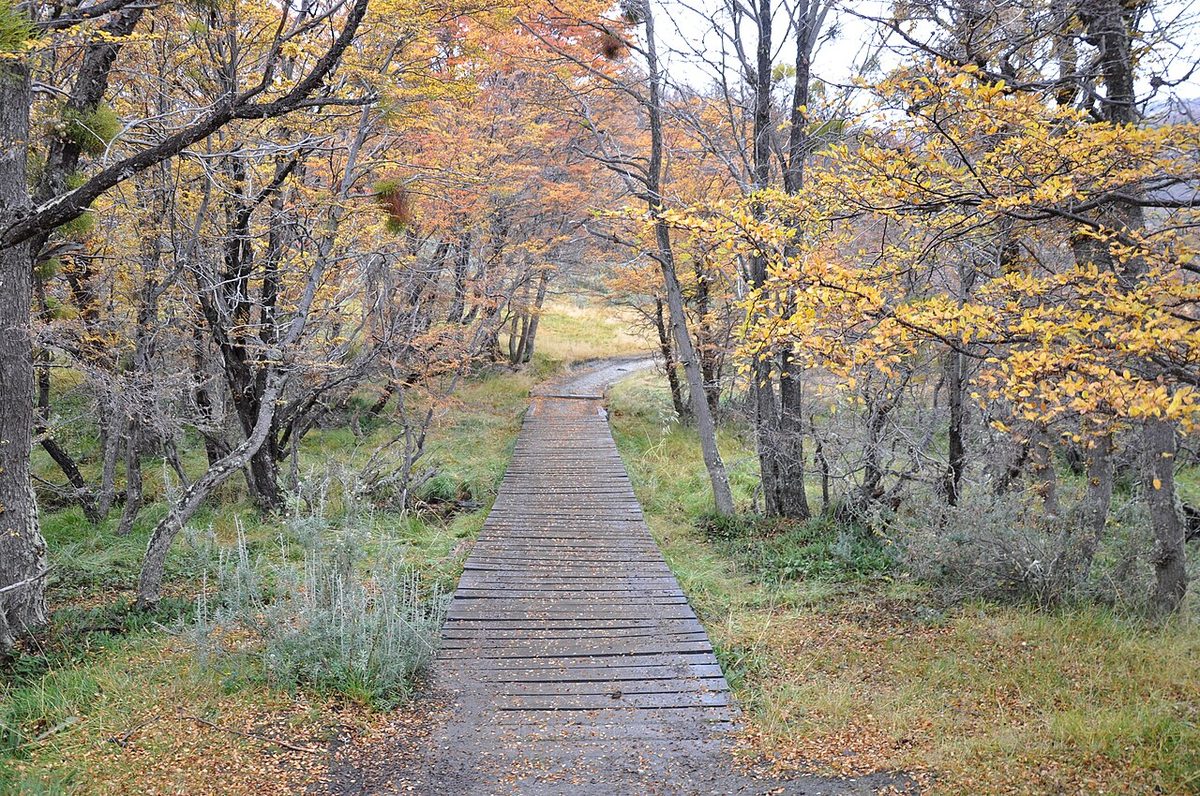
This is the only Argentine national park that combines marine, forest, and mountain environments. It protects 68,909 hectares of lenga forest, peat bog, glacial lakes, and the point where Ruta 3 finally runs out of country at Lapataia Bay. There are around 40 km of trails at a range of difficulties, plus boardwalks, viewpoints, and the famous wooden sign marking the end of the road.
Half day or full day in the park
A half day covers the greatest-hits version: Lapataia Bay, the end-of-Ruta-3 sign, a short boardwalk or two, and the Lago Roca (Acigami) viewpoint. A full day lets you actually hike. The Senda Costera is the classic walk, roughly 8 km along the shoreline over about four hours at a moderate pace. Fit hikers with a clear-weather day and time to register can take on Cerro Guanaco, a steep climb of around 900 metres for a huge view down the channel.
Do not go just for the sign. The sign is fun for a photo. The forest, the coast, and Lapataia are the actual reason to come.
The southernmost post office
Tucked in the park is a tiny wooden post office on stilts where you can buy a postcard and get it stamped from the world’s southernmost city. It is touristy, the line can be slow, and I love it anyway. If you are the kind of person who mails postcards, this is the one to send.
A guided tour, a rental car, a shuttle, or the End of the World Train will all get you in. I unpack the trails, fees, and how to visit in the Tierra del Fuego National Park guide. One planning note: park entry fees change often, so confirm the current rate close to your trip and check whether your tour already includes it.
The End of the World Train
The Tren del Fin del Mundo is the world’s southernmost railway, and the history is real. It began around 1909 as a freight and prison line, the “Train of the Prisoners,” hauling timber that convicts had been forced to cut. It closed in 1952 and reopened in 1994 as a tourist ride. The restored section runs about 7 km into the edge of the park and takes roughly an hour and a half round trip.
Is it necessary? No. Is it lovely for the right traveler? Yes. Families, history buffs, and anyone who wants an easy, scenic park day will enjoy it. If you are a hiker on a tight schedule, I would skip it and spend the time on the Senda Costera instead.
Hiking Near Ushuaia: Laguna Esmeralda and Martial Glacier
Here is a mix-up I see constantly: people assume all the good hiking is inside the national park. It is not. Two of the best walks sit outside it.
Laguna Esmeralda
This is the famous half-day hike, and deservedly so. It is about 9 km round trip, four to five hours, with a gentle 220 metres of climbing through lenga forest and peat bog to a glacial lake the colour of its name. The trailhead is around 18 km from town on Ruta 3.
The numbers say “moderate,” and for most reasonably fit people that is true. What catches everyone off guard is the mud. This is not a clean path to a turquoise lake; it is a boggy, often soggy trail, and shoulder season makes it worse. Wear shoes you do not mind ruining, stay on the path so you do not widen the damage, and check conditions before you go. Many people walk it independently in good weather, but a guide is the safer call in winter or when the forecast is grim.
Martial is the easy one to underrate. It sits less than ten minutes from town by car, with a mountain path climbing to views over the city, the channel, and the Fuegian Andes. Because it is so close, it fits the awkward edges of a trip perfectly. Land early on a clear day, drop your bags, and go up for your first real look at where you are.
Conditions change fast up there, so check the trail and snow situation, especially outside summer. In winter it becomes a snow walk rather than a hike, which is its own kind of good.
A summer trip and a winter trip to Ushuaia can feel like two different towns, and the winter version is badly underrated by the typical “things to do” list.
From roughly June to September, this is one of the strongest cold-season bases in Patagonia. Cerro Castor, the ski center about 27 km from the city, has slopes for every level, rentals, lessons, childcare, and food, which makes it genuinely family-friendly. Off the slopes, the valley corridor along Ruta 3 opens up cross-country skiing, snowshoeing, dog sledding, snowmobiles, ice skating, and long lamb lunches in the recreation centers.
The trade-off is logistics. Days are short, the cold is real, some summer trails are off the menu, and roads and activities run on current conditions rather than your plan. Do not just copy a January itinerary into July with a thicker jacket. Build the trip around snow, short daylight, and local advice. If winter is the point, the Ushuaia in winter guide goes deeper, and Best Time to Visit Patagonia helps you weigh it against Bariloche.
City and Culture: Museums, the Waterfront and Town
It is easy to treat Ushuaia as just a base camp, but give it an unhurried evening, ideally on arrival day when you are too tired to do anything ambitious anyway.
The Maritime and Prison Museum
The Museo Maritimo y del Presidio is the city’s signature indoor attraction and the best rainy-day choice. It fills the wings of the old prison, the building that shaped the town’s early history, with maritime artifacts, ship models, Antarctic exhibits, and the cold, echoing cell blocks themselves. Walking those corridors tells you more about why Ushuaia exists than any sign by the harbour. Budget a couple of hours; it is bigger than it looks.
The waterfront and San Martin street
Central Ushuaia is walkable, and the rhythm is simple: stroll the waterfront and the port, photograph the big “Ushuaia” letters and the working harbour full of expedition ships, then wander up Avenida San Martin for restaurants, chocolate, wool, and souvenir shops. Add the Bahia Encerrada urban nature reserve for an easy lagoon-side walk right in town. The End of the World Museum is a smaller, history-focused option if the prison museum left you wanting more context.
Estancia Harberton
For a quieter, more authentic slice of Tierra del Fuego history, Harberton is worth the drive. Founded in 1886 by the missionary Thomas Bridges, it is the oldest estancia in the Argentine sector of Tierra del Fuego and a National Historic Monument. It sits about 85 km from the city, usually visited on a full-day tour. You can walk the old buildings, visit the Museo Acatushun marine mammal and bird collection, and often combine the trip with the penguins at nearby Martillo Island.
Be honest with yourself about the time, though. This is most of a day, much of it in a vehicle, on a partly gravel road. If you love history and slow travel, it is a highlight. If your days are short, it competes hard with the channel and the park.
Ushuaia is one of Patagonia’s best food stops if you like seafood, and the dish everyone comes for is centolla, the southern king crab.
You will find it on menus all over town, and a good crab dinner in Ushuaia is a fine thing. But the more committed version is the drive out to Puerto Almanza, a small fishing village about 75 km away on the Beagle Channel coast, dedicated to king crab and shellfish. Eating crab at a simple spot looking straight out at the channel, sometimes pulled from the water that morning, is the kind of meal people remember longer than any view.
Beyond crab, look for Patagonian lamb, seafood stews, local trout where available, and a surprisingly good cafe and chocolate scene for warming up. Book ahead for the well-known restaurants in summer; the town fills fast with cruise passengers and Antarctica travelers. The wider regional food context, including how to eat responsibly in Patagonia, lives in the Patagonia food, culture and responsible travel guide.
The Antarctica Gateway
You cannot write about Ushuaia without Antarctica, but you have to be clear about what it is. Antarctica is not an Ushuaia day trip. It is a separate, expedition-length commitment.
Almost all Antarctic cruises leave from Ushuaia’s port, with the broad season running November to March and typical trips lasting anywhere from about 10 days to two weeks or more. If you are doing it, treat Ushuaia as your staging city: arrive a day or two early so a delayed flight cannot cost you the ship, use the buffer time for the park and a good meal, and decide whether a separate Beagle Channel cruise adds anything your expedition route will not already give you.
Even if Antarctica is the main event, the city deserves a couple of days on either side. Use the buffer for the national park and a slow meal, and treat the expedition as its own trip rather than an Ushuaia add-on.
The Best Things to Do in Ushuaia by Traveler Type
Same town, very different trips depending on who you are. Here is how I would steer each.
First-timers
Do the two anchors and one extra: a Beagle Channel cruise, a day in Tierra del Fuego National Park, and then one thing that fits your energy, whether that is the penguins, Laguna Esmeralda, or just a slow afternoon of crab and the waterfront. Three nights covers it comfortably.
Families
Ushuaia is kinder to kids than its remote reputation suggests. A short, steady catamaran cruise, the easy park boardwalks, the End of the World Train, the prison museum, and in winter, ski lessons or snow play at Cerro Castor keep everyone happy. Penguins are a near-guaranteed crowd-pleaser in season.
Wildlife travelers
Build around the water. A penguin landing tour to Martillo Island, a longer Beagle Channel cruise heavy on the wildlife islands, and the marine museum at Estancia Harberton make a strong few days. Pair it with the Patagonia wildlife guide to time the rest of your trip.
Hikers
Skip the train and spend your days walking: the Senda Costera and Cerro Guanaco in the park, Laguna Esmeralda outside it, and Martial Glacier on an arrival or departure edge. Bring proper footwear and respect the weather; this is still Patagonia, just wetter and muddier than the granite country up north.
Winter travelers
Cerro Castor, cross-country skiing, snowshoeing, and a dog-sledding or snowmobile day, with the prison museum and a long crab lunch for the cold afternoons. This is a genuinely different and underrated Ushuaia.
Honest Take: What’s Overhyped and What’s Worth It
Travel lists rarely tell you what to skip, so here is my candid read.
Worth it for almost everyone: the Beagle Channel cruise, Tierra del Fuego National Park, and king crab. These three rarely disappoint.
Worth it if it fits your interest: penguins (only if you book a real landing), Laguna Esmeralda (only if you are ready for mud), winter at Cerro Castor (only in season), and Estancia Harberton (only if you have a full day and love history).
Overhyped or skippable: the End of the World Train for serious hikers, and any plan built around the “End of the World Lighthouse” myth. The sign at the end of Ruta 3 is a fun photo, not a destination in itself. And honestly, do not try to cram penguins, Harberton, the park, and a cruise into a single 48-hour visit. You will spend the trip in transit and remember none of it.
The biggest mistake is treating Ushuaia like a checklist. Pick the morning’s weather, pick your group’s energy, and choose from the right row of that table.
How to Plan These Into a Trip
A few practical notes so you do not over-stuff your days.
You do not strictly need a car. Stay central, use tours and transfers for the bigger outings, and walk the town. A rental car earns its keep if you want flexibility in the national park, at Laguna Esmeralda, out to Puerto Almanza, or up to the valley snow centers, and it helps families. For a short pre-cruise stay built around boat tours and downtown, it is not worth the hassle.
On timing: three nights is the standard sweet spot, four or five if hiking, penguins, winter, or weather buffers matter. Build in slack for the weather, because the far south will rearrange your plans whether you agree or not. For the full day-by-day, see the day-by-day Ushuaia plan, and to fit the city into a bigger route, the Tierra del Fuego breakdown ties it together. Treat every price and opening time here as “around” and confirm current details close to your trip.
Frequently Asked Questions
What is the best thing to do in Ushuaia?
For most first-time visitors, the best thing to do in Ushuaia is a Beagle Channel cruise paired with a day in Tierra del Fuego National Park. The cruise shows you the city’s sea-and-mountain setting, wildlife islands, and Les Eclaireurs Lighthouse, while the park delivers forest, coast, and the famous end of Ruta 3, all close to town.
How many days do you need in Ushuaia?
Most travelers do well with three to four nights. Three nights covers a Beagle Channel cruise, a national park day, and one extra activity such as penguins or a hike. Four or five nights give room for Laguna Esmeralda, Estancia Harberton, winter snow, or a weather buffer, which matters in a place where forecasts change fast.
Can you see penguins in Ushuaia?
Yes. Penguins gather at Martillo Island, the only colony in Tierra del Fuego, roughly from October to April. You can usually see Magellanic and some Gentoo penguins, and occasionally a King penguin. Read tour details carefully, because some trips view the colony from the boat while only certain operators land you on the island for a guided walk.
Is the Beagle Channel cruise worth it?
Yes, for almost everyone. The cruise is the single experience that makes sense of Ushuaia, taking you past sea lions, cormorants, small islands, and Les Eclaireurs Lighthouse with the mountains behind the city. Choose a short half-day cruise for a simple taste, or a longer penguin-focused trip if wildlife is your main reason for coming south.
What is Ushuaia famous for?
Ushuaia is famous as the “End of the World,” the southernmost city of its size and the main gateway to Antarctica. It is known for the Beagle Channel, Tierra del Fuego National Park, Magellanic penguins, king crab, the old prison, the End of the World Train, and being one of Patagonia’s best winter and far-south destinations.
Do you need a car in Ushuaia?
No, not for a simple trip. If you stay central and use tours, taxis, and transfers, you can do the Beagle Channel cruise, the park, museums, and town without driving. A rental car helps if you want flexibility for the national park, Laguna Esmeralda, Puerto Almanza, the valley snow centers, or lake viewpoints, and it is convenient for families.
What is there to do in Ushuaia in winter?
Winter, roughly June to September, is ski season at Cerro Castor, about 27 km from town, plus cross-country skiing, snowshoeing, dog sledding, snowmobiles, and ice skating along the valley circuit. Off the snow, the prison museum, king crab dinners, and the cosy town atmosphere fill the short, cold days. Watch road conditions and plan around limited daylight.
Final Thoughts
What I love about Ushuaia is that it refuses to be one kind of trip. The same town gives you a gentle catamaran a child can manage and a steep, muddy hike that will test a fit walker, a postcard from the southernmost post office and a steaming plate of king crab pulled from the channel that morning.
So do not try to do all of it. Get out on the water once, walk the national park, eat the crab, and leave a day loose for whatever the weather decides. That is the trip people come home raving about, not the one with the most boxes ticked. When you are ready to turn this into real days, the Ushuaia and Tierra del Fuego guide and the two to five day itineraries will pull it all together.