Beagle Channel Cruise Guide: Islands, Penguins, Lighthouse and Weather
How to choose a Beagle Channel cruise in Ushuaia: islands, sea lions, penguins, the Les Eclaireurs lighthouse, prices, port tax, weather and what to book.
By Patagonia Tourism Guide · First published 25 Aug 2026 · Updated 1 Aug 2026
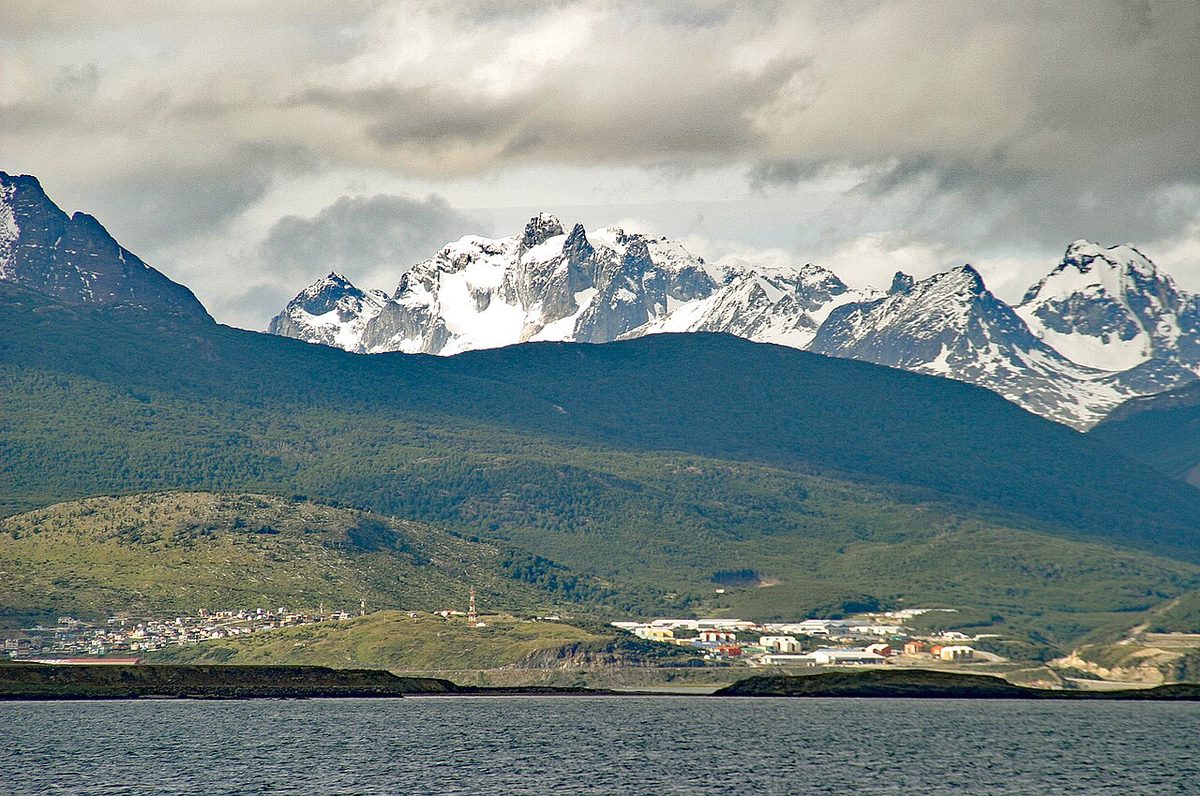
0 — 2 km Fig. 1 · A Beagle Channel cruise sailing past mountains near Ushuaia in Tierra del Fuego · Photo: W. Bulach / CC BY-SA 4.0 via Wikimedia Commons
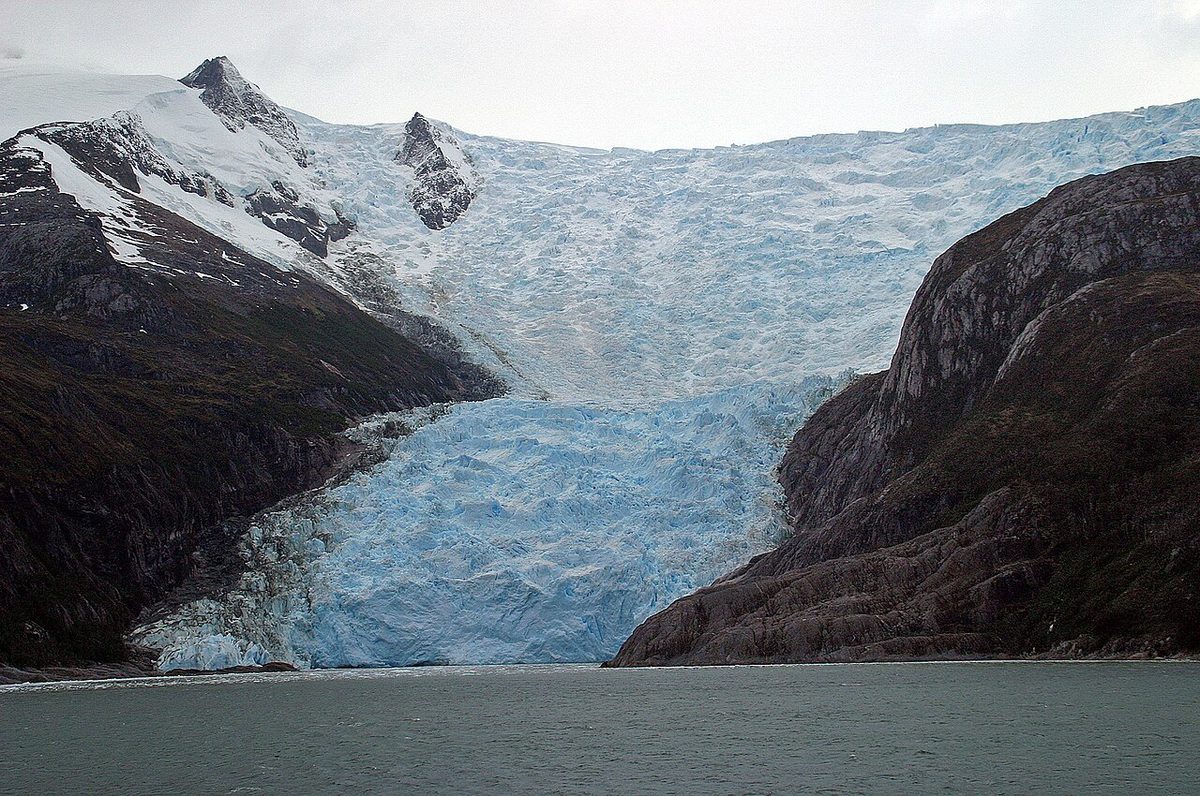
You step onto the deck, the wind hits you sideways, and Ushuaia shrinks behind a wall of mountains while sea lions bark from a rock the color of rust. That is the moment a lot of people remember from Tierra del Fuego, and it usually happens on the water. The hard part is not whether to go out on the channel. It is choosing which boat, on which route, for how many hours.
A Beagle Channel cruise is the single activity I would protect on almost any Ushuaia trip, because it shows you the place from the only angle that makes sense: from the sea, looking back at a city pinned between the Andes and the cold. This guide is the candid version, with the boat types, the stops, the penguin rules, the lighthouse correction everyone gets wrong, the port tax nobody mentions, and how to pick the right trip instead of booking the first office you walk past.
It is written for travelers in the booking stage who already know they want to get on the water and now want to choose well. If you are still deciding whether Ushuaia belongs in your trip at all, start with the coverage of Ushuaia and the Beagle Channel and come back here once your dates are set.
Is a Beagle Channel Cruise Worth It?
Yes. For most first-time visitors a Beagle Channel cruise is the best thing to do in Ushuaia, because it bundles the city’s geography, wildlife, and history into one half-day: sea lions on Isla de los Lobos, cormorants on Isla de los Pajaros, the red-and-white Les Eclaireurs Lighthouse, and channel views you cannot get from land. Choose a short catamaran trip for a simple taste, or a longer penguin tour if wildlife is the point.
Who is it for? Almost everyone. Families, couples, photographers, cruise passengers with a free afternoon, and Antarctica travelers killing time before embarkation all do well here. The only people I would steer toward a shorter, larger boat are those who get badly seasick. More on that below.
Beagle Channel Cruise Options at a Glance
Here is the head-to-head before the detail. Treat every figure as “around,” and confirm prices and durations with the operator close to your trip, because Argentina pricing and seasonal schedules move constantly. Prices below are per adult and usually exclude the port tax.
Cruise type
Vessel
Duration
Best for
Rough price (verify)
Short lighthouse + islands
Catamaran
~3-4 hours
First-timers, short stays, easy half-day
~USD 70-130
Small-group sailing
Yacht / sailboat
~3.5-4 hours
Closer wildlife, fewer people, atmosphere
~USD 100-170
Penguin viewing (no landing)
Large catamaran
~5-6 hours
Seeing penguins from the boat, smoother ride
~USD 160-230
Penguin landing + Harberton
Catamaran + Zodiac
~6.5-10 hours
Walking among penguins, history, full day
~USD 250-420+
Kayak or canoe
Sea kayak / inflatable
~half day
Active travelers, water-level perspective
varies, book ahead
Swipe to see all columns
Table 1
If you skim one row, skim the difference between “penguin viewing” and “penguin landing.” That single distinction explains most of the price gap and most of the disappointment I see in reviews, and I will come back to it.
What You Actually See on the Water
The classic route runs east from the Ushuaia tourist pier, and the wildlife comes in a fairly reliable order. Knowing the sequence helps you decide how long you want to be out.
According to Ushuaia municipal tourism, the Beagle Channel, known as Onashaga in the Yaghan language, can be explored by catamaran, yacht, sailboat, kayak, and canoe, with tours visiting islands populated by cormorants, penguins, and sea lions, plus the Les Eclaireurs Lighthouse.
Isla de los Pajaros
Usually the first stop, maybe fifteen to twenty minutes out. It looks, at a glance, like it is covered in penguins. It is not. Those are cormorants, mostly imperial and rock cormorants, wheeling in the thousands with the mountains behind them. You will also see skuas, steamer ducks, kelp gulls, and, if you are lucky, a black-browed albatross. It is a genuinely good photo even from a stable boat.
Isla de los Lobos and Isla Alicia
Next come the sea lions. South American sea lions haul out on the rocks here in noisy, smelly, photogenic heaps, and the boat slows so you can watch them spar and slide into the water. Guides usually distinguish the smaller “one-hair” sea lions from the larger “two-hair” fur seals. This is the stop most people film.
The icon. The squat red-and-white tower on its own islet, built in 1919, is the postcard shot of Ushuaia and the thing most cruises are quietly built around. The boat circles it slowly. Cormorants nest on the surrounding rocks, and guides often tell the story of the SS Monte Cervantes, the liner that sank near here in 1930. Read the next section before you assume it is the famous “End of the World” lighthouse, because it is not.
Isla Bridges and a short landing
Many shorter cruises disembark briefly on Isla Bridges (sometimes called Karelo), for a guided fifteen-to-thirty-minute walk past Yámana shell middens, low Fuegian plants, and a panoramic viewpoint back toward the city. It is not a hike. It is a leg-stretch with interpretation, and it is one of the nicer touches on the small-boat trips.
On the longer penguin routes you keep going east, past Gable Island and, across the water, the Chilean naval base at Puerto Williams on Navarino Island, before reaching Martillo Island. For the bigger picture of what swims and flies down here, the Patagonia wildlife guide puts the channel in regional context.
Types of Beagle Channel Cruises
This is the decision that matters most, so let me take the boats one at a time. They are not interchangeable, and the right one depends on your time, your budget, and your stomach.
Short catamaran cruise (islands and lighthouse)
This is the default, and for good reason. A catamaran is the most stable platform on the channel, with an indoor heated cabin, bathrooms, and usually a small café, so it suits families, older travelers, and anyone who would rather not be soaked or seasick. You get the full classic route, Pajaros, Lobos, Les Eclaireurs, often a Bridges landing, in roughly three to four hours.
Choose it if you want the Beagle Channel experience without making the whole day about it, if you are in Ushuaia for only two or three nights, or if you are using the city as a low-stress staging point before an Antarctica cruise. It pairs neatly with a city morning or a museum afternoon.
Small-group sailboat or yacht
If you would rather trade some stability for atmosphere and proximity, a yacht or sailboat carries far fewer people and can nose closer to the islands. The wildlife feels nearer, the deck is not a scrum, and the whole thing has more of a sailing-the-end-of-the-world mood. The tradeoff is real: a smaller hull rocks more, so skip it if you are motion-sensitive.
These trips run a similar three-and-a-half to four hours and a similar route to the catamarans, sometimes with the same Bridges landing. They cost a bit more per person, which buys you the smaller group rather than a different itinerary.
Penguin cruise, viewing versus landing
Here is the crux, and it catches people out constantly. “Penguin tour” can mean two completely different things, and the booking page does not always make it obvious.
A penguin viewing cruise is a longer catamaran trip, often five to six hours, that adds Martillo Island to the classic route. The boat noses up to the beach and you watch Magellanic penguins, and some Gentoos, waddle along the sand and swim around the hull. You do not get off the boat. Curious as the penguins are, you are watching from the water.
A penguin landing tour is the one where you actually walk among them, and it works differently. You travel by minibus to Estancia Harberton, then cross by a semi-rigid Zodiac to Martillo Island for a guided hour on foot among the colony. It is the more expensive, more time-consuming, and frankly more magical option if penguins are why you came.
The reason this matters: the on-island walk is run by a single licensed operator, with strict capacity to protect the colony. Most cruises you see advertised cannot land you; they can only show you the penguins from the boat. If walking among penguins is non-negotiable, book that specific tour early and read the inclusions twice. I will cover both in their own sections below.
Kayak and canoe
If you are active and unbothered by cold, a sea kayak or inflatable canoe trip gives you the channel at water level, which is a different and quieter thrill. These are weather-dependent and run as organized excursions only, often on the Lasifashaj River or around the national park rather than the open channel. Choose this if you want effort and immersion over comfort, and be ready to accept a guide’s weather call without sulking.
Penguins on the Beagle Channel: Martillo Island Explained
Penguins are the reason a lot of people upgrade from a short cruise, so it is worth understanding exactly what is on offer.
Martillo Island, in the eastern channel near Estancia Harberton, hosts a colony of Magellanic penguins, a smaller number of Gentoo (Papua) penguins, and the occasional lone King penguin that turns up and gets photographed by everyone. The penguins are present on the island roughly from October to April, with the biggest numbers and the chicks around December to February. Outside that window the colony thins out, and winter visits are limited and viewing-only.
Walking with penguins (the licensed landing)
The walk-among-penguins experience is tightly controlled. You do not wander; a guide keeps you on a set route at a set distance, and the number of people allowed ashore at any time is capped. Because a single operator holds the landing concession, spots are limited and sell out, especially in peak season. Reviewers who got onto the island describe it as the highlight of their trip; reviewers who assumed any “penguin tour” included a landing describe disappointment. Do not be the second kind. Confirm in writing that your tour disembarks on Martillo.
Estancia Harberton
The landing tours fold in Estancia Harberton, which is worth the detour on its own. It is the oldest farm in Tierra del Fuego, founded in 1886 by the missionary Thomas Bridges, who compiled a dictionary of the Yámana language; the estancia became a National Historic Monument in 1999 and is still run by his descendants, about 85 km from Ushuaia. On the grounds, the Acatushún Museum holds a remarkable research collection of austral marine mammals and birds, thousands of specimens, and it reframes the wildlife you just watched as something studied and protected rather than merely cute.
A full penguin-landing day runs long, commonly seven to ten hours door to door once you add the road transfer, the Zodiac crossing, the island hour, the museum, and the drive back along Ruta 3 with its wind-bent “flag trees.” It is a full day. Plan nothing demanding for the evening. For where this fits in a multi-day plan, see the guide to structuring your days.
If your priority is wildlife generally rather than penguins specifically, weigh the timing too. The best time to see wildlife in Patagonia breaks down which months stack the odds for penguins, sea lions, and whales.
The Les Eclaireurs Lighthouse Is Not the “End of the World” Lighthouse
This correction matters because the confusion is everywhere, including on tour pages that should know better.
The photogenic red-and-white lighthouse your Beagle Channel cruise circles is Les Eclaireurs, about 20 km east of Ushuaia, built in 1919 and still working. It is beautiful, it is the postcard, and it is absolutely worth seeing. It is also not the lighthouse made famous as the “End of the World.”
The real “End of the World Lighthouse,” the one tied to Jules Verne, is the Faro San Juan de Salvamento on Isla de los Estados, more than 200 km away and not reachable on any day cruise. As Visit Argentina notes in its overview of Ushuaia, the Beagle Channel and Les Eclaireurs are the channel’s signature sights, while the Isla de los Estados beacon sits far to the east. If a half-day cruise promises the famous lighthouse, it means Les Eclaireurs. That does not make the trip any less good. It just makes the marketing more honest than some of the competition.
How to Choose: What to Ask Before You Book
Tours with near-identical names sell wildly different experiences here. Before you pay, get clear answers to these.
Does it land anywhere? Specifically, does it disembark on Martillo Island (walk with penguins) and/or Isla Bridges (short interpretive walk)? “Sees penguins” usually means from the boat.
What kind of boat? Catamaran for stability, sailboat or yacht for atmosphere and proximity, Zodiac for the Harberton crossing. This decides comfort and seasickness more than anything.
How long, exactly? Three to four hours is a half-day. Five to six adds Martillo viewing. Seven to ten means a Harberton landing day.
Is the port tax included? Almost always no. There is a separate port charge paid in cash on the day, reported around AR$10,400 per person and subject to change. Carry pesos.
Does it include Estancia Harberton entry? On landing tours the estancia admission is often extra, as is lunch.
What is the cancellation and weather policy? Wind cancels trips here. Ask what happens if the operator cancels, and whether you can rebook.
Where does it depart? Most cruises leave the Muelle Turístico at the corner of Av. Prefectura Naval Argentina and Comodoro Augusto Laserre. Penguin-landing tours depart by minibus, not from the pier.
What language is the guide? Confirm English (or your language) if that matters to you.
A practical note: many travelers happily book a short cruise on arrival at a port-side office, and that is fine for the classic route. But the penguin-landing tour and the small-group sailboats are the two that genuinely sell out, so reserve those ahead. For a wider sense of which Ushuaia activities are worth your limited days, the Beagle Channel and Tierra del Fuego highlights guide ranks them.
Seasonality, Weather and Seasickness
The channel is open most of the year, but the season changes the trip.
Summer, December through March, is the easiest window: long daylight, frequent departures, the penguin colony at full strength, and the broadest choice of tours. It is also the busiest, so book the popular trips early. Whales, humpbacks and occasionally orcas, are possible roughly November through May, and a slowed boat following a humpback is the kind of bonus that turns a good cruise into a great one.
Spring and autumn (October, November, April) bring fewer people and more weather risk. Penguin numbers taper toward the edges of the October-to-April window. Winter cruises still run on a reduced schedule and are viewing-only for penguins; pair a winter trip with the rest of a cold-season plan using the Ushuaia winter guide if that is your season. For the regional view of when to come at all, the best time to visit Patagonia lays out the months.
On seasickness, be honest with yourself. The Beagle Channel is far calmer than the Drake Passage, but it is still open southern water and summer wind can chop it up on the way back. If you are prone to motion sickness, book a larger catamaran rather than a small yacht or Zodiac, sit low and central, keep your eyes on the horizon, and take whatever remedy works for you before you board, not after. And dress for it regardless of season: a windproof, waterproof outer layer, a warm mid-layer, a hat and gloves, and shoes with grip for a wet gangway. The wind off the water feels Antarctic even in January.
One more comfort note. A few catamarans will give you a Beagle Channel “passport stamp” if you want a souvenir, and most have a café selling hot drinks, which you will appreciate on the cold leg home. None of this is essential, but it is the kind of small thing that makes the larger boats pleasant in bad weather.
Combining the Cruise with the National Park and More
A Beagle Channel cruise slots into a wider Ushuaia plan rather than competing with it, and the most common pairing is the channel plus the national park.
If you only have one full day, you can run a half-day cruise alongside a half-day in Tierra del Fuego National Park, though that makes both a sampler rather than a deep dive. With two or three days you can give each its own slot, which is what I would do. The Tierra del Fuego National Park guide covers the trails, the End of the World Train, and the fees so you can plan that day properly.
Other natural pairings: a king crab lunch run to Puerto Almanza and king crab, which sits on the channel’s eastern shore and even has its own penguin-viewing boats; or, if Ushuaia is your launch point for the far south, the channel as a warm-up before an Antarctica expedition. Just check whether your ship’s route already satisfies the wildlife itch before you double up.
For stitching all of this into a realistic number of days, lean on the Ushuaia itinerary and the parent Ushuaia and Tierra del Fuego guide, which together place the cruise inside the trip instead of treating it as a one-off.
Frequently Asked Questions
How much does a Beagle Channel cruise cost?
Prices vary, so treat these as “around” and verify before booking. A short catamaran islands-and-lighthouse cruise runs roughly USD 70-130, a small-group sailboat about USD 100-170, a longer penguin-viewing catamaran around USD 160-230, and a full-day penguin-landing tour with Estancia Harberton from about USD 250 upward. A separate cash port tax applies on top.
Can you walk with penguins on a Beagle Channel cruise?
Only on the specific landing tour. Most cruises view penguins on Martillo Island from the boat. To actually walk among them you need the licensed landing tour, which goes via Estancia Harberton and crosses to Martillo by Zodiac for a guided hour ashore. Capacity is strictly limited to protect the colony, so book this one well in advance.
Is the Les Eclaireurs Lighthouse the end of the world lighthouse?
No, though it is widely mislabeled. Les Eclaireurs, the red-and-white tower your cruise circles about 20 km from Ushuaia, dates to 1919. The lighthouse made famous as the “End of the World,” the Faro San Juan de Salvamento, sits on Isla de los Estados over 200 km away and is not visited by any Beagle Channel cruise. You are seeing the photogenic one.
When is the best time for a Beagle Channel cruise?
December through March is the easiest window, with long daylight, frequent departures, and the penguin colony at full strength on Martillo Island, roughly October to April. Whales are possible around November to May. Winter cruises still run on a reduced, viewing-only schedule. Book popular and penguin-landing tours early in peak season, as they sell out.
Is the Beagle Channel rough, and will I get seasick?
It can be choppy, especially when summer wind picks up on the return leg, but it is far calmer than the open Drake Passage and relatively sheltered. If you are prone to seasickness, choose a larger catamaran over a small yacht or Zodiac, sit low and central, watch the horizon, and take a remedy before boarding. Most people are comfortable on the bigger boats.
How long does a Beagle Channel cruise take?
It depends on the route. A short islands-and-lighthouse catamaran cruise is about three to four hours, a penguin-viewing trip to Martillo Island runs around five to six hours, and a full penguin-landing tour via Estancia Harberton takes roughly seven to ten hours door to door once you include the road transfer, Zodiac crossing, museum, and drive back.
Do I need to book a Beagle Channel cruise in advance?
For the standard short cruises, usually no; port-side offices sell the classic route, and you can often book a day or two ahead. But the small-group sailboats and especially the penguin-landing tour sell out, particularly from December to February. If walking among penguins matters to you, reserve that tour as early as you can and build your Ushuaia dates around it.
Final Thoughts
If you do one paid activity in Ushuaia, make it a Beagle Channel cruise. It is the experience that finally makes the geography click: the city, the mountains, the cold water, the islands stacked with sea lions and birds, and that small red lighthouse that everyone photographs and half of everyone mislabels.
My honest steer: most travelers should book a short catamaran trip for the islands and Les Eclaireurs, and only upgrade to the full Harberton-and-Martillo penguin-landing day if walking among penguins is genuinely the thing you came south for. The shorter cruise is cheaper, gentler on the stomach, and leaves you time for the national park. The landing day is longer, pricier, and unforgettable for the right traveler. Neither is a mistake. The mistake is booking a generic “penguin tour” that only views from the boat when you wanted to walk among them, or assuming you are seeing the End of the World lighthouse when you are seeing the local one.
Whatever you choose, verify the current price, the port tax, the cancellation policy, and exactly where the boat lands before you pay. Dress like it is colder than the forecast, get out on the deck, and let the channel do the rest. Then carry on planning with the Ushuaia and Tierra del Fuego guide.