Ushuaia in Winter: Skiing, Snow, Dog Sledding and What Stays Open
Ushuaia winter means Cerro Castor skiing, dog sledding, snowy valleys and short days. See the best months, weather and what stays open in July.
By Patagonia Tourism Guide · First published 28 Aug 2026 · Updated 1 Aug 2026
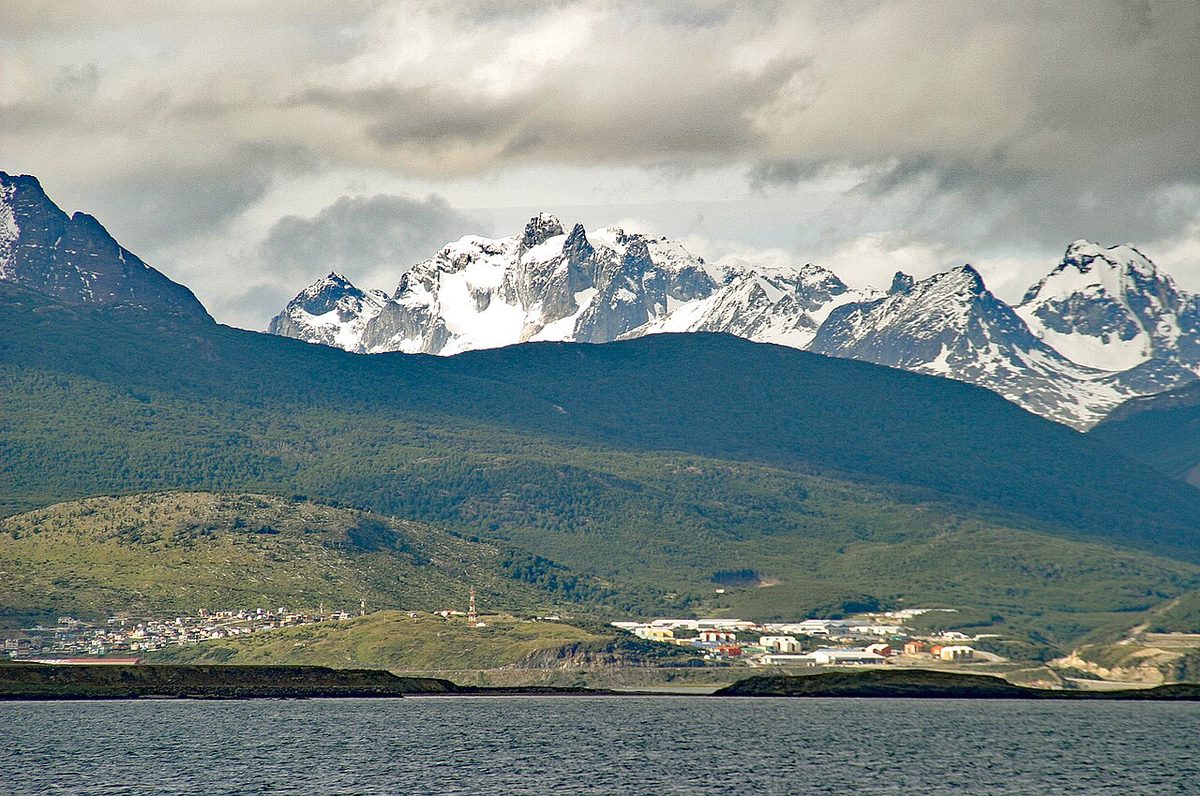
0 — 2 km Fig. 1 · Snow-covered city of Ushuaia and the Fuegian Andes above the Beagle Channel in winter · Photo: Denis Luyten / Public domain via Wikimedia Commons
The first time I watched the sun come up over Ushuaia in July, it was already mid-morning by the clock and the light had that low, sideways, gold-on-snow quality that you only get near the bottom of the world. The Beagle Channel was steel grey, the Fuegian Andes behind town were white to the waterline, and the whole place felt less like a city and more like a winter the rest of the planet had forgotten about.
An Ushuaia winter is not a watered-down version of summer. It is its own trip, built around snow rather than boat decks and long trail days. This guide is for anyone weighing a June-to-September visit to the southernmost city in the world, whether you came to ski Cerro Castor, to try dog sledding, or simply to see Tierra del Fuego under snow without ever clicking into a binding.
If you are still shaping the wider trip, anchor it to the Ushuaia and Tierra del Fuego guide first, then come back here for the cold-season detail.
Is Ushuaia Worth Visiting in Winter?
Yes, if snow is the point. Ushuaia in winter delivers Cerro Castor, the world’s southernmost ski resort, plus cross-country skiing, snowshoeing, dog sledding, snowmobiles, ice skating and lamb in the valleys, all wrapped in short, atmospheric days. It suits skiers, snow-curious travelers and photographers far more than anyone hoping to hike the classic summer trails.
So treat this as a seasonal decision, not just a destination one. The far south swaps one set of pleasures for another between June and September: you lose long daylight, easy hiking and penguins, and you gain reliable snow, a genuine ski mountain, and a quiet, white version of Tierra del Fuego that most visitors never see.
Ushuaia Winter at a Glance
Here is the fast version before we go deep. Treat every figure as “around” and check current conditions close to travel, because snow, prices, lift schedules and daylight all shift through the season and year to year.
Aspect
What to expect
Winter snow season
Around mid-June to late September, sometimes into October
Peak snow months
July and August (heaviest, most reliable snowfall)
Quieter end of season
September, with longer days and softening crowds
Main ski resort
Cerro Castor, around 26 to 27 km from town (about 30 minutes by road)
Cerro Castor size
Around 600 hectares, roughly 34 to 35 trails, about 12 lifts, a snowpark and a beginner zone
Typical July temps
Mean near 2 to 3°C; daytime highs around 5°C; nights often −4 to −5°C, colder in snaps
Daylight
Very short: roughly 7 to 8 hours in June and July, near 9.5 in August
Non-ski snow options
Cross-country skiing, snowshoeing, dog sledding, snowmobiles, ice skating, 4×4 and scenic minibus tours
Stays open
Beagle Channel cruise (afternoon), Tierra del Fuego National Park, End of the World Train, city, museums
Largely off-season
Penguin tours, long independent summer hikes, some park trails
Getting there
Fly Buenos Aires to Ushuaia (around 3.5 hours), then transfer, shuttle or car
Swipe to see all columns
Table 1
If that table already sold you, skip ahead to skiing at Cerro Castor. If you are on the fence, keep reading, because winter is the season where matching your expectations to the place matters most.
What Ushuaia Winter Is Actually Like: Weather, Cold and Daylight
Let me set the scene honestly, because the brochures rarely do.
Ushuaia sits at about 54 degrees south, on the Beagle Channel, on the southern edge of Isla Grande de Tierra del Fuego, with the Fuegian Andes rising straight out of the city. Climates to Travel describes the climate as cold oceanic: windy, unstable, with frequent but not heavy precipitation, and snow that generally falls from April to November. That maritime setting is exactly why winter here feels different from a continental ski town.
How cold does it get?
Cold, but rarely brutal down in the city. Using the 1991 to 2020 normals, June and July are the coldest months, both averaging around 2.3°C, with daytime highs near 5°C and nights that typically dip to around −4 or −5°C. August warms slightly to a 3.1°C mean. Cold snaps are real, though: July has recorded −12.8°C, and June once hit −13.8°C. Those are rare events, not a normal day.
What this means in practice: in town, a winter day is jacket-cold, not expedition-cold. Daytime temperatures often hover near or just above freezing, so accumulated snow at sea level can melt and turn slushy. Up at Cerro Castor and in the valleys, with altitude and wind, it is a different and colder story, and the snow holds far better. The surrounding mountains are usually white from around 500 to 600 meters up.
The daylight is the thing people underestimate
This catches almost everyone. Around the June 21 solstice, Ushuaia gets only about 7 hours and 20 minutes of daylight from dawn to dusk, with the sun rising close to 9:45 a.m. and setting before 5:30 p.m. July is barely longer at around 7 hours 55 minutes. By August you climb back to roughly 9.5 hours, and September feels generous at nearly 12.
Short days are not a flaw here, they are part of the mood. Ushuaia even leans into it with a festival for the longest night. But it does compress your day, so you start ski mornings early and accept that “afternoon” arrives fast. If you want more light on the slopes, late August and September are your friends.
A realistic month-by-month picture
Month
Avg temp (mean)
Daytime feel
Daylight
Snow and skiing
June
Around 2.3°C
Coldest, often near freezing by day
Around 7.3 hours
Season building; Cerro Castor usually opens late month
July
Around 2.3°C
Cold, short, frequently snowy
Around 7.9 hours
Peak snow, peak crowds, full operation
August
Around 3.1°C
Cold but lengthening days
Around 9.6 hours
Reliable snow, slightly more light
September
Around 4.8°C
Milder, softening winter
Around 11.8 hours
Often great snow, longer days, easing crowds
Swipe to see all columns
Table 2
Treat these as planning averages, not promises. Patagonian weather does what it likes, and a single bright, still day on Cerro Castor can feel warmer than the numbers suggest, while a windy whiteout can feel far colder.
Skiing at Cerro Castor: The Southernmost Ski Resort
Cerro Castor is the headline of any Ushuaia winter, and it earns it.
Ushuaia municipal tourism puts the resort about 27 km from the city, with slopes for all ages and levels, rental, classes, childcare and food on the mountain. Visit Argentina calls it the southernmost ski resort in the world and praises its dry “powder snow,” with around 35 trails and connecting runs across four difficulty levels, eight gastronomic points, and terrain spread over roughly 600 hectares. Other resort summaries put it at about 34 to 35 trails and around 12 lifts, with a snowpark, a ski-cross circuit, a dedicated beginner zone and off-piste options.
It is around 26 to 27 km from downtown along Ruta 3, roughly half an hour by road.
Who the mountain is for
Cerro Castor is a genuinely friendly mountain. The mix of beginner, intermediate and advanced terrain, plus a long-running ski school and a beginner area, means a first-timer can have a productive, low-stress first day, while confident intermediates get a varied, satisfying week. Strong skiers and riders will find steeper trails and off-piste, and the lift-served vertical (lifts climb toward roughly 1,000 meters of elevation gain at the top) is enough to keep things interesting.
What makes it special is less the size and more the snow and the latitude. Because it sits so far south and reasonably high above a cold sea, Castor holds light, dry snow better and later in the season than you might expect, which is why some racing teams use it for early training. The forest-and-river setting, with lenga trees laden in white, is genuinely beautiful.
Lift passes, rentals and lessons
Pricing changes every season, so check the official resort tariff at cerrocastor.com rather than trusting any dollar figure, including the absence of one here. A few things tend to hold true:
Multi-day passes usually work out cheaper per day than single tickets.
The resort sells lessons for all levels, with childcare available, which makes it workable for families.
Rental is available on the mountain through its boutiques, alongside more shops in town, so you do not need to fly with gear.
The forest and river chairlift opens around 9:30 a.m. for those with 10:00 a.m. classes and around 9:45 a.m. for the public, so an early start is rewarded on short winter days.
There are eight food stops on the hill, from quick bites to the Morada del Águila restaurant at the base, where lamb and a gourmet menu are the draw. Most also offer Wi-Fi, which is handy when you are waiting out a squall with a hot chocolate.
A note on Glaciar Martial
You will see the Martial Glacier area, minutes above town, described as a winter spot too. In good snow it can work for sledding, a short ski, snowshoeing in the Fuegian woods, and big views over the city and channel. It is far smaller and less reliable than Cerro Castor, and conditions vary, so treat it as a bonus outing rather than a substitute for a real ski day. Outside winter it is better known as a walking and viewpoint hike, covered in the things to do in Ushuaia guide.
Cross-Country Skiing and the Valley Centers
Not all of Ushuaia’s snow is downhill, and some of my favorite winter hours here had nothing to do with a chairlift.
Ushuaia municipal tourism’s Valleys Circuit page describes how Ruta 3 winds into the southern Andes through glacial valleys, peat bogs, lagoons and rivers, opening into an area “ideal for snow activities.” Alongside Cerro Castor, the valley recreation centers offer cross-country skiing, snowshoeing, dog sledding and lamb in their shelters, plus motorized tours, scenic minibuses and overflights.
Cross-country skiing (esquí de fondo)
Gliding through a silent lenga forest dressed in white is the gentlest, most meditative way to spend a snow day here. The valley centers along Ruta 3, in the Tierra Mayor area and nearby, maintain cross-country tracks and rent the gear. You need warm layers and a willingness to fall over a few times, and not much else. It is a friendlier door into snow sport than a steep downhill run, and it is far quieter than Cerro Castor on a peak July day.
Snowshoeing
Snowshoeing is the easiest snow activity to say yes to, because if you can walk, you can do it. Guided snowshoe outings run both at Cerro Castor and in the valleys, taking you into quiet forest and toward viewpoints you would never reach on skis. It is also the best way to actually feel the stillness of a Fuegian winter, away from engines and lift lines.
Dog Sledding, Snowmobiles and Other Snow Adventures
This is where an Ushuaia winter gets memorable, and where it pulls ahead of a lot of ski destinations.
Dog sledding
Dog sledding is the activity people come home talking about. It runs in the Tierra Mayor valley, where most of the winter centers sit, using Siberian and Alaskan huskies bred for serious cold. Rides are typically short, often around 20 minutes, but the experience of a team of dogs pulling you through snow-laden forest, breath steaming, is hard to match. Book ahead in July, dress warmly, and treat the dogs with respect, following the operator’s instructions. It is a splurge, and it is worth it.
Snowmobiles, 4×4 and overflights
For more speed, the valley centers run snowmobile circuits, ATV and 4×4 outings on wild tracks, and even helicopter or light-aircraft overflights of the mountains and valleys. These are the adrenaline end of the menu. They are weather-dependent and pricier, so confirm conditions and what is included before you commit.
Ice skating
Here is a detail almost no competing guide mentions: Visit Argentina notes that Cerro Castor has the only ice skating rink in Argentina, open daily from around 11:00 a.m. to 5:00 p.m. It is a fun, low-commitment add-on, especially for families or non-skiers spending a day on the mountain. Down in town, the frozen scenery around Bahía Encerrada, the urban natural reserve on the waterfront, is a lovely cold-weather walk even if you never lace up skates.
Scenic and comfortable options
If you would rather watch the snow than play in it, agencies run guided minibus tours along Ruta 3 to the main valleys and viewpoints, and horseback riding in the snow is offered too. Not every winter day has to be athletic.
This is the question the title promises, and the one most guides dodge. Here is the honest breakdown.
What stays open
Tierra del Fuego National Park. The park is open year-round and sits only around 11 to 12 km from town. In winter it becomes a snow-dusted version of itself: Lapataia Bay, the end of Ruta 3, the lakes and the forests are all still there, and short walks are doable with proper footwear. Some trails, however, are summer-only (more below). See the Tierra del Fuego National Park guide for trails and fees.
The End of the World Train. It runs through the snowy park in winter, and honestly the historic little train is at its most atmospheric crossing a white landscape. A good, easy, warm-ish outing for families and anyone wanting a softer day.
Beagle Channel cruise. Boat tours run year-round, with afternoon departures (commonly around 2:30 p.m.) through winter, and extra morning departures added roughly November to April. A winter sailing past Les Eclaireurs Lighthouse, sea lions and cormorants under grey skies and snowy peaks is a different, moodier experience. Bring serious warm layers for the deck. The Beagle Channel cruise guide has the detail.
The city. Museums, restaurants, cafes and the waterfront are all open and arguably cozier in winter.
What closes or winds down
Penguin tours. The Magdalena and Martillo Island penguin colonies are a roughly October-to-March affair, so a winter trip is essentially a no-penguin trip. If penguins are a priority, come in summer instead.
Long summer hikes. Many marked national park trails such as the Costera, Hito XXIV, Pampa Alta and Cascada Río Pipo run roughly November to April, and high routes like Cerro Guanaco are seasonal. They are not winter trails.
Laguna Esmeralda, with caveats. The famous half-day hike can be done in winter, but the peat-bog and forest route gets snowy, icy and harder to follow, and a guide is strongly advised. This is not the easy turquoise-lake walk of the summer photos. The Laguna Esmeralda hike guide covers conditions.
Some roads and remote excursions. Snow can close or restrict higher and more remote routes, so always check current conditions before driving beyond the main corridors.
The short version: the two core Ushuaia experiences, the national park and the Beagle Channel, stay open all winter, while penguins and long independent hiking step aside for snow.
The City in Winter: Food, Lamb, Museums and the Festival
When the light fades by mid-afternoon, the city itself becomes the evening’s entertainment, and Ushuaia is good at cold-weather comfort.
Food and lamb
Ushuaia is one of Patagonia’s better food stops, and winter plays to its strengths. The signature dish in the valley recreation centers is Patagonian lamb, the famous cordero, slow-roasted and best eaten somewhere warm with snow outside the window. In town, king crab (centolla) remains the local trophy, alongside lamb, seafood, trout and the kind of stews and hot chocolate that a 7-hour day practically demands. For the serious king crab pilgrimage out to the fishing village, see the Puerto Almanza king crab guide, though check what is open in the depths of winter.
Museums and indoor afternoons
Short days make the indoor sights more valuable, not less. The Maritime and Prison Museum and the End of the World Museum are ideal for a cold or snowy afternoon, giving you the region’s prison history, maritime past and Indigenous Yaghan and Selknam context. They pair naturally with a slow lunch and a wander down Avenida San Martín.
The National Winter Festival
Ushuaia marks the start of winter with the Fiesta Nacional de la Noche Más Larga, the National Longest Night Festival, staged around the June solstice. The 2026 edition runs across roughly June 12 to 21, with the heart of it around June 19 to 21, and it leans into the city’s “longest night in the world” identity with music, gastronomy, and ice and snow sculpture, drawing well over a thousand artists. Cerro Castor adds its own torchlight descent during the season. If you want maximum atmosphere and do not mind the deepest, darkest days, timing your trip to the solstice is a real draw. If you want more daylight for skiing, you might deliberately avoid it.
You do not need polar expedition kit for the city, but you do need real cold-weather layers, especially for the mountain and the boat. Layering is the whole game.
Base layers: thermal top and bottoms in merino or synthetic, not cotton.
Mid layers: fleece or a light down or synthetic puffy.
Outer shell: a waterproof, windproof jacket and ski pants for the slopes and the valleys.
Extremities: warm gloves or mittens, a beanie, a buff or neck gaiter, and thick socks. The wind is the enemy here.
Eyes and skin: goggles for skiing, sunglasses for the glare off snow, and high-SPF sunscreen, because snow reflection burns you even when it is cold.
Feet: waterproof boots with grip for icy town pavements and slushy days; ski boots come with the rental.
For the Beagle Channel: an extra warm layer for an exposed, windy winter deck.
If you rent clothing at Cerro Castor you can travel lighter, but I would still bring my own base layers, gloves, hat and socks for comfort and hygiene. For a full regional checklist, the Patagonia in winter guide goes deeper on cold-season gear.
Getting Around Ushuaia in Winter
Most travelers fly in. Domestic flights connect Buenos Aires to Ushuaia in around 3.5 hours, landing at Malvinas Argentinas Ushuaia International Airport just outside town, which is by far the most efficient way to the far south in winter.
From there, central Ushuaia is walkable, but you will need transport for the snow. Cerro Castor sits around 26 to 27 km out along Ruta 3, and the valley winter centers are strung along the same road. Your options are shuttles and transfers, organized tours, taxis or remises, or a rental car. Plenty of visitors skip the car entirely and rely on resort shuttles and tour transfers, which sidesteps winter driving.
If you do drive, take it seriously. Ask your rental company and hotel about current road conditions, tires and snow chains before any longer trip, and do not improvise chains for the first time on an icy mountain road. The wider best time to visit Patagonia guide and the Patagonia in winter guide both cover cold-season logistics across the region.
Ushuaia or Bariloche for Winter?
This is the comparison almost every winter-Patagonia traveler ends up making, so let me be direct.
Bariloche is Argentina’s classic ski town, built around Cerro Catedral, one of the largest resorts in South America, with a deep alpine-village atmosphere of chocolate, fondue and fireplaces. It is more developed, more crowded in the July holidays, and easier to reach and combine with the lake district. If your priority is the biggest ski terrain and the coziest ski-town scene, Bariloche usually wins, and the rundown of cerro catedral skiing guide lays it all out.
Ushuaia is the wilder, more remote, more atmospheric choice. Cerro Castor is smaller than Catedral but holds excellent snow, the crowds are thinner, and the surrounding Tierra del Fuego setting, the Beagle Channel, the end-of-the-world identity and that strange short-day light, gives it a mood Bariloche cannot replicate. Winter activities like dog sledding and the southernmost-resort novelty land harder here.
My honest take: choose Bariloche for serious skiing volume and alpine comfort, and choose Ushuaia for atmosphere, novelty and a true far-south winter. They are very far apart, so a single trip combining both is a real commitment of flights and time. If you are weighing it as part of a bigger route, the northern Patagonia overview and a careful Patagonia itinerary will keep one mountain town from eating your whole trip.
How Many Days Do You Need in Ushuaia in Winter?
For a ski-focused trip, I would plan four to six nights. That gives you three to four potential days on Cerro Castor, which is the realistic number you want once Patagonian weather costs you a day or two to wind, cloud or fresh-snow chaos. Build in a flexible buffer day; a rigid winter schedule down here is a recipe for disappointment.
If you are not skiing, three to four nights is plenty to fold in a snow activity or two (dog sledding, snowshoeing, cross-country), a national park or Beagle Channel day, the museums, and the food. Either way, do not copy a summer itinerary into July and just add a thicker jacket. Let winter be winter: fewer, snowier, slower days, planned around conditions and short light. For a fuller day-by-day shape, adapt the Ushuaia itinerary to the cold season.
Who Should Visit Ushuaia in Winter (and Who Shouldn’t)
Let me be candid, because this is the most polarizing season at the end of the world.
Come in winter if you:
Want to ski or snowboard at the world’s southernmost resort.
Are learning to ski and want a friendly mountain with a real ski school.
Dream of dog sledding, snowshoeing or cross-country skiing in a quiet Fuegian forest.
Love snowy, moody, atmospheric places more than green hiking ones.
Want a winter Patagonia experience that is wilder and less crowded than Bariloche.
Do not mind cold and very short days, or actively like them.
Think twice if you:
Mainly want to hike the classic Tierra del Fuego trails, which is a summer trip.
Came for penguins, which are essentially an October-to-March affair.
Dislike cold, darkness or losing a day to weather.
Are squeezing Ushuaia into a short, summer-style Patagonia route, where the season clash will frustrate you.
For most people the verdict is simple. If you want snow at the bottom of the world, an Ushuaia winter is one of the most distinctive trips in South America. If you want to walk to Laguna Esmeralda in the sun, come back in January.
Ushuaia Winter FAQ
Is Ushuaia worth visiting in winter?
Yes, if you enjoy snow. An Ushuaia winter offers Cerro Castor, the southernmost ski resort in the world, plus dog sledding, snowshoeing, cross-country skiing, ice skating and lamb in the valleys, all in a wild, atmospheric setting. It is less suited to travelers who came mainly to hike or who dislike cold and very short days.
Can you ski in Ushuaia?
Yes. Cerro Castor, around 26 to 27 km from town, is the world’s southernmost ski resort, with roughly 34 to 35 trails across four difficulty levels, about 12 lifts, a snowpark and a beginner zone over some 600 hectares. It suits beginners through advanced skiers and is known for dry, reliable powder snow this far south.
How cold is Ushuaia in July?
July is one of the coldest months, averaging around 2 to 3°C, with daytime highs near 5°C and nights typically around −4 to −5°C. Cold snaps have hit below −12°C, but those are rare. In town it is jacket-cold rather than extreme, while Cerro Castor and the valleys are colder with wind and altitude.
When is the ski season in Ushuaia?
The snow season runs roughly mid-June to late September, sometimes into October, giving Ushuaia one of the longest winter seasons in Argentina. Cerro Castor usually opens in late June and closes in late September, weather permitting. July and August bring the heaviest, most reliable snow, while September offers longer days and easing crowds.
What can you do in Ushuaia in winter besides skiing?
Plenty. You can try dog sledding in the Tierra Mayor valley, snowshoe through lenga forest, cross-country ski, ride snowmobiles, 4x4s or scenic minibuses along Ruta 3, ice skate at Cerro Castor, and ride the End of the World Train through the snowy national park. Add the Beagle Channel cruise, museums, king crab and lamb for a full non-ski winter.
Is Tierra del Fuego National Park open in winter?
Yes, the national park is open year-round and is only around 11 to 12 km from Ushuaia, becoming a quiet, snowy version of itself with Lapataia Bay, the lakes and the forests. Some trails are summer-only, and conditions can be icy, so plan short walks with proper footwear and check current access and fees before you go.
How many days should you spend in Ushuaia in winter?
For skiing, plan four to six nights so you have three to four possible days on Cerro Castor after losing one or two to weather. If you are not skiing, three to four nights covers a snow activity or two, a national park or Beagle Channel day, the museums and the food. Always build in a flexible buffer day for Patagonian conditions.
Final Thoughts
I came to Ushuaia the first time expecting the famous summer version, all boat decks and long hikes, and the winter visit ended up the one I think about more. There is something about a low July sun on white mountains, a team of huskies in the trees, and a plate of lamb after a short, cold, bright day that the green season simply cannot give you.
My honest advice is to lean into what winter actually is here rather than fighting it. Plan around short days and weather, keep a flexible buffer, pack for real cold on the mountain and the boat even though the town stays manageable, and pick your activities for the snow rather than the trail. Do that, and an Ushuaia winter is about as distinctive a cold-season trip as you will find anywhere.