Laguna Esmeralda Hike Guide: Distance, Mud, Weather and Winter Conditions
The Laguna Esmeralda hike near Ushuaia: distance, time, the famous mud, what to wear, guided vs independent, winter snowshoe conditions and safety.
By Patagonia Tourism Guide · First published 27 Aug 2026 · Updated 1 Aug 2026
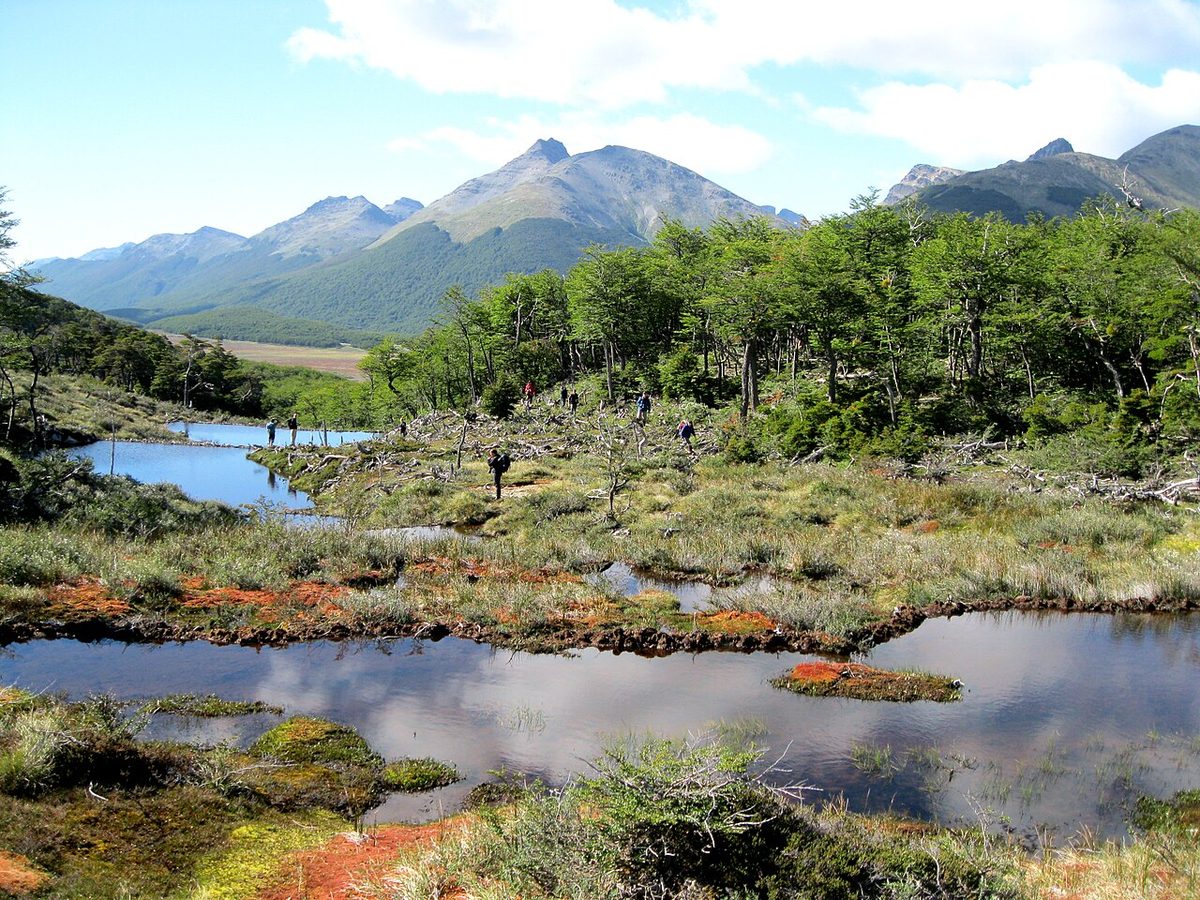
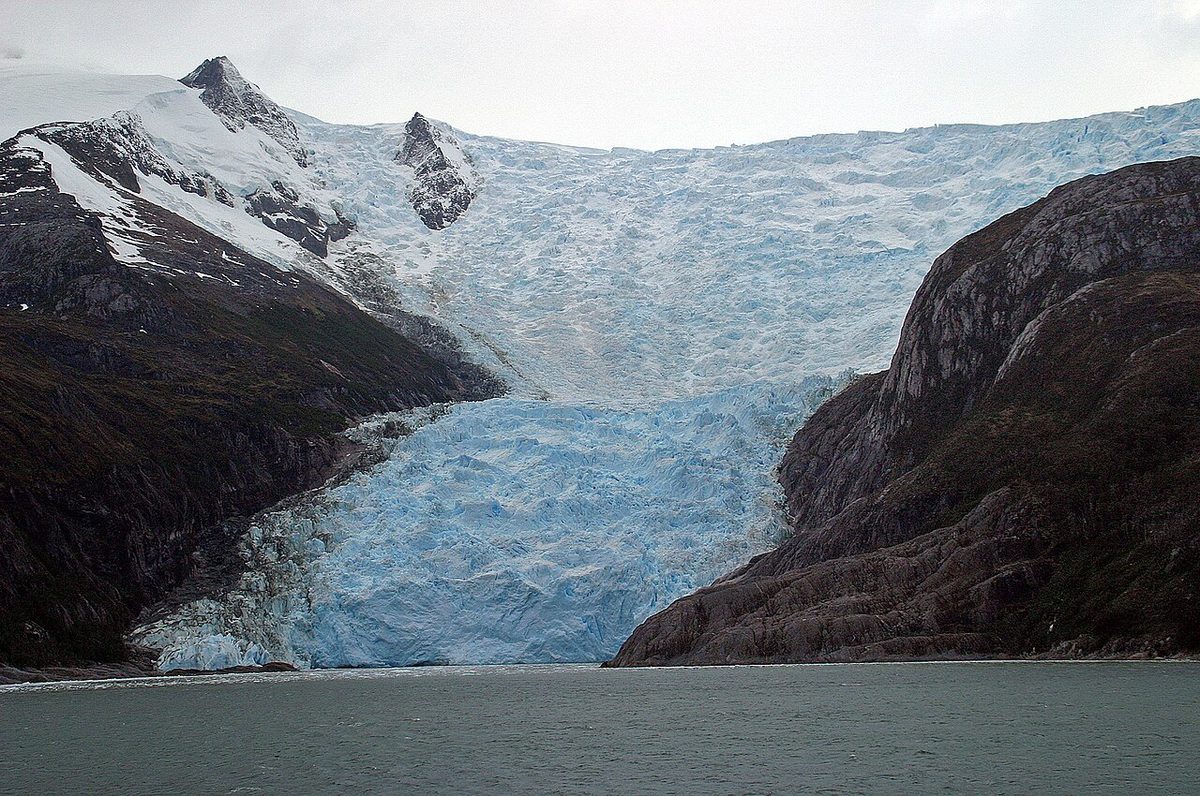
0 — 2 km Fig. 1 · Emerald glacial water of Laguna Esmeralda below snow-streaked peaks near Ushuaia · Photo: CC BY 2.0 via Wikimedia Commons
I have walked to a lot of glacial lakes in Patagonia, and Laguna Esmeralda is the one I send first-timers to without hesitation. It is short, the payoff is absurd for the effort, and it begins twenty minutes from a city with hot showers and king crab waiting at the end. It is also, I should warn you now, one of the muddiest trails I know.
That contradiction is the whole hike. People arrive expecting a tidy walk to a turquoise lake and meet a peat bog instead.
Quick answer: what is the Laguna Esmeralda hike like?
The Laguna Esmeralda hike is the most popular short trek near Ushuaia: around 9 km (about 5.5 miles) round trip, roughly 4 to 5 hours, with only about 220 m of gain to an emerald glacial lake. It is rated moderate, but the real challenge is mud and peat-bog terrain, not the climb. It suits most reasonably fit walkers, including families with older kids.
That last point is what surprises people. The numbers say “easy day.” The trail says “wear boots you are willing to ruin.”
This guide is for anyone actually planning to walk it: travelers wondering whether they are fit enough, people trying to decide between going independently or with a guide, and anyone visiting in shoulder season or winter who needs to know how much the trail changes. It sits under our full Ushuaia and Tierra del Fuego guide, which covers how the whole region fits together. Here, I am going deep on this one trail.
Laguna Esmeralda at a glance
I want to be honest about the numbers before we go further, because they disagree across sources depending on where each one starts counting and which GPS track they trust. I have hedged everything into ranges. Treat these as planning estimates, not promises.
Stat
Estimate
Notes
Distance
Around 9 km (about 5.5 miles) round trip
Official Ushuaia tourism lists 9 km; GPS tracks read 8.8 to 9.6 km
Time
Around 4 to 5 hours
Fast hikers manage 3 to 4 moving; allow more for mud and photos
Elevation gain
Around 220 m (roughly 700 ft)
Official figure 220 m; trackers read up to about 265 m
Difficulty
Moderate
Easy-to-moderate terrain; the mud and weather are the crux, not the climb
Trailhead
Around 17 to 18 km from Ushuaia on Ruta Nacional 3
About a 20-minute drive; parking at the trailhead
Trail type
Out-and-back
Same way back to the car park
Best season
December to March
October to April is the broad window; winter is a separate snowshoe trip
Entry cut-off
No trail entry after about 15:00 in spring/summer, 13:00 in autumn/winter
Posted at the reserve; check on the day
Swipe to see all columns
Table 1
The Ushuaia municipal tourism page for Laguna Esmeralda lists it as 9 km round trip, 4 to 5 hours, 220 m of gain, with medium-to-easy terrain difficulty and medium physical demand, on a route through lenga forest, peat bog, and a final climb to a glacial lake. That official framing matches what my legs remember. The lake itself sits in the Valle Tierra Mayor reserve area, outside Tierra del Fuego National Park, which matters more than you would think and which I will come back to.
Laguna Esmeralda Hike: Distance, Time and Difficulty
So how hard is it, really? Let me give you the honest version, because the labels online swing from “easy” to “moderate” and that spread confuses people.
On paper this is a gentle day. Around 9 km round trip is short by Patagonian standards, and roughly 220 m of climbing is spread out enough that you rarely feel like you are grinding uphill. Compared with the brutal final moraine on the Laguna de los Tres hike over in El Chalten, Laguna Esmeralda is a stroll. There is no exposure, no scrambling beyond a short rocky rise at the very end, and no navigation headache on the main route.
The challenge is underfoot. Long sections cross peat bog and churned-up mud, and that is what turns an easy-sounding 4 to 5 hours into a slower, messier day than the distance suggests. You spend energy picking lines, balancing on logs, and occasionally hauling a boot out of the muck. By the time you climb the final rocky hill to the lake, your legs have done more work than the elevation profile admits.
Put those together and “moderate” is the fair word. Not because it is steep or dangerous in good summer conditions, but because the terrain and the Tierra del Fuego weather can make a short hike genuinely tiring. A reasonably fit person who walks regularly will be fine. You just should not treat it as a casual sidewalk because it starts so close to town.
Who this hike is for
Do the Laguna Esmeralda hike if you want one classic Ushuaia trek, you have a free half day, and you are honestly okay with getting muddy. You do not need to be a strong mountain hiker. Families with school-age kids manage it, and so do plenty of people whose only training was walking around a city. The reward, an emerald lake under glaciated peaks, is wildly out of proportion to the effort.
Think twice, or pick a different plan, if you only have one full day in Ushuaia and want the core experiences first, if you cannot face wet feet, or if you are visiting in deep winter without the gear or guidance for snow. There is no shame in saving it. The shorter Martial Glacier walk or a day in Tierra del Fuego National Park can scratch the same itch with less mud.
The mud and peat bog reality
Let me be blunt, because this is the single thing first-timers underestimate. There is mud, then more mud, then a peat bog. It is the defining feature of the trail, and pretending otherwise does you no favors.
Here is why. Much of the route crosses peatland, a waterlogged ground of moss and decomposing plant matter that holds water like a sponge. Tierra del Fuego is wet, even in summer, so that ground rarely dries out. Add hundreds of hikers a day churning the same lines in peak season, and certain stretches turn into a brown soup that will swallow a shoe if you are careless.
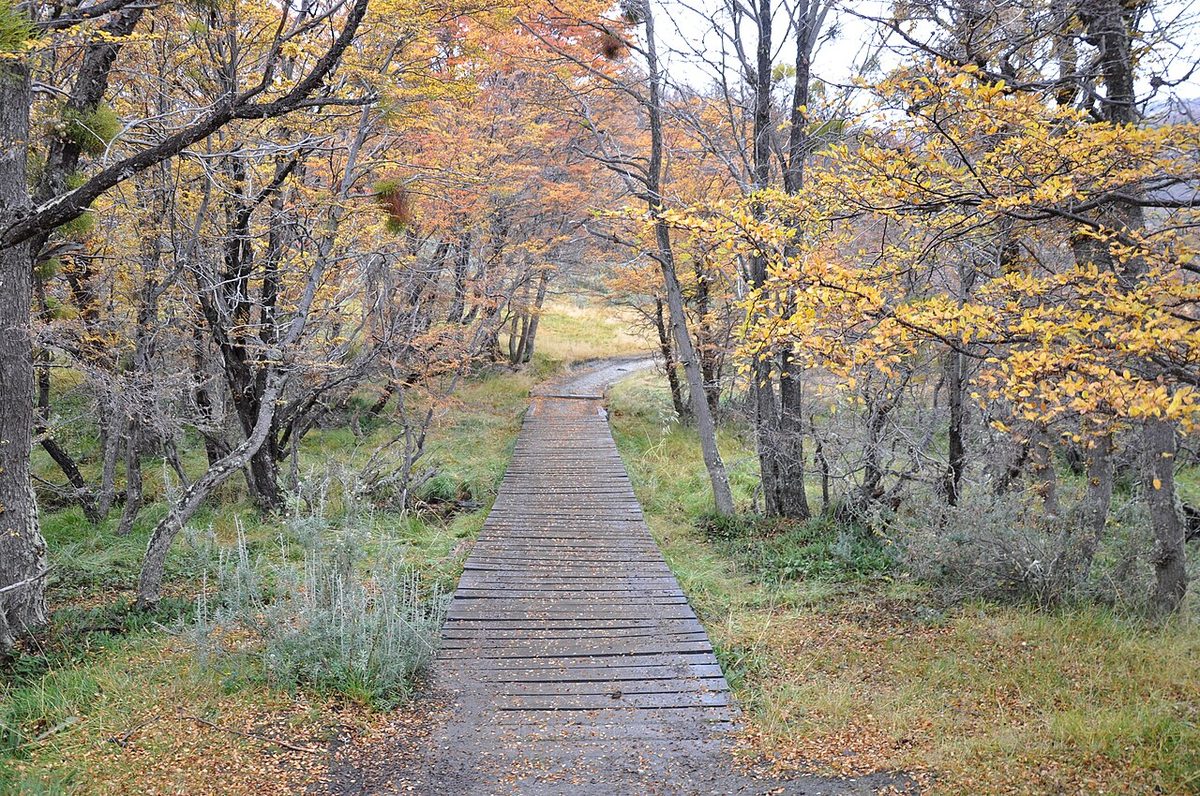
The good news is that the trail has genuinely improved. Over recent years the worst sections have had wooden walkways and boardwalks laid across them, and longtime hikers report these are now sturdier than the old logs, in places with handrails. They do not eliminate the mud, but they take the edge off the worst of it. You can usually keep your feet drier than the trail’s reputation suggests, especially if it has not rained for a day or two.
A few honest tips for the boggy parts:
Wear waterproof boots you do not mind trashing. This is not the place for sneakers or your nice trainers.
Pick up a hiking pole or grab one of the walking sticks piled at the trailhead. Balance is half the battle in the bog.
If you do step into soft ground, keep moving. The way you get stuck is by standing still and sinking.
Watch what guided groups do. Local guides know the driest line through the worst patch, and following them is a legitimate shortcut.
Resist the urge to skirt every puddle by trampling the vegetation at the edges. That is how a muddy trail becomes a wide muddy scar.
That last point matters beyond your own comfort. Peat bogs are slow-growing, fragile environments. Staying on the trail or the boardwalk, even if it means muddy boots, protects ground that takes a very long time to recover. Muddy is temporary. Widening the damage is not.
What the hike is actually like, section by section
I will walk you through it the way you will experience it, from the car park to the lake. Times are rough and depend entirely on your pace and how often you stop to photograph the river.
The lenga forest
You start in a beautiful, slightly eerie lenga forest, the southern beech that defines these mountains. From the parking lot you will see two paths; they merge after about ten minutes, so it does not matter which you take. This first stretch is mostly flat, an easy warm-up, and on a windy day the trees creak and sway around you in a way I genuinely love. There can be muddy patches even here after rain, but nothing you cannot hop across.
Into the valley and along the river
The forest opens into a clearing, and suddenly the landscape expands. You are looking across the Tierra Mayor and Carbajal valleys, peat moss spreading in every direction, with mountains standing behind. The Esmeralda River runs through here in the same bright turquoise as the lake it feeds.
Look for the beaver dams along the water. They are impressive engineering, but worth understanding: beavers are an introduced, invasive species in Tierra del Fuego, and they have done real damage to the native forests by flooding them. It is a strange, instructive sight, beautiful and destructive at once.
The second forest
Cross the river and you re-enter forest, this time older growth, with a couple of steeper pitches as you gain height. This stretch tends to be the muddiest of the trees, so watch your footing. Keep your eyes open and your voice down, too. Red foxes live in here, curious and surprisingly bold, and people regularly spot one trotting along the trail or eyeing a backpack.
The peat bog and the final climb
Out of the forest, you reach the main peat bog. This is the soggiest part, and where the boardwalks earn their keep. Beyond it, the trail meets the river again and rises over rocky ground for the home stretch. The lake stays hidden until the very last moment.
Then you climb a short, rocky hill, crest it, and there it is. Laguna Esmeralda, a startling emerald green, with the Ojo del Albino glacier and the surrounding peaks rising behind it. The color comes from glacial sediment, fine rock flour suspended in the meltwater. Find a spot on the beach to eat, or duck right toward the trees if the wind is up, and just sit with it for a while. You earned this with your socks.
If you have energy, you can pick your way around the shoreline for different angles, or look up to where a rougher route continues toward the Ojo del Albino glacier itself. That extension is a different animal, for experienced hikers with the right gear, and I would only do it with a guide.
How to get to the trailhead
The trailhead is around 17 to 18 km from Ushuaia, roughly a 20-minute drive east on Ruta Nacional 3, in the valley corridor that leads toward the winter centers. There is a parking lot, and in peak season it fills with cars, minibuses, and the occasional tour bus. Where there are crowds there is commerce, so do not be surprised to find vendors renting poles and boots, selling choripan and empanadas, and on a good day even someone making coffee. You have a few ways to get there.
Rental car
A car is my favorite way to do this hike, and Ushuaia in general. You go on your own schedule, start early to beat the buses, and stack another activity before or after, because this is only a half day. In summer you have enormous daylight to play with. If the lot is full, you may end up parking along the roadside.
Shuttle bus
Shuttles run from near the bus terminal and tourist information area in town, typically leaving in the morning, around 10:00, with afternoon return pickups, often around 15:00 and 17:00. Expect to pay something in the region of a few thousand pesos round trip, but prices and times shift constantly, so confirm both at the tourist office when you arrive rather than trusting an old number online.
Taxi or remis
A taxi gives you more timing flexibility than the shuttle. The important part: arrange your pickup time before you set off, because there is no cell signal at the trailhead and you will not be able to call when you finish. Agree on a time, pad it for mud delays, and be there. Sharing the fare with others makes it reasonable.
Guided tour
A guided excursion is the most hands-off option: hotel pickup, transport, a guide, and often a box lunch. Whether you need one is a real question, so I have given it its own section below.
Guided vs independent: do you need a guide?
This is where I part ways with both the tour-sellers who insist you must have a guide and the bloggers who say you never need one. The honest answer depends on the season.
In good summer conditions, the Laguna Esmeralda hike is well marked, heavily trafficked, and straightforward to follow. Most prepared, reasonably fit travelers do it independently without any drama, and I have happily done the same. Follow the trail, keep an eye on the markers across the open ground, and you will be fine.
That said, Ushuaia’s municipal tourism does recommend hiring a specialized agency for greater safety, and I would not wave that away. There are good reasons to choose a guide even when you technically do not need one:
You are visiting in winter or shoulder season, when snow hides the path and conditions get serious.
You want to continue past the lake toward the Ojo del Albino glacier, which involves rougher terrain and is genuinely better with a professional.
You are solo and would rather not be alone with no phone signal.
You are nervous about the mud and want someone who knows the driest line.
You simply want the forest, the beaver story, and the geology interpreted as you walk.
So here is how I would decide. Summer, fit, comfortable outdoors, happy to get muddy: go independently and save the money. Winter, nervous, solo, or chasing the glacier extension: take the guide and consider it money well spent. Both are valid. They are planning styles, not a test of toughness.
What to wear and pack
For a hike this short, people under-prepare precisely because it starts so close to town. Do not. Tierra del Fuego makes its own weather, and the bog does not care about your footwear choices.
The single most important item is waterproof footwear. Boots with grip and a waterproof membrane will keep your feet far happier than anything else, and some hikers go further and bring gaiters or even rubber boots for the boggiest stretch. After that, dress in layers you can add and shed, because you can easily get all four seasons in one afternoon down here.
Here is the kit I would not leave town without:
Waterproof hiking boots with good grip
A waterproof and windproof shell jacket
A warm mid-layer, fleece or light puffy
A base layer, plus a hat and gloves even in summer
Trekking poles, or a stick grabbed at the trailhead
Around 1.5 to 2 liters of water; there are no shops or taps on the trail
Lunch and snacks for a picnic at the lake
Sunscreen and sunglasses; the southern sun is deceptively strong
A power bank and a charged phone with an offline map
A bag to pack out every scrap of your trash
That last item is not optional here. There are no bins and no toilets along the trail, so whatever you bring in, you carry out, down to the tissues. For the full conditioning-and-gear picture across the region, our safety checklist for multi-day treks is the deeper resource.
Here is the part most guides skip: the winter Laguna Esmeralda hike is essentially a different trip, and you should plan it as one.
From roughly June to September, the trail is under snow and ice. The mud problem largely vanishes, frozen and buried, but it is replaced by cold, short daylight, and the need for proper traction. This is when the hike becomes a snowshoe outing rather than a walk, and local operators run guided snowshoe treks that often take a quieter, less-traveled route through the forest to the lake. Expect roughly two hours of snowshoeing to reach Laguna Esmeralda and something like a six-hour outing in total, usually with a hot drink at the lake before you turn back.
In winter I would not go independently unless you genuinely know what you are doing in snow. Conditions change fast, the route is harder to read under white cover, and the margin for error shrinks with the daylight. A guide with the right equipment is the sensible call, and it folds neatly into a broader cold-season trip. Our Ushuaia in winter guide covers how snowshoeing fits alongside skiing at Cerro Castor and the other valley activities.
Shoulder season, roughly October and again in April, is the in-between. October can still hand you snow and ice on the upper sections even as town feels springlike, and the bog can be at its wettest as everything thaws. April brings gorgeous lenga color but shortening days and more variable weather. Both can be wonderful if you are flexible, watch the forecast, and respect the earlier entry cut-off times. If your dates are still open, the best time to hike Patagonia puts these seasonal trade-offs in regional context.
One detail that applies year-round but bites hardest in the cold months: there is a posted cut-off for entering the trail, generally no later than around 15:00 in spring and summer and around 13:00 in autumn and winter. It exists so people are not caught out in the dark or deteriorating weather. Check the current time on the day and start with margin to spare.
Safety and weather
Laguna Esmeralda is accessible, but the environment is not soft, and a short hike can turn uncomfortable faster than the distance implies.
The biggest variable is weather. On an average summer day you might get sun, wind, rain, and even a snow flurry, sometimes all of them. The fix is simple: carry your layers and your shell every time, regardless of the morning sky, and do not let a sunny start lull you into leaving the rain jacket in the car.
A few habits keep this trail as low-drama as it should be:
Start early. You beat the buses, you get the driest trail before it is churned, and you bank daylight and weather margin.
Mind the entry cut-off times and turn around with time to spare; the same bog is much worse to cross tired and in fading light.
Remember there is no cell signal at the trailhead or on the trail. Tell someone your plan, and pre-arrange any taxi pickup.
Do not hike alone if you can help it, especially outside high season.
Filter or carry your water; do not drink untreated from the lowest, most-used sections.
Watch the short rocky climb at the end in both directions. Loose rock plus tired legs is where the minor slips happen.
On wildlife and ground: give the foxes space and do not feed them, however bold they get, and stay on the trail and boardwalks to protect the peat. Because Laguna Esmeralda sits outside Tierra del Fuego National Park, in the Valle Tierra Mayor reserve area, some rules differ from the park, and you will read conflicting things online about whether dogs are allowed. If you are bringing a dog, verify the current local rule, keep it leashed, and pack out its waste. The broader responsible-travel and weather picture is covered in our pillar, the rundown of Ushuaia’s national park.
When to go
The best broad window for the Laguna Esmeralda hike is December through March, when days are long, the weather is at its most cooperative, and the trail is at its busiest and driest. October to April is the wider season for a walking trip, with the understanding that the edges carry more snow, mud, and variability.
For solitude rather than weather, the lever is the clock, not just the calendar. This is the most popular hike in Ushuaia, and the parking lot proves it. Leave at first light and you can have the trail close to yourself before the mid-morning shuttles and buses arrive; Argentine travelers tend to start late, so the early bird really does win here. A clear, calm, dry-ish day after a couple of rain-free days is the jackpot: less bog, better color on the lake, and the mountains actually out.
If you are choosing your travel month for the whole region rather than just this trail, start with the best time to visit Patagonia, which weighs the far south against everywhere else.
Combining Laguna Esmeralda with other Ushuaia plans
Because this is only a half-day hike, it slots beautifully into a fuller Ushuaia trip rather than eating a whole day. That is part of why I like it so much.
The classic pairing is to hike Laguna Esmeralda in the morning and take an afternoon Beagle Channel cruise, using the long summer daylight to do both well. On a different day, give Tierra del Fuego National Park its own slot for the coast, Lapataia, and the End of the World Train, so you are not racing two big outings into one. If food is your thing, the king crab run out to Puerto Almanza is another easy half-day to balance against this one.
To work out how many days you actually need and in what order, lean on our Ushuaia itinerary planner and the wider list of exploring Tierra del Fuego national park. Zooming out further, Ushuaia is usually one stop on a longer southern route, so if you are still assembling the whole trip, the day-by-day Patagonia route plans helps you slot the far south into a sensible sequence.
Fig. 4 · Laguna Esmeralda and the Ojo del Albino glacier at the end of the Ushuaia hikePhoto: CC BY 2.0 via Wikimedia Commons
Frequently asked questions
Is the Laguna Esmeralda hike hard?
No, it is a moderate hike that most reasonably fit people manage, including families with older kids. It runs around 9 km round trip with only about 220 m of gain, so the climb is gentle. The real difficulty is the mud and peat-bog terrain and the changeable Tierra del Fuego weather, not the elevation.
How long does the Laguna Esmeralda hike take?
Most hikers take around 4 to 5 hours round trip, including breaks and time at the lake. Fast walkers can move through it in 3 to 4 hours, but mud, photo stops, and a picnic by the water usually stretch it out. Allow a half day and start early to beat the crowds and the churned-up trail.
How muddy is the Laguna Esmeralda trail?
Very muddy in places. Long stretches cross peat bog that stays wet even in summer, and heavy foot traffic churns the worst sections. Wooden boardwalks now cover much of the soggiest ground, which helps a lot, but waterproof boots are essential. It is worst after rain and in the spring thaw, and best on a dry summer day.
Do you need a guide for Laguna Esmeralda?
In summer, no. The trail is well marked, busy, and easy to follow, so prepared hikers go independently. A guide is genuinely worth it in winter or snowy shoulder season, for the harder extension to the Ojo del Albino glacier, or if you are solo and want company where there is no phone signal. Ushuaia tourism does recommend a specialized agency for safety.
When is the best time to hike Laguna Esmeralda?
December to March is the best broad window, with long days and the most stable weather. October to April is the wider season, with more snow and mud at the edges. For fewer people, start at first light any day. Winter turns it into a guided snowshoe outing rather than a regular walk.
How do you get to the Laguna Esmeralda trailhead?
The trailhead is about 17 to 18 km from Ushuaia, roughly 20 minutes east on Ruta Nacional 3. You can drive and park there, take a morning shuttle from near the bus terminal, hire a taxi, or join a guided tour. If you take a taxi, arrange the pickup time in advance, because there is no cell signal at the trailhead.
Can you swim in Laguna Esmeralda?
You can technically dip in, but it is glacial meltwater and bitterly cold year-round, so most people do not. The lake’s emerald color comes from fine glacial sediment, and the water stays frigid even on a warm summer afternoon. It is far better as a picnic spot and a place to soak in the view than a swimming hole.
Final thoughts
I will be straight with you: parts of the Laguna Esmeralda hike are not glamorous. You will probably get muddy, your boots will need a clean, and if the weather turns you will be glad you packed the shell you nearly left behind. But I have never met anyone at that lake who wished they had skipped it. For a half day of easy walking, the emerald water under those glaciated peaks is one of the great returns on effort anywhere near Ushuaia.
Do it on a dry-ish day if you can, start early, wear boots you do not love, and give yourself time to sit at the lake rather than just photograph it and leave. Respect the weather and the cut-off times, stay on the boardwalks through the bog, and pack out everything you carried in. Tierra del Fuego does not hand out guarantees on the sky, but when Laguna Esmeralda shows up for you, you will understand why it is the first hike I recommend here.