A candid Ushuaia itinerary for 2, 3, 4 and 5 days: Tierra del Fuego park, Beagle Channel, Laguna Esmeralda, penguins, plus winter and pre-Antarctica plans.
By Patagonia Tourism Guide · First published 23 Aug 2026 · Updated 1 Aug 2026
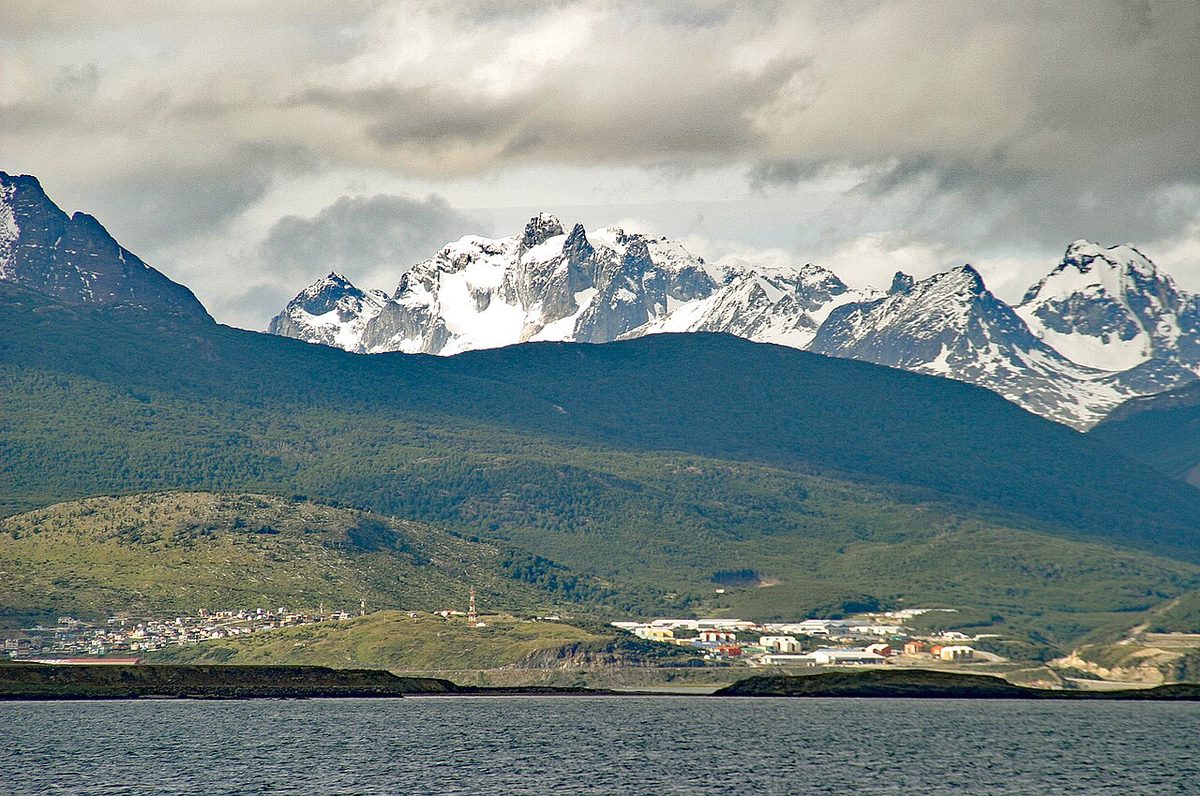
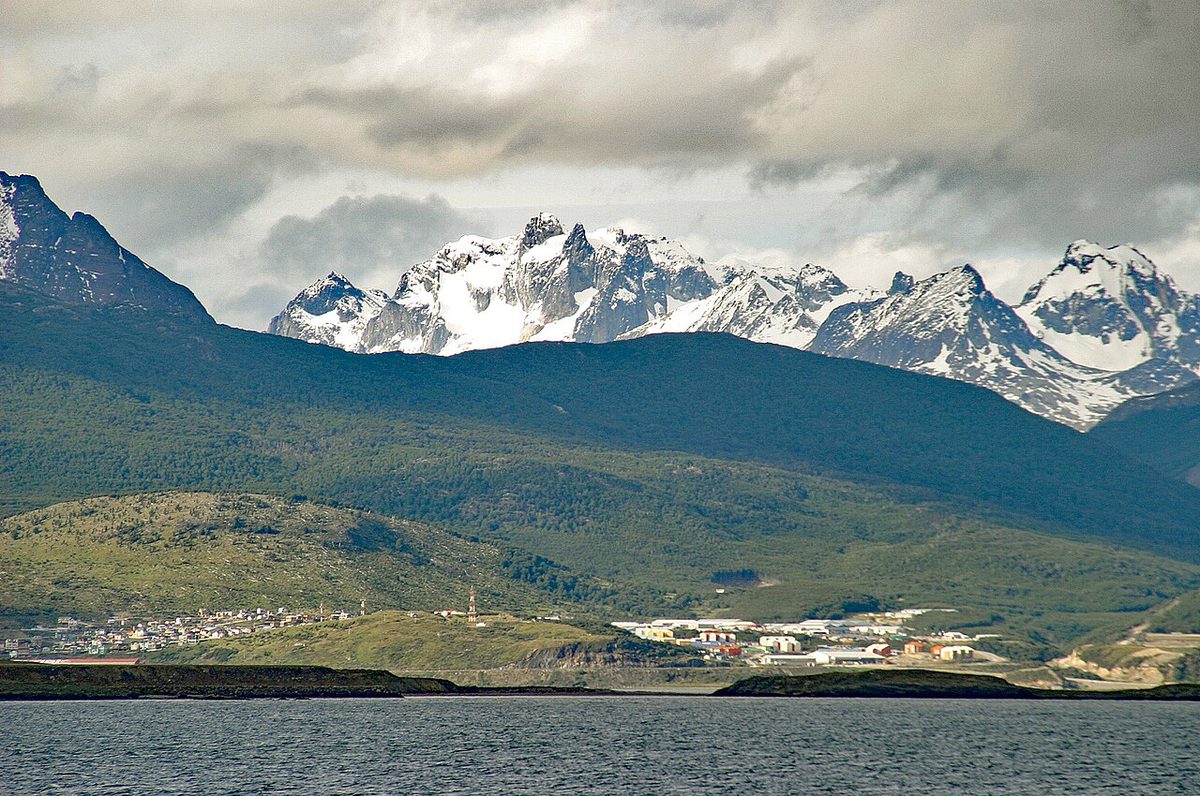
0 — 2 km Fig. 1 · Ushuaia city below snow-capped mountains on the Beagle Channel, the start of any Ushuaia itinerary · Photo: W. Bulach / CC BY-SA 4.0 via Wikimedia Commons
I have watched people land in Ushuaia with a list of fifteen things to do and two and a half days to do them, and I have watched the weather quietly delete half that list before lunch on the first day. The far south does not reward the over-packed plan. It rewards the one that picks a couple of things, gives them their own day, and keeps a slot free for when the wind decides otherwise.
So here is the honest version: the right Ushuaia itinerary is not the one with the most boxes ticked. It is the one that matches the days you actually have to the trip you actually want.
The best Ushuaia itinerary, in brief
For most first-time visitors, the best Ushuaia itinerary is 3 to 4 nights. Three nights gives the two core experiences their own days, Tierra del Fuego National Park and a Beagle Channel cruise, plus a city-and-food afternoon. Four or five nights adds a real hike, a penguin or king-crab day, and a buffer for weather. Two nights is a taste; a week is for hikers, winter, or an Antarctica buffer.
This guide is for the traveler who wants a plan they can trust rather than a wish list. It works whether you are flying in from Buenos Aires, folding Ushuaia into a bigger Patagonia itinerary, or using it as the launch pad for an Antarctica cruise. For the wider context, the Ushuaia guide is the parent hub behind everything below, and it goes deeper on whether the far south belongs in your trip at all.
I have anchored the routes, distances and fees to official sources, mostly Visit Argentina, Ushuaia municipal tourism and Argentina National Parks, and I have hedged anything that moves with the season. Prices and rules change down here, so treat my numbers as “around” and confirm the current figures close to travel.
Ushuaia itinerary at a glance
Use this to pick a length, then read the matching section below.
Days
Route focus
Best for
2 days
City + the core pair (national park morning, Beagle Channel afternoon)
A quick taste; a stopover; a pre-cruise minimum
3 days
Tierra del Fuego NP, Beagle Channel, city and food, each on its own day
First-timers; the standard “see the highlights” trip
4 days
All of the above + one hike or penguin day + a real choice day
The sweet spot; hikers, wildlife, slower travelers
5 days
Park, channel, Laguna Esmeralda, Puerto Almanza/penguins, plus a buffer
A few rules apply to every length, so I will not repeat them in each section:
Do the outdoor things on the clearest days you get. Ushuaia weather changes by the hour, so stay flexible about which day you do the park or the boat.
Do not turn your only full day into a long land transfer like Puerto Almanza or the lakes. Save those for trips with four or five nights.
Build in one flexible slot. In Tierra del Fuego, you will eventually be grateful you did.
How to build your Ushuaia itinerary (the 30-second gut check)
Before the day-by-day, one honest filter, because it is the thing the other itineraries skip. Ushuaia is far from almost everything else in Patagonia, and the flights can quietly eat two travel days. So ask what you are asking Ushuaia to do.
If the answer is “be my Tierra del Fuego stop,” “be my Antarctica launch,” “be my winter-snow base,” or “be a far-south wildlife-and-food few days,” it earns its place easily. If the answer is “it sounded famous and I felt guilty skipping it,” and you only have ten days for classic Patagonia, be honest that it may steal the days you wanted in El Chalten or El Calafate. The rundown of Ushuaia’s national park walks through that decision in full; if you are still choosing the route itself, how to get to Patagonia and the month-by-month weather breakdown come first.
Assuming you are in, here is how the days actually shape up.
2 days in Ushuaia
Two nights gives you one full day, plus the edges of your arrival and departure. It is enough to fall for the setting and not enough to feel you have seen it, which is fine. The goal is the two signature experiences and nothing heroic.
Day 1: Arrive, waterfront, museums, king crab
Keep arrival day light. Walk the waterfront and the Bahia Encerrada reserve, find the End of the World sign for the obligatory photo, wander Avenida San Martin, and drop into the Maritime and Prison Museum or the End of the World Museum if energy allows. If you land early and the sky is clear, Martial Glacier sits less than ten minutes from town and makes a good first look over the city and channel. Then eat well. Ushuaia is a genuinely good seafood town, and your first dinner is the time to order centolla, the local king crab.
Day 2: The core pair, or one bigger thing
With a single full day you have two sensible plays.
Option A, the sampler: a morning in trails, fees and the end-of-the-world train for Lapataia Bay, the end of Ruta 3, and a couple of short trails, then an afternoon Beagle Channel cruise out to the islands and Les Eclaireurs Lighthouse. It is efficient and it shows you both the land and the water. It is also a taste of each, not a deep visit.
Option B, commit to one: a full day in the park with a proper hike like the Senda Costera, or the full-day penguin trip to Martillo Island if wildlife is the reason you came. You cannot do both of these and the cruise in one day. Pick the one you will remember.
The risk with two nights is obvious: one bad-weather day or one delayed flight can take the whole thing. If you only have one full day, plan as if you have one full day, not three.
3 days in Ushuaia
Three nights is the standard short answer, and honestly the one I would pick if time is tight. You get two full days plus the arrival and departure edges, which is exactly enough to give the park and the channel their own days instead of cramming them together.
Settle in slowly. Waterfront loop, Bahia Encerrada, San Martin, a museum if the weather turns, and an unhurried dinner. You have just flown the length of Argentina; do not schedule a summit for tonight. If you arrive with daylight to spare and clear skies, Martial Glacier is the easy bonus.
Day 2: Tierra del Fuego National Park
Give the park a full, relaxed day. Ushuaia municipal tourism describes it as Argentina’s only national park combining marine, forest and mountain environments, protecting 68,909 hectares, and Argentina National Parks lists around 40 km of trails at different difficulty levels.
Choose your style. A guided tour handles logistics and adds interpretation; a rental car gives you flexibility for the short walks and viewpoints; a shuttle from town is the budget option for known trails. The classic stops are Lapataia Bay, Lago Roca/Acigami, Ensenada, and the end-of-Ruta-3 sign. If you want to walk, the Senda Costera runs about 8 km along the coast in roughly 4 hours, and fit hikers with a clear day and prior registration can take on Cerro Guanaco. You can also fold in the End of the World Train, which runs about 7 km into the park.
Day 3: Beagle Channel cruise
Get on the water. A short catamaran cruise covers the port, the islands with their sea lions and cormorants, and Les Eclaireurs Lighthouse, and it fits a half day so you can keep the afternoon for cafes, the waterfront, or shopping for chocolate and souvenirs. If wildlife is the priority and the season is right, trade up to a longer penguin-focused trip instead. Then depart the next morning.
This is the core plan. It works because the two big experiences never have to compete for the same hours.
4 days in Ushuaia
Four nights is where the trip stops feeling like a checklist and starts to breathe. You keep the core pair and add a genuine choice day, which is the difference between a good visit and a rushed one.
Day 1: Arrive, city, waterfront, food
The same gentle arrival as the three-day plan. City, waterfront, museums, dinner, optional Martial Glacier if you land early.
Day 2: Tierra del Fuego National Park
The park, unhurried, with time for a real walk and a slow lunch rather than a drive-through of the viewpoints.
Day 3: Beagle Channel or penguins
Either a Beagle Channel cruise to the lighthouse and the wildlife islands, or the full-day penguin experience. The penguin walk on Martillo Island, also called Yekapasela, is the standout for wildlife travelers: a colony of thousands of Magellanic penguins plus a small group of Gentoos, reached via the historic Estancia Harberton and a short zodiac hop. Note that only one licensed operator is permitted to actually land and walk among the birds, the daily quota is small, and Harberton is typically closed on Tuesdays, so book ahead and read what your tour includes. It is a full day, around seven hours with the drive, so it does not combine with a separate cruise.
Day 4: Your one real choice day
This is the day that earns the fourth night. Pick one:
Laguna Esmeralda, the classic half-day hike, if you want one good trail.
Five nights is the length I would choose if I were not in a hurry. You can keep Ushuaia as a single base, see everything that matters without racing, eat well, and still hold a buffer for the inevitable weather.
Day 1: Arrive, recover, waterfront
City, Bahia Encerrada, food. Ease in.
Day 2: Tierra del Fuego National Park
The park, with short trails, Lapataia, and the train if you want it.
Day 3: Beagle Channel cruise or penguins
The water day. Short cruise for a taste, penguin trip if wildlife is your reason for coming.
Day 4: Laguna Esmeralda
Your hiking day. Ushuaia municipal tourism lists Laguna Esmeralda at 9 km round trip, 4 to 5 hours, about 220 m of elevation gain, with the trailhead roughly 18 km from town on Ruta 3. The catch is not the climb; it is the mud and peat bog. Wear shoes you do not mind ruining, stay on the trail, and check conditions in shoulder season.
Day 5: Puerto Almanza, a winter center, or a buffer
Spend the last full day on the thing that fits your trip. Puerto Almanza is a Beagle Channel fishing village about 75 km away, dedicated to king crab and best done by car or tour. In winter, swap in a snow day at Cerro Castor or the valley centers. Or keep it open as the buffer that saves the trip if the weather stole a day earlier. Depart the next morning.
Five days is not too much if you actually like the far south. It is only too much if you borrowed those days from a route you wanted more.
Ushuaia before an Antarctica cruise
This is the scenario the other itineraries skip, and it has its own rules. If you are boarding an expedition ship, Ushuaia is your staging city, and the cheapest insurance on a very expensive trip is time.
Visit Argentina’s Antarctica page puts trips at 7 to 14 days, with November through March as the broad season, and recommends booking months ahead. Embarkation is usually in the afternoon. Arrive at least one full day before, and two if your flights are complicated, because a missed connection is merely annoying on a normal trip but catastrophic before a ship.
A clean pre-cruise plan looks like this:
Day 1: Arrive, settle, walk the waterfront, eat well.
Day 2: Tierra del Fuego National Park, an easy, scenic day.
Day 3: Beagle Channel cruise, a gear check, and any last errands, or simply hold it as a buffer.
Day 4: Embark.
One judgment call: decide whether a Beagle Channel cruise adds something or just duplicates the first hours of your ship’s route. If your expedition already sails the channel past the lighthouse, you might spend that pre-cruise day on the park or a hike instead. And if you can, stay a night after the cruise too, to decompress before the long flight north.
Ushuaia in winter
Most itineraries online quietly assume summer, and one of the biggest competitor pages flatly tells you not to come between June and September. I disagree. Winter Ushuaia is not a failed summer; it is a different trip, and a good one if snow is the point.
The shape of a winter Ushuaia itinerary bends toward the valleys. Ushuaia municipal tourism puts the Cerro Castor ski center 27 km from the city, with rentals, classes and food, and the valleys circuit along Ruta 3 adds cross-country skiing, snowshoeing, dog sledding, snowmobiles, and lamb in the recreation centers.
A sensible three-to-four-day winter plan: arrive and settle; a snow day at Cerro Castor; a valley day with cross-country skiing, snowshoeing or dog sledding; and a flexible day for weather, the national park in its snow-dusted form, or a museum and a long lunch. Just build around short daylight, cold, and current road conditions, and let local operators make the snow calls. Do not copy a January plan into July and add a thicker jacket.
Fig. 4 · Turquoise Laguna Esmeralda below the mountains, a classic half-day hike near UshuaiaPhoto: CC BY 2.0 via Wikimedia Commons
How to get around for each plan
The single biggest variable in any Ushuaia itinerary is how you move, because it changes the cost, the pace, and which plans are even realistic. For the regional picture, see how to get to Patagonia; here is the Ushuaia-specific version.
Without a car
You can do an excellent 2, 3 or even 4-day trip with no rental at all if you stay central. Downtown Ushuaia, the port, the museums, the restaurants and most tour pickup points are walkable. For the national park, municipal tourism lists regular minibuses from town, plus taxis, remises and organized tours. Beagle Channel cruises leave straight from the port. Laguna Esmeralda is reachable by shuttle, taxi or tour. The trade-off is timing: shuttles run on a set schedule, so you lose the freedom to linger.
With a rental car
A car helps most on the 4 and 5-day plans, where flexibility pays off: the national park at your own pace, Laguna Esmeralda, Puerto Almanza, the lakes and Paso Garibaldi, the valley centers in winter. It is far less necessary for a short trip built around boat cruises and downtown. If you drive in winter, ask about tires, chains, road conditions and insurance before you commit.
With guided tours
Tours shine exactly where logistics would eat your day: the penguin trip via Harberton, a guided park day with the train, a winter snow outing. They are least necessary for a simple Beagle Channel cruise, which you can just book at the port. A sensible no-car hybrid for a 4-day trip: walk and shuttle for the close-in days, and book guided trips for the penguins and any winter snow day.
Costs and what to book ahead
Ushuaia is not the cheapest Patagonia base. Flights, tours, cruise-season demand and remote logistics all add up. For the region-wide picture, use the budget planner for a Patagonia trip; here is what to watch locally.
A few hedged numbers, all worth re-checking close to travel:
National park entry. As of the late-May 2026 check, Argentina National Parks listed Tierra del Fuego daily access at around ARS 30,000 for the general (foreign-visitor) category, with lower resident and student rates and 3-day and 7-day Flexipass options. A 50% second-consecutive-day discount applies within 72 hours, and for this park it applies only to online purchases. Bring ID for category checks, and confirm whether your tour already includes the ticket.
End of the World Train. Tourist class runs around USD 40 for adults, with pricier first and premium classes, and the fare typically includes transfers from town and multilingual commentary. Crucially, park entry is not included in the train ticket, so budget both.
Beagle Channel cruise and penguin tours. A short cruise is the affordable option; the full-day penguin trip via Harberton costs more and takes the whole day. Ask what is included: port tax, pickup, landing access, and the weather-cancellation policy.
Book early for peak-season lodging, the penguin walk (small daily quota), small-boat cruises with a specific operator, winter ski packages, rental cars on peak dates, and any well-known restaurant if food matters. A small city fills fast when cruise passengers, Antarctica travelers and summer visitors overlap. For where to base yourself, the where to stay in Patagonia guide breaks down the zones; in Ushuaia itself, pick convenience over a faraway view if the stay is short.
When to go, and how it changes the plan
Ushuaia is a year-round destination, but a summer trip and a winter trip are almost different vacations. If your dates are flexible, read the seasonal guide to Patagonia before booking flights this far south.
Summer (December to March) is easiest for first-timers: long days, full tour schedules, the Beagle Channel in full swing, and the broadest hiking. The trade-off is demand and price, and a reminder that summer here is still cool. Pack layers, rain protection, and a warm hat for the boat.
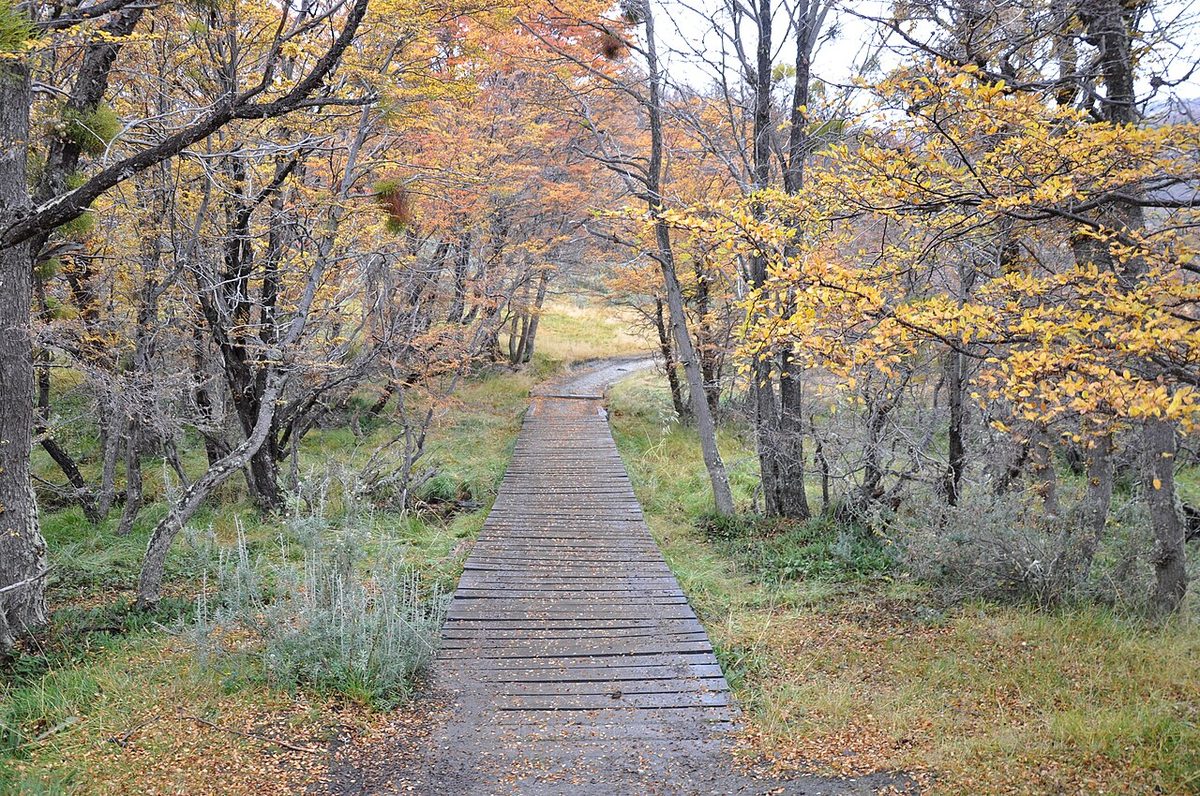
Autumn (April and May) can be quietly lovely, with lenga forests turning color and fewer crowds, but trails get more conditional and tour frequency thins, so stay flexible.
Winter (June to September) is its own trip, built around Cerro Castor and the valley centers, with short daylight and real cold. Plan around snow, not summer trails.
Spring (October and November) is a transition: lengthening days, lingering snow up high, muddy trails, and weather that has not settled. November is generally the friendlier half for a first-time plan.
A quick plan by traveler type
The same number of days can mean very different itineraries depending on who you are.
First-timer: the 3-day plan. Park, Beagle Channel, city and food, in that order.
Hiker: 4 to 5 days, swapping in Laguna Esmeralda and a longer park day like the Costera or Cerro Guanaco.
Wildlife traveler: prioritize the full-day Martillo Island penguin trip over a short cruise.
Family: the short park trails, the End of the World Train, a gentle cruise, and a snow center in winter.
Food traveler: add Puerto Almanza and a king-crab dinner in town.
Antarctica traveler: the pre-cruise plan above, with a buffer day and gear checks.
For the full menu of activities to slot into any of these, the guide to Ushuaia’s sights guide is the companion to this one.
Ushuaia pairs best when it has time and route logic. With two to three weeks, a common arc is Ushuaia, then El Calafate for Perito Moreno Glacier, then El Chalten for Fitz Roy hiking, adding Torres del Paine if time allows. With only ten days, adding Ushuaia usually makes the classic route too rushed, and I would protect the glacier and the granite first.
If you are weighing it against the northern lakes, the Bariloche and northern Patagonia guide helps you compare; the short version is that Bariloche is the softer, food-and-lakes base, while Ushuaia is the far-south, Beagle-and-Tierra-del-Fuego one. They complement each other, but they are a long way apart.
Ushuaia itinerary FAQ
How many days do you need in Ushuaia?
Most first-time visitors need 3 to 4 nights. Two nights covers the core pair, Tierra del Fuego National Park and a Beagle Channel cruise, in a single rushed day. Three nights gives them their own days plus city and food time. Four or five nights adds a hike, a penguin or king-crab day, and a weather buffer. Visit Argentina officially suggests 2 to 4 days.
What is the best thing to do in Ushuaia?
For most first-timers, the two best things are Tierra del Fuego National Park and a Beagle Channel cruise, ideally on separate days. The park gives you Lapataia Bay, forest and coast trails, and the end of Ruta 3, while the cruise shows you the islands, sea lions, cormorants, and Les Eclaireurs Lighthouse. Add Laguna Esmeralda or the Martillo Island penguins if you have a third day.
Can you do Ushuaia in 2 days?
Yes, but treat it as a taste. With one full day you can pair a morning in Tierra del Fuego National Park with an afternoon Beagle Channel cruise, or commit the whole day to one bigger thing like a park hike or the penguin trip. You cannot do the park, the cruise, and the penguins in two days, so choose, and keep the plan loose in case the weather turns.
Do you need a car in Ushuaia?
No, not for a simple 2 to 4-day trip if you stay central. Minibuses, taxis, shuttles and tours reach the national park and Laguna Esmeralda, and Beagle Channel cruises leave from the port in town. A rental car mainly pays off on 4 to 5-day plans with Puerto Almanza, the lakes, Paso Garibaldi, or the winter valley centers, where having your own schedule matters more.
Is the Beagle Channel cruise or the penguin tour better?
It depends on your time. A short Beagle Channel cruise is the efficient choice and covers the lighthouse and wildlife islands in a half day, which fits a 2 or 3-night trip. The full-day Martillo Island penguin trip, via Estancia Harberton, is the highlight if wildlife is why you came, but it takes around seven hours and only one operator is licensed to land, so book ahead.
Do I need to book the End of the World Train?
It helps in peak season, and you can buy through the official operator or as part of a guided park tour. The ride runs about 7 km into Tierra del Fuego National Park, lasts roughly 90 minutes round trip, and usually includes transfers from town and multilingual commentary. Remember that the train ticket does not include national park entry, so budget both, and know that it is a scenic add-on, not essential.
What is the best month to visit Ushuaia?
December through March is the easiest broad window for sightseeing, Beagle Channel trips, the national park, hiking, and Antarctica departures, though it is the busiest. June through September is best for skiing and winter snow activities at Cerro Castor and the valley centers. April and November are quieter shoulder months that reward flexible travelers willing to work around the weather.
Final thoughts
The Ushuaia trips I have seen go well were never the ambitious ones. They were the ones where someone picked a length, gave the park and the channel their own days, chose one extra thing for the weather rather than the bucket list, and kept a slot free. A long dinner with king crab. A boat past the lighthouse on a clear morning. A muddy walk to a glacial lake that earns the photo.
So decide how many nights you have, choose the plan above that fits, protect that flexible slot, and stop trying to see everything. You will see more, oddly, by chasing less. And when you are ready to widen the trip, the Ushuaia and Tierra del Fuego guide and the Patagonia itinerary planner will help you connect the far south to the rest.