3 Week Patagonia Itinerary: Classic Route + One Big Add-On
A realistic 3 week Patagonia itinerary: the classic Day 1-21 southern route plus modular Bariloche, Ushuaia, wildlife & Carretera Austral add-ons.
By Patagonia Tourism Guide · First published 9 Jul 2026 · Updated 1 Aug 2026
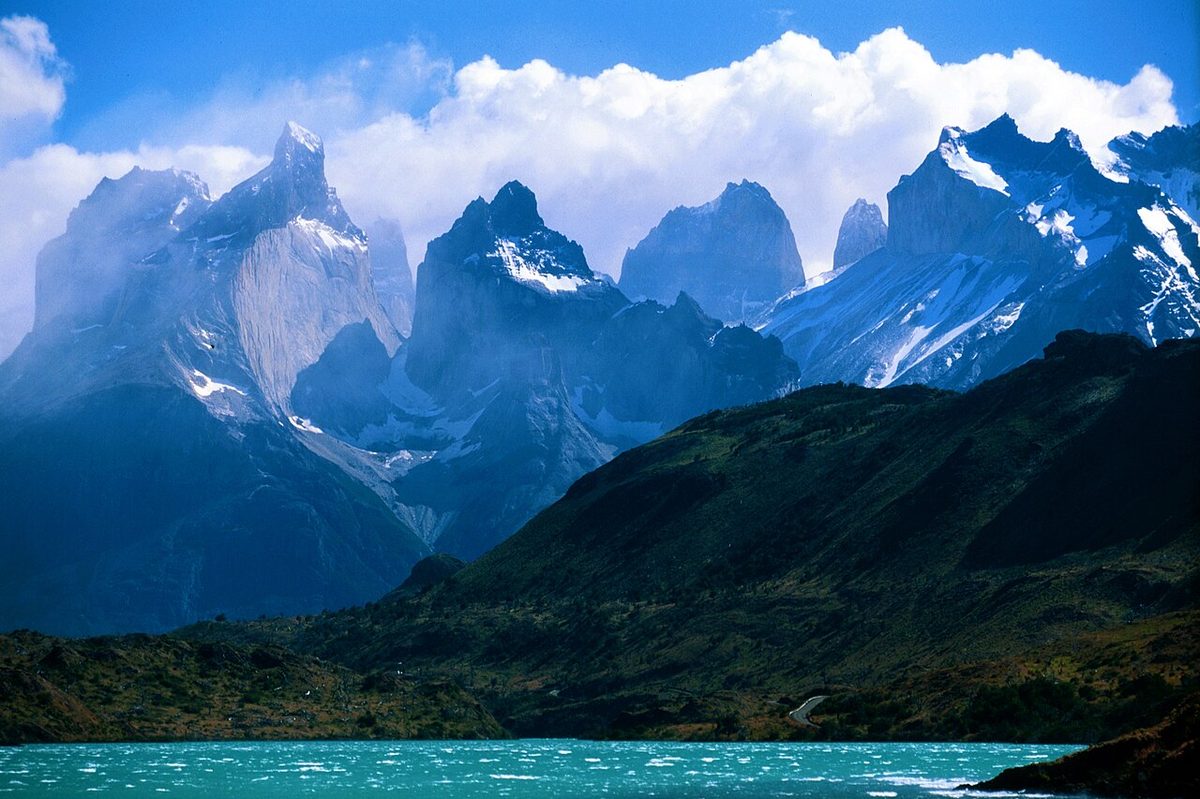
0 — 2 km Fig. 1 · Torres del Paine granite peaks, the southern highlight of a 3 week Patagonia itinerary · Photo: Winky from Oxford, UK / CC BY 2.0 via Wikimedia Commons
Three weeks is the length where Patagonia finally stops fighting you. Two weeks is the famous sweet spot, but it spends almost every day on the southern icons. With 21 days you keep that proven core and still bolt on one whole extra region without turning the trip into a series of airport runs. The hard part is no longer “how do I fit it in.” It is “which extension actually makes this trip better.”
The best 3 week Patagonia itinerary is the classic southern route — El Calafate, El Chalten, Puerto Natales, and Torres del Paine — built out to a relaxed 14-day spine, plus exactly one major add-on: northern Bariloche and the Lake District, far-south Ushuaia, the Peninsula Valdes wildlife coast, or a Carretera Austral leg. One add-on, not three.
This guide is for the traveler who already has roughly 21 days locked and wants a route they can actually copy: real day numbers, real transport, real internal flights, and honest weather buffers. If you are still deciding how many days to take, start with the trip-planning walkthrough for Patagonia and come back once three weeks is firm. Everything below assumes you have the time and you want to use it well.
I am going to give you the full Day 1 to Day 21 core first, then four bolt-on modules as separate day-by-day plans, then a straight decision section on how to choose between them. Mix and match. The core stays the same; you swap the add-on.
At a Glance: The Core Route and Your Add-On Options
Use this table before you book anything. The core is fixed. The add-on is the choice that defines your trip.
Segment
Days
Where you base
How you move
Best for
Core (fixed)
~14
El Calafate, El Chalten, Puerto Natales, Torres del Paine
Fly into El Calafate (FTE); buses + one border crossing
Everyone — the non-negotiable spine
North add-on: Bariloche
~5-6
Bariloche, Villa La Angostura
Fly Bariloche (BRC) ↔ El Calafate
Lakes, food, families, softer adventure
Far-south add-on: Ushuaia
~4-5
Ushuaia
Fly El Calafate ↔ Ushuaia (USH), or via Buenos Aires
End-of-the-world atmosphere, Antarctica gateway
Wildlife add-on: Peninsula Valdes
~4-5
Puerto Madryn
Fly Trelew (REL)/Madryn ↔ El Calafate via Buenos Aires
Whales, penguins, orcas (season-dependent)
Carretera Austral leg
~6-7
Coyhaique, Cochrane, Villa O’Higgins
Fly Balmaceda (BBA); ferries + gravel
Road-trippers who love logistics
Swipe to see all columns
Table 1
For most first-time travelers I would pick the classic core plus Bariloche. It gives Patagonia the most variety — northern lakes and forests at the start, then the southern granite-and-glacier drama — with the simplest internal flight (Bariloche to El Calafate is a direct route on the main Argentine carriers). If the far south is the dream, swap in Ushuaia. If you are a wildlife person traveling in spring, Peninsula Valdes changes the whole texture of the trip. Only choose the Carretera Austral if you genuinely enjoy ferries and gravel roads.
Two scheduling rules carry through everything below. First, build your weather buffers into the hiking towns, not the transfer days. Second, book the route-defining pieces — internal flights and any Torres del Paine refugios — months ahead. The pacing logic here matches the parent Patagonia itinerary planner; this article just commits to specific days.
The Classic Core: Day 1 to Day 14
This is the spine. It is the same route the 2 week Patagonia itinerary is built on, but with the extra breathing room three weeks allows. Run it after your add-on or before it, depending on which gateway your add-on uses. I will write it as the second half of the trip (Days 8-21 in a Bariloche-first plan), but the day logic is identical wherever it sits.
Day 1: Arrive in El Calafate
Fly into El Calafate (airport code FTE), the practical gateway for southern Argentine Patagonia, with direct connections from Buenos Aires and from Bariloche and Ushuaia. Keep this day soft. Walk the lakefront, sort out cash and your glacier transport, and sleep early if you came off a long international connection. Do not try to do anything heroic on arrival day.
Day 2: Perito Moreno Glacier
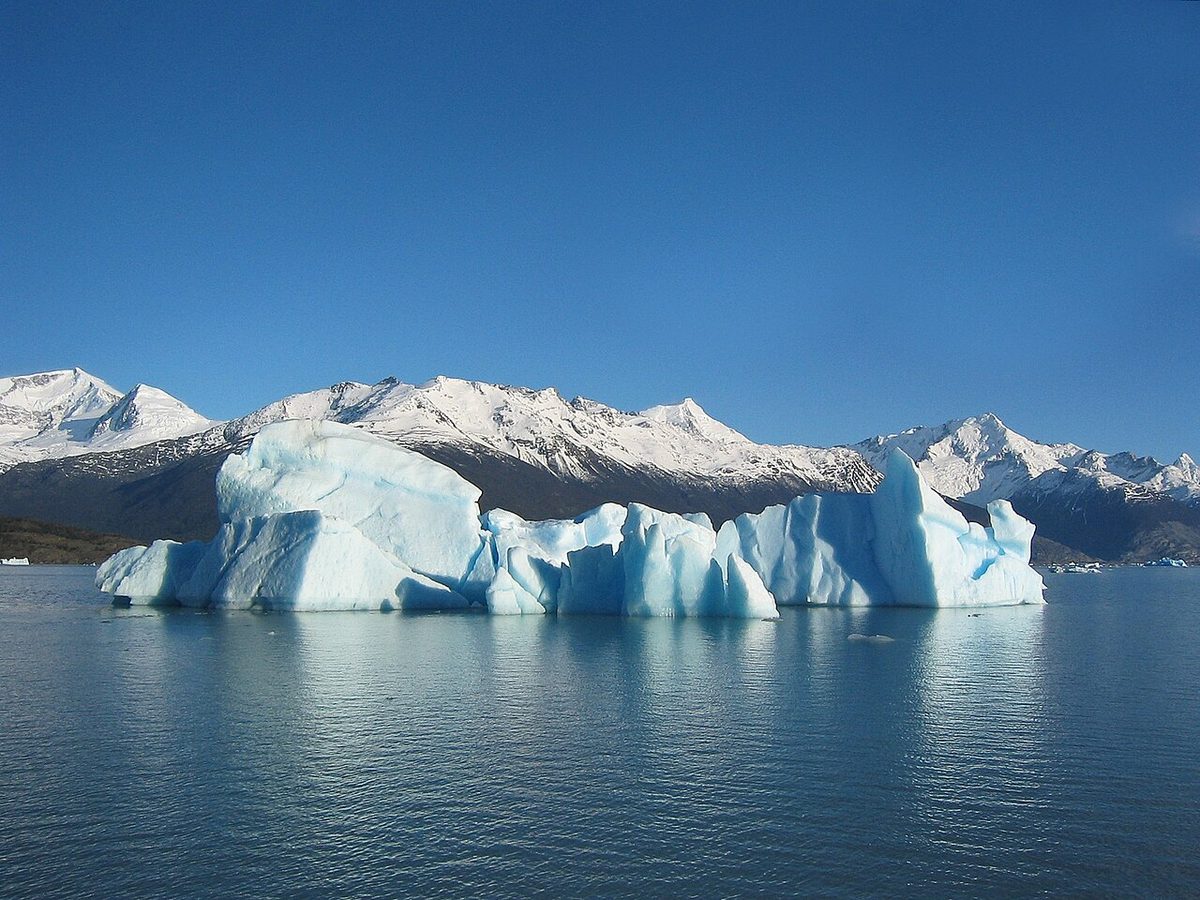
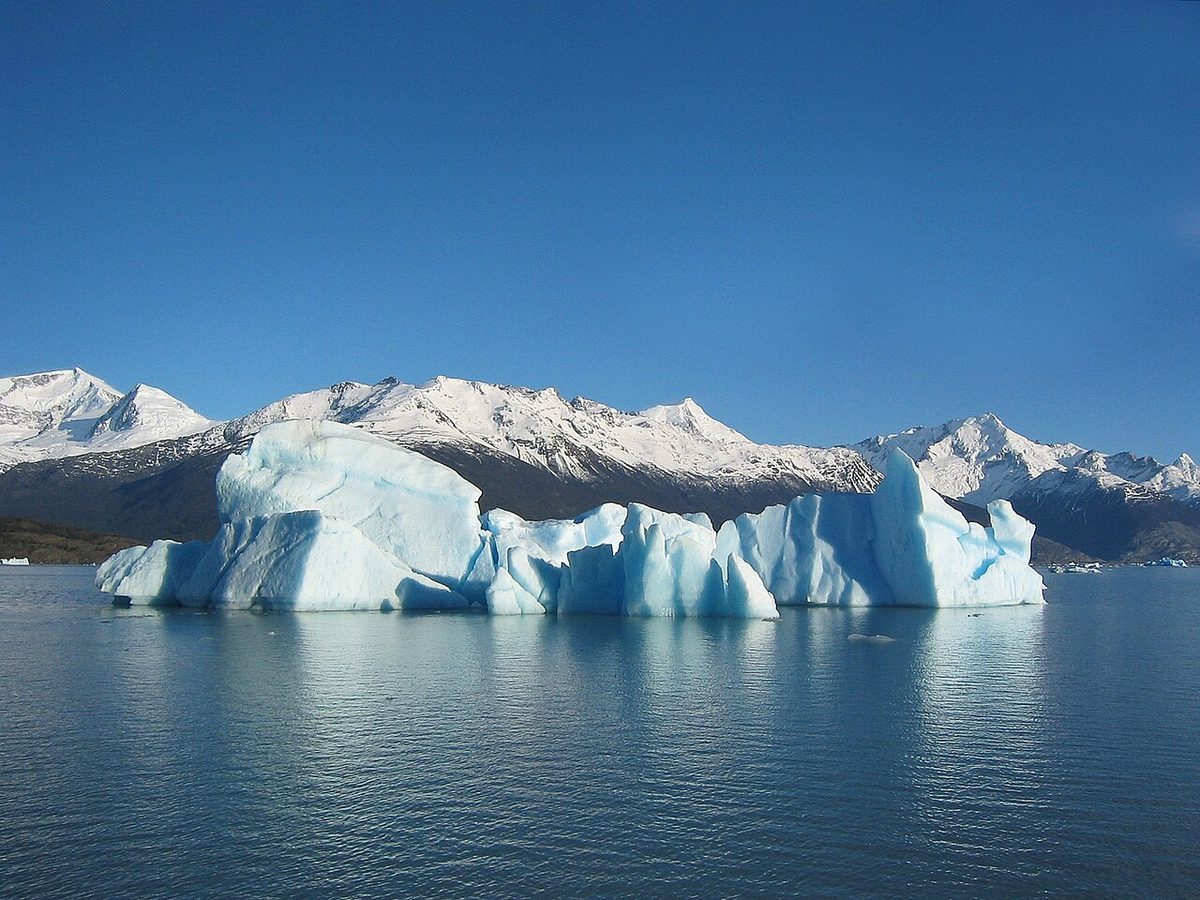
Spend a full day on the walkways at Perito Moreno. Visit Argentina notes the glacier sits around 80 km from El Calafate via Ruta Provincial 11, roughly 1 hour 30 minutes by car. Add a boat approach or, if it fits your budget and the season, a mini-ice-trek on the glacier itself. This is one of Patagonia’s most reliable wins — easy access, enormous payoff. The full mechanics of the glacier day are in the El Calafate and Perito Moreno guide.
Day 3: Transfer to El Chalten
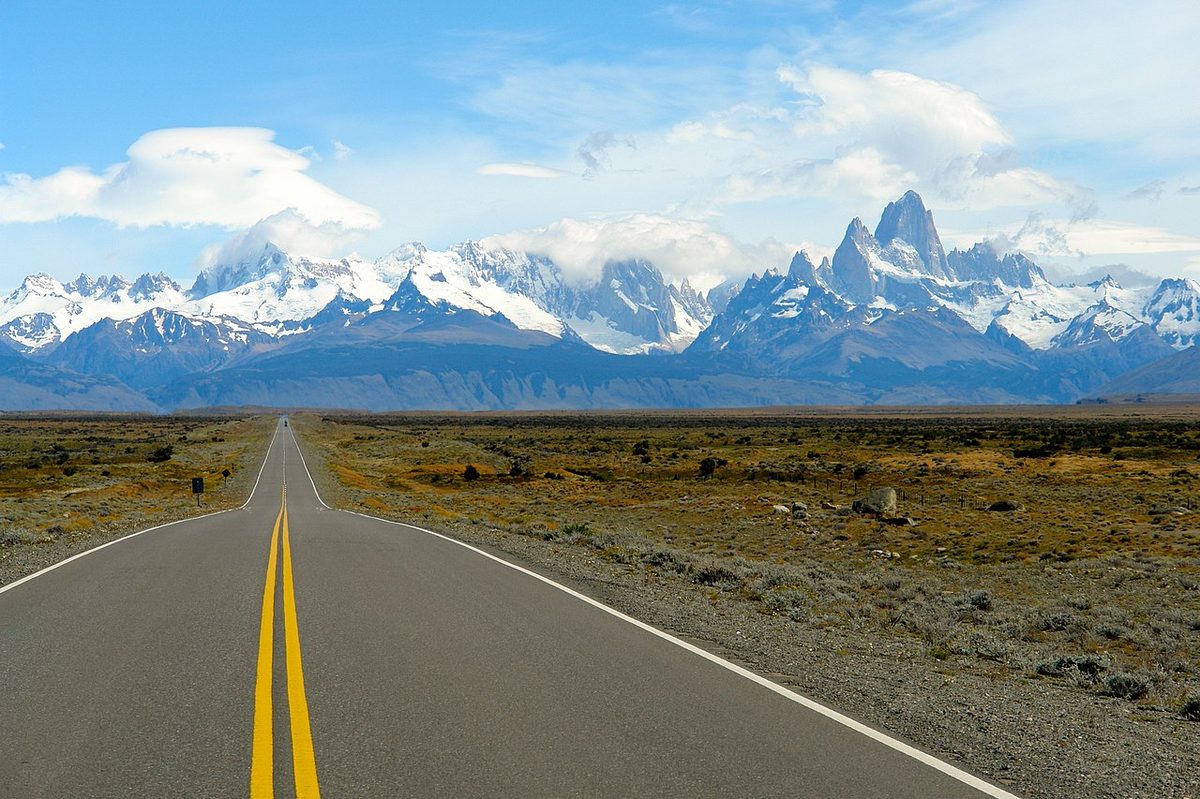
Travel north to El Chalten by bus or car. Visit Argentina describes El Chalten as mainly accessed from El Calafate, about 215 km away, roughly a three-hour ride. If the sky is clear when you roll in, do a short viewpoint walk that same afternoon rather than banking every view for “later.” In El Chalten, later is not guaranteed.
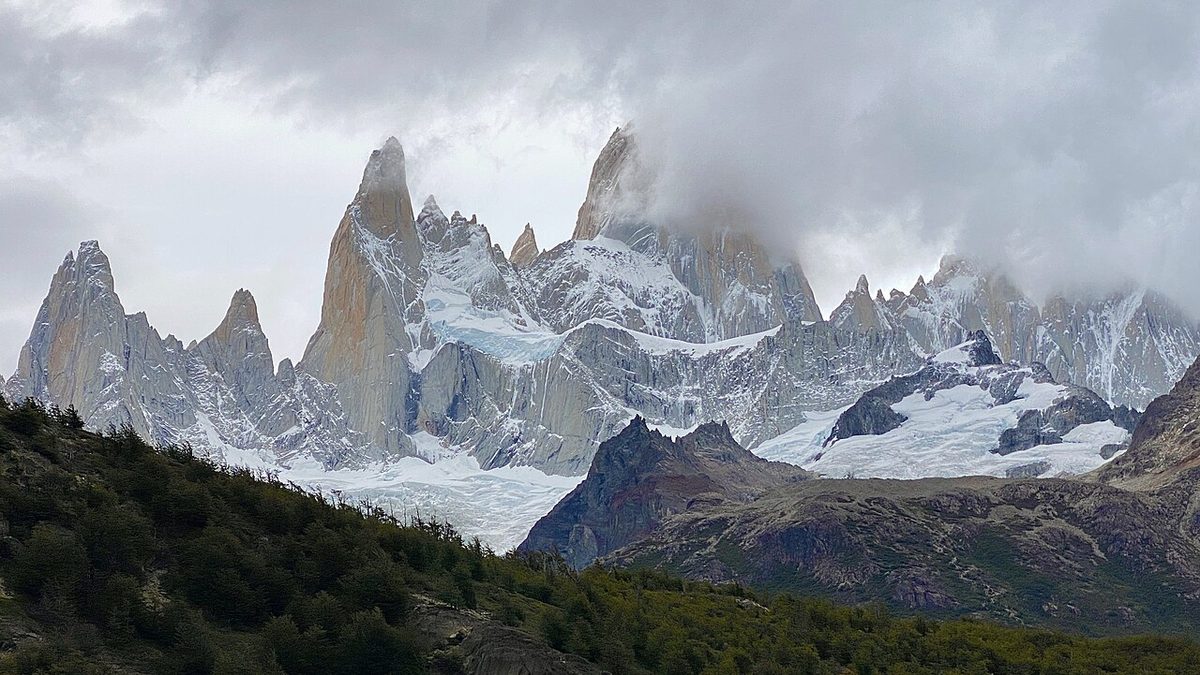
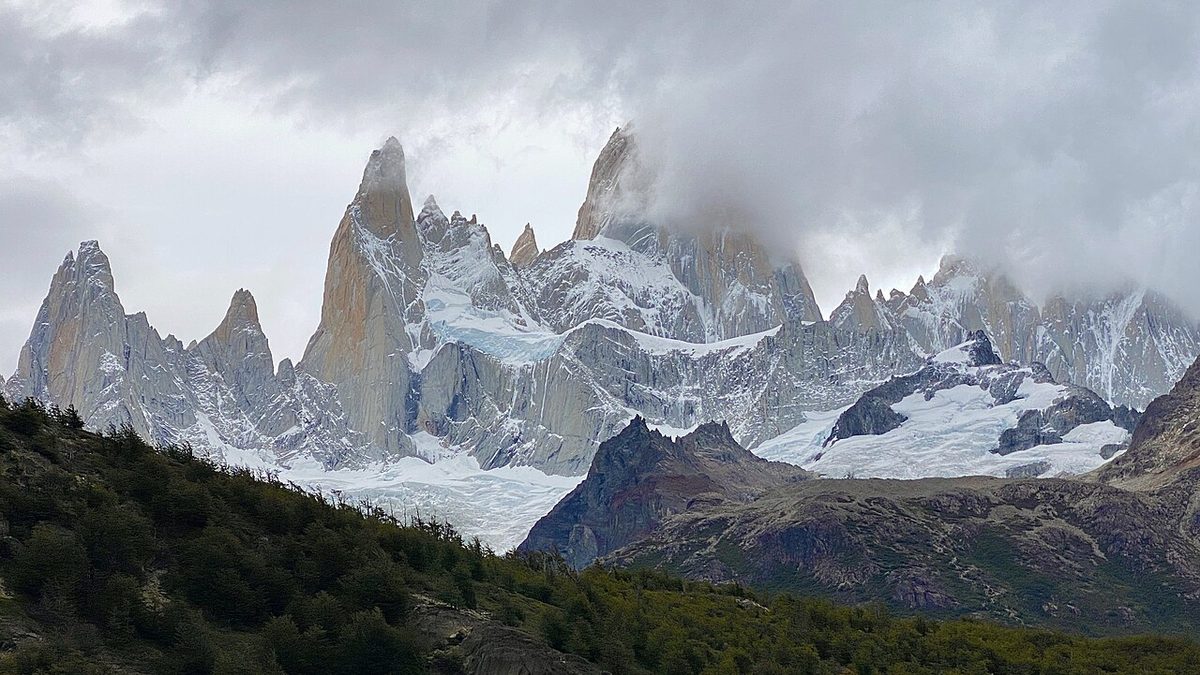
Use your best forecast day for the hike that matters most to you — for most people that is Laguna de los Tres, the classic Fitz Roy viewpoint. Do not be stubborn about doing hikes in a fixed order. The whole town reshuffles its plans around the forecast every morning, and you should too. Trail details and the full hike menu are in the El Chalten and Fitz Roy hiking guide.
Day 5: Laguna Torre or a second hike
Take Laguna Torre, Loma del Pliegue Tumbado, or a shorter viewpoint depending on weather and how your legs feel. Pliegue Tumbado is the one to choose on a clear day if you want both Fitz Roy and Cerro Torre in a single panorama.
Day 6: El Chalten buffer day
This is the day that makes the trip honest. If the weather has been kind and your legs are done, rest and wander the village. If clouds stole Fitz Roy on Day 4, this is your second shot. Protecting an El Chalten buffer is the single most useful scheduling decision on the whole route. The mountain does not read your itinerary.
Day 7: Transfer to Puerto Natales
This is your cross-border logistics day, and you should treat it as one — it is structure, not scenic filler. Buses run from El Calafate to Puerto Natales in Chile; the crossing takes time, and a missed connection reshapes the next morning. Arrive, settle, and breathe. Worldly travelers learn fast that in Patagonia getting from A to B is its own task, and the bus only runs on certain days.
Day 8: Puerto Natales prep day
Do laundry, buy trail food, confirm park tickets or tour bookings, rent a car if your plan needs one, and eat a proper meal. If you are doing the W Trek, this is where you make sure every refugio and campsite reservation is in hand. Chile Travel’s W Trek guide is blunt that you must have those reservations before you arrive, and that capacity is limited and books months ahead.
Days 9 to 12: Torres del Paine
Four days in the park. How you spend them depends on your style.
Day-hiking version (based in or near the park, or day-tripping from Puerto Natales): Base Torres on your best-weather day, the French Valley area, the Grey Glacier sector, and a lower-effort scenic drive on a windy day.
W Trek version: the classic four-to-five-day hut-to-hut route. Chile Travel describes the journey beginning in Puerto Natales with about a two-hour bus to Laguna Amarga; a typical flow runs Paine Grande to Grey, into the French Valley, then out to the Base Torres viewpoint.
Staying inside or near the park cuts daily travel; Puerto Natales is cheaper and more flexible. Either way, check CONAF for current notices, especially outside peak summer when there can be winter-guide requirements and seasonal closures. The full park breakdown is in the breakdown of the park’s sectors and trails.
Use this for a park day the weather ate, a calmer Puerto Natales day, or repositioning toward your exit airport. With three weeks you can afford to lose a day to wind and still come out fine — that is the whole point of the extra length. Do not give this buffer away by over-scheduling.
Day 14: Depart the core
Fly out of Punta Arenas (PUQ) — about a five-hour drive from the park, with more frequent flights — or out of Puerto Natales (PNT), which has direct service to Santiago and Puerto Montt and sits only around two hours from the park entrance. Compare both airports on price and timing before you commit. If your add-on comes after the core rather than before it, this is a transfer day toward the next region instead of a flight home.
That is the 14-day spine. Now choose your one add-on and slot it in front of Day 1 (or after Day 14). Each module below is written as its own little day-by-day trip.
North Add-On: Bariloche and the Lake District (5-6 Days)
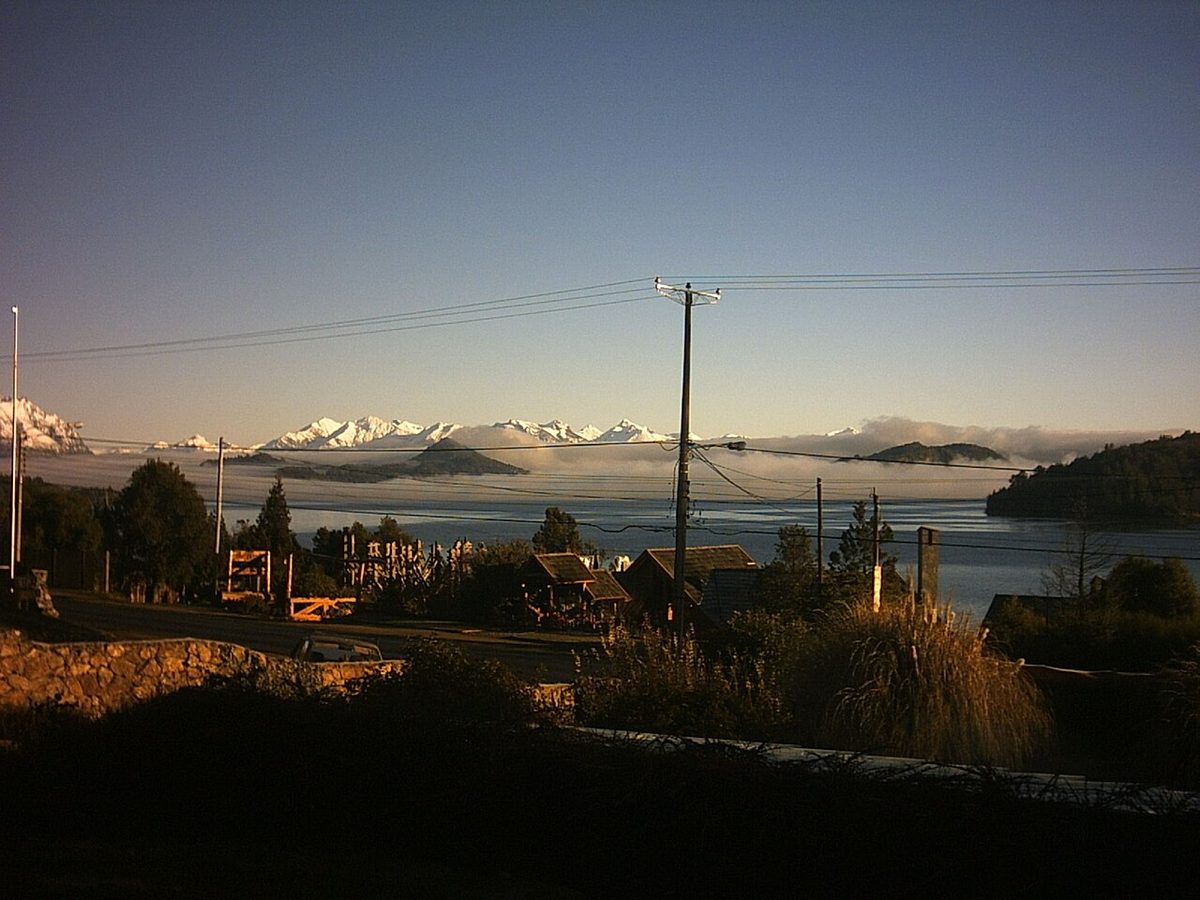
Best for variety, food, lakes, families, and softer adventure. This is my default pick because it gives the trip a completely different opening chapter — German-influenced chocolate, deep blue lakes, gentle forests — before the granite drama down south. Visit Argentina describes Bariloche as a year-round destination good for 2 to 7 days, built around adventure tourism, chocolate, hiking, kayaking, cycling, and snow sports.
Run this before the core so you finish on the southern highlights. The connecting flight is the easy part: Bariloche (BRC) has a direct route to El Calafate (FTE) on the main Argentine carriers, so you do not have to backtrack through Buenos Aires.
Day 1: Arrive Bariloche. Fly in from Buenos Aires. Settle into town on the shore of Lake Nahuel Huapi, grab chocolate, and get your bearings.
Day 2: Circuito Chico. Drive or cycle the classic loop — Cerro Campanario chairlift for the postcard panorama, Llao Llao viewpoints, lakeside stops.
Day 3: Lake activity day. Kayak on Nahuel Huapi, take a short forest hike, or boat to Isla Victoria and the Arrayanes forest.
Day 4: Seven Lakes Road toward Villa La Angostura. Drive the Ruta de los Siete Lagos at least partway, one of the most scenic routes in Argentina, with lake after lake strung along the road.
Day 5: Buffer or deeper day trip. Push toward San Martin de los Andes, do a refugio hike, or simply slow down before the flight south.
Day 6: Fly Bariloche (BRC) to El Calafate (FTE) and pick up the core at Day 1.
Far-South Add-On: Ushuaia and Tierra del Fuego (4-5 Days)
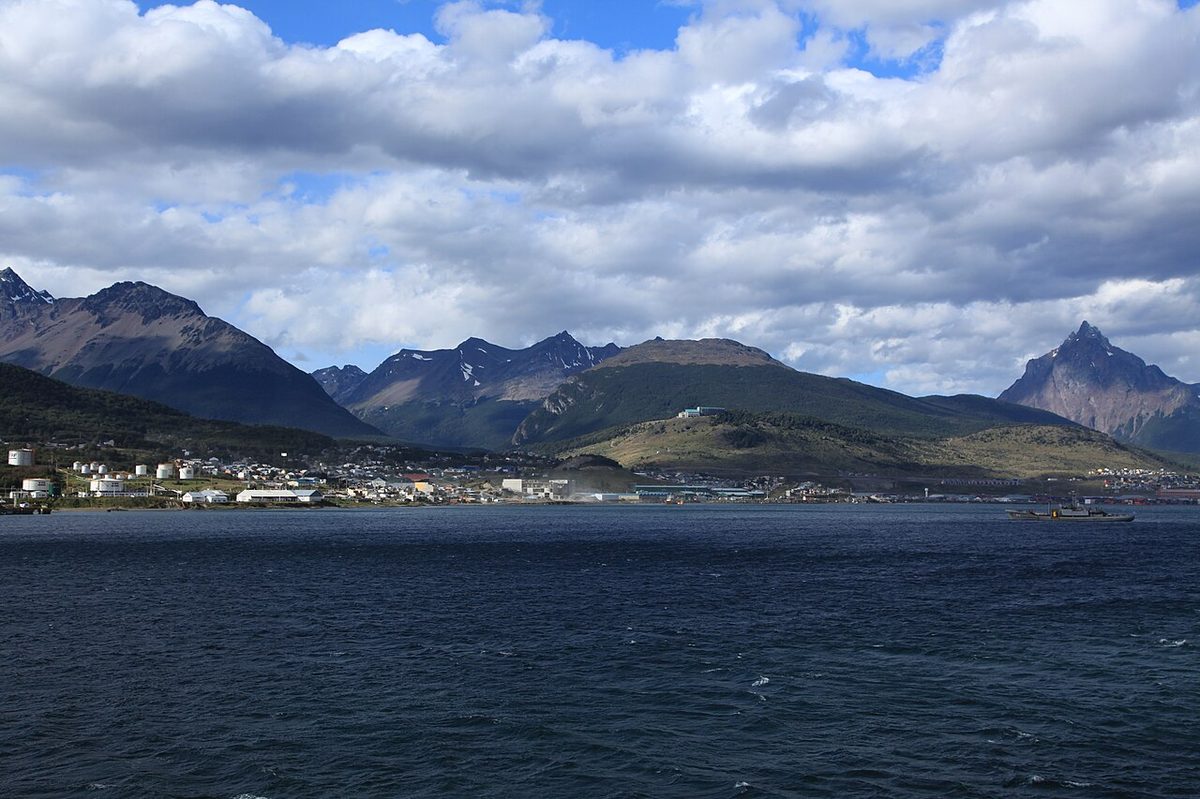
Best for the end-of-the-world atmosphere, the Beagle Channel, and travelers eyeing an Antarctica cruise. Visit Argentina calls Ushuaia the southernmost city on the planet and the gateway to Antarctica, recommending 2 to 4 days and highlighting Beagle Channel tours, Cerro Castor, the Martial Glacier, and Tierra del Fuego National Park. By land it is a long way down — around 3,084 km from Buenos Aires on Ruta Nacional 3 — so you fly.
The connection is friendlier than people expect: El Calafate (FTE) and Ushuaia (USH) have a direct route, so you can run Ushuaia and the core back to back without routing through Buenos Aires. Do Ushuaia first or last; I slightly prefer first, so the trip builds toward Fitz Roy and Torres del Paine.
Day 1: Arrive Ushuaia. Fly in (from Buenos Aires, or direct from El Calafate if you are bridging from the core). Walk the waterfront, settle in.
Day 2: Beagle Channel. Take a boat tour out past the sea-lion colonies and the Les Eclaireurs lighthouse — the classic Ushuaia half-day.
Day 3: Tierra del Fuego National Park. Hike the coastal trails, ride the End of the World Train if that appeals, and stand at the literal end of Ruta 3.
Day 4: Buffer or Martial Glacier / extra trail. Use a clear day for the Martial Glacier walk above town, or hold this as weather insurance.
Day 5: Fly to El Calafate (USH to FTE) and start the core, or fly home if Ushuaia is your finale.
The full far-south breakdown — Beagle Channel operators, the national park, Antarctica logistics — is in the Ushuaia and Tierra del Fuego guide.
Wildlife Add-On: Peninsula Valdes (4-5 Days)
Best for whales, penguins, sea lions, elephant seals, and orcas — and it only works if your travel month lines up with the animals. This is the most original of the four add-ons and gives the trip a texture nothing else does. Visit Argentina’s Peninsula Valdes page names September through November as the ideal window, notes the Southern right whale is usually visible June to October, sea-lion colonies build September to November, and killer whales are likeliest February to May. Build around the species calendar first, then fit the route to it.
You reach the peninsula from Puerto Madryn (about 56 km away) or by flying into Trelew International Airport (REL), about 66 km from Madryn; you can also fly into Puerto Madryn directly from Buenos Aires. Unlike Bariloche and Ushuaia, there is no tidy direct hop to El Calafate here — you will route through Buenos Aires between the wildlife coast and the south, so give the connection a generous transfer.
Day 1: Arrive Puerto Madryn. Fly into Trelew or Madryn from Buenos Aires. Settle on the coast.
Day 2: Peninsula Valdes full day. Head out to Puerto Piramides for a whale-watching boat (in season), then the lookouts at Punta Norte, Caleta Valdes, and Punta Cantor for elephant seals and sea lions.
Day 3: Punta Tombo or a second peninsula day. In the right months, Punta Tombo’s huge Magellanic penguin colony is the headline; otherwise go deeper into the peninsula.
Day 4: Buffer / Welsh Chubut. Hold weather insurance for the boat, or explore the Welsh towns of Gaiman and Trelew.
Day 5: Fly Trelew/Madryn to Buenos Aires, connect to El Calafate (FTE) and begin the core.
Carretera Austral Add-On: A Northern-Chile Leg (6-7 Days)
Best for road-trippers who actively enjoy ferries, gravel, and remote valleys. This is the hardest add-on to slot in, because you are stapling two different planning problems together: the southern icons and a remote Chilean road. Chile Travel describes the Carretera Austral as more than 1,200 km of road that includes barge crossings — this is not a casual side trip, it is its own journey. With only a week of it you do a section, not the whole road.
Fly into Balmaceda (BBA) near Coyhaique to start in the middle of the route, rent a sturdy vehicle, and work south. Getting from the southern end back to El Calafate is the awkward part: plan the transition carefully by air or overland, because there is no quick connection.
Day 1: Fly to Balmaceda, base in Coyhaique. Pick up your vehicle, stock up — services thin out fast south of here.
Day 2: Coyhaique to Puerto Rio Tranquilo. Drive the lake-and-mountain road; the Marble Caves boat trip on Lago General Carrera is the highlight.
Day 3: Rio Tranquilo to Cochrane. Remote, beautiful driving with at least one barge or narrow gravel stretch to respect.
Day 4: Cochrane and Patagonia National Park. Wildlife, valleys, and genuine end-of-the-road quiet.
Day 5: Buffer for ferries/weather. On this road, a buffer is not optional — barge schedules and rain dictate the day.
Day 6-7: Reposition south toward El Calafate by your planned air/overland route, then start the core.
How to Choose Your Add-On for a 3 Week Patagonia Itinerary
If you only remember one thing: pick the add-on that matches your reason for coming, not the one that looks most impressive on a map. Here is how I would decide.
Choose Bariloche if you want the most variety and the smoothest logistics, you are traveling with family or a mixed-ability group, food and lakes are part of the appeal, or you are visiting in winter and might ski. It is the safest, most crowd-pleasing add-on, and the direct Bariloche-El Calafate flight makes it the least painful to connect.
Choose Ushuaia if the far-south, end-of-the-world feeling is genuinely the dream, you are boarding an Antarctica cruise, or the Beagle Channel and Tierra del Fuego have been on your list for years. The direct El Calafate-Ushuaia flight keeps it efficient. Skip it if your real fascination is northern lakes — Ushuaia is dramatic but it is more of the rugged south you are already getting.
Choose Peninsula Valdes if wildlife is a core motivation and your dates fall in the right season (spring, September-November, is the broadest window). If you are coming in deep summer purely for hiking, the wildlife is quieter and the Buenos Aires connection costs you a travel day — in that case, skip it.
Choose the Carretera Austral if you love a road-trip puzzle, you are comfortable with gravel and ferries, and remoteness is the point rather than a problem. For most travelers this is the one to save for a dedicated trip.
Still torn between two? Default to Bariloche for variety, or Ushuaia for drama. And if you find yourself wanting all four, you are not planning a three-week trip — you are planning a one-month Patagonia trip and have not admitted it yet.
Transport and Internal Flights: Making 21 Days Actually Work
A three-week Patagonia route lives or dies on its flights and its booking order. Get these right and the whole thing flows.
The internal flights that matter
Patagonia is a region, not a country — roughly the size of a continent’s worth of map — so you connect distant pieces by air, not by endless overland slogs.
Bariloche (BRC) ↔ El Calafate (FTE): direct on the main Argentine carriers. This is what makes the Bariloche add-on so clean.
El Calafate (FTE) ↔ Ushuaia (USH): direct, which lets you run the far-south module without backtracking through Buenos Aires.
Buenos Aires ↔ Ushuaia (USH): frequent; the usual way in if Ushuaia is your start or end.
Buenos Aires ↔ Trelew (REL) / Puerto Madryn: how you reach the wildlife coast; expect to transit Buenos Aires between Valdes and the south.
Santiago / Puerto Montt ↔ Puerto Natales (PNT) or Punta Arenas (PUQ): your Chilean exits from the core. Puerto Natales sits about two hours from Torres del Paine; Punta Arenas about five, but with more flights.
Balmaceda (BBA): the gateway for a Carretera Austral leg.
The recurring trap is assuming every pair of towns connects directly. Several do not, and you end up backtracking through Buenos Aires or Santiago — sometimes with an overnight. Always check whether your two regions actually link before you assume a one-hour hop.
Buses, cars, and the border
On the core, buses are genuinely good: El Calafate to El Chalten, and El Calafate to Puerto Natales across the border, are well-served corridors. They are not a subway, though — schedules vary, the crossing takes time, and buses can be cancelled in bad weather, which is exactly why your buffers live in the hiking towns.
Rental cars earn their keep around El Calafate and El Chalten, on Torres del Paine scenic routes, all over Bariloche and the Lake District, on the wildlife coast, and absolutely on the Carretera Austral. They also bring cross-border permits, one-way fees, gravel, and fuel planning. If you rent one vehicle to cross between Argentina and Chile, you need a specific permit from the rental company — arrange it well ahead. Rent a car to solve a route problem, not because it feels adventurous. The full logistics picture is in how to get to and around Patagonia.
What to book first, and weather buffers
Book in this order: international flights, then the internal Patagonia flights above, then any W Trek refugios and in-park Torres del Paine lodging, then high-demand small-town hotels in El Chalten, El Calafate, Puerto Natales, Bariloche, and Ushuaia, then rental cars with cross-border paperwork, then specialty tours (ice trek, whale boat, penguin trip), then cross-border buses and ferries, and finally park tickets close to travel following current rules.
On buffers: with three weeks you have room for two of them, and you should use it. Put one in El Chalten (Day 6 above) and one after Torres del Paine (Day 13). Resist the urge to fill both with extra activities at booking time. A buffer you protected is the day the cloud finally lifts off Fitz Roy and you are still there to see it. For cost planning across all of this, the Patagonia trip cost and budget guide breaks down flights, park fees, and lodging.
For the hiking-led versions of this itinerary, aim for late November through March. December to February gives maximum access, the longest days, and full transport frequency; March trades some daylight for thinner crowds and autumn color; November is shoulder-season value with some snow and opening-schedule risk.
The big exception is the wildlife add-on. If Peninsula Valdes is your extension, the calendar flips toward September through November, when whales and sea-lion colonies are at their best — and you accept slightly cooler, windier southern hiking in exchange. You cannot fully optimize both, so decide which half of the trip leads. The full month-by-month picture is in when to visit Patagonia. For a hiking-first variant of this whole route, see the hiking route planner for Patagonia; if hard trails are not your thing, the guide to non-hiking Patagonia approach reshapes every segment around glaciers, boats, and scenic drives.
Frequently Asked Questions
Is 3 weeks enough for Patagonia?
Three weeks is enough for the full classic southern route plus one major region — Bariloche, Ushuaia, Peninsula Valdes, or a Carretera Austral section — at a pace that feels like travel rather than logistics. It is not enough to see all of Patagonia, which spans roughly 2,500 km north to south. Pick one add-on, protect your buffers, and the trip stays relaxed.
Is 3 weeks too long in Patagonia?
No, three weeks is rarely too long if you build the route around regions rather than a long checklist. The risk is over-packing it with too many flights and one-night stops, which makes 21 days feel rushed. Choose the classic core plus a single add-on, keep two weather buffers, and the extra week becomes the difference between enduring Patagonia and enjoying it.
Should I do the Argentina or Chile side of Patagonia?
For a three-week trip, do both — that is the whole advantage of the length. The classic core already crosses the border: Argentina gives you Perito Moreno, El Chalten, and Fitz Roy; Chile gives you Puerto Natales and Torres del Paine. Your add-on then leans one way: Bariloche, Ushuaia, and Valdes are Argentine, while a Carretera Austral leg is Chilean.
Do you need to fly between places in Patagonia?
Yes, for the long jumps. You fly into El Calafate to start the core, and internal flights connect distant regions — Bariloche to El Calafate, El Calafate to Ushuaia, and Buenos Aires to the wildlife coast. Within the core, buses handle El Calafate to El Chalten and the border crossing to Puerto Natales. Trying to do every leg overland would eat days you do not have.
Should I add Ushuaia or Bariloche to my 3 week Patagonia itinerary?
Add Bariloche for variety, lakes, food, families, and the simplest connection — it has a direct flight to El Calafate. Add Ushuaia if the end-of-the-world atmosphere, the Beagle Channel, or an Antarctica cruise is the real draw; it also connects directly to El Calafate. Bariloche gives you contrast with the rugged south; Ushuaia gives you more of the dramatic south.
Do I need to book the W Trek in advance for a 3-week trip?
Yes. If your core uses the W Trek in Torres del Paine, you must reserve refugios and campsites before you arrive, and capacity is limited enough that you should book months ahead. Chile Travel and CONAF both stress this. If you would rather stay flexible, run Torres del Paine as day hikes from Puerto Natales or an in-park base instead, and skip the fixed trek bookings.
Final Thoughts
If a friend handed me 21 days and asked what to do, I would not start with the map. I would ask what kind of trip they actually want. Then I would lock the classic southern core — El Calafate, El Chalten, Puerto Natales, Torres del Paine — because it is proven, the distances are sane, and it delivers the icons. Only then would I choose the one add-on that fits their reason for going: Bariloche for variety, Ushuaia for the far-south pull, Valdes for wildlife in spring, the Carretera Austral if they love a road puzzle.
The mistake I would talk them out of is adding two extensions to “make the most of it.” Three weeks is generous, but it is not infinite, and every extra region you cram in steals a buffer you will wish you had kept. The best 3 week Patagonia itinerary is not the one with the most pins. It is the one with one well-chosen add-on and two protected days for when Patagonia does its thing and hides the mountain. Keep the route honest, and three weeks is plenty.
When you are ready to compare this against shorter and longer options, the Patagonia itinerary planner holds the 7-day, 10-day, and 2-week routes side by side.