A hike-first Patagonia hiking itinerary with day-by-day 1, 2 & 3-week routes: W Trek, El Chalten day hikes, O Circuit, plus refugio booking and gear.
By Patagonia Tourism Guide · First published 12 Jul 2026 · Updated 1 Aug 2026
0 — 2 km Fig. 1 · Hikers on the Torres del Paine W Trek route in Patagonia with granite peaks behind · Photo: Adal Mesa Delgado / CC0 via Wikimedia Commons
The first thing I tell anyone planning a Patagonia hiking itinerary is to stop building it around towns. Build it around trails, then let the towns fall into place where you sleep. That one change fixes most of the bad routes I see, because in Patagonia the hike is the reason you came, and the hike is also the thing the wind can cancel without asking.
The best Patagonia hiking itinerary for most people is the 2-week version: a few hard day hikes out of El Chalten for Fitz Roy and Cerro Torre, then the 4 to 5-day Torres del Paine W Trek across the border in Chile. That combination gives you both marquee trail experiences without a multi-region marathon.
This guide is for hikers. If you want estancias, glacier cruises, and scenic drives with the occasional short walk, you want the broader Patagonia itinerary planner instead. If your idea of a good day is 20 kilometers and 1,000 meters of climbing to stand under a granite wall, keep reading. I have laid out three complete day-by-day routes, a trail difficulty reference, the refugio booking reality that trips up almost everyone, and the gear and weather notes that actually matter on these specific trails.
Patagonia Hiking Itinerary at a Glance: 1, 2 & 3 Weeks
Use this table to pick your trip length before you read anything else. Everything below expands these three routes into day-by-day plans.
Trip length
Hike-first route
Marquee trails
Best for
Skip for now
1 week
El Chalten only, OR Torres del Paine W Trek only
Laguna de los Tres + Laguna Torre, OR the full W
One trail region, done properly
Combining both countries
2 weeks
El Chalten day hikes + W Trek
Fitz Roy, Cerro Torre, Base Torres, French Valley, Grey Glacier
Most hikers — the core route
O Circuit, Bariloche, Huemul
3 weeks
El Chalten + W Trek + O Circuit OR Bariloche hut-to-hut
All of the above plus the remote O loop or Nahuel Huapi refugios
Experienced trekkers wanting wilderness
Trying to add a fourth region
Swipe to see all columns
Table 1
For most first-time Patagonia hikers, my honest recommendation is the 2-week route: El Chalten for around four nights of day hiking, then cross to Puerto Natales and walk the W Trek. It is the cleanest way to get both icons. One week means choosing a single region. Three weeks is when you earn the remote stuff: the O Circuit, the Huemul, or the Bariloche huts in the north.
A quick note before the routes. Two official facts shape every plan on this page. First, Chile Travel’s W Trek guide is explicit that you must have reservations for all your refugios and campsites before you arrive at the park’s Laguna Amarga gate. Second, Visit Argentina notes that El Chalten’s trails now require a paid trekking-area ticket bought through the National Parks website. Neither is hard. Both will sink your day if you ignore them.
1-Week Patagonia Hiking Itinerary
Seven days is enough to hike one region well. It is not enough to hike two. I know that is not what the “see it all” itineraries promise, but every time I have watched someone try to fold El Chalten and the W Trek into a week, they spent the trip on buses and at borders instead of on trails.
So choose. Below are the two strongest one-week hike-first options. Pick El Chalten if you want flexible day hiking and the best odds of a clear Fitz Roy. Pick Torres del Paine if a multi-day hut-to-hut trek is the dream.
Option A: El Chalten, the day-hiking week
Best for: hikers who want the most trail time with the least logistics, and who like sleeping in a real bed.
This is the route I would send most people on for a first hiking week, because everything starts on foot from town and you can read the forecast each morning and pick your hike. Visit Argentina calls El Chalten the trekking capital of Argentina for exactly this reason — the trails fan out straight from the village.
Day 1 — Arrive in El Calafate, transfer to El Chalten. Fly into El Calafate, then take the bus or a transfer roughly 215 kilometers north to El Chalten, about three hours. If you land early and the sky is clear, walk up to the Los Condores and Las Aguilas viewpoints from town in the evening. They are short and they orient you.
Day 2 — Laguna Torre (Cerro Torre). Start with this one. It is around 18 to 22 kilometers round trip with gentle climbing and no brutal final wall, so it is a smart way to find your legs. The payoff is the jagged spike of Cerro Torre over a glacial lake. Sleep in El Chalten.
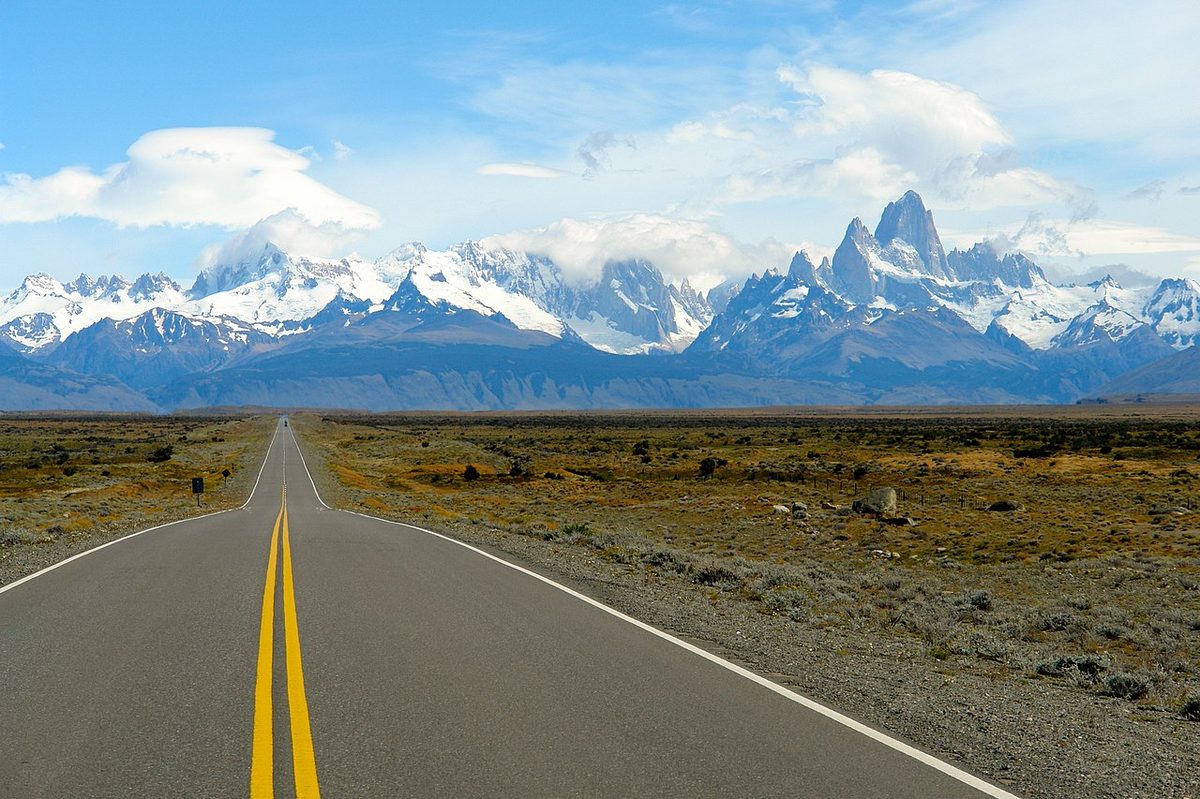
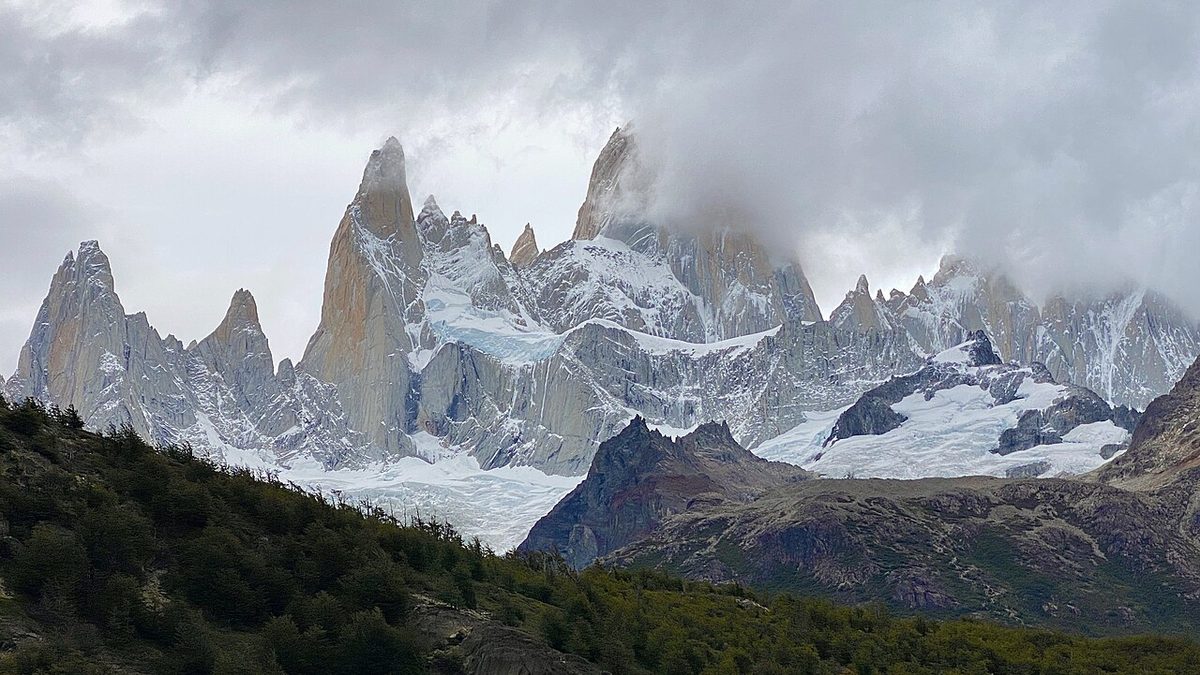
Day 3 — Laguna de los Tres (Fitz Roy). Use your best forecast day for this. It is the hardest standard day hike here — roughly 20 to 25 kilometers round trip with around 800 to 1,000 meters of gain, and a savage last kilometer up loose moraine. Most people take 8 to 10 hours. Stand under Fitz Roy, eat your sandwich, and earn the descent. Sleep in El Chalten.
Day 4 — Loma del Pliegue Tumbado. This is the underrated one. It is the only viewpoint where you see Fitz Roy and Cerro Torre and the glaciers all at once, around 19 to 21 kilometers round trip on a steadier grade. If the morning is clear, go.
Day 5 — Buffer or fourth hike. This day is why the itinerary works. If weather cost you a viewpoint earlier, this is your second chance. If you have banked all three, add Laguna Capri, Chorrillo del Salto, or push toward Lago del Desierto.
Day 6 — Slow morning, transfer to El Calafate. Walk something short, then bus back. If your legs are wrecked, the Perito Moreno Glacier walkways near El Calafate are a flat, spectacular reward.
Day 7 — Depart from El Calafate.
Why it works: one airport, no border, and three or four chances at the weather. For the full trail breakdown, including the Río Eléctrico approach and where the portals start, see the Fitz Roy hiking breakdown.
Option B: the Torres del Paine W Trek week
Best for: hikers whose single goal is the W, and who want a multi-day hut-to-hut experience.
If the W Trek is the point, build the whole week around it and keep everything else simple.
Day 1 — Arrive in Puerto Natales. Fly into Puerto Natales (PNT) or, more reliably, Punta Arenas (PUQ) and transfer about three hours. Puerto Natales is your gear-and-food base.
Day 2 — Prep day. Confirm both operator bookings, your park ticket, buses, and the catamaran. Rent or buy anything missing. Eat well.
Days 3 to 7 — The W Trek. Five days, four nights, around 70 kilometers, drawing a “W” past Base Torres, French Valley, and Grey Glacier. The full day-by-day version is in the next section and in the Torres del Paine W Trek and O Circuit guide.
Day 7 — Return to Puerto Natales, depart the next morning if you can. Do not book a same-day international flight off the trail. The catamaran and bus chain leaves no room for a Patagonian surprise.
If you only have a week and you want both Fitz Roy and the W, my advice is blunt: you do not have a week for both. Do one now and come back. For the wider picture, the Torres del Paine travel guide covers the park beyond the trek.
2-Week Patagonia Hiking Itinerary: El Chalten + W Trek
This is the route I would put my own money on. Two weeks lets you hike El Chalten properly, cross to Chile without panic, and walk the full W Trek with a buffer day on each side. It is the classic hikers’ combination, and it is classic because it works.
The route spine
El Calafate (arrive) → El Chalten (4 nights, day hikes) → cross to Puerto Natales → W Trek (5 days) → Puerto Natales → depart.
You can run it in reverse if your flights or W Trek bookings demand it. Either direction is fine; let refugio availability decide.
Days 1 to 6: El Chalten and Fitz Roy
Day 1 — Arrive El Calafate, transfer to El Chalten. Roughly three hours north. Evening viewpoint walk if it is clear.
Day 2 — Laguna Torre. Ease in. Cerro Torre over the lake, gentle grade, around 18 to 22 kilometers.
Day 3 — Laguna de los Tres. Your hardest day and your best photo. Save it for the clearest forecast; the mountain hides often.
Day 4 — Loma del Pliegue Tumbado. The full panorama day. A steadier climb than Fitz Roy and, on a clear morning, the best single view in the area.
Day 5 — Buffer / fourth hike. Rest, or bank a missed viewpoint, or walk to Laguna Capri. The point of four nights is to never bet Fitz Roy on a single sky.
Day 6 — Transfer toward Puerto Natales. This is a logistics day. Bus from El Chalten or El Calafate across the border. It is long and it crosses two passport checks; treat it as a travel day, not a hiking day.
Days 7 to 13: the W Trek
Day 7 — Puerto Natales prep day. Laundry, food shopping, gear check, and a last confirmation of both operator bookings and your park ticket. You cannot enter without reservations, so verify them now, not at the gate.
Day 8 — Bus to Laguna Amarga, register, hike to Base Torres. Around a two-hour bus from Puerto Natales. Register at the CONAF gate with your passport, ticket, and reservation vouchers. Most people walk up to the Mirador Base de las Torres the first afternoon or the next morning — an 8 to 10-hour return through the Ascencio Valley and a steep moraine finish. Sleep near Central or Chileno.
Day 9 — Toward Cuernos / Francés. A beautiful, gentler day along Lago Nordenskjold under the Cuernos del Paine. Sleep at Refugio Los Cuernos or the Francés sector.
Day 10 — French Valley. Drop your big pack at Campamento Italiano and climb into the granite amphitheater toward the Francés and Británico viewpoints. If it is socked in and snowing — and it can be — turn around at Francés and save your legs. Continue to Paine Grande to sleep.
Day 11 — Grey Glacier. The final arm of the W, around eight hours return from Paine Grande to the Grey Glacier viewpoints, with icebergs floating in the lake. Back to Paine Grande for the night.
Day 12 — Catamaran out, return to Puerto Natales. Cross Lago Pehoe by catamaran to Pudeto, then bus back to town. Shower, eat, sleep horizontally.
Day 13 — Recovery and buffer. Keep this day. If weather pushed a section, you have margin. If not, rest in Puerto Natales or take a short scenic day.
Day 14 — Depart via Puerto Natales, Punta Arenas, or back to El Calafate.
That is the 2-week hiking itinerary I would hand a friend. It has both icons, a buffer on each leg, and it does not pretend the W Trek is a casual stroll. For a less trail-heavy version of two weeks, compare it with the broader 2-week Patagonia itinerary, and if you are squeezing it tighter, the 10-day Patagonia itinerary shows what gets cut.
3-Week Patagonia Hiking Itinerary: Add the O Circuit or Bariloche Huts
Three weeks is when Patagonia opens up for hikers. You keep the 2-week core and add one serious extension. Do not try to add two. Pick the wilderness loop or the northern huts, not both.
Option A: upgrade the W to the full O Circuit
Best for: experienced trekkers who want the remote back side of Torres del Paine.
The O Circuit is the full loop around the Paine massif — roughly 110 to 130 kilometers over 7 to 9 days — and the W is simply its southern half. The difference is the back section: Serón, Dickson, Los Perros, and the John Gardner Pass, walked one-way counterclockwise, far quieter than the W. Swap the W block in the 2-week plan for the O and you get a 3-week route like this:
Days 1 to 6: El Chalten as above.
Day 7: transfer to Puerto Natales.
Day 8: prep day.
Days 9 to 17: the O Circuit (the remote loop, then the W arms).
Days 18 to 19: recover in Puerto Natales.
Days 20 to 21: depart.
The O demands more: longer days, a high pass, and a strict counterclockwise direction. It also has its own booking complications because you cross between both operators’ territory. The full comparison and day-by-day is in the Torres del Paine W Trek and O Circuit guide.
Option B: add Bariloche hut-to-hut in the north
Best for: hikers who want a completely different texture — alpine ridges, granite spires, and mountain refugios in the Lake District.
Instead of going deeper into one park, fly north to Bariloche after the W and trek the refugios of Nahuel Huapi National Park. Visit Argentina describes Bariloche as a year-round hiking and adventure base, and the refugio network is its best-kept secret. Refugio Frey is the standout day hike — a ridge walk to an alpine lake ringed by climbing spires — and you can link Frey to Refugio Jakob (San Martin) on a tougher traverse, or attempt the full four-refugios loop (Frey, Jakob, Laguna Negra, Lopez), around 46 kilometers that takes 4 to 5 days because of the rocky, scrambly terrain.
A 3-week shape with Bariloche:
Days 1 to 6: El Chalten.
Day 7: transfer to Puerto Natales.
Days 8 to 12: W Trek (prep + 4-night trek).
Day 13: return to Puerto Natales, recover.
Day 14: travel north toward Bariloche (this usually means flying via Buenos Aires or El Calafate).
Days 15 to 19: Bariloche refugio hiking — Frey, then a hut-to-hut traverse.
Days 20 to 21: slow down and depart.
This is the most varied hiking trip on the page. The northern Patagonia overview covers the refugios, the chairlift start to Frey, and the season, which runs roughly December to April up there.
Here is the honest difficulty picture. Distances are round trip from the trailhead and are approximate — they vary by source and by where your watch starts counting. Treat times as full-day estimates with stops, not race paces.
Trail
Region
Distance (approx.)
Difficulty
Notes
Laguna Torre
El Chalten
18–22 km
Moderate
Gentle grade, no final wall; good first day
Laguna de los Tres (Fitz Roy)
El Chalten
20–25 km
Hard
Brutal last ~1 km moraine; 8–10 hrs
Loma del Pliegue Tumbado
El Chalten
19–21 km
Moderate–hard
Best combined panorama; steady climb
W Trek (full)
Torres del Paine
~70 km / 5 days
Moderate–hard
Multi-day; Base Torres + French Valley are the cruxes
Base Torres (day section)
Torres del Paine
~18–22 km
Hard
8–10 hrs, steep moraine finish
O Circuit (full)
Torres del Paine
~110–130 km / 7–9 days
Hard
Remote back side + John Gardner Pass; one-way
Huemul Circuit
El Chalten
~60+ km / 4 days
Expert
River fords, Tyrolean traverses, ice-cap views
Refugio Frey
Bariloche
~20–22 km return
Moderate–hard
Ridge + alpine lake; can use chairlift start
Four Refugios loop
Bariloche
~46 km / 4–5 days
Hard
Rocky scrambling slows progress
Swipe to see all columns
Table 2
If you are honest with yourself about that table, the rest of the planning gets easier. You do not need to be an athlete for the W Trek or the El Chalten day hikes, but you do need to be comfortable on your feet for 8 to 10 hours and unbothered by wind and elevation change. The Huemul and the O are a different commitment entirely.
Refugio and Campsite Booking: the Part Everyone Gets Wrong
This is where Patagonia hiking itineraries go from “planned” to “actually possible.” It is the single most frustrating piece of the whole trip, and it is worth understanding before you book a flight.
On the W and O treks, you cannot just show up and walk. Chile Travel states plainly that you must have reservations for every refugio and campsite before you reach the Laguna Amarga gate, and that places are very limited — book six months or more ahead. At the gate, rangers check your passport, your park entry ticket, and your reservation vouchers for each night.
The catch that surprises people: the overnights are run by two different private operators, not by CONAF. One company runs some sites, the other runs the rest, and a full W crosses both. That means you are booking on two separate systems, each with its own calendar, and your ideal sequence might be open on one and sold out on the other. When that happens you adjust dates or flip your direction. The old free CONAF campsites that used to ease this (Italiano, Paso) have stayed closed since the pandemic, which tightens availability further.
My practical advice:
Decide your trek dates first, then book overnights immediately — months out for December to February.
Book in trail order and check both operators’ calendars together before committing to any single night.
Choose “full board” or pre-pitched tents if you want to carry less; choose your own tent and food if you want to spend less. Both are valid; just decide before you book.
Screenshot every voucher into one phone album. You will show them at the gate and at each refugio, and trail signal is poor.
The same “book early” rule applies to El Chalten’s accommodation in peak season, though the day hikes there do not require trail reservations — only the National Parks trekking ticket. For the deeper booking walkthrough and current operator notes, lean on the Torres del Paine W Trek and O Circuit guide, and check CONAF for any current park notices before you treat a route as open.
W Trek vs O Circuit: Which Should a Hiker Choose?
If you are deciding between the two Torres del Paine treks, here is how I think about it.
Choose the W Trek if this is your first multi-day Patagonia hike, if you have 4 to 5 trekking days, or if you want the three signature sights — Base Torres, French Valley, Grey Glacier — without committing to a high pass and remote camps. It is the busier route precisely because it concentrates the best views into less time.
Choose the O Circuit if you are an experienced backpacker, you have 7 to 9 days, and you want the quiet. The O includes everything the W has plus the wild northern loop and the John Gardner Pass, where the crowds vanish and the scenery feels like Patagonia before tourism. It is harder, longer, and one-directional, and the booking is fiddlier because you span both operators’ ground.
A simple rule I use: if you are flying this far and you have the days and the fitness, the O gives you the W as a bonus. If you do not have nine days or you are unsure of your trekking legs, the W is the right call and there is no shame in it.
El Chalten rewards a smart order more than any other Patagonia hiking base, because the trails leave straight from town and you can pick each morning by forecast. Visit Argentina lists Laguna de los Tres, Laguna Capri, Laguna Torre, and Loma del Pliegue Tumbado as the headline circuits, with three official portals — Los Condores, Base Fitz Roy, and Río Eléctrico — feeding the network.
The sequence I would follow with four hiking days:
Laguna Torre first. Gentle, lets your legs adapt, and Cerro Torre is reliably worth it.
Laguna de los Tres on your best weather day. It is the hardest and the most weather-sensitive; do not waste a clear sky on an easier trail.
Loma del Pliegue Tumbado for the all-in-one panorama, ideally on a second clear day.
A buffer or a softer fourth — Laguna Capri, Chorrillo del Salto, or a walk toward Lago del Desierto.
If you camp at Poincenot below Fitz Roy, you can catch the famous sunrise when the towers glow orange, which turns Laguna de los Tres into an overnight rather than a day hike. Remember the trekking ticket — buy it on the National Parks website before you set off, since access changed in late 2024. Full trail-by-trail detail lives in the walk-through of Laguna de los Tres.
Advanced Routes: the Huemul Circuit and Beyond
If you are an expert and the standard hikes feel too tame, the Huemul Circuit is the prize. It is a roughly four-day loop out of El Chalten, about 16 to 18 kilometers a day, with cold river fords, two Tyrolean rope traverses across gorges, and a viewpoint over the Southern Patagonian Ice Field that very few hikers ever see. It is not a casual upgrade. You must register with the rangers at El Chalten and pass a gear check that includes a harness and carabiners for the traverses, and you should book and prepare months ahead if you go in peak season.
I would only attempt the Huemul if you are a confident, self-sufficient multi-day trekker with the right kit, or if you go with a guide. The weather exposure on the ice-field side is serious, and the route punishes mistakes. Most people who ask me about it are better served by Loma del Pliegue Tumbado for the views and the O Circuit for the multi-day commitment. But if you have the experience, the Huemul is the most adventurous trek in the El Chalten area by a wide margin.
For the backpacking-style version of all of this — buses, hostels, camping, budget pacing — the Patagonia backpacking itinerary is the better companion.
Gear and Weather for These Specific Trails
Patagonia weather is the variable that ruins itineraries, and on these trails it is not an abstraction — it is the wind trying to push you off an exposed ridge and the cloud sitting exactly on the summit you came for.
A few things I would not hike these routes without:
A real waterproof shell and warm mid-layer, even in summer. Both Chile Travel and Visit Argentina hammer the same point: dress in layers — thermal, fleece, waterproof — because conditions flip within an hour.
Sturdy, water-resistant boots with ankle support. The Base Torres moraine and the Fitz Roy final climb are loose, steep, and unforgiving on trail runners for most people.
Trekking poles. They save your knees on the descents, which are the part of these hikes people underestimate.
Hat, gloves, and sunscreen. You will want all three on the same day. The sun is fierce and the viewpoints are cold.
Offline maps and snacks. Signal is poor on the trails; download maps before you go and carry more food and water than you think.
On timing: December to February brings the longest days — 16-plus hours of light, which is a real gift for long hikes — but also the wildest wind. March and early April trade some daylight for fall color, fewer people, and slightly calmer air. On the W Trek, the prevailing wind runs west to east, which is why some hikers walk it west to east to keep the gusts at their back; others go east to west to save Base Torres for a finale and to match refugio availability. Let your bookings and your nerve decide.
A Patagonia hiking itinerary usually fails at the booking stage, not the walking stage. Book in this order:
Domestic flights into your gateway — El Calafate for El Chalten, Puerto Natales or Punta Arenas for Torres del Paine, Bariloche if you add the north.
W Trek or O Circuit refugios and campsites across both operators. This is the route-defining booking. Do it first among the on-the-ground items, months ahead.
High-demand lodging in El Chalten, El Calafate, and Puerto Natales for peak season.
Park tickets — the Torres del Paine entry and the El Chalten trekking ticket via the National Parks website.
Trek transport — buses to Laguna Amarga and the Lago Pehoe catamaran for the W; the El Calafate–El Chalten bus.
Huemul ranger registration or Bariloche refugio spots if your route includes them.
For a real hiking trip, plan at least one week for a single region — either El Chalten’s day hikes or the Torres del Paine W Trek. Two weeks is the sweet spot and lets you combine both. Three weeks adds the O Circuit, the Huemul, or Bariloche’s refugios. Less than a week works only as a short add-on, not a dedicated hiking itinerary.
Is one week enough to hike Patagonia?
One week is enough to hike one region well, not two. Spend it on El Chalten’s day hikes — Laguna Torre, Laguna de los Tres, and Loma del Pliegue Tumbado — or on the 4 to 5-day W Trek with prep and recovery days. Trying to do both Fitz Roy and the W in seven days means more time on buses and at the border than on trails.
What is the best Patagonia hike for beginners?
Laguna Torre out of El Chalten is the friendliest marquee hike — around 18 to 22 kilometers with gentle climbing and no brutal final wall, ending under Cerro Torre. For a multi-day taste, the W Trek is approachable for moderately fit hikers, especially if you book refugios with meals and pre-pitched tents so you carry less. Build up to Laguna de los Tres and the O Circuit.
W Trek vs O Circuit: which should I do?
Do the W Trek if it is your first multi-day Patagonia hike, you have 4 to 5 days, and you want the three best views without a high pass. Do the O Circuit if you are an experienced backpacker with 7 to 9 days who wants the remote, quiet northern loop. The O includes the W as its southern half, so if you have the days and fitness, it gives you both.
How hard is the W Trek?
The W Trek is moderate to hard. It is around 70 kilometers over five days, and the difficulty comes from two long days — Base Torres (8 to 10 hours with a steep moraine finish) and the French Valley climb — plus relentless wind and changeable weather. You do not need to be an athlete, but you should be comfortable hiking 8-plus hours with a pack and prepared for conditions to turn fast.
Do I need to book refugios in advance for the W Trek?
Yes, and it is mandatory. Chile Travel confirms you must have reservations for every refugio and campsite before you reach the Laguna Amarga gate, where rangers check your vouchers, passport, and park ticket. Two private operators run the overnights, so you book across both systems, and they sell out months ahead in peak season. Book as soon as your dates are fixed.
Can you hike Fitz Roy (Laguna de los Tres) in a day?
Yes. Laguna de los Tres is a long but standard day hike from El Chalten — roughly 20 to 25 kilometers round trip, about 8 to 10 hours, with a steep final kilometer up loose moraine. Most hikers do it in a single day and return to town. If you want the sunrise glow on Fitz Roy, camp at Poincenot below the final climb and go up at dawn instead.
Do you need a guide to hike in Patagonia?
For the W Trek and El Chalten day hikes, no — they are well-marked and most people hike them self-guided, though guides are available. The O Circuit can be done independently with experience. The Huemul Circuit, with its river fords and rope traverses, is the one I would only attempt with strong skills or a guide. Always check CONAF for any seasonal guiding requirements before you go.
What is the best month for hiking in Patagonia?
December through February brings the longest daylight — over 16 hours — and the most reliable trail access, at the cost of the strongest winds and the biggest crowds. March and early April trade some light for fall color, fewer people, and calmer air, which many hikers prefer. November is spring shoulder season with more weather risk. See the season guide for a month-by-month breakdown.
How fit do you need to be to hike in Patagonia?
For the W Trek and El Chalten’s main day hikes, you need to be comfortable walking 8 to 10 hours over uneven ground with significant climbing, carrying at least a daypack. You do not need to be an elite athlete, but training with long hikes and elevation beforehand makes a real difference. The Huemul and the O Circuit require genuine multi-day trekking fitness and self-sufficiency.
Final Thoughts
If I had to compress this whole page into one piece of advice, it would be this: protect your hiking days, and protect them from yourself. The temptation in Patagonia is always to add — another region, another famous name, one more line on the map. But the trails here do not reward the busiest itinerary. They reward the hiker who is standing under Fitz Roy on the one clear morning, or at the Base Torres viewpoint when the clouds finally lift off the towers, because they left themselves the time.
Pick your length honestly. One week, one region. Two weeks, the El Chalten and W Trek core, which is the route I would choose again tomorrow. Three weeks, and you have earned the O Circuit, the Huemul, or the Bariloche huts. Book the refugios the day your dates are set, pack for wind you do not believe is coming, and let the forecast — not your itinerary — choose tomorrow’s trail. That is how you actually hike Patagonia, instead of just visiting it.