Puma Tracking in Patagonia: Torres del Paine Guide
Plan puma tracking Patagonia in Torres del Paine: best winter season, how guided safaris work, real costs, safety, and ethical viewing rules.
By Patagonia Tourism Guide · First published 12 Sep 2026 · Updated 1 Aug 2026
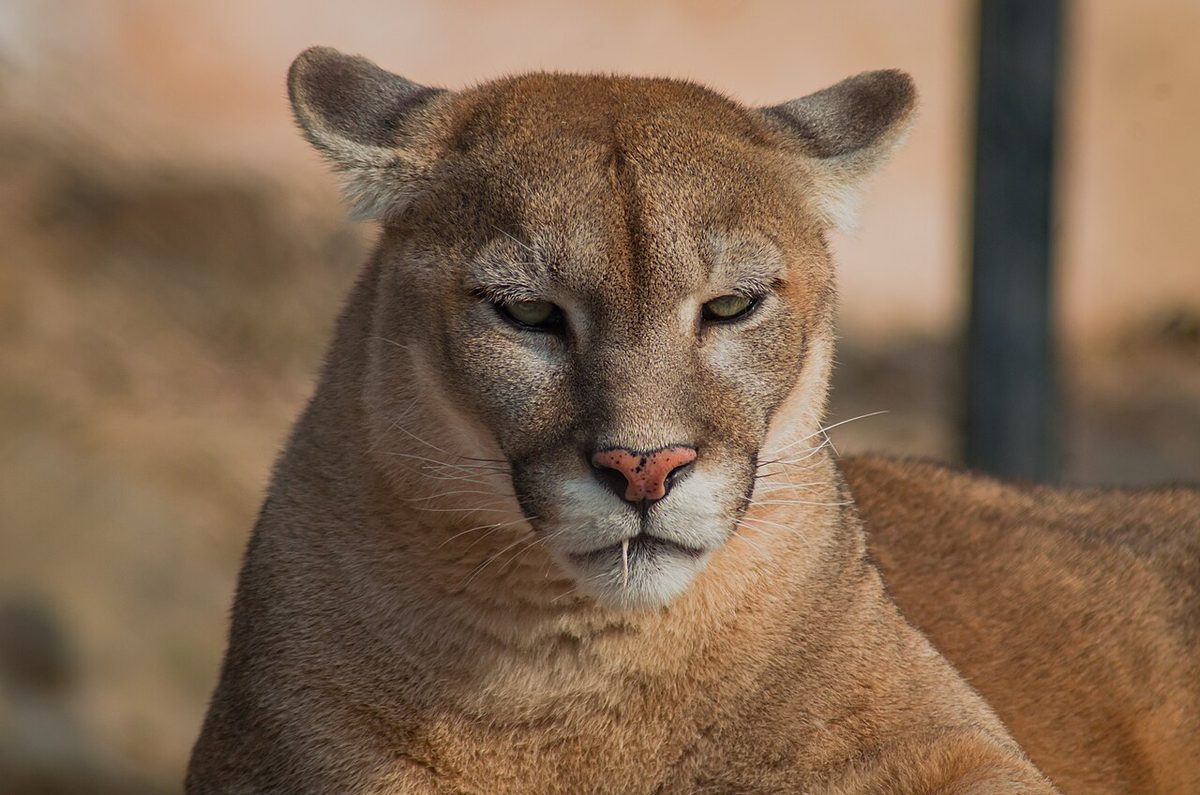
0 — 2 km Fig. 1 · Wild puma resting on the Patagonian steppe during a puma tracking Patagonia safari in Torres del Paine · Photo: Shahzaib Damn Cruze / CC BY-SA 4.0 via Wikimedia Commons
The first wild puma I watched was lying on a low ridge above Lago Sarmiento at first light, paws tucked, tail twitching, completely indifferent to the four of us standing a long way off with our breath fogging. Our tracker had spotted her from the road before any of us saw anything but rock and golden grass. We didn’t move toward her. We didn’t need to. She rolled, yawned, and looked straight through us, and that was the whole point.
Here is the short version. The place for puma tracking Patagonia travelers dream about is the eastern side of Torres del Paine in Chile, around Laguna Amarga and Lago Sarmiento and the neighbouring estancias. You go with a licensed tracker, at dawn and dusk, ideally in the southern winter and shoulder months (roughly April to September), and you allow at least three days. Sightings are likely but never guaranteed.
This guide is for the traveler who has decided a wild puma is worth building a trip around, and who wants to do it right: where to base yourself, when to go, how a tracked safari actually works, what it realistically costs, and how to behave so the animal stays wild and you stay safe. I’ll hedge every price and rule, because Chile tightened the regulations recently and you should verify before you book.
One promise up front, the same one I make about whales and orcas: no honest guide guarantees a puma. The good operators come close, and on a multi-day trip in the right season it is genuinely unusual to see nothing. But these are wild cats with enormous territories, and a quiet day scanning empty steppe is a normal, legitimate outcome. Plan for a strong chance over several days, not a certainty in one morning.
Puma tracking Patagonia at a glance
Before the detail, here’s the season-and-cost picture I wish someone had handed me first. The single biggest planning mistake is treating “puma season” as one flat thing, or assuming a casual day tour from town gives you the same odds as a dedicated multi-day safari. It doesn’t.
Season / month
Puma activity & conditions
Trip type
Rough cost band (verify)
Dec–Feb (summer)
Pumas active but mostly at dawn; long days, heavy crowds, thick grass
Day outings, harder spotting
Lower day-rate, but lower odds
Mar–early Apr (autumn)
Excellent: cubs growing, females hunting hard, twilight activity, fall colour
Multi-day safari
Premium
Apr–Jun (late autumn/early winter)
Prime: thin vegetation, cold, quiet park, snow aids tracking
Multi-day safari
Premium
Jun–Sep (winter)
Prime tracking: snow, far fewer people, shorter days, very cold
Multi-day winter safari
Premium
Oct–Nov (spring)
Good: fewer crowds than summer, new cubs, decent weather
Multi-day safari
Premium
Swipe to see all columns
Table 1
A few honest notes on that grid. “Premium” here is real money. A specialist private guide commonly runs around USD 900 to 1,000 per day before transport, and many serious trackers quote a realistic budget of roughly USD 1,000 per person per day once a vehicle and lodging are stacked on, per operator pricing summarised by Swoop Patagonia. Treat every figure here as a pattern, not a quote, and reconfirm close to your dates.
If I had to pick one window for a first puma trip, I’d look hardest at late autumn into winter, roughly April through July. The vegetation thins, the guanacos cluster, snow makes tracks readable, and the crowds that clog the summer park are gone. It’s brutally cold and the days are short, but for the best time to see wildlife in Patagonia on the puma front specifically, that quiet cold season is hard to beat. For the broader seasonal picture across every species, our month-by-month wildlife breakdown lays out the whole year.
Where: Torres del Paine’s eastern sector
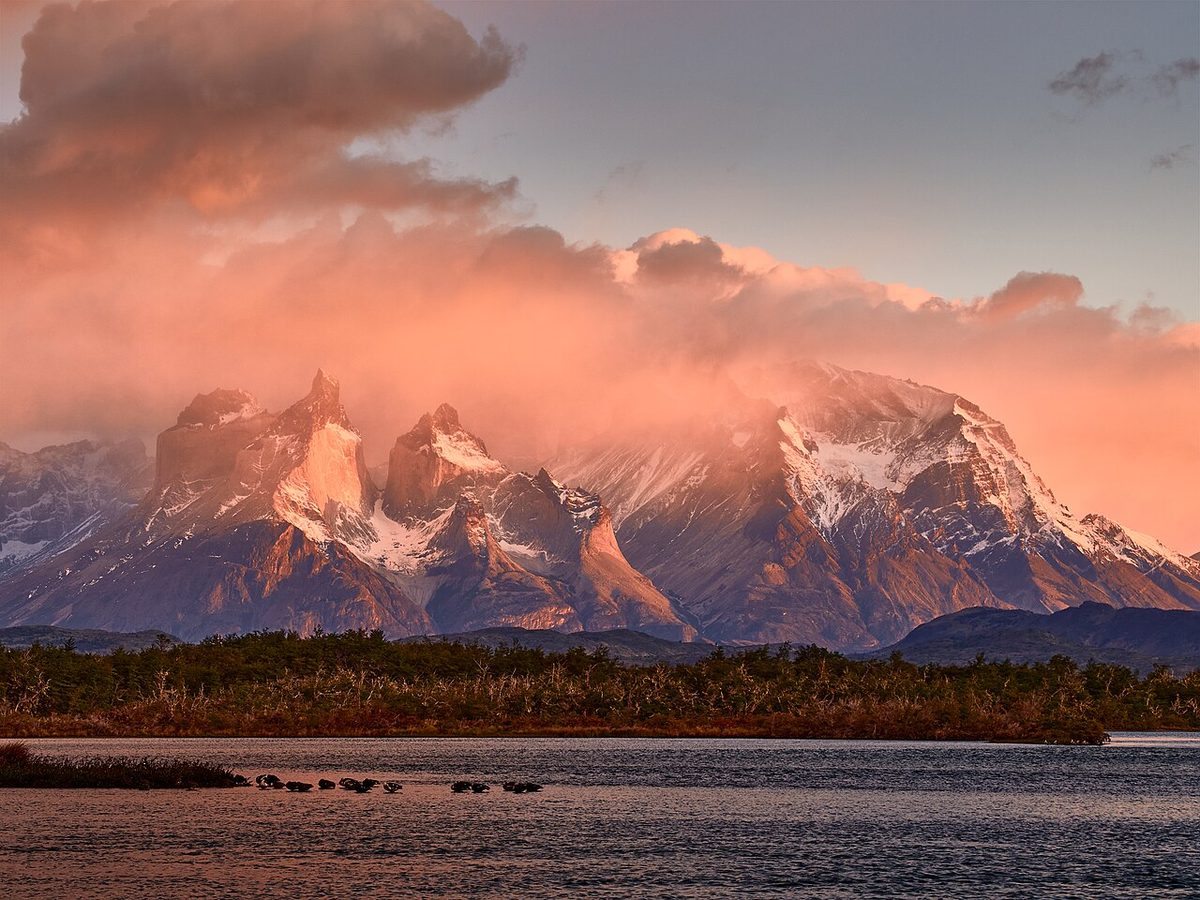
If you only learn one piece of geography from this article, learn this: the pumas are not where most hikers are. The famous towers, the W trek, the Grey Glacier, the refugios, all of that sits in the western and central park. The cats concentrate in the drier, lower, more open eastern sector, the Patagonian steppe around Laguna Amarga, Lago Sarmiento and the Estancia Laguna Azul valleys.
Chile Travel describes the park’s geography of caves, hills and scrub as ideal shelter for pumas, and points to the abundance of guanacos as the reason the cats stay. That’s the whole logic of the place. Where the guanacos graze, the pumas hunt, and the eastern steppe is guanaco country.
Why the east, and why the estancias
Torres del Paine is widely cited as holding the highest density of pumas on Earth, with the regional population often estimated at around 50 to 200 animals, according to conservation coverage compiled by the Sierra Club. The eastern park has the biggest concentration, both because of the guanacos and because hunting was banned inside the park in 1972 and pumas have been protected ever since.
Some of the best tracking now happens on private estancias bordering the park, land that was once sheep country and is now managed for wildlife. EcoCamp Patagonia, which works with a named local tracker, describes operating on a roughly 7,000-hectare private ranch (about 22,000 acres) next to the park where guanacos roam freely and the puma population is healthy. Crucially, hiking is not permitted on many of these reserves, which keeps human pressure low and the cats relaxed.
Where you’ll base yourself
Most puma trips run out of Puerto Natales, the gateway town about two hours from the park, or from lodges and the EcoCamp-style camps closer to the eastern entrance. Natales gives you the most hotels, gear shops, and flexibility; our Puerto Natales travel guide covers where to sleep and eat. Staying inside or beside the eastern park cuts the pre-dawn drive, which matters a lot when your tracker wants you in position before the light.
For the wider park logistics, entrance fees, and how the sectors fit together, read our Torres del Paine travel guide alongside this one. Puma tracking is a specialist add-on to a Torres del Paine trip, not a separate destination.
Pumas live in Torres del Paine year-round, so technically you can look any month. But the odds, the comfort, and the crowds swing hard with the season, and getting this right is the difference between a great trip and an expensive frustration.
Winter and the shoulder months: the prime window
The short answer most experienced trackers give is winter and the months either side of it. From roughly April to September, the steppe grass dies back, sightlines open up, snow makes fresh tracks easy to read, and the summer crowds vanish. GoChile flags October–November and late March to early June as the periods with the best conditions and fewest visitors, and notes that winter snow actively helps tracking even though the cold demands serious gear.
There’s a daily-rhythm bonus in winter too. In summer you’re dragged out at 4 or 5 am because that’s the only cool, active window. In the short days of winter, Swoop Patagonia notes pumas in the park move around far more during daylight, so a civilised mid-morning-to-dusk schedule can work. Cold buys you light.
Autumn: cubs, hunting, and colour
Many trackers quietly favour March and April. Females are actively hunting to feed growing cubs, the cats are out in the twilight hours rather than only at night, and the lenga forests turn red and gold. GoChile singles out February through April as strong for exactly this reason: mothers provisioning cubs are more visible. If you want mild-ish weather plus high activity, autumn is the sweet spot.
Summer: possible, but the hard mode
December to February is peak tourist season in Torres del Paine, and it’s the worst time to prioritise pumas. The grass is tall, the cats are active mainly in the brief cool of dawn, and the eastern roads are busy. You can still see pumas, especially with a good tracker, but you’re working against thick cover, heat, and competition for sightings. If your trip is fundamentally a summer hiking trip, treat a puma as a lucky bonus, and read our Patagonia winter and Torres del Paine winter guides if a dedicated cat trip in the cold season tempts you instead.
How puma tracking in Patagonia works
This is the part people picture wrong. A puma safari is not a vehicle game drive through a fenced park, and it’s not a hike hoping to stumble on a cat. It’s patient, radio-coordinated, mostly-on-foot detective work led by people who know individual animals.
The trackers and the radios
The heart of a good trip is the tracker, often a local who has spent years, sometimes a former hunter (a leonero) retrained as a guide and conservationist, learning the territory and the individual cats. Swoop Patagonia describes guides who know every puma in their area by range and personality, and many have worked with film crews documenting these animals. Trackers spread out, scan from high points with binoculars and spotting scopes, and stay in radio contact. When one finds a cat, the others converge, carefully.
How do they find a cat in all that country? They read the prey. EcoCamp’s tracker explains that guanacos give a distinctive, sharp alarm call when a puma is near, so the guides watch guanaco behaviour as much as the ground, alongside fresh tracks, scrapes, kill sites, and known hunting corridors.
The daily rhythm
The pattern is built around the cat, not your comfort. You’re out in the half-dark before dawn, when pumas are most active, scanning ridgelines and the edges of cover. You spend the middle of the day off, often back at the lodge for lunch, because the cats are resting and so should you. Then you go out again for the last hours before dusk, which doubles as the best light for photography. It’s slow. A lot of a puma day is standing in the wind, waiting, learning to read the landscape, and that searching is genuinely part of the experience rather than dead time.
Multi-day and photography trips
Because no single outing is a sure thing, the serious trips run multiple days, commonly three to seven. Swoop Patagonia and EcoCamp both stress allowing at least three days to give yourself a real chance of a quality sighting. Dedicated photography safaris go longer still, pairing you with a tracker day after day to work the same known cats in good light, the kind of trips that produce the puma images you’ve seen in wildlife documentaries. If a single encounter is all you want, a day trip from Puerto Natales exists, but understand you’re buying one roll of the dice, not the odds a multi-day trip gives you.
I’ll be blunt and slightly annoying about this, the same way I am with whales: exact prices move with the operator, the season, the exchange rate, and how much logistics you stack on. So treat the following as a pattern, not a price list, and verify current rates before you book.
This is a premium experience. Here’s the shape of it:
A specialist private guide/tracker commonly runs around USD 900 to 1,000 per day, before transport, per pricing summarised by Swoop Patagonia.
Private 4×4 transport is often a separate line, sometimes around USD 500 per day for the vehicle, shared across your group.
All-in, plan for roughly USD 1,000 per person per day as a realistic minimum once you fold in guide, transport, and lodging, climbing from there for premium lodges and private trips.
Multi-day packages (guide, lodging, meals, park logistics) frequently land in the multiple thousands of USD per person for a three-to-six-day program.
Why so expensive? You’re paying for scarce expertise (a handful of genuinely skilled trackers), private-land access, low guide-to-guest ratios, vehicles, and the simple fact that this is a long, labour-intensive search. The flip side of the price is the ethics: well-run, well-paid puma tourism is now a direct reason ranchers protect cats instead of shooting them. To weigh this splurge against the rest of your wildlife plan, our best time to see wildlife in Patagonia guide helps you decide where the money is best spent. Whatever figure you read, including mine, reconfirm it close to your dates.
DIY roadside sightings vs guided tracking
Here’s a fair question: pumas in eastern Torres del Paine have become famously tolerant of vehicles, and people do see them from the road. So do you actually need to pay for a tracker?
You can, in fact, get lucky on your own. Driving the eastern park roads at dawn and dusk, especially in the off-season, occasionally yields a puma crossing or resting near the road. Plenty of self-drivers have a roadside sighting they’ll never forget. But there are real catches, and a recent rule change matters.
The new rule on the Laguna Amarga–Lago Sarmiento trail
As of 2025, you can no longer just wander the prime puma ground unaccompanied. CONAF issued a resolution making it mandatory to be accompanied by a licensed guide to walk the trail between Laguna Amarga and Lago Sarmiento, the heart of the tracking zone, as reported in regional coverage of the new protocol. The same protocol sets minimum distances and registration requirements (more on that in the ethics section). The days of unlimited DIY foot access to the best puma corridor are over, and that’s a conservation win, not red tape for its own sake.
Why guided is usually worth it
Beyond the rules, a tracker changes everything about your odds and your conduct:
Spotting skill. A good tracker finds cats you would drive straight past. The difference in success rate is enormous.
Individual knowledge. They know which female has cubs, whose territory you’re in, and where a particular cat tends to hunt.
Ethics and safety judgment. They manage distance, read the animal’s mood, and know when to back off, which protects both you and the puma.
On-foot access. Through licensed operators you reach private reserves and the regulated trail you can’t legally walk alone.
My honest take: a roadside sighting is a wonderful piece of luck, and if you’re already self-driving the park, keep your eyes open at dawn. But if a puma is a primary reason for your trip, pay for the tracker. The odds, the ethics, and now the rules all point the same way. For the broader case on guided versus independent wildlife, see our guide to keeping a safe distance guide.
Let’s be clear-eyed about this, because both extremes are wrong. Pumas are not bloodthirsty man-eaters, and they’re also not big house cats. They are large, powerful, wild predators, and the recent surge in close human encounters means complacency is the real risk.
How dangerous are they, really?
Attacks on humans are genuinely rare. Coverage of Torres del Paine notes only one fatal attack on record in the park, more than 30 years ago, when a local was killed. Pumas overwhelmingly avoid people and would rather slip away than confront you. So the statistical risk is low.
But the context has shifted. Many eastern-park pumas are now habituated to humans and vehicles, and with the park busier than ever, more cats and more people are sharing the same ground at the same twilight hours. Fundación Rewilding Chile research cited in regional press found that human-puma interactions peak at dusk, which is exactly when you’ll be out looking. Habituated does not mean tame. It means a powerful animal has lost its fear of you, which raises the stakes for everyone.
Stay calm and do not run. Running can trigger a chase response.
Face the animal and keep eye contact. Never turn your back on it.
Pick up children so they can’t run.
Make yourself look bigger. Raise your arms, stand tall and upright. Don’t crouch or sit.
Back away slowly while facing the puma, and give it a clear escape route. Don’t corner it.
Don’t approach, especially a cat that’s feeding or with cubs.
If you’re in a vehicle and see a puma, stay in the vehicle. Don’t get out to follow it.
The most important safety move, though, is upstream of all that: go with a licensed guide who manages the encounter, keeps the group together, and reads the animal’s behaviour so a tense situation never develops in the first place. Solo, on foot, at dusk, in the dark, is exactly the scenario the new rules exist to prevent.
Ethics and responsible puma viewing
This is not a decorative section. It’s the part that decides whether your trip helps these cats or harms them, and Chile has just put real rules behind it.
The new official protocol
In 2025 the Municipality of Torres del Paine, working with Panthera, The Nature Conservancy, the Torres del Paine Legacy Fund and Sernatur, finalised an official Protocol for Responsible Puma Viewing, published on the municipal site. It’s a genuine, downloadable document (in Spanish and English), built with conservation scientists, and it sets out concrete rules. The headline ones, as reported in regional coverage:
Keep a minimum distance of around 50 metres from a puma, and around 100 metres if the animal is moving.
Tour operators must be registered, guides certified, and visitors given a safety briefing and informed consent.
Authorised sectors and maximum viewing times are defined, so a single cat isn’t surrounded all day.
Verify the current specifics before you travel, since the protocol is new and may be refined, but the direction is unambiguous: more distance, more structure, more accountability.
The behaviour that actually matters
Whether or not a ranger is watching, these are the rules I’d hold any guide and group to:
Keep your distance, even when the cat seems relaxed. A habituated puma’s tolerance is not your permission to close in. If you’re changing its behaviour, you’re too close.
Never bait, lure, or feed a puma or its prey. Ever. It’s both dangerous and corrosive to the animal’s wild behaviour.
Don’t surround or encircle the animal. Stay in a group on one side, leave it an escape route, and let it move freely.
Don’t chase, block, or crowd it, on foot or in a vehicle. No racing along the road to keep up.
No drones. They stress wildlife and are inappropriate around a hunting predator.
Stay with your licensed guide and follow instructions immediately. When they say back up, back up.
Be especially careful around cubs or a kill. The stakes for the animal are highest, so give even more space.
Don’t broadcast exact live locations of specific cats; it draws crowds to a single animal.
The principle underneath all of it is simple, and it’s the same one I apply to whales and orcas: a good sighting is one where the puma keeps doing exactly what it was doing because your group behaved well, not one where the cat reacts to you so someone gets a closer phone video. That restraint is also what keeps the whole model alive. Puma tourism only protects pumas if it’s done in a way ranchers, the park, and the cats can all live with. For the full cross-species ethics, see our code of conduct around animals guide.
Why your money is part of the conservation story
It’s worth knowing what your premium buys beyond a sighting. After a century of pumas being shot to protect sheep, hunting was banned in the park in 1972, and the population recovered to the densities the park is now famous for. Neighbouring estancias that once paid hunters now earn more from tracking guests, and former leoneros work as trackers. Outside protected land, though, pumas are still killed, and a cat’s huge range means many cross into areas where they’re at risk. Choosing a registered, ethical operator is a direct vote for the coexistence model that keeps these animals alive.
This is cold, exposed, slow-moving work, often in winter, standing still in wind for long stretches. Dress and equip for that, not for a brisk hike.
Serious warm layers: thermal base, heavy midlayer, down jacket. You’ll be motionless in the cold for hours.
Windproof, waterproof shell, top and bottom. Patagonian wind is the real enemy.
Warm hat, buff, and insulated gloves, even outside deep winter.
Waterproof, warm boots with grip for snow, gravel, and uneven steppe.
Binoculars. Non-negotiable. Much of the watching is at distance, by design.
A long telephoto lens (think 400mm or longer) if photos matter; pumas are farther than they look, and that’s correct.
A spotting scope if you’re a keen photographer or birder, though your tracker will usually have one.
Spare batteries and a power bank; cold drains batteries fast.
Sun protection: sunglasses, sunscreen, lip balm. Snow glare and UV are strong.
A thermos and snacks for the long waits, and cash for park or village extras.
Patience. I mean it as gear. It stops you pressuring the guide, crowding the cat, or calling a slow day a failed one.
While you’re scanning that steppe, you’ll see far more than pumas, guanacos, foxes, rheas, and Andean condors riding the ridges, so it pairs naturally with birdwatching across Patagonia. And if your wider trip also touches the Atlantic coast, our Península Valdés guide and penguins in Patagonia guide cover the very different wildlife there.
Frequently asked questions
When is the best time to see pumas in Torres del Paine?
Pumas are present year-round, but the best odds come in the southern winter and shoulder months, roughly April to September, when thin vegetation, snow, and far fewer tourists make tracking easier. Many trackers especially like March and April, when females hunt actively to feed cubs. Summer works but is the hardest, with tall grass and crowds. Always verify current conditions.
Are puma sightings guaranteed on a tracking tour?
No, and distrust anyone who promises otherwise. These are wild cats with vast territories. That said, on a multi-day trip with a skilled tracker in the right season, it’s genuinely unusual to see no puma at all. Allow at least three days to give yourself a real chance, rather than gambling everything on a single morning outing.
How much does puma tracking in Patagonia cost?
It’s a premium experience. A specialist private guide often runs around USD 900 to 1,000 per day before transport, and a realistic all-in budget is roughly USD 1,000 per person per day once vehicle and lodging are included. Multi-day packages reach several thousand USD per person. Prices shift with season and exchange rates, so confirm current rates directly before booking.
Is puma tracking in Torres del Paine dangerous?
The statistical risk is low; only one fatal attack is on record in the park, over 30 years ago, and pumas usually avoid people. But many eastern-park cats are now habituated to humans, and interactions peak at dusk. Going with a licensed guide who manages distance and reads behaviour is the single biggest safety factor. Never approach, corner, or run from a puma.
Do I need a guide, or can I see pumas on my own?
You can occasionally spot a puma from the road at dawn or dusk while self-driving. But as of 2025, CONAF requires a licensed guide to walk the prime Laguna Amarga–Lago Sarmiento trail. A tracker also hugely improves your odds and ensures ethical, safe behaviour. If a puma is a main goal of your trip, pay for the guided tracking.
Where exactly are pumas found in Torres del Paine?
In the park’s eastern sector: the open Patagonian steppe around Laguna Amarga, Lago Sarmiento, and the neighbouring estancias such as the Laguna Azul area. This is guanaco country, and where the guanacos graze, the pumas hunt. It’s a different part of the park from the towers, the W trek, and Grey Glacier, which sit further west.
How many days should I allow for puma tracking?
Allow at least three days. A single outing can find a cat, but multi-day trips dramatically raise your odds because you get several dawn and dusk windows and time to work known animals. Dedicated photography safaris often run five to seven days. Building in extra days also gives you a buffer for bad weather and quiet patches.
Final thoughts
A wild puma is not a guaranteed photo, and it shouldn’t be sold as one. It’s a slow, cold, patient pursuit in one of the most beautiful corners of the planet, with a real chance of a sighting that genuinely changes how you see wild animals, and a real chance of a quiet day that’s still worth it. Go in the cold season, give yourself at least three days, hire a licensed tracker, keep your distance, and let the cat stay wild. Do that, and you’re not just buying an experience, you’re funding the coexistence that keeps Torres del Paine the best place on Earth to watch these animals. To slot this into the bigger picture, loop back to our whale watching walkthrough.