Best Birdwatching in Patagonia: Condors to Flamingos
A field-tested Patagonia birdwatching guide: where to find condors, rheas, flamingos and coastal birds, plus the best seasons, gear and ethics.
By Patagonia Tourism Guide · First published 13 Sep 2026 · Updated 1 Aug 2026
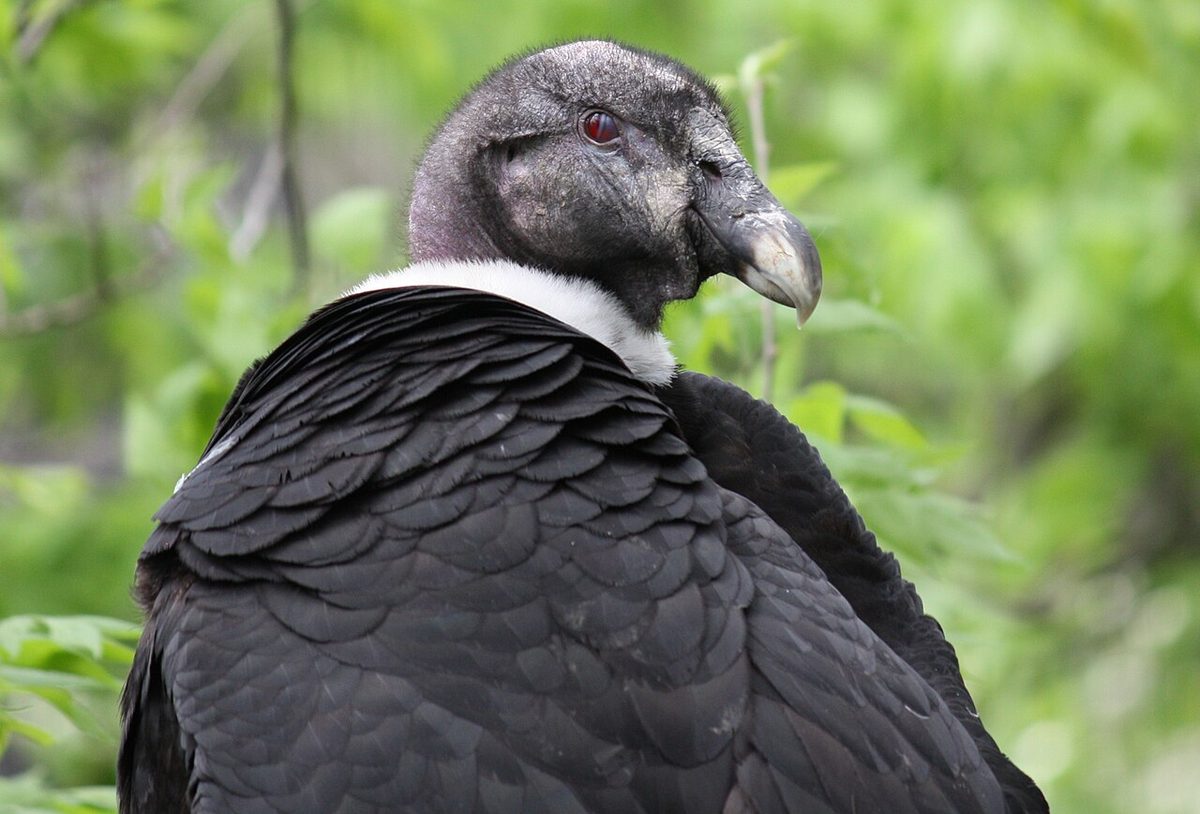
0 — 2 km Fig. 1 · Andean condor soaring over a ridge, the signature raptor for Patagonia birdwatching · Photo: Ltshears / CC BY-SA 3.0 via Wikimedia Commons
The first Andean condor I really watched wasn’t doing anything dramatic. It was just hanging in the air above a ridge near Laguna Amarga, in Torres del Paine, riding a thermal with its primaries splayed like fingers and not flapping once in the four or five minutes I stood there with my neck craned back. A guanaco carcass was somewhere below, and the bird was in no hurry. I forgot about the mountains for a while. That is the thing nobody tells you about Patagonia birdwatching: the headline animals here are huge, slow, and patient, and they teach you to be the same.
Here is the short version. The best Patagonia birdwatching runs from spring through summer, roughly October to March, across four standout zones: Torres del Paine for Andean condors and raptors, the Patagonian steppe for Darwin’s rhea, Laguna Nimez in El Calafate for Chilean flamingos and black-necked swans, and the Nothofagus forests of Tierra del Fuego for the Magellanic woodpecker. The Atlantic coast adds cormorants, oystercatchers and penguins. You do not need a specialist tour to start.
This guide is for the traveler who is already coming to Patagonia for the glaciers, the towers, or the whales, and wants to take the birds seriously without turning the whole trip into an expedition. It is also for the dedicated birder building a target list. I’ll name the species, tell you where I’ve actually found them, hedge the seasons and the prices, and point you at official sources, because reserves change their hours and conservation status shifts and you should verify before you build a day around any of it.
One honest note up front. Birds move, weather closes in, and a quiet morning at a lagoon is a completely normal outcome. I’ll never tell you a species is guaranteed. What I can tell you is which habitats reward patience, and how to stack the odds so a casual interest turns into the kind of morning you remember for years.
Patagonia birdwatching at a glance
Before the detail, here’s the picture I wish someone had handed me on my first trip. The single biggest mistake people make is treating “Patagonia birds” as one experience in one place. It isn’t. The condor lives in a different world from the flamingo, which lives in a different world from the woodpecker. Where you stand, and when, decides almost everything.
Bird
Where to look
Best season
How to spot it
Andean condor
Torres del Paine cliffs, steppe ridgelines, El Chaltén
Year-round; thermals strongest spring–summer
Scan ridges late morning as the air warms
Darwin’s rhea (ñandú)
Open Patagonian steppe, Península Valdés, Ruta 40
Year-round; chicks in summer
Watch grassland from the road; they run, don’t fly
Chilean flamingo
Laguna Nimez (El Calafate), Laguna Amarga (TdP)
Peak Dec–Jan; many present year-round
Shallow lagoon edges, often distant; bring a scope
A few things to read off that grid. The forest birds and the steppe birds barely overlap, so a trip that’s all Torres del Paine will miss the Magellanic woodpecker, and a trip that’s all Ushuaia will miss the rhea. The flamingos are the easiest “wow” bird to find on a normal traveler’s itinerary, because Laguna Nimez sits a ten-minute walk from the middle of El Calafate. And the condor, the bird everyone wants, is genuinely common in the right terrain — you just have to look up at the right time of day.
If I had to pick one window for a first birding-aware trip, I’d choose November to early March. The breeding season is in full swing, the migrants are back, the days are long, the thermals that hold condors aloft are reliable, and the flamingo numbers at Laguna Nimez climb toward their December–January peak. For the species-by-species view across the whole region, our Patagonia wildlife and whale watching guide is the parent map this article hangs off.
Why Patagonia is a serious birding destination
People come to Patagonia for mammals and mountains and treat the birds as scenery. That undersells the place. The diversity isn’t tropical-rainforest huge, but it is distinctive, and a high share of what you see is found only at the bottom of South America.
The numbers tell part of it. Torres del Paine alone is home to around 118 bird species, including roughly 15 birds of prey, according to the team at EcoCamp Patagonia, who guide the park constantly. Tierra del Fuego National Park records well over 90 species in its forests, peat bogs and coastline. Down on the steppe and in the wetlands you add geese, ducks, ibises, raptors and the rhea. On the Atlantic coast you stack cormorant colonies, terns, gulls, oystercatchers and the great Magellanic penguin rookeries.
What makes it special, though, is the character of the birds. This is a place of superlatives. The Andean condor (Vultur gryphus) has one of the largest wingspans of any land bird on Earth, up to around 3.2 metres, per EcoCamp’s park notes. The Magellanic woodpecker (Campephilus magellanicus) is the largest woodpecker in South America and one of the largest anywhere, 36 to 45 cm long, as Wikipedia’s species account sets out. The Darwin’s rhea is a flightless ratite that sprints across the grass like a small dinosaur. You are not ticking off little brown jobs here, though there are plenty of those too. You are watching big, charismatic, southern-hemisphere specialties in wide-open country where you can actually see them.
And crucially, much of it is accessible. You don’t need a machete and a permit. A lot of the best Patagonia birdwatching happens from a gravel road, a lakeside boardwalk, or a forest trail you were going to walk anyway.
Where to go for Patagonia birdwatching
Let me break the region into the four habitats that matter, because that’s how the birds are organized and it’s how you should plan. Get the habitat right and the species follow.
Torres del Paine and the southern steppe: condors and raptors
If you want raptors and big open-country birds, this is the place. Torres del Paine packs cliffs, lakes, lenga forest and steppe into one park, which is why the bird list is so long.
The star is the Andean condor. The cliffs and mountain walls are exactly the launch pads it needs, and you’ll often see them circling the towers themselves or working the ridge above Laguna Amarga, the entrance lagoon, sometimes dropping to a guanaco kill left by a puma. EcoCamp notes condors here nesting in high rock cavities and soaring at altitude looking for carrion. The trick is timing: condors rely on thermals, the columns of warm rising air that form once the sun has heated the slopes, so late morning into the afternoon is far better than dawn for watching them aloft.
The park’s 15 or so raptors give you plenty beyond the condor. Watch for the black-chested buzzard-eagle (Geranoaetus melanoleucus), a heavy, broad-winged bird of the high slopes; the chimango caracara and southern crested caracara, both common and confiding; and, if you’re lucky and quiet, the lesser horned owl (Bubo magellanicus) or the tiny austral pygmy owl (Glaucidium nanum), which hunts by day. The lagoons and the Serrano River add waterbirds: black-necked swans, upland geese, flamingos, grebes, spectacled and yellow-billed ducks, red-gartered coots. Even the famous flightless rhea turns up on the steppe sections of the park. For the full birds of Torres del Paine experience you really want a couple of days, ideally folded into the broader visit our full rundown of Torres del Paine lays out.
The same steppe stretches for hundreds of kilometres along Ruta 40 and across the peninsulas, and it’s all rhea-and-raptor country. You’ll find more on tracking the park’s mammals, which share this ground, in our puma tracking in Patagonia guide; condors and pumas hunt the same valleys for a reason.
Laguna Nimez, El Calafate: flamingos and waterbirds
This is the easiest great birding morning in all of Patagonia, and I send everyone here. Laguna Nimez is a municipal nature reserve on the edge of Lago Argentino, a flat walk from the centre of El Calafate. You buy a ticket, you get a little checklist, and you follow a roughly 3-kilometre flat loop past hides and observation decks. No guide, no 4×4, no early alarm required.
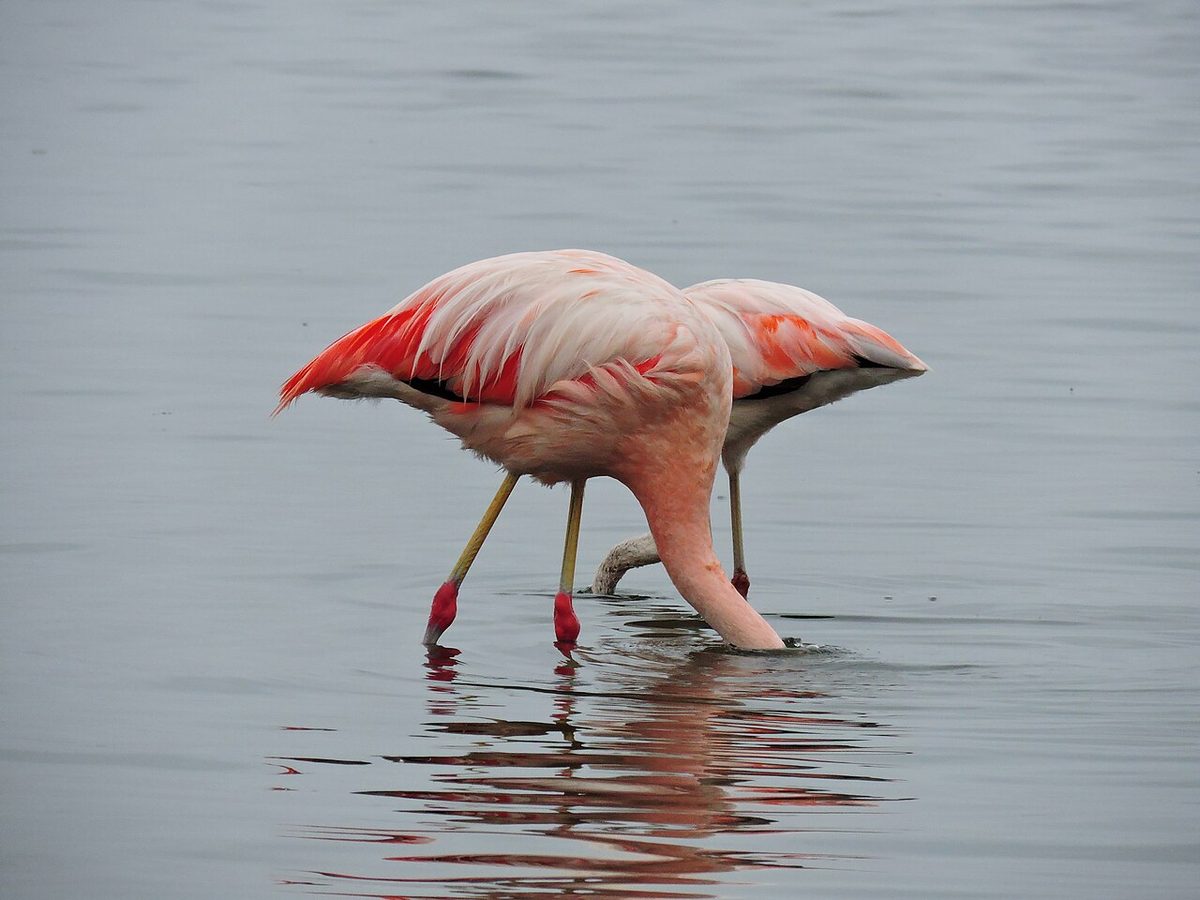
The reserve is an officially recognized Important Bird Area (AICA), and the reserve’s own materials and birding accounts list around 80 species recorded here, a mix of residents and migrants. The headliner is the Chilean flamingo (Phoenicopterus chilensis), with its grey legs, pink “knees” and largely black bill. Birding write-ups call Nimez the finest accessible flamingo watching in Argentine Patagonia, with peak counts of roughly 80 to 150 birds in December and January, though some are usually around year-round. They feed in the shallows, often at a distance, so a spotting scope or a long lens pays off.
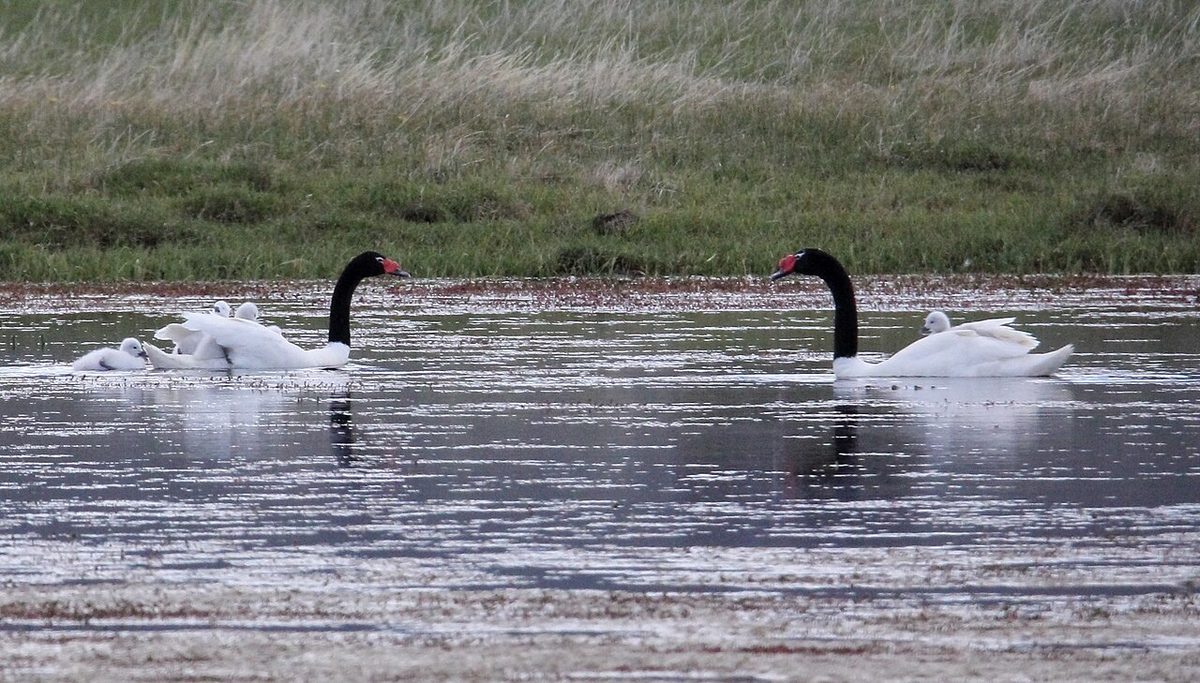
The flamingos get the photos, but the supporting cast is the real reward. Black-necked swans (Cygnus melanocoryphus) glide on the open water. You’ll see upland and ashy-headed geese, buff-necked and black-faced ibis, red-shovelers and other ducks, cinereous harriers quartering the reeds, two-banded and other plovers on the mud, and steppe specialists like the Patagonian mockingbird and spectacled tyrant around the edges. It’s a genuinely rich Laguna Nimez birds list for a place you can do before lunch.
Practical notes, and please verify these because reserves adjust them: Laguna Nimez generally opens in the warmer months (roughly spring through autumn) with an entrance fee of around a few thousand pesos that changes constantly with inflation — confirm current hours and price on the reserve’s site or by phone before you go. Mornings and the golden hour before closing are best for light and for activity. It slots perfectly into the El Calafate day our roundup of things beyond the glacier guide describes, and it’s the natural warm-up before the glacier.
Tierra del Fuego forests: the Magellanic woodpecker and austral parakeet
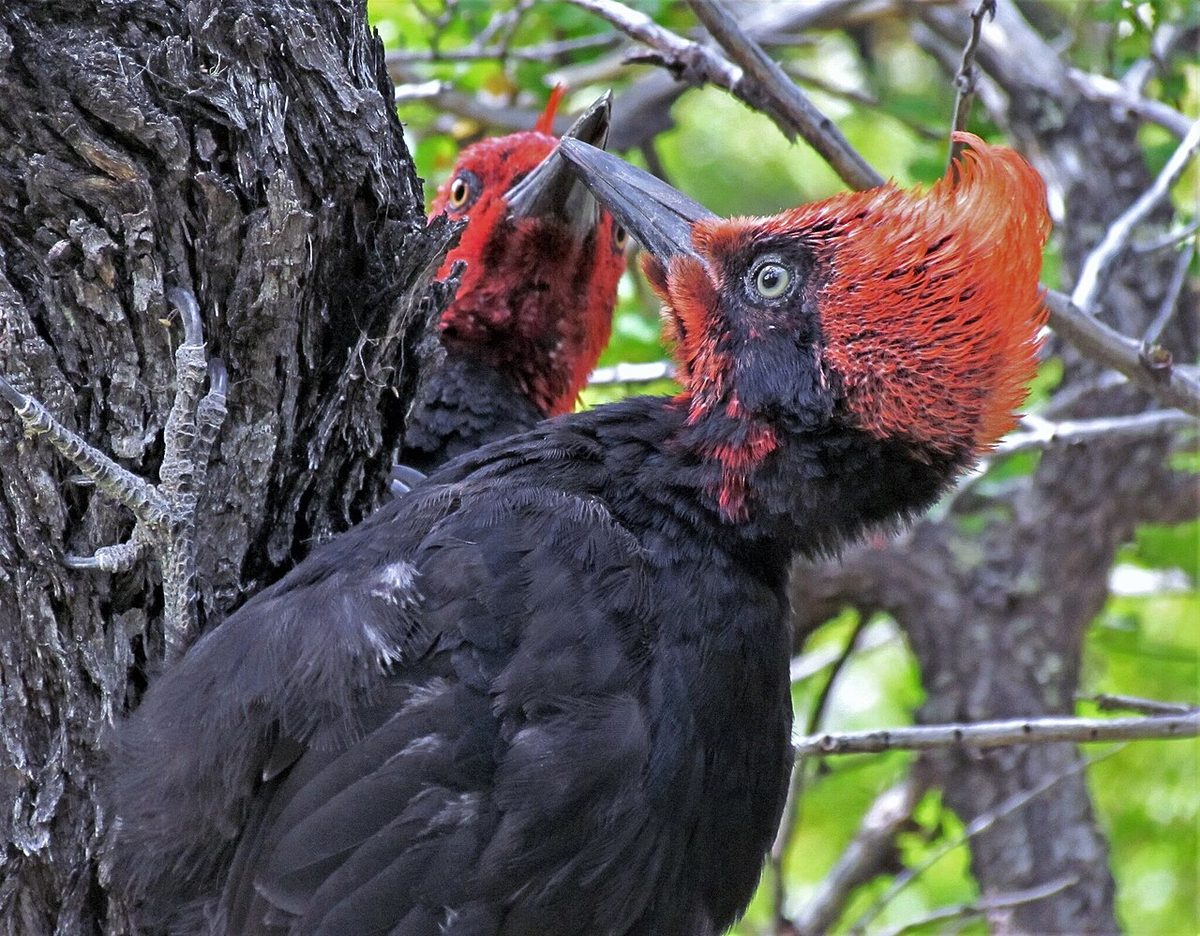
For the forest birds you go south, to the southern beech (Nothofagus) forests of Tierra del Fuego. The trophy here is the Magellanic woodpecker, and seeing a pair is one of the great Patagonia birding moments. The male wears a head of fiery red with a short crest; the female is black-headed with a curling crest and a small red patch at the base of the bill, per the Magellanic woodpecker species account. They live in mature forest with big old trees, and the way to find them is to listen: their territorial signal is a loud, resonant double-knock that carries through the trees. Stop, stand still, and let the forest tell you where they are.
The best base for this is Tierra del Fuego National Park near Ushuaia, where the woodpecker is scattered through the woodland along with the rest of the forest community. The same trails give you the austral parakeet (Enicognathus ferrugineus), the world’s southernmost parrot, which you’ll usually hear as a screeching green flock passing overhead before you see it. Add the fire-eyed diucón, white-throated treerunner, thorn-tailed rayadito, austral thrush, black-chinned siskin, and the patagonian sierra-finch, which EcoCamp notes nests in spiny calafate bushes to keep its chicks safe. Our Tierra del Fuego National Park guide covers the trails and logistics for the park itself.
Don’t ignore the water down here. The park’s coastline and the Beagle Channel add kelp geese, flightless steamer ducks, torrent ducks on fast rivers, upland geese, blackish and Magellanic oystercatchers, and several cormorants. A Beagle Channel boat is one of the simplest ways to reach the seabird and sea-lion islands — see our Beagle Channel cruise guide for how those trips work and what they pass.
The Atlantic coast: cormorants, oystercatchers and seabirds
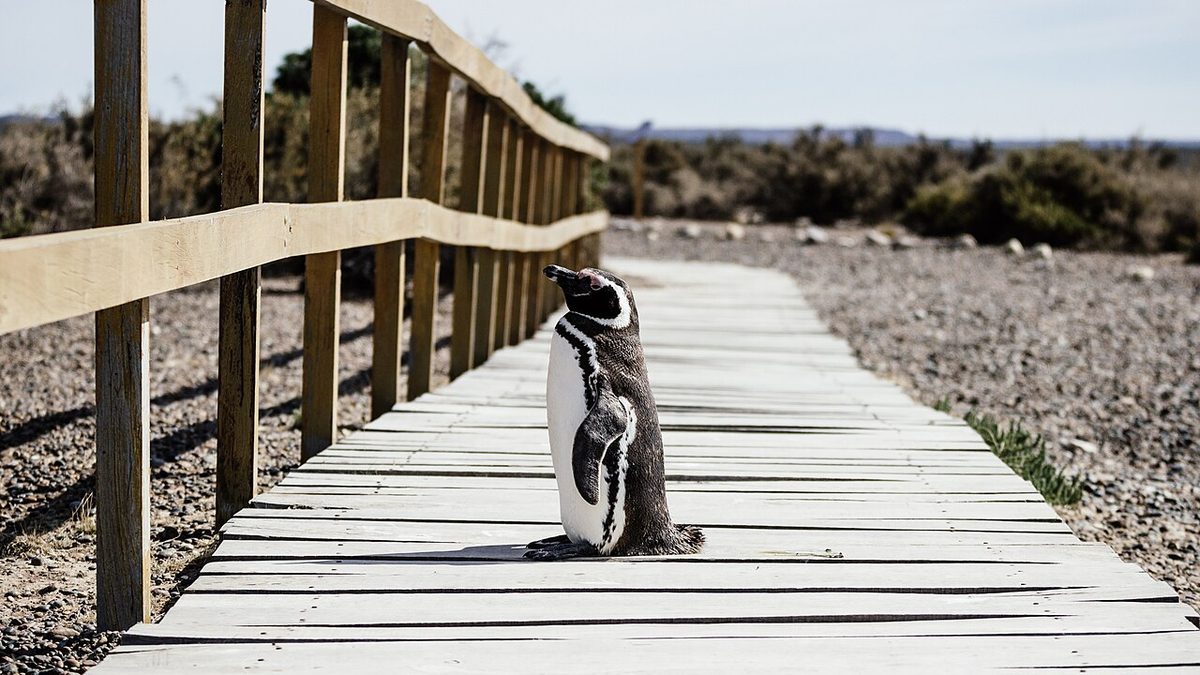
The fourth world is the Atlantic seaboard, and Península Valdés is its hub. The coasts of Golfo Nuevo and Golfo San José string together beaches, cliffs and rocky points that hold colonies of Magellanic penguins, several cormorant species, terns and gulls. Just south of Puerto Madryn, Punta Loma has a large colony of rock (Magellanic) cormorants on its cliffs, easy to reach and easy to watch.
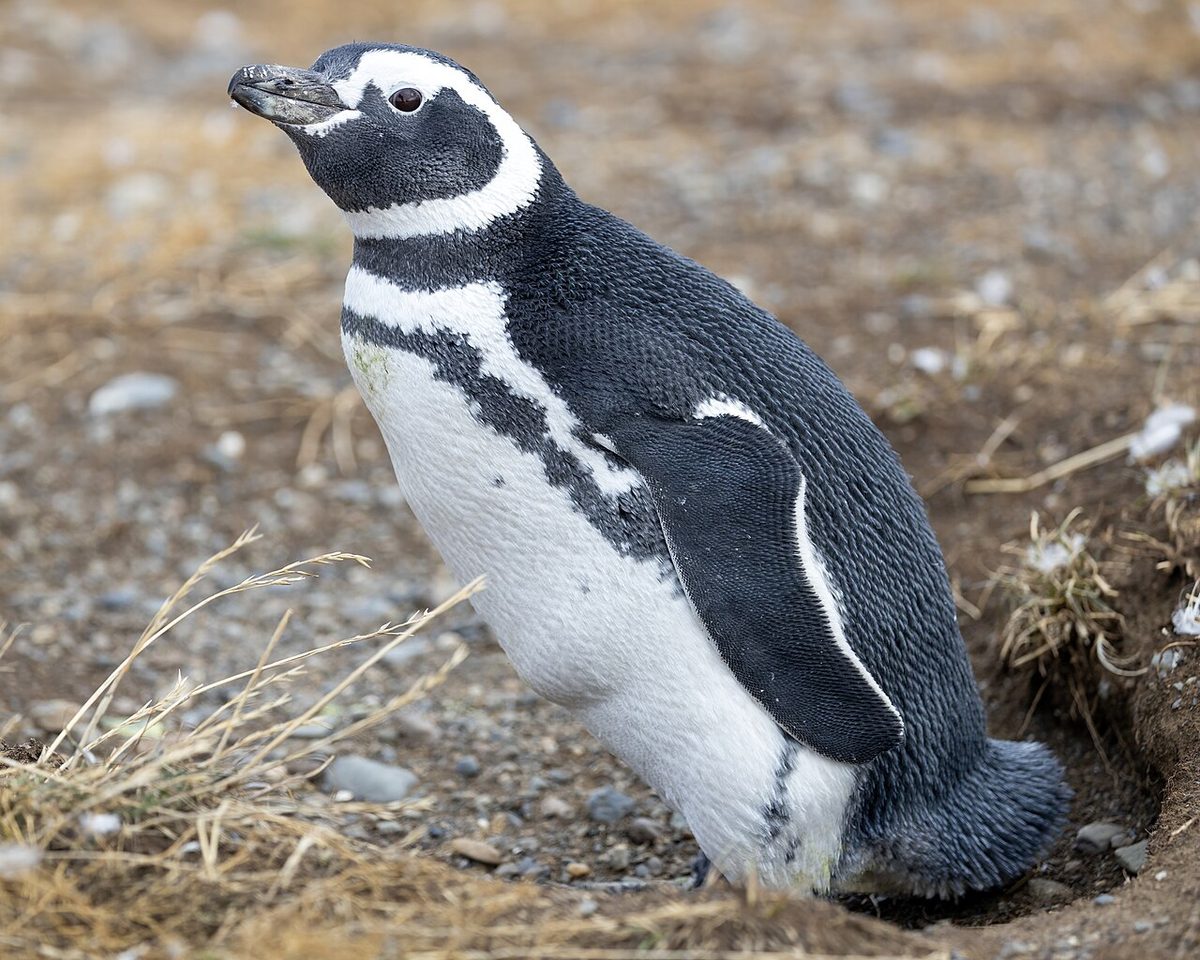
On the shorelines, look for the striking black-and-white American (Magellanic) oystercatcher with its orange bill probing the tideline, the ubiquitous kelp gull, dolphin gulls, South American terns, snowy sheathbills scavenging near the colonies, and two-banded plovers on the sand. Inland from the coast, the peninsula’s steppe is excellent for the lesser rhea, the elegant crested-tinamou, canasteros and other arid-country passerines. The whole peninsula is a UNESCO World Heritage area and one of the densest wildlife zones in Patagonia; our Península Valdés guide walks the full loop, and the penguins in Patagonia guide covers the rookeries in depth, since the penguins are really the coast’s signature bird.
The signature birds, one by one
A habitat map is the practical way to plan, but a few species deserve their own portrait, because they’re the reason people fall for Patagonia birdwatching in the first place.
Andean condor
The bird that defines the Andes. Up close at a roost it looks almost prehistoric — bare head, white neck ruff, that immense black-and-white wing. In the air it’s all grace, soaring for long stretches without a wingbeat. It’s a scavenger, a vulture, and a vital one: condors clean the steppe of carrion. They’re long-lived and slow to breed, which is also why they’re vulnerable. The IUCN lists the Andean condor as Vulnerable, with populations declining across much of the range, and that status is the backdrop to the conservation note later in this guide. Best places: the cliffs of Torres del Paine, the granite amphitheatre around El Chaltén, and high steppe ridgelines anywhere in the south. Best time of day: from mid-morning once thermals build.
Darwin’s rhea / ñandú
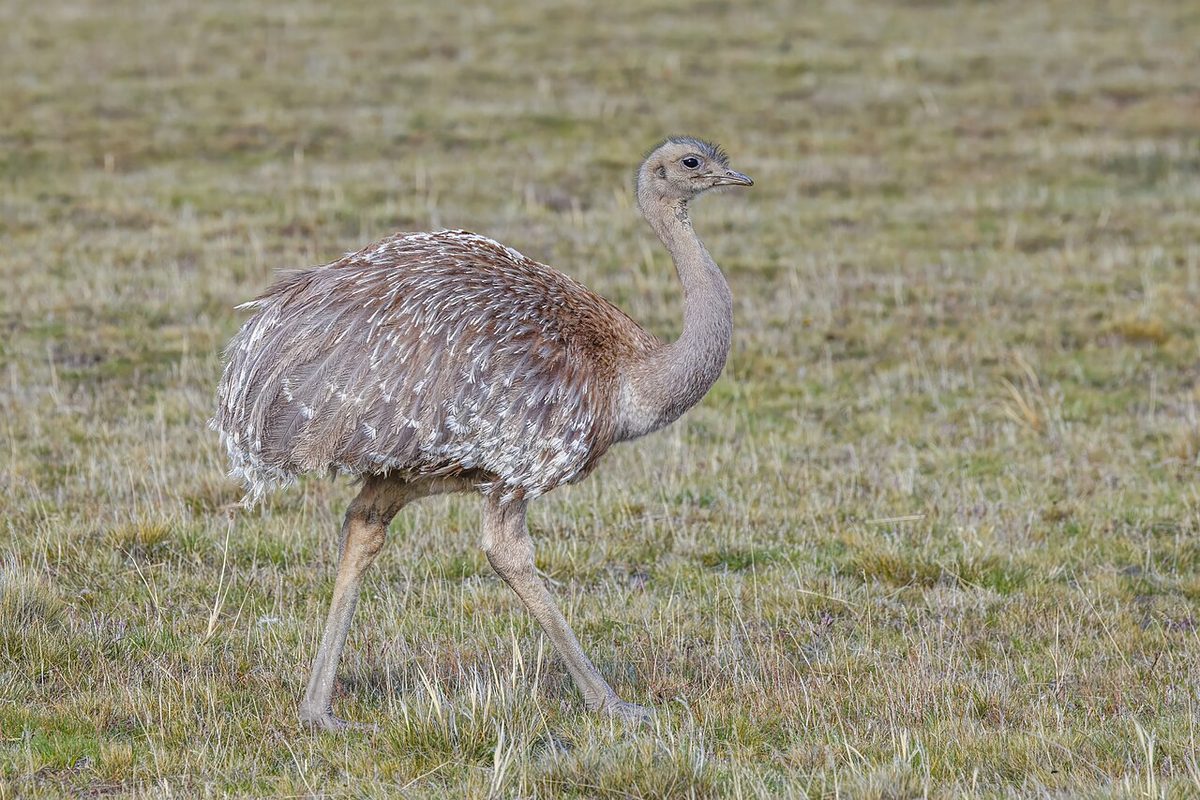
Patagonia’s flightless giant. The southern form is the lesser rhea or Darwin’s rhea (Rhea pennata), brownish-grey with long yellow legs, and it can run at speeds of up to around 60 km/h. The natural history is wonderful: the male incubates the eggs of several females and then raises the striped chicks himself, herding a crèche of youngsters across the grass through the summer. You’ll see them on open steppe — Península Valdés, the approaches to Torres del Paine, the long straights of Ruta 40. They’re shy of vehicles that slow down too suddenly, so ease off the gas and watch from the road.
Chilean flamingo
The most improbable bird in a landscape of wind and granite. A flock of flamingos standing in a glacial-blue lagoon with snow peaks behind is a sight that doesn’t quite compute, and yet there they are at Laguna Nimez and at Laguna Amarga on the doorstep of Torres del Paine. They filter-feed on tiny invertebrates and algae, which is where the pink comes from, and they’re sensitive to disturbance, so keep your distance and let them feed. Peak numbers cluster in December and January, but you can get lucky in any warm month.
Magellanic woodpecker
The forest’s drummer. Big, slow, and loud, a pair working a dead lenga trunk is mesmerizing — they peel bark and chisel into wood for grubs, pausing to deliver that carrying double-knock. They need old-growth forest with standing dead trees, which ties their fate to how southern beech forests are managed. Tierra del Fuego National Park is the classic place to find them. Be patient, be quiet, and follow your ears.
Black-necked swan and the geese
The waterbirds you’ll see most. The black-necked swan is unmistakable and elegant; the geese are everywhere on the steppe and worth learning. The upland goose (Chloephaga picta) is common, the male white-fronted, the female warm brown. The ashy-headed goose is handsome and more local. And the ruddy-headed goose (Chloephaga rubidiceps) is the one to treasure and the one in trouble — more on that below.
Patagonia birdwatching has a clear rhythm, and it lines up with the broader travel season, which makes life easy. The short version: spring and summer, October through March, is prime. Here’s why, and what shifts month to month.
October–November (spring). Migrants return, residents pair up and start breeding, song peaks, and the steppe greens. Flamingo numbers are building. Days lengthen fast. Forest birds like the woodpecker and parakeet become more vocal and easier to locate. This is my favourite window for variety.
December–January (high summer). The warmest, longest days, the strongest thermals for condors, and the peak flamingo counts at Laguna Nimez. Rhea chicks and goslings are about. The trade-off is crowds and wind; January is busy across Patagonia.
February–March (late summer/early autumn). Still excellent, often calmer crowds, juveniles everywhere learning the ropes. The light gets lovely. Many of the smaller migrants are still present early in this window.
April–September (autumn/winter). Quieter and harder. Some species, including the black-necked swan, move north; reserves like Laguna Nimez may reduce hours or close; the forest birds and coastal residents stay put but daylight is short and conditions are cold. Good for hardy specialists, not for a first birding trip.
For the full cross-species timing picture, including how birds line up against whales, penguins and pumas, our Patagonia wildlife calendar is the quickest reference, and the timing notes for wildlife spotting guide explains the seasonal overlaps that decide when to come.
You don’t need a specialist tour to start
Here’s the candid part. The birding-tour industry in Patagonia is excellent, and if you want a 250-species trip list and the regional endemics nailed down, a dedicated guide with a scope and local knowledge is worth every peso. But you do not need one to start, and I’d hate for the price of a specialist tour to talk anyone out of the birds entirely.
So much of the best Patagonia birdwatching is free and self-guided:
Laguna Nimez is a walk-in reserve with a checklist and hides. You can do superb flamingo, swan, goose and duck watching there alone, in a morning, for the price of a cheap entrance ticket.
Tierra del Fuego National Park has marked forest trails where the woodpecker, parakeet and forest passerines live. Walk slowly, stop often, listen.
Torres del Paine delivers condors and raptors from the road and the standard trails. You don’t need a special bird permit to look up at a ridge.
The Atlantic coast at Punta Loma and across Península Valdés puts cormorant colonies, oystercatchers, gulls and penguins within easy reach of a normal wildlife day.
What you do need is modest and it’s mostly about behaviour, not budget. Slow down. Get there early or stay late. Learn ten target birds before you arrive so you recognize them. Carry binoculars and a field guide. The difference between “I saw some birds” and “I watched a pair of Magellanic woodpeckers for twenty minutes” is rarely money. It’s usually patience and a little homework.
If and when you want to go deeper, that’s the moment to hire a specialist — for the tough endemics, a focused photography trip, or a region like the steppe wetlands where local knowledge genuinely changes your odds.
Gear and field-guide tips
You don’t need much, but the few right things matter a lot in this wind and this light.
Binoculars are non-negotiable. A solid 8×42 is the all-rounder: bright enough for forest gloom, steady enough in wind. This is the single best purchase for Patagonia birdwatching.
A spotting scope earns its weight for flamingos and distant waterbirds at Laguna Nimez and the lagoons, and for condors on far ridges. Optional for casual birders, transformative for keen ones.
A field guide.Birds of Chile (Jaramillo) covers the Chilean side beautifully and overlaps heavily with Argentine Patagonia; Birds of Argentina and the South-west Atlantic is the standard for the Argentine side. A good guide turns confusion into identification.
The eBird and Merlin apps.eBird shows you real, recent hotspot sightings — search “Laguna Nimez” or “Torres del Paine” — and Merlin helps with ID and song offline. Download the regional packs before you lose signal.
Wind and weather protection. A windproof, waterproof shell, a warm layer, hat and gloves even in summer. You’ll be standing still in exposed places, and Patagonia’s wind is relentless.
Patience and quiet. Not gear, exactly, but the most important items in the bag. Birds reward the still and the silent.
A note on photography: most of these birds are farther than they look, and the light is bright and contrasty. A long lens helps, but so does fieldcraft — let the bird come to you rather than crowding it.
This isn’t a decorative section. The birds that make Patagonia birdwatching special are also under real pressure, and how you behave is part of the story.
Start with the Andean condor. The IUCN lists it as Vulnerable, and across its range it faces poisoning (often secondary, from baited carcasses meant for other predators), persecution and habitat loss. A bird that lives for decades and raises few young recovers slowly from any of that.
Then there’s the steppe. Argentina’s grasslands have lost birds quietly while the famous species got the attention. The ruddy-headed goose is the starkest example: once described as the most abundant goose on the Patagonian steppe, the continental population has crashed to roughly 800 individuals, a decline of around 90% since the early twentieth century, according to research supported by Aves Argentinas and reported by BirdLife. And the hooded grebe (Podiceps gallardoi), a Critically Endangered bird found only on remote Santa Cruz plateaus, is the reason parts of Patagonia National Park were protected at all; Aves Argentinas has gone as far as captive-breeding and releasing birds to try to hold the line.
You don’t have to be a conservationist to help; you just have to watch well. Keep your distance, especially from flamingos and nesting birds. Stay on trails and boardwalks in reserves. Never feed wildlife — a fed bird is a changed bird. Skip the drone near colonies and roosts. Don’t broadcast the exact locations of sensitive or rare species online. And choose authorized operators when a boat or a protected area is involved. The full ethics, across every Patagonia species, live in our wildlife viewing rules guide, and they apply doubly to birds, which are easier to disturb than they look.
The good news is that birdwatching, done right, is one of the lowest-impact ways to enjoy Patagonia and one of the strongest arguments for protecting it. Every birder who values a flamingo lagoon or an old-growth forest is one more voice for keeping them.
Frequently asked questions
Where is the best birdwatching in Patagonia?
There’s no single spot, but four stand out: Torres del Paine for Andean condors and raptors, Laguna Nimez in El Calafate for Chilean flamingos and waterbirds, Tierra del Fuego National Park for the Magellanic woodpecker and forest birds, and Península Valdés and the Atlantic coast for cormorants, oystercatchers and penguins. Most travelers can reach several of these on a normal Patagonia itinerary.
What is the best time of year for Patagonia birdwatching?
Spring and summer, roughly October to March, is the prime window. Breeding peaks, migrants return, days are long, and condor-carrying thermals are reliable. Flamingo numbers at Laguna Nimez peak in December and January. Winter (June–September) is much harder, with shorter days, some species departing, and reduced reserve hours, so it’s not ideal for a first birding trip.
Where can I see the Andean condor in Patagonia?
The cliffs and ridges of Torres del Paine are among the most reliable places, especially around Laguna Amarga, along with the granite peaks near El Chaltén and high steppe ridgelines across the south. Condors ride thermals, so look from mid-morning into the afternoon once the air has warmed, rather than at dawn. Scan high along cliff lines and ridge tops.
What birds can I see at Laguna Nimez in El Calafate?
Laguna Nimez records around 80 species on a flat 3 km loop a short walk from town. Highlights include Chilean flamingos, black-necked swans, upland and ashy-headed geese, black-faced and buff-necked ibis, various ducks, cinereous harriers and steppe passerines. It’s an officially recognized Important Bird Area and the easiest great birding morning in Patagonia. Verify current hours and the entrance fee before visiting.
Where do I find the Magellanic woodpecker?
In mature southern beech (Nothofagus) forest, with Tierra del Fuego National Park near Ushuaia the classic site. The largest woodpecker in South America, it needs old-growth trees with standing deadwood. The best way to locate a pair is to listen for their loud, resonant double-knock, then move quietly toward it. They’re present year-round and most vocal in spring.
Do I need a specialist birding tour, or can I do it myself?
You can absolutely start on your own. Laguna Nimez, Tierra del Fuego’s forest trails, Torres del Paine’s roads, and the Atlantic coast all offer excellent self-guided birding for little or no cost beyond entry. A specialist guide with a scope is worth it for a big target list, the tricky endemics, or a focused photography trip, but it’s an upgrade, not a requirement, for enjoying Patagonia’s birds.
What gear do I need for birdwatching in Patagonia?
At minimum, a decent pair of 8×42 binoculars, a field guide such as Birds of Chile or Birds of Argentina, and windproof, waterproof clothing with a warm layer, since you’ll stand still in exposed, windy places. A spotting scope helps greatly for distant flamingos and condors. The free eBird and Merlin apps are excellent for finding hotspots and identifying birds and songs offline.
Final thoughts
Patagonia rewards the birder who slows down. The mammals and the mountains will pull at you, and they should, but give the birds a morning or two of real attention and the place opens up. Stand under a soaring condor until your neck aches. Walk the Laguna Nimez loop with the flamingos glowing against the lake. Wait in a lenga forest for that double-knock. None of it requires a fortune or an expedition — just binoculars, patience, and the willingness to look up and listen.
Plan around the habitats, come in the long days of spring and summer, watch with respect, and verify the changeable details before you go. Then let Patagonia birdwatching do what it does best, which is teach you to be still in one of the windiest places on Earth.