When and where to see orcas Patagonia: Punta Norte's beaching hunt, the Feb-May and Oct-Nov windows, and an honest reality check on your odds.
By Patagonia Tourism Guide · First published 11 Sep 2026 · Updated 1 Aug 2026
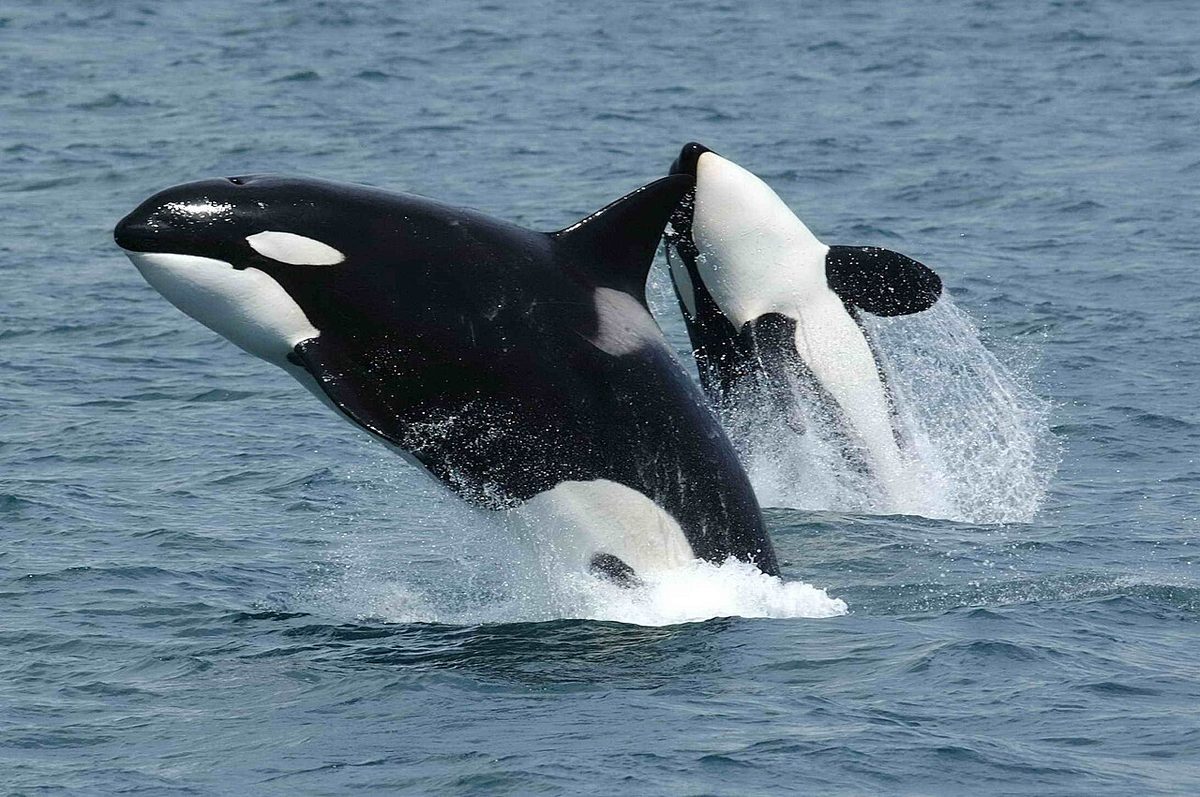
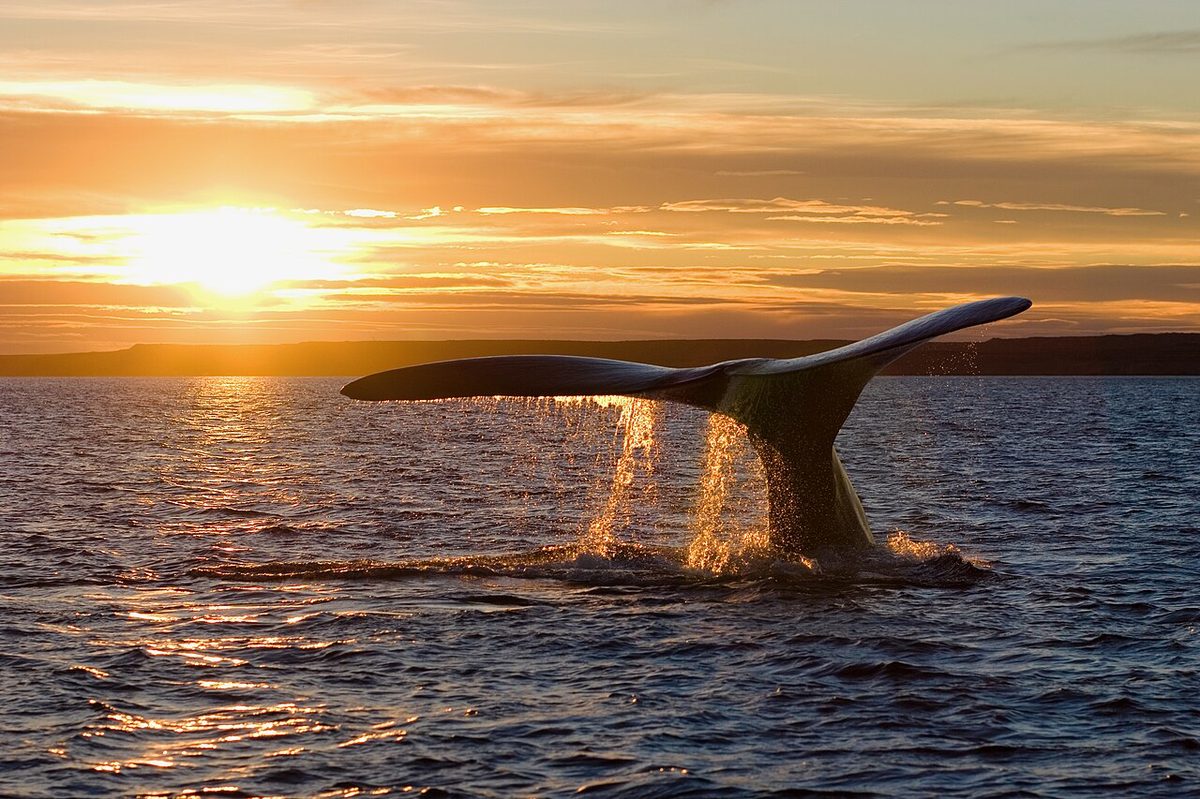
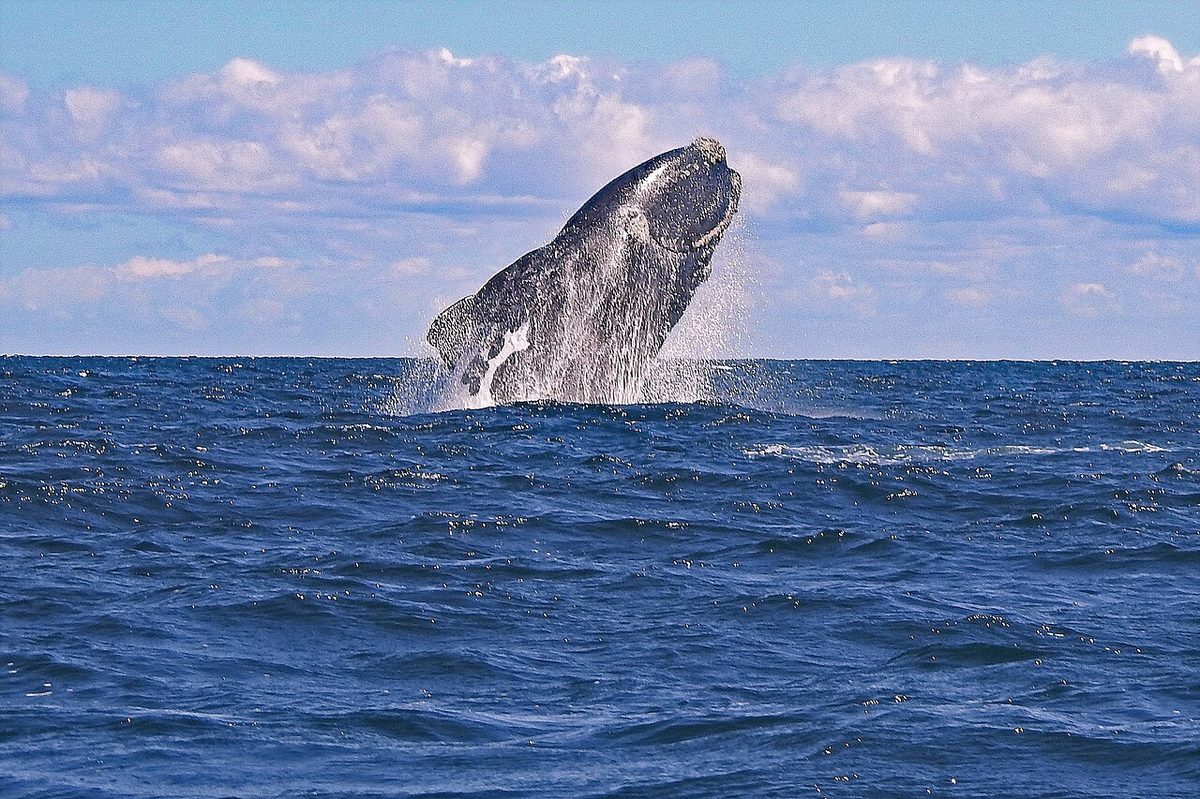
0 — 2 km Fig. 1 · Orca surfacing with its tall dorsal fin, the killer whale that draws visitors to orcas Patagonia at Peninsula Valdes · Photo: A Streetcar Named Keanu / CC0 via Wikimedia Commons
I have stood at the Punta Norte lookout for the better part of two days, chasing the orcas Patagonia is famous for, and seen exactly one dorsal fin, far out, moving the wrong way. No beaching. No sea lion pup snatched off the gravel. Just wind, a coffee going cold in my hand, and a lot of patient people scanning an empty channel. I tell you this first because almost every photo you have seen of orcas hunting on this coast represents a few seconds that most visitors, on most days, do not get to witness.
So let me be straight with you before anything else. To see orcas Patagonia is famous for, you go to Punta Norte on Peninsula Valdes, roughly February to mid-May (peak around March-April), or Caleta Valdes around October-November. The orcas there hunt by deliberately beaching to grab sea-lion and elephant-seal pups. It is real, it is rare, and most visitors do not see the beaching. Plan for luck, not certainty.
This guide is for the traveler who has watched the documentary, felt their stomach drop when the orca launched onto the sand, and now wants to know whether they can actually plan a trip around it. The honest answer is complicated, and I would rather give you the complicated truth than sell you a fantasy. I will tell you where to go, the two seasonal windows, why this is one of the hardest wildlife sightings on Earth, how to watch from the Punta Norte lookout versus a guided estancia, what it costs, and how to keep your expectations somewhere near reality. I will hedge every price and rule, because this coast changes and you should verify before you commit.
If you want the wider picture of every species on this coast first, our Patagonia wildlife and whale watching guide sets the whole scene, and this article zooms all the way in on the one animal people obsess over and rarely see.
Orcas Patagonia at a glance: month by month
Before the detail, here is the calendar I wish someone had drawn for me. The single biggest mistake people make is treating “orca season” as one block of guaranteed action. It is not. The behavior is tied to the tide, the weather, the prey, and the moods of about thirty wild animals. The table below is a planning aid, not a promise.
Month
Orca activity
What’s happening
Realistic chance
January
Low
Sea-lion pups being born; too young to be prey
Slim
February
Building
Pups start learning to swim; orcas begin appearing
Low but rising
March
Peak (Punta Norte)
Pups in the surf line; intentional stranding most likely
Best window
April
Peak (Punta Norte)
Hunting continues; pups grow warier through the month
Best window
May (early-mid)
Tapering
Pups bigger and smarter; orcas shift to other prey
Declining
June-September
Very low
No coastal hunt; right-whale season instead
Effectively none
October
Secondary (Caleta Valdes)
Elephant-seal pups weaning; orcas hunt them
Low, a real window
November
Secondary (Caleta Valdes)
Weaned elephant-seal pups venture to sea
Low, a real window
December
Low
Window closing
Slim
Swipe to see all columns
Table 1
A few honest notes on that grid. The main attack window at Punta Norte runs roughly late February to mid-May, peaking in March and April, which the Puerto Pirámides tourism authority ties directly to the South American sea-lion pupping cycle: pups are born in January, learn to swim a few weeks later, and become the prey orcas target. The secondary window at Caleta Valdes runs October to November, when orcas hunt weaning elephant-seal pups instead, per the same source. Outside those windows the famous beaching essentially does not happen, even though the odd orca can appear at any time of year.
If I had to pick one window for a trip built around the beaching, I would choose mid-March to mid-April and give it as many days as I could stand. The local operators will tell you the genuine peak can be as short as 10 to 15 days, and nobody knows the exact dates in advance. For how orcas fit alongside whales, penguins, and everything else by month, our Patagonia wildlife calendar lays the whole year out side by side.
Where to see orcas in Patagonia
The orcas Patagonia is known for are not spread along some vague stretch of coast. They concentrate at two specific places inside one protected area, and knowing which is which will save you a wasted drive.
The whole stage is Peninsula Valdes, a UNESCO World Heritage protected area in Chubut province, about 400 km of gravel and coast that juts into the South Atlantic. If you have not sorted the basics of getting around it, read our Peninsula Valdes guide first, because the distances out here are real and the roads are slow.
Punta Norte sits at the far northeastern tip of the peninsula, about 76 km from Puerto Pirámides and a fair bit more from Puerto Madryn, mostly on gravel. This is where the legendary intentional stranding happens. There is a sea-lion colony along a roughly 3 km stretch of flat, boulder-strewn beach, and a resident group of orcas that has learned to charge the shallows at the right tide and haul itself partway onto the gravel to seize a pup.
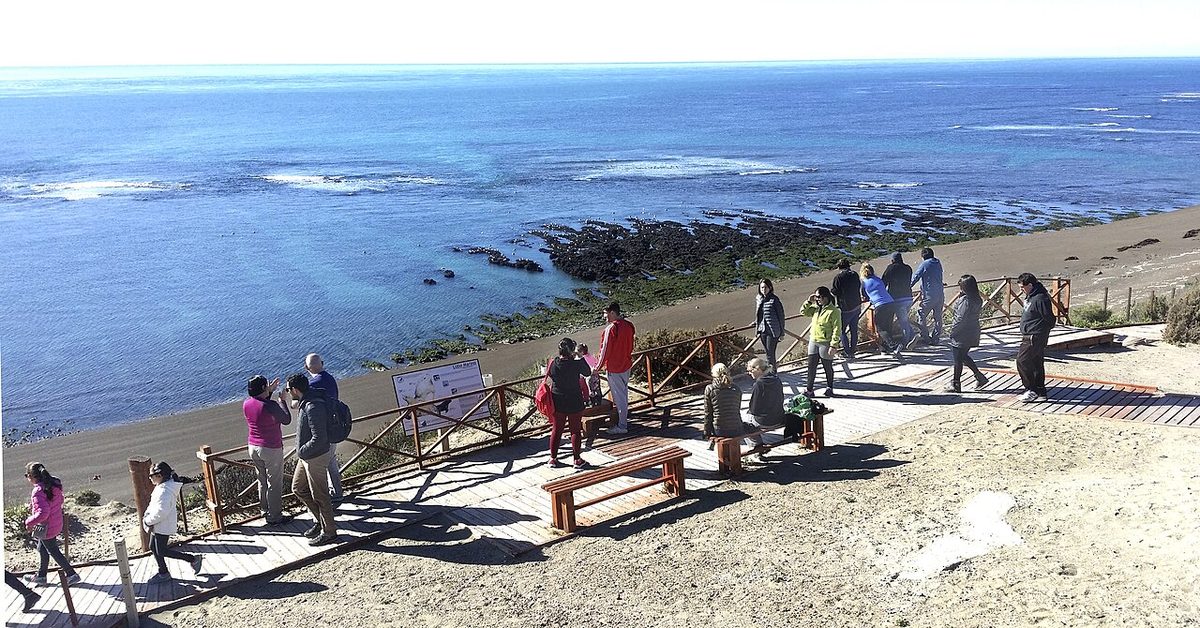
The reserve has a proper public lookout, El Mirador, set on the cliff above the colony, plus accessible trails, restrooms, and a small coffee shop. Chubut Patagonia lists Punta Norte’s orca season as March to May and notes the viewpoints sit above the colonies at a height that gives a decent angle on the action below. That elevation matters: you are not down on the sand with the animals, you are looking down on the channel from safety, which is exactly how it should be.
Caleta Valdes: the spring alternative
Caleta Valdes is the second act, about 79 km from Puerto Pirámides on the eastern coast. Here the prey is different. Female elephant seals haul out in early September to give birth, and around October and November, when their pups are weaned at about two and a half months and forced to learn the sea on their own, the orcas move in and use the same beaching technique on these inexperienced youngsters, according to Puerto Pirámides tourism. It is a quieter, less famous window than Punta Norte’s autumn peak, but it is a genuine second chance if your trip falls in spring.
Visit Argentina also notes orcas can occasionally turn up near Punta Delgada and, frankly, anywhere along the peninsula, since they range widely. But if you are planning around a sighting, Punta Norte and Caleta Valdes are the only two addresses worth building a day around.
The intentional beaching: what you are actually hoping to see
It helps to understand the behavior, because it explains both why it is so spectacular and why it is so hard to catch.
This is not orcas chasing prey in open water. It is a learned, deliberate hunting technique found in only a handful of places on the planet, and Peninsula Valdes is the most consistent of them. The orca accelerates toward the beach, rides the momentum of a wave, and drives its body almost completely out of the water onto the gravel to grab a sea-lion or elephant-seal pup at the waterline, then thrashes back into the surf. Visit Argentina calls Peninsula Valdes “the only place in the world where you can see orcas teach their calves to hunt young sea lions,” and that teaching is the key: the adults do not hunt alone but bring their young along to practice the stranding.
The cultural-transmission story is genuinely remarkable. Chubut Patagonia records that the technique was first observed in 1974, that the orcas live in matriarchal family groups, and that the young receive a long apprenticeship before they attempt it themselves. Only a small, specific subset of this population are “stranders” at all. So you are not waiting for any orca to do any orca thing. You are waiting for particular individuals, with a rare inherited skill, to choose to use it in front of you.
And the toll is real. In a good season of intentional stranding, the orcas take roughly 10% of the sea-lion pups born that January, according to peninsulavaldes.com. The surviving pups learn fast, grow warier through April, and by early May are too big and too cautious to be easy targets, which is exactly when the orcas give up the beaching and move on to other food. The whole window is short because the prey itself changes within weeks.
When to go: the two windows, honestly
Let me put real structure on the timing, because “February to May” is too loose to plan a flight around.
The main window: late February to mid-May (peak March-April)
This is the one you have seen on film. Puerto Pirámides tourism frames the broad orca season as February to mid-May, correlating with the sea-lion pupping cycle, while Visit Argentina zeroes in on March to May for the Punta Norte beaching specifically. Within that, locals consistently point at March and April as the real peak, with the most intense stretch sometimes lasting only 10 to 15 days that cannot be predicted ahead of time.
So the planning logic is brutal but simple. Earlier in the window (late February) the pups are barely swimming and the orcas are just starting to show. Later (May) the pups are wise and the orcas drift to other prey. The fat middle, mid-March to mid-April, is your best bet, and even then you are buying a chance, not a ticket. If you want to understand how March behaves across all of Patagonia, our best months for Patagonian wildlife guide puts the autumn window in context.
The secondary window: October to November at Caleta Valdes
The spring window is the underrated one. Around October and November, orcas hunt weaning elephant-seal pups at Caleta Valdes using the same beaching move. Chubut Patagonia lists Caleta Valdes orca viewing as October and November, and the convenient thing is that this overlaps with the tail of the southern right whale season and the start of strong penguin activity, so a spring trip can be rich even if the orcas never show. The official Peninsula Valdes fauna calendar broadly lists orca windows as roughly March to May plus October to November, which matches everything on the ground.
If you are weighing autumn versus spring for the whole trip, not just orcas, our advice on when to go guide will help you balance weather, crowds, and what else is happening regionally.
Why orca sightings are so rare
I want to spend real time here, because this is the section that protects your trip from disappointment. Four things have to line up at once, and you control none of them.
The time of year has to be right. Outside the windows above, the coastal hunt essentially does not happen. That part you can plan.
The tide has to be right. The orcas can only beach when the water is high enough to carry them over the rocky reefs to the prey. Puerto Pirámides tourism explains that hunting typically happens in a window of about three hours before to three hours after high tide at Punta Norte, and that Punta Norte’s high tide runs about 3 hours and 20 minutes later than the published high tide for Puerto Madryn. At Caleta Valdes, aim for roughly two hours before to two hours after high tide. So even on a perfect day, the action is confined to a few hours, and if high tide falls at an awkward time, your viewing window is small.
The weather has to cooperate. Strong winds from the north kick up a heavy coastal swell. Big waves mask the prey’s sounds, make hunting harder, and genuinely endanger the orcas, who can get stranded for real during a botched attempt. Check the forecast obsessively; a windy high tide is a wasted high tide.
And then there is the orca factor. This is the one nobody can solve. Even with the season, the tide, and the weather all perfect, the orcas may simply not be there. Puerto Pirámides tourism is refreshingly honest about this: some of these whales are known to range at least 150 km from Punta Norte, feeding on dolphins, sharks, and fish elsewhere, and there are aspects of their movements that researchers still do not understand. You can do everything right and watch an empty channel. That is not bad luck so much as the normal outcome.
Put those four filters together and you see why this is one of the hardest marquee wildlife sightings on the continent. The honest expectation, even in peak April with good tides, is that you might see orcas patrolling, you might see a half-hearted approach, and you very well might see nothing at all. A full beaching is the rare jackpot on top of all of that. Treat it like puma tracking in Torres del Paine: you go for the chance and the place, and you build a trip that still works if the headline animal never appears.
Fig. 4 · South American sea lions hauled out on the shore, the prey orcas target during the Punta Norte attack seasonPhoto: James Stewart / CC0 via Wikimedia Commons
How to watch: the Punta Norte lookout versus a guided option
There are basically two ways to give yourself a shot, and they suit different travelers.
The public lookout at Punta Norte
The straightforward, lower-cost approach is to drive to the Punta Norte reserve and watch from El Mirador, the public clifftop lookout above the sea-lion colony. You pay the standard Peninsula Valdes reserve entry fee (verify the current rate, and bring ID, since rates vary by residency), and then you wait. Puerto Pirámides tourism is blunt about the strategy: “the longer a person stays in the area, the higher are the chances to see them.” Bring binoculars, because plenty of attacks happen well down the beach from the viewpoint, and bring a long lens (400mm or more) if photos matter.
The advantage is freedom and time: you can plant yourself for hours, time your visit to high tide, and come back day after day. The downside is that you are on your own to read the tide table, the weather, and the channel, and you are sharing the lookout with everyone else who had the same idea on a peak-season weekend.
Guided trips and the estancias
The other approach is to go with people who watch this coast every day. Specialized orca-focused excursions run during the season, and some of the most coveted access is through the private estancias at the northern end of the peninsula, whose land borders the prime hunting beaches. These can offer closer, more knowledgeable, sometimes more restricted vantage points, with guides who know which individual orcas are around and how the tide is shaping up. Access to the most exclusive spots can be limited and pricey, and it should be: this is sensitive ground, and restricted access is part of protecting it.
A good guide will not change your odds of an actual beaching as much as you would hope. What they buy you is better positioning, real-time knowledge, the tide and weather read done for you, and the company of someone who can explain what you are watching. If your whole trip hinges on orcas and you can afford it, a guided day or two is worth it. Whichever way you go, lean on authorized operators and reserve staff, and read our responsible wildlife watching in Patagonia guide before you go, because the ethics here are not optional.
Costs and logistics, hedged
I will not print a hard price, because Argentina’s exchange rate makes any figure stale within months, and because reserve fees and tour rates move. Treat all of this as a pattern to verify close to your dates.
Peninsula Valdes reserve entry is a per-person fee paid at the isthmus entrance, with discounts by residency. Bring ID for everyone in the car. Confirm the current rate before you go.
Self-driving to Punta Norte means a rental car plus fuel, and a lot of slow gravel. Fill the tank before you enter the peninsula, keep to the 60 km/h gravel limit, and watch for guanacos and sheep on the road. The reserve generally opens around 8 AM and closes near sunset.
Guided orca excursions and estancia access sit at a premium above a standard peninsula day tour, and the most exclusive northern-estancia spots cost meaningfully more. Verify availability and price directly; peak-season access can be limited.
Base yourself smartly. Most people sleep in Puerto Madryn or Puerto Pirámides and day-trip out. Pirámides is closer to the northern reserves, which helps when you are chasing a specific high tide. Our Peninsula Valdes guide covers the base-town trade-offs.
For where orcas fit into a wider Patagonia route and budget, our Patagonia itinerary planner is the place to see whether the Atlantic coast even fits your trip, because it is a long way from the Andes and the travel days are real.
Ethics, patience, and managing your expectations
This is the part I care about most, so I will not bury it.
The orcas of Peninsula Valdes are a protected, studied, culturally unique population, and the beaching is a high-stakes behavior for them. A botched stranding can injure or kill an orca for real. So the rules at Punta Norte and Caleta Valdes are not bureaucratic nonsense. Keep your distance, stay on the marked trails and viewpoints, keep your voice down, never try to get closer for a better angle, and follow the wildlife guards without argument. No drones. The reserve signage spells this out, and Chubut Patagonia repeats it: do not chase, disturb, or feed the fauna, and keep your voice calm while watching.
Now the expectations talk. If you arrive needing to see the beaching or the trip is ruined, you have set yourself up to fail. Most visitors, even in peak April with a textbook high tide, do not witness an intentional stranding. Some see orcas cruising the channel. Some see an approach that fizzles. Many see nothing but sea lions and a beautiful, brutal coast. That is not a failed trip. That is wildlife.
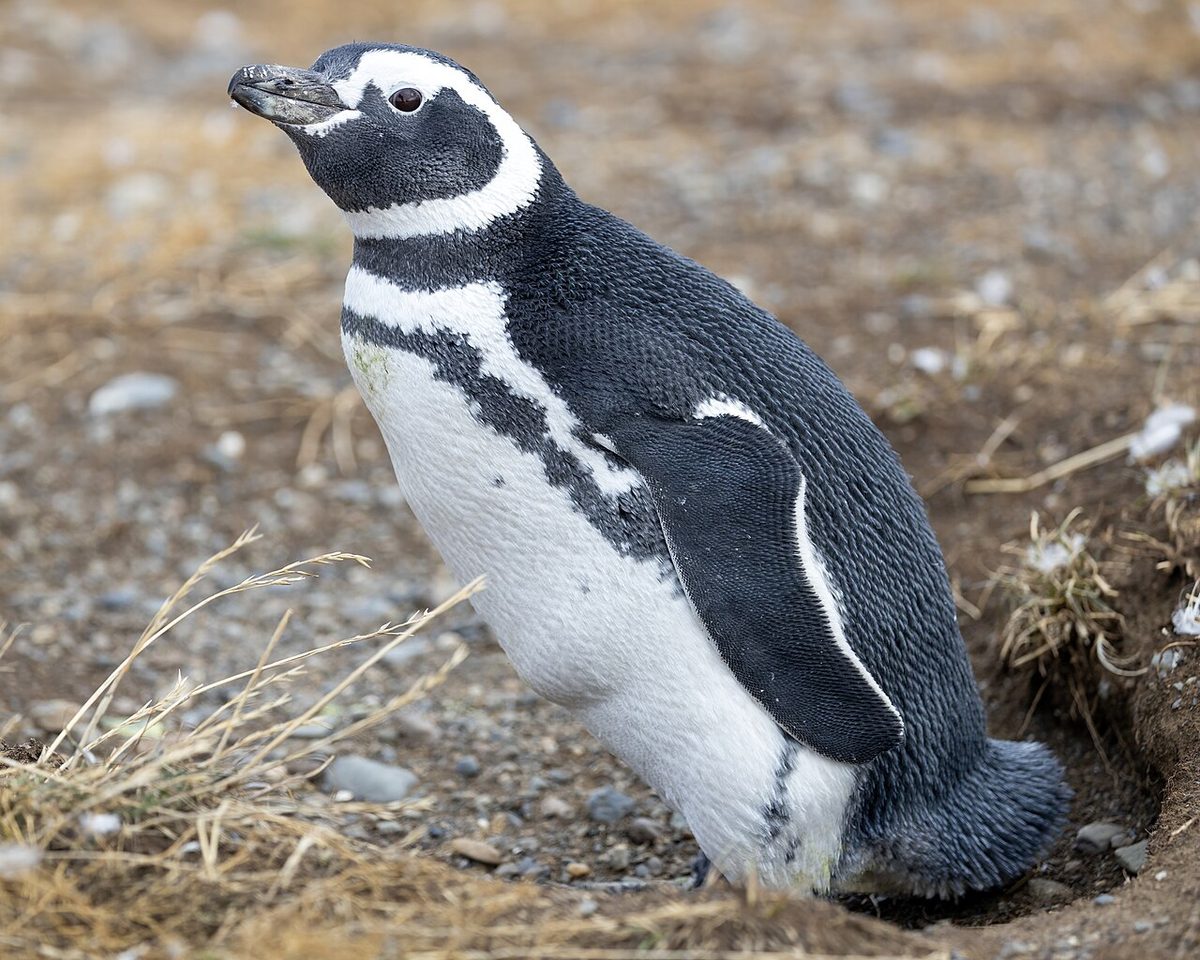
The travelers who come away happy are the ones who reframed it before they arrived: they came to spend patient hours in one of the world’s great wildlife theaters, with the beaching as a rare gift rather than the price of admission. Pair the orca gamble with the things you can more reliably enjoy, the penguins in Patagonia colonies along the Chubut coast, the Puerto Madryn whale watching in season, the sea lions and elephant seals and steppe wildlife of the peninsula, even the coastal Patagonia birdwatching, and you will have a full trip no matter what the orcas decide to do.
The main window is roughly late February to mid-May, peaking in March and April at Punta Norte on Peninsula Valdes, when orcas hunt sea-lion pups by beaching themselves. A secondary window runs October to November at Caleta Valdes, targeting elephant-seal pups. Even in peak season, sightings depend on tides, weather, and luck. Verify current timing locally before you book.
Are orca sightings at Punta Norte guaranteed?
No, and be wary of anyone who implies they are. Witnessing the intentional beaching requires the right month, the right tide window (about three hours either side of high tide), calm weather, and the orcas actually being present, since they range widely. Most visitors do not see a full stranding. Plan for the possibility, allow several days, and treat any sighting as a bonus.
Why do the orcas beach themselves at Peninsula Valdes?
It is a learned hunting technique, first observed in 1974 and passed down through matriarchal family groups. The orcas deliberately strand on the gravel at high tide to snatch sea-lion or elephant-seal pups at the waterline, then thrash back to sea. Adults bring their young to practice it. Only a small subset of this population, the “stranders,” do it, which is part of why it is so rare to watch.
How many days do I need to have a chance at seeing orcas?
There is no magic number, but more is better. The Puerto Pirámides tourism office puts it plainly: the longer you stay, the higher your chances. The genuine peak can last only 10 to 15 unpredictable days, so I would build in several attempts across different high tides rather than betting on a single afternoon. Combine it with other peninsula wildlife so the trip succeeds regardless.
Can I see orcas and whales in Patagonia on the same trip?
Sometimes, at the edges. Southern right whale season runs roughly June to December, while the main orca beaching window is February to mid-May, so they barely overlap. The best chance of catching both is the shoulders: late autumn or, better, the October-November Caleta Valdes orca window, which overlaps the tail of whale season. See our Puerto Madryn whale watching guide for the whale calendar.
Where exactly do I watch the orcas hunt?
At Punta Norte, you watch from El Mirador, a public clifftop lookout above the sea-lion colony, about 76 km from Puerto Pirámides on gravel roads. At Caleta Valdes, you watch from marked paths and viewpoints above the elephant-seal colony. Both have accessible trails and basic facilities. Bring binoculars and a long lens, since the action often happens well down the beach.
Is it ethical to watch the orca hunt?
Yes, when you do it properly. Watch only from the official viewpoints, keep your distance, stay on marked trails, keep noise down, use no drones, and follow the wildlife guards. The beaching is dangerous for the orcas themselves, and the population is protected and closely studied. Responsible viewing from above the colony does not interfere with the hunt; pushing for a closer angle does.
Final thoughts
I still think about that empty channel at Punta Norte, two days of wind and waiting and one distant fin. I did not see the beaching. And I would go back tomorrow, because the standing-and-waiting was its own thing, sea lions barking below, the whole Atlantic grinding against that gravel, the knowledge that at any second the water might erupt.
That is the trip you are signing up for. Not a guaranteed spectacle, but a chance at one of the rarest sights in the natural world, in a place that is worth the long drive even on a quiet day. Come in mid-March to mid-April for the best odds, or October-November for the elephant-seal window. Give it as many high tides as you can. Watch the weather. Keep your distance. And come with a trip that is already full of whales, penguins, sea lions, and steppe, so the orcas can be the gift rather than the burden.
If the beaching happens in front of you, you will never forget it. If it does not, you will still have stood somewhere extraordinary. Either way, verify the current seasons, fees, and rules before you go, because this coast writes its own rules and changes them without telling anyone. For the full species picture, loop back to our guide to spotting Patagonian wildlife.