Is Patagonia expensive? Honest 2026 daily cost ranges from shoestring to luxury, what drives the price, and Argentina vs Chile, with every figure hedged.
By Patagonia Tourism Guide · First published 24 Sep 2026 · Updated 1 Aug 2026
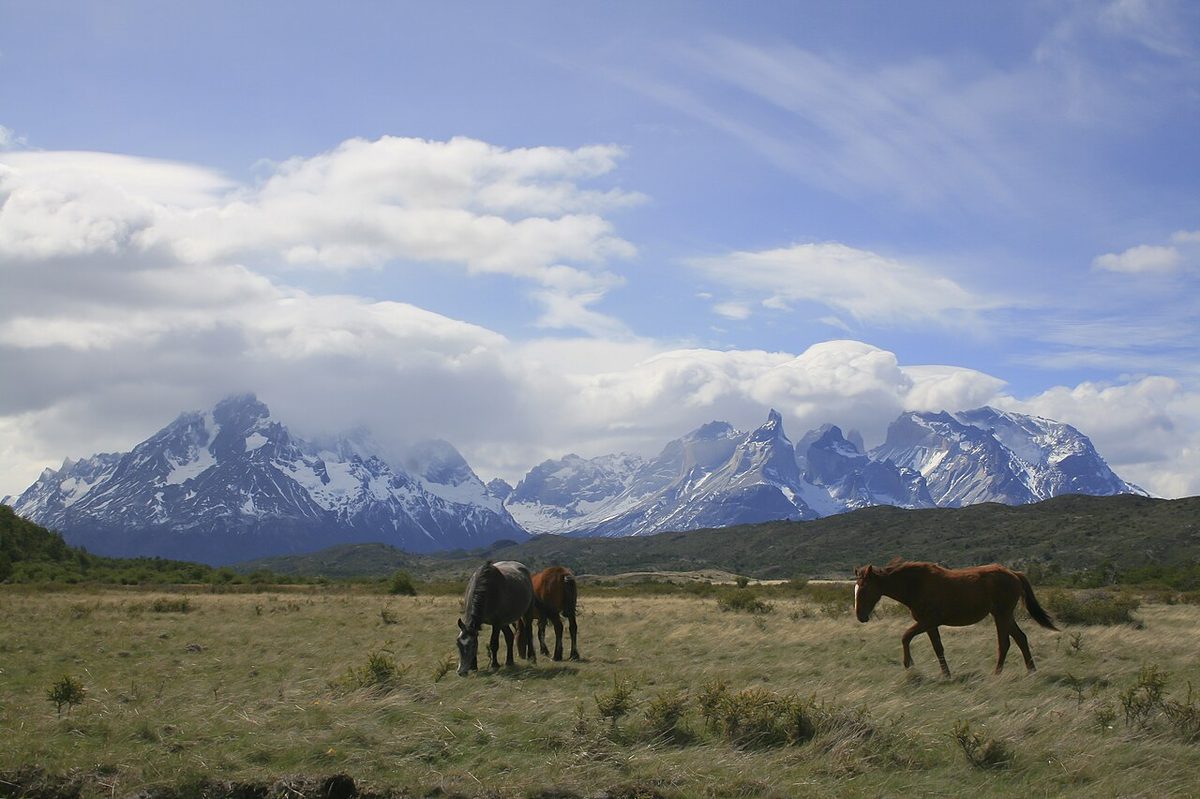
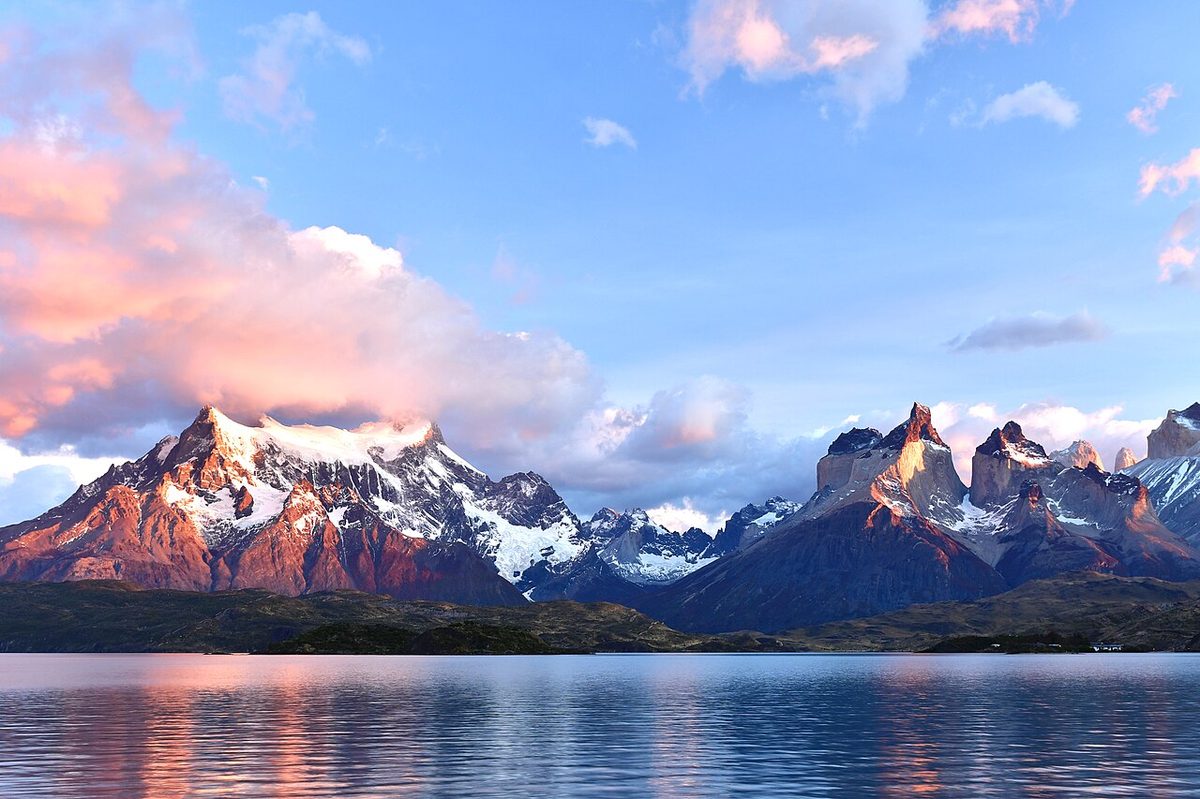
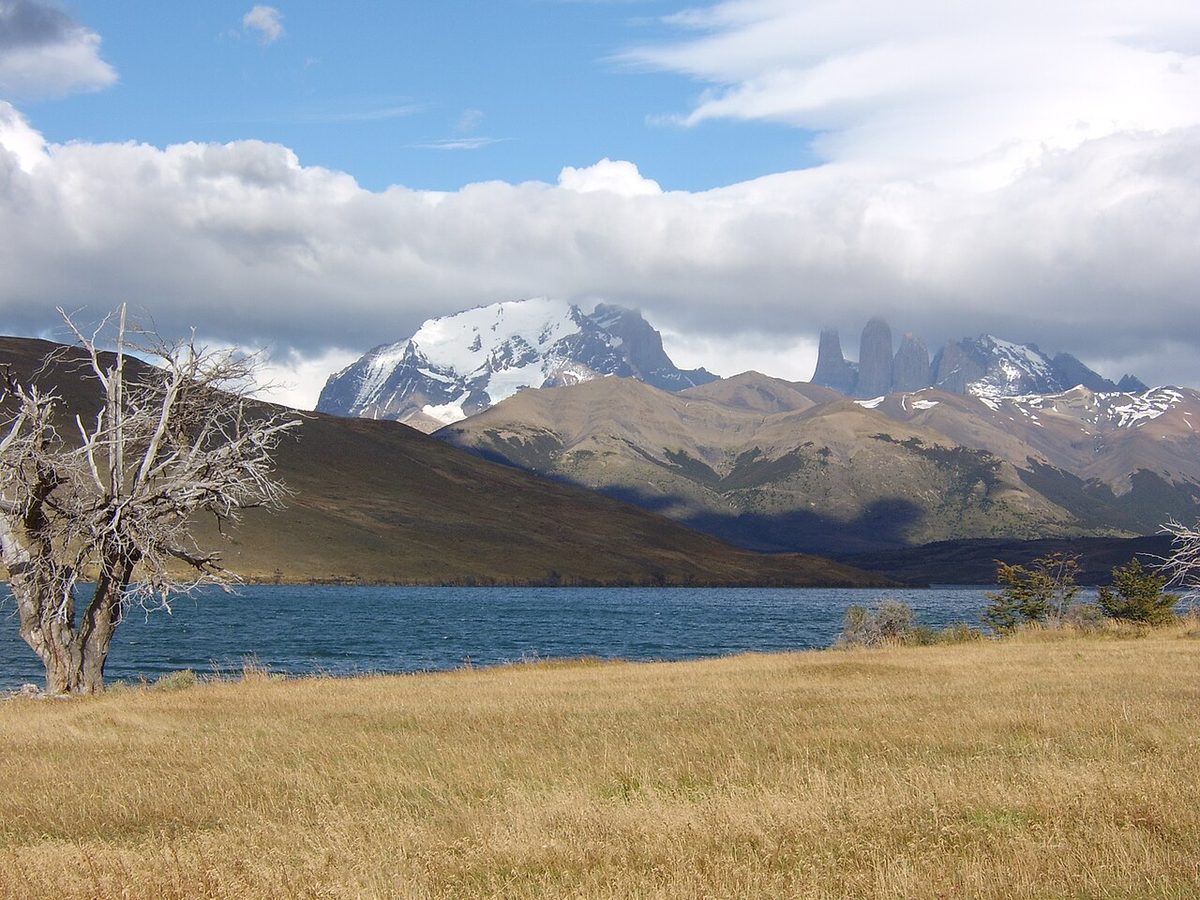
0 — 2 km Fig. 1 · The Paine massif in Torres del Paine National Park, the marquee stop that shapes whether Patagonia is expensive · Photo: Diego Delso / CC BY-SA 3.0 via Wikimedia Commons
The first time I added up a Patagonia trip on a napkin in a Puerto Natales hostel, I got a number that made me put my pen down and order another coffee to think about it. Then I watched a British couple at the next table do their two-week southern loop, glaciers and all, for roughly half of what I’d guessed, because they cooked, took buses, and skipped the ice-trek upsells. Same region, same season, wildly different bills. So when you ask, is Patagonia expensive, the honest answer is: yes, and also it depends entirely on how you travel.
Is Patagonia expensive? Yes, by South American standards it’s one of the pricier regions, mostly because it’s remote, seasonal, and spread across huge distances. But the daily cost swings enormously: a disciplined backpacker can get by on roughly USD 80 to 120 a day as of 2026, while an all-inclusive lodge guest spends USD 700 or more. Your travel style decides almost everything.
This guide is for the traveler who has read “Patagonia is expensive” a hundred times and wants real numbers attached to it: what a day actually costs at each travel style, what drives the price up, where Argentina and Chile differ, and which corners are safe to cut. I’ll hedge every figure, because prices here move fast, especially in Argentina, and I’ll point you at the sources. Treat all of this as planning ranges for 2026, then verify current prices and exchange rates before you book anything.
One thing up front: I’m not going to hand you a single magic number. “Patagonia costs X per day” is a sentence, not a plan. The spread between how two reasonable people travel the same route is bigger than the gap between a cheap country and an expensive one. What follows is how to find your number.
Patagonia daily budget at a glance
Here’s the table I wish someone had shown me before that napkin. These are per-person daily figures, excluding your long-haul international flight, and they assume you’re paying through normal tourist channels in 2026. They line up with the tiers in our Patagonia trip cost and budget guide, which goes deeper on each.
Travel style
Roughly USD/day
What you actually get
Shoestring
~75–125
Dorms or camping, groceries, buses, free hikes, almost no paid tours
Budget-comfort
~130–220
Hostels or simple private rooms, buses plus maybe one flight, some restaurant meals, a few chosen tours
Mid-range
~250–450
2–3 star hotels, domestic flights, mix of restaurants, several guided activities
Comfort/upscale
~450–800
Better hotels, private transfers, rental car, premium day tours
A few honest caveats on that grid. These exclude the flight to South America, which is often the single biggest line in the whole budget. Solo travelers usually pay more per person on rooms and transfers; couples and groups sharing a cabin or a car can land at the low end of a tier. And these are averages across a trip — a single ice-trek day or a refugio night on the W can briefly spike you two tiers higher, then a quiet hiking day in El Chaltén brings you back down.
Multiple 2026 budget guides land in the same neighborhood. Nomadasaurus and Worldly Adventurer both put careful budget travel around USD 80 to 150 a day; LATAM Travellers and Career Gappers put mid-range comfort closer to USD 180 to 300, with luxury lodges at USD 500 to 800-plus. The consensus is real. The numbers still drift, so reconfirm.
So, is Patagonia expensive? The honest version
Yes — but let me be precise about why, because the reason changes how you’d save.
Patagonia is not expensive because every meal is gourmet or every bed is a boutique hotel. Plenty of the best moments here are nearly free: walking out of El Chaltén before sunrise, cooking pasta in a hostel kitchen with people from six countries, watching the light slide across Lago Argentino, standing on a pebble beach hoping a whale surfaces one more time.
It’s expensive because the region gives you fewer cheap shortcuts than most places. The distances between gateways are enormous. The famous towns have limited high-season lodging, so the good-value beds sell out and you’re left with what’s expensive or what’s awkward. Many of the headline experiences are genuinely remote, and reaching them costs money or a tour. The weather can punish a tight itinerary, so you pay for buffer days. Everything that runs the tourism machine — food, fuel, staff, gear — travels hundreds or thousands of kilometers to get there, and that freight cost is baked into every hotel night and restaurant plate. As Worldly Adventurer puts it, it’s expensive precisely because it’s remote, seasonal, and logistically demanding.
Compared with the rest of South America, yes, it’s a step up. Compared with Iceland, Alaska, Norway, or New Zealand — the other end-of-the-earth bucket-list destinations — independent Patagonia can actually come out cheaper if you choose your paid experiences carefully. Both things are true at once.
So the better question isn’t really “is Patagonia expensive.” It’s “which parts of this trip are worth paying for, and which costs are just poor planning?” Hold that thought; the whole back half of this article is about it.
When I look at why one person’s Patagonia bill is double another’s, it almost always comes down to the same handful of levers.
Season
Peak summer — December, January, February — brings the easiest logistics, the longest days, and the most operators running. It also brings the highest lodging demand, the fullest buses, the priciest rental cars, and the least room to improvise. Several guides note that shoulder months like November and March can cut costs by roughly 20 to 30 percent while the trip still works, a point LATAM Travellers makes plainly. Our notes on shoulder-season timing guide breaks down the month-by-month trade-off; from a pure budget angle, I’d look hardest at November and March.
Route
The route is the budget. El Calafate plus El Chaltén is efficient because the airport, the glacier, and the hiking town connect cleanly. Add Puerto Natales and Torres del Paine and you add a border, Chilean prices, and park logistics. Add Ushuaia and you usually add a flight. Add Bariloche or the Atlantic coast and you add a whole extension. An over-ambitious route gets expensive even when every individual hotel is modest. Sort the route first with the how to get to Patagonia guide; a budget only means something after the route is honest.
Lodging scarcity
This is one of the biggest and most misunderstood drivers. The problem isn’t that every bed is pricey — it’s that the affordable beds vanish. In El Chaltén in hiking season, in Puerto Natales around W Trek dates, inside Torres del Paine, in Puerto Pirámides during whale season, booking late rarely makes Patagonia cheaper. It just makes your options narrower and, usually, dearer.
Transport
Buses are excellent value on the classic routes and one of the easiest ways to keep costs down. Worldly Adventurer’s figures suggest budgeting somewhere around USD 200 to 600 for ground transport across a two-week trip. Domestic flights save time on the long jumps but cost more, and the cheapest fares strip out the baggage you need for trekking gear. Rental cars have a misleading headline price — add insurance, fuel, one-way fees, gravel rules, and border permits before you compare.
Activities and park fees
Patagonia has many free or low-cost days and a few expensive optional ones: Perito Moreno ice trekking, guided puma tracking, Beagle Channel trips, whale boats, glacier cruises. These are where a mid-range budget quietly becomes an upscale one. Park fees, meanwhile, are no longer rounding errors — Argentina’s national parks updated their access fees from June 2026, and Chile’s are administered through Pases Parques and CONAF. Our rundown of 2026 entrance fees guide tracks the current official numbers, which is exactly where you should get them rather than from any blog, including this one.
What each travel style really costs
Numbers are easier to use when you can picture the day they buy. Here’s what each tier feels like on the ground.
Shoestring: roughly USD 75–125 a day
This is the lowest range where the trip still functions properly. It means hostel dorms or camping, cooking your own food, buses instead of flights wherever possible, free day hikes, and very few paid tours. It shines in El Chaltén and Bariloche, where the hiking is free once you’ve arrived, and it works on the bus-friendly southern routes. It strains the moment your dream involves Torres del Paine refugios, ice trekking, or hitting many regions in a short window.
The danger at this level is false economy. You can absolutely have a wonderful budget trip — but if you cut the only weather buffer before Fitz Roy, or skip a layer you genuinely need, the budget starts running the trip instead of the other way around. Our Patagonia backpacking itinerary is built around making this tier work without those traps. The most committed shoestringers go lower still — some bloggers document Patagonia on USD 20 to 50 a day through heavy camping, hitchhiking, and cooking — but I wouldn’t treat that as the baseline for a normal first trip.
Budget-comfort: roughly USD 130–220 a day
This is the range I’d call realistic for most independent travelers who want to save without turning every choice into a sacrifice. Hostels, simple private rooms, or modest guesthouses; grocery breakfasts and packed trail lunches with some restaurant dinners; buses on the logical routes and maybe one domestic flight; a few carefully chosen paid activities. It suits couples, friends, and solo travelers with two-plus weeks. Our budget-first trip plan sits squarely in this band, and it’s the tier I quietly recommend to more people than any other.
Mid-range: roughly USD 250–450 a day
For travelers who want the trip to feel comfortable but still independent: 2 to 3 star hotels or good cabins, domestic flights where they save real time, restaurant meals mixed with casual food, guided day tours in the key places, maybe a rental car for part of the route. For a lot of first-time 10 to 14 day trips, this is the honest range — it lets you pay for the experiences that matter while still making choices.
Comfort and luxury: roughly USD 450 to 900-plus a day
Upscale buys less friction: better hotels, private transfers, rental car for convenience, premium tours, in-park or near-park lodging. Above that, all-inclusive lodges, private guides, and bundled logistics. Worth saying clearly — remote comfort costs more than city comfort. A nice room near Torres del Paine is not the same market as a nice room in Santiago. Many travelers get a better trip by spending selectively rather than upgrading everything, but if support, photography access, or a special-occasion trip is the goal, the lodge model earns its price. Our Patagonia luxury travel cost guide breaks down where that money actually goes.
Everyone wants to know which side is cheaper, and in 2026 the honest answer leans one way — with caveats.
Argentine Patagonia is generally better value for lodging and food right now. As Career Gappers and LATAM Travellers both note, the Argentine peso has devalued faster than the Chilean peso in recent years, which often makes hostels, restaurants, and everyday spending noticeably cheaper on the Argentine side. El Chaltén, Bariloche, and El Calafate can deliver strong value, especially if you stick to the glacier walkways instead of the expensive ice tours.
The catch is twofold. First, Argentine Patagonia is far larger, so the savings on rooms and meals get partly eaten by the cost and time of moving between distant spots. Second, Argentina’s prices and card behavior are volatile in a way Chile’s mostly aren’t — quoted figures age fast, and exchange-rate assumptions can bite.
Chilean Patagonia tends to feel more predictable. Cards work widely in tourist areas, prices are clearer, and logistics around Torres del Paine are orderly. It’s not necessarily cheaper, though — the in-park accommodation, the W Trek refugios, and remote Carretera Austral cabins are genuine budget accelerators.
My practical take: if your goal is the cheapest possible hiking trip, Argentina often wins because El Chaltén hands you enormous free-hiking value once you’re there. If your goal is Torres del Paine specifically, Chile isn’t optional. The route where your main experiences are reachable without constant premium logistics beats “the cheaper country” every time. Our Argentine and Chilean Patagonia comparison guide weighs the whole decision, not just the price tag.
The W Trek: a budget conversation of its own
Torres del Paine deserves its own note because the W Trek isn’t just a hike — it’s a booking system, and it’s one of the biggest single cost drivers in a Patagonia trip. As of 2026, ReserveNature and other trek guides put Vértice campsites around USD 12 to 14 per person and Las Torres campsites considerably higher, with refugio beds ranging from roughly USD 80 to well over USD 200 a night depending on operator, room, and whether meals are bundled. A basic self-guided camping W can land somewhere around USD 600 to 900 all-in; a refugio-and-meals version climbs past USD 1,000 to 1,500, and guided trips more again. Those are illustrative 2026 figures, not quotes — our W Trek cost guide carries the current breakdown to verify before you reserve.
Season and timing: the lever people underuse
If money is tight, when you go is one of the most powerful levers you’ve got, and it’s the one travelers most often leave on the table.
Peak summer is the most expensive and least forgiving window. Push to November or March and you often keep functioning trails and reasonable access while demand — and therefore price — softens by roughly a fifth to a third. Several sources flag September and the autumn months as among the cheapest times to travel, with thinner crowds and falling lodging prices, though you trade some of that saving for colder weather, shorter days, and a few operators not yet open. October and April can save even more, but only if your specific route still works in those conditions.
The savings stack with everything else: shoulder-season prices on top of grocery cooking on top of buses on top of a focused route compound into a meaningfully cheaper trip than peak-season versions of the same itinerary. Check the trade-offs in best time to visit Patagonia before you lock dates.
After enough trips here, I’ve landed on a fairly firm line between savings that make the trip cleaner and savings that quietly make it worse.
Safe places to save
Cook strategically. You don’t need to cook every meal; you need to stop buying every meal by accident. Self-catering can drop a food budget from roughly USD 60 to 90 a day to around USD 25 to 35, per Worldly Adventurer’s figures — easily USD 250 to 400 a week. Book lodging with kitchen access and pack trail lunches.
Use buses on the classic routes. El Calafate to El Chaltén, El Calafate to Puerto Natales, Punta Arenas to Puerto Natales — these are good value and reliable.
Stay in gateway towns. Puerto Natales over in-park Torres del Paine, El Calafate as the glacier base. The gateway-town strategy is often the single easiest budget win.
Travel shoulder season. November and March, as above.
Choose fewer regions. A focused route beats a frantic one on both cost and experience.
Share costs. A rental car, cabin, or transfer split two to four ways changes the math completely.
Costs I would not cut
Weather buffers. Patagonia weather is not a side note. If Fitz Roy, the Torres, or a glacier boat is central, protect the time. A cheap bus that costs your only clear-sky day is not a saving.
Insurance. “I’m only hiking” has done a lot of damage in mountain travel. Read the policy and match it to what you’re actually doing. This is a planning rule, not insurance advice. Our Patagonia money guide covers the practical side of cards, cash, and coverage.
Essential gear. Don’t underbuy wind, rain, warmth, or footwear. Patagonia punishes light packing that’s light because it’s incomplete.
The one thing you came for. If your whole dream is the W Trek, fund the trek and simplify everything else. If it’s whales, fund the wildlife region in the right season. Cut around the core, never through it.
The classic mistake is spending on filler tours and then economizing on the route-defining day. Do the opposite.
How much cash, and cards or pesos?
Money handling is part of the budget here because Argentina and Chile don’t behave the same way. In Chile, cards work widely in towns, hotels, and supermarkets; carry some pesos for small purchases and remote spots, but you won’t be living on cash. In Argentina it’s more volatile — foreign Visa cards may get a preferential, near-blue exchange rate, which makes card use far more practical than it once was, but you should verify that’s still true with your own bank close to your travel dates. In both countries, carry some cash for tiny businesses, tips, taxis, and the remote stretches where cards simply don’t work, and bring US dollars in good, undamaged condition as a backstop. ATMs exist but charge stiff per-withdrawal fees, so plan larger, less frequent withdrawals. Don’t build a budget from an exchange-rate blog post from last year — including any number you read here. Our Patagonia money guide goes deeper on the current card-and-cash strategy.
Frequently asked questions
Is Patagonia expensive compared to the rest of South America?
Yes. Patagonia is among the pricier regions of South America because it’s remote, seasonal, and spread over long distances, so transport, lodging, and food all cost more than in places like Buenos Aires or Santiago. That said, it can be cheaper than comparable wilderness destinations like Iceland or New Zealand if you travel independently and choose paid experiences carefully. Verify current prices, since they move fast.
How much does Patagonia cost per day?
As rough 2026 planning ranges, shoestring backpackers spend around USD 75 to 125 a day, budget-comfort travelers USD 130 to 220, mid-range USD 250 to 450, and comfort to luxury USD 450 to 900-plus, all excluding long-haul international flights. Your route, season, lodging style, and paid activities move the figure more than anything else. Treat these as averages across a trip and reconfirm before booking.
Can you do Patagonia on a budget?
Yes. The cheapest practical approach focuses on fewer regions, uses buses, stays in hostels or camps, cooks most meals, prioritizes free hikes, travels in shoulder season, and picks paid tours ruthlessly. El Chaltén and Bariloche are strong budget anchors because the hiking is free once you arrive. Torres del Paine and the Carretera Austral need more careful planning to stay affordable.
Is Argentina or Chile cheaper for Patagonia?
In 2026, Argentine Patagonia is generally better value for lodging and food, largely because the peso has devalued faster than Chile’s. But Argentine Patagonia is much larger, so transport costs eat into the saving, and its prices are more volatile. Chile is more predictable and often easier for card use. The route matters more than the country — pick the one where your main experiences don’t require constant premium logistics.
What’s the cheapest time to visit Patagonia?
Shoulder season — roughly November and March — is the sweet spot, often cutting costs by about 20 to 30 percent while trails and access still work well. September and the autumn months can be cheaper still, with thinner crowds and falling lodging prices, but you trade that for colder weather, shorter days, and fewer open operators. Peak summer (December to February) is the most expensive window.
How many days do you need in Patagonia, and does more time cost more?
Most first-timers do well with about 7 to 13 days, enough for two regions and the headline glaciers and hikes without feeling rushed. Counterintuitively, more time often lowers your daily cost: longer trips let you use slower buses, apartments with kitchens, and grocery routines instead of premium logistics. A rushed short trip pays for that speed in flights, transfers, and stress.
What costs do people forget to budget for in Patagonia?
The usual surprises are domestic flights and baggage fees, airport transfers, park entry tickets, rental-car insurance and border permits, fuel and ferries, gear rental, trail snacks bought last-minute, laundry, luggage storage, tips, travel insurance, weather-buffer nights, and exchange-rate or ATM fees. None are huge alone, but together they’re often the gap between a budget estimate and the real total.
Final thoughts
So, is Patagonia expensive? Yes — but “expensive” turns out to be the least useful word in the conversation. The region is genuinely pricier than most of South America, for real structural reasons: distance, remoteness, season, scarce beds. And yet the gap between how two thoughtful travelers do the exact same route is wider than the gap between a cheap country and a dear one.
Your number isn’t set by Patagonia. It’s set by your route, your season, your lodging style, and which paid days you decide actually matter. Get those four right and the budget follows. Pick the route where your dream experiences are reachable without premium logistics, travel in the shoulder, cook when you can, and spend freely on the one thing you came for.
Then do the boring, important part: take every figure here as a 2026 planning range, and verify current prices and exchange rates before you book. The next step is to model your actual trip in the guide to what a Patagonia trip costs, and to start the route honestly with the primer on how Patagonia fits together.