How Many Days in El Chalten? An Honest Fitz Roy Plan
How many days in El Chalten? Plan 3-4 nights with a weather buffer for Fitz Roy. Honest 2, 3, 4 and 5-day plans, day by day, plus how to use the forecast.
By Patagonia Tourism Guide · First published 2 Aug 2026 · Updated 1 Aug 2026
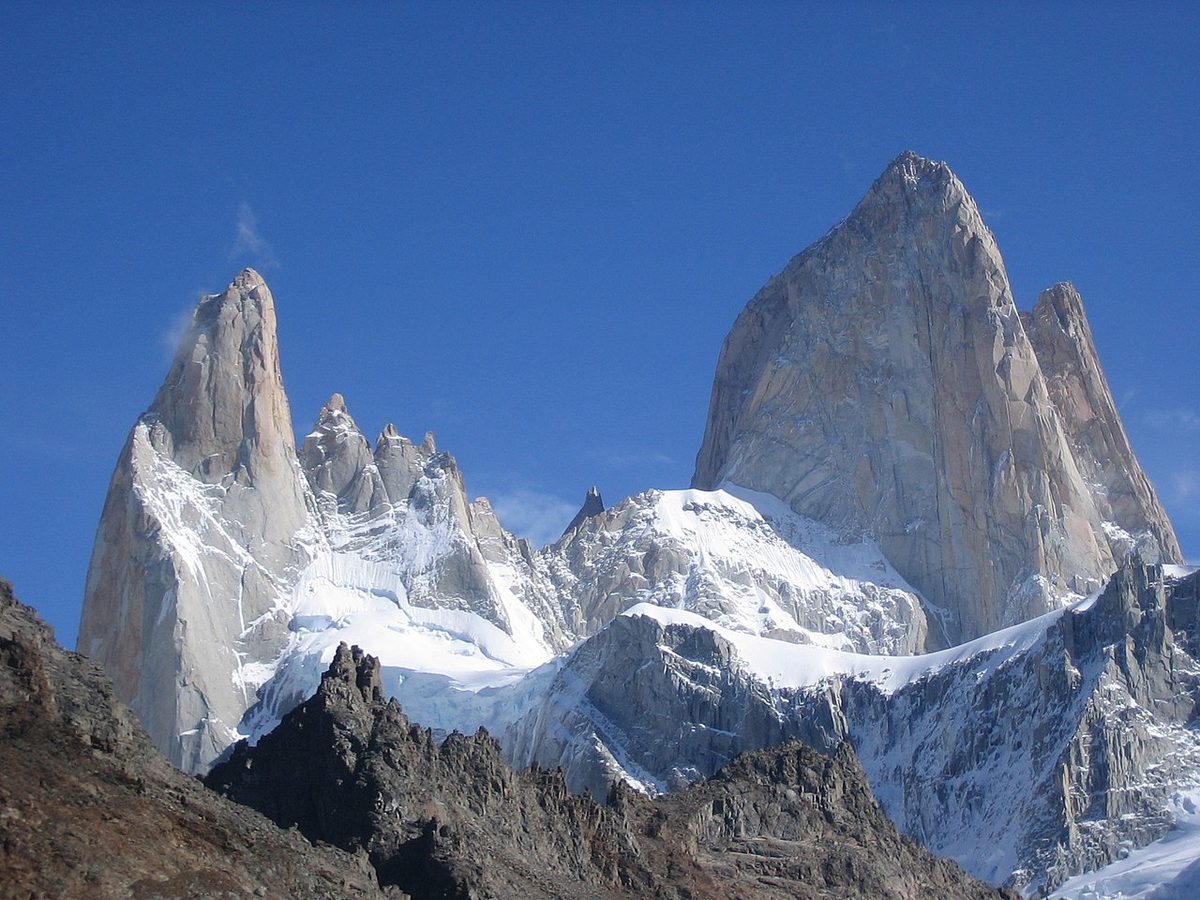
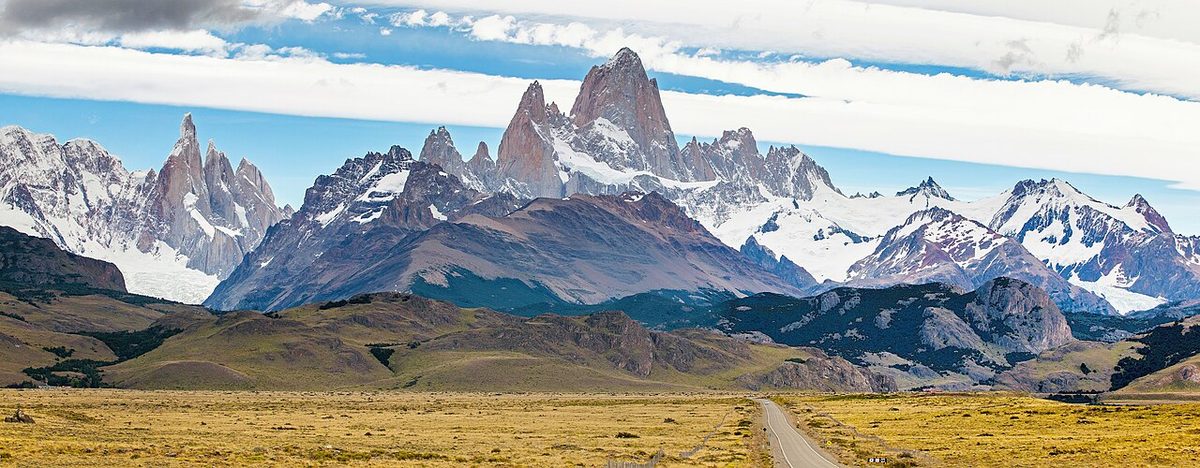
0 — 2 km Fig. 1 · Mount Fitz Roy standing clear above the valley near El Chalten in Argentine Patagonia · Photo: Prissantenbär / Public domain via Wikimedia Commons
I have watched people arrive in El Chalten on a one-night plan, hike all day in cloud, and leave the next morning without ever seeing the mountain they came for. I have also watched people with a spare day wake up to a flawless Fitz Roy on the morning they almost left.
The difference was rarely fitness or planning skill. It was usually one or two extra nights.
So before you lock your dates, let me give you the version no booking widget tells you.
The honest answer to how many days in El Chalten is three to four nights, which gives you two or three full hiking days plus a built-in weather buffer. Two nights is the rushed minimum and a gamble on a single day. Five or more nights is where El Chalten stops feeling like a race, which is ideal for keen hikers, photographers, campers, and the Huemul Circuit.
This guide is for the traveler sketching a Patagonia route who needs to size the El Chalten stop without wasting a once-in-a-trip weather window. It is for you whether you want the minimum that still “counts,” the comfortable middle, or the generous version. For the full trail-by-trail detail behind these plans, read the notes on trekking from El Chalten, the parent guide this article sits under.
How Many Days in El Chalten, at a Glance
Here is the quick version, hedged on purpose, because the right number depends on how much you care about clear Fitz Roy views and how much the weather decides to cooperate.
Nights in El Chalten
Full hiking days
What you can realistically do
Who it suits
Main risk
1 night
Roughly half a day
Arrival plus one short hike or viewpoint
Road-trip pause, passing through
No real Fitz Roy chance
2 nights
1 full day
One big hike (Laguna de los Tres if clear) or two shorter ones
Very tight itineraries
One bad forecast erases the main view
3 nights
2 full days
The two classics, or one classic plus a buffer
First-timers who want Fitz Roy
Still light on buffer
4 nights
3 full days
Both classics plus a panorama or a true buffer day
Most hikers; the sweet spot
You must cut a night somewhere else
5 nights
4 full days
All three big hikes without forcing every day
Keen hikers, photographers, campers
More lodging and budget
6+ nights
Flexible
Big hikes, rest, weather patience, Huemul Circuit
Slow travelers, backpackers, climbers
Hard to fit in a short trip
Swipe to see all columns
Table 1
If you take one thing from this table, make it the buffer-day idea baked into the 3- and 4-night rows. The single most common El Chalten mistake I see is treating one clear hiking day as a plan rather than a bet.
Why the Weather Decides Your Answer
In most destinations, “how many days” is a question about how much there is to see. In El Chalten, it is mostly a question about how much margin you want against the sky.
Fitz Roy and Cerro Torre sit at the edge of the Southern Patagonian Ice Field, and they make their own weather. The peaks can disappear behind cloud for two or three days, then reveal themselves for twenty minutes at sunset. I have sat at a viewpoint watching a wall of grey, packed up to leave, and turned around to find the whole massif suddenly out and glowing. That is the maddening, wonderful character of the place.
A pattern worth knowing: the clearest views often come early. Mornings, roughly the first few hours of daylight, tend to give the best odds before afternoon cloud builds over the summits. That is one more reason an early start matters, and one more reason a single afternoon arrival does not “count” as a real attempt.
Now layer on the logistics. Most people reach El Chalten by bus or car from El Calafate, around 215 kilometers away, a ride of roughly three hours, as Visit Argentina describes. If your one and only clear day happens while you are still on that bus, you lose it. A buffer night is insurance against exactly that bad luck.
This is why I keep pushing past the minimum. Two nights can be glorious if the weather gods are kind. They can also hand you a single grey day and a long drive home wondering what was behind the clouds. Adding a night does not just add a hike. It adds a second roll of the dice.
Let me answer the question hiding inside the bigger one: what is the least time that still gives you a fair shot at the mountain?
The honest minimum is one clear morning plus the legs for a hike that reaches a Fitz Roy viewpoint. In practice that means at least two nights, so you have one full day to use on the clearest forecast.
If you are fit and the weather is good, spend that day on Laguna de los Tres, the classic Fitz Roy hike. It is a long day, around 20 to 24 kilometers depending on where you start, with a steep final climb, but it delivers the iconic view of the spires above the lake.
If the big day is too much, or the forecast is only half-decent, you can still “see Fitz Roy” on a lighter walk. Laguna Capri and the Mirador Fitz Roy viewpoint sit on the same early trail and give you the mountain without the full commitment. They are the difference between “I saw it” and “I saw nothing,” and on a tight schedule that difference is everything.
What the minimum does not buy you is a second chance. With one full day, if Fitz Roy is socked in and rain is sheeting across the valley, that is the trip. No buffer, no redo. Plenty of people accept that trade because their wider route is tight. Just go in with eyes open: two nights is a sample of El Chalten, not the full meal.
Two nights usually means one full hiking day plus an arrival afternoon and a departure morning. It is the shortest stay I would consider if Fitz Roy matters at all, and I only recommend it when the rest of your Patagonia trip genuinely cannot spare another night.
Here is the shape I would use. Remember, it is a shape, not a rule. The forecast reorders it.
Day 1 — Arrive and walk something short. Take the morning bus or drive from El Calafate, check in, and sort your trail ticket and food. If you land with daylight, walk the Los Condores and Las Aguilas viewpoints near the visitor center, or the easy Chorrillo del Salto waterfall, or stroll toward Laguna Capri if energy allows. These orient you and bank a small win in case tomorrow is grey.
Day 2 — Your one big day. If Fitz Roy is clear, go for Laguna de los Tres and start early. If the summit is hidden but the Cerro Torre valley looks better, switch to Laguna Torre, which is a gentler grade and often more forgiving in mixed weather. If it is wet and wild, drop to Laguna Capri or Mirador del Torre and accept the lighter version.
Day 3 — Leave. Squeeze a short morning viewpoint only if your transfer is relaxed. Do not book a fragile, same-day onward connection that punishes you if the bus runs late.
My take: two nights is a taste. If you draw a clear day, you will leave thrilled. If you draw the wrong day, there is no plan B, and that is the whole problem with the rushed minimum.
The 3-Day Plan (the First-Timer Minimum)
Three nights gives you two full hiking days, and this is the floor I would actually recommend for a first-timer who cares about Fitz Roy. The reason is simple: two days means two chances at a clear morning, which is a meaningfully better bet than one.
Day 1 — Arrive, short hike, logistics. Settle in, buy your park ticket, pick up food, and rent any gear you need. If timing and energy line up, walk Los Condores or out toward Laguna Capri for your first Fitz Roy glimpse. Keep it short; do not start a giant hike late in the day.
Day 2 — Best forecast goes to Laguna de los Tres. This is your Fitz Roy day, so give it whichever of your two full days looks clearest, even if that means swapping with day 3. Start early, carry layers, lunch, water, and a headlamp, and take your time at the lake. If you have energy, the short detour to the Mirador Laguna Sucia viewpoint adds a dramatic second angle.
Day 3 — The second classic. Hike Laguna Torre for Cerro Torre and the iceberg-dotted lake, or, if the day is clear and calm, climb El Chalten’s best panoramic day hike for the wide panorama over the whole massif. Choose Pliegue Tumbado only when visibility and wind are friendly, because its reward is the view and it is badly exposed up top.
Day 4 — Depart.
This works beautifully when the weather hands you one clear day out of two. It can still feel unlucky if both full days are poor, because three nights has no true spare day, only the ability to reorder the two you have. That residual risk is exactly why I nudge so many people to four.
The 4-Day Plan (the Sweet Spot)
Four nights is the plan I would choose for most hikers on a one- or two-week Patagonia route. It gives you three full hiking days, which is enough to do both classics, add a panorama, and still hold something in reserve. This is where the weather stops feeling like a threat and starts feeling like a variable you can manage.
Day 1 — Arrive and warm up. Los Condores, Las Aguilas, Chorrillo del Salto, or Laguna Capri depending on time and weather. Sort tickets, food, and gear so the big days run smoothly.
Day 2 or 3 — Laguna de los Tres on the clearest morning. Do not save it for a worse forecast just because your draft itinerary penciled it in. When Fitz Roy is out, go. The mountain sets the schedule.
Day 2 or 3 — Laguna Torre. Use this as your second classic on the next best valley day. Add the Mirador Maestri extension only if the weather is stable and your legs agree.
Day 4 — Panorama, repeat, or true buffer. This is the day that makes the whole plan feel sane. If the first two days were grey, it becomes your Fitz Roy day after all. If you already had good weather, climb a big-view hike without the crowds for the big view, revisit a favorite, or simply rest. A genuine buffer day is not wasted time; it is the night that rescues the trip when Patagonia misbehaves.
Day 5 — Depart.
The cost of four nights is that you usually have to take a night from somewhere else, often El Calafate or an extra city. I think it is almost always worth it. Perito Moreno Glacier near El Calafate is extraordinary, but it does not depend on a single clear summit the way Fitz Roy does. If you have to rob a night to fund an El Chalten buffer, El Calafate and the Perito Moreno Glacier guide can usually spare it.
The 5+ Day Plan (When El Chalten Stops Being a Race)
Five nights or more is where El Chalten becomes generous instead of efficient. You get four or more full hiking days, which means you can do all three big hikes without forcing every single day to be heroic, wait out a bad stretch, take a real rest morning, or chase the light as a photographer.
Day 1 — Arrive, settle, short walk. Tickets, food, gear, and an easy viewpoint.
Day 2 — Laguna de los Tres if clear; otherwise swap.
Day 3 — Laguna Torre, kept flexible for weather.
Day 4 — Loma del Pliegue Tumbado, only if wind and visibility are reasonable.
Day 5 — Flexible day. Options include Laguna Capri, Chorrillo del Salto, the Rio Electrico and Piedras Blancas side of the valley, a kayaking or horseback excursion, a guided trip, a rest day, or a second crack at Fitz Roy if your earlier one was cloudy.
Day 6 — Depart.
If you want to camp, five nights converts neatly into a couple of nights in town, one night at Poincenot or De Agostini for a sunrise hike, and a recovery night in town afterward. Sleeping closer to the peaks shortens the dark pre-dawn push and changes the whole feel of the experience. Just treat reservations, gear, and weather as part of the hike, not a last-minute lodging choice. The Patagonia hiking, camping, gear and safety guide covers what that actually involves.
A Note on the Huemul Circuit
If you are an experienced, self-sufficient trekker, El Chalten holds one more reason to add days: the Huemul Circuit. It is a serious multi-day route, around 55 kilometers over roughly four days, with Tyrolean rope crossings, exposed passes, and big views over the Viedma Glacier and the ice field, as operators like Swoop Patagonia describe. It demands real backcountry skill, registration, and gear, and it is firmly outside the scope of a first-time day-hiking plan. But if it is on your radar, budget four hiking days for the circuit alone, plus buffer, and you are quickly into a week-plus stay. For most readers, the Huemul Circuit is a reason to come back, not a reason to extend a first visit.
How to Use the Forecast to Sequence Your Hikes
The plans above all share one secret: the day numbers are placeholders. Your real itinerary gets written each evening when you check the forecast and look at the sky. Locals do this constantly. A hostel kitchen at breakfast can feel like a weather bureau, with everyone quietly rearranging their day.
Here is the logic I use to decide which hike on which day.
If the forecast says…
Hike this
Why
Clear morning, low cloud on the peaks, manageable wind
Laguna de los Tres / Fitz Roy
The iconic view and the most weather-dependent payoff; spend your best window here
Good visibility but stronger wind
Laguna Torre
A lower valley route, still a classic, more sheltered than the exposed options
Clear, stable, light wind
Loma del Pliegue Tumbado
Huge panorama, but exposed up high, so it needs the calmest day
Cloud sitting on Fitz Roy but otherwise dry
Laguna Capri, Mirador del Torre, Los Condores
Real walks and partial views without burning your strongest legs on a low-reward day
Wet, windy, tired, or an afternoon arrival
Chorrillo del Salto, town errands, gear rental
Protect tomorrow’s good day
Fresh snow or ice on the upper sections
Ask at the visitor center first
Some trails turn serious outside normal summer conditions
Swipe to see all columns
Table 2
Three rules make this work. First, give your clearest day to Laguna de los Tres, even if that is your last day. Second, never save the iconic hike for a worse forecast out of loyalty to a draft plan. Third, keep the short hikes as a pressure valve so a grey day still feels like progress.
This is the same weather-window thinking the El Chalten and Fitz Roy hiking guide builds out in full, with each trail’s difficulty, distance, and quirks. If you only internalize one habit, make it this: build the trip around your top view, not around a fixed trail order.
Fig. 4 · El Chalten town below the Fitz Roy massif, the trailhead base for the day hikesPhoto: CC BY 2.0 via Wikimedia Commons
Do You Have to Pay to Hike? (Clearing Up Old Advice)
This deserves its own note because it directly affects how you plan your days, and because some popular older guides get it wrong.
For years, travelers described El Chalten hikes as free, and you will still find blog posts and forum comments saying so. That is no longer the full picture. As Visit Argentina now states plainly, the town itself is free to enter, but you need a ticket for the trails to Mount Fitz Roy, Cerro Torre, and other points of interest, purchased through the National Parks system. The official Argentina National Parks fee page lists Los Glaciares and the El Chalten portal with daily, 3-day, and 7-day Flexipass options.
Why does this matter for “how many days?” Because the multi-day Flexipass can be the economical choice once you are hiking on three or more days, and a daily ticket may suit a two-day stop. So the number of nights you book and the pass you buy are linked decisions. Rates and rules change, so treat any figure you read, here or elsewhere, as orientation only and confirm current pricing on the official page before you travel. Do not budget your trip around someone’s 2019 trip report that says it is all free.
Where El Chalten Fits in a Bigger Patagonia Trip
Almost nobody flies to the bottom of Argentina just for El Chalten, so the real question is how its nights fit the wider route. Here is how I tend to slot it.
On a 7-day Patagonia trip pairing El Calafate and El Chalten, I usually give El Chalten three or four nights and El Calafate two. Fitz Roy is moodier than Perito Moreno, so it gets the buffer. The 7-day Patagonia itinerary shows how those nights interlock with travel days.
On a 10-day or two-week route that adds Puerto Natales and Torres del Paine, El Chalten still deserves three to four nights if hiking matters, even though the trip is now competing for time across a border. The Patagonia hiking itinerary is built around exactly this kind of multi-base trekking trip.
Wherever it lands, respect the transfer day. If you fly into El Calafate, wait for luggage, ride three hours to El Chalten, check in, and shop for food, that day is logistics plus maybe a short viewpoint, not a hiking day. The route between the two towns connection deserves its own slot in your plan. And once you have your nights roughed out, choosing a base town in Patagonia helps you decide how to split them between towns and what to book ahead in peak season, when El Chalten beds fill fast.
If you are weighing whether to add nights here or somewhere else entirely, the broad Patagonia itinerary planner is the hub for those route-level trade-offs.
A Few Honest Trade-Offs Before You Book
Adding nights in El Chalten is not free. It usually means cutting a night somewhere else, paying for more lodging in a town that is not cheap, and committing to a place where, frankly, there is not much to do on a rainy day except wait it out. Those are real costs.
But here is the asymmetry that tips me, almost every time, toward more nights. The downside of one extra night is a quiet day in a beautiful mountain town with a coffee and a book. The downside of one too few is flying home having never seen the mountain. Those are not equivalent risks. When in doubt, I buy the buffer.
The other trade-off is fitness honesty. Three big hikes on three consecutive days sounds efficient on paper. In real legs, after the steep finish to Laguna de los Tres, a long Laguna Torre day can feel brutal, and an exposed Pliegue Tumbado climb in wind can feel pointless. More nights let you space the hard days, which often means you enjoy all of them instead of grinding through. There is no medal for turning a dream trip into a punishment schedule.
You need at least three nights for a reasonable first hiking trip, and four is better. Three nights gives two full hiking days, enough for the two classic trails if the weather cooperates. Four adds a true buffer so a clouded-in Fitz Roy does not ruin the visit. Two nights is the rushed minimum and a bet on one day.
Is 2 days enough for El Chalten?
Two days can be enough only if you are lucky with the weather and your single goal is one big hike. It gives you one full hiking day, so if Fitz Roy is clear you can do Laguna de los Tres and leave happy. If it is clouded in, there is no second chance. I would call two days a taste of El Chalten, not a full visit.
Can you see Fitz Roy in one day?
Yes. Most hikers see Fitz Roy on a single full-day hike to Laguna de los Tres, usually around 8 to 10 hours round trip. The catch is weather: the summit may be hidden. With only one day you cannot wait for a clearer morning, so a one-day Fitz Roy visit is realistic but a gamble on the sky.
Is 3 days enough in El Chalten?
Three days, meaning three nights, is the sweet minimum for first-timers who want Fitz Roy. It gives two full hiking days, which is two chances at a clear morning and time for both classic trails. It still has no spare buffer day, so an unlucky two-day stretch of bad weather can leave you wishing for one more night.
Why do people recommend buffer days in El Chalten?
Because Fitz Roy and Cerro Torre can stay hidden behind cloud for days, and the clearest views often come only in narrow morning windows. A buffer day is a spare hiking day you hold in reserve so that, if your planned day is socked in, you can simply wait and try again. Local guides routinely suggest keeping one or two.
How many nights in El Calafate and El Chalten together?
A common, comfortable split is two nights in El Calafate for the Perito Moreno Glacier and three or four in El Chalten for the hiking. El Chalten gets more because Fitz Roy is weather-dependent and rewards a buffer, while the glacier is impressive in almost any conditions. Adjust to your total trip length and hiking appetite.
When is the best time to see Fitz Roy clearly?
The broad hiking season runs roughly October to April, with December to March the most reliable summer window. Within any day, mornings tend to offer the clearest peaks before afternoon cloud builds. No month guarantees a clear Fitz Roy, which is exactly why extra days and early starts matter more than picking a “perfect” date.
Do you need to pay to hike in El Chalten now?
Yes. While the town is free to enter, the trails to Fitz Roy, Cerro Torre, and nearby points now require a paid National Parks ticket, with daily and multi-day Flexipass options. Older guides that call it all free are out of date. Check the official Argentina National Parks fee page for current rates before you go.
Final Thoughts
If you forced me to answer in one breath: book four nights in El Chalten, hold one of them as a buffer, and spend your clearest morning on Fitz Roy. If your trip cannot stretch that far, three nights is a fair first-timer plan, and two nights is a calculated gamble you can take with your eyes open.
The thread running through all of it is humility about the weather. El Chalten is one of the easiest great mountain destinations to reach, with trails leaving from the edge of town and no refugio puzzle to solve. That ease fools people into thinking the planning is just as simple. It is, except for the one variable that matters most, and that variable does not care about your itinerary.
So give yourself margin. The extra night you almost did not book is the one you will be grateful for when you wake up, check the sky, and find the whole massif standing clear above the valley. That morning is why you came. Buy yourself the best possible chance of catching it.
When you are ready to turn these day counts into a real trail plan, head back to the Fitz Roy hiking breakdown for the hike-by-hike detail.