Responsible wildlife watching Patagonia: minimum distances for whales, pumas and penguins, drone bans, ethical operators and Leave No Trace rules.
By Patagonia Tourism Guide · First published 15 Sep 2026 · Updated 1 Aug 2026
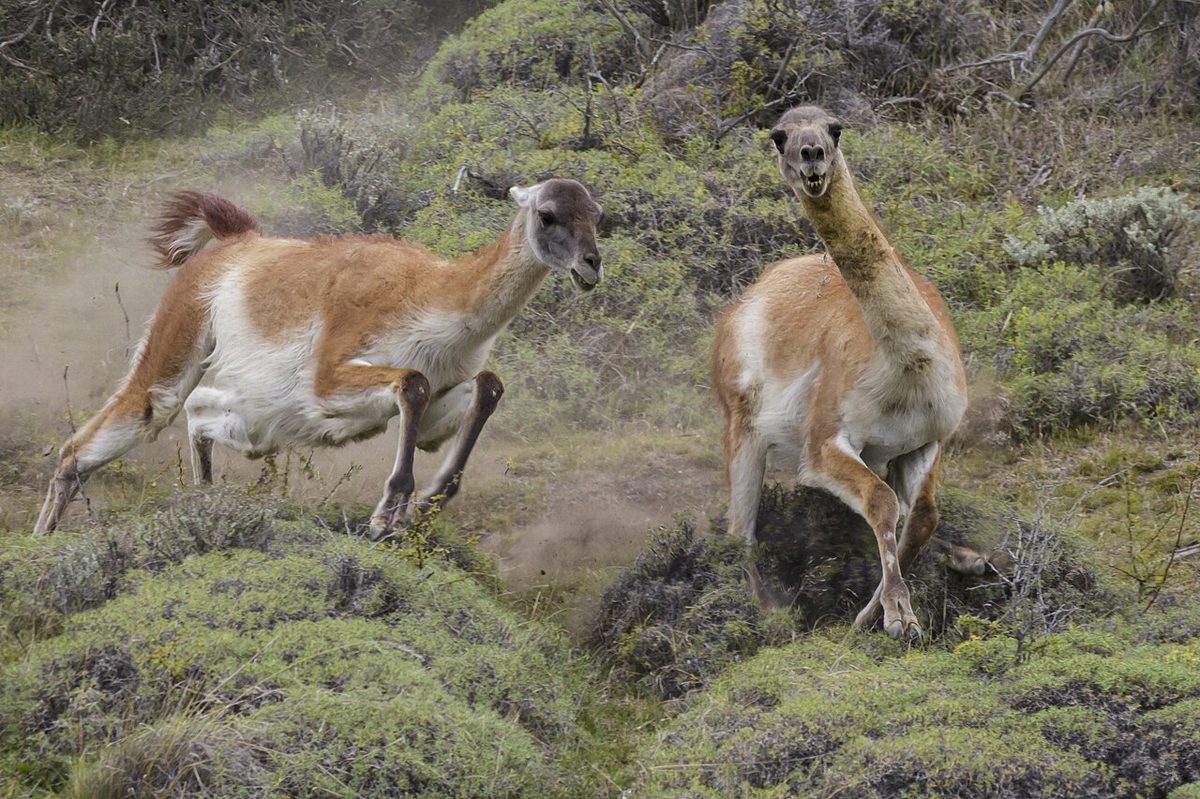
0 — 2 km Fig. 1 · Guanaco on the open steppe in Torres del Paine, an animal to watch at a respectful distance for responsible wildlife watching Patagonia · Photo: Thomas Fuhrmann / CC BY-SA 4.0 via Wikimedia Commons
A guanaco once stared at me across maybe twenty meters of Torres del Paine steppe, ears swiveling, chewing, completely unbothered, while behind me a man crept forward step by step with his phone held out like an offering. The guanaco bolted. The man swore. And I remember thinking: the animal did exactly the right thing, and the human did exactly the wrong one. Most bad wildlife moments in Patagonia look like that. Not malice. Just one more step than the animal could tolerate.
This guide is about not taking that step.
Responsible wildlife watching Patagonia comes down to a few hard rules: keep your distance (roughly 50 to 100 m from pumas, 100 m or more from whales by boat, 30 m from penguins, 10 m from sea lions), never feed or bait anything, stay on trails and boardwalks, leave drones at home in every national park, use licensed operators, and accept that no sighting is better than a stressed animal. Get those right and almost everything else follows.
Who is this for? Anyone planning to be near wild animals in Patagonia, whether that is a whale boat out of Puerto Pirámides, a puma tracking morning in Torres del Paine, a penguin boardwalk on the Chubut coast, or just driving the gravel and meeting a fox. You do not need to be a biologist. You need to know the rules, why they exist, and what to do when an animal does something the brochure didn’t mention. I’ll hedge anything that shifts year to year and point you at the parks and agencies that set the actual rules, because protocols here are changing fast and you should verify the current version before you go.
One thing up front. None of this is about being a purist or scolding people. The animals in Patagonia are working: feeding, breeding, raising young, fleeing predators, surviving wind and cold and hunger. Tourism can genuinely fund their protection, and in places like Península Valdés and Torres del Paine it demonstrably does. But the same tourism becomes a stressor the moment we want closeness more than the animal wants space. The whole craft of doing this well is staying on the right side of that line. For the species-by-species planning that sits behind all of this, our breakdown of where to see whales is the place to start.
Why responsible wildlife watching in Patagonia actually matters
It is tempting to treat the ethics section as the boring part you skip to get to the good stuff. Resist that. In Patagonia the ethics are the good stuff, because the reason the wildlife is still here and still watchable is that someone, somewhere, drew a line and held it.
Take the southern right whales of Península Valdés. They were hunted to near-collapse, and the recovery that now brings tens of thousands of visitors a year only happened under decades of careful regulation. According to the International Whaling Commission’s case study on the peninsula, authorities capped the number of operators while the industry was still tiny, limited boats and passengers, and built a code of conduct from thousands of hours on the water. That restraint is the product. Without it there is no whale watching worth the name.
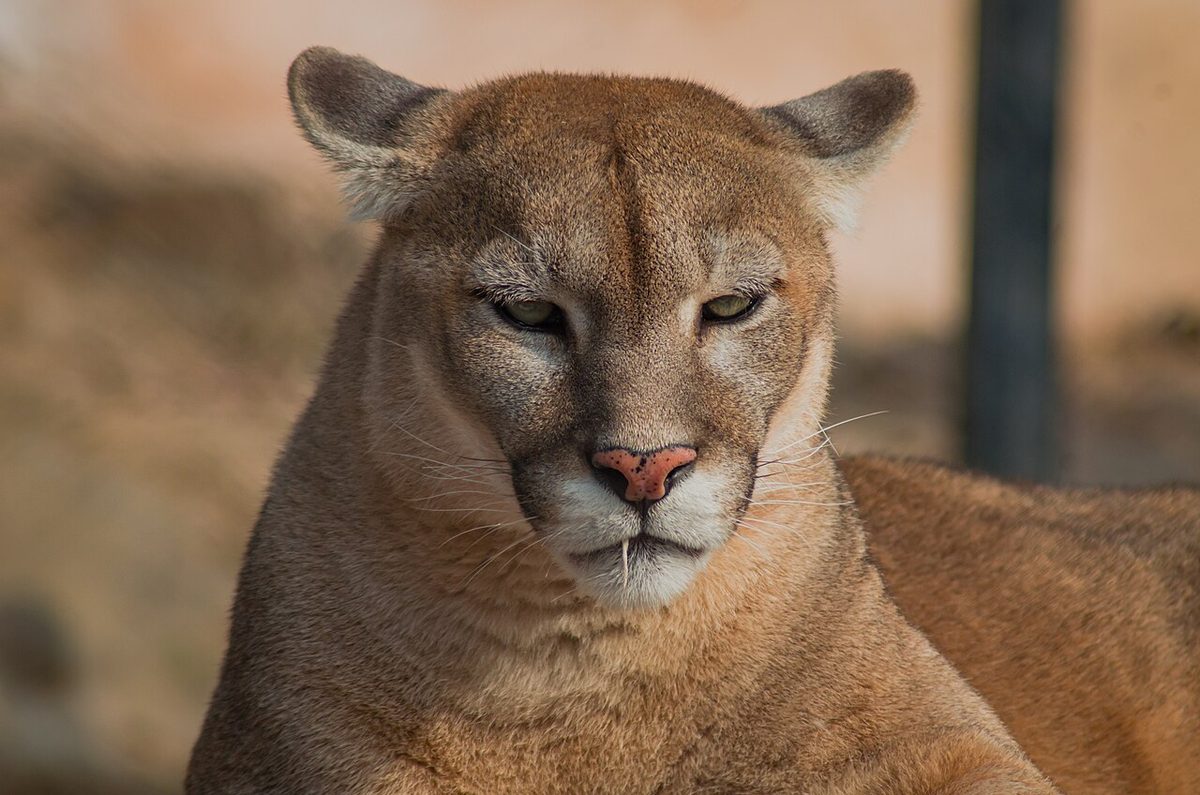
The puma story in Torres del Paine is younger and more fragile. As ranches shifted from shooting pumas to selling photo safaris, sightings exploded, and so did problems: cats walking past parked cars, viral videos of people far too close, animals growing habituated to humans. In response, the Municipality of Torres del Paine and partners launched a formal puma-watching protocol in August 2025, reported by Patagon Journal. One biologist quoted in that piece put it bluntly: a conflict damages a park’s reputation and costs an animal its life. That is the stake. A puma that learns to associate humans with food, or that gets cornered and lashes out, often ends up dead. Your good behavior is not abstract courtesy. It is the difference between a cat that lives and one that doesn’t.
So responsible wildlife watching in Patagonia is not a moral garnish. It is the thing that keeps the wildlife watchable for the next person, and keeps the animals alive to be watched.
The core rules of responsible wildlife watching Patagonia at a glance
Here is the table I wish every visitor saw before their first outing. Treat the distances as the floor, not the target. Closer is almost never better. And treat every figure as approximate and subject to change, because parks revise these, and the only authoritative version is the current one posted by the park or operator on the day you go.
Animal
Minimum distance (approx.)
Key rule
Source / authority
Pumas (on foot)
50 m, 100 m if the puma is moving
Licensed guide, registered operator, never block its path
Torres del Paine puma protocol (Aug 2025), via Patagon Journal
Whales (by boat)
Boats approach slowly, never chase or surround; let the whale set the terms
Authorized operator only; no swimming or diving with whales
Chubut Provincial Law 5714 / Patagonian Whale Watching Technique, via IWC
Whales / marine mammals (from shore)
Hang back from the waterline; don’t crowd mothers and calves
Do not fly drones in Chilean or Argentine national parks
CONAF (Chile) / APN (Argentina); verify current rules
Swipe to see all columns
Table 1
A rule of thumb that beats any number: if the animal reacts to you, you are too close. A head that snaps up, a body that tenses, a penguin that veers, a guanaco’s alarm call, a whale that changes course. That is the animal telling you to back off, and it overrides whatever the sign says. The published distances are the legal minimum on a calm day. The animal’s behavior is the real-time speed limit.
Minimum distances by animal
Whales and marine mammals, from boats and from shore
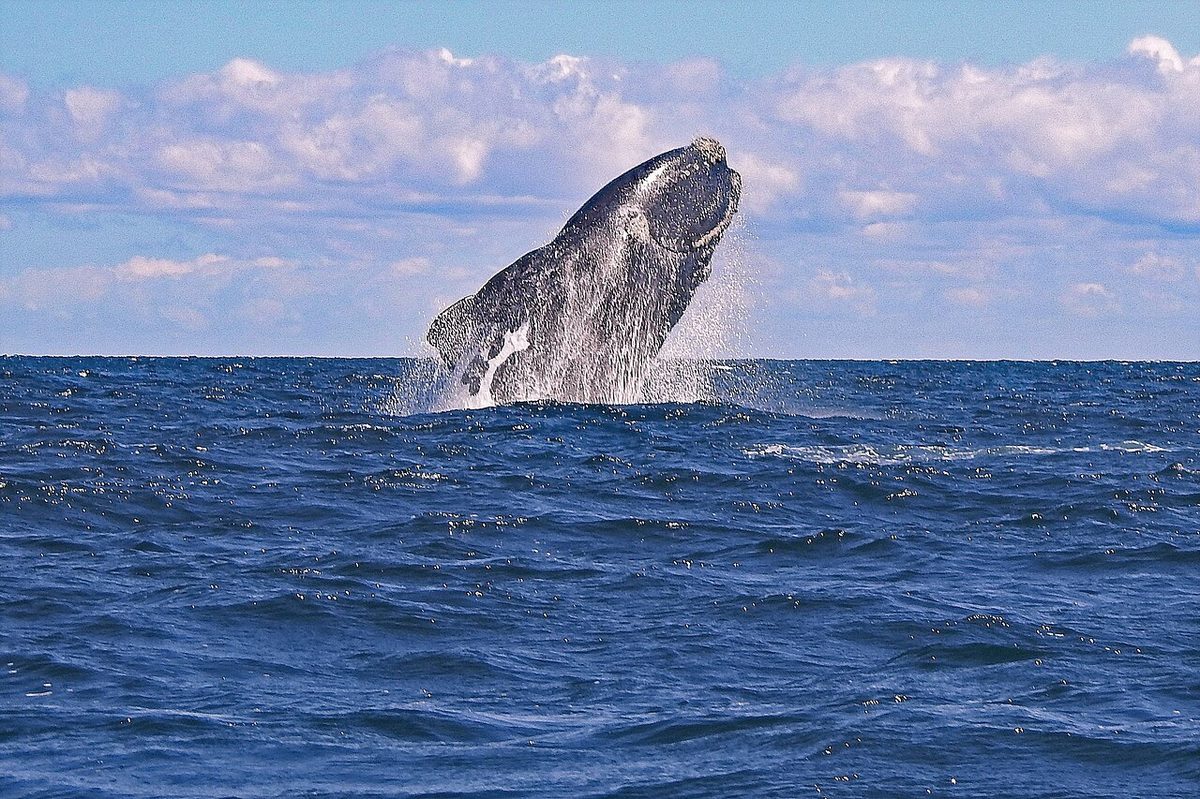
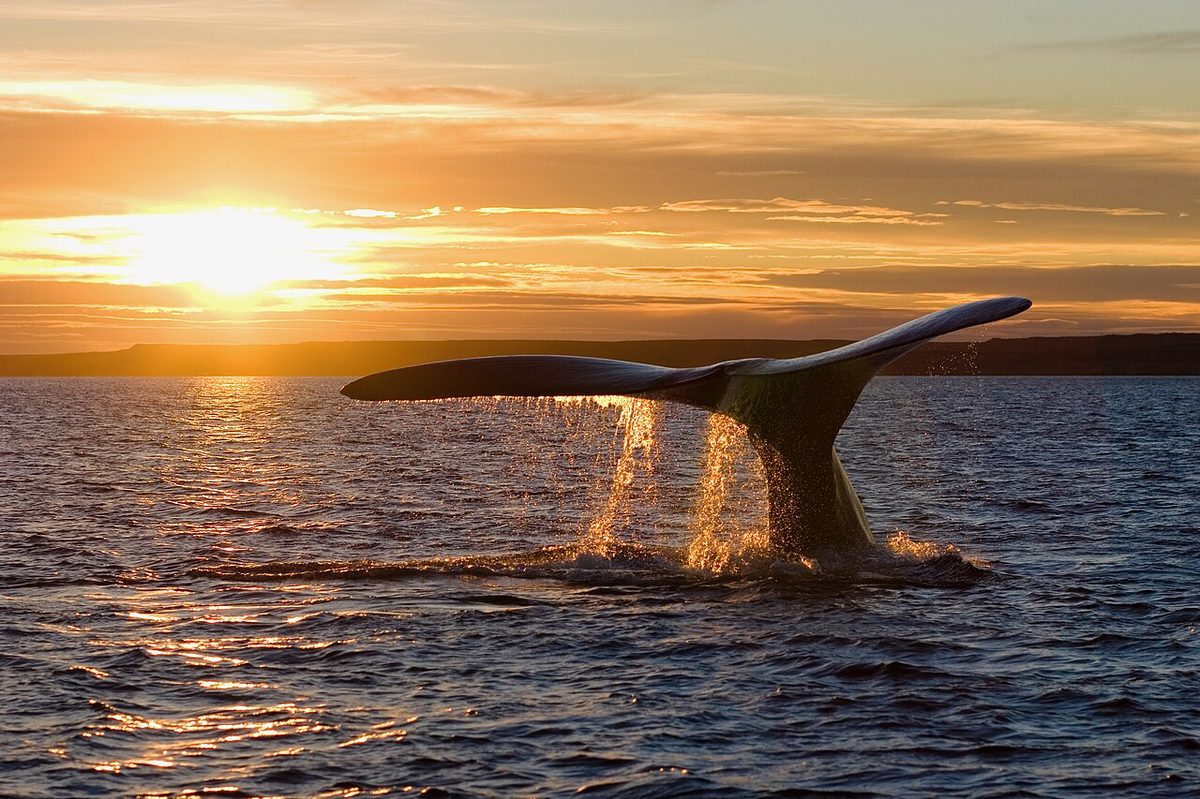
Whale watching around Puerto Madryn and Península Valdés is some of the most tightly regulated in the world, and that is exactly why it works so well. Per the IWC case study, Chubut’s Provincial Law 5714 requires operators to follow the “Patagonian Whale Watching Technique” and tourists to follow a “Code of Good Practice.” It prohibits harassing, swimming, or diving with whales at any time of year. It caps permits at six, limits each operator to a single vessel and 70 passengers, and sets a minimum trip length of 90 minutes specifically to stop rushed, high-pressure trips that chase whales to deliver a fast sighting.
The most important behavioral rule is simple: boats do not chase or surround whales. As the Península Valdés responsible-tourism page puts it, boats must approach slowly and let the whales dictate the interaction. There is also a seasonal rule that tells you everything about how cautious this system is: approaches to mother-and-calf pairs are prohibited before August 31 each year, until the calves are robust enough to handle the disturbance. That is the detail you want from an operator. A whale surfacing right next to the hull is not permission to follow it when it moves off. Your job on the boat is to let the guide manage the distance and resist the urge to ask them to get closer.
From shore, the rules are softer but the principle is identical. At a beach like El Doradillo, where southern right whales drift astonishingly close, the temptation is to wade toward the waterline. Don’t. Hang back, keep your group calm and quiet, and never crowd a mother resting in the shallows with a days-old calf. You are not on a boat governed by the Coast Guard out there, which means the only thing regulating your behavior is you.
Pumas: the licensed-guide and 50 m / 100 m protocol
Pumas get their own discipline because the consequences of getting it wrong are the highest. The protocol launched in Torres del Paine in August 2025, reported by Patagon Journal and developed with input from over 150 stakeholders including Panthera, The Nature Conservancy, the Torres del Paine Legacy Fund and Sernatur Magallanes, sets out the framework most ethical operators now follow.
The headline numbers: keep at least 50 meters from a puma, and 100 meters if the puma is moving. The protocol also mandates that adventure-tourism providers register, that guests get a safety briefing and sign an informed-consent form, and that people wear appropriate clothing. There is a reason for the moving-animal rule. A puma walking somewhere has a destination, often a kill it is returning to, or cubs, and putting yourself inside its path is both dangerous and disruptive.
Two practical points. First, use a licensed, registered guide for puma tracking. This is not me upselling guides for the sake of it. A good puma guide brings the optics, the tracking skill, the read on behavior, and crucially the judgment to know when to leave, and they keep the group from drifting closer the way groups always want to. Our puma-spotting primer guide covers how to choose one. Second, note the timing. A camera-trap study by the Rewilding Chile Foundation, cited in the same Patagon Journal report, found pumas are most active at dusk, which overlaps with prime tourist hours, so the encounters and the protocol exist in the same fragile window.
One sign of how live this all is: CONAF announced that from September 1, 2025, the Base Torres viewpoint no longer requires a certified guide, provided hikers stay on authorized trails, per Reserva Las Torres. Rules tighten and loosen season to season. Verify the current ones before you go.
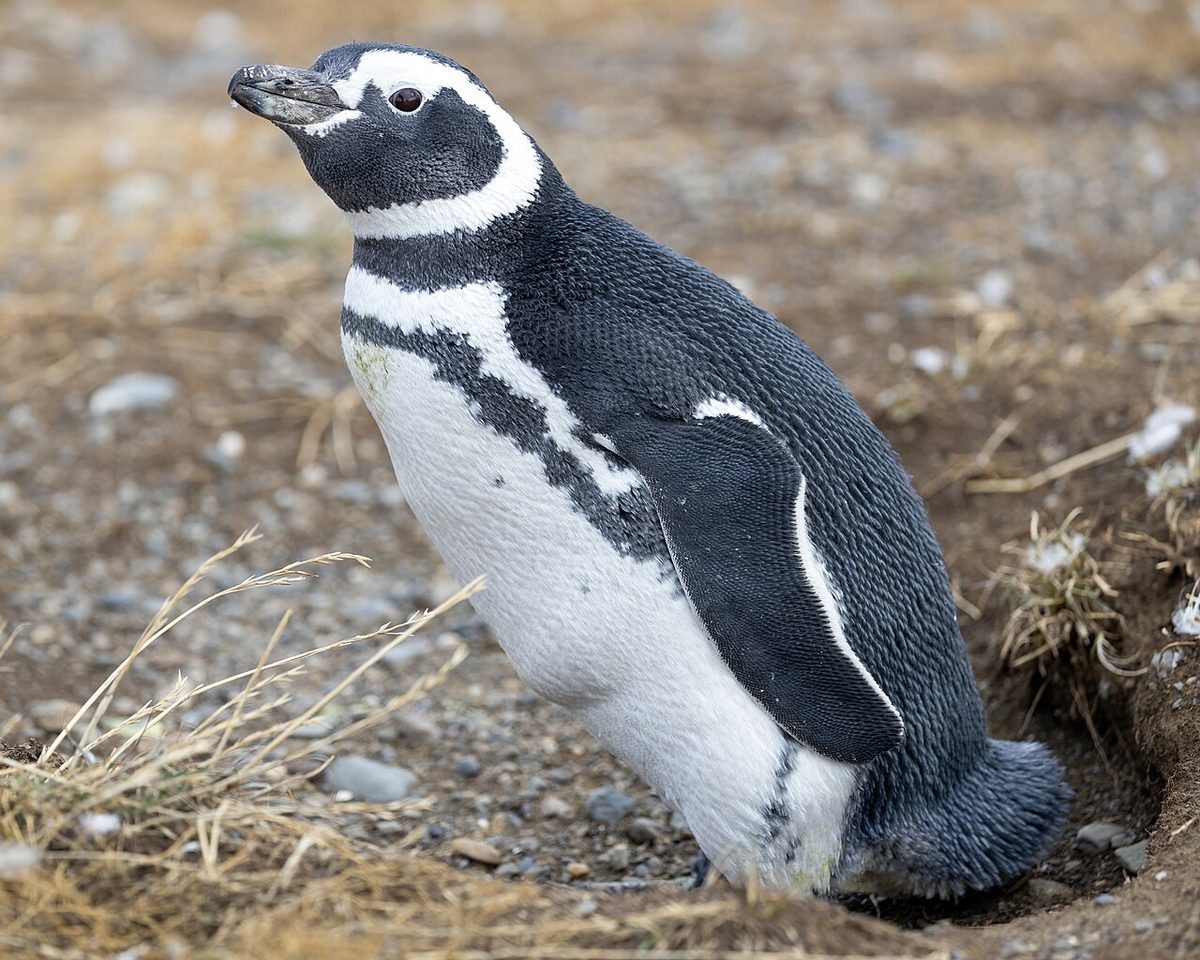
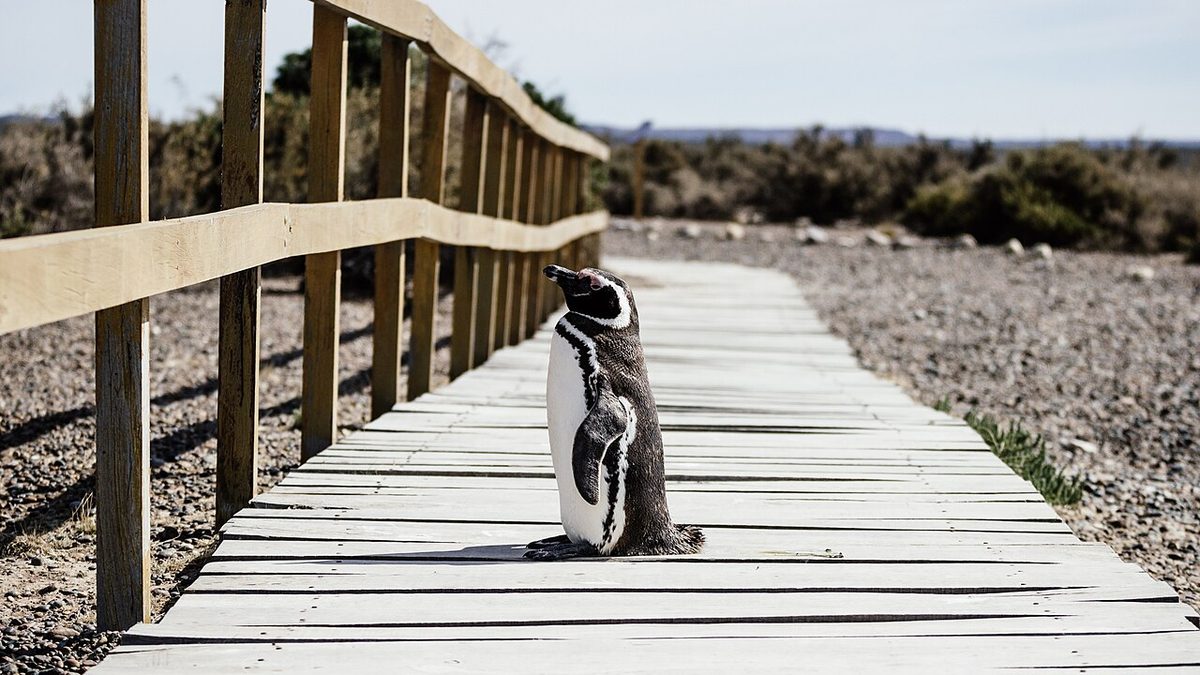
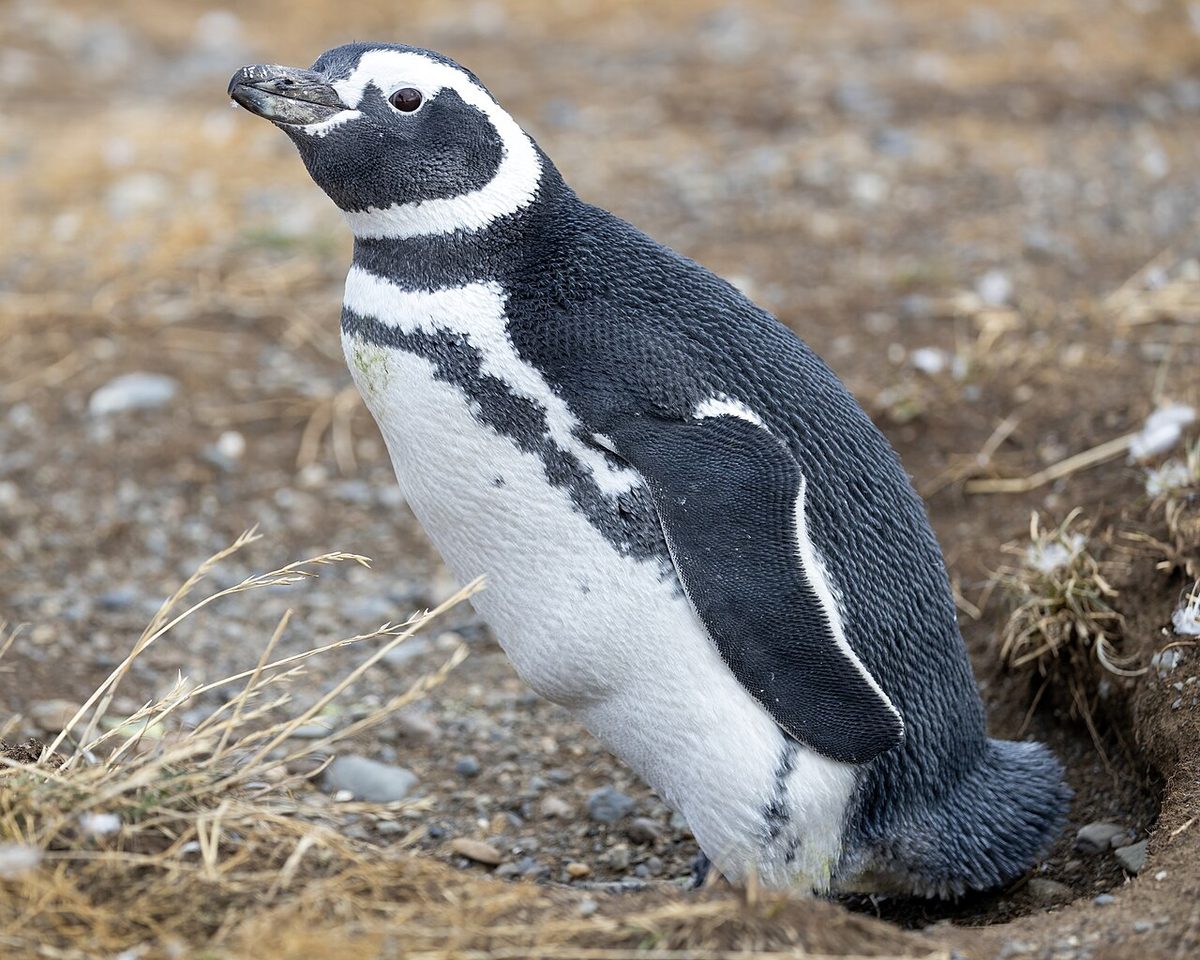
Penguin colonies along the Chubut coast and in Chilean Patagonia are managed with boardwalks and marked paths for a reason: they route thousands of people through a living, nesting city of birds without trampling burrows or the birds themselves. The rule is to stay on the path, full stop. General Patagonia guidance puts the working distance at around 30 meters unless a penguin chooses to approach you, which they sometimes do, because the path crosses their commute between nest and sea.
That last bit catches people out. A Magellanic penguin waddling straight at you is not an invitation to step toward it for the photo. It has somewhere to be. Stop, let it pass, give it the right of way, and never block the route between a penguin and the water. Don’t reach for them, don’t herd them, and keep your voice down. The colony tolerates you because you behave predictably. Step off the boardwalk toward a burrow and you can crush an egg you never saw.
Guanacos, foxes, rheas and birds
The everyday animals of the steppe, guanacos, foxes, rheas, condors, the birdwatching cast, are the ones most people relax around, and that relaxation is where the feeding problem starts. The distance rule is looser here, judged by behavior: stay far enough that the animal keeps doing what it was doing. If a guanaco lifts its head and freezes, or gives that strange high alarm call, you have already pushed too far.
Foxes are the real trap. A fox trotting up to your car looks adorable and is almost always a sign that someone before you fed it. The rule is absolute and I’ll keep coming back to it: do not feed wildlife, ever. A fed fox loses its fear, lingers by roads, and gets hit by cars. The cuteness is the symptom of a problem you don’t want to add to.
Drones: why they’re banned in the national parks
Let me make this simple. In the national parks of both Chilean and Argentine Patagonia, leave the drone in the bag, or better, at the hotel.
In Argentina, drones are prohibited in national parks. Los Glaciares National Park, home to the Perito Moreno Glacier, posts “Forbidden to Use Drones” signage, and the broader rule across Argentine national parks is a flat prohibition unless you have specific authorization for scientific or professional work. Argentina’s civil aviation authority, ANAC, also requires drones to be registered and bans flying within 5 km of airports, among other restrictions. For the planning context around glaciers and parks, see our Torres del Paine travel guide and the wider wildlife guide.
In Chile, flying is prohibited in Torres del Paine National Park, which is treated as a no-drone zone, and many other CONAF-administered parks restrict or ban drones to protect wildlife and the quiet of the place. Chile’s DGAC handles the national drone framework, and the standing advice is to check directly with CONAF before assuming any flight is allowed inside a protected area.
Why so strict? Because to wildlife a drone is a small, fast, buzzing predator from the sky. It flushes nesting birds off eggs, panics herds, scatters seabird colonies, and stresses animals in ways a person on the ground never would. The noise alone changes behavior across a wide radius. A drone shot is never worth a flushed colony or a bird that abandons a nest. And beyond the ethics, you risk fines and confiscation. The rules differ by park and by country and they change, so verify the current regulation with the specific park before you travel, and assume “no” inside any national park unless you have written permission in hand.
Feeding and baiting: never, anywhere
If there is one rule that needs no asterisk, no “verify locally,” no “around,” it is this. Do not feed or bait any wild animal in Patagonia. Not the fox by the road, not the bird at the campsite, not the caracara eyeing your sandwich, and absolutely never a predator.
This is enshrined in Leave No Trace Principle 6, “Respect Wildlife,” which the National Park Service summarizes plainly: never feed animals, because feeding damages their health, alters natural behaviors, habituates them to people, and exposes them to predators and other dangers. Every one of those failure modes plays out in Patagonia. A fed fox becomes a roadside beggar. A fed bird mobs the next camper. And baiting a puma, which thankfully is rare, would be catastrophic, because a cat that links humans to food is a cat heading for a conflict it won’t survive.
Baiting also covers the subtler stuff people don’t think of as feeding: leaving food scraps out, an unzipped pack, a poorly stored cooler, lunch leftovers tossed “for the birds.” Store your food and your trash securely. Pack out everything, including organic scraps, which are not “natural” where you drop them and still teach animals to associate humans with a meal. The kindest thing you can do for a wild animal in Patagonia is to remain, to it, a source of nothing.
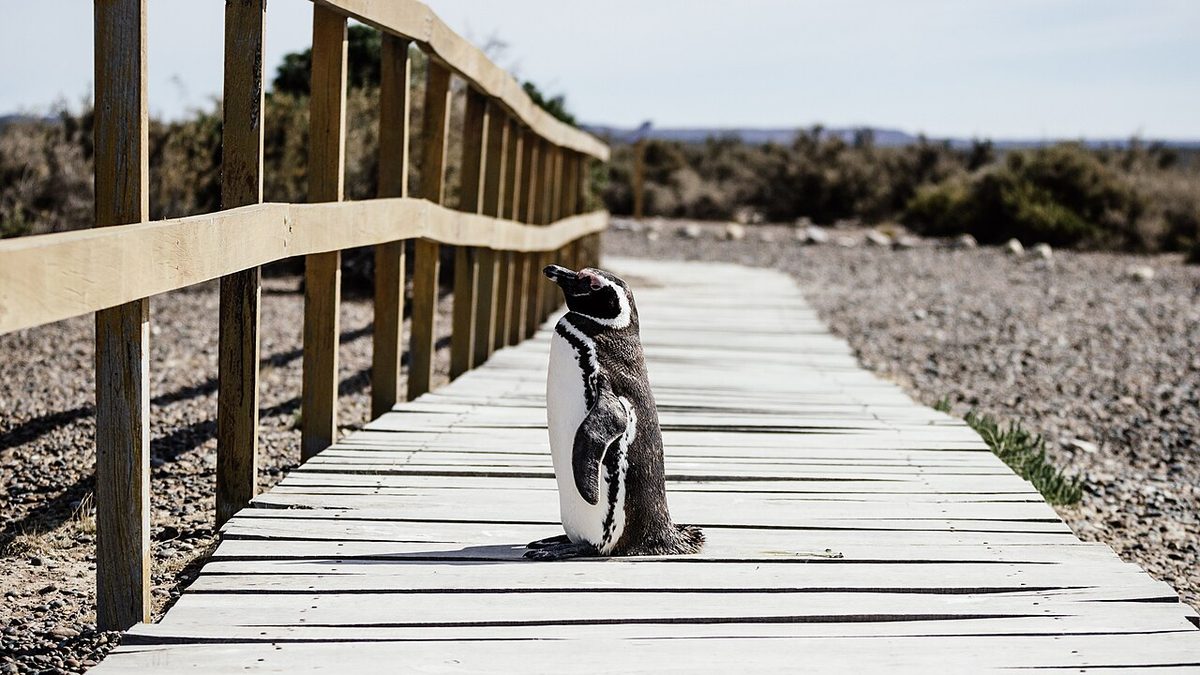
Fig. 3 · Magellanic penguin beside a colony path, illustrating Patagonia park wildlife rules to stay on boardwalks and give penguins spacePhoto: Polinova / CC BY-SA 4.0 via Wikimedia Commons
Staying on trails and boardwalks
A surprising amount of wildlife harm in Patagonia is not done at the animal at all. It is done to the ground, the burrows, the nests, and the fragile steppe and bog that the animals depend on, by feet that wandered off the path.
Stay on marked trails and boardwalks. In penguin colonies this protects burrows you cannot see, dug into sandy ground where one careless step collapses a nest. On the steppe and in the high country it protects slow-growing vegetation and the soil itself, which in this wind-scoured, cold climate can take years to recover from a shortcut. The Leave No Trace ethic of traveling on durable surfaces exists precisely because off-trail “exploring” multiplied by a hundred thousand visitors is how a landscape gets loved to death.
There is a wildlife-stress angle too. Trails are predictable. Animals near a well-used path learn its rhythm and tolerate it. The moment you step off, you become unpredictable, an unfamiliar shape moving where shapes don’t usually move, and that reads as threat. Staying on the trail is not just tidy. It is how you keep your presence legible to the animals around you. And it keeps you out of a puma’s path or a sea lion’s line to the water, both of which are safety issues as much as ethical ones.
Choosing ethical, licensed operators
You will book boats, guides, and tours in Patagonia, and the single highest-leverage ethical decision you make is who you hand your money to. A good operator enforces the rules so you don’t have to police yourself; a bad one quietly breaks them to give you a “better” experience that is worse for the animals.
For whale watching, this is non-negotiable: use a licensed operator out of Puerto Pirámides, the only authorized port in Argentina for nautical whale excursions. The licensing system, with its capped permits, trained guides, and Coast Guard enforcement, is the entire reason the watching is sustainable. An unregistered boat undercuts all of it. For puma tracking, choose a registered provider that works within the Torres del Paine protocol, briefs you, and is visibly willing to keep distance and leave when an animal needs space.
Here is what to ask, and what good answers sound like:
Are you licensed and registered for this activity? A confident yes, with specifics, is the baseline.
What distances and rules do you keep, and what do you do when an animal approaches or reacts? You want to hear “we hold back and let the animal decide,” not “we get you as close as possible.”
How big are the groups, and how do you handle people who push the rules? Smaller is usually calmer for the animals; a good guide will tell you they’ll shut down bad behavior.
Do you ever guarantee a sighting? The right answer is no. Anyone promising a guaranteed puma or whale is either misleading you or planning to push animals to deliver.
A guide who says “we might not see one, and if we do we’ll keep our distance” is the guide you want. For the bigger picture on combining operators and bases across the region, our guide to when each animal is active guide helps you line up the season with the right outings.
Photography ethics
Almost every wildlife-watching mistake I see in Patagonia is committed in pursuit of a photo. The phone held out, the extra step, the person who walks around the boardwalk rope to get the angle. So it is worth saying plainly: the photo is never worth changing the animal’s behavior.
The honest fix is gear and patience, not proximity. Bring a long lens, or accept that your phone will produce a small animal in a big landscape, which is often the more truthful image anyway. Let the animal come to you if it chooses, and hold still when it does. Skip the flash, especially with nocturnal animals and in colonies, where a sudden burst of light is genuinely startling. Never ask a guide to flush a bird, bait an animal, or edge closer for a shot.
There is also a quieter, modern responsibility: don’t post exact, real-time locations of sensitive animals, particularly pumas. A live pin can summon a crowd to a single stressed cat within hours. Share the photo, love the photo, but blur the location. The best wildlife photographers I have watched in Patagonia are almost boring to stand next to. They wait, they whisper, they do not lunge. Then they go home with the shot, and the animal goes on with its day exactly as if they had never been there. That is the whole goal.
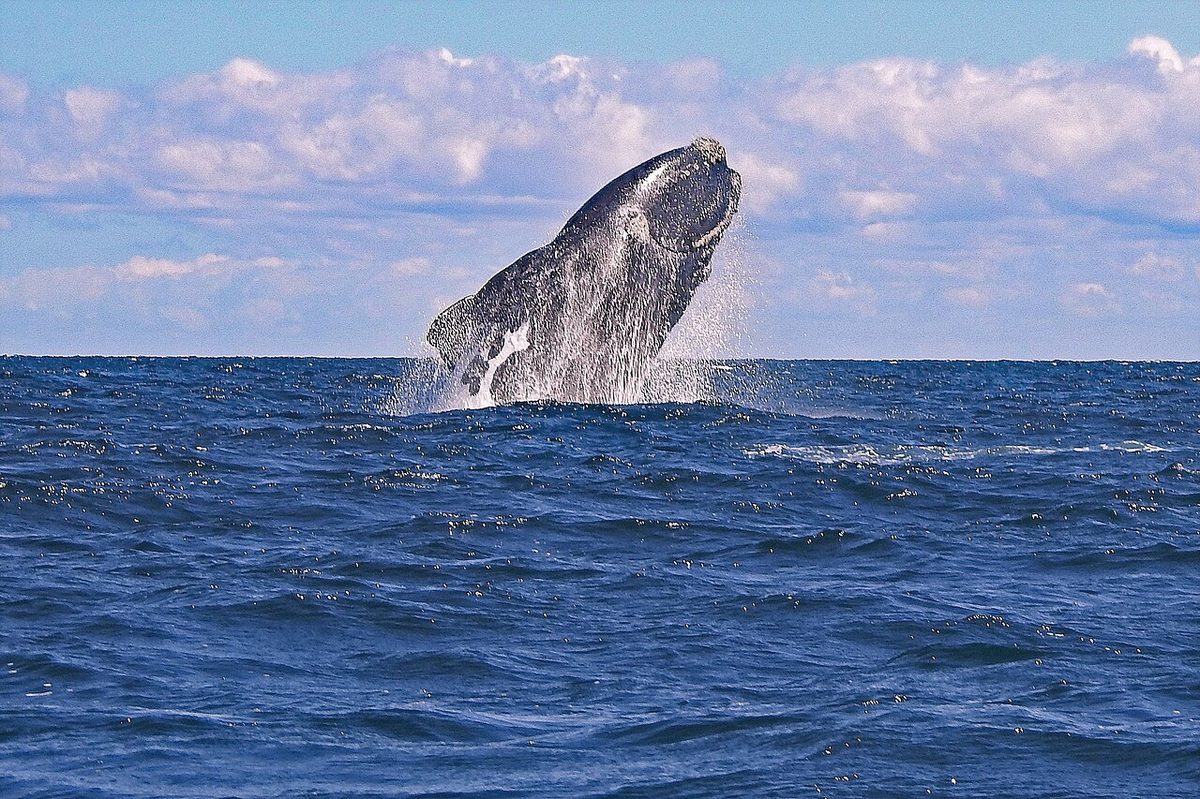
Fig. 4 · Southern right whale surfacing near Peninsula Valdes, watched under licensed-operator distance rules for responsible wildlife watching PatagoniaPhoto: Hugo Hulsberg / CC0 via Wikimedia Commons
Leave No Trace in wildlife areas
Leave No Trace is a set of seven principles, and while all of them apply in Patagonia, the wildlife-specific heart of it is Principle 6, “Respect Wildlife.” The National Park Service frames it as observing wildlife from a distance, never feeding them, not following or approaching them, securing food and trash, controlling pets, and avoiding wildlife during sensitive times: mating, nesting, raising young, and winter, when animals are already stretched thin.
That last clause is easy to miss and important here. Patagonia’s calendar is full of sensitive windows: whales with newborn calves in the early season, penguins on eggs and chicks through spring and summer, elephant seals and sea lions through their pupping. When an animal is breeding or raising young, the cost of disturbing it is highest, because a flushed parent can mean an abandoned nest or a chilled chick. Give breeding animals more room than you would at any other time, not less, however tempting the babies are.
The rest of Leave No Trace rounds it out. Pack out all your trash, down to the orange peel and the toilet paper, which does not “biodegrade away” in this cold, dry, slow climate and which teaches animals bad habits besides. Stay on durable surfaces. Keep noise down. Leave what you find. The whole framework is one idea applied a dozen ways: leave the place, and its animals, as unchanged by your visit as you possibly can. The EcoCamp wildlife guide sums up the local version as not straying from the tracks, leaving no litter, not touching or interacting with wildlife, and keeping your distance, because the animals need to stay wary of humans to stay wild.
What to do in a puma encounter
Most visitors will never have a close, unplanned puma encounter, and the protocols exist precisely so that the ones who do stay safe. But you should know the basics before you go, because the worst time to learn them is in the moment.
If you see a puma at a distance and it has not noticed you or is simply moving through, the answer is the easy one: keep your distance, the 50 meters and 100 meters if it is moving, stay calm, do not approach, do not try to get a better angle, and let it pass. If you are with a guide, do exactly what they say, immediately. The protocol’s emphasis on briefings and consent forms is there so everyone in the group already knows the plan.
If a puma is close and aware of you, the standard big-cat guidance applies: do not run, because running can trigger a chase response. Do not crouch or turn your back. Make yourself look large, raise your arms or open your jacket, stay facing the animal, back away slowly, and keep children and anyone small close to you and picked up if necessary. Speak firmly. Give the animal a clear, open route to leave, never corner it. Pumas in Torres del Paine are remarkably tolerant of respectful humans and attacks are extremely rare, but tolerance is not an invitation, and a cornered or surprised animal is a different animal. The single best protection is the boring one: stay on trails, keep distance, watch at dawn and dusk only with people who know what they are doing, and never put yourself between a puma and where it is going. Our puma tracking in Patagonia guide goes deeper on doing this the right way.
Quiet, noise and keeping calm
Noise is the disturbance people forget, because it doesn’t feel like crossing a line the way stepping closer does. But to a wild animal, a loud group is a threat broadcasting itself across a wide area, and it changes behavior long before anyone gets near.
Keep your voice down around wildlife. No shouting to summon others to a sighting, no playing music, no slamming car doors, no revving engines near animals. On a whale boat, the operator’s quiet, eco-friendly approach is part of the regulated technique for a reason, and your job is to match that calm rather than whooping at every surfacing. In a penguin colony, a hush lets the whole place carry on as if you weren’t there, which is exactly the experience you actually came for. The best wildlife moments in Patagonia are almost always the quiet ones, the beach that goes silent when the whale rises, the group that stops talking when the puma appears on the ridge. Quiet is not just respectful. It is what makes the encounter good.
Driving and vehicle behavior on Valdés and park roads
A lot of Patagonia’s wildlife lives along the roads, which makes how you drive an ethics issue, not just a safety one. On the gravel of Península Valdés, on park roads in Torres del Paine, on Ruta 40 and the steppe, animals cross, graze the verges, and sometimes stand in the road.
Slow down. Guanacos, rheas, foxes, armadillos, and birds all turn up on and beside these roads, and speed kills them, and sometimes the people who swerve. Inside protected areas, respect the posted speed limits, which are set low for exactly this reason. Do not stop in the middle of a road, block traffic, or create a vehicle scrum around an animal, the rolling equivalent of crowding it on foot; pull fully off where it is safe and keep your group in or beside the car. Never use your vehicle to chase, herd, or get closer to wildlife. And do not feed animals from the car, which trains them to approach vehicles and gets them killed.
If an animal is on the road, stop and let it cross in its own time rather than nudging forward. The same principle that governs everything else applies behind the wheel: you are a guest moving through their home, and the responsibility to avoid harm is entirely yours. For the broader practicalities of driving and self-driving here, our Patagonia hiking, camping, gear and safety guide covers the logistics, and for the famous coast specifically, the Península Valdés guide and seeing orcas at Peninsula Valdes guide put the wildlife driving in context.
How far do you have to stay from a puma in Torres del Paine?
The Torres del Paine puma protocol, launched in August 2025, sets a minimum of around 50 meters from a puma, increasing to 100 meters if the puma is moving. It also requires registered operators, a safety briefing, and an informed-consent form. These rules can change, so verify the current protocol with your operator or the park before you go, and always defer to your guide.
Are drones allowed in Patagonia’s national parks?
No. Drones are prohibited in the national parks of both Chilean and Argentine Patagonia, including Torres del Paine and Los Glaciares, where “no drone” signage is posted. They disturb wildlife and other visitors, and you risk fines or confiscation. Limited authorization may exist for scientific or professional use. Assume drones are banned inside any national park and verify the current rule with that specific park.
Can you feed wildlife in Patagonia?
Never. Feeding any wild animal in Patagonia is harmful and, in protected areas, against the rules. It damages their health, makes them dependent on humans, draws them to roads where they are hit by cars, and, with predators, can lead to dangerous encounters that cost the animal its life. This includes scraps and unsecured food and trash. Store food securely and pack out everything.
How do I choose an ethical wildlife operator in Patagonia?
Pick licensed, registered operators, the only authorized whale boats out of Puerto Pirámides, and puma guides working within the Torres del Paine protocol. Ask how they handle distance, group size, and rule-breaking, and whether they guarantee sightings. Good answers: they keep distance, let animals decide, and never promise a sighting. Anyone guaranteeing a puma or whale is a warning sign.
What should I do if a puma approaches me?
Do not run or turn your back. Stay facing it, make yourself look large by raising your arms or opening your jacket, back away slowly, and keep children close and picked up. Give it a clear route to leave and never corner it. With a guide, follow their instructions immediately. Attacks are extremely rare, and keeping distance, staying on trails, and watching only with experienced guides is the best protection.
How close can the boats get to whales at Península Valdés?
Whale watching at Península Valdés is governed by Chubut Provincial Law 5714 and the Patagonian Whale Watching Technique. Boats must approach slowly, cannot chase or surround whales, and must let the whales dictate the encounter. Swimming or diving with whales is prohibited, and approaches to mother-and-calf pairs are barred before August 31. Use only licensed operators and let the guide manage the distance.
Is it OK to take photos of wildlife in Patagonia?
Yes, responsibly. Use a long lens rather than getting closer, skip the flash, and never ask a guide to flush, bait, or chase an animal for a shot. Don’t step off boardwalks or trails for an angle, and don’t post exact real-time locations of sensitive animals like pumas, which can draw crowds. The rule is simple: never change an animal’s behavior for a photo.
Final thoughts
Responsible wildlife watching in Patagonia is mostly a matter of restraint, and restraint is harder than it sounds when a puma steps onto the ridge or a whale rises ten meters off the bow. The pull to take one more step, fly the drone, ask the guide to get closer, is real. The whole discipline is feeling that pull and not acting on it.
But here is the trade you are actually making, and it is a good one. Behave well, and you get the better experience anyway: the animal that keeps doing what it was doing, calm and wild and unbothered, instead of the brief, anxious sighting of a creature you spooked. Keep your distance, stay quiet, stay on the trail, never feed anything, leave the drone at home, choose licensed operators, and accept that no sighting beats a harmful one. Do that, and you are not just following rules. You are part of the reason the wildlife is still here. Verify the current protocols before you travel, because they are changing fast, and then go watch Patagonia’s animals the way they deserve to be watched. For the species, seasons, and bases behind all of this, loop back to our whale watching walkthrough and the Patagonia wildlife calendar.
Southern right whale surfacing near Peninsula Valdes, watched under licensed-operator distance rules for responsible wildlife watching Patagonia — Hugo Hulsberg / CC0 via Wikimedia Commons