Plan flights Santiago to Patagonia: which airport for Torres del Paine, the Carretera Austral and the lakes, plus flight times and booking tips.
By Patagonia Tourism Guide · First published 18 Sep 2026 · Updated 27 Sep 2026
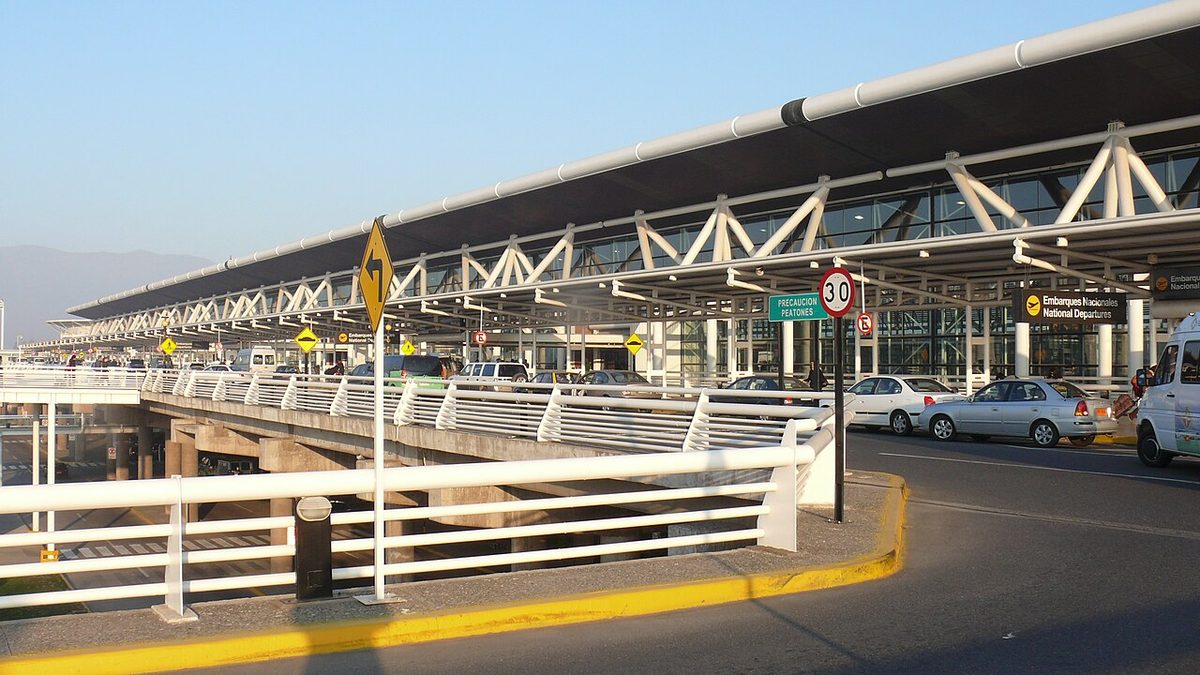
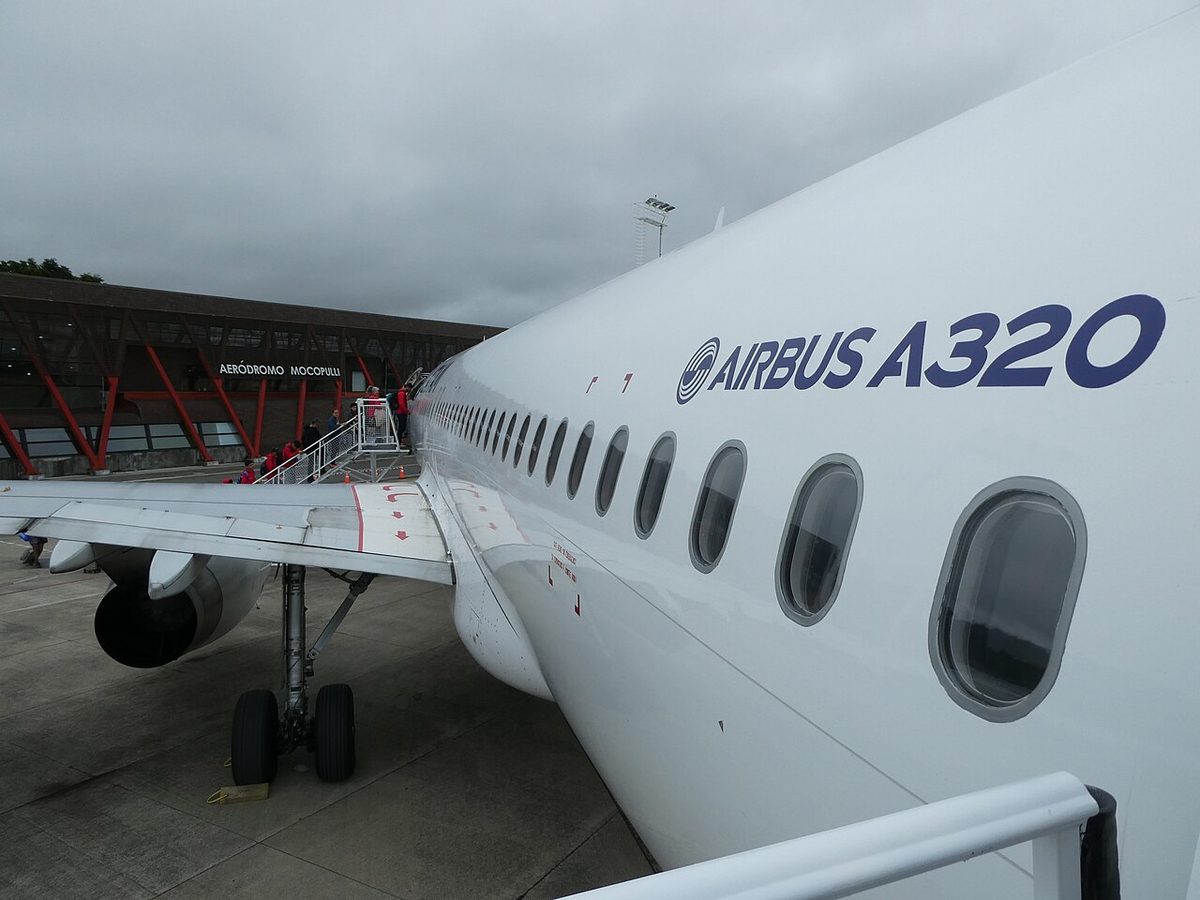
0 — 2 km Fig. 1 · Photo: Paweł Drozd, on Wiki Drozdp / CC BY-SA 3.0 via Wikimedia Commons
I have done the Santiago connection more times than I can count, and the part that still trips people up is not the flying. It is the assumption that there is one airport called “Patagonia” waiting at the other end. There isn’t. Santiago is the door, but Chilean Patagonia has at least four very different doormats, and choosing the wrong one can cost you a whole day of backtracking down a country that is 4,300 kilometers long.
So before you book anything, here is the honest framing.
Getting from Santiago to Patagonia almost always means one domestic flight from Santiago’s airport (SCL) to a regional gateway: Punta Arenas (PUQ) for Torres del Paine and the deep south, Balmaceda (BBA) for the Carretera Austral around Coyhaique, Puerto Montt (PMC) for the lakes and northern Route 7, and seasonal Puerto Natales (PNT) right on the doorstep of Torres del Paine. Flights run on LATAM, Sky Airline and JetSMART, take roughly two to four hours, and should be booked weeks ahead.
This guide is for the traveler who has landed (or will land) in Santiago and now needs to make the right onward connection without wasting the trip on logistics. I will tell you which airport serves which Patagonia, how long each flight takes, what the connection from your international arrival actually involves, when to book, and where the long overland alternatives make sense and where they quietly eat your holiday. I will hedge every price and schedule, because Chilean domestic fares and seasonal routes move constantly, and you should verify before you pay.
One thing up front: I am talking about Chilean Patagonia here. If your trip is built around El Calafate, El Chaltén, Bariloche or Ushuaia, those are Argentine gateways and you are usually better routing through Buenos Aires instead. Our Buenos Aires to Patagonia guide covers that side, and the how to get to Patagonia pillar lays out the whole two-country picture if you are still deciding.
Flying Santiago to Patagonia: which airport?
Let me make this the simplest part of your planning, because it is the decision everything else hangs off.
There is no single best airport. There is only the best airport for the Patagonia you actually want. Pick your destination first, then book the flight that lands closest to it. Booking the cheapest fare before you know your route is the classic Santiago-to-Patagonia mistake.
Here is the at-a-glance version. Use it to find your gateway, then read the section that matches.
Route from Santiago
Airport (code)
Flight time
Serves
Santiago to Punta Arenas
Pres. Carlos Ibáñez del Campo (PUQ)
~3h20m–3h50m
Torres del Paine, Puerto Natales, Magallanes, Strait of Magellan
Santiago to Puerto Natales
Teniente Julio Gallardo (PNT)
~3h19m direct
Torres del Paine (closest airport), seasonal only
Santiago to Balmaceda
Balmaceda (BBA)
~2h20m–2h54m
Coyhaique, Carretera Austral, Marble Caves, Aysén
Santiago to Puerto Montt
El Tepual (PMC)
~1h47m
Lake District, Chiloé, northern Carretera Austral
Swipe to see all columns
Table 1
A few honest notes on that grid before we go deeper.
All of these depart from Santiago’s Comodoro Arturo Merino Benítez International Airport (SCL) in Pudahuel, the same airport your international flight lands at, which makes the connection cleaner than it is in Buenos Aires. The flight times vary by source and by whether your flight is non-stop or routes through Puerto Montt, so treat them as planning bands, not promises.
And one geographic fact that surprises almost everyone: you cannot drive between the deep-south gateways (Punta Arenas, Puerto Natales) and the Carretera Austral gateways (Balmaceda, Puerto Montt) without crossing into Argentina. Chile’s southern geography is broken up by ice fields and fjords, so there is no continuous Chilean road linking them. That is exactly why the domestic flight from Santiago matters so much. For the bigger road picture, the guide to Patagonia’s geography makes this instantly obvious.
Santiago to Punta Arenas (PUQ): the southern workhorse
If your Patagonia is Torres del Paine, the southern fjords, penguins on Isla Magdalena, or anything in the Magallanes region, Punta Arenas is your airport, and it is the one I book most.
The route from Santiago to Punta Arenas lands at Presidente Carlos Ibáñez del Campo International Airport (PUQ). Flight time runs around 3 hours 27 minutes non-stop, per Chile Travel, and closer to 3 hours 50 minutes by other listings; allow about 4 hours 45 minutes if your itinerary routes through Puerto Montt. It is roughly a 2,000-kilometer hop down the spine of Chile.
The reason this is the workhorse is reliability. According to Go Patagonic, there are direct flights all year round to Punta Arenas with LATAM, Sky Airline and JetSMART. That year-round, three-airline coverage is what you want when your trip has a fixed start date and no slack. Punta Arenas simply has more frequencies and more competition than anywhere else in Chilean Patagonia, which usually means more choice and better fares.
From Punta Arenas to Torres del Paine
Here is the catch most first-timers miss: Punta Arenas is not Torres del Paine’s doorstep. The park is up near Puerto Natales, about 250 kilometers north.
From the Punta Arenas airport or the city, frequent daily buses make the roughly 3-hour run north to the Puerto Natales bus terminal along Route 9, as both Go Patagonic and Chile Travel describe. There are also private transfers straight from the arrivals hall if you would rather not wait for a bus. Our Punta Arenas to Puerto Natales guide breaks down the bus companies, timing and where to catch them.
So the realistic chain is: fly Santiago to Punta Arenas, bus or transfer 3 hours to Puerto Natales, sleep, then enter the park the next day. Do not plan to land in Punta Arenas and start a trek the same afternoon. For the park itself, lean on the how to get to Torres del Paine guide and the Puerto Natales travel guide.
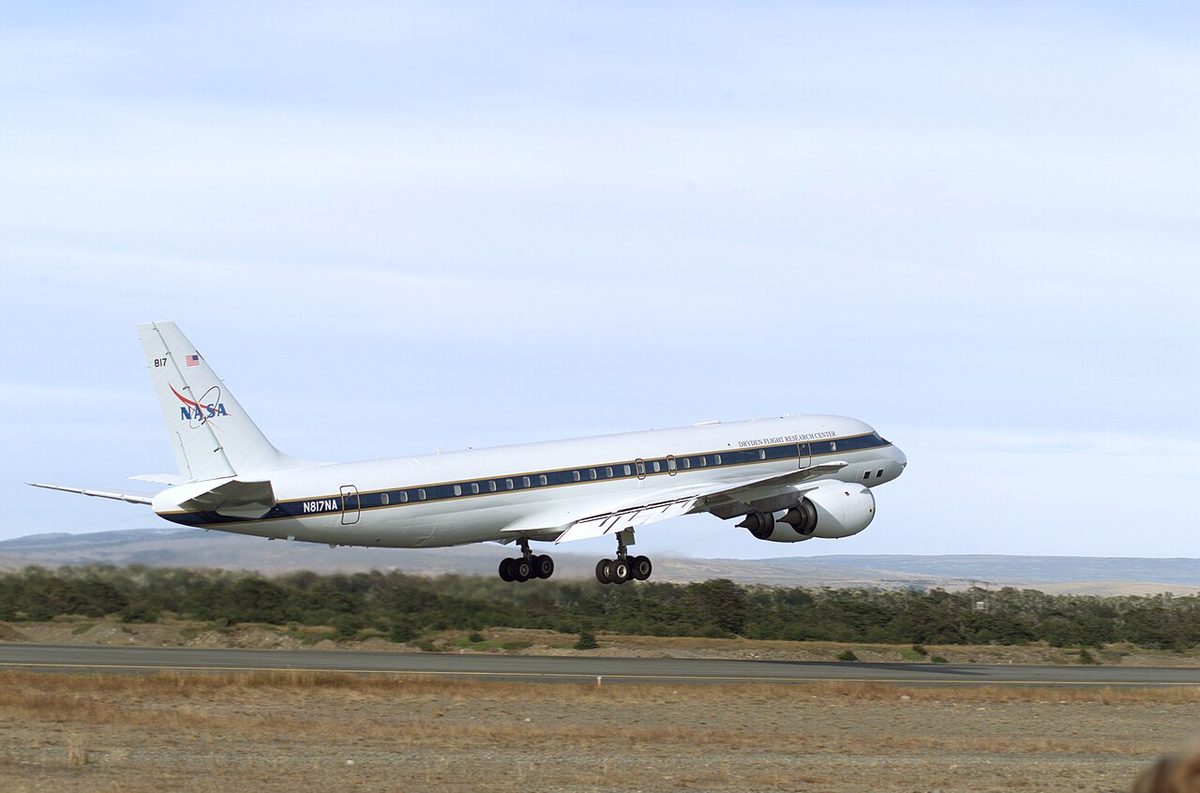
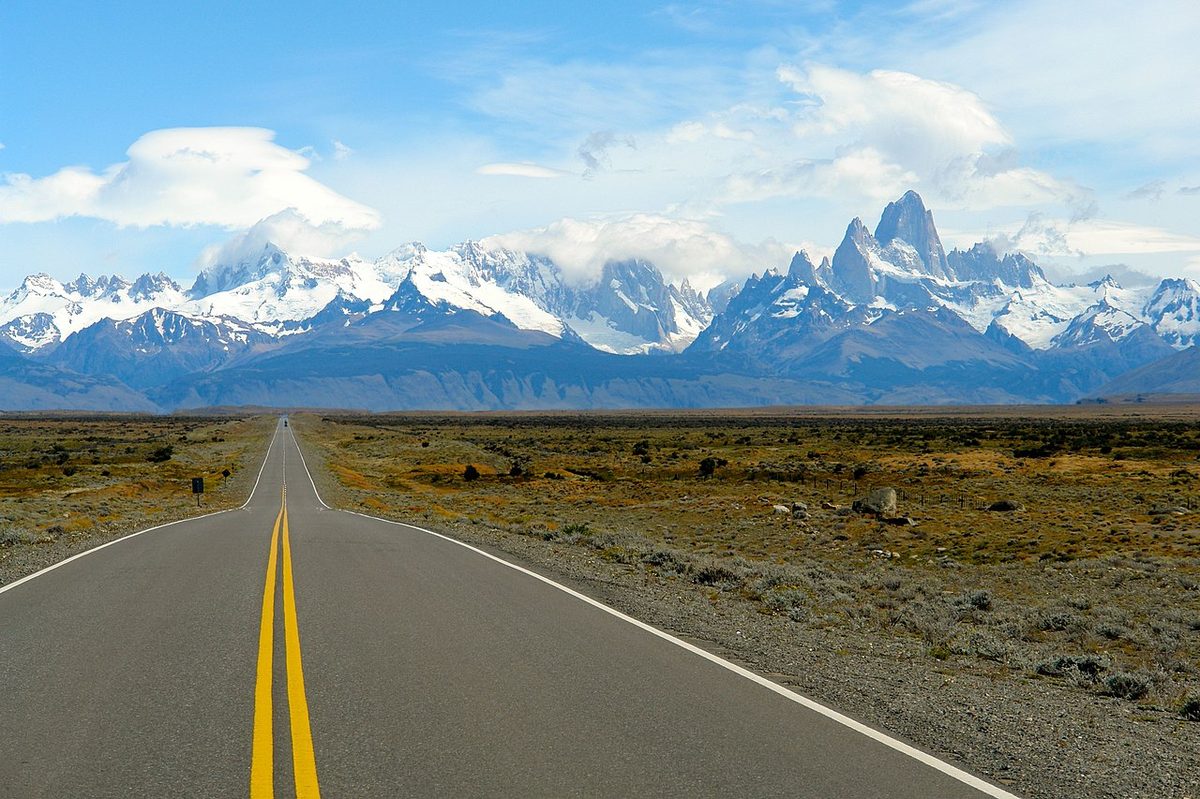
Fig. 2 · Photo: NASA Armstrong Flight Research Center / NASA/Jim Ross / Public domain via Wikimedia Commons
Santiago to Puerto Natales (PNT): closest to Torres del Paine, but seasonal
Now the airport everyone wishes they could always use, because it drops you right next to Torres del Paine: Puerto Natales, served by the Aeródromo Teniente Julio Gallardo (PNT).
When it operates, it is glorious. Direct flights arrive from Santiago’s Arturo Merino Benítez airport on LATAM, Sky Airline and JetSMART, taking about 3 hours 19 minutes over roughly 2,036 kilometers, according to TorresDelPaine.com (which references the airport operator, jac.gob.cl). With a Puerto Montt stopover, budget about 4 hours 21 minutes. From the aerodrome it is only an 11-minute taxi to the Puerto Natales bus station, where park tours and transfers depart.
The single most important thing to know: this route is seasonal. Go Patagonic notes the Santiago–Puerto Natales flights generally operate September to April, the Chilean spring and summer, and in some cases route via Puerto Montt. Outside that window, the flights thin out or stop, and Punta Arenas becomes your fallback with the 3-hour bus on top.
So the rule I use is simple. If you are travelling roughly September to April and a Puerto Natales flight lines up with your dates at a sane price, grab it; it can save you the better part of a travel day versus flying into Punta Arenas. If you are travelling in the Chilean autumn or winter (May to August), or the schedules just do not fit, route through Punta Arenas instead and accept the bus. Verify the current season’s schedule directly with the airline before you build the trip around PNT, because it shifts year to year.
There is also a lovely insider tip from TorresDelPaine.com: on the way down, take a seat on the left side of the plane for the best view of the Torres del Paine massif, and on the return, sit on the right. On a clear day you get the granite towers from the air. Small thing, big payoff.
Santiago to Balmaceda (BBA): the Carretera Austral gateway
If your Patagonia is the Carretera Austral around Coyhaique, the Marble Caves at Puerto Río Tranquilo, Queulat’s hanging glacier, or the wild Aysén region, your airport is Balmaceda (BBA) and not, despite the name, anything in Coyhaique itself.
The route from Santiago to Balmaceda takes around 2 hours 54 minutes, with some listings as short as 2 hours 20 minutes. Go Patagonic reports the route is operated by LATAM and Sky Airline, with both direct flights and services that stop in Puerto Montt. JetSMART also lists the Santiago–Balmaceda route, with fares it advertised from around USD 61 one-way as an example, though availability on this route varies by season and date, so verify it is actually running on your dates rather than assuming.
Balmaceda’s airport sits out on the steppe, about an hour’s drive south of Coyhaique, the regional hub roughly halfway down the Carretera Austral. From the airport you can take a scheduled bus (services like Buses Suray run most days) or, easier, a direct hotel transfer from outside arrivals. From Coyhaique you are well placed to reach Cerro Castillo, Puerto Río Tranquilo and the Marble Caves, the Exploradores Glacier, and the southern end of Route 7.
Why fly into Balmaceda rather than Puerto Montt for the Carretera Austral? Because it is far more efficient for a shorter, central-Aysén trip. If you only have a week or so and want the iconic middle section, Balmaceda drops you straight into it. If you want to drive the whole of Route 7 from the top, Puerto Montt is the better start. Sort that decision out with the Carretera Austral road trip guide before you book, because it genuinely changes which flight you want.
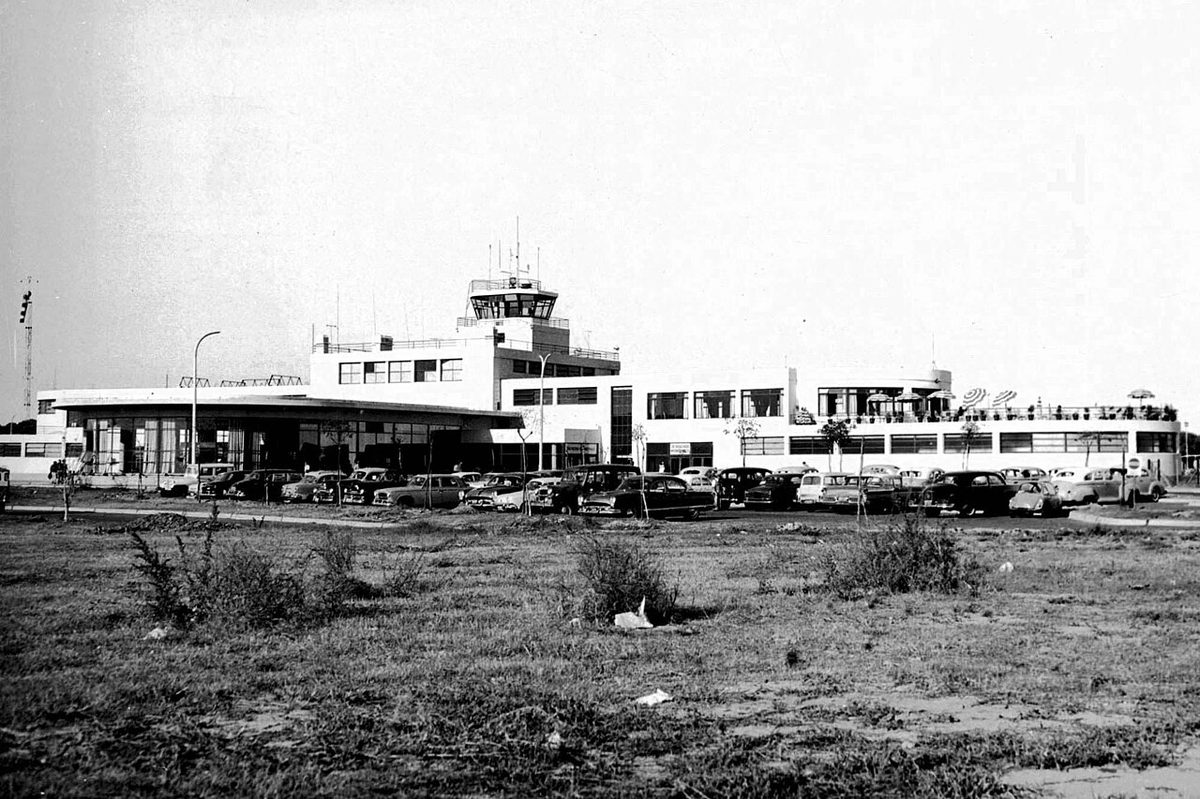
Fig. 3 · Photo: Joachim Lutz / CC BY-SA 4.0 via Wikimedia Commons
Santiago to Puerto Montt (PMC): lakes, Chiloé and the top of Route 7
The shortest hop of the lot, and the busiest airport in Chilean Patagonia, is Puerto Montt’s El Tepual (PMC). This is your gateway for the Lake District, the island of Chiloé, the Osorno volcano and Puerto Varas, and the northern start of the Carretera Austral.
Flight time from Santiago to Puerto Montt is only about 1 hour 47 minutes over roughly 950 kilometers, and the frequency is enormous. All three major Chilean airlines — LATAM, Sky Airline and JetSMART — fly direct, every day, per Go Patagonic. Because so many flights pass through here, it is also the natural connecting point for onward services deeper south to Balmaceda and even Punta Arenas. If you ever see a “stopover in Puerto Montt” on a southern fare, this is the airport in question.
Puerto Montt suits two kinds of traveler. First, anyone whose Patagonia is really the green, volcanic, lake-and-forest north — Puerto Varas, Frutillar, Chiloé. Second, road-trippers who want to drive the full Carretera Austral from its northern end, taking the first ferries out of the Puerto Montt area and working south. For the lakes-versus-deep-south question, and how the Chilean north compares with the Argentine side, our Argentina vs Chile Patagonia guide is the honest comparison.
How the SCL connection actually works
This is the section I wish someone had given me the first time, because the flying is easy and the connection is where trips wobble.
Your international flight into Chile lands at Santiago’s Comodoro Arturo Merino Benítez International Airport (SCL) in Pudahuel. Here is the good news that Buenos Aires travelers do not get: your domestic Patagonia flight departs from the same airport. There is no cross-city airport change. SCL handles both international and domestic operations under one roof, so you are not dragging luggage across town between terminals like you might between Ezeiza and Aeroparque.
That said, “same airport” is not the same as “no buffer needed.” Here is how I plan it.
Clear immigration and customs first. On an international arrival you collect bags, pass passport control, and go through customs before you can re-enter the domestic flow. That takes real time, especially at busy hours.
Re-check your bags for the domestic leg unless they are through-checked on a single ticket. If you booked the international and domestic flights separately (very common to save money), your bags are not automatically through-checked. You collect them, exit, and check in again for the Patagonia flight.
Leave a generous gap. On a single connecting ticket I want a few hours. On separately booked tickets, I will not connect same-day with a tight margin — I would rather take an evening domestic flight with a wide cushion, or simply overnight in Santiago and fly south fresh the next morning. A missed domestic flight on a separate ticket is your problem, not the airline’s.
Watch the seasonal and the small. Puerto Natales is seasonal; Balmaceda frequencies are thinner than Punta Arenas or Puerto Montt. The fewer the daily flights, the more a missed connection hurts, so build the buffer to match the route.
My rule: if the Patagonia leg is the part of the trip you cannot afford to lose, do not gamble it on a tight same-day connection off a long-haul flight. A night in Santiago is cheap insurance, and it is a good city to spend an evening in anyway.
When to book your Santiago to Patagonia flight
Chilean domestic fares behave like most low-cost markets: cheap if you plan, punishing if you do not. Sky and JetSMART are budget carriers with unbundled fares (you pay extra for bags and seats), and LATAM’s lowest fares work similarly, so the headline price you see is rarely the price you pay once you add a checked bag.
The patterns worth knowing:
Book ahead. Domestic fares are often meaningfully cheaper booked around four weeks out or more, and general advice for these routes lands in the 60-to-90-day range for good prices. Treat the cheap teaser fares you see in ads as best-case, not typical.
Peak season is its own animal. For December and January — Chilean high summer and the busiest time for Torres del Paine and the Carretera Austral — book months ahead, with some guidance suggesting six to nine months for the best combination of price and availability. Seats on the seasonal Puerto Natales route in particular go early.
Add the bag. On Sky and JetSMART especially, price the fare with your checked luggage before deciding it is cheaper than LATAM. Once you add bags and a seat, the gap often narrows.
Verify the schedule, not just the price. Seasonal routes (Puerto Natales) and thinner routes (Balmaceda) change with the calendar. Confirm the flight actually operates on your date directly with the airline.
Whatever number you see quoted anywhere, including the example fares in this article, reconfirm close to your dates. For how flights fit into the wider budget, our bus travel guide and broader transport guidance round out the cost picture, and the how to get to Patagonia pillar puts flying in context against the overland options.
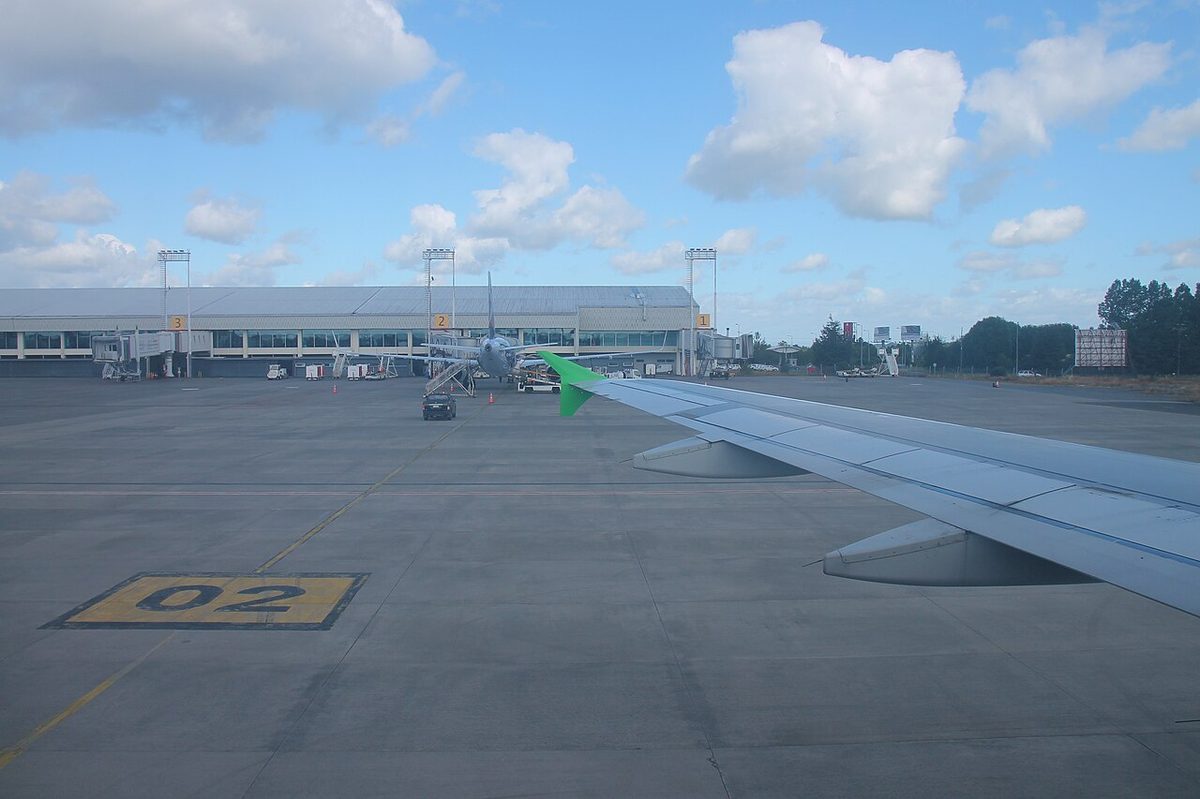
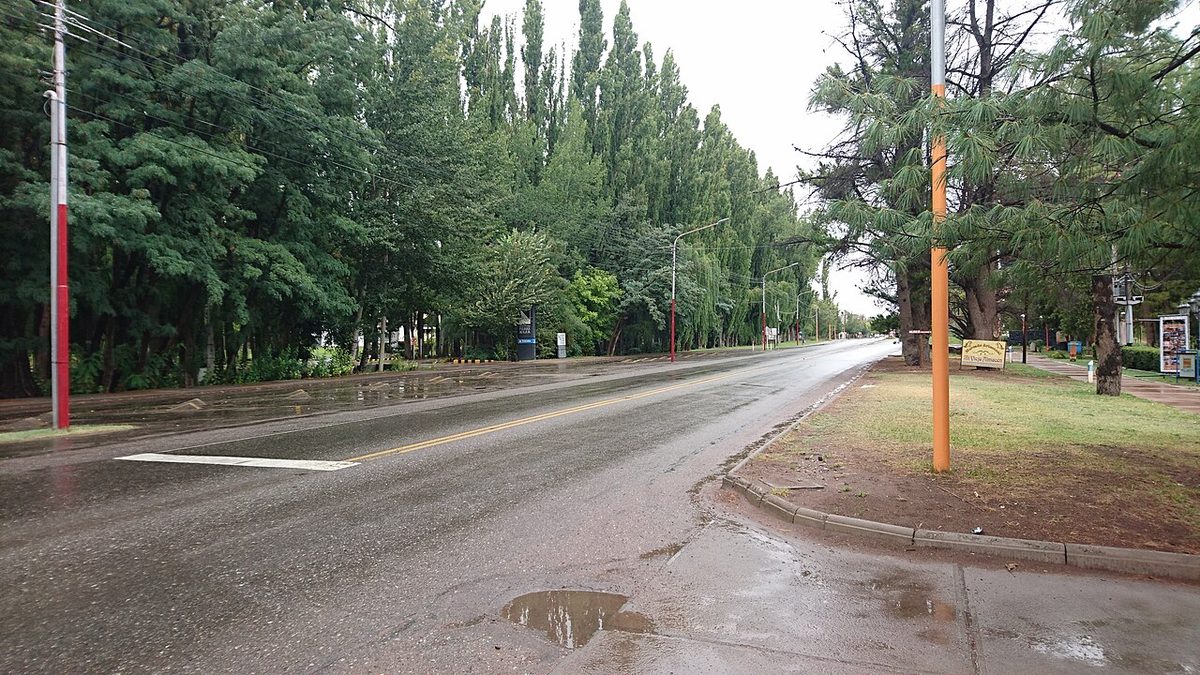
Fig. 4 · Photo: Draceane / CC BY-SA 4.0 via Wikimedia Commons
The long way: buses, ferries and driving from Santiago
Can you reach Chilean Patagonia from Santiago without flying? Yes. Should you, on a normal holiday? Almost never. But it is worth understanding the alternatives so you can rule them in or out with open eyes.
Bus from Santiago south
Long-distance buses run south from Santiago, and they are comfortable by global standards — full-recline “cama” seats, overnight services. The problem is sheer distance. As Go Patagonic bluntly puts it, the distances from Santiago are very long — more than 10 hours at least — and if you want to enjoy Patagonia properly, you are better off flying. Santiago to Puerto Montt alone is a long overnight haul; going further south by land means crossing into Argentina, because there is no continuous Chilean road to the deep south. A flight that takes under two to four hours versus a multi-day overland slog is not a close call when your holiday is finite.
Buses come into their own within Patagonia, not for getting to it. Once you are south, they are excellent for legs like Punta Arenas to Puerto Natales. The Patagonia buses guide covers that regional network properly.
Ferries up the fjords
There is a romantic option: long-distance passenger ferries up the Chilean fjords (the Patagonian “navimag”-style routes), linking Puerto Montt with Puerto Natales over several days through the channels. It is a genuine experience, not merely transport — think scenery, not speed. But it runs on its own seasonal schedule, sells out, and is a multi-day commitment. Treat it as an adventure you choose on purpose, not a practical way to “get there.”
Driving from Santiago
You can rent a car in Santiago and drive south, and for the Lake District around Puerto Montt that can be a fine road trip. But to reach the deep south or to properly drive the Carretera Austral, you are looking at huge distances, ferries, gravel, and Argentine border crossings with their own paperwork. Most people who drive Patagonia fly to a gateway first and rent the car there. If a self-drive is your dream, read the Patagonia rental car guide on cross-border permits and gravel before you commit, and start the route planning from the guide to driving route 7.
My honest take: fly the long leg, drive the fun bit. Spend your energy on the landscape, not the transit.
Putting it together: sample Santiago to Patagonia routes
To make this concrete, here are the connection spines I would actually use. Add nights, treks and buffer days to taste.
Torres del Paine, peak season: Fly Santiago to Puerto Natales (if the seasonal flight fits), or Santiago to Punta Arenas plus a 3-hour bus. Sleep in Puerto Natales, enter the park next day.
Torres del Paine, off-season: Fly Santiago to Punta Arenas (year-round, three airlines), bus 3 hours to Puerto Natales.
Carretera Austral, short central trip: Fly Santiago to Balmaceda, transfer to Coyhaique, drive south to the Marble Caves and back.
Full Carretera Austral, north to south: Fly Santiago to Puerto Montt, rent a vehicle, take the first ferries, work south; fly out from Balmaceda.
Lakes and Chiloé: Fly Santiago to Puerto Montt, base in Puerto Varas, ferry across to Chiloé.
In every case the shape is the same: one short-to-medium domestic flight from SCL does the heavy lifting, and ground transport handles the last stretch. That is the whole trick to getting from Santiago to Patagonia without losing days.
Fig. 5 · Photo: CARLOS TEIXIDOR CADENAS / CC BY-SA 4.0 via Wikimedia Commons
Frequently asked questions
How do you get from Santiago to Patagonia?
The standard way is one domestic flight from Santiago’s airport (SCL) to a regional gateway: Punta Arenas (PUQ) for Torres del Paine and the deep south, Balmaceda (BBA) for the Carretera Austral and Coyhaique, Puerto Montt (PMC) for the lakes, or seasonal Puerto Natales (PNT) for the closest access to Torres del Paine. Flights run on LATAM, Sky Airline and JetSMART and take roughly two to four hours. Long-distance buses, ferries and driving exist but cost days, so most travelers fly.
How long is the flight from Santiago to Patagonia?
It depends on the gateway. Santiago to Puerto Montt is the shortest at about 1 hour 47 minutes. Santiago to Balmaceda is around 2 hours 20 minutes to 2 hours 54 minutes. Santiago to Puerto Natales is about 3 hours 19 minutes direct, and Santiago to Punta Arenas about 3 hours 27 minutes to 3 hours 50 minutes non-stop. Flights routing through Puerto Montt take longer, often well over four hours. Verify exact times when you book.
Which airport do you fly into for Torres del Paine from Santiago?
Two options. Puerto Natales (PNT) is the closest airport to the park, an 11-minute taxi from the bus station, but flights are seasonal, generally September to April. Punta Arenas (PUQ) operates year-round on three airlines and is the reliable fallback, but it sits about 250 kilometers south, so you add a roughly 3-hour bus or transfer to Puerto Natales. In summer, take the Puerto Natales flight if it fits your dates; otherwise route through Punta Arenas.
Can you fly directly from Santiago to Puerto Natales?
Yes, but only in season. Direct flights from Santiago to Puerto Natales run on LATAM, Sky Airline and JetSMART, taking about 3 hours 19 minutes, but they generally operate only from around September to April, and some route via a stop in Puerto Montt. Outside that window the route is limited or unavailable, and you should fly into Punta Arenas instead. Always confirm the current season’s schedule directly with the airline before planning around it.
What is the cheapest way to get from Santiago to Patagonia?
The cheapest reliable way is a budget domestic flight on Sky Airline or JetSMART booked well in advance, ideally a month or more out, and longer for the December–January peak. Just price the fare with a checked bag included, because these are unbundled low-cost carriers. Buses are cheaper per kilometer but cost you multiple days and still cannot reach the deep south without crossing into Argentina, so the time penalty usually outweighs the saving.
Do you need to change airports in Santiago for a domestic flight?
No. Santiago’s Comodoro Arturo Merino Benítez International Airport (SCL) handles both international and domestic flights, so your Patagonia connection leaves from the same airport you arrive at. You will still clear immigration and customs on arrival, and if your tickets were booked separately, you collect and re-check your bags. Leave a generous buffer, or overnight in Santiago, especially if the domestic leg is on a separate ticket.
Can you drive or take a bus from Santiago to Patagonia instead of flying?
You can, but it is rarely worth it on a normal trip. Distances from Santiago run to well over ten hours by road just to reach the Lake District, and there is no continuous Chilean road to the deep south, so you must cross into Argentina. Buses and ferries are comfortable and scenic but cost days. Most travelers fly the long leg and use buses, ferries or a rental car only within Patagonia.
Final thoughts
The Santiago connection is the easy part of a Patagonia trip; people just overthink it by treating Patagonia as one place. It isn’t. Decide which Patagonia you want, match it to the right airport — Punta Arenas for Torres del Paine and the south, Balmaceda for the Carretera Austral, Puerto Montt for the lakes, seasonal Puerto Natales when it fits — book the domestic flight early, and give your SCL connection a real buffer.
Do that, and one short flight from Santiago drops you exactly where the good part begins. Get it wrong, and you spend a precious day undoing it. Choose the route first, then the flight. Then go verify the current schedules and fares, because in Chilean aviation they change with the season, and the only timetable that matters is the one live on your dates.