Where to Stay on the Carretera Austral: Town-by-Town Guide
Where to stay Carretera Austral, town by town: Coyhaique, Río Tranquilo, Futaleufú, Tortel and more, with lodging types, nights, and booking realities.
By Patagonia Tourism Guide · First published 7 Sep 2026 · Updated 1 Aug 2026
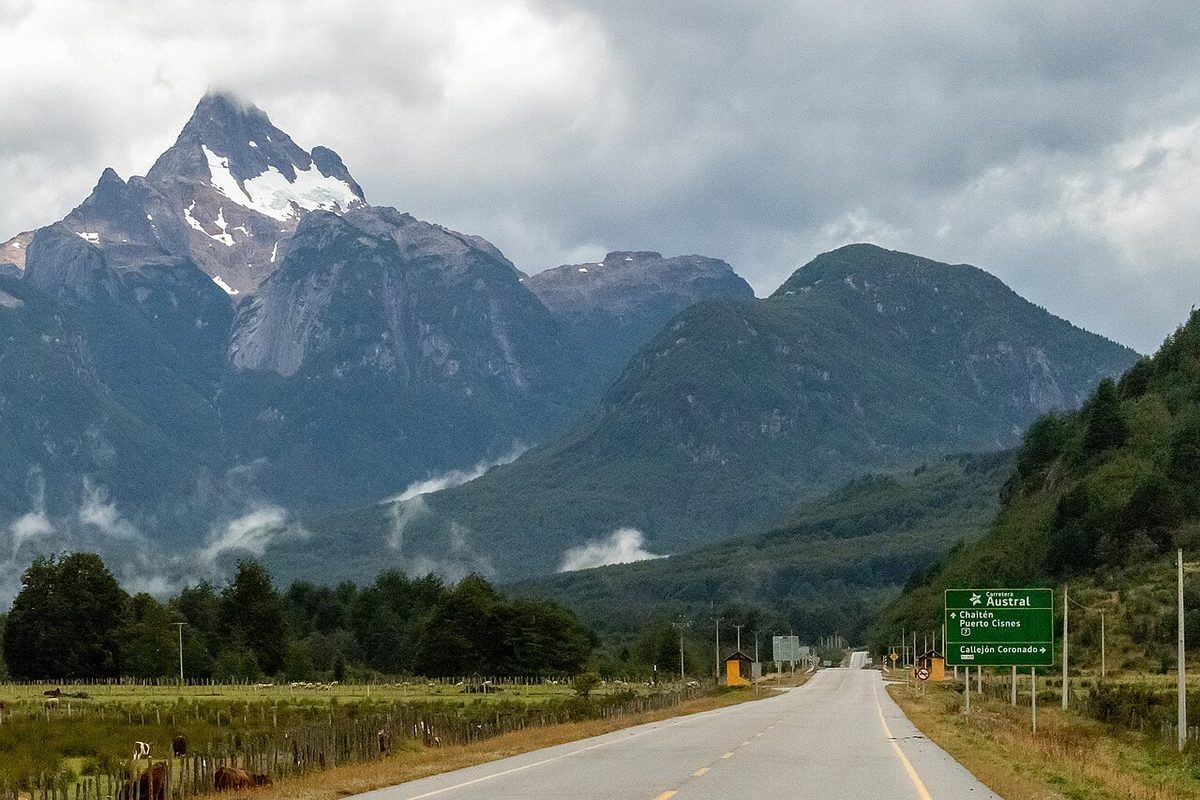
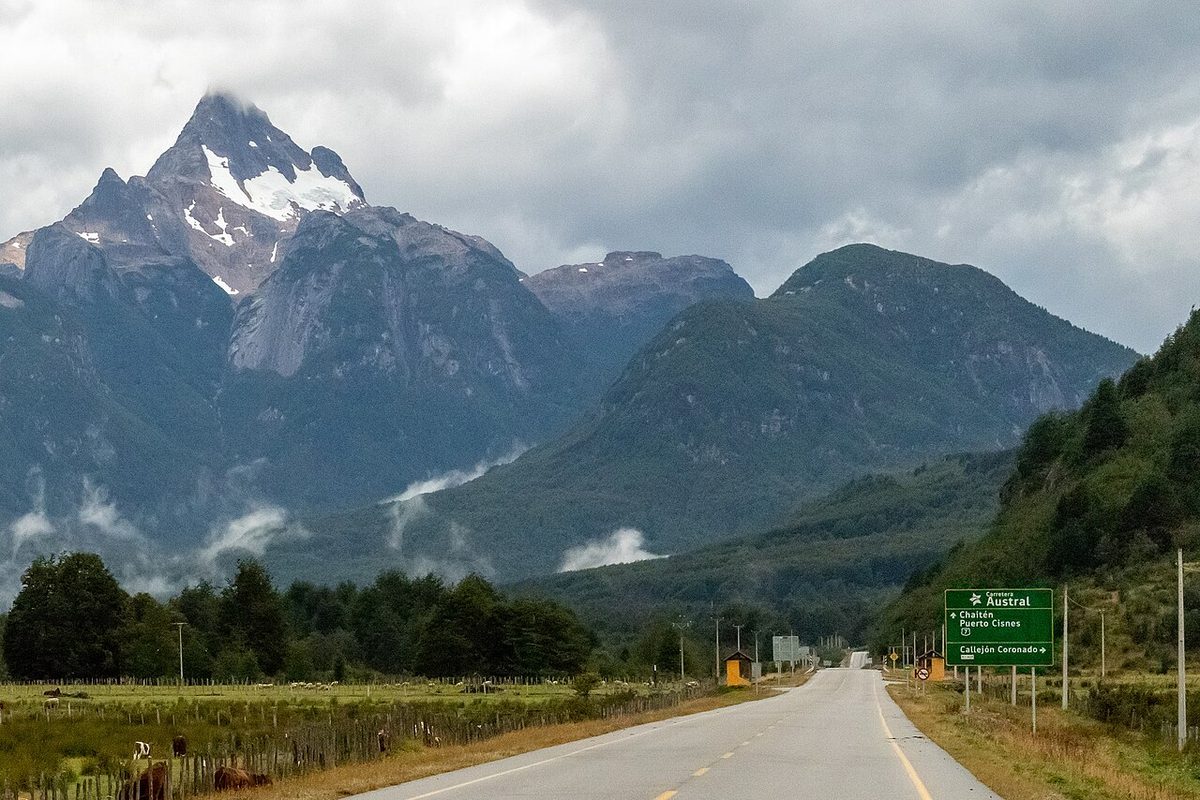
0 — 2 km Fig. 1 · Where to stay Carretera Austral: an empty gravel road winding through the mountains of Chilean Patagonia · Photo: Camila Eyzaguirre / CC BY-SA 3.0 via Wikimedia Commons
The first time I drove the Carretera Austral, I made the rookie mistake of booking nothing past Coyhaique. I figured I’d improvise. Then I rolled into Puerto Río Tranquilo on a Saturday in late January and watched three carloads of travelers go door to door, in the rain, with no signal, learning that every bed in town was taken.
That night taught me that out here, where you sleep is a decision you make weeks ahead, not a detail you sort out at dinner. So let me save you the scramble.
Deciding where to stay Carretera Austral comes down to picking the right handful of base towns in route order and booking the ones that bottleneck. Use Puerto Varas as your gateway, Coyhaique as the central hub, and Puerto Río Tranquilo for the Marble Caves; everywhere else you’re choosing between cabañas, hospedajes, hostels, camping, and a few lodges. Book January and February ahead and carry cash.
This guide is for the traveler who has already decided to drive (or bus) Chile’s Route 7 and now needs to know, town by town, where to put their head down. It pairs with our full driving Chile’s southern highway, which covers the driving, the ferries, and how many days the whole thing takes. Here, we’re only talking about beds.
.jpeg)
Where to Stay Carretera Austral: The Quick Version
Before the town-by-town detail, here is the whole route in one table. If you read only one thing on this page, read this. It maps each base to what it’s actually good for and how many nights it tends to earn on a road trip with limited time.
Town (route order)
Good base for
Suggested nights
Puerto Varas / Puerto Montt
Gateway, gear rental, last big supermarket, flights in
1–2
Hornopirén
Ferry staging, a quiet first night south
1
Chaitén
Pumalín park access, northern resupply
1–2
Futaleufú
Rafting, a detour worth the gravel
1–2
La Junta
Pure pass-through, a bed between the north and Puyuhuapi
0–1
Puyuhuapi
Queulat hanging glacier, hot-spring splurge
1–2
Coyhaique
The hub: services, ATMs, gear, mid-range hotels, rest
2–3
Cerro Castillo
Hiking the Cerro Castillo massif, a southern-leg base
1–2
Puerto Río Tranquilo
The Marble Caves; weather buffer essential
2
Cochrane
Patagonia National Park, southern resupply, last reliable ATM
1–2
Caleta Tortel
The boardwalk village, fjords, glacier boats
1
Villa O’Higgins
The literal end of the road; a commitment
1–2
Swipe to see all columns
Table 1
A note on the nights column before anyone emails me: these are starting points, not rules. Hikers will want more at Cerro Castillo and Cochrane; people racing the weather will want a buffer night at Río Tranquilo. And the price tiers I use below ($ budget, $$ mid, $$$ splurge) are rough and shift hard with season. Always confirm current rates directly. For the wider money picture, the Patagonia spending estimates puts these numbers in context.
The North: Gateway, Ferries, and Forest Towns
The northern third of the Carretera Austral runs from Puerto Montt down through a chain of ferries and small, rain-soaked timber towns. This is where the road feels most like an expedition and least like a highway, and the lodging reflects it: family-run cabañas and hospedajes, the odd hostel, a lot of camping, and only the occasional proper hotel.
Puerto Montt and Puerto Varas: where to start
Almost everyone starts here, because Puerto Montt has the route’s biggest airport (El Tepual) with direct flights from Santiago, and it’s the last truly big supermarket before Coyhaique, some 660 km south. But Puerto Montt itself is a workmanlike port city, and I’d rather sleep 20 minutes up the road.
Stay in Puerto Varas. It sits on Lake Llanquihue with the cone of Osorno volcano filling the horizon, it has German-Chilean charm, good restaurants, and a far nicer spread of accommodation than its bigger neighbour, from hostels to lake-view boutique hotels. It’s also where you rent camping and overland gear before heading south. Puerto Varas is the gateway most road-trippers should pick, full stop.
Give it one or two nights: one if you’re just flying in and pushing off, two if you want to catch your breath, provision up, and sort the car. For everything on physically reaching this corner of Chile, our how to get to Patagonia guide maps the flights and gateways.
Hornopirén is a small village wrapped around a bay, and for most drivers it exists as a ferry staging post. The car ferry south to Caleta Gonzalo (the bimodal route into Pumalín) leaves from here, and you often want to be in town the night before to make the morning sailing. It’s also the one ferry on the route you genuinely must reserve in advance, which the Carretera Austral ferries guide walks through.
That’s really the whole case for staying: position, plus a genuinely peaceful first night on the road. You’ll find a handful of hospedajes and cabañas and a couple of campgrounds; there’s no need to book months out, but in peak summer I’d still lock something in a few weeks ahead because the inventory is tiny.
Lodging types: hospedajes, cabañas, camping. Tier: $ to $$. One night is plenty.
Chaitén: gateway to Pumalín
Chaitén is the largest town in the far north of the route, a dusty grid of wooden houses rebuilt after the 2008 volcanic eruption that buried half of it. It’s your base for Pumalín National Park, the magnificent Tompkins-founded park of Valdivian rainforest, waterfalls, and ancient alerce trees just to the north.
Lodging here is firmly in cabaña-and-hospedaje territory: cosy timber cabins with wood-burning stoves, simple guesthouses, and camping if you’ve got gear. A useful quirk to know is that many Chaitén places aren’t on Booking.com at all; you call ahead or simply turn up and ask. Chaitén does have an ATM, which makes it a sensible place to top up cash before the thinner stretches south.
One night works if you’re moving through; two if you want a full day exploring Pumalín’s trails. Lodging types: cabañas, hospedajes, camping. Tier: $ to $$.
Futaleufú: the detour with the best beds in the north
Futaleufú sits up a side valley near the Argentine border, and it’s a detour, an hour-plus each way off the main road. It earns it. This is one of the world’s great whitewater rivers, the village is postcard-pretty, and it happens to have some of the most characterful accommodation on the whole northern route: grand old wooden casonas turned into warm guesthouses, a clutch of hostels, and cabañas.
Because Futaleufú is a destination in its own right (and a border crossing), it books up in January and February, so reserve ahead in peak season. It also has an ATM. If rafting or a quieter, prettier base appeals, give it a night or two; if you’re tight on time, you can skip the detour without missing the road’s headline sights.
These two often get lumped together, but they play different roles.
La Junta is, honestly, a pass-through. It’s a crossroads town with fuel, a few hospedajes and cabañas, and not much reason to linger unless you need to break up the drive. Worth knowing: La Junta has no ATM, so don’t plan on getting cash here. A night is optional; many people just push on.
Puyuhuapi is the one to pause at. It’s a tiny former German settlement on a fjord, and it’s your launch point for Queulat National Park and its astonishing hanging glacier, the Ventisquero Colgante. The town has hostels and cabañas at the budget-to-mid end, but its real draw is the splurge: the famous fjord-side spa lodge reached by boat, where you soak in thermal pools after a day on the trail. That lodge is a genuine bucket-list stay, and it books well ahead.
Give Puyuhuapi one night to see Queulat, two if you want a slow soak-and-hike day. Lodging types: hostels, cabañas, camping, one destination spa lodge. Tier: $ to $$$.
If the Carretera Austral has a capital, it’s Coyhaique, and your relationship with this town will define the middle of your trip.
Coyhaique: base, resupply, and reset
Coyhaique is the only place on the route that feels like a proper small city. It has the route’s best supermarket (a full Unimarc), reliable ATMs, gear shops, mechanics, the widest range of accommodation anywhere on the road, and an airport nearby at Balmaceda with direct flights to Santiago, which is why a lot of travelers start or end their road trip here rather than in Puerto Montt.
For Coyhaique accommodation, the sweet spot is the mid-range. The town has the only real cluster of comfortable hotels and polished B&Bs on the whole route, most of them within a few blocks of the central Plaza de Armas, alongside plenty of hostels and cabañas for tighter budgets. This is the one stop where booking a “normal” hotel online actually works the way you’d expect.
I treat Coyhaique as a hub, not a sight. Base here for two or three nights, use it to resupply and do laundry, and run day trips or stage your push south. It’s also the smartest place on the route to draw out a big chunk of cash, because south of here ATMs get scarce and several towns have none at all. Stock up.
Lodging types: hotels, boutique B&Bs, hostels, cabañas, camping. Tier: $ to $$$. Two to three nights.
Cerro Castillo: the hikers’ base
About an hour and a half south of Coyhaique sits Villa Cerro Castillo, a small village beneath the jagged crown of the Cerro Castillo massif. This is one of the great hikes of northern Patagonia, and the village exists mostly to serve trekkers heading up.
Accommodation leans rugged and excellent value. The signature option here is the combined hospedaje-and-camping setup: big grassy camping fields, dorm beds in domes, simple cabins with kitchens, hot showers, the whole spread on one friendly property. There are also a few cabañas and small guesthouses. Cerro Castillo has an ATM, but treat it as a backup rather than something to rely on.
A night is enough to stage the day hike; two if you want to attempt the longer multi-day circuit, which demands real self-sufficiency. Lodging types: camping, dorms/domes, cabañas, hospedajes. Tier: $ to $$.
The South: the Wild, Remote End
South of Cerro Castillo, the road gets emptier, the towns get smaller, and the booking math gets serious. This is where the cash-and-signal warnings stop being theoretical. It’s also, for my money, the most beautiful stretch of the whole drive.
Puerto Río Tranquilo: the Marble Caves base
Puerto Río Tranquilo is a one-street town strung along the shore of Lago General Carrera, Chile’s largest lake, and it exists for one reason: it’s the launch point for the Marble Caves, the swirled blue-and-white rock caverns you reach by boat or kayak right from the waterfront.
Here’s the problem, and the reason this whole article exists. Río Tranquilo is small, the bed inventory is genuinely limited, and in January and February it sells out. This is the single most important town on the route to book ahead. Lodging is mostly hospedajes, cabañas, and camping, including friendly hospedaje-plus-camping combos with dorms and big fields, plus a few small lodges. Many places aren’t on the big booking sites.
Crucially, give Río Tranquilo two nights, not one. The Marble Caves boats only run when the lake is calm, and the wind here can scrap a tour with no notice. A buffer night is the difference between seeing the caves and driving away disappointed. For a quieter, more comfortable alternative, the lodges around Puerto Guadal and Puerto Sánchez, on the lake’s southern arm, are a lovely splurge within striking distance.
Lodging types: hospedajes, cabañas, camping, a few small lodges. Tier: $ to $$$. Two nights.
Cochrane is the last town of any real size as you head south, and it plays the same role down here that Coyhaique does up north: resupply, fuel, and a last reliable ATM before the road runs out. It’s also the practical base for the southern, Chacabuco-valley sector of Patagonia National Park, the rewilded former estancia that’s one of the route’s conservation crown jewels.
Lodging is modest and functional: a couple of small, utilitarian hotels at the top end, several hostels and hospedajes with kitchen access, and cabañas. Nobody comes to Cochrane for the rooms; you come for the position and the supplies. Draw your cash here, because Caleta Tortel and Villa O’Higgins beyond it effectively run on cash only.
One night for resupply; two if you’re giving Patagonia National Park the time it deserves. Lodging types: small hotels, hostels, hospedajes, cabañas. Tier: $ to $$.
Caleta Tortel: the boardwalk village
Caleta Tortel is unlike anywhere else on the road, a village with no streets at all, built on stilts and connected entirely by cypress boardwalks above the fjord. You park at the lot above town and walk in. It’s magical, and it takes longer to get around on foot than you’d expect.
Accommodation is a spread of family hospedajes and a few comfortable lodges, including a standout fjord-view lodge with central heating and home-cooked Chilean dinners. The big practical note: Tortel has no ATM and runs essentially on cash, so arrive with enough pesos for your stay, meals, and any glacier boat trips, all of which you’ll have drawn back in Cochrane. Signal is patchy to nonexistent, so confirm your booking before you lose service.
One night is the right dose for most people; the village is small, even if walking it isn’t. Lodging types: family hospedajes, fjord-view lodges. Tier: $ to $$$. One night.
Villa O’Higgins: the end of the road
Villa O’Higgins is the literal end of the Carretera Austral, a tiny frontier settlement at the bottom of a dead-end spur reached by its own ferry crossing. Getting here is a commitment: it’s out-and-back unless you’re doing the legendary border trek into Argentina toward El Chaltén, so decide before your trip whether Villa O’Higgins is in your plan, because building the route around it adds real days.
For its size, the lodging punches above its weight. There’s the well-known cyclists’ refuge that’s the social heart of town, simple hospedajes and dorms, and a surprising amount of charm at the top end, think cosy cabins and forest yurts with private hot tubs and wood-burning stoves, plus a stylish small lodge or two. Like Tortel, Villa O’Higgins has no ATM and leans cash-only, and signal is minimal. Carry pesos, book ahead in summer, and don’t expect to sort anything online from the road.
One night if you’re just touching the end; two if you’re staging the El Chaltén crossing or simply want to savour the finish. Lodging types: hostels/dorms, hospedajes, cabins, yurts, a small lodge. Tier: $ to $$$.
Sometimes the budget decides everything, so here’s the route sorted that way. The honest headline: the Carretera Austral skews budget and mid-range, and the splurge tier is thin and concentrated in a few spots.
Budget
This road is a backpacker’s dream, and you can travel it for around US$35 to US$50 a day if you’re careful. The cheapest beds are campsites (often around US$7) and hostel or dorm bunks (roughly US$14), and nearly every town has both. The hospedaje-plus-camping combos at Cerro Castillo and Río Tranquilo are perfect budget bases: kitchen access, hot showers, and a field for the tent. Many of the best-value family hospedajes aren’t online at all, so be ready to call or walk in. Our broader where to stay in Patagonia guide goes deeper on stretching a budget across the whole region.
Mid-range
Mid-range on the Carretera Austral mostly means a private room in a comfortable guesthouse, a B&B, or a cabaña with a wood stove and a kitchen, the kind of place that runs roughly US$30 to US$90 a double depending on town and season. Coyhaique has by far the best mid-range cluster, with actual hotels you can book online; elsewhere it’s characterful cabañas and casonas like the wooden guesthouses of Futaleufú. This tier is the comfortable sweet spot for most road-trippers.
Splurge
The splurge tier is real but rare, and it tends to be lodges and estancias rather than city hotels. The standouts are the fjord-side hot-spring lodge near Puyuhuapi, the lake lodges around Puerto Río Tranquilo and Puerto Guadal, the fjord-view lodge in Caleta Tortel, and the design cabins and yurts in Villa O’Higgins. Expect these to run well into the hundreds of dollars and to book up early in summer. They’re worth it as one or two special nights rather than a whole trip.
A note for campers
Campers have it best of anyone out here. There are campgrounds in essentially every town and many national parks, and rates are a fraction of a room. Rent or buy your gear in Puerto Varas before you head south, because there’s nowhere reliable to do it once the road gets remote. The trade-off is the weather, this is a famously wet, windy region, so a properly waterproof tent and warm sleeping bag are non-negotiable. If your dates aren’t fixed yet, the seasonal guide to Patagonia guide explains which months make camping out here far more pleasant.
When to Book and the Cash, ATM, and Signal Realities
This is the section that separates a smooth trip from a stressful one, and it’s the part most first-timers underestimate. The official Chile Travel guidance is blunt: the best season is December to March, and some sections have limited services, so come prepared and carry provisions.
When to book. January and February are peak, and the small towns genuinely sell out. You don’t need to pre-book every single night, but you should lock in the bottleneck towns well ahead: Puerto Río Tranquilo above all, plus Futaleufú, Puyuhuapi’s lodge, and Villa O’Higgins. The pass-through towns (Hornopirén, La Junta, Chaitén) you can usually improvise a few weeks out, even in summer. Outside peak, in the shoulder edges of November and March, availability is far easier. For nailing your dates, see best time to visit Patagonia.
Cash and ATMs. Carry cash, and a lot of it. ATMs exist only in a handful of towns, Chaitén, Futaleufú, Coyhaique, Chile Chico, Cochrane, and Villa Cerro Castillo, and even those can run dry or go offline. Crucially, several places where you’ll sleep have no ATM at all: La Junta, Caleta Tortel, and Villa O’Higgins among them. Tortel and Villa O’Higgins are effectively cash-only towns. The rule that’s never failed me: every time you pass an ATM in Coyhaique or Cochrane, draw out more than you think you need.
Signal and wifi. Cell coverage is intermittent even on the major Chilean carriers, and in some southern sectors there’s no signal at all. Many hospedajes have slow or no wifi. Download offline maps before you leave Coyhaique, and confirm every onward booking while you still have service, because you won’t be sorting it from the road. The wider how to road trip the Carretera Austral and the drive the Carretera Austral guide cover fuel, the ferries you must reserve, and the rest of the logistics.
What to skip. If you’re short on nights, La Junta is the easiest town to drop, just refuel and roll on. The Futaleufú detour is skippable if rafting isn’t your thing. And be deliberate about Villa O’Higgins: it’s wonderful, but the dead-end road there and back costs real days, so only commit if the end-of-the-road feeling (or the El Chaltén crossing) genuinely calls to you. For sequencing all of this into a route, the two-week driving schedule lays out the days.
Where should you base yourself on the Carretera Austral?
There’s no single base, because the route is over 1,200 km long; you move between towns. The three anchors are Puerto Varas as your northern gateway, Coyhaique as the central hub for services and resupply, and Puerto Río Tranquilo for the Marble Caves. Around those, pick shorter stops in route order. Coyhaique is the one town worth two or three nights.
Do you need to book accommodation in advance on the Carretera Austral?
In January and February, yes, for the towns that sell out, especially Puerto Río Tranquilo, Futaleufú, Puyuhuapi’s lodge, and Villa O’Higgins. Pass-through towns like Hornopirén and La Junta you can usually arrange a few weeks out. Outside peak season, availability is far easier and you can improvise more. Many of the best family hospedajes aren’t online, so be ready to call or arrive and ask.
Are there ATMs on the Carretera Austral, and is it cash only?
ATMs exist only in Chaitén, Futaleufú, Coyhaique, Chile Chico, Cochrane, and Villa Cerro Castillo, and even those occasionally run out or go offline. Several towns where you’ll stay, including La Junta, Caleta Tortel, and Villa O’Higgins, have no ATM at all and effectively run on cash. Draw out plenty of pesos whenever you pass a machine in Coyhaique or Cochrane, because many businesses won’t take cards.
Where do you stay to visit the Marble Caves?
Stay in Puerto Río Tranquilo, the small lakeside town where the Marble Caves boat and kayak tours depart right from the waterfront. Book ahead in summer, because beds are limited and sell out. Give it two nights rather than one: the tours only run when Lago General Carrera is calm, and wind can cancel a trip, so a buffer night protects your chance of actually seeing the caves.
Is Puerto Montt or Puerto Varas the better base to start?
Puerto Montt is the logistics hub with the main airport and the last big supermarket, but Puerto Varas, 20 minutes north on Lake Llanquihue beneath Osorno volcano, is the nicer place to sleep. It has more charm, better restaurants, a wider range of accommodation, and it’s where you rent camping gear. Fly into Puerto Montt, but base yourself in Puerto Varas before heading south.
Is there cell signal and wifi along the Carretera Austral?
Coverage is patchy even on major Chilean carriers like Entel and Claro, and some southern sectors have no signal at all. Many hospedajes offer only slow or no wifi. Coyhaique and the larger towns are reliable, but the remote south is not. Download offline maps before you go, and confirm any onward bookings while you still have service rather than counting on the road.
Final Thoughts
If I could go back and hand my younger self one line before that rainy night in Río Tranquilo, it would be this: book the towns that bottleneck, carry more cash than feels reasonable, and let the rest stay loose.
The Carretera Austral rewards a particular kind of planning. You don’t need every night locked down, and improvising the pass-through towns is part of the fun. But the handful of small places everyone wants, the Marble Caves base, the rafting village, the hot-spring lodge, the end of the road, fill up, and they fill up early. Get those right, draw your pesos in Coyhaique and Cochrane, download your maps, and you can drive one of the most beautiful roads on earth without ever wondering where you’ll sleep.
Match each base to what that stretch is for, give Coyhaique and Río Tranquilo the extra night they deserve, and the whole route gets easier. When you’re ready to keep planning, head back to the Carretera Austral road trip guide for the driving and ferries, and lean on the where to stay in Patagonia guide for beds across the rest of your trip.
Prices and availability change. Treat all figures here as approximate and verify current rates, opening, and booking lead times directly before you travel.