How to Get to Torres del Paine: Routes, Buses and Transfers
How to get to Torres del Paine: buses from Puerto Natales, Punta Arenas and El Calafate, the border crossing, rental cars and in-park shuttles, explained.
By Patagonia Tourism Guide · First published 14 Jul 2026 · Updated 1 Aug 2026
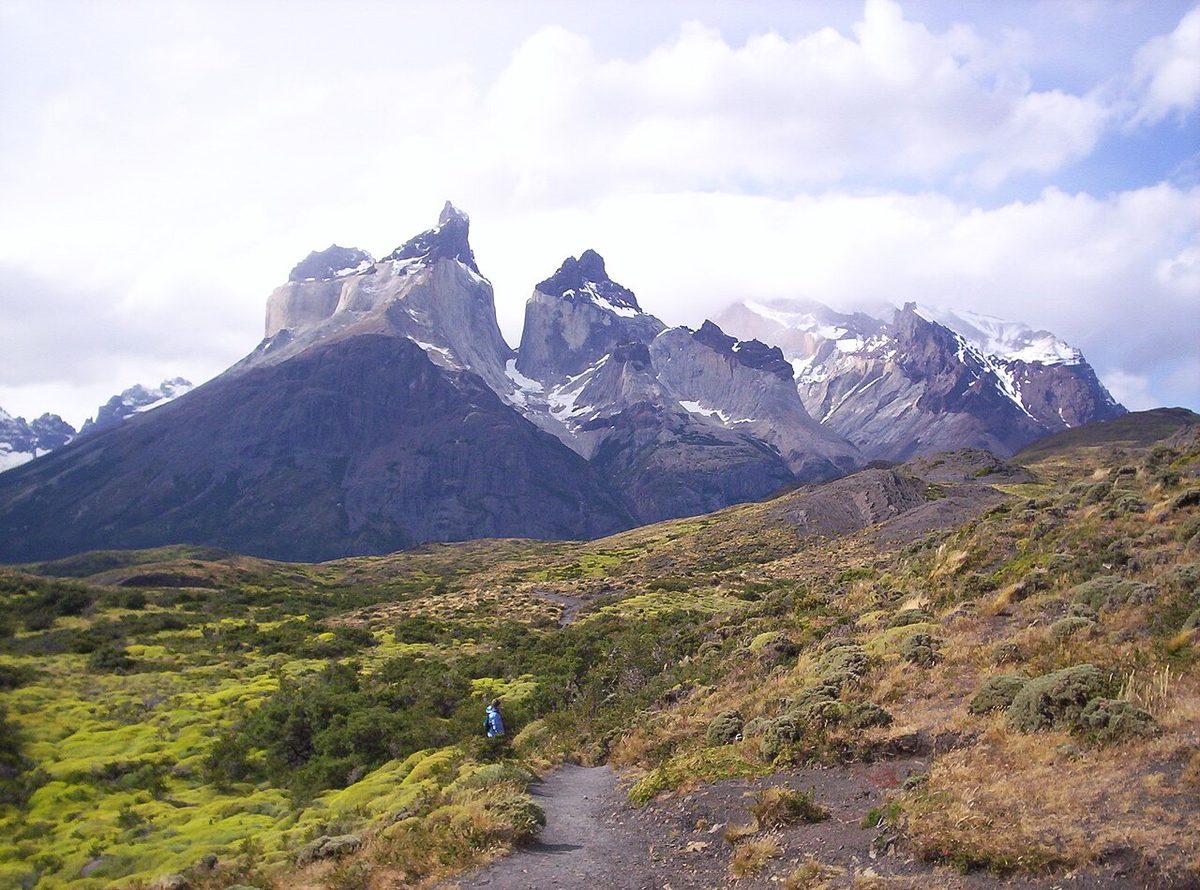
0 — 2 km Fig. 1 · The granite towers of Torres del Paine rising above a turquoise lake in Chilean Patagonia · Photo: Winky from Oxford, UK / CC BY 2.0 via Wikimedia Commons
The first time I tried to plan Torres del Paine, I lost an entire evening to one stubborn question: how do you actually get there? The photos make it look like you step off a plane and the towers are right in front of you. They are not.
Torres del Paine sits in a remote corner of Chilean Patagonia, and reaching it is a small chain of connections rather than a single ride. The good news is that knowing how to get to Torres del Paine is mostly about understanding that chain, which is well worn and predictable once someone walks you through it. That is what this guide does.
Most people get to Torres del Paine through Puerto Natales, the gateway town about two hours from the park by bus to the Laguna Amarga entrance. The other two realistic gateways are Punta Arenas, the region’s main airport, around three hours south of Puerto Natales, and El Calafate in Argentina, a cross-border bus of roughly five to seven hours. From Puerto Natales you finish the trip by bus, rental car, transfer, or tour.
This is for anyone figuring out the logistics: independent travelers, W Trek hikers, day-trippers, and people stitching Torres del Paine into a wider Patagonia route. It is the parent Torres del Paine travel guide zoomed all the way in on one thing – how you reach the park and move around once you are inside it.
How to get to Torres del Paine at a glance
Before the detail, here is the whole picture in one table. Treat the times as honest ballparks; weather, road conditions, the border, and exactly where you get off inside the park all move them around.
From
How
Approx. time
Notes
Puerto Natales
Public bus (Bus Sur, Gómez, María José, Zaahj)
~2 hrs to Laguna Amarga
Main gateway. First buses ~7 am. Book ahead in peak.
Puerto Natales
Rental car (Ruta 9 / Y-290)
~2 hrs
Most flexible. Gravel inside park, no fuel in the park.
Puerto Natales
Private transfer or day tour
~2 hrs each way
Easiest, hands-off. Tours include the driving and stops.
Punta Arenas
Bus to Puerto Natales, then onward
~3 hrs + ~2 hrs
No direct bus to the park. Overnight in Puerto Natales.
Punta Arenas
Direct day tour
Very long day
Possible but a lot of driving for one park day.
El Calafate (Argentina)
Cross-border bus to Puerto Natales, then onward
~5–7 hrs + ~2 hrs next day
Border crossing included. Arrives too late to connect same day.
Santiago
Fly to Punta Arenas or Puerto Natales, then overland
~3.5 hr flight + transfer
No direct flights from abroad; everyone routes via Santiago.
Inside the park
In-park bus stops + Pehoé catamaran + Las Torres shuttle
Minutes to ~30 min
Laguna Amarga check, Pudeto catamaran to Paine Grande, shuttle to Torres Central.
Swipe to see all columns
Table 1
If you only remember one thing: nearly every route funnels through Puerto Natales. Get yourself to Puerto Natales and the last leg into the park is the easy part.
From Puerto Natales (the main gateway)
Puerto Natales is where most independent Torres del Paine trips begin, and for good reason. It is the closest town to the park, around 112 km (70 miles) from the entrance, and it is set up entirely around getting people in and out: bus offices, gear rental, grocery stores for trail food, and a steady churn of travelers either heading to the towers or limping back from them.
The park entrance most buses aim for, Laguna Amarga, is roughly a two-hour drive. That is the number to plan around. If you are going deeper into the park – to Pudeto or the Grey sector – add time, because the bus keeps driving after the entrance.
By bus from Puerto Natales
This is the workhorse option and the one I would point most people toward. Several companies run the route out of the Terminal Rodoviario, with Bus Sur the best known, alongside operators like Buses Gómez, María José, and Turismo Zaahj. In high season there are multiple departures a day. The first buses leave around 7 am (some as early as 6:45), with a midday run around noon and an afternoon departure around 2:30 pm. The earliest and latest slots tend to be seasonal, running roughly November through March.
A one-way ticket is usually around US$17–20. Buy it ahead online when you can, especially in peak season – the early buses sell out, and there is essentially no mobile signal inside the park to sort tickets on the fly.
My honest advice: take the first morning bus you can stomach. Torres del Paine is at its best early, the light is better, the wind is often calmer, and you give yourself a buffer if the weather turns or a connection slips. A 7 am bus gets you to the entrance with the whole day ahead of you. The midday and afternoon buses are fine if you are just transferring to a refugio, but they waste daylight if you actually want to hike.
By rental car from Puerto Natales
If you want to move on your own clock, stop for every guanaco, and reach corners the buses skip, rent a car in Puerto Natales. The drive in follows Ruta 9 (or the Y-290 if you are entering from a different angle), paved most of the way until you near the park, then gravel once you are inside.
The catch is that a car is more about freedom than savings unless you are splitting it. I will cover the full rental picture – gravel, fuel, fees, paperwork – further down, because the same rules apply whether you pick the car up in Puerto Natales, Punta Arenas, or El Calafate.
By transfer or tour from Puerto Natales
Private transfers cost more than the bus but get you door to door on your schedule, which is worth it if you are tired, traveling as a group, or carrying a lot of gear. Guided day tours go a step further: they handle the driving, the entrance stops, and the timing, and deliver you to the major viewpoints without you touching a map. For a one-day visit, a tour is often the least stressful way to see a lot of the park. More on that in the tours and transfers section.
Here is the thing most first-timers get wrong: Punta Arenas is the region’s main airport, but it is not the park’s gateway. There is no direct bus from Punta Arenas to Torres del Paine. You go to Puerto Natales first, then continue from there.
Most travelers actually arrive in Patagonia through Punta Arenas (airport code PUQ) precisely because it has far more flights than Puerto Natales – up to around six connections a day from Santiago in high season, versus often just one to Puerto Natales. So if your flight lands in Punta Arenas, your route looks like this:
Punta Arenas → Puerto Natales (~3 hrs) → Torres del Paine (~2 hrs)
The Punta Arenas to Puerto Natales leg is around 250 km (155 miles) and takes roughly three hours by bus on a paved road. Buses Pacheco runs services directly from the Punta Arenas airport, and Buses Fernández and Bus Sur run from the city bus terminal. It is a comfortable, frequent connection.
The mistake to avoid is assuming you will land in Punta Arenas and hike the towers the next morning. Realistically, you want to overnight in Puerto Natales so you can catch an early bus into the park. Trying to chain a Punta Arenas arrival straight through to a park trailhead the same day is how people end up stranded or rushed. Build the Puerto Natales night in.
Two alternatives exist. A handful of all-inclusive lodges inside the park arrange direct transfers from Punta Arenas, which is lovely if you are paying for that level of trip. And some operators sell direct day tours from Punta Arenas to the park – doable, but it makes for an enormous day with hours of driving bookending a few hours in the park. I would only do that if I had no other option.
If you are still mapping out flights, airports, and overland hops across the whole region, the how to get to Patagonia guide zooms out to the full picture.
From El Calafate, Argentina (the cross-border route)
This is the route that makes people nervous, and it is genuinely the most interesting one. El Calafate in Argentina is the classic pairing with Torres del Paine because it is the gateway to the Perito Moreno Glacier and sits within reach across the border. Plenty of travelers do the loop of Perito Moreno, El Chaltén, and then the towers – it is the backbone of a southern Patagonia trip.
As with Punta Arenas, there is no direct bus from El Calafate to Torres del Paine itself. You take a cross-border bus to Puerto Natales, then continue into the park the next day.
El Calafate → Puerto Natales (~5–7 hrs, border included) → Torres del Paine (~2 hrs next morning)
The El Calafate to Puerto Natales leg is around 268 km (167 miles), but the clock is dominated by the border crossing, so plan for five to seven hours rather than pure driving time. Buses typically leave El Calafate around 8 am and reach Puerto Natales in the early-to-mid afternoon, roughly 2–3 pm. Several operators run it – Bus Sur, Cootra, Turismo Zaahj, and others – and a ticket usually costs around US$40–50.
The critical timing detail: these buses arrive in Puerto Natales too late to catch the same-day onward connection into the park. Almost everyone spends the night in Puerto Natales and heads to the towers the next morning. Do not build an itinerary that assumes you will cross from Argentina and be on a park trail the same afternoon. It does not work.
I will walk through the actual crossing – what happens, what you can and cannot carry, how long it takes – in the border crossing explained below, because it deserves its own section. For the Argentine side of this trip, the El Calafate planning guide covers what to do before you cross, and Visit Argentina describes El Calafate as the gateway to Los Glaciares National Park.
A rental car can be the best way to see Torres del Paine – or an expensive headache – depending on how you set it up. I like having a car for the flexibility: you stop where you want, you are not tied to bus stops, and you reach quiet viewpoints at the hours when the tour buses are not there. But there are real gotchas.
The roads. The drive in from Puerto Natales is paved most of the way, but inside the park the roads are gravel – narrow in places, with blind curves, washboard sections, and wildlife that steps onto the road without warning. None of it requires a hardcore 4×4 in good summer conditions, but you drive it slowly and carefully. The in-park speed limit sits around 40–60 km/h, and that is not a suggestion. Guanacos do not check for traffic.
Fuel. There is no fuel inside the park. Fill the tank in Puerto Natales before you go, and top up there again on the way out. Cerro Castillo, near the Argentine border, is another fuel point if you are coming from that direction. Running low in the park is a genuinely bad situation with no easy fix.
Drop-off and one-way fees. If you pick the car up in one city and drop it in another, expect a one-way drop-off fee. These add up fast.
Crossing the border in a rental. This is the big one. If you want to drive an Argentine rental into Chile or vice versa, you cannot just show up at the border. You need a notarized authorization letter from the rental company permitting international travel, plus the right cross-border insurance, and the cross-border drop-off fees are steep. Arrange all of it when you book, not at the counter, and confirm the company actually allows the crossing – some flatly do not. If a self-drive crossing is central to your plan, the Patagonia road trip and Ruta 40 border crossings guide goes deeper on the paperwork.
Parking. Inside the park, park in the designated lots, most commonly at the Welcome Center near Torres Central. Regular cars are fine there; campervans have separate areas.
Daily rental rates run around US$150 in this region, more in peak season and for larger vehicles. Split between three or four people, a car can be competitive with buses and far more flexible. Solo, it is a comfort-and-freedom purchase, not a money-saver.
By tour or private transfer
If logistics are not your idea of fun, hand them off. This is a completely valid way to visit Torres del Paine, and for some travelers it is the smart one.
Guided day tours from Puerto Natales run you out to the headline viewpoints – the lakes, Salto Grande, the Cuernos lookouts, wildlife areas – with the driving and timing handled. For a single park day, especially if the weather is uncertain and you want someone who knows where the views are that morning, a tour is hard to beat. The trade-off is less time on any one trail and a fixed schedule.
Private transfers are the in-between: you get door-to-door service on your own timing without committing to a full guided tour. They cost more than the bus but make sense for groups, families, anyone with a lot of gear, or trekkers coordinating an awkward early start.
Lodge transfers are worth asking about if you are staying inside the park. Many in-park hotels include or arrange a transfer from Puerto Natales, and some of the high-end lodges will collect you all the way from Punta Arenas. If you have already booked a stay, check what is included before you separately buy a bus ticket – you may not need it.
Getting around inside the park (catamaran and shuttles)
This is the piece that trips people up, because “getting to Torres del Paine” does not end at the entrance gate. The park is large, and the famous sectors are linked by a specific little system of bus stops, a catamaran, and a shuttle. Understanding it ahead of time saves a lot of confusion on the day – and it is the part most guides gloss over.
The bus from Puerto Natales makes up to five stops inside the park: Laguna Amarga, Pudeto, Camping Pehoé, Administración, and Hotel Lago Grey. Which one you want depends entirely on where you are headed.
Laguna Amarga: the entry checkpoint
Laguna Amarga is the main entry checkpoint, and this matters even if it is not your final stop. Everyone’s park ticket and QR code get checked here. If you are continuing on the same bus to Pudeto, you still get off, have your documentation checked, and reboard. So have your ticket sorted before you arrive – you cannot buy it at the gate. (Tickets come only from the official platform; the Torres del Paine tickets guide covers exactly how.)
Laguna Amarga is also the stop for the eastern and central sectors – the Base Torres trailhead side, Torres Central, Chileno, Serón, and Cuernos.
The Hotel Las Torres shuttle
From Laguna Amarga, the trailhead area around the Welcome Center and Torres Central is about 7 km further. You can walk it, but most people take the Las Torres shuttle (run by Reserva Las Torres) that connects Laguna Amarga with the Welcome Center several times a day. Its schedule is timed to roughly match the arrival and departure of the Puerto Natales buses, but it is a separate, small-fee service – check the times when you arrive so you do not get stranded at the checkpoint.
The Pudeto catamaran across Lake Pehoé
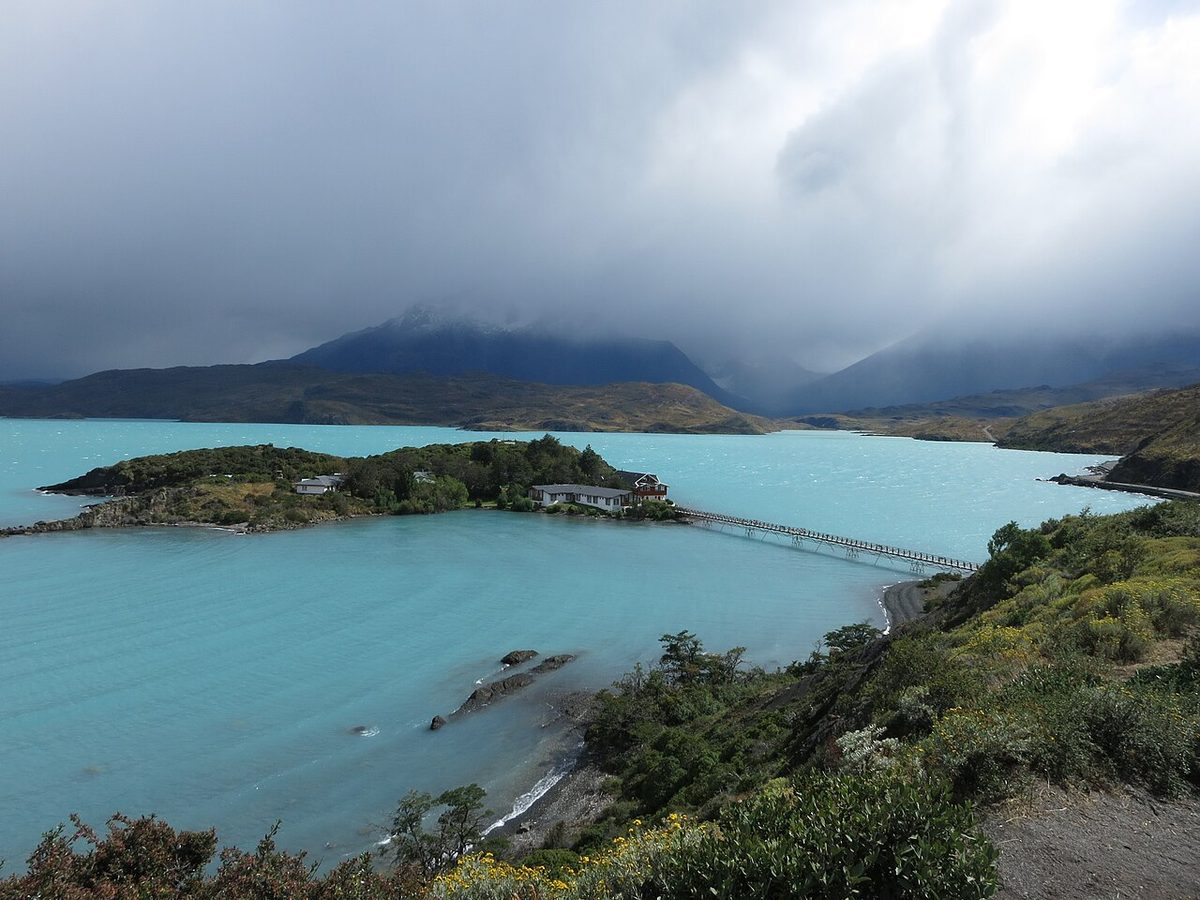
If you are heading to the western side – Paine Grande, the French Valley, or Grey – your stop is Pudeto, and from there you cross Lake Pehoé on the Catamarán Pehoé. The crossing to Paine Grande takes around 30 minutes, and it is genuinely one of the most beautiful boat rides you will take, with the Cuernos rising over the water.
Book the catamaran in advance, because it is the linchpin of the western W Trek and it fills up. The departures are roughly coordinated with the bus arrivals, but “roughly” is the key word – check the current schedule and line your bus, checkpoint, and boat up before you commit to a plan, especially if you are connecting tight. This crossing is exactly the kind of thing the W Trek and O Circuit guide plans around, since the trek direction you choose depends on it.
The Grey Lake boat
Over in the Grey sector, a separate boat runs across Grey Lake between Refugio Grey and Hotel Lago Grey. It is pricier than the Pehoé catamaran and not all Puerto Natales buses stop at Hotel Lago Grey, so confirm both the boat and the bus schedules if you are planning to finish there. It doubles as a scenic glacier cruise, which softens the cost.
The short version: Laguna Amarga to check in, the catamaran for the west, the Las Torres shuttle for the towers. Get those three straight and the inside of the park stops feeling like a maze.
The border crossing explained
If you are coming from El Calafate, the international border is the part of the day that feels mysterious until you have done it once. Here is exactly what happens, so it does not.
The El Calafate to Puerto Natales bus crosses between Argentina and Chile at the Paso Río Don Guillermo crossing on the Chilean side, paired with the Cancha Carrera post on the Argentine side, near the Chilean village of Cerro Castillo. The crossing is open daytime hours (roughly 8 am to 9 pm), which is part of why the buses leave early.
The process goes like this. The bus stops first at the Argentine exit post, where everyone gets off and goes through immigration to get an exit stamp. The bus then drives a short stretch of no-man’s-land to the Chilean entry post, where you get off again – this time with all your luggage – clear immigration for your entry stamp, and pass Chilean customs. The driver waits for the whole bus at each stop; you are not going to get left behind, but the group only moves as fast as its slowest passenger, so it is unpredictable.
The single most important rule: Chile is strict about agricultural products. The customs agency (SAG) does not allow fresh fruit, vegetables, meat, dairy, honey, seeds, or many plant products across the border. Bags get scanned and sometimes searched on the Chilean side. Eat or ditch that apple before the border – the fines are real and not worth it. You will fill out a short declaration form stating you are not carrying any of it.
Practical notes: carry your passport (Chile wants at least six months of validity), keep proof of onward travel handy in case you are asked, and know that most Western nationalities – US, UK, EU, Canada, Australia – do not need a visa for either country. There are no land-border crossing fees. The whole thing is usually calm and orderly; the unpredictability is the queue length, not the difficulty. Build a buffer into your day and do not schedule a fragile same-day connection on the far side. For the wider context on documents and advisories, the how to get to Patagonia guide and Chile Travel are good references.
Torres del Paine punishes last-minute planning in peak season, and rewards a little foresight. Here is how I think about lead times.
Park tickets: Buy these before you travel through the official platform – they are QR-only, must be purchased at least 24 hours ahead, and are not sold at the gates. This is the easy one, but skipping it stops your whole trip at Laguna Amarga. The guide to buying park entry guide has the step-by-step.
Buses: In high season (roughly December to February), buy the Puerto Natales–park buses and the El Calafate cross-border buses days to a couple of weeks ahead. The early-morning departures and the cross-border services are the first to sell out. In shoulder season you have more slack, but I still book the morning bus in advance.
The catamaran: If your plan depends on the Pehoé catamaran – which it does for most of the western W Trek – reserve it as early as you lock your trek dates. It is a single boat on a fixed schedule.
Accommodation: This is the real bottleneck. In-park hotels, refugios, and campsites get booked three to six months ahead for peak season, and the refugios on the trekking circuits sell out earliest of all. If you are trekking, beds drive everything – book those first, then build flights, buses, and the catamaran around the dates you actually got. The lodging options around Torres del Paine guide breaks down the options.
Flights: Puerto Natales has limited seasonal flights and inflated prices because of the demand on that single daily service; Punta Arenas has far more frequency. Book whichever you choose early in peak, and do not be surprised if flying into Punta Arenas and busing up is both cheaper and easier than chasing a Puerto Natales flight.
Common mistakes to avoid
I have made or watched people make every one of these. They are all avoidable.
Flying into the wrong airport and expecting a quick hop. Punta Arenas is three hours from Puerto Natales, which is another two from the park. Landing in Punta Arenas does not mean you are nearly there. Plan the overnight.
Booking a same-day connection after the border. The El Calafate bus arrives in Puerto Natales too late to continue into the park that day. Treat the cross-border day as a travel day and start fresh the next morning.
Assuming there is fuel in the park. There is not. Fill up in Puerto Natales. Running low inside the park is a slow, expensive problem.
Not having your ticket before Laguna Amarga. You cannot buy it at the gate, and there is no signal to fix it on arrival. Buy the QR ticket in advance and download it offline.
Missing the catamaran-bus timing. The catamaran and the buses are coordinated only loosely. If you are connecting between them, check both schedules and leave margin. A missed catamaran can blow up a trekking day.
Skipping the early bus. The 7 am departure gives you light, calmer wind, and a buffer. The afternoon buses waste daylight if you actually want to be in the park.
Trying to cross the border in a rental without paperwork. You need the notarized authorization letter and cross-border insurance arranged in advance. Showing up without them ends the drive at the border.
For more of the big-picture planning traps – itineraries that are too ambitious, season mismatches, underestimating the wind – the parent Torres del Paine travel guide and the best hikes in Torres del Paine guide are worth a read before you lock anything in.
How to get to Torres del Paine: FAQ
How far is Torres del Paine from Puerto Natales?
Torres del Paine is around 112 km (about 70 miles) from Puerto Natales, and the bus to the Laguna Amarga park entrance takes roughly two hours. Driving is similar, around two hours, on a road that is paved most of the way and gravel inside the park. Going deeper into the park, toward Pudeto or Grey, adds time on top of that.
What is the closest airport to Torres del Paine?
Puerto Natales (PNT) is the nearest airport, but it has limited seasonal flights from Santiago and Puerto Montt – often just one a day in high season. Most travelers fly into Punta Arenas (PUQ), around 300 km away, because it has far more frequent connections. El Calafate (FTE) in Argentina is another option if you are combining with Los Glaciares.
Is there a direct bus from El Calafate to Torres del Paine?
No. There is no direct bus from El Calafate to the park. You take a cross-border bus from El Calafate to Puerto Natales, which takes around five to seven hours including the border crossing, then continue from Puerto Natales into the park the next day. The cross-border buses arrive too late to connect onward the same day.
Can you visit Torres del Paine as a day trip?
Yes, you can visit Torres del Paine as a day trip from Puerto Natales by guided tour, rental car, or seasonal bus. It is a long day – around two hours each way plus time in the park – but worthwhile if your schedule is tight. A tour handles the driving and viewpoints. For a real feel for the park, though, two to three days is far better than one.
Do you need a car to get around Torres del Paine?
No, you do not need a car. Public buses, the in-park catamaran, the Las Torres shuttle, and guided tours cover the main sectors well, and trekkers rarely use cars at all. A rental adds flexibility for viewpoints and quiet hours, and is cost-effective split among a few people, but it is a freedom choice, not a requirement.
How do you get around inside Torres del Paine?
The Puerto Natales bus makes up to five stops inside the park, with Laguna Amarga as the entry checkpoint where everyone’s ticket is checked. From Pudeto, the Catamarán Pehoé crosses Lake Pehoé to Paine Grande in about 30 minutes for the western sectors. The Las Torres shuttle links Laguna Amarga with the Welcome Center near the towers. Schedules are coordinated but worth verifying on arrival.
How early should I take the bus into the park?
Take the first morning bus you can – usually around 7 am from Puerto Natales. Early departures give you the best light, often calmer wind, and a buffer if weather or connections shift. The midday and afternoon buses are fine for transferring to a refugio, but they waste daylight if you actually want to hike or sightsee that day.
Final thoughts
For all the planning anxiety, getting to Torres del Paine is really one simple idea repeated: get to Puerto Natales, then take the short last leg into the park. Every gateway – Punta Arenas, El Calafate, even Santiago – is just a different way of reaching that one town. Once you see it that way, the chain of connections stops feeling fragile.
My own advice, after doing this more than once: do not try to be a hero with the timing. Give yourself the Puerto Natales night, take the early bus, sort your ticket and catamaran ahead of time, and leave a buffer around the border if you are coming from Argentina. The park is dramatic enough without adding logistics drama on top. Do the boring planning well, and you get to spend your energy on the part that matters – standing in front of those towers, watching the weather move across them, wondering why you ever worried about the bus.