W Trek cost broken down for 2026: refugios vs camping, meals, gear rental, park entry, buses and the catamaran, with budget and comfortable totals in USD.
By Patagonia Tourism Guide · First published 27 Sep 2026 · Updated 1 Aug 2026
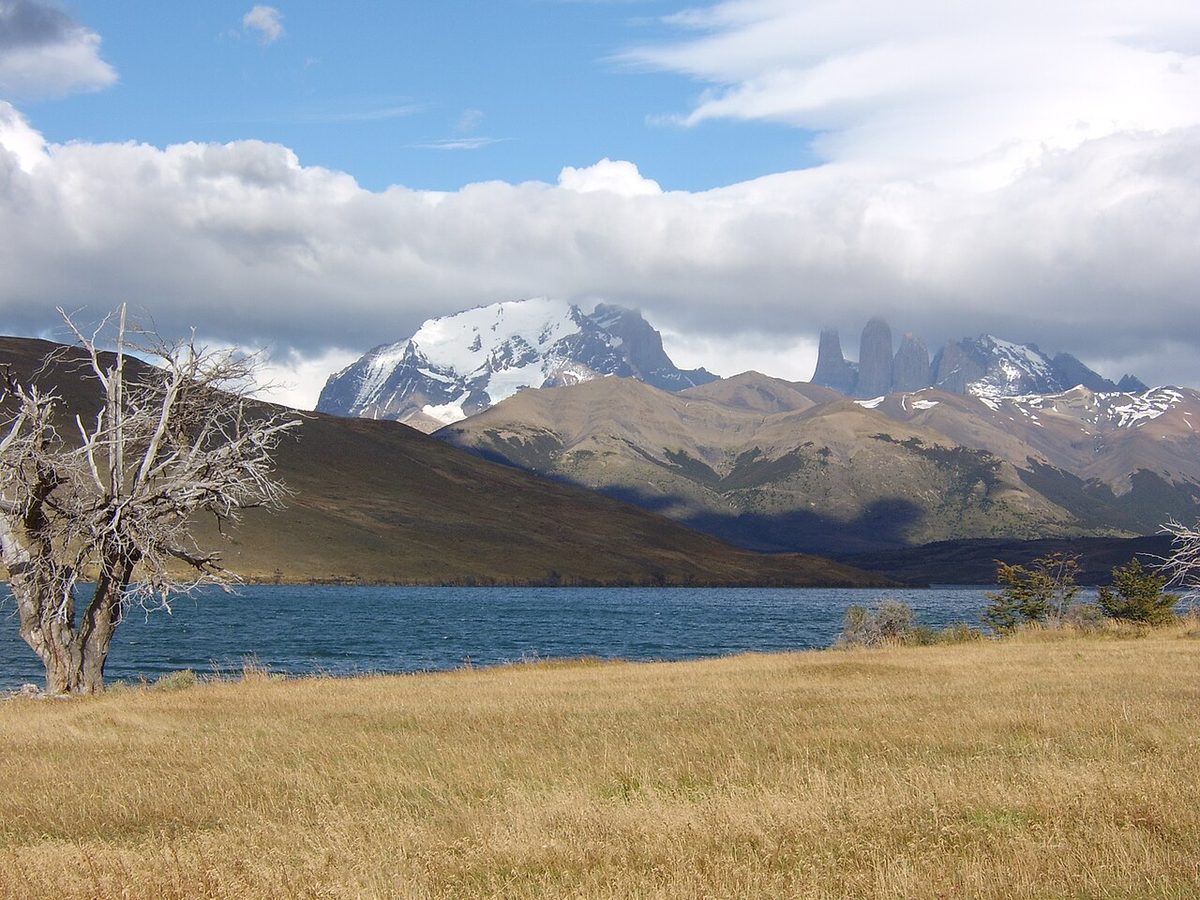
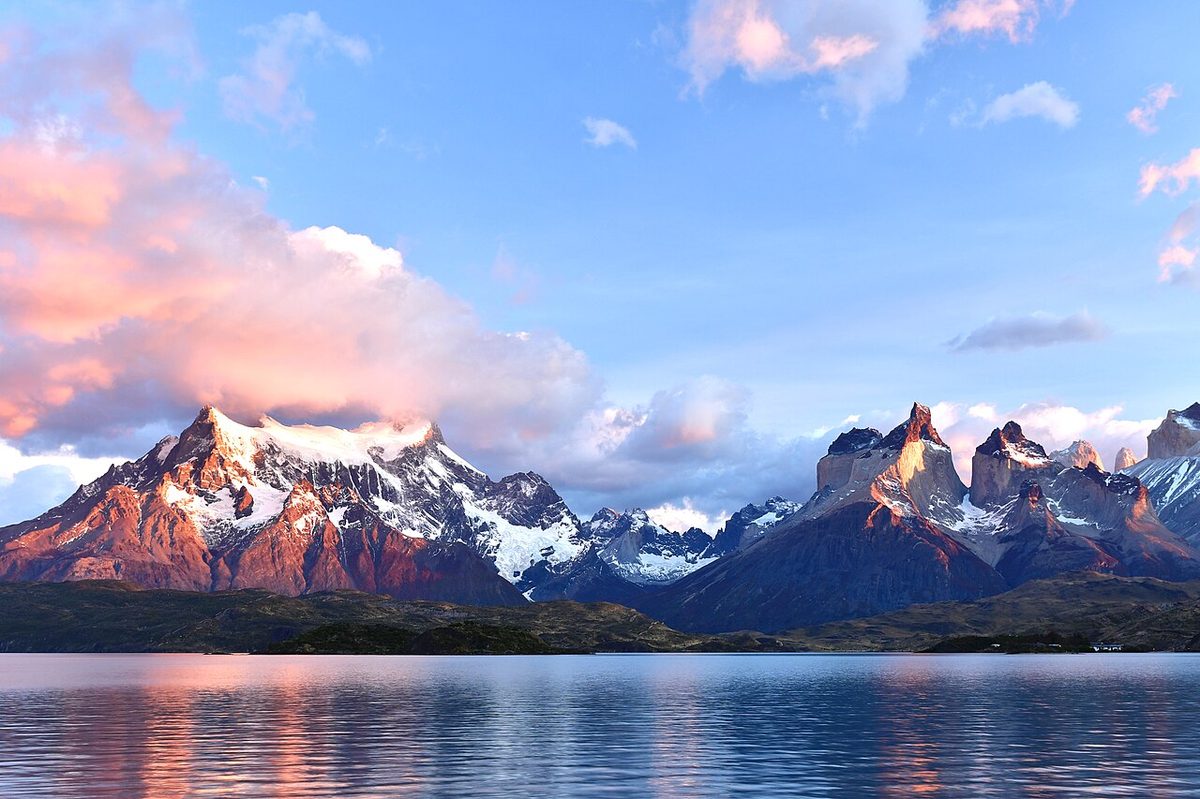
0 — 2 km Fig. 1 · The three granite towers of Torres del Paine, the eastern climax of the W Trek · Photo: Taconvino / Public domain via Wikimedia Commons
I once sat in a Puerto Natales hostel watching two groups plan the same hike and arrive at totals that were almost USD 2,000 apart per person. One pair was carrying their own tent and a bag of pasta. The other had booked refugio beds with three meals a day and a transfer at each end. Same trail, same four days, completely different bills.
That gap is the whole story of the W Trek cost, and it’s why a single number never helped anyone.
The W Trek cost runs roughly USD 500 to 900 per person if you camp and cook your own food, and roughly USD 1,400 to 2,600 or more if you sleep in refugios with meals included. Park entry, buses, the Lake Pehoé catamaran, and gear rental sit on top of your beds-and-food choice. Guided trips cost more again. Treat all figures as 2026 planning ranges and verify before booking.
This guide is for the trekker who has decided to walk the W in Torres del Paine and now needs to know what it actually costs, line by line, so they can build a real budget instead of a guess. I’ll show you the budget camper version and the comfortable refugio version side by side, explain the two booking companies you’ll deal with, and flag where people overspend. Every figure here is a planning range for 2026 — prices move, so reconfirm on the official booking sites before you pay.
One thing up front, because it trips people up constantly: the W Trek isn’t really sold as a “trek.” It’s sold as a stack of separate bookings — beds, meals, a park ticket, a bus, a boat — spread across two different companies and a government portal. Your total is the sum of those parts. Once you see the parts, the price stops feeling mysterious and starts feeling like something you can control.
W Trek cost at a glance
Here’s the comparison I wish I’d had on that hostel table. Both columns assume the classic four-day, three-night W done west to east, one person, in 2026 high season. The left column is a self-catering camper carrying or renting gear. The right is someone in refugios with meals and the easy transfers. Your real trip will land somewhere between, and these are ranges, not quotes.
Cost category
Budget self-catering camper
Comfortable refugio + meals
Park entrance (foreigner, high season)
~USD 35
~USD 35
Accommodation (3 nights)
~USD 40–130 (campsites)
~USD 450–900+ (refugio beds)
Food (whole trek)
~USD 30–50 (groceries)
~USD 450–650 (full/half board)
Bus Puerto Natales ↔ park (return)
~USD 30
~USD 30
Catamaran Lake Pehoé (one way)
~USD 30
~USD 30
Park shuttle (Laguna Amarga ↔ Welcome Center)
~USD 6–12
~USD 6–12
Gear rental (if you don’t own it)
~USD 90–180
~USD 0–40
Indicative all-in total
~USD 500–900
~USD 1,400–2,600+
Swipe to see all columns
Table 1
A few honest caveats on that grid. These exclude getting to Puerto Natales in the first place, your nights in town before and after, travel insurance, and any guide. They assume high-season foreigner pricing; low season is cheaper on the park fee. Solo trekkers pay more per person for campsites and rooms than couples sharing. And a guided package replaces most of these lines with one bundled price, usually from around USD 1,500 per person and up.
The two companies that run the W (and why it matters)
This is the single most confusing thing about pricing the W, so let me make it simple.
Accommodation along the W is split between two private concessionaires. You don’t book “Torres del Paine.” You book with one or both of these companies, on their own websites, with their own prices and rules.
Las Torres Patagonia (you’ll book through lastorres.com or the TorresHike platform) runs the eastern and central sites: Torres Central and Torres Norte near the base-of-the-towers trailhead, Chileno up that valley, Cuernos, Francés, and Serón. Their refugios are generally the pricier, more hotel-like end of the spectrum.
Vértice Patagonia (vertice.travel) runs the western sites: Paine Grande, Grey, plus Dickson and Los Perros on the longer O Circuit. Vértice tends to be the cheaper of the two for both beds and camping.
Here’s the catch. A standard W crosses both companies’ territory. The western half (Paine Grande, Grey) is Vértice; the eastern half (Chileno, Central) is Las Torres. So almost everyone doing the full W has to make two separate bookings on two separate sites, line up the dates so they actually connect, and pay each company directly.
This is why a lot of people give up and buy a guided package — not because guiding is essential, but because coordinating two booking systems for scarce beds is genuinely annoying. It’s doable yourself, and it saves real money, but go in knowing you’re assembling a puzzle. Our comparison of guided and independent w treks walkthrough covers the booking sequence in detail, and W Trek refugios compares the individual properties.
Both points are corroborated by booking guides and the operators themselves: the W spans both concessions, and you need to reserve with both. Verify current prices on each company’s site, because they update seasonally and the two don’t move in step.
Park entrance: the easy line item
Start with the one fixed cost everyone pays. The park entrance fee is set by CONAF and sold through the official portal, Pases Parques.
As of 2026, foreigners pay around USD 35 in high season (roughly November 1 to March 31) and around USD 18 in low season (roughly April 1 to October 31). Chilean nationals and residents pay far less — around USD 6 high and USD 3 low. Children under 18 enter free regardless of nationality.
Buy it in advance at pasesparques.cl. That’s CONAF’s official online sales channel, and buying ahead saves time at the gate. If you arrive by private vehicle there are payment totems at the Serrano and Laguna Amarga entrances that take cards, but for a trekker arriving by bus, the online ticket is the clean move.
One nuance to verify: some guides quote a slightly higher figure (around USD 38 to 50) for multi-day entry, and the exact single-day versus multi-day rules can shift. Don’t take my number as gospel — check the current foreigner rate and validity on Pases Parques before you go. Our ticket rules for Torres del Paine and Patagonia park fees guides track the official numbers, which is exactly where you should confirm them.
For a four-day W, the park fee is a small slice of the total. It’s the beds and meals that move your budget.
Camping vs refugios: where most of your money goes
This is the decision that splits that USD 2,000 gap I opened with. Everything else on the W is roughly the same whether you camp or sleep indoors. Accommodation is the lever.
Camping: the budget path
Camping is by far the cheapest way to sleep on the W, and it’s how the sub-USD-900 total happens.
Prices are per person, per night, and they differ by company. Vértice campsites run around USD 12 to 14 per person. Las Torres campsites are noticeably dearer — around USD 40 to 50 per person at double occupancy, and more if you’re solo. There’s historically been one free campsite on the route as well; whether it’s open and how to reserve it changes year to year, so verify on the booking sites rather than counting on it.
So a three-night W mixing Vértice and Las Torres campsites might land somewhere around USD 40 to 130 total for your pitches, depending on which sites your route hits. That’s the line that makes camping so much cheaper than refugios — you’re paying tens of dollars for sleep, not hundreds.
You’ll need a tent, a sleeping bag rated for cold, and a mat. If you own them, camping is the clear budget winner. If you don’t, factor in rental (more on that below) or check whether a campsite offers a pre-pitched, equipped tent — several do, for a premium that sits between bare camping and a refugio bed.
Refugios: the comfortable path
Refugios are mountain lodges — bunk-style dorm rooms, sometimes private rooms, with hot showers, a dining hall, and a roof that doesn’t flap in the wind at 3 a.m. They’re the reason the comfortable column climbs past USD 1,400.
A bed alone (no meals) runs very differently between the two companies. Vértice refugios are the cheaper end, roughly USD 43 to 105 per person per night depending on the refugio and the bedding option. Las Torres refugios are pricier and more variable — you’ll see room rates quoted from around USD 150 up past USD 600 depending on occupancy and whether it’s a shared dorm or a private room, which works out to a wide per-person spread. A mid-range dorm bed with meals included is commonly cited around USD 80 to 120 a night, but that bundles food into the figure, so read carefully what each price actually includes.
Three nights of refugio beds is therefore the difference between a few hundred dollars and well over USD 900, all before you’ve eaten a single meal. That’s not a knock on refugios — a warm bunk after a wet day on the Grey valley is worth a lot. It’s just where the money is.
My honest take: a lot of people get the best value from a hybrid. Camp the cheaper Vértice nights, take a refugio bed for the one night you most want a real shower and a hot dinner, and you split the difference on both cost and comfort. The pure-refugio W is wonderful and the pure-camping W is cheap; the hybrid is what I quietly recommend to most first-timers. Compare the trade-offs in W Trek refugios and sanity-check your nightly plan against the W Trek itinerary.
Food: full board, half board, or your own pasta
Food is the second-biggest budget swing after beds, and it follows the same camper-vs-refugio logic.
At the refugios you can usually buy full board (breakfast, a packed trail lunch, and dinner), half board (breakfast and dinner), or skip the meal plan entirely. Full board is convenient and the food is genuinely decent for the middle of a national park, but it isn’t cheap. Expect meals to add roughly USD 200 a day at the comfortable end, which is how a three-to-four-day refugio trek picks up USD 450 to 650 in food alone. Some operators bundle bed-plus-board into a single per-day figure in the USD 210 to 290 range; again, check what’s included so you’re comparing like with like.
Self-catering is dramatically cheaper. One group I read about spent around USD 95 on groceries for four people across the whole trek — roughly USD 20 to 25 per person for the entire four days. Realistically I’d budget a bit more, maybe USD 30 to 50 per person, so you’re eating trail food you actually like rather than the absolute cheapest carbs. You buy it all in Puerto Natales before you go, carry it, and cook on your own stove at the campsites.
The middle path exists here too. Many trekkers self-cater breakfasts and lunches, then buy one hot refugio dinner on the night they most want it. You can also buy à la carte snacks, drinks, and the occasional meal at refugios along the way without committing to a full meal plan — handy, though à la carte adds up fast at park prices.
A word of warning on the stove: you can only use gas at designated cooking areas, and you’ll buy fuel canisters in Puerto Natales because you can’t fly with them. Our W Trek food guide gets into what to actually pack and where to shop, and the W Trek packing list covers the stove-and-fuel logistics.
Getting to and around the W adds a predictable chunk that’s the same whether you camp or splurge. Three pieces matter.
The bus from Puerto Natales to the park. Regular buses run from the Puerto Natales terminal to the Laguna Amarga entrance and on to Pudeto. A return ticket runs around CLP 28,000, roughly USD 30. Buy it the day before in town; in high season the early buses fill up. This is excellent value and the standard way trekkers reach the park.
The catamaran across Lake Pehoé. This is the one a lot of people forget to budget. If you walk the W from west to east — the common direction — you take the bus to Pudeto, then the catamaran across Lake Pehoé to Paine Grande, where the trail begins. As of 2026 that crossing costs around CLP 26,000 to 27,000, roughly USD 30 one way. The boat runs a couple of times a day and the schedule shifts by season, so check current times on the operator’s site (catamaranpehoe.com) and don’t cut your bus connection thin. If your route needs the catamaran in both directions, double it.
The park shuttle. Inside the park, a short shuttle connects the Laguna Amarga gate with the Welcome Center near Hotel Las Torres, where the base-of-the-towers trail starts. It’s a small hop — around USD 6 to 12 one way — but it’s a separate ticket, and skipping it means a dull road walk you won’t enjoy after a long day.
Add those up and ground transport for the W is roughly USD 65 to 75 per person, give or take, before any pre- and post-trek movement. For the bigger picture of reaching the region at all, see how to get to Torres del Paine and the guide to Puerto Natales.
Gear rental: only if you don’t already own it
If you’re flying in without a tent and a serious sleeping bag, gear rental in Puerto Natales is your friend — but read the fine print, because it’s priced in a way that surprises people.
Rental shops in town rent by the day. A full camping kit runs roughly USD 56 to 90 a day at the busier shops; individual items are cheaper, with sleeping bags and trekking poles around USD 8 a day each. One well-regarded shop quotes something like USD 162 per person for a five-day full kit when two people share. Renting on-site at the campgrounds inside the park is more expensive again — a two-person tent might be around USD 46, a sleeping bag around USD 29, a mat around USD 13, per the on-site rates I’ve seen.
Here’s the trap: kit is charged for the whole rental window, not per night you actually use it. If you rent a tent for a five-day trek but only camp two of those nights and sleep in refugios the rest, you still pay for all five days of tent rental. So if you’re doing a mostly-refugio trip, renting a tent “just in case” can quietly add USD 100 or more for two nights of actual use. Decide your sleeping plan first, then rent only what that plan needs.
For pure campers without their own gear, expect rental to add somewhere around USD 90 to 180 per person for the trek. For refugio-and-meals trekkers, gear rental is often close to zero — maybe a pair of poles. The W Trek packing list breaks down what’s worth bringing from home versus renting on the ground.
Guided vs self-guided: what the premium buys
The last big fork is whether you walk it yourself or pay a company to handle everything.
Self-guided is what all the numbers above assume. You book your own beds and meals across the two concessionaires, buy your own transport and park ticket, and walk the well-marked trail without a guide. It’s the cheapest way to do the W, and the trail genuinely doesn’t require a guide in the October-to-April trekking season. A basic self-guided camping W lands around USD 500 to 900; a mid version mixing refugios and some meals around USD 1,000 to 1,500; a comfortable refugio-and-full-board version around USD 1,600 to 2,600 or more.
Guided trips bundle all of that — beds, meals, transfers, park fee, a guide, sometimes gear — into one price, usually from around USD 1,500 per person and climbing for smaller groups or fancier lodging. Some budget guided departures advertise roughly USD 200 to 300 a day all-in.
So what does the guided premium actually buy? Three things, honestly. First, someone else does the two-company booking puzzle. Second, a guide for safety, pacing, and context — nice to have, not essential on the standard W in summer. Third, the gear and logistics are sorted. If you’re short on planning time, nervous about doing it alone, or traveling in a group that values the hand-holding, it can be worth it. If you’re a confident hiker on a budget, self-guided saves a lot.
One hard rule: in winter (roughly May to September) a guide is required — you can’t self-guide the W in those months. If your dates fall there, the guided cost isn’t optional. Our Torres del Paine W Trek and O Circuit guide weighs the guided-versus-independent decision in full.
Numbers are easier to trust when you can see them add up. Here are two honest 2026 builds for a four-day, three-night W in high season, per person. Both exclude getting to Puerto Natales, town nights, and insurance.
The budget self-catering camper
Park entrance (foreigner, high season): ~USD 35
Campsites, 3 nights (mix of Vértice and one Las Torres site): ~USD 60–110
Groceries for the whole trek: ~USD 30–50
Bus Puerto Natales ↔ park (return): ~USD 30
Catamaran across Lake Pehoé (one way): ~USD 30
Park shuttle: ~USD 6–12
Gear rental (if needed): ~USD 90–180
Rough total: ~USD 280 if you own all your gear and camp the cheap sites, up to ~USD 450 with rental and pricier pitches
If you own your gear, camp only the cheaper Vértice sites where your route allows, and shop carefully, a sub-USD-400 W is genuinely achievable. Add rental and a Las Torres campsite or two and you’re closer to USD 450 to 600. The headline “USD 600 to 900” budget figure you’ll see elsewhere usually folds in a couple of town nights and some pre-trek spending too — which is fair, just know what’s inside the number.
The comfortable refugio-and-meals trekker
Park entrance (foreigner, high season): ~USD 35
Refugio beds, 3 nights: ~USD 450–900+
Full or half board across the trek: ~USD 450–650
Bus Puerto Natales ↔ park (return): ~USD 30
Catamaran across Lake Pehoé (one way): ~USD 30
Park shuttle: ~USD 6–12
Poles or minor gear rental: ~USD 0–40
Rough total: ~USD 1,400–2,600+
The spread here is almost entirely driven by which refugios you book — the cheaper Vértice beds versus the premium Las Torres rooms — and whether you take full board everywhere. A trekker who picks Vértice where possible and half board lands near the bottom; someone in Las Torres private rooms with full board every night lands at the top or beyond. If you want the truly polished, transfers-and-private-rooms version, you’ve crossed into the territory our Patagonia luxury travel cost guide covers, and a guided package may actually be simpler.
For the broader cheap-trip strategy that this camper budget plugs into, see the Patagonia budget itinerary.
How to spend less without wrecking the trek
After enough trips here, I’ve landed on a clear line between savings that make the W cleaner and savings that quietly make it worse.
Camp the cheap nights, splurge one. The Vértice campsites are a fraction of a refugio bed. Camp those, and book one refugio for the night you most want a hot meal and a shower. This single move saves more than anything else.
Self-cater the trek, eat one hot dinner. Groceries from Puerto Natales beat full board by hundreds of dollars. Carry your food, then treat yourself to one refugio dinner if you like. Buy fuel canisters in town — you can’t fly with them.
Book both concessionaires yourself. Skipping the guided premium is the biggest single saving available, and the trail doesn’t need a guide in summer. It costs you an evening of coordinating two websites. Worth it for most fit hikers.
Don’t over-rent gear. Because kit is charged for the whole window, only rent what your actual sleeping plan needs. A “just in case” tent for a refugio trip is wasted money.
Travel shoulder season. The park fee drops in low season, beds are easier to get, and Puerto Natales is cheaper. October, November, March, and April trade some weather risk for real savings and thinner trails.
Book early for the beds, not the bus. The scarce thing on the W is accommodation, especially the cheaper campsites and Vértice beds in peak weeks. Those sell out months ahead. Buses, the catamaran, and the park ticket you can sort closer to the date. Our book Patagonia in advance guide explains the timing that actually matters.
And the costs I would not cut: a sleeping bag warm enough for a Patagonian night, real rain and wind protection, and travel insurance that covers mountain trekking. The W rewards being properly equipped and punishes the opposite. Read the policy against what you’re actually doing — our Patagonia travel insurance guide covers the practical side, and Patagonia money handles cards, cash, and which pesos you’ll need on the ground.
As 2026 planning ranges, a self-catering camper with their own or rented gear spends roughly USD 500 to 900 all-in, while a comfortable refugio-and-meals trekker spends roughly USD 1,400 to 2,600 or more. The figure depends almost entirely on camping versus refugios and self-catering versus full board. Guided packages start around USD 1,500. Verify current prices before booking.
Is the W Trek cheaper camping or staying in refugios?
Camping is dramatically cheaper. Campsites run roughly USD 12 to 50 per person per night depending on the operator, while refugio beds run from around USD 43 to well over USD 200 per person per night before meals. Adding full board widens the gap further. Most of the total W Trek cost difference comes down to this single accommodation choice, so decide it first.
How much is the Torres del Paine entrance fee for the W Trek?
As of 2026, foreigners pay around USD 35 in high season (roughly November to March) and around USD 18 in low season, with children under 18 free. Buy it in advance at the official Pases Parques portal (pasesparques.cl). Some guides quote slightly higher multi-day figures, so confirm the current foreigner rate and its validity period before you travel.
Do you have to book both Vértice and Las Torres for the W Trek?
Usually, yes. Accommodation on the W is run by two separate companies: Vértice Patagonia covers the western sites like Paine Grande and Grey, while Las Torres Patagonia covers the eastern sites like Chileno and Torres Central. A standard W crosses both territories, so you reserve on both companies’ websites, with separate prices and rules, and line up the dates so your nights connect.
Can you do the W Trek on a budget?
Yes. The cheapest route is self-guided, camping every night, carrying groceries you bought in Puerto Natales, and using the public bus, catamaran, and shuttle. If you already own your gear and camp the cheaper Vértice sites, the trek itself can come in under USD 400 plus your town nights. Book the scarce campsites early, since the budget beds sell out first.
Is a guided W Trek worth the extra cost?
It depends on you. A guided trip, usually from around USD 1,500 per person, bundles beds, meals, transfers, the park fee, and a guide, and it spares you coordinating two booking systems for scarce beds. The standard W doesn’t require a guide in the October-to-April season, so confident hikers save a lot going self-guided. In winter, though, a guide is mandatory, so the cost isn’t optional then.
How much does food cost on the W Trek?
Self-catering is far cheaper: groceries for the whole four-day trek often run roughly USD 20 to 50 per person if you shop in Puerto Natales and cook on your own stove. Refugio meal plans cost much more, with full board adding around USD 200 a day, so a refugio trek can pick up USD 450 to 650 in food alone. Many trekkers self-cater and buy just one hot refugio dinner.
When should you book the W Trek to get a spot?
For peak-season dates, book accommodation as soon as the two companies open their season, which is typically staggered across April to June, with peak dates released first. The cheaper campsites and Vértice beds sell out earliest. The park ticket, bus, and catamaran can be arranged much closer to your trip, so prioritize locking down beds first and sort transport later.