Plan El Chalten hiking around Fitz Roy, Laguna de los Tres, Laguna Torre, trail fees, camping, weather windows, and 2- to 5-day itineraries.
By Patagonia Tourism Guide · First published 7 Jun 2026 · Updated 27 Sep 2026
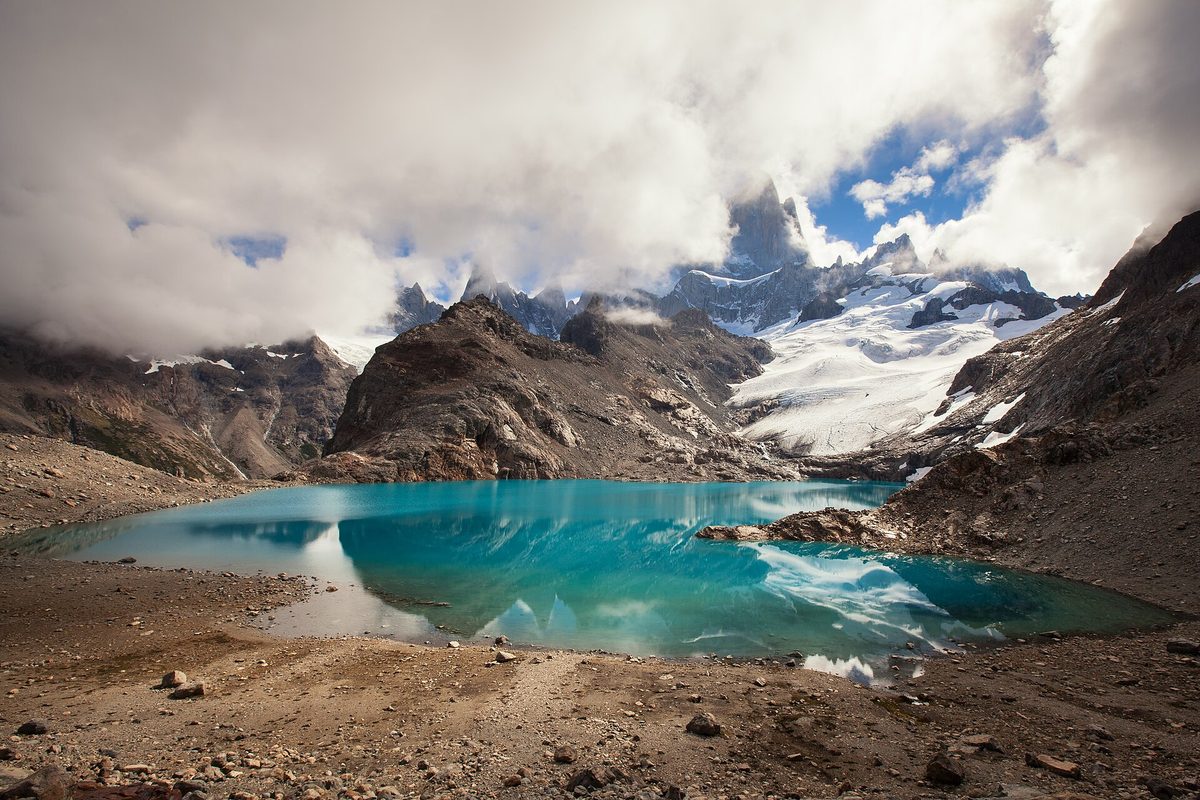
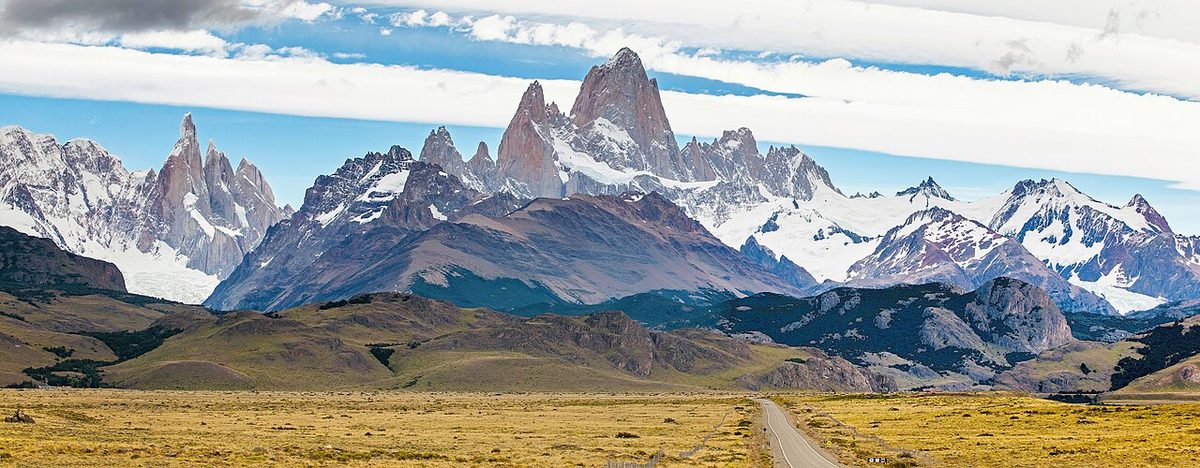
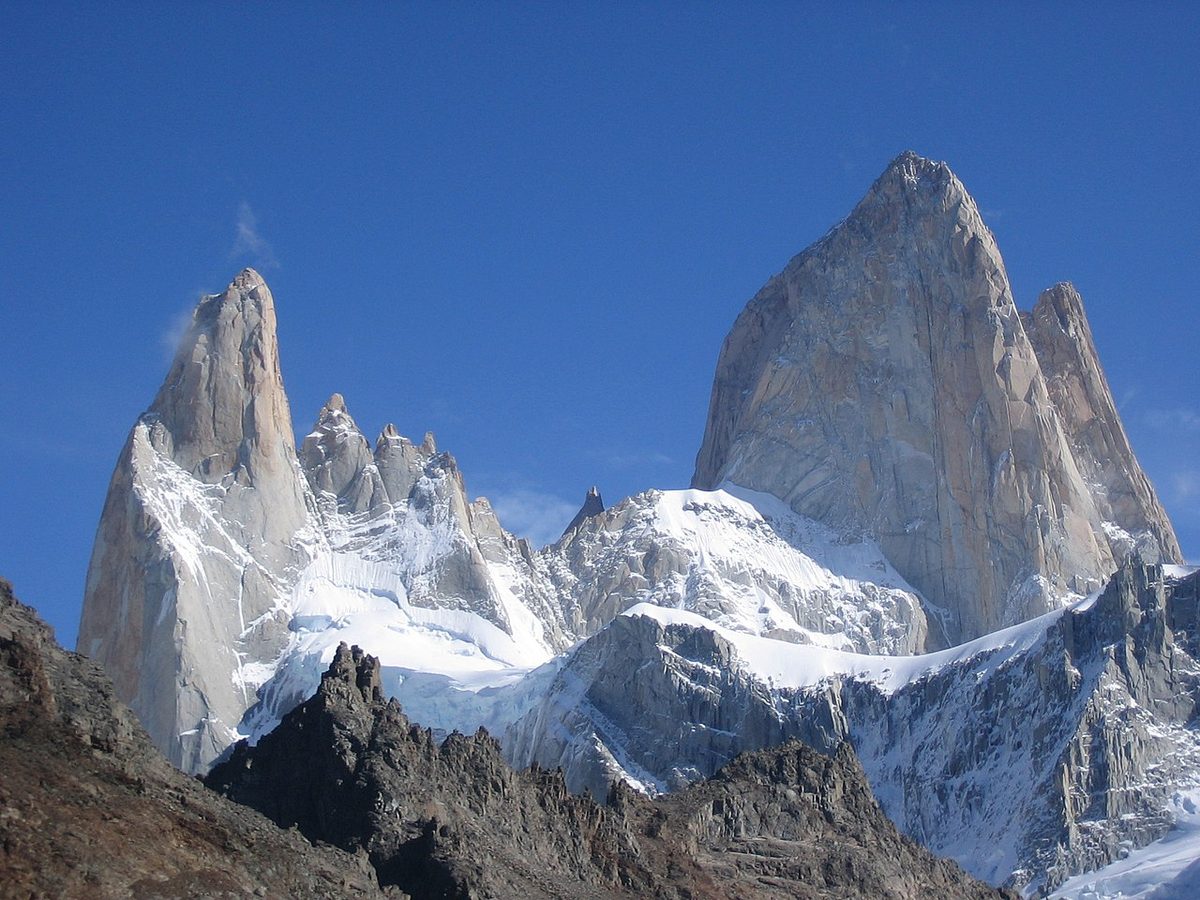
0 — 2 km Fig. 1 · Mount Fitz Roy above Laguna de los Tres near El Chalten, Argentina · Photo: Fredlyfish4 / CC BY-SA 4.0 via Wikimedia Commons
El Chalten is one of the easiest places in Patagonia to fall in love with and one of the easiest places to plan badly.
That sounds unfair until you arrive. The town is small. The trails are close. You can walk from your hotel or hostel to some of the most famous mountain viewpoints in South America. You do not have to book a refugio system months ahead like the W Trek. You do not need to solve an elaborate ferry puzzle before your first hike. You can wake up, check the sky, buy a sandwich, and start walking toward Fitz Roy.
That is the magic.
The trap is believing that simple access means simple planning.
El Chalten hiking is ruled by weather, not by your spreadsheet. Fitz Roy can vanish behind cloud for two days and then appear for 20 minutes at sunset. A route that looks moderate on paper can feel serious when the wind picks up above the treeline. A short stay can become a gamble, especially if the one clear day arrives while you are still on a bus from El Calafate. The best El Chalten plan is not the one that includes the most trails. It is the one that protects your best weather window.
If you remember only one thing from this guide, make it this: stay longer in El Chalten than feels efficient. Three nights is the minimum I would want if Fitz Roy matters. Four or five nights is much better. Use the clearest forecast for Laguna de los Tres or your main Fitz Roy viewpoint. Keep Laguna Torre, Laguna Capri, Los Condores, Chorrillo del Salto, and town time flexible around that.
This guide helps you make those calls before you arrive. It covers the major hikes, how many days to stay, current trail-fee and camping realities, which trails to prioritize in different weather, what to pack, when to hire a guide, and how to fit El Chalten into a bigger Patagonia itinerary.
If you are still choosing your travel month, read when to visit Patagonia before fixing dates. If you are at the very beginning of the trip-planning process, start with the broader Patagonia trip planning basics.
For most first-time hikers, the best El Chalten hiking plan is 3 to 5 nights in town.
With 2 nights, you get one full hiking day. Use it for Laguna de los Tres if the weather is clear and you are fit enough for a long, steep day. If Fitz Roy is fully clouded in, choose Laguna Torre, Laguna Capri, Los Condores, or Chorrillo del Salto instead and accept that this was a short sample, not a full El Chalten trip.
With 3 nights, you get two full hiking days. This is enough for one big Fitz Roy day and one second hike, usually Laguna Torre or Loma del Pliegue Tumbado. It is still vulnerable to bad weather.
With 4 nights, you get three full hiking days. This is the sweet spot for many travelers because you can use the best forecast for Laguna de los Tres, add Laguna Torre, and keep a third day for Loma del Pliegue Tumbado, Laguna Capri, or a buffer.
With 5 nights or more, El Chalten starts to feel generous. You can hike without forcing every day to be heroic. You can camp near Poincenot or De Agostini, add shorter trails, take a rest morning, wait for a better forecast, or explore the Rio Electrico and Lago del Desierto side of the valley.
The classic first-time trail order is not fixed. The weather decides.
If your forecast says…
Do this first
Why
Clear morning, low cloud, manageable wind
Laguna de los Tres / Fitz Roy
This is the iconic view and most weather-dependent payoff
Good visibility but stronger wind
Laguna Torre
Lower valley route, still a classic mountain day
Clear, stable, not too windy
Loma del Pliegue Tumbado
Huge panorama, but exposed higher up
Cloudy over Fitz Roy but dry
Laguna Capri, Mirador del Torre, Los Condores
Useful views without committing to a huge day
Wet, windy, tired legs, or arrival afternoon
Chorrillo del Salto, town errands, gear rental
Save your legs and protect the next good day
Fresh snow, ice, or poor visibility
Ask at the visitor center before committing
Some trails become much more serious outside normal summer conditions
Swipe to see all columns
Table 1
The best hikes in El Chalten for most visitors are:
Laguna de los Tres: the classic Fitz Roy hike and the biggest day-hike payoff.
Laguna Torre: the Cerro Torre valley hike, less steep than Laguna de los Tres but still a long day.
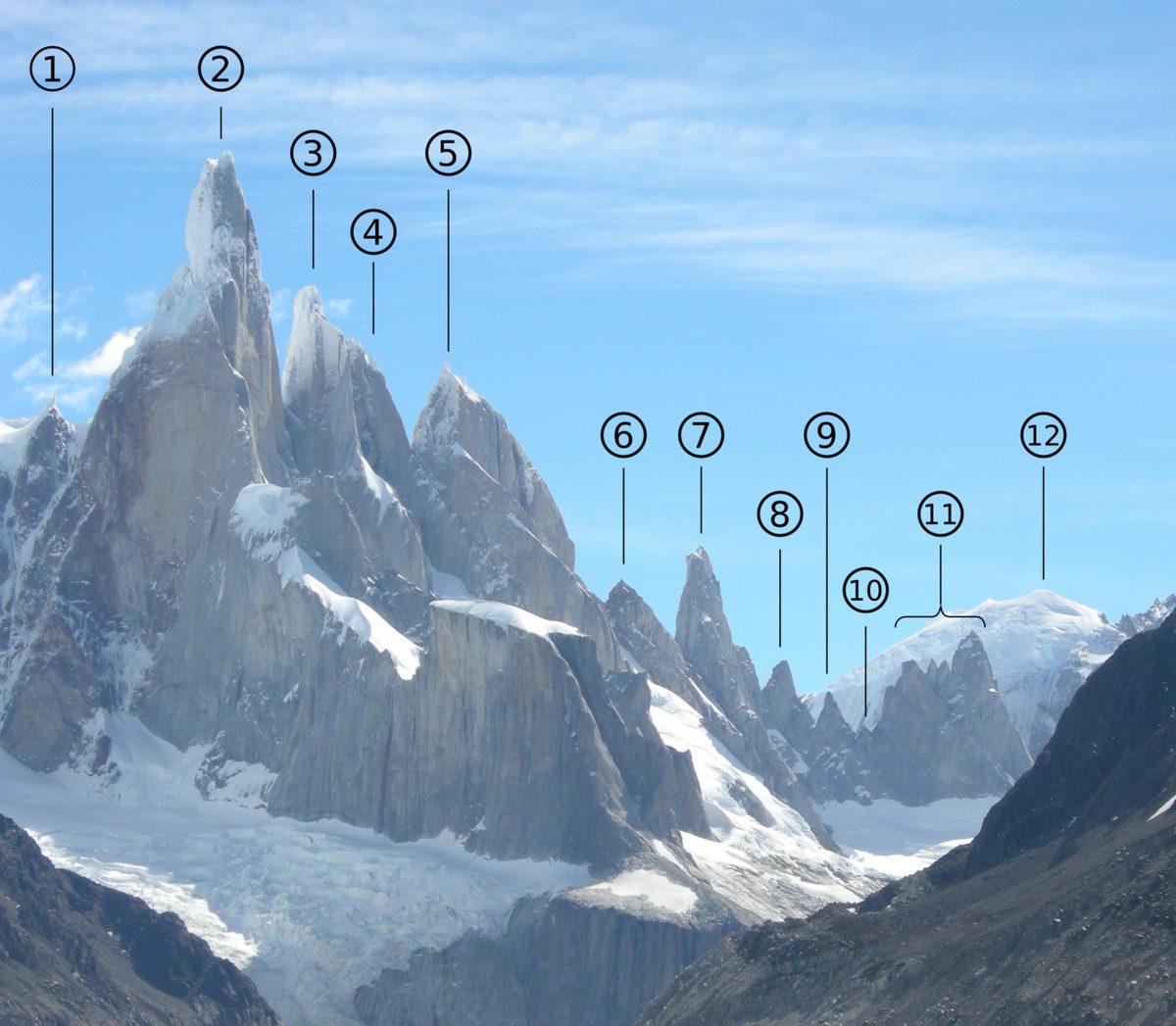
Loma del Pliegue Tumbado: the panoramic ridge hike with Fitz Roy, Cerro Torre, Laguna Torre, and Viedma views.
Laguna Capri: a shorter Fitz Roy viewpoint and good arrival-day or easier hiking option.
Los Condores and Las Aguilas: short viewpoints near the visitor center, useful on arrival or departure.
Chorrillo del Salto: an easy waterfall walk, good when legs or weather are not cooperating.
Rio Electrico / Piedras Blancas / El Pilar approach: useful for a different way into the Fitz Roy side, especially if you have transport.
As of the official APN fee page checked on May 27, 2026, Los Glaciares National Park and the El Chalten entrance sector have paid access, with daily, 3-day Flexipass, and 7-day Flexipass options listed. The rates and payment rules can change, so do not rely on old “El Chalten is free” blog posts. Check the official National Parks fee page and ticket system before you hike.
El Chalten is often called Argentina’s trekking capital, and for once the nickname is not just tourism copy. The town sits in the northern part of Los Glaciares National Park, near the Fitz Roy and Cerro Torre massifs. Trails begin at the edge of town or a short drive away. A normal day can start with coffee on Avenida San Martin and end with your boots muddy from a glacier viewpoint.
That town-based access is what makes El Chalten special.
In Torres del Paine, the park often asks you to solve lodging, buses, tickets, catamarans, transfers, and reservations before the trip feels real. In El Chalten, the first impression is gentler. You can stay in town, watch the weather, and walk to the trailhead. For independent hikers, that is a gift.
It also changes the psychology of the place. In El Chalten, everyone is watching the same sky. People quietly rearrange their days over breakfast. A hostel kitchen can feel like a weather bureau. Someone who expected to hike Laguna Torre tomorrow may suddenly leave for Laguna de los Tres today because Fitz Roy is out. Someone who wanted a rest day may decide to hike because tomorrow looks worse. That flexibility is the point.
El Chalten is not a destination where I would lock every hiking day months ahead unless I was camping or taking a guided program. I would arrive with priorities, not commandments.
The major planning truths are:
The famous trails are close, but the days can still be long.
You do not need a rental car for the main town-based hikes.
You do need to respect weather, daylight, and trail conditions.
You should verify current trail fees and camping reservations.
You should build your itinerary around your top view, not around a fixed trail order.
Visit Argentina describes El Chalten as a trekking destination inside Los Glaciares National Park, with routes such as Laguna de los Tres, Laguna Capri, and Loma del Pliegue Tumbado. It also says the broad ideal season is October to April and that El Chalten is mainly accessed from El Calafate, about 215 kilometers away.
El Chalten official tourism adds the practical town layer: daily buses from El Calafate operate year-round, services include lodging, restaurants, equipment rental, guides, private transfers, and many classic treks start directly from town.
That combination is why El Chalten belongs in so many first-time Patagonia routes. You get huge scenery with less pre-trip friction than Torres del Paine. But if you are combining both, protect enough time for each. The Torres del Paine Travel Guide and W Trek Patagonia guide cover the Chilean side in more detail.
The clean answer: spend at least 3 nights in El Chalten if hiking is one of the main reasons for your Patagonia trip. Spend 4 to 5 nights if Fitz Roy views matter.
The honest answer: the right number of days depends on whether you are happy with “I tried” or whether you want a fair shot at clear mountain views.
Two full hiking days can be enough when the weather cooperates. One clear day for Laguna de los Tres, one decent day for Laguna Torre, and you leave happy. But that same two-day plan can feel thin if clouds sit on Fitz Roy the whole time. This is why I do not like one-night or two-night El Chalten stops unless the broader trip is very tight.
Here is how I would think about it.
Time in El Chalten
What it really means
Best for
Main risk
1 night
Arrival plus maybe a short hike
Passing through, road trip pause
No real Fitz Roy chance
2 nights
One full hiking day
Very tight itineraries
One bad forecast can erase the main view
3 nights
Two full hiking days
Minimum first-time hiking plan
Still light on buffer
4 nights
Three full hiking days
Best normal plan
Requires cutting elsewhere
5 nights
Four full hiking days
Hikers, photographers, campers
You may need more budget/lodging
6+ nights
Flexible mountain stay
Slow travelers, backpackers, weather patience
Harder to fit into a short Patagonia route
Swipe to see all columns
Table 2
If you are building a 7-day Patagonia trip with El Calafate and El Chalten, I would usually give El Chalten 3 or 4 nights and El Calafate 2 nights. Perito Moreno Glacier near El Calafate is extraordinary, but it is less dependent on a single summit view. Fitz Roy is more moody. It deserves buffer.
The common mistake is to say, “We only need one day for Fitz Roy.” That sentence has a hidden assumption: that Fitz Roy will be visible on your one day. Sometimes it will be. Sometimes the mountain will behave as if it has never heard of your vacation.
If I were planning for myself, I would rather have four nights in El Chalten and skip one extra city than have two nights in El Chalten and spend the rest of the trip wondering what was behind the clouds.
Best Hikes in El Chalten
El Chalten has more trails than most visitors can hike in one trip, but the first-time decision usually centers on three major day hikes and several shorter options.
The three big hikes:
Laguna de los Tres for Fitz Roy.
Laguna Torre for Cerro Torre.
Loma del Pliegue Tumbado for the wide panorama.
The shorter and easier hiking options:
Laguna Capri.
Los Condores and Las Aguilas.
Chorrillo del Salto.
Mirador del Torre.
Short town walks and viewpoints.
The extended or alternate options:
Rio Electrico / El Pilar approach to the Fitz Roy side.
Piedras Blancas viewpoint.
Laguna Madre and Hija connection.
Laguna de los Tres to Laguna Torre camping traverse.
Huemul Circuit and other advanced routes, which are outside the scope of a first-time day-hiking plan.
Here is the practical comparison.
Hike
Typical time
Distance from official/local sources
Difficulty
Best for
Watch for
Laguna de los Tres
8 to 9 hours
About 15.5 miles / 25 km
Demanding
Iconic Fitz Roy view
Final steep climb, weather, crowds, snow/ice
Laguna Torre
7 to 8 hours
About 11.8 miles / 19 km
Moderate
Cerro Torre, glacier lake, valley day
Long day, wind, clouds, Maestri extension
Loma del Pliegue Tumbado
7 to 8 hours
About 13 miles / 21 km
Moderate to hard
Best wide panorama
Exposure, wind, poor visibility, snow
Laguna Capri
4 to 5 hours
About 5 miles / 8 km
Low to moderate
Short Fitz Roy view
Early climb, paid access checks
Los Condores and Las Aguilas
About 2 hours
About 4 to 6 km
Easy to moderate
Arrival/departure, sunset, town views
Wind, paid access
Chorrillo del Salto
About 3 hours from town
About 7 km total
Easy
Waterfall, easy day
Shares general fee/access system
Rio Electrico / Piedras Blancas
Variable
Starts about 16 km from town
Moderate
Alternate Fitz Roy approach
Requires transport and current access info
Swipe to see all columns
Table 3
Do not choose these hikes by difficulty label alone. Laguna Torre may be less steep than Laguna de los Tres, but it is still a long walk. Loma del Pliegue Tumbado may look like “just a viewpoint,” but its exposure makes it a poor choice in rough wind or low cloud. Laguna Capri is shorter, but it still starts with enough climb to feel like hiking.
If you have only one big hiking day and the weather is good, choose Laguna de los Tres.
If you have two big hiking days, choose Laguna de los Tres and Laguna Torre.
If you have three big hiking days, add Loma del Pliegue Tumbado.
If your legs, weather, or travel style say no to three big hikes, choose one big hike and two smaller ones. There is no award for turning a beautiful mountain town into a punishment schedule.
For the full route, difficulty and sunrise strategy, see the complete Laguna de los Tres hike guide.
The Laguna de los Tres hike is the El Chalten classic. It is the route most people mean when they say the Fitz Roy hike.
El Chalten’s official trail page describes Laguna de los Tres as the most sought-after hike, a demanding 8 to 9 hour route of about 15.5 miles, with the closest natural viewpoint to Fitz Roy’s granite walls. The page notes that the final climb gains roughly 400 meters to the lake and usually takes a little over an hour of effort.
That final climb is the part people remember.
Most of the hike is not brutally steep. You leave town from the north end of Avenida San Martin, climb above the De las Vueltas valley, pass through forest, reach Fitz Roy viewpoints, and continue toward the Poincenot area. Then the last section changes the mood. The trail climbs hard over rocky, exposed moraine terrain. If the weather is clear, the anticipation carries you. If the weather is wet, windy, icy, or crowded, that last section can feel much more serious than the distance number suggests.
The reward is the famous view: Laguna de los Tres below Fitz Roy, with the granite spires rising above the water. On a clear morning, it is one of Patagonia’s great day-hike endings. If you have energy and conditions are safe, the side view toward Laguna Sucia adds another dramatic angle.
Who Should Hike Laguna de los Tres?
Hike Laguna de los Tres if:
Fitz Roy is the main image in your head.
You can handle a full 8 to 10 hour hiking day.
You are comfortable with a steep, rocky final climb.
You have suitable shoes, layers, food, water, and a headlamp.
The forecast gives you a reasonable view window.
Choose a shorter alternative if:
The mountain is completely clouded in and you have another day.
You are already exhausted from Torres del Paine or another hard trek.
The final section has snow, ice, or mud you are not equipped for.
Wind or weather makes continuing feel like a bad decision.
Your group has mixed fitness and no one wants to split.
The mistake is thinking that turning around is failure. In Patagonia, turning around can be good judgment. The official El Chalten page specifically recommends checking trail status at the visitor center and being cautious in autumn or spring when snow or mud can affect the steep final stretch.
Town Start vs Rio Electrico / El Pilar Approach
Most first-timers start from town because it is simple. You walk to the trailhead, hike to Laguna de los Tres, and return to El Chalten.
Another common option is to start from the Rio Electrico / El Pilar side and hike one way back to town via Laguna de los Tres, Poincenot, Laguna Capri or the Fitz Roy viewpoint path. This can reduce repeated trail and gives you a different approach, but it requires a transfer or taxi and current access planning. Visit Argentina notes that Portal Rio Electrico is about 16 kilometers from El Chalten on Provincial Route 41 and can be used for Piedra del Fraile, Piedras Blancas, Poincenot, and Laguna de los Tres access.
I would choose the town start if I wanted simple logistics or was hiking solo without wanting to coordinate transport.
I would choose the Rio Electrico / El Pilar-style approach if I had a car, a reliable transfer, good weather, and wanted the route to feel less like an out-and-back.
Either way, do not treat the transfer version as a shortcut that makes the hike easy. The final climb is still the final climb.
Sunrise at Laguna de los Tres
Sunrise at Laguna de los Tres is a dream for photographers and a bad idea for unprepared hikers.
The appeal is obvious. When the morning light hits Fitz Roy, the granite can glow red-orange for a few minutes. El Chalten’s official trail page calls out that dawn reward directly. But getting there for sunrise from town means hiking in the dark for hours, including navigation, cold, possible mud, and the need to manage the steep final section before full daylight.
For many travelers, the smarter version is to camp at Poincenot if current reservations, equipment, and conditions allow. From Poincenot, the pre-dawn push is shorter, though still steep and serious. Camping has its own responsibilities, which we cover later.
If you hike for sunrise:
Carry a real headlamp, not just a phone light.
Bring warm layers for waiting at the top.
Know the route before doing it in the dark.
Check trail and weather conditions locally.
Avoid solo dark starts if you are not confident.
Be ready to turn around if conditions are poor.
For most first-time visitors, a normal early start is better than a forced sunrise mission. You can still have an extraordinary day without making the hardest section happen in darkness.
For the section-by-section route and Cerro Torre cloud odds, see the full Laguna Torre hike guide.
Laguna Torre is the second classic El Chalten hike and the one I would protect after Laguna de los Tres.
El Chalten’s official Laguna Torre page describes it as a 7 to 8 hour route of about 11.8 miles, following the Fitz Roy river valley toward a glacial lake below the Cerro Torre and Adela range. The route passes Mirador del Torre and De Agostini camp before reaching the lake. You can continue along the moraine toward Mirador Maestri for a longer day if conditions and energy allow.
Laguna Torre is less steep than Laguna de los Tres, but it should not be dismissed as easy. It is still a full hiking day, and weather matters. Cerro Torre is famously moody. Clouds can hide the spire, wind can whip across the lake, and the return can feel longer than expected when your legs are done.
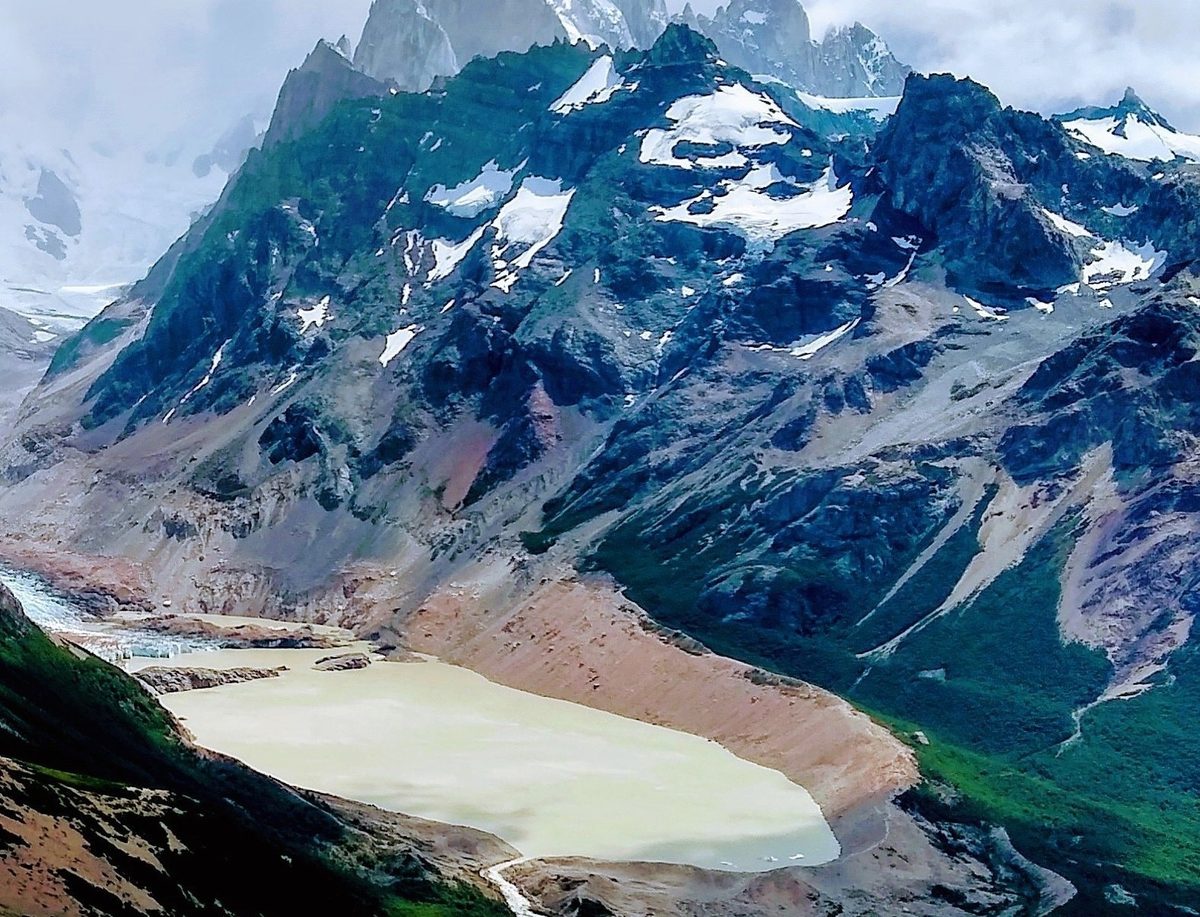
The character is different from the Fitz Roy hike. Laguna de los Tres builds toward a steep final reveal. Laguna Torre feels more like a valley journey. You follow the river, move through forest and open sections, pass viewpoints, and eventually arrive at a glacier-fed lake that often holds icebergs from the Grande glacier.
Laguna Torre vs Laguna de los Tres
If you only have one day and both views are clear, I would choose Laguna de los Tres for the iconic Fitz Roy payoff.
If you only have one day and Fitz Roy is clouded in but the Cerro Torre valley looks better, choose Laguna Torre.
If you have two days, do both.
Question
Laguna de los Tres
Laguna Torre
Main mountain
Fitz Roy
Cerro Torre
Effort style
Long day with steep final climb
Long valley hike with gentler grade
Best view
Laguna de los Tres below Fitz Roy
Laguna Torre, glacier, Cerro Torre/Adela
Better for sunrise
Spectacular but logistically harder
Best with De Agostini overnight
Better in mixed fitness groups
Harder
Usually more forgiving
Better if wind is severe
Not ideal
Sometimes more manageable, but still exposed near lake
Swipe to see all columns
Table 4
Do not force a ranking too hard. They are complementary. Laguna de los Tres gives you the Fitz Roy altar. Laguna Torre gives you the Cerro Torre valley and a different mood of Patagonia: colder, glacial, slightly haunted on a grey day, beautiful even when it is not perfect.
Mirador Maestri
Mirador Maestri is the common extension beyond Laguna Torre. From the lake area, you can continue along the moraine for roughly another 2 kilometers to a better angle toward the glacier and mountains.
This is not mandatory. Add it if:
Weather is stable.
Visibility is good.
You started early.
You still have strong legs.
You have enough daylight for the return.
Skip it if the wind is punishing, the view is gone, or your group is already tired. A good Laguna Torre day does not require doing every optional extension.
Loma del Pliegue Tumbado is the hike I would add when I had a third strong day in El Chalten.
It does not go into the Fitz Roy or Cerro Torre valleys. It climbs above them. That is why it can be so good.
El Chalten’s official page describes Pliegue Tumbado as a 7 to 8 hour, about 13 mile route starting at the National Park Ceferino Fonzo Visitor Center. It climbs roughly 1,100 meters in total toward a high viewpoint and, if conditions allow, a summit with a 360-degree panorama. The same page warns that the route is exposed to wind and that a small snowfall is not unusual even in summer.
This is the hike for people who want the whole stage at once: Fitz Roy, Cerro Torre, Laguna Torre, the Fitz Roy river valley, the steppe, and Viedma Lake. On a clear day, it can be the best broad view in the area.
It is also the hike I would be most cautious about in wind or poor visibility. Below treeline, it is a normal uphill hike. Higher up, exposure matters. The trail can become less obvious near the upper sections, though it is marked. If cloud sits low, the payoff disappears and the risk/reward balance changes.
Choose Loma del Pliegue Tumbado if:
You already have a good Fitz Roy day or the forecast favors a clear panorama.
Wind is reasonable.
Visibility is strong.
You enjoy steady climbing.
You want a less crowded alternative to the two lake classics.
Skip or postpone it if:
The forecast shows strong wind.
The upper ridge is clouded in.
Snow or ice affects the final section.
Your legs are wrecked from Laguna de los Tres.
You are trying to force three big hikes in three days and not enjoying any of them.
If I had three full days, my ideal order would be:
Laguna de los Tres on the clearest Fitz Roy morning.
Laguna Torre on the next best valley day.
Loma del Pliegue Tumbado if weather and legs agree.
If the best weather day comes on day three, save Laguna de los Tres for day three. The order serves the mountain, not the other way around.
The short hikes around El Chalten are not consolation prizes. They are what make the town usable in real weather.
On a perfect Patagonia itinerary, every full day is clear, calm, and dramatic. On a real one, you might arrive after a bus ride with three hours of daylight, wake up sore after Laguna de los Tres, or look at the forecast and decide that a big exposed route would be wasted. Short trails keep the trip alive without burning the whole day.
Laguna Capri
Laguna Capri is one of the best shorter hikes in El Chalten because it gives you a Fitz Roy view without requiring the full Laguna de los Tres commitment.
El Chalten official tourism describes it as a low-difficulty route of about 4 to 5 hours and about 5 miles / 8 km. The trail begins at the north end of town, shares the early approach toward the Fitz Roy side, and reaches a lake viewpoint framed by native forest.
Use Laguna Capri if:
You arrive in El Chalten early enough for a half-day hike.
Fitz Roy is visible but you do not have time for Laguna de los Tres.
You want a gentler acclimatization day.
Your group has mixed fitness.
The weather is good but not stable enough for a huge day.
It is still a hike. The first section climbs, and you should still carry layers, water, food, and rain protection. But compared with Laguna de los Tres, it is much easier to fit into a flexible plan.
Los Condores and Las Aguilas
Los Condores and Las Aguilas are short viewpoints near the visitor center side of town. They are especially useful on arrival day, departure day, or when the higher trails are clouded in.
El Chalten’s official page describes the combined route as low difficulty, about 2 hours, and around 4 to 6 kilometers depending on how much you include. The viewpoints look back over town, the mountains, the steppe, and Viedma Lake.
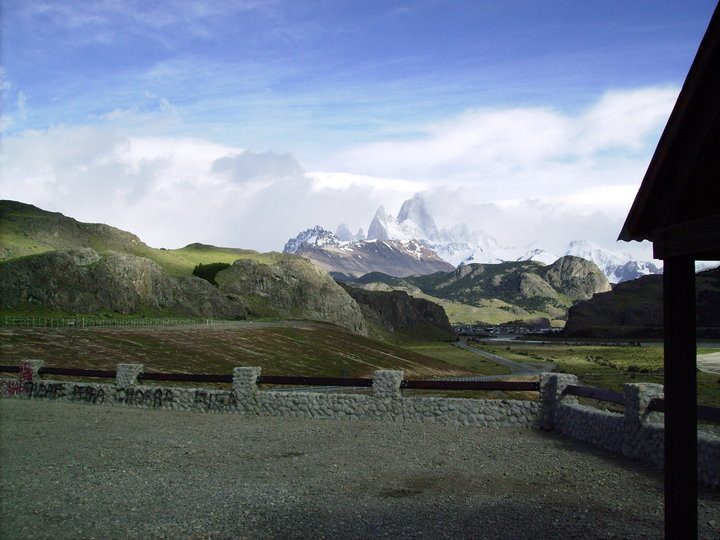
This is a good first walk because it orients you. You see how El Chalten sits between valley, steppe, river, and mountain walls. It is also a good sunset option if the weather is clear enough.
Chorrillo del Salto
Chorrillo del Salto is the easy waterfall walk. It is a good choice when you want to move but not commit to a major hike.
El Chalten official tourism describes it as a short route to a waterfall of more than 20 meters, with the walk from town totaling around 7 km. Some travelers also reach the closer access area by car or bicycle, then walk the final section.
Use Chorrillo del Salto when:
It is raining lightly and bigger viewpoints are gone.
You have tired legs.
You are traveling with kids or non-hikers.
You arrive late and want a simple nature walk.
You need a recovery day that is not just sitting in town.
Mirador del Torre
Mirador del Torre is useful if you want a taste of the Laguna Torre valley without doing the full lake hike. It is often listed as an easy 3 to 4 hour route from town. For some travelers, it is enough on a cloudy day. For others, it becomes the first section of the full Laguna Torre route.
This is a good bad-weather compromise. If the clouds lift, you can continue. If they do not, you can turn the day into a shorter walk without feeling that you failed.
El Chalten Trail Fees, Tickets and Entry Portals
This is one of the areas where old El Chalten advice can mislead people.
For years, many travelers described El Chalten day hikes as free and simple. Some older blog posts and forum comments still say that. The current reality is more complicated.
As of the official Argentina National Parks fee page checked May 27, 2026, Los Glaciares National Park and “Los Glaciares – Portada El Chalten” are listed with paid access. The same page lists:
Daily pass categories.
3-day Flexipass categories.
7-day Flexipass categories.
Annual pass.
Exemption categories.
A 50% second-day discount within 72 hours of first entry for paid national parks.
At the time checked, the page listed the general daily Los Glaciares / El Chalten access at ARS 45,000, the 3-day Flexipass at ARS 90,000, and the 7-day Flexipass at ARS 157,500 for the general category, with lower national, provincial, and student categories. These numbers are time-sensitive. Use them for orientation only and verify official rates before travel.
Visit Argentina’s El Chalten page says the town itself is free to enter, but a ticket is required for trails that go to Mount Fitz Roy, Cerro Torre, and other points of interest. It also identifies three entry points:
Portal Los Condores: for Los Condores, Las Aguilas, Loma del Pliegue Tumbado, and Laguna Toro routes.
Portal Base Fitz Roy: for Cerro Torre, Laguna de los Tres, and Chorrillo del Salto routes.
Portal Rio Electrico: about 16 km from town, useful for Piedra del Fraile, Piedras Blancas, Poincenot, and Laguna de los Tres access.
My practical advice:
Check the official APN fee page before your trip.
Check again when you arrive in Argentina if your trip is months away.
Decide whether a daily ticket, second-day discount, 3-day Flexipass, or 7-day Flexipass makes sense for your actual hiking plan.
Do not assume Perito Moreno and El Chalten are priced or checked exactly like they were in someone’s old trip report.
Carry the ID or passport that matches your ticket category.
Keep your ticket accessible offline if cell service is weak.
For each campsite and the current reservation rules and fees, see the full El Chalten camping guide.
Camping can turn El Chalten from a town-based hiking trip into a much richer mountain experience. It can also turn a simple trip into a gear, reservation, weather, and responsibility problem.
The main campsite names first-time hikers hear are:
Poincenot: on the Fitz Roy / Laguna de los Tres side.
Laguna Capri: also on the Fitz Roy side, closer to town.
De Agostini: on the Laguna Torre / Cerro Torre side.
Asociacion Amigos del Parque Nacional Los Glaciares lists Poincenot, De Agostini, and Laguna Capri as North Zone campsites accessible from El Chalten. The page says capacity is limited and visitors should reserve before starting the hike. It also lists basic distances and estimated approach times: Laguna Capri around 4 km / 1 hour 45 minutes, Poincenot around 8 km / 2 hours 45 minutes, and De Agostini around 9 km / 3 hours.
The same campsite source is clear about the rustic reality:
No restaurants or stores at the campsites.
No showers.
No electricity.
No phone signal or internet.
Visitors bring their own tent, sleeping bag, sleeping pad, food, stove, and gear.
Fires are prohibited; gas stoves are used in designated areas.
Trash must go back out with you.
Pets are not allowed.
Camping at Poincenot makes sense if you want a better chance at sunrise or early-morning Laguna de los Tres without walking all the way from town in the dark. Camping at De Agostini makes sense if you want sunrise or quieter time around Laguna Torre. Laguna Capri can work for a gentler overnight with Fitz Roy views.
I would not camp just because it sounds more adventurous. Camp if it improves the trip you actually want and if you are prepared for the conditions.
Choose camping if:
You have the right gear or know exactly what to rent.
You can reserve the campsite you need.
You want sunrise access without a full dark town start.
You are comfortable cooking and sleeping in mountain conditions.
You are willing to carry everything in and out.
Stay in town if:
You want restaurants, showers, beds, and easy rest days.
Weather is unstable and you want flexibility.
You are new to camping and already doing hard hikes.
You do not want to manage reservations, gear rental, and pack weight.
Your main goal is day hiking, not backpacking.
If you want to camp, treat reservations, rules, pack weight, food, and weather as part of the hike itself rather than as a last-minute lodging choice.
El Chalten Weather and Trail Strategy
For season-by-season detail and how to read the forecast, see the full El Chalten weather guide.
El Chalten weather is not background information. It is the itinerary.
Argentina National Parks’ visitor recommendations for Los Glaciares warn that conditions can change suddenly in any season and tell visitors to check trail and road status, carry layers, waterproof clothing, trekking footwear, food, water, and other essentials. That is not bureaucratic filler. That is the operating manual.
The most common weather mistakes are:
Saving Laguna de los Tres for a later day when the first day is clear.
Hiking to a high viewpoint when clouds are already sitting on the summit.
Ignoring wind because the temperature looks mild.
Forgetting that Patagonia sun can burn even when the air is cold.
Starting late on long hikes.
Planning one full El Chalten hiking day and calling that “enough.”
The best strategy is simple:
Arrive with a priority list.
Check the forecast, but do not worship it.
Ask locally about trail conditions.
Use the clearest likely morning for your most important view.
Keep shorter trails for uncertain weather.
Build a buffer day if you can.
Which Hike Needs the Best Weather?
Laguna de los Tres gets the first clear Fitz Roy window. That does not mean it must be first on the calendar. It means it gets the best visible mountain window.
Loma del Pliegue Tumbado also needs good visibility, and because it is exposed higher up, I would not choose it in strong wind if I had safer alternatives.
Laguna Torre can still be good in moody weather, especially if the valley is visible. A grey Laguna Torre day can feel atmospheric rather than wasted. But if everything is socked in and rain is heavy, save your energy.
Short hikes are your pressure valve. Laguna Capri, Los Condores, Mirador del Torre, and Chorrillo del Salto let you keep moving without spending your best legs on a low-reward day.
What About Winter and Shoulder Season?
Visit Argentina gives October to April as the broad ideal season for El Chalten, with May to September bringing a snowy, quieter winter experience. That does not mean every October or April day is easy, and it does not mean winter is impossible. It means you should treat the shoulder and winter seasons as a different trip.
From April to October, snow, mud, ice, shorter daylight, limited services, and route conditions can affect the famous hikes. The official Laguna de los Tres and Loma del Pliegue pages both warn that snow or mud can affect the final or upper sections and make safe travel harder.
If you are visiting outside the main hiking months:
Check trail conditions in person.
Consider a guide for harder routes.
Carry traction if advised locally.
Do not copy a January itinerary into June.
Expect some services to be reduced.
Make peace with doing shorter hikes if conditions demand it.
The best El Chalten itinerary is flexible. The examples below are not commandments. They are planning shapes.
When you arrive, adjust based on:
Forecast.
Cloud over Fitz Roy and Cerro Torre.
Wind.
Trail conditions.
Your legs.
Trail fees and pass strategy.
Camping reservations if relevant.
2 Days in El Chalten
Two days usually means two nights and one full hiking day, or a tight two full days if your transfers line up well. This is short. Be honest about that.
Best version:
Day 1: Arrive from El Calafate.
If you arrive with daylight, do Los Condores, Las Aguilas, Chorrillo del Salto, or a short town walk. Confirm ticket needs, buy food, check the weather, and sort gear.
Day 2: Main hike.
If clear, hike Laguna de los Tres. If Fitz Roy is hidden but Cerro Torre looks better, hike Laguna Torre. If the weather is poor, choose Laguna Capri, Mirador del Torre, or Chorrillo del Salto and accept that this was a short visit.
Day 3: Depart or squeeze a short morning walk.
Do not book a fragile same-day connection if you have a better choice.
My view: two nights is not enough for a hiking-focused traveler unless the broader itinerary forces it. It is a taste, not a plan.
3 Days in El Chalten
Three nights gives you two full hiking days. This is the minimum I would recommend for first-timers who care about Fitz Roy.
Day 1: Arrive, short viewpoint.
Walk Los Condores or Laguna Capri if timing and energy allow. If Fitz Roy is perfectly clear and you arrived early, you can be more ambitious, but do not start a huge hike too late.
Day 2: Best forecast day for Laguna de los Tres.
Start early. Carry layers, lunch, water, and a headlamp. If weather is bad, swap with day 3.
Day 3: Laguna Torre or Loma del Pliegue Tumbado.
Choose Laguna Torre for a classic second hike or Pliegue Tumbado for the broad panorama if visibility and wind are good.
Day 4: Depart.
This works well if the weather gives you one clear day. If both full days are poor, it can still feel unlucky. That is Patagonia.
4 Days in El Chalten
Four nights is the best normal first-time plan.
Day 1: Arrive and short hike.
Los Condores, Las Aguilas, Chorrillo del Salto, or Laguna Capri depending on time and weather.
Day 2 or 3: Laguna de los Tres on the clearest morning.
Do not save it for a worse forecast just because your draft itinerary says so.
Day 2 or 3: Laguna Torre.
Use this as your second classic. Add Mirador Maestri only if conditions are good.
Day 4: Loma del Pliegue Tumbado, Laguna Capri, Rio Electrico/Piedras Blancas, or buffer.
This is the day that makes the plan feel sane. If the first two days were cloudy, it may become your Fitz Roy day. If you already had good weather, it can become your panorama day.
Day 5: Depart.
This is the plan I would choose for many hikers on a two-week Patagonia itinerary.
5 Days in El Chalten
Five nights lets you stop racing.
Day 1: Arrive, short hike, logistics.
Get settled, check tickets, buy food, rent gear if needed.
Day 2: Laguna de los Tres if clear.
If not, swap.
Day 3: Laguna Torre.
Keep it flexible for weather.
Day 4: Loma del Pliegue Tumbado.
Choose this only if wind and visibility are reasonable.
Day 5: Flexible day.
Options include Laguna Capri, Chorrillo del Salto, Rio Electrico/Piedras Blancas, a guided excursion, a rest day, photography, or a second attempt at Fitz Roy.
Day 6: Depart.
If you want to camp, a 5-night plan can become:
2 or 3 nights in town.
1 night at Poincenot or De Agostini.
1 recovery/buffer night in town.
Do not camp the final night before an early bus unless you have a clean exit plan.
How to Get to El Chalten
For buses, self-drive and the honest day-trip verdict, see the full El Calafate to El Chalten guide.
El Chalten does not have a commercial airport. Most travelers arrive through El Calafate.
El Chalten official tourism says daily flights arrive at Comandante Armando Tola International Airport near El Calafate, about 200 km from El Chalten, and that buses from El Calafate operate year-round. Visit Argentina gives the El Calafate to El Chalten distance as about 215 km and says travelers can arrive by private car or regular bus services.
The bus is usually the simplest independent option. A rental car can help if you want Rio Electrico, Lago del Desierto, or flexible photography stops, but you do not need a car for the main town-based hikes. If you are only doing Laguna de los Tres, Laguna Torre, Laguna Capri, Los Condores, and town-based trails, a car may spend most of the time parked.
Do not underestimate the transfer day. If you fly into El Calafate, wait for luggage, catch a bus, ride to El Chalten, check in, and buy supplies, that day is not a full hiking day. Treat it as logistics plus a short viewpoint unless timing is unusually kind.
Stay in town if this is your first El Chalten trip. It gives you the most flexibility for restaurants, grocery shopping, gear rental, trail starts, and weather-driven decisions.
The main accommodation types are:
Hostels and dorms for budget hikers.
Guesthouses and simple inns.
Apartments and cabins for self-catering.
Mid-range hotels.
Higher-end lodges in or around the area.
Campsites in town or in the park.
Peak season lodging can fill quickly, especially in January, February, and around strong hiking windows. Book early if your dates are fixed. If your budget is tight, do not assume you can arrive in high season and casually find a good bed.
For most travelers, the best location is simply walkable to town services and the trailheads you care about. El Chalten is small, but after a long hike, “a little farther” can feel longer.
Think about lodging based on your trip style:
Traveler type
Best lodging style
Why
Budget backpacker
Hostel or simple guesthouse
Social, affordable, easy food prep
Hiking couple
Guesthouse, apartment, or small hotel
Rest and flexibility between big days
Family
Cabin or apartment
Space, kitchen, easier recovery days
Photographer
Flexible town base plus maybe one campsite night
Weather watching and early starts
Camper
Town night before/after park camping
Gear sorting, showers, recovery
Comfort traveler
Higher-end lodge or hotel
Better rest, guided options, less friction
Swipe to see all columns
Table 5
Use Where to Stay in Patagonia for the region-wide accommodation strategy, especially if you are deciding how to split nights between El Calafate, El Chalten, and Torres del Paine.
Packing, Safety and When to Hire a Guide
El Chalten makes independence feel easy, but do not let the town’s casual hiking culture talk you out of basic preparation.
For major day hikes, bring:
Waterproof/windproof shell.
Warm layer.
Hiking pants or comfortable trail clothing.
Broken-in hiking shoes or boots.
Hat and gloves.
Sunglasses.
Sunscreen.
Lunch and snacks.
Water bottle.
Headlamp.
Offline map.
Battery pack.
Trekking poles if useful for knees and the Laguna de los Tres descent.
Basic first aid.
Cash/card/ID and trail ticket.
Bag for your trash.
For camping, add:
Tent suitable for wind and mountain weather.
Sleeping bag rated for cold nights.
Sleeping pad.
Stove and fuel where permitted.
Food for the whole stay.
Cooking kit.
Headlamp with extra batteries or charge.
Dry bags or pack liner.
Warm camp layers.
Reservation voucher and ticket details.
Argentina National Parks’ recommendations for Los Glaciares include several rules that matter for hikers:
Pets are not allowed in protected areas.
Drones are prohibited.
Weather can change quickly.
Fire is allowed only in enabled fire systems, and visitors should bring firewood where relevant; for El Chalten campsites, current campsite rules emphasize gas stoves and no fires.
Some areas have weak or no cell signal.
Visitors must pack out trash.
Remote or climbing areas require registration.
Do You Need a Guide in El Chalten?
For the main summer day hikes, many prepared hikers go self-guided. The trails are well known, popular, and generally straightforward in normal conditions.
That does not mean a guide is pointless.
Hire a guide or consider one if:
You are hiking in winter or shoulder-season snow/ice conditions.
You are uncomfortable with navigation.
You want to do a sunrise hike but are nervous about the dark approach.
You are traveling solo and want company for safety.
You want to learn about geology, glaciers, plants, wildlife, and local history.
You are planning a multi-day traverse.
Your group has mixed experience and needs better pacing.
You are attempting advanced routes outside the standard day-hiking network.
Do not hire a guide because you think self-guided hikers are better or worse. Guided and self-guided are planning styles. The right choice is the one that makes your trip safer and more enjoyable.
Many travelers compare El Chalten and Torres del Paine because both sit on the classic southern Patagonia route. The right answer is often both, but they solve different trip desires.
El Chalten is better if you want:
Town-based hiking.
Easier independent logistics.
Flexible day-by-day planning.
Fitz Roy and Cerro Torre views.
Hostels, apartments, restaurants, and trails from town.
Big hiking without a refugio reservation system.
Torres del Paine is better if you want:
Chile’s most famous national park scenery.
W Trek or O Circuit structure.
Wildlife such as guanacos and possibly puma-focused guiding. If wildlife is becoming a real trip priority, compare the mountain options with whales and penguins in the Patagonia wildlife and whale watching guide.
Scenic drives and lodge-based park stays.
A more managed national park experience.
Multi-day trekking with fixed park accommodation.
El Chalten is not “easy Torres del Paine.” Torres del Paine is not “better El Chalten.” They feel different.
If you have 10 to 14 days, the classic route combines El Calafate, El Chalten, Puerto Natales, and Torres del Paine. If you only have a week and want hiking without border logistics, El Calafate plus El Chalten is one of the best short Patagonia routes. If the W Trek is your non-negotiable dream, build around Torres del Paine first and add El Chalten only if you have enough time.
The first mistake is staying too briefly. One clear hiking day is not a plan. It is a bet.
The second mistake is saving Laguna de los Tres for a later day when the mountain is visible now. If Fitz Roy is out and your legs are ready, go.
The third mistake is treating Laguna Torre as an “easy day” after a hard hike. It is easier than the final climb to Laguna de los Tres, but it is still a long day.
The fourth mistake is hiking Loma del Pliegue Tumbado in strong wind just because it is on the list. That route is exposed and visibility-dependent.
The fifth mistake is ignoring the current trail-fee system. Old advice may be outdated. Check APN sources.
The sixth mistake is camping without checking current reservations, fees, gear needs, and campsite rules.
The seventh mistake is starting too late. Long hikes need daylight, and the best weather often comes earlier.
The eighth mistake is carrying too little food and warm clothing because the trail starts from town. Patagonia does not become tame just because you bought a coffee first.
The ninth mistake is refusing to change the plan. El Chalten rewards flexible travelers.
The tenth mistake is trying to combine every famous hike with no rest. If you do Laguna de los Tres, Laguna Torre, and Loma del Pliegue Tumbado on consecutive days, it can work for fit hikers in good conditions. It can also become a grind. Build the trip for your real body, not your optimistic one.
Suggested Internal Reading Path
If El Chalten is part of your Patagonia trip, use these guides in order:
The best hike in El Chalten for most first-time visitors is Laguna de los Tres, also known as the Fitz Roy hike. It gives the closest classic viewpoint of Mount Fitz Roy and its surrounding granite spires. If the weather is poor or you want a less steep long hike, Laguna Torre is the best second choice.
How many days do you need in El Chalten?
You need at least 3 nights in El Chalten for a reasonable first hiking trip. Four or five nights is better if Fitz Roy views matter because weather can hide the mountains for a full day or more. With only 2 nights, you are betting on one main hiking day.
Is Laguna de los Tres hard?
Laguna de los Tres is a hard day hike for many travelers because it is long and has a steep final climb. El Chalten official tourism lists it as a demanding 8 to 9 hour route of about 15.5 miles, with a final climb of roughly 400 meters to the lake. Fit hikers can do it, but it deserves an early start and proper gear.
Is Laguna Torre easier than Laguna de los Tres?
Laguna Torre is usually easier than Laguna de los Tres because it has less severe climbing, but it is still a long 7 to 8 hour hike. It is not a casual stroll. Choose it when you want Cerro Torre views, a glacier lake, and a strong hiking day without the steep Laguna de los Tres finish.
Do you need a guide for El Chalten hikes?
You do not usually need a guide for the main summer day hikes if you are prepared and conditions are normal. A guide is useful for winter or shoulder-season conditions, sunrise hikes, solo anxiety, navigation confidence, local interpretation, multi-day traverses, or advanced routes.
Are El Chalten hikes free?
Do not assume they are free based on old advice. As of the official APN fee page checked May 27, 2026, Los Glaciares National Park and the El Chalten entry sector have paid access, with daily and Flexipass options listed. Check the official National Parks fee page before hiking because rates and rules can change.
Can you hike Fitz Roy from El Chalten in one day?
Yes. Most hikers do Laguna de los Tres as a full-day hike from El Chalten, usually 8 to 10 hours depending on pace, stops, weather, and route variation. Starting from the Rio Electrico / El Pilar side is another option if you arrange transport.
What is the best month for El Chalten hiking?
The broad El Chalten hiking season is October through April. December through March gives the strongest summer hiking window, while late November and March can be excellent with fewer crowds. April can be beautiful but more variable. Winter requires more caution, gear, and current local advice.
Can beginners hike in El Chalten?
Yes, beginners can enjoy El Chalten if they choose appropriate trails. Start with Los Condores, Las Aguilas, Chorrillo del Salto, Laguna Capri, or Mirador del Torre before committing to Laguna de los Tres, Laguna Torre, or Loma del Pliegue Tumbado. Beginners should be especially careful with weather, footwear, daylight, and pacing.
Should I stay in El Calafate or El Chalten for hiking?
Stay in El Chalten for hiking. El Calafate is the gateway for Perito Moreno Glacier and has the airport, but El Chalten is the hiking base. Day trips from El Calafate to El Chalten are long and inefficient if your goal is serious hiking.
Can you camp near Fitz Roy?
Yes, but you need to check current campsite rules and reservations. Poincenot and Laguna Capri are the main campsites on the Fitz Roy side, while De Agostini serves the Laguna Torre side. Asociacion Amigos del Parque Nacional Los Glaciares lists reservations, fees, and rules for these campsites.
Is El Chalten worth visiting if you do not hike hard?
Yes, if you enjoy mountain scenery and shorter walks. Los Condores, Las Aguilas, Chorrillo del Salto, Laguna Capri, viewpoints, cafes, and scenic drives can still make El Chalten worthwhile. If you dislike walking entirely, El Calafate or a lodge-based Torres del Paine trip may fit better.
Official Sources and Image License Notes
This article uses official destination, park, trail, fee, and campsite sources for planning facts:
Images are sourced from Wikimedia Commons under their respective licenses (CC BY, CC BY-SA, or public domain). Each photo links to its source page and author on Wikimedia Commons. Hero image: Fredlyfish4 / CC BY-SA 4.0 via Wikimedia Commons.
Also on this pillar — El Chalten9 sheets · See all