Patagonia Road Trips, Ruta 40 and Border Crossings
Plan a Patagonia road trip with Ruta 40, self-drive routes, rental cars, gravel roads, fuel, border crossings, permits, and realistic itineraries.
By Patagonia Tourism Guide · First published 17 Jun 2026 · Updated 1 Aug 2026
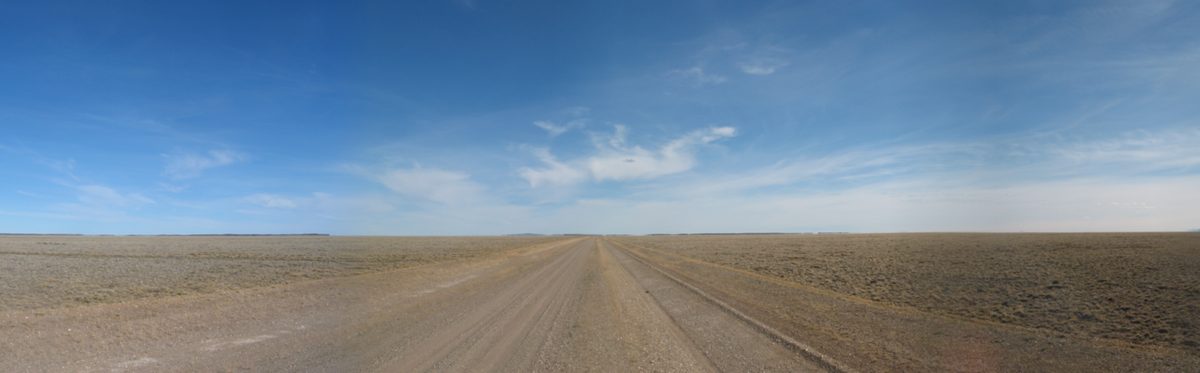
0 — 2 km Fig. 1 · A car on a remote road in Argentine Patagonia · Photo: Giacomo Miceli / Public domain via Wikimedia Commons
A Patagonia road trip can be one of the best ways to see the region. It can also be the fastest way to turn a dream trip into a long argument with distance, wind, paperwork, and fuel stops.
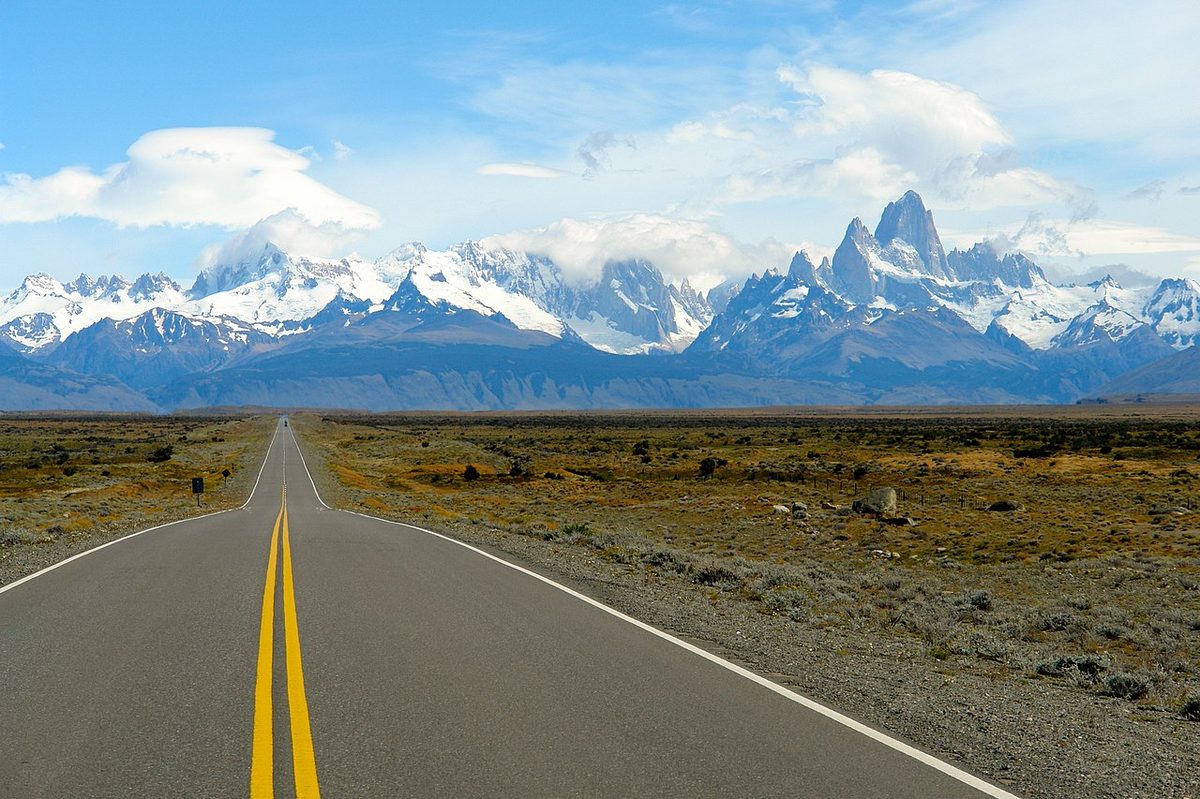
That is the part I want to be honest about from the start. Patagonia rewards independence. A car lets you stop for a guanaco on the horizon, wait for a cloud to lift from Fitz Roy, linger at a lake that was supposed to be a five-minute photo stop, or leave town before the tour buses move. But the car does not make Patagonia smaller. It does not remove borders. It does not change ferry schedules. It does not guarantee fuel in a remote town, and it definitely does not make a 12-hour drive a good idea just because Google Maps drew a neat line.
The best self-drive Patagonia trips are not the ones with the most pins. They are the ones where the route matches the time, the vehicle matches the road, the border paperwork is handled before the rental counter, and the itinerary leaves room for the kind of weather Patagonia is famous for.
This guide is the road-trip hub for the site. It covers Ruta 40 Patagonia, the best self-drive routes, rental car decisions, cross-border permits, Chile and Argentina border crossings, gravel roads, fuel, ferries, and the practical mistakes that are easy to miss when you are staring at a map from home.
Last fact-check: May 27, 2026. Road status, border hours, rental rules, ferry operations, and seasonal access can change quickly. Use this guide to build the right plan, then recheck official road, ferry, border, park, and rental-company information before you pay or drive.
Quick Answer: Is a Patagonia Road Trip Worth It?
Yes, a Patagonia road trip is worth it if you choose the right route for your time and treat logistics as part of the trip. The easiest first self-drive route is Bariloche, Villa La Angostura, San Martin de los Andes, and the Seven Lakes area. The classic southern road trip is El Calafate, El Chalten, Puerto Natales, and Torres del Paine, but the Argentina-Chile border and rental-car paperwork matter. The best remote road trip is the Carretera Austral in Chile, but it needs more days, ferries, gravel-road patience, and flexible planning.
Trip style
Best route
Minimum time I would want
Main thing to watch
First Patagonia self-drive
Bariloche, Villa La Angostura, Seven Lakes, San Martin de los Andes
El Calafate, El Chalten, Puerto Natales, Torres del Paine
10 to 14 days
Border permit, wind, long drives, park lodging
Ruta 40 Patagonia focus
Bariloche to El Chalten / El Calafate, or a shorter section
14 to 21 days
Distance, fuel, gravel, one-way rental cost
Carretera Austral
Puerto Montt, Chaiten, Puyuhuapi, Coyhaique, Puerto Rio Tranquilo, Villa O’Higgins
14 to 21+ days
Ferries, rain, gravel, limited services
Wildlife road trip
Puerto Madryn, Peninsula Valdes, Punta Tombo, El Doradillo
3 to 5 days
Season, tides, gravel, wildlife on roads
Far-south overland
Punta Arenas, Tierra del Fuego, Ushuaia
5+ days as a segment
Ferries, borders, wind, long empty stretches
Cross-border road trip
Argentina and Chile in one rental
10+ days
Rental authorization, insurance, SAG declaration, border status
Swipe to see all columns
Table 1
If you remember one thing, make it this: do not plan a Patagonia road trip as if the road is just empty space between attractions. In Patagonia, the road is the attraction, the delay, the risk, and sometimes the best part of the day.
What This Guide Covers
How to decide whether to rent a car in Patagonia.
The best Patagonia road trip routes by trip length.
What Ruta 40 is, and which Patagonia sections matter most.
How cross-border rental cars work in practice.
The main Argentina-Chile border crossings travelers use.
Chile SAG food and agricultural controls.
Gravel roads, wind, tires, fuel, ferries, and spare-day planning.
Sample self-drive itineraries for 5, 7, 10, 14, 21, and 30+ days.
Internal links to deeper route, destination, cost, lodging, transport, and safety guides.
The phrase “Patagonia road trip” sounds like a single thing until you try to plan one. Then it splits into several very different trips.
There is the northern lake-district road trip around Bariloche, Villa La Angostura, San Martin de los Andes, and the Seven Lakes Route. That is the most accessible self-drive version: big scenery, good towns, enough services, and plenty of day-trip flexibility.
There is the classic southern Patagonia route around El Calafate, El Chalten, Puerto Natales, and Torres del Paine. That one can be brilliant by car, especially if you want flexibility around trailheads and viewpoints, but it becomes a cross-border paperwork trip if you rent on one side and drive into the other.
There is Ruta 40, the long Argentine road that runs parallel to the Andes and carries a lot of the romance of overland Patagonia. It is beautiful, lonely, and sometimes more about the feeling of distance than about any one stop.
There is the Carretera Austral, Chile’s Route 7, which is its own world of fjords, forests, gravel, ferries, rain, rivers, and remote services. If that is the road trip you want, read the dedicated road conditions between Coyhaique and cochrane as soon as you finish this page.
There are wildlife road trips around Puerto Madryn and Peninsula Valdes, which are less about mountains and more about whales, penguins, sea lions, elephant seals, and tide timing. For that, use the wildlife viewing planner.
There are Tierra del Fuego road trips, which sound simple because Ushuaia is a famous endpoint, but overland routes can involve Chilean territory, border formalities, and ferry crossings. The notes on visiting Tierra del Fuego covers that far-south logic in more detail.
The first planning question is not “Can I road trip Patagonia?” It is “Which Patagonia road trip am I actually talking about?”
Should You Rent a Car in Patagonia?
A rental car is useful in Patagonia when it gives you flexibility you will actually use. It is not automatically better than buses, flights, tours, or transfers.
I would seriously consider a car if you are planning:
Bariloche, Circuito Chico, Villa La Angostura, Seven Lakes, or San Martin de los Andes.
Peninsula Valdes, El Doradillo, Punta Tombo, or scattered wildlife stops near Puerto Madryn.
Torres del Paine scenic viewpoints and day hikes from Puerto Natales, especially if you are not doing the W Trek.
A Carretera Austral route.
A Ruta 40 road trip where the drive is part of the purpose.
A photography-focused route where you want sunrise, sunset, and unscheduled stops.
A family trip where private movement is worth the extra cost.
A multi-stop route where buses would force awkward timing.
I would be more cautious about renting a car if:
The car will sit parked for several days while you trek the W, O, Huemul, or multi-day hut/camp routes.
You are solo and budget-sensitive.
You need a one-way rental over a huge distance.
You want to cross Argentina and Chile but have not confirmed the permit, insurance, allowed crossings, and fees.
You are traveling in winter and are not comfortable with snow, ice, chains, short days, and reduced services.
You are trying to solve an overloaded itinerary by driving faster.
That last point matters. A car does not make Bariloche, El Chalten, Torres del Paine, Ushuaia, and the Carretera Austral suddenly fit into two weeks. It can even make an overpacked route worse because you take on navigation, parking, fuel, damage risk, and border paperwork on top of long travel days.
The right route depends more on time than ambition. Patagonia punishes the “while we are there” mindset because the region is enormous and the best days are often the days you do less.
If You Have 3 to 5 Days
Choose one compact self-drive area.
Best choices:
Bariloche, Circuito Chico, Colonia Suiza, Villa La Angostura, and maybe a piece of the Seven Lakes Route.
Puerto Madryn, Peninsula Valdes, and El Doradillo in wildlife season.
El Calafate to Perito Moreno Glacier and possibly one night in El Chalten if you are careful.
Puerto Natales and Torres del Paine scenic day trips.
Do not use 3 to 5 days to “do Ruta 40.” You can drive a section, but it will be a taste, not a proper Ruta 40 road trip.
If You Have 7 Days
You can have a strong road trip, but it should still be regional.
Good seven-day choices:
Bariloche to San Martin de los Andes and back through Seven Lakes.
Bariloche, El Bolson, Lago Puelo, and Esquel/Los Alerces if you want a slightly wider Argentine lake route.
El Calafate, El Chalten, and Perito Moreno Glacier, mostly Argentina-only.
Puerto Natales and Torres del Paine with a rental car, staying in or near the park if budget allows.
Puerto Madryn plus Peninsula Valdes, Punta Tombo, and Gaiman if wildlife timing is right.
A seven-day cross-border road trip can work in southern Patagonia, but it is tight. I would only do it if the vehicle permit is already handled, the route is simple, and you are not trying to begin a major trek immediately after a border day.
If You Have 10 to 14 Days
This is where the classic self-drive routes start to make sense.
Good 10 to 14-day choices:
El Calafate, El Chalten, Puerto Natales, and Torres del Paine.
Bariloche, Seven Lakes, El Bolson, Esquel, Los Alerces, and maybe a Ruta 40 extension.
A north or central Carretera Austral route from Puerto Montt or Balmaceda, depending on flights and ferries.
A split route with buses/flights plus short car rentals in the places where the car adds real value.
For a classic first Patagonia trip, I often prefer not renting one car for the entire itinerary. Fly or bus between big regions, then rent locally where it helps. A car around Bariloche is useful. A car for Peninsula Valdes is useful. A car for Torres del Paine can be useful. But carrying one rental across every transfer can become expensive and clumsy.
If You Have 14 to 21 Days
Now Ruta 40, Carretera Austral, and cross-border combinations become much more realistic.
Good two-to-three-week choices:
Bariloche to El Chalten and El Calafate on the Argentine side, with selected Ruta 40 stops.
Bariloche, Esquel, Los Antiguos, El Chalten, El Calafate, and Puerto Natales, if you are comfortable with long driving days and border planning.
Puerto Montt to Villa O’Higgins on the Carretera Austral, or a strong northern/central section with more time to breathe.
A Chile-Argentina loop linking the Carretera Austral, Chile Chico / Los Antiguos, Ruta 40, El Chalten, El Calafate, and Torres del Paine.
This is also where you need to be honest about one-way logistics. The dream route often starts in Bariloche and ends somewhere near El Calafate, Puerto Natales, Punta Arenas, or Ushuaia. Rental companies may allow it, refuse it, or price it high enough that the route needs rethinking.
If You Have One Month or More
With a month, you can treat Patagonia as a proper overland region instead of a highlights circuit.
Possible long routes:
Northern Patagonia lakes to Ruta 40 to El Chalten and El Calafate.
Carretera Austral plus Argentina crossings through Futaleufu, Chile Chico/Los Antiguos, or other Aysen links.
El Calafate, Torres del Paine, Punta Arenas, Tierra del Fuego, and Ushuaia.
A broader Argentina-Chile mix that uses both Ruta 40 and the Carretera Austral.
One month does not remove the need to plan. It gives you the gift Patagonia wants most: slack. You can wait out weather, take a shorter driving day, stay an extra night somewhere that surprised you, or avoid crossing a border in a storm because your whole trip does not depend on winning that one day.
Ruta 40 Patagonia: What It Is and What It Is Not
Ruta 40 is one of the great names in South American travel. Official tourism sources describe it as more than 5,000 kilometers long, running parallel to the Andes, with kilometer zero at Cabo Virgenes in Santa Cruz. The full route stretches far beyond Patagonia, north through Argentina toward Jujuy. For most Patagonia travelers, the relevant sections are the southern and northern Patagonian pieces: Santa Cruz, Chubut, Rio Negro, Neuquen, and the road links toward places like El Chalten, El Calafate, Perito Moreno, Cueva de las Manos, Esquel, El Bolson, Bariloche, Villa La Angostura, San Martin de los Andes, and Junin de los Andes.
That is the romance. The practical truth is that Ruta 40 is not one uniform scenic drive. It is a spine. Sometimes it is spectacular. Sometimes it is empty. Sometimes the best thing on Ruta 40 is the sense of scale. Sometimes the best thing is leaving it for an access road into a national park, mountain town, lake, cave site, or border crossing.
The official Patagonia Argentina Route 40 page is useful because it gives the route its proper frame. It notes the far-south start at Cabo Virgenes, the Santa Cruz steppe, links toward El Calafate and El Chalten, the Perito Moreno and Cueva de las Manos area, Esquel, El Bolson, Bariloche, Villa La Angostura, the Seven Lakes area, and Neuquen. It also cautions travelers to check maps/GPS, fuel, tourist services, weather-related shortages, winter snow and ice, and remaining gravel sections.
That last part is the difference between a good Ruta 40 road trip and a naive one. You do not plan Ruta 40 only with a photo. You plan it with a fuel strategy, a tire strategy, a damage strategy, and an understanding that pavement and services can change by section and season.
Instead of starting with a giant map, start with route shapes. These are the self-drive patterns that make sense for real travelers.
1. Bariloche and the Seven Lakes
Best for: first-time self-drivers, families, food, lake scenery, easier logistics, winter or summer flexibility.
This is the softest landing for a Patagonia road trip. Bariloche has an airport, services, rental cars, restaurants, lake viewpoints, and nearby drives that deliver a lot without requiring a remote expedition mindset.
A compact route might include Circuito Chico, Cerro Campanario, Colonia Suiza, Villa La Angostura, the Seven Lakes Route, San Martin de los Andes, and maybe El Bolson or Lago Puelo if you have extra time.
2. Bariloche to Esquel, Los Alerces, and El Bolson
Best for: travelers who want a wider Argentine lake road trip without jumping straight into the full Ruta 40 commitment.
This route keeps you in Argentina and can feel quieter than the Bariloche-Seven Lakes circuit. Esquel and Los Alerces National Park add forests, lakes, and a different rhythm. El Bolson can work as a slower stop if you want markets, local food, and mountain views without the intensity of southern Patagonia.
This is a good bridge route for travelers wondering whether they like long Patagonia driving days. If this feels like too much, do not build a Bariloche-to-El Chalten monster drive.
3. Ruta 40 South: Bariloche to El Chalten and El Calafate
Best for: travelers who actually want an overland journey, not just the cheapest way to connect two famous places.
This is the route many people imagine when they say “Ruta 40 Patagonia.” It can be incredible. It can also be a grind if you are trying to squeeze it into a trip that would be better served by flying.
The road connects big landscapes and far-apart stops. You may look at places like Esquel, Perito Moreno, Los Antiguos, Cueva de las Manos, Gobernador Gregores, Tres Lagos, El Chalten, and El Calafate. The exact route depends on road conditions, rental rules, timing, and whether you want a direct drive or a deeper trip.
The key decision is simple: if the road trip is the point, consider Ruta 40. If El Chalten and El Calafate are the point, flying to El Calafate and driving locally may be smarter.
4. El Calafate, El Chalten, Puerto Natales, and Torres del Paine
Best for: classic southern Patagonia scenery, Fitz Roy, Perito Moreno Glacier, Torres del Paine, and travelers with 10 to 14 days.
This route is popular because it combines some of Patagonia’s biggest names in one geographic area. It can work by bus, private transfer, tour, rental car, or a mix. By car, it gives you more control over viewpoints, stops, and timing, especially around El Chalten and Torres del Paine.
The catch is that adding Puerto Natales and Torres del Paine usually means crossing between Argentina and Chile. If the rental car starts in Argentina, you need permission to enter Chile. If it starts in Chile, you need permission to enter Argentina. You also need to understand Chile’s SAG declaration rules when entering Chile, and you need to check border status before the drive.
Best for: remote road-trip travelers, photographers, people with patience, and anyone who wants forests, fjords, rivers, gravel, ferries, and small towns.
Chile Travel describes the Carretera Austral as more than 1,200 kilometers on Route 7, with ferries/barges, gravel sections, variable climate, and limited services. That is not marketing fluff. It is the planning reality.
The route can be done north to south from Puerto Montt, accessed through Balmaceda/Coyhaique for a shorter central trip, or combined with Argentina through crossings such as Futaleufu, Huemules/Balmaceda, or Jeinimeni/Chile Chico-Los Antiguos, depending on your route.
Do not treat the Carretera Austral as just another road option inside this guide. It is big enough to need its own decision system. Use the Carretera Austral Road Trip Guide before you book a vehicle.
Best for: wildlife, families, photographers, and travelers who want a shorter road trip with a strong payoff.
This route is often overlooked by mountain-focused travelers, but it is one of the places where a rental car can make real sense. The distances are manageable by Patagonia standards, and having your own car can help with viewpoints, tide timing, El Doradillo, and flexibility around wildlife conditions.
It is not the same kind of road trip as Ruta 40. You are driving gravel and coast rather than mountains and glaciers. But if your trip is timed for whales, penguins, sea lions, or elephant seals, it can be one of the most satisfying self-drive choices in the region.
Best for: travelers who want the far south, Antarctica connections, winter activities, Beagle Channel scenery, or overland-endpoint satisfaction.
Ushuaia can be visited without a road trip. Many travelers fly in, use tours and taxis, and leave. But if you want to drive Tierra del Fuego or approach Ushuaia overland, the route becomes more complex. Depending on the route, you may deal with Chilean territory, the Strait of Magellan area, border formalities, and ferry logistics.
This is not a casual add-on to a short El Calafate and Torres del Paine trip. If you want Ushuaia, give it a reason and enough time. The coverage of Ushuaia and the Beagle Channel explains when it is worth the detour.
Rental Car Patagonia: What To Ask Before Booking
Do not wait until the rental counter to ask important questions. That is how a road trip becomes a refund problem.
Before booking a rental car in Patagonia, ask:
Is cross-border travel allowed with this vehicle?
Which countries can I enter?
Which border crossings are allowed?
What documents will you provide for the border?
Is cross-border insurance included or extra?
How long does the border authorization take to prepare?
Is there a fee per border crossing, per rental, or per country?
Are gravel roads allowed?
Are specific roads excluded from the rental contract?
Are ferries allowed?
Is there a one-way drop-off fee?
Can the car be dropped in another city or country?
What happens if a border closes and I return late?
What damage is excluded from insurance?
Are tires, windshield, underbody, and gravel damage covered?
How many spare tires are included?
Is a tire repair kit included?
Are chains required or available in winter/shoulder season?
What roadside assistance exists outside major towns?
What is the emergency contact process if there is no signal?
The cross-border permission is the one travelers most often underestimate. If you rent in Argentina and want to drive into Chile, the rental company must provide the correct authorization and insurance for that plan. If you rent in Chile and want to drive into Argentina, the same principle applies in the other direction. Do not assume the border officer will accept a casual explanation.
The short version is this: your rental company has to be part of the route plan from the beginning.
Patagonia Border Crossings: How To Think About Them
Crossing between Argentina and Chile in Patagonia is common. It is not something to fear, but it is also not a toll booth.
A border crossing can involve:
Exit formalities from the country you are leaving.
Entry formalities for the country you are entering.
Passport checks.
Vehicle paperwork.
Customs controls.
Agricultural or sanitary controls.
Luggage inspection.
Queue time.
Weather and road-condition disruptions.
Reduced or seasonal hours.
Temporary closures.
Chile’s Pasos Fronterizos site is the official place to start for Chilean border-complex status and operating information. Argentina also has official border and road-status sources, and Argentina’s Vialidad Nacional road-status page is a key check before driving national routes.
Do not hard-code border hours from an old blog post into your trip. Check close to travel, then check again before driving. This is especially true in winter, shoulder season, storms, strikes, roadworks, or high-demand holiday periods.
My rule is conservative: do not schedule a major trek start, expensive tour, boat trip, or same-day flight immediately after a border crossing unless you have no better option. A smooth crossing can be forgettable. A slow one can eat the day.
Major Argentina-Chile Border Crossings in Patagonia
This table is not a live status table. It is a planning map for which crossings matter to common Patagonia road trips. Always verify current status and hours before travel.
Crossing
Common route use
Why it matters
Cardenal Samore
Bariloche / Villa La Angostura to Osorno, Puerto Varas, Puerto Montt
Major northern Patagonia crossing for lake district and Chile connections
Futaleufu
Esquel / Trevelin to Futaleufu and northern Carretera Austral access
Useful for linking Argentine lake country with Chilean Patagonia
Huemules / Balmaceda
Coyhaique / Balmaceda area to Argentina
Useful for Aysen, Coyhaique, and Ruta 40 combinations
Jeinimeni / Chile Chico-Los Antiguos
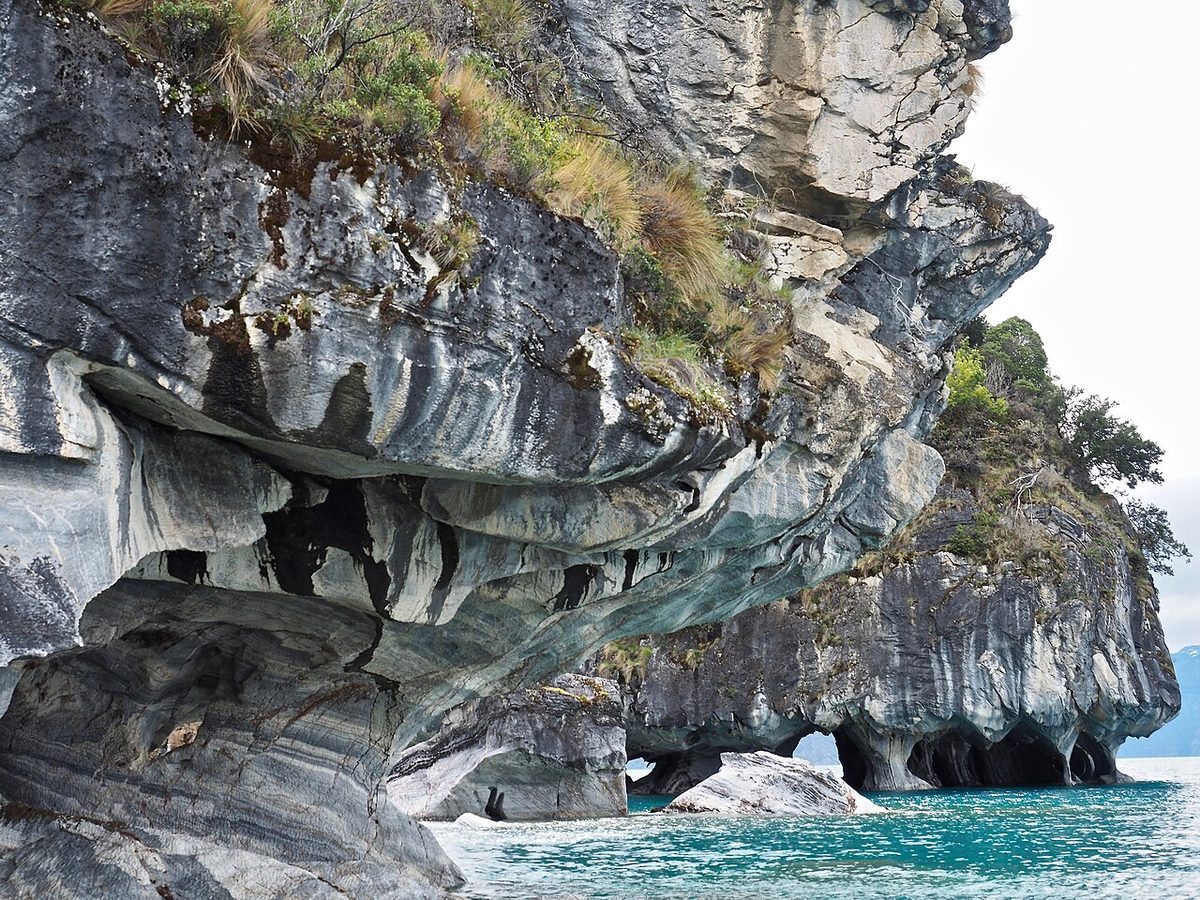
Lago General Carrera / Marble Caves to Los Antiguos and Argentina
Important for Carretera Austral plus Ruta 40 route shapes
Rio Don Guillermo / Cancha Carrera area
Torres del Paine / Cerro Castillo to El Calafate-oriented routes
Common for southern Patagonia self-drives between park country and Argentina
Dorotea
Puerto Natales to Rio Turbio and southern Ruta 40 links
Useful around Puerto Natales, Rio Turbio, and southern road-trip logistics
Integracion Austral / Monte Aymond
Punta Arenas to Rio Gallegos and mainland far south
Important for Punta Arenas, Rio Gallegos, and overland far-south movement
San Sebastian
Chilean and Argentine Tierra del Fuego
Key crossing for overland Ushuaia / Tierra del Fuego routes
Swipe to see all columns
Table 2
There are other crossings, and some adventurous routes use quieter passes. For most first-time travelers, the crossings above are the ones that will appear in route planning.
Chile SAG Controls: The Food Rule That Trips People Up
When you enter Chile, do not casually carry fresh food, meat, cheese, honey, seeds, plants, or animal/vegetable products across the border. Chile takes agricultural controls seriously.
SAG, Chile’s agricultural and livestock service, says travelers entering Chile should complete the declaration and have it available for inspection. It notes that the digital form can be completed before arrival where implemented, that travelers over 18 complete it, and that luggage can be inspected manually, by X-ray, or by detector dogs. It also lists animal products and plant products that should trigger a “yes” declaration.
Practical version:
Finish or discard risky food before the border.
Declare what must be declared.
If you are unsure, ask the inspector rather than guessing.
Do not hide food because you do not want to waste groceries.
Plan grocery shopping after the crossing when possible.
This matters on road trips because travelers often stock the car with snacks, picnic supplies, fruit, cheese, meats, and hiking food. That is normal for remote drives. It becomes a problem when the next drive crosses into Chile.
Road Conditions: Gravel, Wind, Dust, Ice, and Distance
Patagonia driving is not technically difficult every day. That is part of why people underestimate it. Many sections are straightforward, paved, beautiful, and quiet. Then the trip changes character: gravel, wind, a fuel station you were counting on, a roadwork delay, a border queue, a ferry schedule, a flat tire, or snow where the map looked harmless.
The practical risks are usually boring until they are not.
Gravel Roads
Gravel in Patagonia can mean a manageable ripio road that any careful driver can handle. It can also mean washboard, loose stones, potholes, dust, reduced visibility, and windshield damage from oncoming vehicles.
On gravel:
Slow down.
Increase following distance.
Do not overcorrect.
Expect longer stopping distance.
Pull over carefully for faster local traffic when safe.
Watch for tire damage after rough stretches.
Avoid driving too close behind trucks or buses.
Keep headlights on if visibility is dusty.
The official Patagonia Argentina Route 40 page still notes gravel sections in Santa Cruz at the time of this fact-check. Even where sections are paved, roadworks and weather can change the feel of a route.
Wind
Patagonian wind is not a cute detail. It can move the car, make doors dangerous, drain your patience, and turn a scenic viewpoint into a quick photo and retreat.
Practical wind habits:
Hold doors firmly when opening them.
Park facing wind when possible.
Be extra careful around high-sided vehicles.
Expect fatigue after long windy drives.
Avoid planning every day at maximum distance.
Do not assume a calm morning means a calm afternoon.
Winter and Shoulder Season
Winter can be beautiful, but a winter Patagonia road trip is a different project. Snow, ice, short daylight, reduced services, chain requirements, and road closures can matter. Some rental companies restrict routes or require specific equipment. Some border crossings reduce hours or close during weather events.
Guanacos, sheep, horses, birds, and other animals can appear near or on roads. Do not drive at night in remote areas if you can avoid it. It makes wildlife harder to see, reduces your response time, and increases the chance that a simple drive becomes a serious problem.
Fuel and Services: The Half-Tank Rule
In remote Patagonia, I like a boring rule: fill up before you need to.
If you are used to driving in places where another gas station is always 20 minutes away, Patagonia requires a reset. Fuel stations can be far apart. Services can close, run short, lose card connectivity, or have reduced hours. Weather can affect supply. Small towns may not have what you expect.
Practical fuel habits:
Refill when you reach half a tank in remote areas.
Do not skip fuel because the price is annoying.
Carry some cash in local currency.
Do not rely only on card payments.
Ask locally about the next fuel stop before long stretches.
Download offline maps, but do not treat them as proof that a station is open.
Plan food, water, and bathroom stops as part of the driving day.
Treat fuel and services as route constraints, not errands. Remote Patagonia driving is easier when you stop topping up based on price and start topping up based on distance.
Ferries and Route Dependencies
Ferries matter most on Chilean routes, especially the Carretera Austral and far-south overland routes. They can also matter around Tierra del Fuego and the Strait of Magellan depending on how you approach Ushuaia.
The mistake is treating a ferry like a bridge. A bridge is always there. A ferry has schedules, capacity, weather sensitivity, booking rules, queues, and sometimes seasonal complications.
For the Carretera Austral, ferry planning is part of the route, not an afterthought. Chile Travel notes that the Carretera Austral includes sections by barge, and the dedicated driving Chile’s southern highway covers the main ferry logic in more detail.
Practical ferry habits:
Identify ferry-dependent sections before booking lodging.
Check whether reservations are possible or required.
Confirm vehicle rules and arrival time.
Build buffer time around important ferries.
Carry food, water, and warm layers in case of delays.
Recheck weather and operator notices close to travel.
How I Would Plan a Patagonia Road Trip
If I were building a self-drive Patagonia trip from scratch, I would not start by saving 70 map pins. I would build it in this order.
1. Pick the Road Trip Type
Choose one primary route style:
Northern lakes and Bariloche.
Southern classics around El Calafate, El Chalten, Puerto Natales, and Torres del Paine.
Ruta 40 overland.
Carretera Austral.
Peninsula Valdes wildlife.
Tierra del Fuego.
A longer Argentina-Chile overland route.
Do not mix them all unless you have the time to make the driving days part of the trip.
2. Choose the Right Airports or Gateways
Patagonia road trips are shaped by where you can start and end the rental. Bariloche, El Calafate, Puerto Madryn/Trelew, Puerto Montt, Balmaceda, Punta Arenas, Puerto Natales, and Ushuaia all create different route possibilities.
One car for the whole trip sounds clean. It is not always best.
Sometimes it is smarter to:
Rent a car in Bariloche for the lake district.
Fly to El Calafate.
Use buses or transfers for El Chalten.
Rent again for Torres del Paine if needed.
Avoid an expensive one-way or cross-border rental.
This is especially true for travelers mixing hiking and sightseeing. A car parked for four days while you trek is not freedom. It is a paid object waiting for you.
4. Check Cross-Border Feasibility Before Booking Lodging
If the route crosses Argentina and Chile, do this early:
Confirm the rental company allows the crossing.
Confirm the specific crossing is allowed.
Confirm insurance.
Confirm document preparation time.
Confirm fees.
Confirm whether multiple entries are allowed.
Only then should you book nonrefundable lodging around that plan.
5. Protect the Fragile Days
Fragile days include:
Border crossings.
Ferries.
Long gravel stretches.
Park check-in days.
Trek start days.
Domestic flight days.
Boat tours.
Glacier trekking.
Remote lodging arrival days.
Do not stack two or three fragile things on one day unless you are intentionally accepting risk.
6. Book Scarce Items in the Right Order
For most road trips, the order is:
Route-defining reservations, such as W Trek lodging, in-park Torres del Paine hotels, scarce small-town lodging, ferries, or specialty tours.
Rental car with the exact permit/insurance needs.
Flights or long-distance transport.
Lodging along the driving route.
Park tickets, buses, local tours, and secondary activities.
Final checks for road, ferry, and border status close to travel.
These are route shapes, not promises that every day will run perfectly. Use them to choose a structure, then adapt for season, road status, rental terms, lodging availability, and your driving tolerance.
5 Days: Bariloche and the Seven Lakes
Day 1: Arrive in Bariloche, pick up car, short lake viewpoint drive.
Day 2: Circuito Chico, Cerro Campanario, Colonia Suiza.
Day 3: Drive to Villa La Angostura, lake viewpoints, overnight there or continue carefully.
Day 4: Seven Lakes Route toward San Martin de los Andes.
Day 5: Return to Bariloche or continue if your flight route allows.
Why it works: high scenery, manageable distances, good services, no border.
What to watch: peak-season traffic, parking, winter conditions, and not rushing every viewpoint into one day.
7 Days: El Calafate, El Chalten, and Perito Moreno Glacier
Day 1: Arrive El Calafate, pick up car or settle in.
Day 2: Perito Moreno Glacier by car, bus, or tour.
Day 3: Drive to El Chalten.
Days 4-5: El Chalten hiking and weather buffer.
Day 6: Extra El Chalten day or return toward El Calafate.
Day 7: Fly out or add a short local drive.
Why it works: no country border, enormous scenic payoff, easy to mix with buses if you decide not to drive.
What to watch: wind, weather buffers for Fitz Roy, and not treating El Chalten as a one-night stop.
10 to 14 Days: Southern Patagonia Cross-Border Classic
Day 1: Arrive El Calafate.
Day 2: Perito Moreno Glacier.
Days 3-5: El Chalten and hiking buffer.
Day 6: Drive back toward El Calafate or stage for border route.
Day 7: Cross toward Puerto Natales or Torres del Paine, with the correct rental permit.
Days 8-11: Torres del Paine scenic drives, day hikes, or park stay.
Day 12: Puerto Natales buffer or return route.
Days 13-14: Fly out from Puerto Natales/Punta Arenas or return to El Calafate if the rental requires it.
Why it works: it connects Patagonia’s biggest southern icons.
What to watch: cross-border paperwork, SAG declaration, park lodging, fuel, and too many nonrefundable commitments around the border day.
This route is best when the rental paperwork and border timing are confirmed before you lock in park nights.
14 to 21 Days: Ruta 40 Patagonia Overland
Start: Bariloche or northern Patagonia.
Possible stops: El Bolson, Esquel, Los Alerces, Perito Moreno town, Cueva de las Manos, Los Antiguos, Gobernador Gregores, Tres Lagos, El Chalten, El Calafate.
End: El Calafate, Rio Gallegos, Puerto Natales, or another southern gateway depending on rental feasibility.
Why it works: this gives the road enough time to become the trip.
What to watch: one-way rental cost, remote services, long driving days, gravel sections, and route fatigue.
If you only have 10 days and your dream is Fitz Roy, I would usually fly to El Calafate instead of forcing the full drive. If you have 18 days and want the open-road experience, Ruta 40 starts to make sense.
This is one of the clearest cases where the romantic road-trip answer and the practical trip-planning answer may be different.
21+ Days: Carretera Austral and Ruta 40 Combination
Start: Puerto Montt, Balmaceda, Bariloche, or another gateway depending on direction.
Core idea: Drive a meaningful Carretera Austral section, cross to Argentina through a practical border, then connect to Ruta 40 and southern Patagonia.
Possible combinations:
Puerto Montt to Carretera Austral, then Futaleufu/Esquel and Argentine lake country.
Balmaceda/Coyhaique to Puerto Rio Tranquilo, Chile Chico/Los Antiguos, then Ruta 40 south.
Carretera Austral central/south, then Argentina, El Chalten, El Calafate, and Torres del Paine.
Why it works: this is one of Patagonia’s great overland styles.
What to watch: ferries, border permits, gravel, weather, limited services, and overcommitting to both countries without enough slack.
With a month or more, you can stop thinking only in famous destinations and start thinking in sections:
Northern lakes.
Ruta 40.
Aysen and Carretera Austral.
El Chalten and El Calafate.
Torres del Paine and Puerto Natales.
Punta Arenas and Tierra del Fuego.
Optional Ushuaia.
This is when a campervan or motorhome may become tempting. It can be wonderful, but it also adds size, fuel cost, parking, campsite, ferry, wind, and road-condition questions. Choose it because the travel style fits you, not because it looks like an easy way to avoid planning.
Where To Sleep on a Patagonia Road Trip
Lodging strategy changes by route.
In Bariloche and northern Patagonia, you can often use a comfortable base and day-trip by car. In El Chalten, it is usually better to sleep in town if hiking is the point. In Torres del Paine, sleeping inside or near the park can save major drive time but costs more and sells out earlier. On the Carretera Austral and Ruta 40, lodging gaps can shape the route as much as scenery does.
For road trips, I care less about the cutest hotel and more about these questions:
Is it near the road I need tomorrow?
Is parking included and secure?
Can I arrive late if a ferry or border takes longer?
Is fuel nearby?
Are restaurants or groceries nearby?
Can I dry gear?
Is the road access reasonable in bad weather?
Is cancellation flexible around fragile route days?
The rundown of towns and lodging guide covers base-town strategy in detail. Use it before booking a route that depends on reaching a remote guesthouse after a long gravel day.
What To Carry in the Car
This depends on the route and season, but for a serious Patagonia road trip I would want:
Offline maps.
Phone charger and backup power.
Paper or saved copies of rental documents.
Passport and required vehicle authorization.
Insurance documents.
Local cash.
Water.
Food that will not create border problems.
Warm layers accessible in the cabin.
Rain shell.
Sunglasses.
Basic first aid kit.
Tire-changing knowledge.
Spare tire and tools.
Headlamp.
Trash bags.
Printed or saved ferry/border/lodging confirmations.
Emergency contact numbers from the rental company.
For hiking and weather gear, use the backcountry safety basics. Do not pack only for the car. Pack for the moment the car is stopped in wind, rain, mud, or cold while you solve something.
Common Patagonia Road Trip Mistakes
The first mistake is trying to cover too much. Patagonia looks empty on the map, but empty does not mean fast.
The second mistake is renting one car for a route that would be better with flights, buses, and local rentals.
The third mistake is ignoring border permits until the last minute.
The fourth mistake is carrying fresh food into Chile without understanding SAG rules.
The fifth mistake is booking nonrefundable lodging on both sides of a fragile border day.
The sixth mistake is treating gravel-road drive times as if they are normal highway drive times.
The seventh mistake is assuming every fuel station is open, stocked, and accepting cards.
The eighth mistake is driving at night in remote areas because the day was overloaded.
The ninth mistake is assuming a small car is always fine because “locals drive normal cars.” Locals also know which roads are rough, when to slow down, and who to call.
The tenth mistake is letting the road trip swallow the trip. If every day is a transfer day, you are not exploring Patagonia. You are moving through it.
Best Internal Reading Path
Use these guides to build the full trip around this road-trip plan:
FAQ: Patagonia Road Trips, Ruta 40 and Border Crossings
Is Patagonia good for a road trip?
Yes, Patagonia is excellent for road trips if you choose the right route and give it enough time. Bariloche and the Seven Lakes are easiest for a first self-drive. El Calafate, El Chalten, Puerto Natales, and Torres del Paine make a classic southern route. Ruta 40 and the Carretera Austral are better for travelers who want the road itself to be a major part of the trip.
Do you need a 4×4 for Patagonia?
Not always. Many Patagonia road trips can be done with a normal rental car in the right season and on the right roads. What matters is the specific route, rental contract, ground clearance, tire condition, spare tire, weather, gravel-road rules, and driver comfort. Do not rent a 4×4 as a substitute for planning, but do not choose the cheapest small car for a remote gravel route without thinking either.
Can you drive Ruta 40 in Patagonia?
Yes. Ruta 40 runs through Argentine Patagonia and is one of the region’s great overland routes. The useful question is how much of it you should drive. A short trip may be better with flights and local drives. A 14 to 21-day trip can make a stronger Ruta 40 section possible. A month gives you room for a real overland route.
How many days do you need for a Patagonia road trip?
For a compact road trip, 4 to 7 days can work around Bariloche, Peninsula Valdes, El Calafate/El Chalten, or Puerto Natales/Torres del Paine. For a classic cross-border southern Patagonia road trip, 10 to 14 days is more realistic. For Ruta 40 or the Carretera Austral, 14 to 21+ days is much better.
Can you drive between Argentina and Chile in Patagonia?
Yes, but a rental car needs the correct cross-border authorization and insurance from the rental company. You also need passports, vehicle documents, customs compliance, current border status, and Chile SAG declaration awareness when entering Chile. Do not assume you can decide to cross at the last minute.
What paperwork do you need for a rental car border crossing?
The exact paperwork depends on the rental country, rental company, vehicle, and route, but you should expect to need a rental-company authorization, cross-border insurance, vehicle documents, your passport, and any required customs or border forms. Confirm the documents, permitted crossings, preparation time, and fees before booking.
Can you take food across the Chile-Argentina border?
Be very careful when entering Chile. SAG requires travelers to declare relevant animal and plant products, and luggage can be inspected. Avoid carrying fresh fruit, vegetables, meat, cheese, seeds, honey, and similar items casually across the border. If in doubt, declare and ask.
Is Ruta 40 safe to drive?
Ruta 40 can be safe with the right planning, vehicle, season, and driving habits. The main issues are distance, wind, gravel sections, fuel spacing, fatigue, weather, and limited services. Drive during daylight, slow down on gravel, refuel early, check road status, and do not build a route that requires heroic driving days.
What is the best first Patagonia road trip?
Bariloche and the Seven Lakes area is the best first self-drive route for most travelers. It has strong scenery, services, towns, food, lake viewpoints, and flexible day trips without the same border and remoteness issues as longer southern routes.
Is it worth driving from Bariloche to El Chalten?
It is worth driving from Bariloche to El Chalten if you want a real overland Ruta 40 experience and have enough time. It is not worth it if you are only trying to reach El Chalten quickly. In that case, flying to El Calafate and continuing by bus, transfer, or local rental is usually more practical.
Can you drive from El Calafate to Torres del Paine?
Yes, many travelers self-drive between El Calafate and Torres del Paine or Puerto Natales, but it involves an Argentina-Chile border crossing if you enter Chile. Confirm the rental car permit, insurance, border status, road conditions, and SAG declaration rules before building the day.
Is it better to rent a car or take buses in Patagonia?
It depends on the route. Buses are good on classic legs such as El Calafate to El Chalten, El Calafate to Puerto Natales, Punta Arenas to Puerto Natales, and some park routes. A car is better when flexibility matters: Seven Lakes, Peninsula Valdes, Torres del Paine viewpoints, Carretera Austral, Ruta 40, or photography-focused travel. The best Patagonia trip often uses both.
Can you road trip Patagonia without Spanish?
Yes, many travelers do, especially on common tourist routes. But some Spanish helps with fuel, roadworks, police checks, border offices, lodging, rural services, and emergencies. At minimum, save key phrases, rental documents, route names, and addresses offline.
Is a campervan good for Patagonia?
A campervan can be excellent for long road trips, especially on flexible routes with enough time. It can also be expensive and more exposed to wind, ferry logistics, parking rules, campsite availability, fuel costs, and road restrictions. It makes more sense for a longer road-focused trip than for a short itinerary built around trekking reservations.
Final Advice
The best Patagonia road trip is not the one that covers the most kilometers. It is the one where the driving days feel like part of the travel, not a tax you pay between famous places.
If you want the easiest win, start with Bariloche and the Seven Lakes. If you want the classic southern icons, build around El Calafate, El Chalten, Puerto Natales, and Torres del Paine, and treat the border as a real planning item. If you want the open-road myth, give Ruta 40 enough days to be more than a blur. If you want the wildest road-trip feeling, give the Carretera Austral the respect it deserves.
The freedom is real. So are the distances. Plan for both.
Official Sources and Image License Notes
This article uses official tourism, road, border, agricultural-control, and image-license sources for planning facts: