Where to Stay in Ushuaia: Downtown, Airport, Beagle Channel and Ski Areas
Where to stay in Ushuaia by trip: downtown for the cruise pier, the Martial road for forest and views, the airport side, Harberton cottages and Cerro Castor.
By Patagonia Tourism Guide · First published 14 Oct 2026
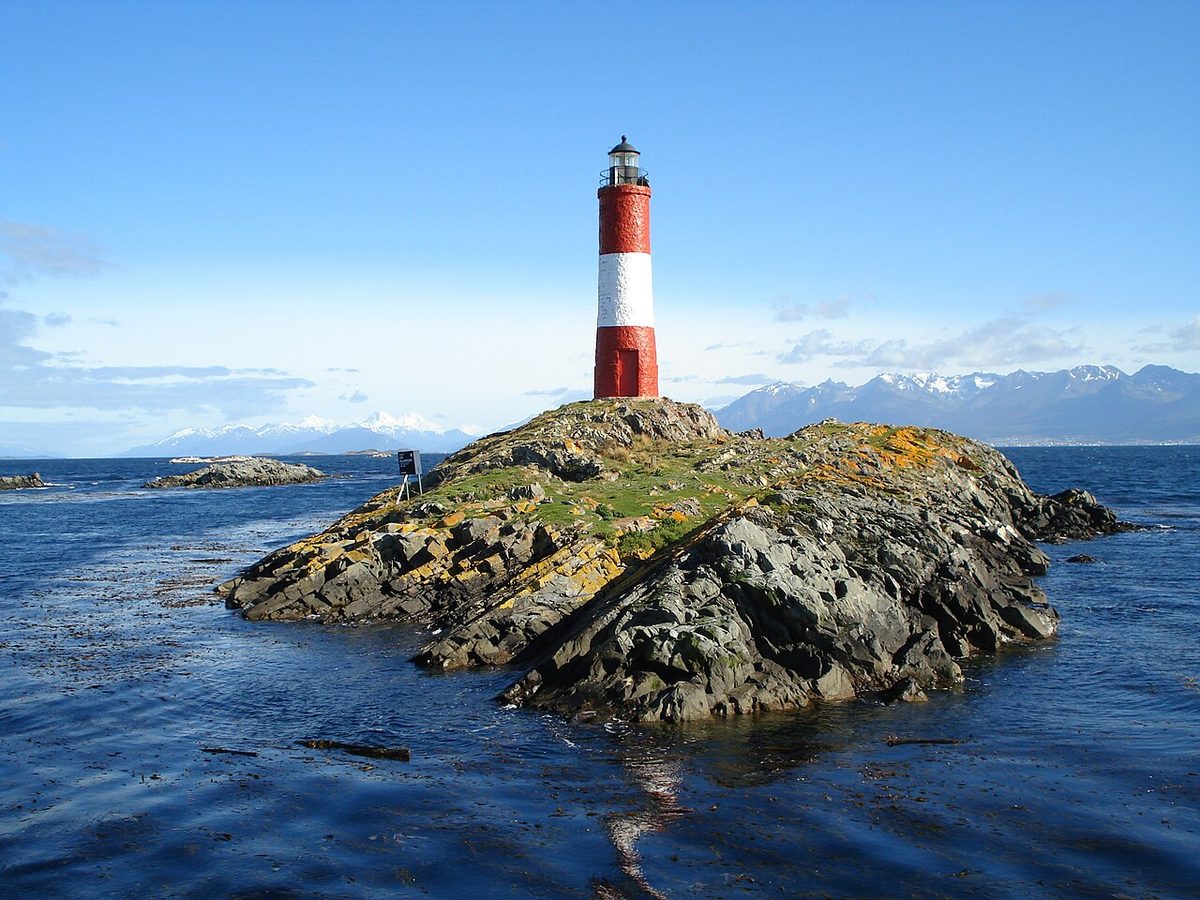
0 — 2 km Fig. 1 · Les Eclaireurs lighthouse on its rocky islet in the Beagle Channel off Ushuaia · Photo: Ricardo Martins / CC BY 2.0 via Wikimedia Commons
Working out where to stay in Ushuaia comes down to one blunt question: do you need to walk somewhere at a fixed time? If a ship is leaving the pier, a bus is leaving for Punta Arenas or a tour boat is leaving the waterfront, you want a bed in the compact downtown strip between the Beagle Channel and the main shopping street. If the point of the trip is the view, the forest, the snow or a quiet estancia, you can go further out, and you pay for it in taxis, transfers and a rental car rather than in room rate alone.
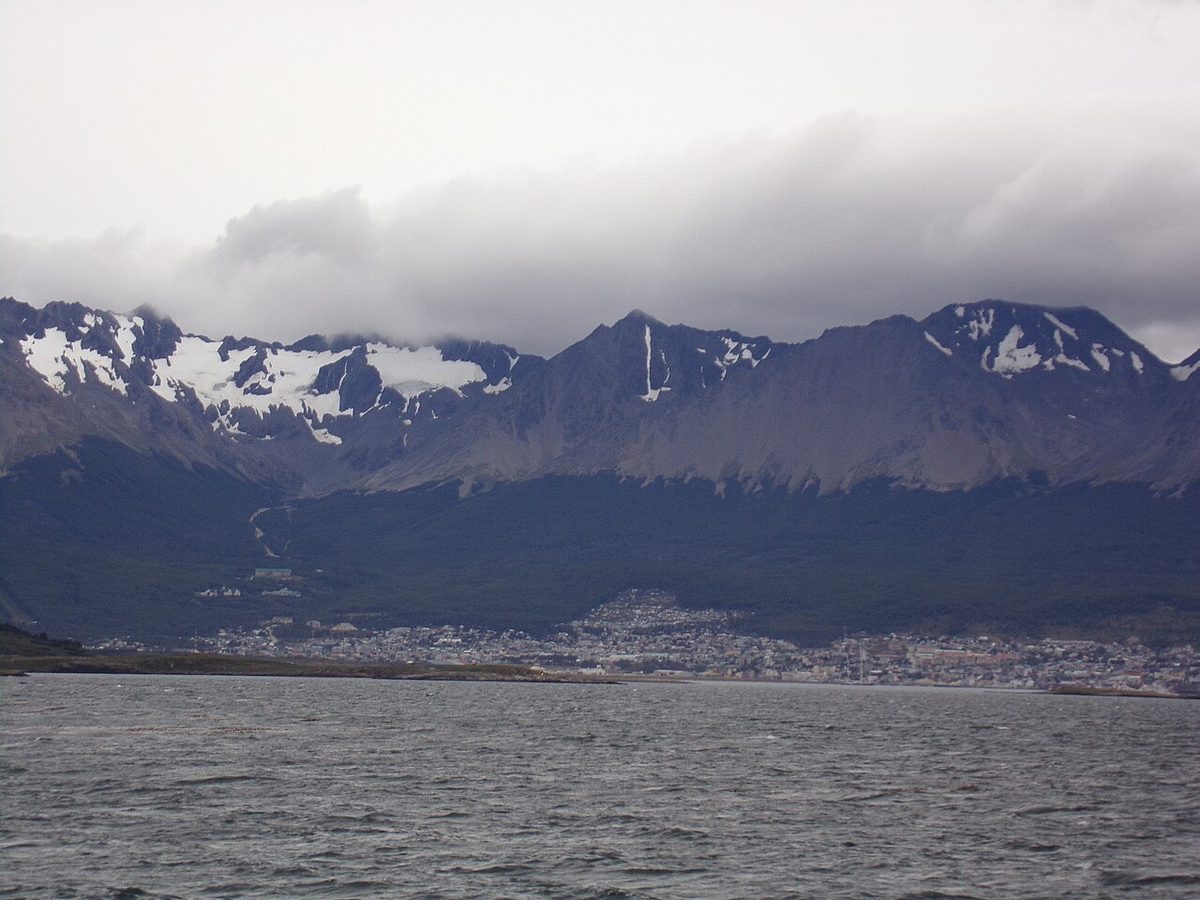
Ushuaia is a small city wedged between a bay and a wall of mountains, and that geography shapes everything. The waterfront is flat, the streets behind it climb hard, the road up to the Martial Glacier keeps climbing, the airport sits on its own spit of land in the bay, and the two roads out of town lead to very different places: Ruta 3 north-east into the ski valleys, and Ruta J east along the channel to Estancia Harberton. Pick the area that matches your trip and the rest is detail.
Distances, seasons and property details below were checked in October 2026 against the properties’ own sites, the national ports agency and Ushuaia’s municipal tourism office. For how Ushuaia compares with the other bases in the region, start with where to stay in Patagonia, and for the destination overview, the Ushuaia and Tierra del Fuego guide.
Where to stay in Ushuaia: the short answer
Sleep downtown, close to the waterfront avenue (Maipú) and San Martín, the main shopping street a block up, if you are boarding an Antarctic ship, catching an early bus, booking Beagle Channel boat trips or travelling without a car. Head up the Martial road toward the glacier, or out to a channel-side hotel with its own shuttle, if you want forest, views and quiet and don’t mind a ride to dinner. Look at the residential west side of the bay if you’re self-driving to Tierra del Fuego National Park and want space. Go out along Ruta J to the cottages at Estancia Harberton for a night or two of genuine remoteness in the summer season, and stay at the foot of Cerro Castor only if waking up at the lifts matters more than restaurants.
One more rule sits on top of all of that. In the cruise season, the night before your ship sails is the hardest night in town to find a good room, so book it when you book the voyage.
How Ushuaia is laid out, and why it matters for your bed
Picture a ramp. At the bottom is the Beagle Channel and the waterfront avenue, Maipú, where the port, the cruise pier and the boat-tour desks are. One block up is San Martín, the shopping and restaurant street. From there the grid climbs steeply toward the mountains, block after block, and the higher you go the better the view and the harder the walk home. Behind the town, Luis Fernando Martial street winds up the slope toward the glacier and the Cerro Martial area. To the west the bay curls around toward the airport spit and the residential districts on the far shore. Beyond town, Ruta 3 runs out through the valleys toward Cerro Castor, and Ruta J branches east along the channel.
Two things make that layout matter more here than in most Patagonian towns. The first is the weather. Servicio Meteorológico Nacional averages for 1991-2020 at the airport put the July mean daily high at 4.6°C and the mean low at 0.2°C, against 13.6°C and 5.4°C in January. A ten-minute uphill walk on a clear January evening is pleasant. The same walk on an icy July night, in the dark, with shopping bags, is something people remember for the wrong reasons.
The second is daylight. Ushuaia swings from more than 17 hours of daylight in summer to just over 7 hours in winter. In December you can walk back up the hill at 10pm in good light. In June and July most of your evening is dark, which makes a short, flat walk to dinner worth real money.
Downtown and the waterfront: the default base
If you only take one thing from this page, take this: for most visitors, especially first-timers and anyone without a car, downtown is the answer. Everything a short stay needs is within walking distance. The pier is on Maipú. The boat trips into the channel leave from the waterfront, so a Beagle Channel cruise is a stroll from your door. The restaurants, outdoor shops, pharmacies and tour desks are on and around San Martín. Even the Tierra del Fuego National Park office is on San Martín, at number 1395, if you want to ask rangers about trails before heading out.
Hotel Albatros is the landmark worth knowing. Its own site describes it as facing the Beagle Channel, right in the centre, and Oceanwide Expeditions uses it as a reference point for the pier: the pier entrance is opposite Lasserre Street, the government building and Hotel Albatros. If you want to understand what “walking distance to the ship” means in Ushuaia, that is it. Albatros also publishes the two policies that matter most to anyone sailing the next day or flying out after a voyage: check-in is from 14:00 and check-out is at 10:00, it will store luggage before check-in and after check-out, and early check-in or late check-out is either subject to availability or guaranteed if you pay for it.
Use that as a checklist for any downtown hotel, whatever you book:
Will they hold bags before check-in and after check-out, and until what time?
Can early check-in or late check-out be guaranteed for a fee, rather than “subject to availability”?
Is the room on the waterfront side or the street side, and how high up?
Will someone be on the desk if your flight lands late at night?
Downtown is also where the budget beds cluster. Hostels, small hotels and licensed apartments sit within a few blocks of the waterfront, which is why backpackers rarely need to look anywhere else. An apartment with a kitchen downtown can be the best-value way to do three or four nights, particularly in winter when you’ll want to cook in rather than walk out.
The downsides are the obvious ones. On cruise-turnaround days the centre fills with passengers, taxis and tour groups. Rates climb on the busiest cruise nights. And a room with a channel view on the waterfront is a different product from a room facing the street a block back, so read the room description rather than the hotel name.
Anyone sleeping in Ushuaia the night before an Antarctic voyage.
First-time visitors doing the classic two to four days of boats, the national park and the best things to do in Ushuaia.
Travellers without a car, and anyone in town in winter who wants a flat walk to dinner.
Bus travellers. Bus-Sur’s connection toward Punta Arenas is listed at 08:00 from Ushuaia on Tuesdays, Thursdays and Saturdays (check the current timetable), and an 08:00 departure in the dark is a strong argument for sleeping close to wherever the bus company tells you to board. Confirm the departure point with Bus-Sur when you book, and see Punta Arenas to Puerto Natales for the onward leg.
The hillside above the centre: views for legwork
Climb a few blocks back from San Martín and the town changes character. It becomes residential, with houses, small guesthouses, B&Bs, hosterías and a lot of licensed holiday apartments, many of them with windows facing straight down to the channel. Prices tend to drop as the gradient rises, and the views often improve, which is the whole bargain.
What listings rarely tell you is how steep the walk is. A place described as “five blocks from the centre” can be five gentle blocks along the slope or five lung-busting blocks straight up it. Before you book, open a map, find the property, and count how many blocks it sits above San Martín rather than across from it. In summer, a few blocks up is fine for most people and the view is a genuine reward. In winter, ice on steep pavements is a real hazard, and the short days mean you’ll make most of those climbs in the dark.
The hillside works well for:
Couples and families staying three or more nights who want a kitchen and a view and will cook some evenings.
Self-drivers, as long as the property has parking you can actually get a car into on a slope.
Summer visitors on a budget who don’t mind the climb.
It works badly for anyone with heavy luggage and no car, anyone with mobility problems, and anyone sailing the next morning. On the day your ship leaves, you want the walk to the pier to be the easiest part of the day, not a downhill haul with two suitcases.
A practical tip: if you love a hillside apartment but are nervous about the night before a voyage, split the stay. Spend the first nights up the hill and move down to a waterfront hotel for the last one.
The Martial road: forest, glacier trails and a ride to dinner
Behind the town, Luis Fernando Martial street winds up the mountain toward the Martial Glacier. Ushuaia’s tourism office puts the glacier just 7 kilometres from the centre, and the road passes through the higher residential edge of town into forest before it reaches the Cerro Martial area, which the municipality lists as the Parque del Fin del Mundo. The municipal listing gives its hours as every day from 9am to 7.30pm and notes restaurants open all year.
The trails are the attraction. The municipal page lists the Circuito del Bosque at 30 minutes, the Mirador del Glaciar at 75 minutes, the Mirador de las Lagunas and the Circuito de las Nubes at 150 minutes each, and the 240-minute Circuito de los Vientos, which it marks as closed. The Francisco Jerman refuge sits on the Club Andino Ushuaia track. If you stay on this road, those walks start close to your door rather than a taxi ride away, which is the strongest argument for being up here.
The hotels along the Martial road tend to be a different style from downtown: more resort than city hotel, with forest settings and long views over the town and the channel. Hotel Las Hayas is one of them, and its own site gives the distances that matter: about 5 km to the port, about 10 km to the national park and about 30 km to Cerro Castor. It also runs the Las Hayas Ski Lounge at the base of Cerro Castor. That is a lounge for skiers, not rooms on the mountain, but it is a useful perk if you’re planning a ski week from a Martial road base.
The catch is simple: you can’t walk to dinner. Every trip into town is a taxi, a remis (a pre-booked car), a hotel shuttle or your own car. Before you book, ask the hotel three things:
Does it run a shuttle into the centre, how often, and until what time at night?
Can the front desk book taxis or remises reliably on a busy evening?
Is there a restaurant on site that is open every night of your stay?
If the answers are good, the Martial road is a lovely base for a slower stay, a recovery stay after an Antarctic voyage, or a winter week. If the answers are vague, budget for a lot of short rides.
Malvinas Argentinas International Airport sits on its own spit of land in the bay, between Ushuaia’s bay and Golondrina bay, about 4-5 km from the centre (the municipal tourism office says 5 km; other sources say 4). That short distance is the key fact. The tourism office also states plainly that there is no public transport from the airport into the city, so you arrive by taxi, remise or a booked transfer, whichever part of town you’re staying in.
Put those two facts together and staying “near the airport” makes much less sense than it does in a big city. A downtown hotel is already only a short ride from the terminal. What listings call “near the airport” is usually the residential west side of the bay, along the shore and the hills facing back toward town. That area has its own appeal, but saving minutes on the airport run is not really it.
The real reasons to stay on the west side are space, quiet, views back across the bay and a head start on the road out to Tierra del Fuego National Park. Cabins and larger apartments with parking are common here, which suits families and self-drivers. If you’re spending most of your days in the park, Tierra del Fuego National Park has the detail on trails and entry; the daily pass for foreign adults is ARS 40,000 under the national parks tariff in force since 1 June 2026, with 50% off a second day within 72 hours when you buy online.
Hotel Los Cauquenes is the example to know if you want the channel-side resort version without needing a car. The hotel’s own site places it 7 km from the city, on a Beagle Channel beach, with 48 rooms and suites, and it offers free transfers to both the city and the airport. Those transfers change the maths: a resort out of town with free rides is a very different proposition from one where you pay for a taxi every time you want dinner downtown.
Who the airport side suits:
Self-drivers focused on the national park.
Families who want cabins, a kitchen and room to spread out.
Travellers who value a quiet shore and views over walkability.
Who it doesn’t suit: anyone sailing to Antarctica the next morning, anyone without a car who wants to eat out in town every night (unless the hotel runs transfers), and anyone choosing it purely for a flight time. For flight options in and out of the region, see Patagonia’s airports.
East along the Beagle Channel: Estancia Harberton and Ruta J
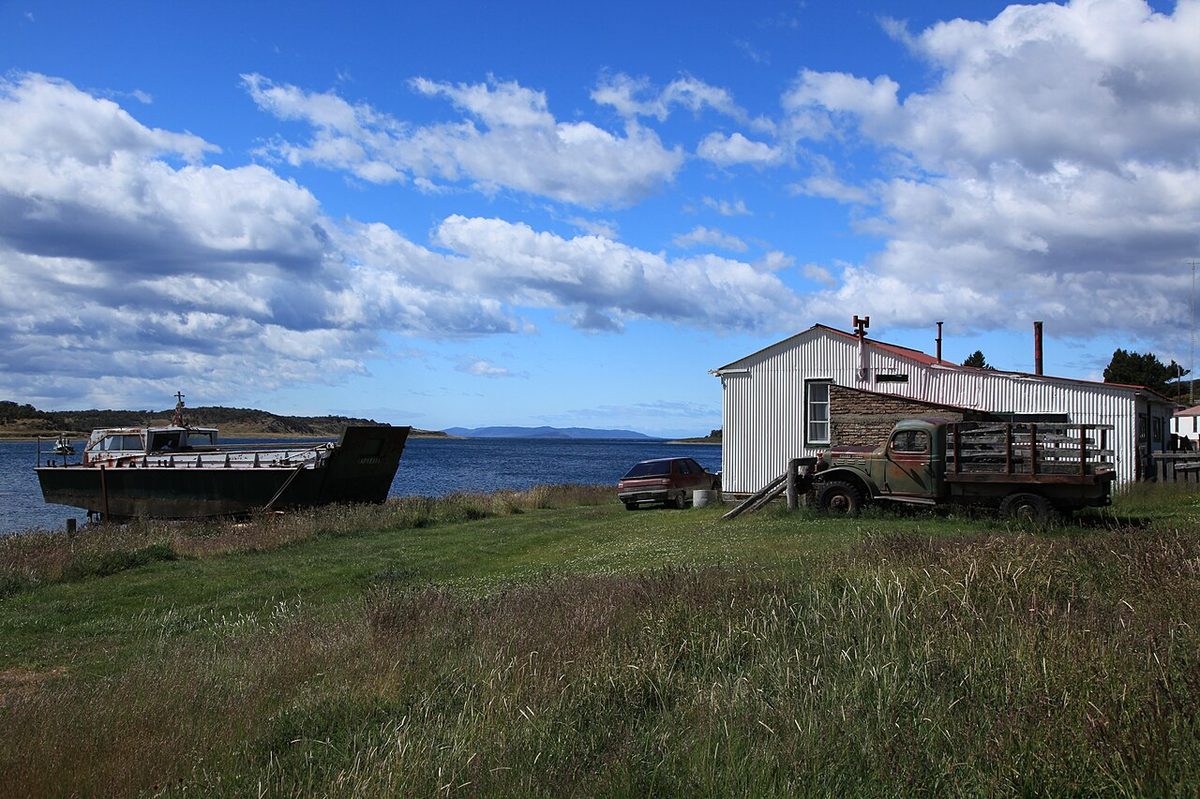
This is where Ushuaia stops being a city break. Ruta J runs east along the Beagle Channel through forest and open coast, and the places you can actually sleep out there are very few. The one with real, bookable lodging is Estancia Harberton.
The estancia’s own site places it 90 km from Ushuaia, at Route J km 43. Its site lists public opening from 11 October to March, from 12:00 to 19:00, closed on Tuesdays and on 25 December and 1 January; confirm the dates for the current season with the estancia. The site also warns that the terrain makes it unsuitable for visitors with reduced mobility. Those are the day-visit rules, and they’re worth knowing even if you stay overnight, because they shape what’s happening around you during the day.
The lodging is genuinely small-scale: four cottages that can be combined, each with its own character.
Cottage
What the estancia describes
Uribe’s
Private rooms with shared bathroom and kitchen
Nail’s (the former shepherd’s house)
Private rooms for three, private bathroom, shared kitchenette
Minnie May’s
Private house for four, private bathroom and kitchen, wood stove
Yekadahby’s
Private house for four, private bathroom and kitchen, wood stove
Swipe to see all columns
Table 2
On top of the cottages, Harberton offers four programmes: bed and breakfast, half pension, full pension and all-inclusive. The all-inclusive programme adds access to the Isla Martillo (Yecapasela) penguin rookery with Piratour, a twilight walk to a beaver dam and the use of mountain bikes. For anyone who came to Tierra del Fuego for wildlife, that combination is a strong reason to sleep out here rather than do Harberton as a long day trip. Read more about the birds themselves in penguins in Patagonia, and about the wider style of stay in Patagonian estancias.
How to book: by email, at [email protected]. Ask the estancia directly for 2026/27 cottage availability, rates and which programmes are running on your dates. The public season is listed as October to March, so if you’re hoping to stay at any other time of year, ask them about that month specifically rather than assuming.
Practicalities for a Harberton stay:
You need transport. A rental car gives you the most freedom, and renting a car in Patagonia covers what to check before you drive gravel roads. Otherwise, ask the estancia how guests usually arrive.
Shop in Ushuaia before you leave. With a kitchen in some cottages and fixed meal times in the programmes, it pays to know what you’re bringing.
Plan around Tuesdays. Ask how the weekly closure affects overnight guests, meals and tours.
Puerto Almanza, the small fishing village further along the channel, is a different kind of stop. The provincial tourism site places it 75 km from Ushuaia via Ruta 3 and then Ruta J, with Puerto Williams on Navarino Island directly opposite across the channel. Treat Almanza as a lunch stop on a Ruta J day, built around the seafood (see Puerto Almanza and its king crab), and sleep either at Harberton or back in Ushuaia. If one of the village’s restaurants offers rooms, confirm them directly before you plan a night there.
Staying for skiing: Cerro Castor and the Ruta 3 valley
Plenty of people arrive expecting an Alpine-style ski village, with hotels clustered around the lifts. Ushuaia doesn’t really work like that. Cerro Castor, the ski centre out on Ruta 3, is 27 km from Ushuaia at Ruta 3 km 26, according to the municipal tourism listing, which describes it as a ski centre for alpine skiing, snowboarding and cross-country, with equipment rental, classes and childcare. In practice, most skiers sleep in town and travel out each morning.
That leaves three sensible ski bases:
Downtown gives you restaurants, après-ski on foot and the widest choice of rooms, at the cost of the longest daily drive or shuttle ride. It is the best choice for mixed groups where not everyone skis every day.
The Martial road puts you on the mountain side of town, among forest and snow, with spa-style hotels that suit a winter week. Las Hayas, for one, puts Cerro Castor about 30 km from its door and runs its ski lounge at the Castor base, so you have somewhere to change and warm up at the mountain.
The base of Cerro Castor is the option for anyone who wants to wake up at the lifts. Castor Ski Lodge is the cabin lodging to look at there. For which months it takes guests, cabin sizes, prices and exactly how close the cabins sit to the lifts, check castorskilodge.com or Cerro Castor’s own site before you plan around it.
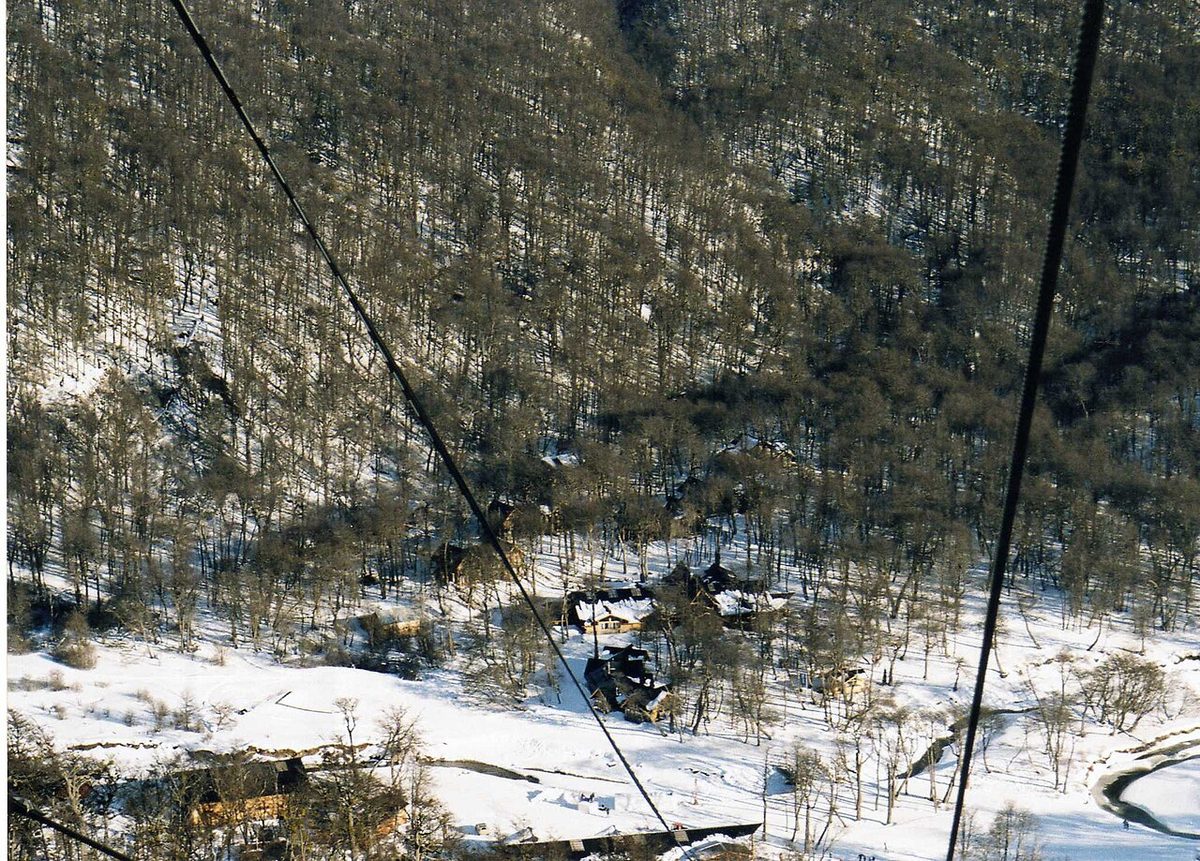
The Ruta 3 valley between town and Castor holds a string of winter recreation centres, the places people go for dog sledding, snowshoeing, cross-country skiing, snowmobiles and long lamb lunches. The municipal valleys page describes them as stops for snow activities and lunch. Treat them as day trips. If you’re hoping to sleep at one of them, check with each centre directly before assuming they have beds. The Ushuaia in winter guide covers what the valley centres and Cerro Castor offer as activities. The same road also leads to the trailhead for the classic Laguna Esmeralda hike.
Two cautions for ski-week planning. First, the season depends on snow, and Cerro Castor sets its opening and closing dates each year, so check the resort’s own site for the current season before you lock in a week, and make sure your booking can flex. Second, driving Ruta 3 in winter means snow and ice. If you’re not used to it, a downtown or Martial road base with organised transport to the mountain is less stressful than a self-drive commute. For the regional picture, see Patagonia in winter.
Where to stay in Ushuaia before an Antarctic cruise
This is the most important booking decision on this page, and it’s the simplest. Stay downtown, within walking distance of the pier on Maipú, and arrive at least a day early.
Oceanwide Expeditions spells out the logistics. There is only one pier in Ushuaia, in the main port on Maipú Street, with its entrance opposite Lasserre Street, the government building and Hotel Albatros. You must show your vessel boarding pass to be allowed onto the pier. The operator recommends arriving in Ushuaia a day before your voyage in case of flight delays or lost luggage, because the vessel will not be able to wait for missing passengers or luggage.
Now look at the numbers behind the booking pressure. Argentina’s national ports and navigation agency, ANPYN, said the 2025/26 season closed with 495 calls at the port of Ushuaia. In its release of 14 September 2026, it reported that the 2026/27 season had begun with the arrival of the Ventus Australis, and that more than 590 calls were confirmed, 100 more than the previous season. Those ships bring passengers who want a bed in the same few downtown blocks on the same few nights, which is why the night before departure fills first.
How to handle it:
Check your voyage package first. Some expedition operators include a pre-voyage hotel night, transfers or both. Find out before you book your own room, so you don’t pay twice.
Book the night before sailing when you book the voyage. If it isn’t included, reserve it straight away, ideally with free cancellation.
Choose a hotel that will hold luggage. Your operator will give the boarding time, and a hotel that stores bags after a 10:00 check-out lets you spend the day in town rather than guarding suitcases.
Build in a buffer. One night before is the minimum the operator recommends. Two nights before gives you a cushion against a cancelled flight from Buenos Aires.
Think about the return. Your operator will tell you when the ship docks back in Ushuaia. If your flight home is the same day, check the gap carefully. If it’s tight, or you simply want a hot bath and a slow day, book a night after the voyage too, downtown for convenience or out on the Martial road or the channel for a recovery stay.
When to book: summer ships, winter snow and the quiet months between
Ushuaia has two high seasons pulling on the same beds for different reasons, and the quieter months in between.
Season
What fills beds
Conditions (SMN 1991-2020 averages)
Booking advice
Cruise season (spring and summer; ANPYN’s 2026/27 season opened in September)
Antarctic voyages, cruise turnarounds, Beagle Channel trips, Harberton’s public season
January mean high 13.6°C, low 5.4°C; more than 17 hours of daylight
Book the night before sailing when you book the voyage; book downtown early
Winter ski season (snow-dependent)
Cerro Castor ski weeks, valley snow activities
July mean high 4.6°C, low 0.2°C; just over 7 hours of daylight
Book ski weeks early; choose a base with easy transport to Castor
Shoulder months (autumn and spring)
Fewer ships, no skiing
Cool and changeable
More choice and better rates; check what’s open
Swipe to see all columns
Table 3
A few patterns sit underneath that table.
Summer is the cruise season, and ANPYN’s 2026/27 count makes it busier than the last one on paper. The pressure is uneven: it piles up on the nights before ships sail. If your dates are flexible, look at the nights either side of your ideal date, because the difference in availability can be large.
Winter is the ski season. It brings its own crowd, particularly on the Martial road and around downtown, and it depends on the snow. Book a ski week early, but keep it flexible.
The shoulder months are quieter, and the trade-off is that some places close or scale down outside their main season. Harberton’s public season is October to March, for example. The municipal tourism office publishes an updated list of open accommodation on its lodging page, which is the quickest way to see what’s actually operating in your month. If you want the regional view on lead times, booking Patagonia in advance covers which beds and services sell out first.
Hotel, hostel, cabin or apartment?
Ushuaia’s municipal tourism office says the city has more than 100 official accommodation sites, from five-star hotels to cabins in the woods to apart-hotels and places with shared rooms, with the information supplied by the Instituto Fueguino de Turismo, the provincial tourism body. Here is how the main types fit the areas above.
Hotels cover every area, from the waterfront to the Martial road and the channel shore. Pick by location first and facilities second, because in Ushuaia the location decides how much of your day you spend in taxis.
Hostels cluster downtown. That suits backpackers perfectly: walk to the boats, the bus and the supermarkets, and cook in the shared kitchen.
Hosterías and B&Bs are spread through the hillside grid and the residential areas. They’re often family-run, which tends to mean good local advice and breakfast with a view, and sometimes a steep walk.
Cabins are most common on the edges of town, up the Martial road and on the west side, and they suit families and self-drivers with a car.
Licensed apartments are everywhere, downtown included, and are the best-value way to do a longer stay with a kitchen. Here is the step people skip: Ushuaia publishes a list of authorised accommodation on its tourism site, linked from the lodging page. Before you pay for an apartment or house, check that it appears on the official list. A licensed rental is a legitimate, self-catering option, and checking takes a couple of minutes.
For the wider comparison across the region, see camping vs hostels vs hotels in Patagonia. If you’re planning hut-to-hut trekking elsewhere on the trip, Patagonia’s refugios explains how mountain huts work, and if a tent is part of the plan, camping in Patagonia covers the rules, including the camping areas in Tierra del Fuego National Park.
How many nights, and where, by trip type
Trip
Where to base
Nights
Why
Antarctic voyage, outbound
Downtown, walking distance of the pier on Maipú
1-2 before sailing
One pier, the ship won’t wait, flight-delay buffer
Antarctic voyage, return
Downtown, Martial road or a channel-side hotel
0-1 after
Tight-flight insurance or a recovery stay
First visit, sightseeing
Downtown
3
Boats, the park and the town on foot
Self-drive, national park focus
West side of the bay, or the hillside with parking
3-4
Space, parking, a quick start for the park
Winter ski week
Downtown, Martial road, or the base of Cerro Castor
5-7
Castor is 27 km out along Ruta 3
Estancia escape
Harberton cottage, in its public season
1-2
Penguins, beaver dams and quiet; ask the estancia
Backpacker
Downtown hostel
2-3
Everything on foot, shared kitchen
Swipe to see all columns
Table 4
The numbers are a starting point. If you’re combining Ushuaia with El Calafate, El Chaltén or Torres del Paine, the decision is less about Ushuaia itself than about where you lose a travel day; the best towns in Patagonia helps you choose which bases earn more nights.
Common mistakes
Booking a view hotel up the hill for the night before an Antarctic voyage. It looks romantic in the listing. On the day, it means taxis, luggage and timing worries. Sleep downtown that night.
Assuming an airport hotel will help. The airport is 4-5 km from the centre and there’s no public transport, so you need a taxi or transfer wherever you sleep. Choose the area for the trip, not the flight.
Underestimating the hill. Count the blocks above San Martín before booking a hillside apartment, especially in winter.
Picking the Martial road without a transport plan. Ask about shuttles and taxis before you book, or plan on driving.
Treating Harberton as a casual overnight. It’s 90 km out, seasonal, closed to the public on Tuesdays and booked by email. Plan it properly or do it as a day trip.
Expecting a ski village. Most skiers sleep in town. If you want to be at the base of Cerro Castor, check the lodge’s own site for its season early.
Booking an unlisted apartment. Check it against the municipal list of authorised accommodation first.
Leaving the night before the ship to the last minute. With more than 590 cruise calls confirmed for 2026/27, according to ANPYN, those nights fill first.
Frequently asked questions
What is the best area to stay in Ushuaia?
For most visitors, downtown, close to the waterfront avenue (Maipú) and San Martín. You can walk to the cruise pier, the Beagle Channel boats, restaurants and shops. Choose the Martial road for forest and trails, the west side for space and the national park if you have a car, Estancia Harberton for a remote summer stay, and the base of Cerro Castor only for a ski week.
Where should I stay in Ushuaia before an Antarctica cruise?
Downtown, within walking distance of the single cruise pier on Maipú Street, whose entrance is opposite Lasserre Street, the government building and Hotel Albatros. Oceanwide Expeditions recommends arriving a day before your voyage, because the ship cannot wait for missing passengers or luggage. Check whether your voyage includes a hotel night before booking your own, and choose a hotel that will hold luggage after check-out.
How far is Ushuaia airport from the city, and is there a bus?
The airport is about 4-5 km from the centre; the municipal tourism office gives 5 km. It says there is no public transport from the airport to the city, so you’ll need a taxi, a remise or a booked transfer. Some out-of-town hotels, such as Los Cauquenes, offer their own transfers.
Can you stay at Cerro Castor?
There is cabin lodging at the base: Castor Ski Lodge, at the foot of the mountain. Check castorskilodge.com or Cerro Castor’s own site for the months it takes guests, cabin sizes and rates. Most skiers stay in Ushuaia, 27 km away, or on the Martial road.
Can you stay overnight at Estancia Harberton?
Yes. The estancia has four cottages, from private rooms with shared facilities to whole houses for four, and four programmes from bed and breakfast to all-inclusive. It’s 90 km from Ushuaia at Route J km 43, and its site lists public opening from 11 October to March, closed on Tuesdays (confirm the current season with the estancia). Email [email protected] for availability and rates on your dates.
Is it worth staying on the Martial road?
It is if you want forest, quiet, views and the glacier trails close by, and you’re happy to take a taxi, remise or shuttle into town for meals. It isn’t the right choice for the night before an Antarctic voyage or for travellers who want to walk to dinner.
How do I know a holiday rental in Ushuaia is licensed?
Ushuaia’s tourism office publishes a list of authorised accommodation, supplied by the provincial tourism institute, on its lodging page. Check that the apartment or house you’re about to book is on it before you pay.
Final thoughts
Ushuaia rewards a little geography. Downtown is the safe default and the sensible choice before an Antarctic sailing. The hillside trades legwork for views and value, the Martial road trades walkability for forest and trails, the west side suits drivers and families, Harberton is a small, seasonal treat for those who plan ahead, and the base of Cerro Castor is for people who came to ski and nothing else.