Patagonia Estancias: Ranch Stays, Day Visits and Who They Suit
Patagonia estancias compared: day visits vs all-inclusive ranch stays, published 2026-27 prices, which ones open in winter, and how to reach each by region.
By Patagonia Tourism Guide · First published 16 Oct 2026
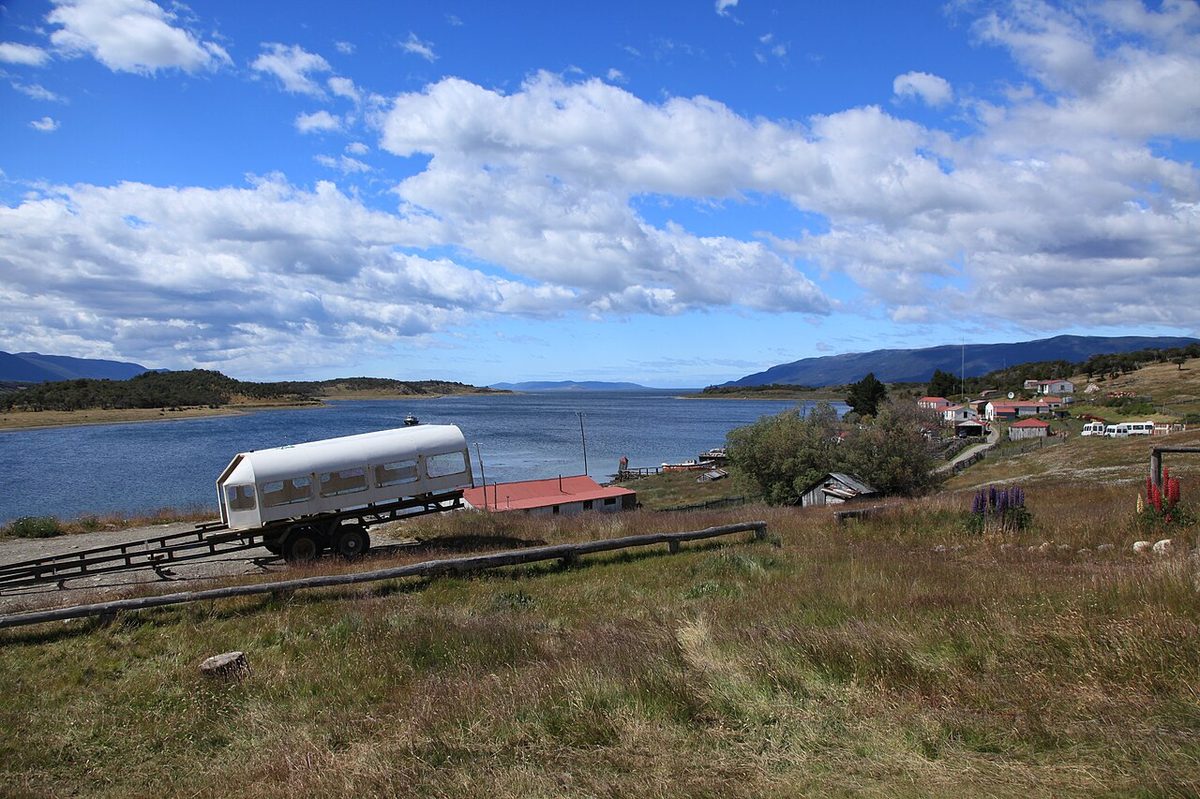
0 — 2 km Fig. 1 · The white-walled farmhouse and outbuildings of Estancia Harberton on the Beagle Channel shore in Tierra del Fuego, founded in 1886 · Photo: Liam Quinn from Canada / CC BY-SA 2.0 via Wikimedia Commons
Patagonia estancias are the old sheep ranches of the southern steppe, and the word now covers two quite different things. One is a day out: tea and fried dough on arrival, a sheepdog working a flock, a shearing demonstration, a long lamb lunch and perhaps an hour on a horse. The other is an all-inclusive ranch stay that, at Cristina and Cerro Guido, the two whose 2026-27 rate sheets are public, starts at USD 860 per person per night with a three-night minimum, or USD 1,680 per person for a single night. Most travellers should do the first. Some should save hard for the second.
That split is what most planning pages blur, and it matters more than which ranch has the prettiest view. Book a day visit expecting a quiet night under the stars and you’ll be back in town by dinner. Book a stay expecting a working farm and you may find the sheep left decades ago. This page sorts the estancias open for the 2026-27 season region by region, from El Calafate and Torres del Paine to Ushuaia and Península Valdés, says what each version costs where the price is public, and is blunt about who should skip them.
Seasons, rates and access details here were checked in October 2026 against the estancias’ own sites and official tourism and park pages. Estancias sit at the far end of the lodging spectrum covered in where to stay in Patagonia; if you’re still choosing bases, the best towns in Patagonia will help you decide which ranches are even within reach.
What is a Patagonian estancia?
An estancia is a large rural ranch, and in southern Patagonia almost every one you can visit was founded for sheep and wool. The shearing shed, the pens, the long low workers’ quarters and the manager’s house with its imported timber are all there because, for a few decades, wool from this windswept grassland fed the mills of Britain.
Chile’s national library tells the Magallanes side of the story clearly. According to Memoria Chilena, sheep ranching in the region began in 1876, when Governor Diego Dublé Almeyda had the first flock brought over from the Falkland Islands. Sheep estancias spread through the 1880s on the back of British textile demand. In 1884 the Chilean state held its first land auction, leasing lots of 30,000 hectares for 20 years. By 1910 more than 80% of the territory’s land was in the hands of two large economic groups, and the Sociedad Explotadora de Tierra del Fuego acquired most of Última Esperanza, the district around Puerto Natales, in 1905 and 1906. Chile’s Consejo de Monumentos Nacionales describes sheep production, wool, tallow, meat and hides, as the region’s main economic resource for almost a century.
That is the history you’re standing in when a guide walks you through a shearing shed. When the wool economy loosened its grip, ranches were split up, sold or absorbed into national parks, and some of the families who stayed turned to visitors. Estancia Cristina, on Lago Argentino, gave up its cattle and switched its park permit to tourism in 1997, according to its own history. Hotel Las Torres in Torres del Paine opened on 12 December 1992, with 10 rooms, on Estancia Cerro Paine, which the Kusanovic family had bought in 1979; the family removed the cattle in 2013.
The upshot for a traveller is that “estancia” now means one of five things, and it helps to know which you’re booking.
Type
What you get
Examples in this guide
Working ranch that also hosts guests
Real livestock, shearing and herding demonstrations, riding on ranch land
Cerro Guido, Nibepo Aike, Lazo
Historic estancia run mainly for visitors
Heritage buildings, museum, guided activities, little or no farming today
Cristina, Harberton
Wildlife estancia on private coast
Penguins or marine mammals on ranch land, guided walks
A day at an estancia is the most sensible way for most people to experience one, and the format is remarkably consistent. Nibepo Aike’s Country Day is a good template: a reception with hot drinks and fried cakes or pound cake, a walk around the historic farmstead, a sheep milking, herding and shearing demonstration, a go at handling the reins, then lunch of barbecued lamb with salads, dessert and a drink. An optional ride comes on top. Cerro Guido’s Día de Estancia, near Torres del Paine, mixes a horse ride, a lamb asado and farm chores. La Península, across the fjord from Puerto Natales, puts a boat ride, a two-hour ride or guided trek and spit-roast lamb at noon into one day.
You get the culture, the lamb and a taste of the land. You don’t get the place to yourself, the evening light, or the routes that only overnight guests ride or walk.
An overnight stay changes the deal. The estancias that publish their terms sell full-board or all-inclusive programmes with guided excursions, transfers and often the national park fee rolled in. Evenings are quiet because the day visitors have gone. In exchange you accept minimum stays, fixed transfer schedules, set mealtimes and prices in luxury-lodge territory. Cristina suggests three nights; Cerro Guido requires three.
Here’s the comparison in one place.
Day visit
Overnight stay
Time
A morning or a full day; Cristina’s day runs about 10 hours
Usually 2-4 nights; Cerro Guido’s minimum is 3
Published 2026-27 prices
Cristina from USD 190 per person (riding from USD 400), VAT included, park fee extra
Cristina from USD 1,680 per person for 1 night; Cerro Guido from USD 860 per person per night (3-night minimum)
Usually included
Transfer from town (often optional), snack on arrival, lamb lunch, demonstrations
All meals, guided excursions, transfers, often park fees and some drinks
Usually extra
Park fees, riding upgrades
Premium drinks, laundry, tips, private excursions, sometimes Wi-Fi
Best for
Most travellers, non-hikers, families, anyone on a normal budget
A simple rule: do a day visit if you want the shearing shed, the sheepdogs, the lamb and an hour in the saddle. Stay overnight only if the estancia’s own land is the point of the trip, if you want a base that takes every logistical decision off your hands, or if it’s a once-in-a-lifetime splurge. You never need to sleep at an estancia to visit one.
Patagonia estancias near El Calafate
El Calafate has the widest spread of estancia formats in Patagonia, from an evening show on the edge of town to a boat-access ranch inside Los Glaciares National Park. If you’re basing yourself here, read where to stay in El Calafate alongside this section.
Estancia Cristina
Cristina sits on the north side of Lago Argentino inside the national park, and you can only get there by boat. Departures leave from Puerto Punta Bandera, which the estancia places 47.5 km west of El Calafate on RN 11. It’s one of the most remote-feeling places you can reach in a day from a town with an airport.
The history is a good one. The estancia’s own account says the English Masters family founded it in 1914 and renamed it after their daughter Cristina, who died in 1924 aged 20. Because the land fell inside the park when Los Glaciares was created in 1937, the family held occupancy permits rather than title. In 1997 they gave up cattle and turned the permit over to tourism. Be clear about what that means today: Cristina is a tourism estancia with a heritage museum, not a working sheep ranch. If watching shearing is your priority, Nibepo Aike is the better day.
Cristina runs daily from 1 October to 30 April, Christmas and New Year included, according to its FAQ. Its 2026-27 day visits start at the following prices, per person in US dollars with VAT included:
Classic: from USD 190
Glaciar Upsala lookout: from USD 245
Trekking: from USD 295
Horseback riding: from USD 400
The Los Glaciares park fee is not included in day-visit prices; the APN’s general daily rate has been ARS 50,000 since 1 June 2026. A day visit takes about ten hours: six at the estancia and four of round-trip navigation, plus about an hour each way by road to the port. Most programmes run in rain; the estancia says only the Cañadón de los Fósiles trek is cancelled for weather. Riding is open from age six with a helmet, the fossil-canyon trek from twelve.
Overnight stays are where Cristina gets expensive. Lodge seasons run 15 October to 14 December 2026 and 1 March to 30 April 2027, with a higher-rate period from 15 December 2026 to 28 February 2027. Prices are per person, per programme, in US dollars, excluding VAT, for a double room:
Programme
Shoulder 2026-27
High 2026-27
1 night
USD 1,680
USD 1,770
2 nights
USD 2,520
USD 2,650
3 nights
USD 3,100
USD 3,255
Each extra night
USD 990
USD 1,040
Single room, 1 night
USD 1,995
USD 2,095
Swipe to see all columns
Table 3
The programme includes shared transfers from El Calafate hotels, the park fee, the navigation via Brazo Upsala and Canal Cristina, full board with wine or beer at meals, guided expeditions and the heritage museum tour. Premium drinks, laundry, tips, private expeditions and Wi-Fi are extra. The estancia has 20 rooms. Its FAQ is frank about connectivity: satellite Wi-Fi only, no mobile signal, and electricity from 07:00 to 23:00.
On VAT, Cristina’s rates page notes that Argentina’s 21% applies but that foreign non-residents paying in foreign currency or with a foreign card may be exempt on accommodation and breakfast under Decree 1043/2016. Ask how it applies to your booking before you pay.
A Cristina day and the Todo Glaciares boat tour both chase the Upsala side of the lake, so few people need both. Cristina gives you land, a ranch and a museum; the boat tour gives you more ice. The El Calafate itinerary shows how either fits around a Perito Moreno day.
Estancia Nibepo Aike
Nibepo Aike is the working-ranch choice from El Calafate. It sits on the south arm of Lago Argentino, 56 km from town on gravel, about an hour and a half’s drive according to its practical-information page. The estancia describes itself as the only estancia inside Los Glaciares National Park with livestock production, and its own FAQ says visiting the ranch doesn’t require the park entry fee charged at the Perito Moreno sector. Confirm that when you book, since park rules change.
Its history page traces the ranch to Santiago Peso, a Croatian settler who arrived in the early twentieth century, and says the same family runs it three generations later. The lodge pages talk of more than 110 years of history.
The Country Day runs from 15 September to 15 May, with daily morning departures: about five hours at the estancia plus roughly two and a half hours of transfer. It includes the reception with hot drinks and homemade cakes, the farmstead walk, sheep milking, herding and shearing demonstrations, a reins test, and a lamb barbecue with salads, dessert and a drink. Transfers from El Calafate are optional, and so is a horse ride of 45 minutes or three hours, open to over-10s only. For the price, ask the estancia through its bookings page.
If you’d rather stay, the lodge has 10 rooms and sells full-board programmes with riding, guided visits and rural-work demonstrations. Request a quote through the estancia’s bookings page for 2026-27 rates. Two practical points from its own site: check-in is 14:00 and check-out 10:00, and the included transfers run on a fixed schedule from hotels within El Calafate’s urban area, not from the airport. If you fly in and want to go straight to the ranch, you can’t.
Estancia 25 de Mayo
For anyone who wants the estancia atmosphere without a full day or a gravel drive, 25 de Mayo sits right at the edge of El Calafate. Kau Yatún, a hotel inside the estancia, gives its location as 600 m from the town centre. The estancia’s own site lists a “Tarde de campo” (afternoon in the country), the same with a dinner show, and a stand-alone dinner show, plus outdoor experiences under the Patagonia Profunda name, with bookings by WhatsApp.
Treat it as a dinner-and-show evening rather than a working-ranch visit. It suits a free evening after a glacier day, travellers with young children, and anyone short of time. Ask the estancia directly for its season and prices for your dates.
Estancias near Torres del Paine and Puerto Natales
On the Chilean side, estancias ring the park and line the fjords around Puerto Natales. The trade-off is the same as in Argentina: day trips from town, or expensive all-inclusive stays on the steppe. For bases in town, see where to stay in Puerto Natales; for lodges inside the park itself, where to stay in Torres del Paine.
Estancia Cerro Guido
Cerro Guido calls itself a historic, fully operational sheep ranch with a boutique hotel attached. Its 2026-27 fact sheet gives more than 100,000 hectares, 21 heated rooms in restored ranch houses and Wi-Fi in the rooms. It sits on the eastern side of Torres del Paine: 97 km and about 1 hour 20 minutes from Puerto Natales, 328 km and about four hours from Punta Arenas, and 40 minutes from the Laguna Amarga park entrance. Shared transfers run on fixed schedules from Punta Arenas, Puerto Natales, Cancha Carrera and Cerro Castillo.
It is also open all year. The fact sheet lists a special winter programme from May to August, which makes Cerro Guido the obvious estancia for Torres del Paine in winter.
All-inclusive rates for 2026-27 are per person per night in US dollars, excluding VAT, with a three-night minimum:
Season (2026-27)
Shared programme, double/triple
Private programme, double/triple
Low: 1 Sep-31 Oct 2026 and 1 Apr-31 Aug 2027
USD 860
USD 1,200
High: 1 Nov 2026-31 Mar 2027
USD 1,210
USD 1,690
Peak: 20 Dec 2026-10 Jan 2027
USD 1,390
USD 1,950
Swipe to see all columns
Table 4
Singles pay more (USD 1,090 a night in low season on the shared programme) and children have their own rate (USD 610 in low season). The shared programme covers a classic room, full board, an open bar of house wines and standard spirits, shared transfers, daily shared excursions with bilingual guides, the Torres del Paine entrance fee, and a USD 35 per person per night donation to the Cerro Guido Conservation Foundation. The Conservation Safari full day, fly fishing, premium drinks, laundry and tips cost extra. The estancia says its USD rates are VAT-exempt for non-resident foreign guests who pay in dollars and show their passport and tourist card at check-in.
The estancia experiences include riding, a traditional shearing and sheepdog demonstration and a tour of its early twentieth-century buildings, alongside e-bikes, hiking, archaeology and conservation outings. Children up to four stay free sharing a bed. Pets aren’t allowed.
Cerro Guido’s site also offers a Día de Estancia for day visitors: a horse ride, lamb asado and farm activities. Ask the estancia for the price.
Estancia La Península
La Península is Puerto Natales’ answer to an El Calafate country day, with a boat ride thrown in. Chile’s official tourism site describes the day: a short taxi or transfer of about 5 km from town to Puerto Bories, a 40-minute boat across the Última Esperanza fjord, then a two-hour ride or a guided trek, spit-roast lamb at noon, and an afternoon sheepdog demonstration with an explanation of shearing and what the wool was worth. It runs in spring and summer.
It’s an excellent non-hiking day for anyone staying in town, and a good weather-buffer day if the park forecast turns. Ask the operator for the price and what’s included when you book. The Puerto Natales travel guide has more ways to fill a day around it.
Estancia Lazo
Lazo is a family business that describes more than 40 years of cattle ranching and now hosts visitors. Its own site offers guided rides with local gauchos, asados and a cabin with views of the Paine massif. It suits riders who want a smaller, more personal operation than Cerro Guido. Write to [email protected] for dates and a quote.
More Magallanes estancias
Chile’s official tourism board lists a wider set of ranches that welcome visitors in Magallanes, including Estancia San Luis, Estancia Cerro Negro, Estancia Río Penitente and Estancia Lago Pinto, along with Leona Amarga, Pingo Salvaje, Baguales Glamping and Tierra de Ovejeros. Contact each directly for seasons and prices.
Río Penitente is the easiest to fit in. Chile Travel places it on Route 9, roughly halfway between Punta Arenas and Puerto Natales, founded in 1891, with its main house and shearing shed preserved over five generations. It offers fly fishing, riding, river walks, a quincho barbecue, a shearing demonstration and an inn with eight rooms. If you’re driving from Punta Arenas to Puerto Natales, it breaks up the road nicely.
San Gregorio: the ghost estancia on the road north
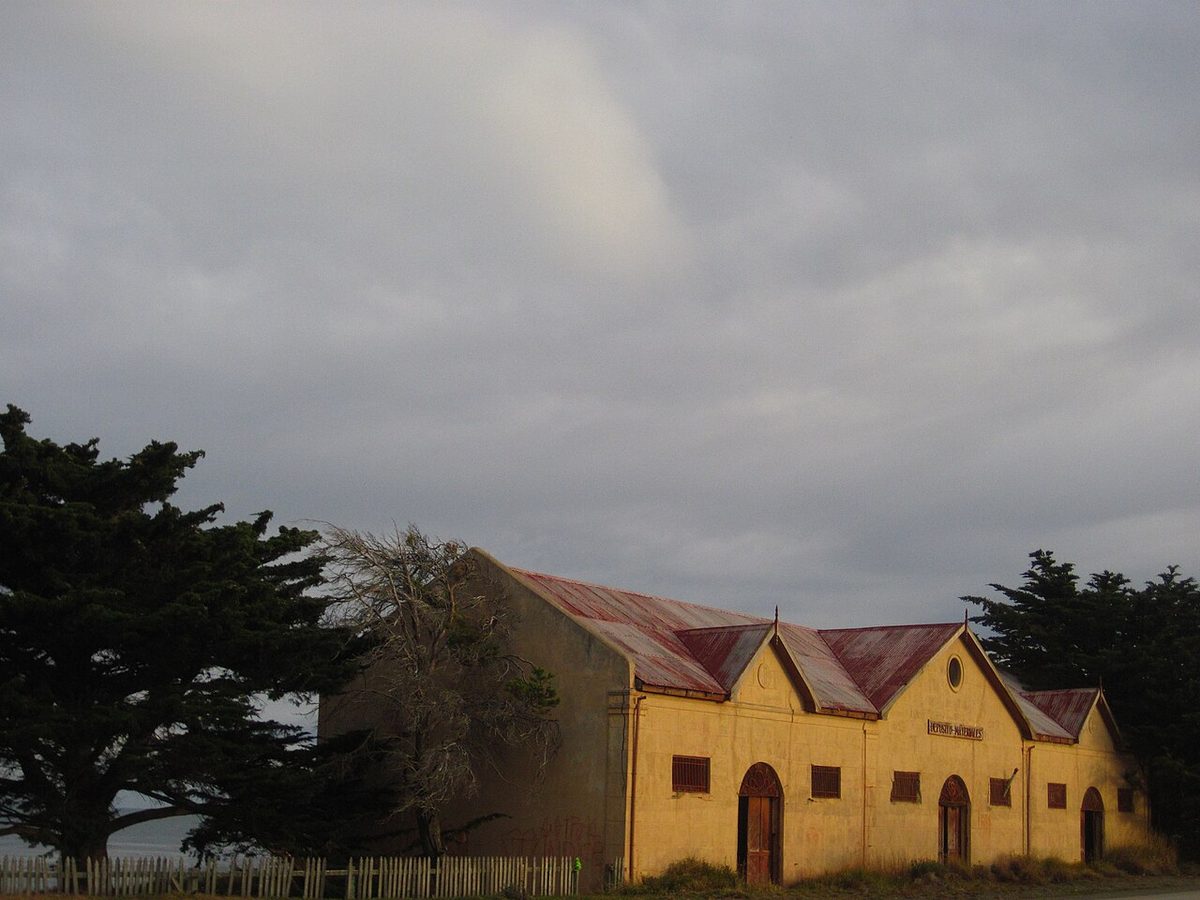
Not every estancia worth seeing is open. Estancia San Gregorio stands at kilometre 120 of the Ruta Internacional Monte Aymond, north of Punta Arenas, and Chile’s Consejo de Monumentos Nacionales lists it as a historic monument. Its registry sheet says José Menéndez founded it and that the pioneer Marius Andrieu built it from 1878. The same sheet describes a self-contained company town: shearing shed, sheep dip, smithy, warehouses, houses for the manager, foremen and workers, a chapel, an infirmary, a library, a theatre, its own pier and even a railway to ship the wool.
What survives today is weathered and fragile. There are no visiting hours, tickets or guides, so view the buildings from the roadside and don’t enter them. It’s a natural stop if you’re driving from Punta Arenas towards the Argentine border, and the most vivid picture you’ll get of how big the wool business once was.
Estancias in Tierra del Fuego
Estancia Harberton
Harberton is the estancia most visitors to Ushuaia hear about first, and with good reason. Its own site says Anglican missionary Thomas Bridges founded it in 1886 and that the fifth and sixth generations of his family run it today. The same site notes that it was declared a Monumento Histórico Nacional in 1999. It sits on Ruta J at kilometre 43, which the estancia puts at 90 km from Ushuaia.
The estancia opens to the public from 11 October to March, from 12:00 to 19:00, and closes on Tuesdays, 25 December and 1 January. Guided tours of the historic core leave at 13:00, 15:00 and 17:15, and tours of the Museo Acatushún, which covers the region’s marine birds and mammals, at 14:15, 16:30 and 18:45. The Casa de Té Manacatush tea house is free to enter and needs no booking.
For the 2026-27 pass price, check the estancia’s tariffs page (estanciaharberton.com/es/tarifas) or email [email protected] before you go. The figure still shown there, ARS 50,000 per person, was the 2025-26 pass and was valid only to 31 January 2026, so don’t budget from it.
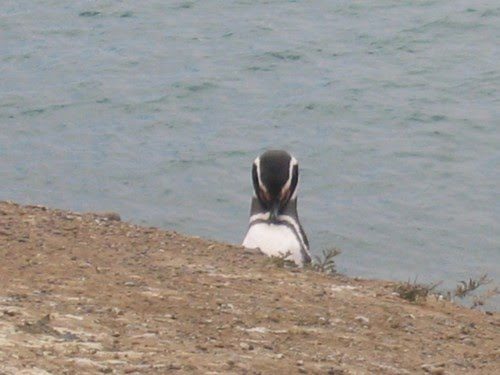
The penguin question comes up constantly. The walk among the colony on Isla Martillo is run by Piratour, not by the estancia, and Piratour sets its own prices and availability ([email protected]). If the penguins are your priority, book with Piratour first and build the estancia visit around it. Penguins in Patagonia compares Martillo with the other colonies.
Harberton also has lodging in four historic houses, with B&B, half-board, full-board and all-inclusive plans. Its lodging page lists extras for all-inclusive guests, including private guides, a night visit to an active beaver lodge, mountain bikes and access to the Isla Martillo penguin colony with Piratour. Ask the estancia for 2026-27 dates and rates.
One honest warning: the estancia’s own site says it is not suitable for people with reduced mobility because of the terrain.
Further north, near Río Grande, Estancia Viamonte’s own site tells how Thomas Bridges’ sons Lucas, Despard and Will founded it in 1902, stocking it with sheep driven from Harberton, and that later generations of the family still live there. Its site is about the family and the ranch’s history, so treat Viamonte as history rather than a booking.
Península Valdés: the penguin estancia
Estancia San Lorenzo
San Lorenzo is a working merino sheep estancia near Punta Norte, at the northern tip of Península Valdés, with a Magellanic penguin colony on its land. Its operator, Pingüinos Punta Norte, says the colony can be visited from mid-September to the end of March each year, with the estancia open from 10:00 to 18:00. Self-drive visitors join guided colony walks at 11:00, 14:00 and 16:00, lasting about an hour and a quarter.
The old shearing barn is now the restaurant and visitor centre, and the ruins of a sea lion factory, where the animals were killed between 1917 and 1953, are a sobering part of the visit. The estancia is 160 km from Puerto Madryn and lies inside the Península Valdés protected area, so the area’s entrance fee applies: ARS 50,000 per foreign adult per day and ARS 25,000 for children aged 6 to 11, with under-6s free (Resolución 40/2026). Ask the operator for the visit price when you book.
Plan it as a full day from Puerto Madryn. In February and March you can pair it with the start of the orca season at Punta Norte (February to May), where hunting usually starts about three hours before high tide; orcas in Patagonia explains the timing and the Península Valdés guide covers the rest of the peninsula.
For an overnight wildlife estancia on the peninsula, Estancia Rincón Chico has hosted guests since 2001 on its stretch of coast and reinvests lodge income in the Conservación Península Valdés foundation, according to its own site. Check its site for the season and rates.
Along Ruta 40 through Santa Cruz, estancias still take guests, some of them small family operations with modest websites or none. Seasons tend to be short, and listings in old directories go stale fast. Phone or email ahead, confirm the season and what’s included, and never assume a listing is current just because it’s online. The Ruta 40 road-trip and border-crossings guide covers fuel, gravel and distances; if a ranch falls through, Patagonia camping has the fallback.
If you’re starting further north in the lake district, ranches near the Andes are a different style again, more about riding than wool. Start from where to stay in Bariloche.
What Patagonia estancias cost in 2026-27
Cristina and Cerro Guido publish full 2026-27 rates on their own sites, and they set the benchmark for stays. For the others, ask each estancia for a quote.
Estancia
Day visit, 2026-27
Overnight, 2026-27
What’s bundled
Cristina
From USD 190 per person (riding from USD 400), VAT included, park fee extra
From USD 1,680 per person for 1 night (double, shoulder, excl. VAT); 3 nights from USD 3,100
Transfers, boat, park fee, full board with wine or beer, guided excursions
Cerro Guido
Ask the estancia
From USD 860 per person per night (shared, double, low season, excl. VAT), 3-night minimum
Full board, open bar, transfers, excursions, Torres del Paine fee, USD 35 conservation donation
Nibepo Aike
Ask the estancia
Ask the estancia
Full board and ranch activities
Harberton
Check the tariffs page
Ask the estancia
Four plans, B&B to all-inclusive
La Península, Lazo, 25 de Mayo
Ask the operator
Lazo: ask
Varies
Swipe to see all columns
Table 5
So the cheapest adult Cerro Guido stay, three nights in low season on the shared programme, comes to USD 2,580 per person before any extras. A night at Cristina runs to USD 1,680 per person in the shoulder season.
Those numbers look less outrageous when you compare them with what they replace: a hotel, every meal, drinks, a daily guided excursion, transfers and park fees. A Cristina day visit is itself a full-day boat excursion, so a stay folds a tour you might have bought anyway into the price. It is still luxury travel. If that budget makes you wince, a day visit is the right call and you’ll lose little. For the broader picture, see Patagonia luxury travel costs and is Patagonia expensive.
Hidden costs to watch:
Park fees. Los Glaciares charges non-resident foreigners ARS 50,000 a day; Cristina’s day visits exclude it, its stays include it. Península Valdés charges ARS 50,000 per foreign adult per day. Cerro Guido’s shared programme includes the Torres del Paine fee. Patagonia park fees has the rest.
VAT. Ask how the 21% applies in Argentina; Cerro Guido’s USD rates are VAT-exempt for qualifying foreign guests.
Drinks. Premium wines and spirits are extra at both estancias that publish rates.
Wi-Fi. Extra at Cristina.
Single supplements, laundry, tips and private excursions.
When estancias are open
Most estancias that take day visitors run from about September or October to April, the same window as the boats, the penguins and comfortable riding weather. Cerro Guido is the notable year-round exception.
Estancia
Season (own site or official listing)
Winter
Cristina
Daily 1 Oct-30 Apr; stays 15 Oct 2026-30 Apr 2027
Closed
Nibepo Aike Country Day
15 Sep-15 May
Closed mid-May to mid-September; ask about the lodge
Harberton
11 Oct-March, 12:00-19:00, closed Tuesdays, 25 Dec, 1 Jan
Closed
San Lorenzo
Mid-Sep to end of Mar, 10:00-18:00
Closed
La Península
Spring and summer
Closed
Cerro Guido
Year-round, special winter programme May-August
Open
25 de Mayo, Lazo
Ask the estancia
Ask
Swipe to see all columns
Table 6
Mid-October is the start of the season: Harberton’s site gives 11 October as its opening day, Cristina has been running since the start of the month and San Lorenzo’s penguins since September.
Two transport notes matter if you’re combining an El Calafate estancia with a Chilean one. Bus-Sur’s El Calafate to Puerto Natales service runs from September to April. And Puerto Natales’ Teniente Julio Gallardo airfield has scheduled partial closures from 1 January to 31 March 2027, with normal operation only from 1 to 10 January. Between January and March, plan to fly into Punta Arenas, which runs normally all year and is about three hours from Puerto Natales by road. For the winter picture across the region, see Patagonia in winter.
Getting there
Estancia
From
How
Time or distance
Cristina
El Calafate
47.5 km on RN 11 to Puerto Punta Bandera, then boat
About 10-hour day including 4 hours on the water
Nibepo Aike
El Calafate
56 km of gravel; estancia transfer or own car
About 1 h 30 each way
25 de Mayo
El Calafate
Edge of town
A few minutes
Cerro Guido
Puerto Natales / Punta Arenas
Road; shared transfers on fixed schedules
97 km, 1 h 20 / 328 km, 4 h
La Península
Puerto Natales
5 km to Puerto Bories, then 40-minute boat
Full day
Río Penitente
Punta Arenas-Puerto Natales
Route 9, about halfway
Stop en route
San Gregorio
Punta Arenas
Ruta Internacional Monte Aymond, km 120
Roadside stop
Harberton
Ushuaia
Ruta J to km 43
90 km (estancia’s figure)
San Lorenzo
Puerto Madryn
Across Península Valdés to Punta Norte
160 km; full day
Swipe to see all columns
Table 7
A hire car gives you freedom for Nibepo Aike, Harberton, San Lorenzo and the Chilean roadside stops, but check your rental terms for gravel. For Cristina and La Península, the boat is the transport and you’re on the operator’s timetable.
Non-hikers and mixed-fitness groups. Riding, shearing and a long lunch need no trekking legs. Patagonia without hiking builds a whole trip on days like these.
Families with children over six. Cristina takes riders from six; Nibepo Aike’s rides are for over-10s; Cerro Guido lets under-fives stay free sharing a bed; at Cristina children aged 3 to 11 pay 70% on day visits. See the Patagonia family trip guide.
Riders. Cristina’s horseback day, Nibepo Aike’s three-hour ride and Lazo’s gaucho-led rides are the pick.
Honeymooners and splurge trips. Cristina’s empty evenings and Cerro Guido’s open bar and private programme are made for it; the Patagonia honeymoon itinerary shows how to slot one in.
Wildlife travellers. Cerro Guido for pumas on the steppe, San Lorenzo for penguins, Harberton for the Martillo colony. Combine with puma tracking in Patagonia.
Anyone who wants logistics handled. One price can cover transfers, meals, guides and park fees.
Think twice if you are:
On a tight budget. A day visit gives you most of the culture for a fraction of a stay. The Patagonia budget itinerary keeps the costs down elsewhere.
Vegetarian or vegan. Lamb is the centrepiece of almost every estancia meal. Ask before you book what the kitchen will cook instead.
Travelling with reduced mobility. Harberton says it isn’t suitable, and boat-access estancias involve docks and uneven ground. The Perito Moreno walkways are a more accessible day; see Perito Moreno for wheelchair users.
Short on time for the trails. Every estancia day is a day away from El Chaltén or the W. Use one as a weather-buffer day, not a replacement.
Someone who likes spontaneity. Boat times, transfer slots and set meals run the day.
Dependent on a connection. Cristina has no mobile signal.
Visiting responsibly
These are working landscapes and family homes, not theme parks. Stay with your guide around shearing sheds and pens, close any gate you open, leave working dogs to their work, and ask before photographing ranch hands. The etiquette is covered in more depth in Patagonian food, culture and responsible travel.
The bigger choice is which estancias you support. Cerro Guido’s own conservation material describes how pumas came to be seen as “the main enemy of the cattle industry”; today the estancia funds research, runs a Conservation Safari and adds a USD 35 per guest per night donation to its foundation. Rincón Chico reinvests lodge income in the Conservación Península Valdés foundation. Cristina gave up livestock in 1997, and Las Torres removed the cattle from Cerro Paine in 2013. A tourist’s money can tip the balance between predators being shot and predators being protected, so it’s reasonable to ask an estancia how it handles pumas and foxes. Responsible wildlife watching in Patagonia covers distances and behaviour.
Two more points. On horseback, be honest about your experience, wear the helmet (Cristina makes it compulsory) and respect age limits. With penguins, stay on the marked paths and keep the distance the guide sets; San Lorenzo’s colony is visited only with a guide, and Isla Martillo only with Piratour. And at a ruin like San Gregorio, look from outside.
Booking tips
Book direct where you can. Each estancia’s own site carries the current season and terms, and a direct email gets questions about diet, riding ability and children answered properly.
Ask what’s included, line by line. Transfers from the airport or only from town hotels? Park fee? Wine, or only soft drinks? Wi-Fi? The same night can differ by hundreds of dollars once you add up the extras.
Check minimum stays. Cerro Guido requires three nights; Cristina suggests three; Nibepo Aike recommends two to four nights.
Read the cancellation terms. Cerro Guido, for example, asks for a 30% deposit within five working days and allows free cancellation for individual bookings 76 or more days before arrival, or 106 or more days in peak season.
Book early for December to February, especially for stays and for Cristina’s riding day. How far ahead to book in Patagonia gives the wider timetable.
Plan a night in town on either side. Transfers usually start and end at town hotels, not airports.
A large rural ranch, almost always founded for sheep and wool in the late nineteenth or early twentieth century. Today some are still working farms that take guests, some are historic estancias run mainly for visitors, and a few are ruins or monuments.
Can you visit an estancia without staying overnight?
Yes, and most travellers should. From El Calafate there are country days at Nibepo Aike, boat-access days at Cristina and evening programmes at 25 de Mayo. From Puerto Natales, La Península is a full day with a boat crossing, and Cerro Guido offers a Día de Estancia. Harberton near Ushuaia and San Lorenzo on Península Valdés are day visits too.
How much does an estancia stay cost in Patagonia?
Going by their own 2026-27 rate sheets: Cristina from USD 1,680 per person for one night in a double in the shoulder season, and Cerro Guido from USD 860 per person per night in low season with a three-night minimum, both excluding VAT. Both include meals, transfers, excursions and park fees. For other estancias, ask for a quote.
Are estancias open in winter?
Most that take day visitors close from about May to September. Cerro Guido, near Torres del Paine, is open all year with a special winter programme from May to August.
Which estancia is best from El Calafate?
Cristina for the Upsala side of the lake and real remoteness, Nibepo Aike for a working-ranch day with shearing and herding, and 25 de Mayo for an easy evening close to town.
Is there an estancia near Torres del Paine?
Yes. Cerro Guido sits on the eastern side of the park, 40 minutes from the Laguna Amarga entrance; Lazo offers gaucho-led rides with views of the Paine massif; and La Península is a boat-access day from Puerto Natales.
Can you see penguins at an estancia?
Yes, in two places. San Lorenzo on Península Valdés has a Magellanic penguin colony on its land, visited with a guide from mid-September to the end of March. From Harberton, the Isla Martillo colony walk is run by Piratour, which handles its own bookings.
Do I pay national park fees on an estancia visit?
It depends. Cristina’s day visits exclude the Los Glaciares fee and its stays include it. Nibepo Aike’s FAQ says no park fee is needed to visit the ranch. Cerro Guido’s all-inclusive programme includes the Torres del Paine fee. San Lorenzo lies inside the Península Valdés protected area, which charges its own entrance fee.
Are estancias good for children?
Yes, with age limits. Cristina takes riders from six and its fossil-canyon trek from twelve, Nibepo Aike’s rides are for over-10s, and Cerro Guido lets children up to four stay free sharing a bed.
Final thoughts
An estancia is the part of a Patagonia trip that explains the landscape: why the steppe is fenced, why the towns grew where they did, why a sheepdog can move a flock across a valley on a whistle. For most people, a well-chosen day gives all of that. Nibepo Aike or La Península for the working ranch, Cristina for the boat and the remoteness, Harberton for the history and the penguins next door, San Lorenzo for penguins on ranch land.
Save the overnight stay for when the land itself is the point: riding Cerro Guido’s steppe in winter, or having Cristina’s lakeshore to yourself after the boat leaves. Check the season, ask what’s included and book direct. Then see how an estancia fits with the rest of your beds in where to stay in Patagonia.