Where to Stay in Puerto Natales: Before and After Torres del Paine
Where to stay in Puerto Natales for Torres del Paine: the best area for an early park bus, the recovery night after the W, Puerto Bories and the IVA rule.
By Patagonia Tourism Guide · First published 13 Oct 2026
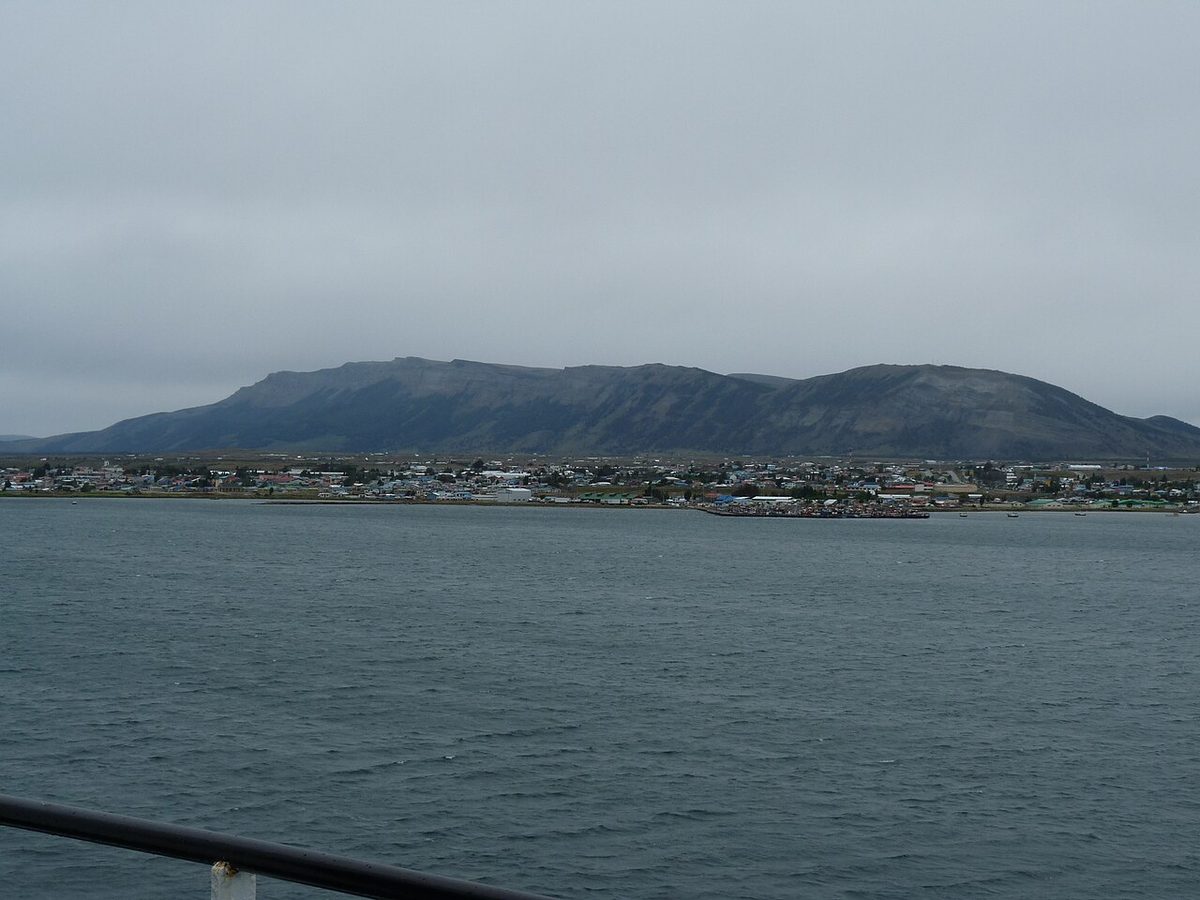
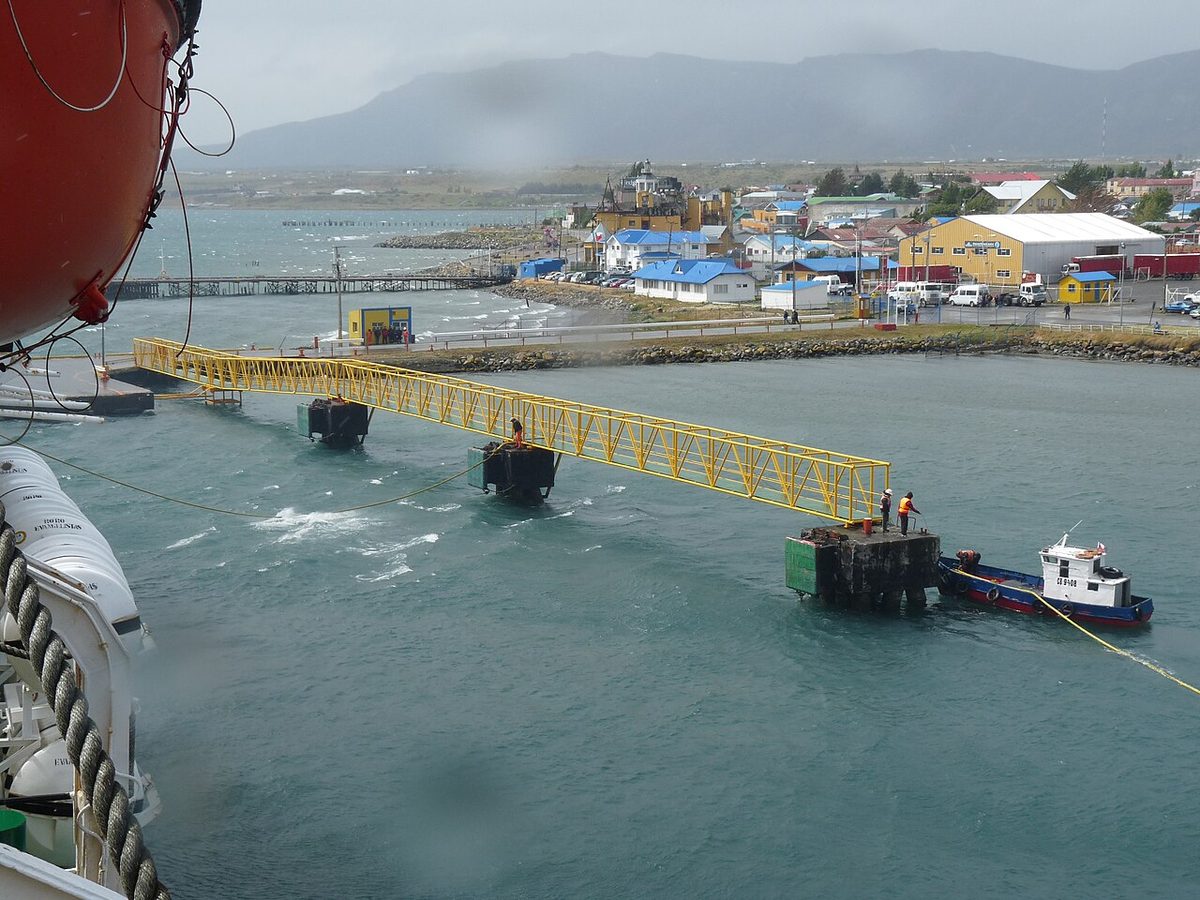
0 — 2 km Fig. 1 · Puerto Natales on the shore of the Última Esperanza Sound with the mountains of the far shore behind the town · Photo: Pierre cb / Public domain via Wikimedia Commons
Deciding where to stay in Puerto Natales is really a question about two buses: the one that takes you into Torres del Paine and the one that brings you back. Get those two nights right and the rest of the trip falls into place. Get them wrong and you end up dragging a 20 kg pack along the waterfront in the dark at dawn, or stepping off the evening park bus with wet boots and nowhere booked.
Natales is a small, low-rise town on the shore of the Última Esperanza Sound, and most people who come here are on the way to or from the park. That makes it unusual among Patagonian bases. You don’t choose a neighbourhood for nightlife or sights; you choose it around a bus timetable, a gear shop’s opening hours and how far you’re willing to walk with everything you own on your back. This guide assumes you’ve already settled on visiting the park and are sleeping at least one night in town, probably two. If you’re still weighing up a bed inside the park, read about staying inside Torres del Paine first, then come back.
Bus times, opening hours and hotel details below were checked in October 2026 against the operators’ and properties’ own sites. For the bigger picture across the region, the where to stay in Patagonia guide compares every major base.
Where to stay in Puerto Natales: the short answer
For a first night with errands to run, stay in the centre within a few blocks of the Plaza de Armas. If your park bus leaves early and your pack is heavy, sleep on the terminal side of town or in the centre rather than out on the fjord road. For the night after the trek, when all you want is a hot shower, a view and a proper dinner, book the waterfront, one of the lodges strung along the shore north of town, or Puerto Bories if the budget stretches.
That’s the whole strategy in one paragraph. The rest of this page explains why, area by area, and what to ask before you hand over a card number.
Area
Best for
Main trade-off
Typical lodging
Waterfront (Costanera Pedro Montt)
Couples, the recovery night, views of the sound
Wind, higher prices, a longer haul to the bus terminal
Mid-range and upscale hotels
Centre (around the Plaza de Armas)
First night, gear rental, food shopping, short stays
Busier streets, few views
B&Bs, small hotels, hostels, apartments
Near the Terminal Rodoviario
Early park buses, late arrivals, budget trekkers
Residential and quiet, a walk to restaurants
Family hostales, hostels
North along the fjord road (the Huertos)
Views, quiet, travellers with a car
You need a taxi or a long walk for early buses
Lodges and boutique hotels
Puerto Bories
A splurge, all-inclusive stays, non-hikers
Out of town; a drive to the terminal
Destination hotel
Swipe to see all columns
Table 1
How Puerto Natales is laid out
Natales is a grid, and a forgiving one. The western edge is the Costanera, the promenade along the water. Chile Travel, the national tourism board, calls the Costanera Pedro Montt one of the biggest attractions in town, and on a calm evening with the light going pink over the sound it’s easy to see why. Walk inland a few blocks and you reach the Plaza de Armas and the commercial streets around it: restaurants, outdoor shops, supermarkets, banks, tour agencies and laundries. Keep walking inland and the town turns residential, and that’s where the Terminal Rodoviario sits, the main bus station for Punta Arenas, El Calafate and Torres del Paine services.
Then there’s the road north. Follow the shore out of town and the addresses change character: instead of street numbers you’ll see “Huerto” followed by a number, a holdover from the old smallholdings that lined the road, or a kilometre marker on Ruta 9. That strip holds most of the lodges with big windows onto the fjord. Further on, past the edge of town, is Puerto Bories, the old meat-freezing port that now houses a well-known hotel.
Two practical notes before the area-by-area detail. First, distances that look trivial on a map stop being trivial in Patagonian wind with a full pack. Check the walk from any property to the terminal on a map before you book, and be honest about the 06:30 version of yourself. Second, Natales really is small. Chile Travel advises booking accommodation well in advance, especially in high season, precisely because the town has a limited number of beds and a very large park on its doorstep.
The waterfront: Costanera Pedro Montt
This is the postcard part of town. Rooms facing the water look straight across the sound to the mountains on the far shore, and the promenade is the obvious place for an evening walk after a week of trail food. It’s also the most exposed part of Natales; the wind comes straight off the fjord, and some days the spray reaches the road.
Best for: the night after the trek, couples, anyone who only has one night in town and wants it to feel like a holiday rather than a staging post.
Watch out for: the walk to the terminal. The bus station is on the opposite, inland side of town. For a late-morning departure with a light bag it’s a pleasant stroll; for an early bus with a trekking pack, book a taxi the night before.
Two hotels with live websites anchor this stretch. NOI Indigo Patagonia, at Ladrilleros 105 just off the water, has 61 rooms according to its own site, which also lists online packages with “rates from” USD 160 (a half-board package), USD 225 and USD 269 as of October 2026. Those are package prices, not a nightly room rate, so read what each includes before comparing them with anything else. Hotel Costaustralis describes itself as facing the Costanera and sells all-inclusive programmes of three, four and five nights alongside ordinary stays; it also sells packages around race weekends, so check dates if you travel in the shoulder season.
The rest of the waterfront is a mix of mid-range hotels and guesthouses that change hands and names more often than visitors expect. Several properties still recommended on hotel lists have dead or redirected websites. Before you book anywhere, open the property’s own site and make sure it works and shows the current season.
If you only take one piece of advice from this page, make it this: for the night before the trek, the centre is hard to beat. Everything you need to finish trek prep is within a few blocks, so you rarely need a taxi.
Best for: first-time visitors, anyone renting gear, anyone buying trek food, short stays, travellers without a car.
Watch out for: noise on the busier streets, especially near bars, and rooms with no view at all. The terminal is still a walk away, so check the distance from your specific street.
The errands that make the centre worth it:
Gear rental. Rental Natales, at Herman Eberhard 370, opens Monday to Sunday from 09:00 to 22:00 between October and April, and 10:00 to 20:00 from May to September, according to its own site. Those long summer hours mean you can step off an afternoon bus from Punta Arenas and still collect a tent the same evening. Its site takes bookings by date, so reserve ahead in high season. The Patagonia gear rental guide covers what to rent and what to bring from home.
Food and fuel. The supermarkets and small shops cluster here. Buy stove gas and trail food the afternoon before you leave, not the evening, when queues build up.
Cash. Withdraw what you need the day you arrive. ATMs in a small town serving a very busy park are not the place to be at 06:45.
Laundry. The laundries (lavanderías) are in and around the centre too. Ask your accommodation which is nearest and how long it takes, then drop clothes off on arrival.
Among the small hotels here, Hotel Lady Florence Dixie is a straightforward choice: its own site lists 19 rooms, all with a private bathroom and central heating, a buffet breakfast included in the rate, and a location two blocks from the Plaza de Armas. Central heating matters more than it sounds. After a day in the wind, a warm room that dries a fleece overnight is worth a lot.
The centre is also where most hostels and family-run hostales sit, along with apartments that suit groups who want to cook. If you’re travelling with friends and plan to portion out five days of food on the kitchen table, an apartment with a kitchen is a better trek base than any hotel room.
Near the bus terminal
The Terminal Rodoviario is the hub for everything that leaves Natales by road: the Torres del Paine buses, the buses to Punta Arenas and the international buses to El Calafate. The streets around it are residential, quiet and short on restaurants, which is exactly why they work for trekkers on a tight schedule.
Best for: early park buses, late arrivals from El Calafate, budget travellers, anyone carrying a full pack.
Watch out for: a walk into the centre for dinner and supplies, and very little atmosphere.
Think about this zone in terms of arrival and departure times. Bus-Sur’s El Calafate service reaches Natales around 21:30 on its afternoon departure days (Tuesday, Thursday and Saturday, leaving El Calafate at 16:30). If you arrive then and take a park bus the next morning, a bed a few minutes’ walk from the terminal makes both ends of the night easier. The same logic applies to anyone coming back on the later wave of park buses.
What you’ll find here is mostly family-run hostales and hostels, many of them used to trekkers. Quality varies widely, so the questions in the checklist further down matter more here than anywhere else. Ask about breakfast times and bag storage in writing, and look for recent reviews that mention both.
One thing not to rely on: left-luggage at the terminal itself. Plan to leave your spare bag with your accommodation and confirm the arrangement before you arrive.
North along the fjord road: the Huertos strip
Head north along the shore and Natales thins out into a line of lodges and boutique hotels, most of them built for the view. Addresses here use “Huerto” numbers or Ruta 9 kilometre markers instead of street numbers, which confuses taxi drivers less than it confuses visitors. Copy the exact address from the hotel’s own site into your maps app before you arrive.
Best for: a quiet night with the fjord outside the window, couples, travellers with a hire car, the recovery night after the trek.
Watch out for: early departures. You’re no longer walking to the terminal with a pack, so book a taxi the night before, because morning demand is high when every lodge on the road wants a cab at the same time.
The properties here with live websites include Weskar Patagonian Lodge, which its own site puts 1,200 metres from the town centre, an easy walk along the waterfront promenade on a calm day. Altiplánico Patagonia, at El Huerto 282, also sits out along this stretch, about 3 km from the centre by its own site. Remota Patagonia Lodge, also outside the centre, works differently from a normal hotel: it sells all-inclusive programmes, Soft and Aventura, from three nights and four days, with excursions built in. It suits travellers who want the park handled for them rather than trekkers coming and going on public buses.
If you’re driving, this zone makes the most sense of all. You’re already on the road towards the park, parking is easier than in the centre, and an early start means getting in the car rather than finding a taxi. The Patagonia rental car guide covers the road and the paperwork.
Puerto Bories: a destination, not a trek base
Puerto Bories is the old cold-storage and meat-freezing works north of Natales, on the Señoret Channel. Today its main occupant is The Singular Patagonia, a hotel built into the former plant. The hotel says the site was declared a National Monument in 1996 and places it about five minutes’ drive from Puerto Natales. You don’t have to stay to see it: the on-site museum is open to the public daily from 12:00 to 17:00, with general admission of CLP 10,000, a reduced CLP 3,000 for seniors, students, 12 to 17-year-olds and Natales residents, and free entry for under-12s (hotel’s own site, October 2026).
As a place to stay, Puerto Bories is best thought of as the reward, not the base. It’s too far to walk to the terminal with a pack before dawn, and on the night before the trek you’ll want the gear shop and supermarket within reach. On the night after, or as part of a programme with its own park transfers, it’s a very different proposition: industrial heritage, the channel outside, and nothing to organise.
Older guidebooks name several other hotels around Puerto Bories. Some of those no longer trade under the same name, and at least one website now shows a domain-for-sale page. If a listing sends you to a property here that isn’t mentioned above, find its own working website before booking.
Across the sound: estancias
A handful of estancias on the far side of the Última Esperanza Sound take guests, reached by boat. They’re wonderful for a slow extra day or two, and they’re no use as a trek base: you’re a boat ride plus a bus away from the park. If a ranch stay appeals, read the Patagonia estancias guide and treat it as a separate part of the trip, booked directly with the estancia for the current season.
The night before Torres del Paine
This is the night that decides how the trek starts. Treat it like a checklist, not a hotel booking.
Choose your area by your bus. Several companies run buses from the Terminal Rodoviario to the park, each on its own timetable. Bus-Sur’s own site lists a 12:00 daily departure, taking from about two hours depending on your stop, and the first buses of the day leave the terminal in the morning. CONAF’s park page lists other times again, which tells you everything: check your own operator’s timetable when you book, and print the ticket. The earlier your departure, the closer to the terminal or the centre you want to sleep. The how to get to Torres del Paine guide compares the options, including private transfers.
Ask about breakfast time when you book. Plenty of places start breakfast after the first bus has gone. Some hostels and hostales serve early or pack a breakfast for trekkers; others don’t. Ask the question before you pay, not at check-in.
Sort luggage storage in writing. You’ll walk the W with a pack and leave everything else in town. Ask the property whether storage is free for guests, how many nights they’ll hold a bag, whether they’ll keep it if your night after the trek is booked somewhere else, whether it’s locked, and until what time you can collect it. Most hotels and hostels in Natales store bags for trekkers. “Most” is not “all”.
Pick up rental gear the afternoon before. Rental Natales is open until 22:00 in season, which is generous, but collecting in daylight gives you time to pitch the tent in the hostel courtyard and test the stove. Find out now if a pole is missing, not halfway along the W.
Download and print everything. Your park pass comes as a QR code from pasesparques.cl, the only official channel. Tickets can’t be bought on the day or at the park entrance; the gate only validates the pass. Since 1 May 2026 CONAF sells a single-day entry or a multi-day entry valid for a continuous period of up to ten days. Add every refugio and campsite confirmation (Vertice and Las Torres run separate booking systems), your bus tickets and any boat bookings. Signal across most of the park is unreliable. The Torres del Paine tickets page walks through the purchase.
Book a morning taxi if you’re out of town. Lodges on the fjord road and in Puerto Bories all want taxis at the same hour. Ask reception to book one the evening before.
Check the trail notices. In October 2026, CONAF’s notice for the park recommended trekking poles and microcrampons because winter conditions persisted on parts of the W and the Base Torres trail, and the full circuit had its own closure notice pending a weather and safety evaluation. Read CONAF’s current notice before you pack; the Torres del Paine travel guide keeps the essentials together.
One more thought on this night. If you arrive in Natales the same afternoon from Punta Arenas, you have very little slack. Bus-Sur’s buses from Punta Arenas leave at 07:00, 08:30, 10:00 and 11:00 and take 3 hours 15 minutes, so even the earliest gets you in mid-morning, and later ones in the afternoon, with a rental shop to visit, food to buy and bags to repack. That’s doable, and it’s also when people forget the stove gas. Two nights in town before a long trek is not wasted time.
Here’s the timetable that makes the night after nearly unavoidable. Bus-Sur runs its Torres del Paine connection from September to April, with two return waves listed on its site:
Stop
First return
Second return
Lago Grey
13:30
17:00
Administración
14:00
17:30
Camping Pehoé
14:15
17:45
Pudeto
14:30
19:30
Laguna Amarga
15:00
20:15
Arrives Puerto Natales
about 16:30
about 21:30
Swipe to see all columns
Table 2
Times from Bus-Sur’s own site, October 2026. Bus-Sur lists the second return as a next-day-connection option. Other companies run their own schedules.
Now set that against the onward buses. Bus-Sur lists its Natales to El Calafate departure at 15:30, with a journey of about six hours. Bus-Sur’s first return from the park reaches Natales around 16:30. So with Bus-Sur there is no same-day connection from the trail to Argentina: you need at least one night in Natales before the Puerto Natales to El Calafate bus.
Punta Arenas is different. Bus-Sur leaves Natales for Punta Arenas at 17:00, 19:00 and 21:00, and the journey takes 3 hours 15 minutes. Off Bus-Sur’s first return you could, in theory, be in Punta Arenas by mid-evening. In practice you’d arrive late, tired, with a wet tent, and still need a bed there. Unless you have a flight from Punta Arenas the next morning, sleeping in Natales and taking a daytime bus is the calmer plan. The Punta Arenas to Puerto Natales guide covers both directions.
What to sort for this night:
Laundry. Five days of trail clothes will need washing. Drop them at a lavandería on arrival and ask when they’ll be ready, or ask whether your hotel offers a laundry service.
Drying. Ask for a heated room or a space to hang a tent. Packing a wet tent into a bus luggage hold for six hours to El Calafate is a reliable way to grow something.
Returning rental gear. Rental Natales stays open to 22:00 in season, so even a later park bus can usually make it. If you’re cutting it fine, message the shop.
Collecting your stored bag. If your bag is at a different property from the one you’re sleeping in, check what time they close reception.
This is also the night to spend a bit more. After several nights in refugios or a tent, a room on the waterfront, a lodge on the fjord road or a night at Puerto Bories feels like a different country. The before-night is about logistics; the after-night is about recovery, so book accordingly.
Five questions to ask before you book
Most bad nights in Natales come from an assumption that turned out wrong. These five questions, sent by email or message before you pay, prevent nearly all of them.
Will you store my bag while I trek, for how many nights, and is it free? Add whether they’ll still hold it if you sleep somewhere else afterwards.
What time does breakfast start, and can you prepare something earlier for an early bus?
Can I check in late? Relevant if you’re arriving on the late El Calafate bus or the second park bus.
Is there heating in the rooms, and anywhere to dry wet gear?
Is the price with or without IVA for foreign tourists, and do you issue a factura de exportación? More on this below; it can change the bill noticeably.
The answers tell you a lot beyond the facts themselves. A property that replies quickly and clearly about bag storage is usually a property used to trekkers.
Lodging types in Puerto Natales
The word “hostal” trips people up. In Chile a hostal is often a small family guesthouse with private rooms, not a backpacker hostel with dorms. Read the room description, not the category. The camping vs hostels vs hotels guide compares the trade-offs across Patagonia.
Type
What you get
Who it suits
Booking tip
Hostel (dorms)
Bunk bed, shared kitchen, other trekkers to swap notes with
Solo trekkers, tight budgets
Ask about bag storage and breakfast time; a good kitchen matters for trek food
Hostal or hospedaje
Private room, sometimes shared bathroom, breakfast often included
Couples on a budget
Many are near the terminal; ask about IVA and heating
B&B or guesthouse
Private en-suite room, breakfast
Couples, older travellers
Few rooms, so they fill early in high season
Small hotel in the centre
En-suite rooms, breakfast, a reception desk to hold bags
First night, short stays
Easiest base for errands
Waterfront or boutique hotel
Views of the sound, restaurant, sometimes a spa
The night after the trek
Compare packages and room-only rates separately
Apartment or cabaña
Kitchen and space
Families, groups, self-caterers
Good for portioning trek food
Lodge on the fjord road
Views, restaurant, quiet
Drivers, couples, recovery nights
Plan taxis for early buses
All-inclusive programme
Lodging, meals, excursions and transfers in one price
Non-trekkers, travellers who want everything organised
Minimum stays apply; Remota’s start at three nights
Swipe to see all columns
Table 3
If you’d rather sleep under canvas in town before heading into the park, see the Patagonia camping guide, and for beds inside the park itself, the Patagonia refugios and W Trek refugios guides cover who runs what.
Paying for your room: IVA, cards and cash
This is the money fact most visitors miss. Chilean tax law (Article 12, letter E, No. 17 of Decree Law 825, the VAT law) exempts from IVA, Chile’s value-added tax, the foreign-currency income that hotel businesses registered with the tax service (SII) receive for services to foreign tourists who don’t have a domicile or residence in Chile. A tax-court ruling published on the SII’s site says the exemption covers the lodging and the meals, laundry and phone services provided together with it, and the hotel documents it with an export invoice, a factura de exportación, rather than an ordinary receipt.
In plain terms: at a registered hotel, a foreign tourist paying in foreign currency can be billed without IVA. That’s the theory. In practice there are conditions, and it is not automatic.
Not every property is registered with SII for this. Many small hostales aren’t, and some simply quote one price for everyone.
The payment has to be in foreign currency. How a hotel handles card payments varies, so ask how they’ll charge you.
Carry your passport and your entry record. Hotels need to establish that you’re a foreign tourist, and they’ll tell you what they need to see.
Online booking platforms differ. Some show prices with IVA, some without. Compare like with like, and ask the hotel directly if the listing doesn’t say.
So the question to ask, ideally in writing, is simple: is the price with or without IVA for foreign tourists, and do you issue a factura de exportación? The SII’s own site, sii.cl, sets out the current IVA rate and rules.
One development to watch: a tourism bill in Chile’s Senate, Boletín 16.817-05 (the Ley de Reactivación del Turismo), included a 1.25% charge on lodging for foreign tourists. It is not law. In March 2026 the bill went back to committee in the Senate, and in May 2026 the newspaper Emol reported that the government’s amendments would remove the lodging charge. If you’re booking for the 2026/27 season and want to know where it stands, check the bill’s record on senado.cl.
On cards and cash: card payment is widely accepted in Chile, but policies at small properties vary, so ask how you can pay when you book. Bring some Chilean pesos for taxis, laundries and small shops, and withdraw them on arrival day. The Patagonia money guide covers ATMs, cards and the Argentina side, and is Patagonia expensive puts lodging costs in context.
When to book, and the 2027 airfield squeeze
Book in this order, and Natales will look after itself:
Refugios and campsites inside the park (Vertice and Las Torres are separate systems; Vertice’s site already shows its 2026-2027 season).
Your park pass on pasesparques.cl.
The park buses or a private transfer.
Your Natales nights before and after the trek.
Gear rental.
The onward bus to El Calafate or Punta Arenas.
The logic is that your trek dates fix your Natales dates, not the other way round. Chile Travel’s W Trek guide advises booking refugios and campsites six months or more ahead; once those are confirmed, book Natales straight away, with free cancellation where you can get it. The book Patagonia in advance guide has the full timeline across the region.
There’s a specific reason to be early in 2026/27. Puerto Natales’ own airfield, Teniente Julio Gallardo, has scheduled closures from 1 January to 31 March 2027 for DGAC works, according to Chile Travel. During that period commercial flights run mainly on Friday-to-Sunday or Saturday-to-Sunday patterns, and normal operation is limited to 1 to 10 January 2027. Punta Arenas airport keeps operating normally year-round, with daily flights from Santiago, and the road from Punta Arenas to Natales takes about three hours. In practice, more travellers will fly to Punta Arenas, take an afternoon bus, and need an extra night in Natales before entering the park, right in the middle of the busiest months. If your itinerary depended on flying into Natales and going straight to the park, rework it now. The Patagonia airports guide covers the alternatives.
Outside summer, watch for event weekends. Hotel Costaustralis sells marathon packages, and race weekends in the shoulder season fill central hotels faster than the calendar suggests. Check the race organisers’ own sites for future dates.
Winter in Puerto Natales
From May to September Natales is a different place: quieter, colder, and cheaper to find a room in. Torres del Paine stays open, with winter hours of 08:00 to 18:30 against summer’s 07:00 to 21:00 (Pases Parques). Transport thins out, though: Bus-Sur’s park connection is listed for September to April, so check which operators run on your dates before you book a room.
Some properties close for part of the winter, particularly the lodges out of town. Before you book a winter trip, confirm directly with the property that it’s open on your dates, and book with a hotel that answers its messages. The centre is the safest winter base: shops, restaurants and transport are all within walking distance. The Torres del Paine in winter and best time to visit Patagonia guides cover the season in detail.
Rental shop, supermarkets and laundries within a few blocks
Back from the W, one night of comfort
Waterfront or the fjord road
Views, a restaurant, a long shower
Splurge, honeymoon or no trekking at all
Puerto Bories or an all-inclusive lodge
Setting, included excursions and transfers
Family or group cooking for themselves
Apartment in the centre
Kitchen and space
Driving a hire car
The fjord road or Puerto Bories
Parking, and already on the road to the park
Winter visit
The centre
Everything walkable; some out-of-town places close
Swipe to see all columns
Table 4
Common mistakes
Booking a waterfront or fjord-road room for an early bus. It looks lovely on the booking page. At 06:15 in a crosswind with a 65-litre pack it looks less lovely. Save the view for the night after.
Planning a same-day connection from the park to El Calafate. Bus-Sur’s El Calafate bus leaves Natales at 15:30 and its first park return doesn’t get back until about 16:30. It doesn’t work, so book the night.
Assuming the bus terminal will hold your bag. Arrange storage with your accommodation, confirm it in writing, and know what time you can collect.
Not asking about breakfast. If breakfast starts at 07:30 and your bus leaves earlier, you need a plan B, whether that’s a packed breakfast from the hotel or food bought the day before.
Paying IVA you might not owe. If you’re a foreign tourist at a registered hotel, ask about the exemption and the export invoice before you pay.
Booking Natales before the trek. Refugio and campsite availability fixes your dates. Book Natales first and you may end up rebooking it.
Trusting an old hotel list. Several properties that still appear on popular lists have dead websites or have changed hands. If you can’t find a working own website for the current season, look elsewhere.
Arriving the afternoon before a long trek with nothing prepared. It can be done, but two nights in town before the trek gives you time to rent gear, test it, and fix whatever’s missing.
Frequently asked questions
What is the best area to stay in Puerto Natales?
The centre, within a few blocks of the Plaza de Armas, is the best all-round area: restaurants, gear rental, supermarkets and laundries are all walkable, and the bus terminal is reachable on foot. For an early park bus with a heavy pack, the streets near the Terminal Rodoviario are more practical. For the night after the trek, the waterfront and the lodges along the fjord road are worth the extra cost.
How many nights should I stay in Puerto Natales before and after Torres del Paine?
Plan on at least one night before the trek and one after. Two nights before a multi-day trek gives you time to rent and test gear, buy food and repack. The night after is close to unavoidable if you’re heading to El Calafate, because Bus-Sur’s El Calafate bus leaves Natales at 15:30 and its first park return arrives around 16:30.
Can I leave my luggage in Puerto Natales while I hike the W Trek?
Yes, most hotels and hostels store bags for trekkers, often free for guests. Confirm in writing before you book: how many nights they’ll hold it, whether they’ll keep it if you sleep elsewhere afterwards, whether it’s locked, and what time you can collect it. Don’t plan on left-luggage at the bus terminal.
Is Puerto Bories walkable from Puerto Natales?
The Singular Patagonia, the hotel at Puerto Bories, puts itself about five minutes’ drive from Puerto Natales. On foot without luggage it’s a long walk along the shore road; with a trekking pack before an early bus it isn’t practical. Use a taxi or the hotel’s own transfers.
Do foreigners pay IVA on hotels in Chile?
Foreign tourists without a domicile or residence in Chile can be exempt from IVA on lodging at hotels registered with the SII for the exemption, when they pay in foreign currency and the hotel issues a factura de exportación. It isn’t automatic: not every property is registered, so ask before you book whether the price is with or without IVA. The current rules and rate are on sii.cl.
Can I get from Torres del Paine to El Calafate on the same day?
No. Bus-Sur’s Natales to El Calafate bus leaves at 15:30, and its first return bus from the park arrives in Natales at about 16:30. Sleep in Natales and take the next day’s bus.
Should I stay in Puerto Natales or inside Torres del Paine?
For most trekkers it’s both: Natales before and after, and refugios or campsites inside the park during the trek. Day visitors with a car or a tour can base themselves in Natales for the whole stay. If you want to wake up beside the mountains, see the guide to staying inside Torres del Paine.
Final thoughts
Puerto Natales rewards travellers who book their rooms around their buses. A central or terminal-side bed for the night before, a booking question or two about bags and breakfast, and something a little special for the night after: that’s the pattern that works, season after season. It also helps to remember that Natales is a town in its own right, with more to it than a bus station and a gear shop, and the Puerto Natales travel guide covers what to do with a spare day.