Patagonia Camping vs Hostels vs Hotels: How to Choose
Patagonia camping vs hostels vs hotels, night by night: 2026-27 tent and refugio prices from both Torres del Paine operators, El Chalten camps and VAT tips.
By Patagonia Tourism Guide · First published 17 Oct 2026
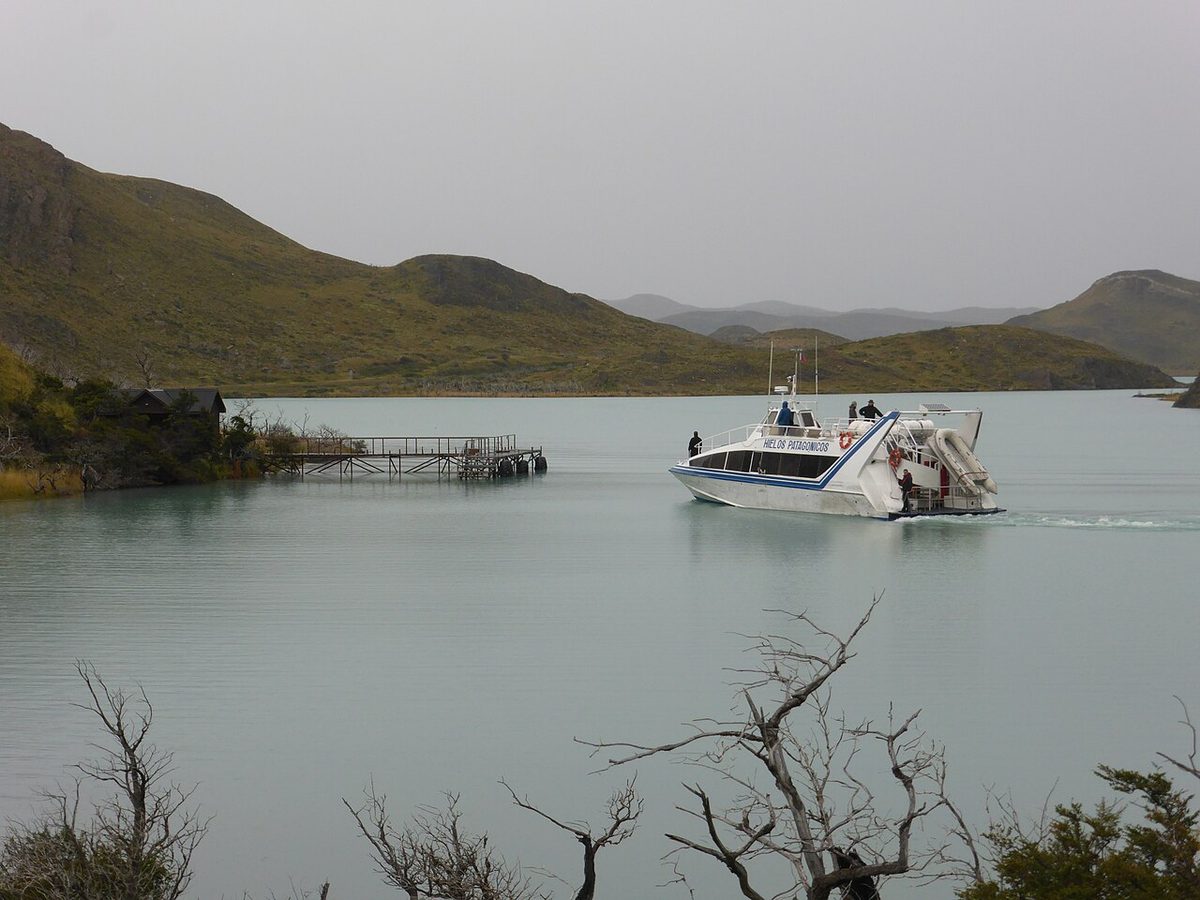
0 — 2 km Fig. 1 · The Hielos Patagónicos catamaran crossing Lago Pehoé in Torres del Paine, the boat link to the Paine Grande refugio and campsite · Photo: CARLOS TEIXIDOR CADENAS / CC BY-SA 4.0 via Wikimedia Commons
The Patagonia camping vs hostels question has a short answer that holds up surprisingly well: camp on the trek, sleep in a hostel between treks, and pay for a hotel on the nights you are not hiking at all. The longer answer is where the money is. On the W Trek in Torres del Paine, the company that runs your campsite now matters more than the choice between tent and bed. A solo hiker pitching their own tent pays USD 13 a night at Vertice’s Paine Grande site in the 2026-27 season, and from USD 90 a night for the same kind of pitch at a Las Torres camp in high season. Same park, same tent, roughly seven times the price.
So treat this as a night-by-night decision rather than a trip-wide identity. A camper who refuses ever to pay for a roof ends up wet and miserable by day four; a hotel traveller who refuses to camp simply can’t sleep in the backcountry around El Chaltén. What follows compares cost, comfort, weather exposure, cooking and booking for each type, with the operators’ own 2026-27 prices where they publish them, and shows which nights you actually get to choose. For a wider look at bases and lodging styles, start with where to stay in Patagonia.
Patagonia camping vs hostels vs hotels at a glance
Each type wins on different nights. The table sets them side by side; the sections after it explain the numbers and the exceptions.
Camping
Hostel
Hotel, hostería or apart-hotel
Typical role
Trek nights in the parks; El Chaltén town on a budget
Town nights between treks
Non-hiking nights, recovery nights, families
Cost signal
USD 11-13 per person at Vertice’s Torres del Paine sites; from USD 40-90 at Las Torres (2026-27); ARS 30,000 per person at El Chaltén’s three park camps
Set by town, season and room type; compare on the hostel’s own site
Widest range; set by location, season, breakfast and room type
Weather exposure
High: wind, rain and no way to dry kit in the backcountry
Low: heated rooms, somewhere to hang a wet tent
Lowest
Cooking
Own stove only where allowed; shared shelters at some operated camps
Shared kitchen, usually the biggest saving
Rarely a kitchen, except cabañas and apart-hotels
Showers
Time-limited hot showers at operated Torres del Paine camps; none at El Chaltén’s park camps
Yes
Private bathroom
Booking
Every Torres del Paine night booked ahead; El Chaltén camps bookable up to the day before
Book once trek dates are fixed
Book early for December to February
Suits
Couples with their own gear; solo hikers on the Vertice side
Solo travellers, couples on a budget
Families, groups in cabañas, anyone the night before a hard hike
Swipe to see all columns
Table 1
One thing the table can’t show: in Torres del Paine, renting a tent inside the park can cost as much as a refugio bed. That single detail upends the usual “camping is cheap” assumption, and the cost section below works through it.
Start with the night, not the trip
Most comparisons treat this as one choice per trip. In Patagonia it is one choice per night, and three quick questions settle most of them.
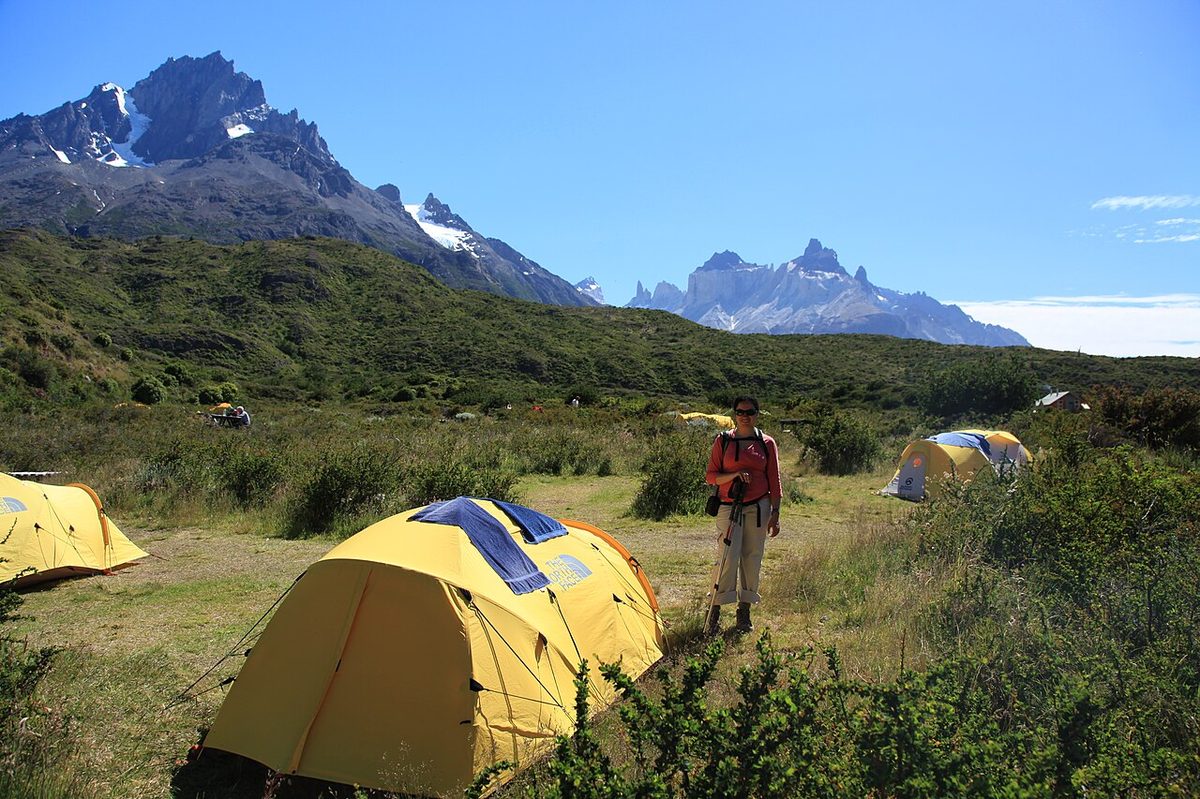
Is it a trek night? If you are sleeping on the W or O circuits in Torres del Paine, there is no hotel option on the trail. You sleep at a booked campsite or in a refugio bed, and every night must be reserved before you go. The W Trek refugios guide covers the bed side in detail and the Patagonia camping guide covers campsite rules. In El Chaltén’s backcountry, your choice is one of the three reservation-only park camps (Poincenot, De Agostini and Laguna Capri) or a private option like Refugio Piedra del Fraile in the Río Eléctrico valley (open 1 November to 6 April). On these nights the real decision is tent or bed, and own gear, rented gear or a fully equipped tent.
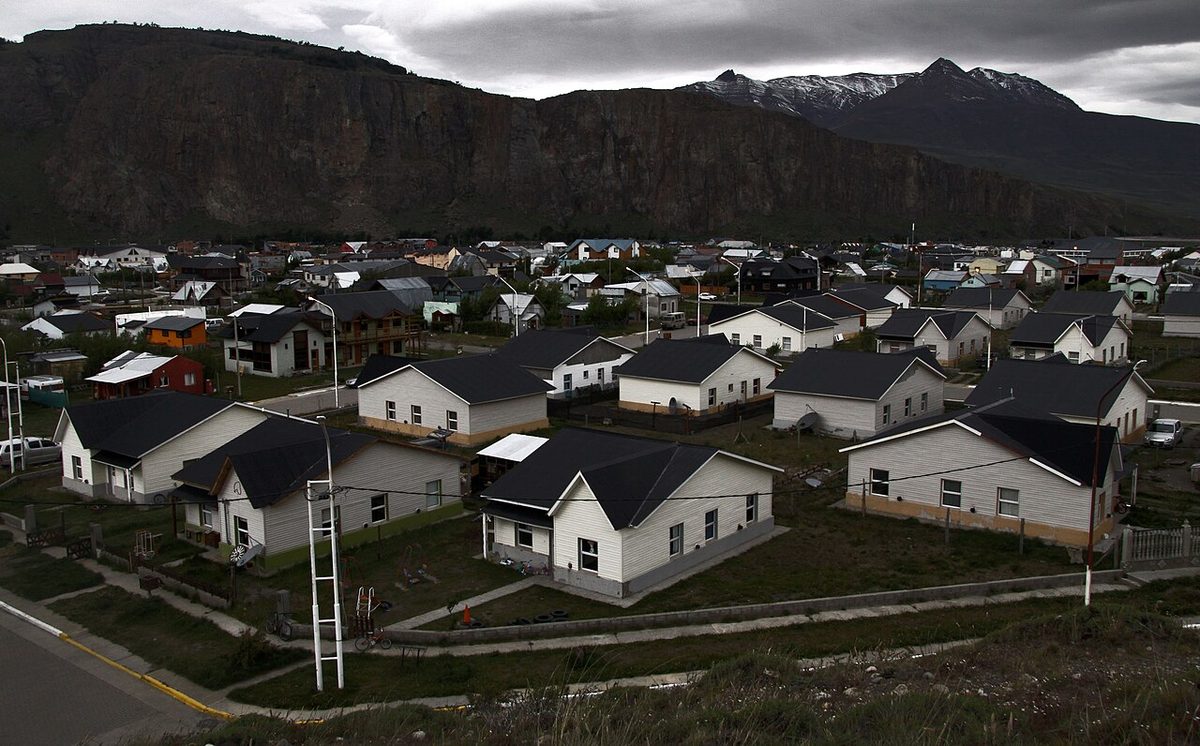
Is it a town night between treks? This is hostel territory. You want a hot shower, a heated room to hang a wet tent and clothes, a kitchen, Wi-Fi to check the forecast and your bookings, and a proper bed. A town campground gives you some of that; a hostel gives you all of it.
Is it a non-hiking night? El Calafate for the Perito Moreno Glacier, a travel day, a rest day, the night before a 6am bus: a tent adds almost nothing here, and the wind is a real cost. Pay for a hotel, hostería, cabaña or apart-hotel, and sleep.
Then adjust for three things: how many of you there are (solo travellers pay single-occupancy rates on one side of Torres del Paine; families hit two-person limits), the season (Las Torres prices October and April lower than November to March), and how well you cope with being wet. Be honest about that last one.
Your realistic options, place by place
Situation
Realistic options
Notes
Torres del Paine W and O trek nights
Booked campsite (own, rented or equipped tent) or refugio bed
Two operators, two booking systems; no hotels on the trail itself
El Chaltén backcountry
Poincenot, De Agostini or Laguna Capri (reservation only) or private options such as Piedra del Fraile
The three park camps have no beds, showers or kitchen
El Chaltén town
Hostel, hostería, cabaña, hotel or town campground
The gateway town where camping in town is a real budget option
El Calafate
Hostel, hotel, hostería, apart-hotel
A hostel-and-hotel town; ask the tourism office about camping options
Puerto Natales
Hostel, hostal, B&B, hotel
Treat it as a roof town; the camping happens inside the park
Ushuaia
Hostel, hotel, apart-hotel; campsites in and around Tierra del Fuego National Park
Open fires prohibited; portable stove only
Carretera Austral
Campsites, hospedajes, cabañas
Camping is often the default; some park camps are first-come
Glacier day trips, cities, travel days
Hotel or hostel
No reason to carry a tent
Swipe to see all columns
Table 2
What camping really costs in Torres del Paine in 2026-27
Torres del Paine has two concessionaires running the campsites and refugios on the main circuits. Las Torres Patagonia runs the Central, Chileno, Francés, Cuernos and Serón sectors. Vertice runs sites including Paine Grande and Grey on the western half of the W. Both publish 2026-27 rates on their own pages, and they could hardly be further apart.
Per person, per night (USD, 2026-27)
Vertice: Paine Grande / Grey
Las Torres: Central, Chileno, Francés, Serón camps
Own tent
13 / 11
From 50 (Nov 2026 to Mar 2027), 40 (Oct 2026 and Apr 2027) sharing a site; 90 / 70 alone
Rented or equipped tent
4-season tent 58 per tent (max 2), plus sleeping bag 38 and foam mat 16 per person
Semi-equipped (tent and mat) from 120 / 110 sharing, 220 / 200 alone; fully equipped (tent, bag, mat, pillow) from 160 / 150 sharing, 290 / 270 alone
Refugio bed
Single bed 66 / 46; made-up “armed” bed 114 / 114; bedding kit 48 / 68
Central Mountain Stay: bed in a shared 6-bed mixed dorm from 230 (Nov to Mar), 200 (Oct and Apr)
Half board
76
90 (140 at Christmas and New Year)
Full board
110
140 (190 at Christmas and New Year)
Dinner only
53
70
Swipe to see all columns
Table 3
Las Torres quotes “from” prices, which are the lowest dates in each period, and its camping tiers are per person on double occupancy unless you are alone in the site. Vertice says its US dollar rates apply to foreigners not resident in Chile who show a passport and valid entry card.
Worked examples from the operator rates
These are straight arithmetic from the published 2026-27 figures above, for campsite and bed fees only.
A couple with their own tent and food at Vertice: USD 26 a night at Paine Grande, USD 22 at Grey.
The same couple at a Las Torres camp: USD 100 a night from November to March, USD 80 in October or April.
A solo hiker with their own tent: USD 13 at Paine Grande against USD 90 at a Las Torres camp in high season.
A couple renting Vertice’s kit for one night (tent, two bags, two mats, two pitches): USD 192 at Paine Grande or USD 188 at Grey, so roughly USD 94-96 each.
A couple in a Las Torres fully equipped tent in high season: from USD 320 for the two of them.
A Vertice bed made up with bedding plus half board: USD 190 per person at both Paine Grande and Grey, whichever way you combine the bed and the bedding.
A Las Torres Central Mountain Stay bed plus half board in high season: USD 320 per person.
Three conclusions fall out of those numbers. First, own gear on the Vertice side is the cheapest bed in the park by a distance. Second, on the Las Torres side, camping alone with your own tent costs about seven times the Vertice pitch, so solo hikers should route their nights accordingly. Third, the in-park rental premium is real: renting Vertice’s full kit costs a couple about USD 190 a night, roughly half the price of two made-up beds with half board, but more than seven times what they would pay to pitch their own tent.
If you are pricing the whole trek rather than a single night, the W Trek cost breakdown adds park entry, transport and food on top of these figures.
Camping in El Chaltén and elsewhere: cheaper, but bare
The Argentine side works differently. El Chaltén’s three park camps, Poincenot, De Agostini and Laguna Capri, are run by the Asociación Amigos del Parque Nacional Los Glaciares, and the fee is ARS 30,000 per person per night. Children up to 11 and El Chaltén residents camp free. Places are limited, you must reserve and pay before you hike, the fee is non-refundable and the date can’t be changed. You can book up to the day before you arrive, which is the useful part: wait for a forecast, then commit.
What the fee buys is simple. Dry toilets, camp hosts, toilet paper and biodegradable detergent. There are no showers, no shop, no kitchen, no electricity and no phone signal. Fires are prohibited and a gas stove is mandatory. Check-in is from 12:00, check-out by 11:00, and you can enter the campsites until 22:00. The camps are open all year, but the association describes winter conditions as extreme. The El Chaltén camping guide covers each camp and its trail.
Don’t count the park entry against camping. Los Glaciares charges non-resident visitors a daily pass of ARS 50,000 (general rate, valid from 1 June 2026), with 50% off a second day within 72 hours, or a three-day Flexipass at ARS 100,000 and a seven-day pass at ARS 175,500. You pay it if you sleep at Poincenot, and you pay exactly the same if you sleep in a hotel in town and walk in for the day. The Patagonia park fees guide lists the rest.
El Chaltén is the gateway town where camping in town makes real sense. The official El Chaltén tourism site lists village campgrounds including El Relincho, La Torcida, El Mochilero, El Regreso II and Mini Camping El Refugio. It notes that the village campsites sit close to the bus terminal and shops and are the only campsites with mobile signal. El Relincho lists two heated dining rooms, communal kitchens, 24-hour hot showers and private rooms as well as pitches, which makes it closer to a hostel with a lawn than a bare field.
None of these campgrounds publishes a nightly rate on that page, so message the campground directly for a quote for your dates. Ask whether there is a separate price for cash and card, and whether the price is per person or per tent. Then compare it with a dorm bed in town for the same night. If the gap is small, the dorm wins on a wet week.
El Calafate, Puerto Natales and Ushuaia
El Calafate and Puerto Natales are best treated as roof towns. If you want to camp near El Calafate, ask the town’s tourism office or the Los Glaciares park office (Av. Libertador 1302) what is open for the season; in Puerto Natales, ask any property that advertises camping exactly what it offers before you book. The El Calafate and Puerto Natales guides cover the town beds properly.
Ushuaia is the exception at the far south. The city’s tourism office lists authorised camping in Tierra del Fuego National Park (park entry plus a camping registration), a Camping Municipal, Camping del C.E.C.U., Playa Larga and Río Olivia. Open fires are prohibited everywhere on that list; only a portable stove is allowed. The page gives no prices or seasons, so contact each site before you go. The Ushuaia where-to-stay guide covers hostels and hotels there.
The Carretera Austral contrast
Further north in Chile, camping is often the default. CONAF lists camping in Parque Nacional Pumalín Douglas Tompkins at CLP 6,000 per person per night, first-come, with no reservations. Not everything is open: CONAF listed the Ventisquero Colgante camping zone in Queulat as closed from 17 April 2026 until further notice, so check the park page before you plan a night there. For the full picture along the road, see where to stay on the Carretera Austral.
The hidden costs that flip the answer
The headline campsite fee rarely tells you what a camping night costs. These are the line items that change the sum.
Renting inside the park. Vertice charges USD 58 a night for a four-season tent, USD 38 per person for a sleeping bag and USD 16 for a foam mat. For a couple, the rental alone is USD 166 a night before the pitch fee. Las Torres sells the same convenience as its semi-equipped and fully equipped tents. Renting in Puerto Natales or El Calafate and carrying the kit in is the usual alternative; compare the shops’ day rates in the Patagonia gear rental guide before you accept an in-park rate.
Meals you are forced to buy. Las Torres allows portable stoves only in the designated cooking areas of its Central, Serón and Francés camps. In the Chileno sector, stoves are prohibited because of the forest-fire risk. Camp at Chileno and you are buying your food: breakfast USD 40, box lunch USD 40, dinner USD 70, or half board at USD 90. A high-season own-tent night at Chileno with half board comes to USD 140 per person, which is no longer a budget night.
The single supplement. Las Torres limits each site to two people, and a group of three must book one double option and one single option. That third person pays the single-occupancy rate: USD 90 rather than 50 for an own-tent site in high season, USD 290 rather than 160 for a fully equipped tent. Vertice prices its pitches per person, and its rental tents take a maximum of two.
Cooking fuel and food. A stove only saves money if you carry the food and fuel for it. Airlines generally won’t carry gas canisters, so plan to buy fuel in town before you enter the park. The W Trek food guide covers what to carry and where the shelters are.
Showers, Wi-Fi and luggage. Vertice’s Paine Grande lists hot showers from 12:00 to 22:00. Las Torres camps have hot showers on a time schedule, and Central lets you store luggage and connect to Wi-Fi. Storing your town clothes at the trailhead saves carrying them, and that is a small reason to start the trek from the Las Torres side.
Tax, if you pay the wrong way. In both countries, how you pay for a room can change the price by around a fifth. The payment section below covers it.
Comfort and weather: what a tent costs you in sleep
Price decides it for some people, but weather decides it for most. Patagonian wind is the constraint that every camping decision has to respect: a tent on open ground in a strong gust is loud, cold and occasionally sleepless, and it can blow hard in any month. Check the Patagonia weather by month page for the season you are travelling in, and the El Chaltén weather guide if you are heading there.
The real camping penalty is cumulative rather than dramatic. One wet night is fine. By the third, your tent is wet, your socks are wet, your mid-layer is damp and there is nowhere to dry anything. Operated camps in Torres del Paine soften this with hot showers, and Vertice’s Paine Grande has a barbecue area that shelters cooks from the wind. El Chaltén’s park camps have none of that: no showers, no kitchen, no electricity. A refugio or hostel, by contrast, gives you a heated room where kit actually dries.
Two practical upgrades make camping easier without abandoning it. On the Las Torres side, own-tent pitches are on the ground or on a wooden platform depending on the site, and the semi-equipped and fully equipped tents are raised 5.2 ft (about 1.6 m) off the ground. In heavy rain, that elevation counts for a lot. And on any trek, the pattern that works for most people is simple: a tent on the trail, a roof the night before and the night after. You start rested and dry, and you finish with a hot shower and a washing machine rather than a long bus ride in damp clothes.
Sleep before a big day deserves its own budget line. A shared dorm the night before a pre-dawn start is a gamble on other people’s alarms. A private room with blackout curtains and an early breakfast can be the best-value room of the trip if it gets you up the hill. The most expensive bed you book is often worth it on the night before the hardest hike.
Hostels: dorms, privates and the kitchen
The hostel’s best feature in Patagonia is the shared kitchen. A refugio dinner costs USD 53 at Vertice and USD 70 at Las Torres in 2026-27. A hostel kitchen turns that into the price of supermarket food, night after night, and it is the main reason a hostel night costs so much less than a refugio night once dinner is counted. Against a town campground, the hostel’s edge is the bed, the heating and somewhere for gear to dry.
Hostel prices aren’t set in one place, so compare like with like. The cost of a dorm bed moves with the town (El Chaltén and Puerto Natales tend to fill around trek dates), the season (December to February is the squeeze), dorm size, whether breakfast is included, and how close the hostel sits to the bus terminal. Check the hostel’s own website for your exact dates, then check the same dates on the property’s booking page so you see the full price including any taxes. In El Chaltén, the elchalten.com accommodation hub lists municipally licensed properties and is a sensible place to build a shortlist.
A few points that change the choice:
Dorm or private for two people. A private double split two ways can come close to the cost of two dorm beds. Do the maths per couple, not per person.
Mixed dorms are the norm on the trail. Las Torres’s Central Mountain Stay sells beds in a shared six-bed mixed dorm. If you want a single-sex room in town, filter for it when you book; Patagonia solo travel covers dorm choices and safety for solo travellers.
Luggage storage and drying space. The underrated hostel perks for trekkers. Ask before booking whether you can leave a bag while you trek and whether there is somewhere to dry a tent.
Membership discounts. If you hold a hostel membership card, check hihostels.com for current member properties in the towns you are visiting rather than assuming any one hostel takes it.
Hotels, hosterías, cabañas and apart-hotels: when the extra money earns its keep
A hotel earns its price on the jobs it takes away from you: a private bathroom, a quiet room, an early breakfast before the bus, a reception desk that holds your bag for a week, and in El Calafate a pickup address for glacier tours. Hielo y Aventura, for example, says its pickup point may only be the address of a hotel, cabin complex or lodging with a reception service, which matters if you plan to camp and book a glacier tour.
The categories overlap, so here is what each usually means in Patagonia:
Hostería: a small inn, often family-run, usually with breakfast. Common in El Chaltén and El Calafate.
Cabaña: a freestanding cabin or a row of units with a kitchen. Often the cheapest way to house a family or a group of four in comfort.
Apart-hotel: a serviced apartment with a kitchenette. Same advantages as a cabaña, closer to the centre.
Hotel: the full-service option, from simple town hotels to all-inclusive lodges.
Cabañas and apart-hotels are the quiet winners for families and groups. You get separate rooms and a kitchen, so you avoid two hotel rooms and three restaurant meals a day. In Argentina, a registered apart-hotel can also offer the 21% VAT discount covered below, which an unregistered private rental can’t.
Hotel prices move more than any other type: location, season, breakfast, view and whether the rate includes excursions all change the figure. Rather than trust a range, price two or three properties on their own websites for your dates. The town guides for El Chaltén, El Calafate, Puerto Natales and Ushuaia name the properties, Torres del Paine lodging covers the hotels at the trailheads, and the Patagonia luxury travel cost guide covers the top end. For a night on a working ranch instead, the Patagonia estancias guide is the place to start.
Who should book what: four scenarios
The best mix depends heavily on who is travelling. These scenarios use the 2026-27 operator rates for trek nights and leave town nights to your own comparison.
Scenario
Trek nights
Town nights
What to watch
Solo trekker
Own tent at Vertice sites (USD 11-13); on the Las Torres side, own-tent solo rate from USD 90 in high season, so weigh a Las Torres dorm bed against it
Dorm beds in hostels; a private room before the hardest day
Las Torres single-occupancy rates; mixed dorms on the trail
Couple
Own tent everywhere: USD 22-26 a night at Vertice, from USD 80-100 at Las Torres
Private double in a hostel or hostería, split two ways
In-park rental adds USD 166 a night at Vertice before pitch fees
Family
Two-person limits apply: Las Torres sites take two, and a third person pays a single option; Vertice rental tents take two
Cabaña or apart-hotel with a kitchen
El Chaltén park camps free for children up to 11; APN park entry free for children 0 to 6
Mixed itinerary
Camp the trek, with one refugio night mid-trek if the forecast turns
Hostel or hotel the night before and after each trek; hotel in El Calafate
Book trek nights first, then fit town beds around them
Swipe to see all columns
Table 4
Solo trekkers gain most from routing. Vertice prices its pitches per person, so the western half of the W is cheap for one. On the Las Torres side, the single-occupancy own-tent rate (from USD 90 in high season, USD 70 in October and April) is within reach of a dorm bed, so price both. In town, a dorm bed avoids paying for a double room on your own. For partners, safety and routes, see Patagonia solo travel.
Couples fit the system neatly. Two people fill a Las Torres site and a Vertice rental tent exactly, private rooms in town cost the same however many of you sleep in them, and one stove feeds two as easily as one.
Families run into the two-person limits. A family of three on the Las Torres side books one double and one single option, so one person pays the solo rate. Families of four need two sites or tents. In town, a cabaña or apart-hotel with a kitchen usually beats two hotel rooms on comfort and often on price. The Patagonia family trip guide covers ages, distances and pacing.
Groups of four or more should think in cabañas in town and multiple two-person sites on the trek. A group of six can fill an entire six-bed dorm at Las Torres’s Central Mountain Stay.
A sample mixed itinerary, night by night
This is a common 12-night loop, priced for accommodation only. It follows the classic route of El Calafate, El Chaltén, Puerto Natales and the W Trek, and the camping figures are the published 2026-27 rates for a couple with their own tent in high season.
El Calafate, 2 nights: hostel or hotel. You are here for the glacier; a tent buys nothing.
El Chaltén, 4 nights: town hostel, hostería or a town campground, with one night at Poincenot or De Agostini (ARS 30,000 each) once you see a clear forecast. Book that park night the day before.
Puerto Natales, 1 night: hostel or hotel. Pick up rental gear, buy gas and food, and leave your town bag.
W Trek, 4 nights: for example, a Las Torres camp on two nights (from USD 100 a night for the couple) and Paine Grande and Grey on the other two (USD 26 and USD 22). That comes to USD 248 for the couple in pitch fees. Swap one night for beds and half board if you need to dry out.
Puerto Natales, 1 night: hotel or private room. Hot shower, laundry, a real bed.
The same four trek nights for a solo hiker with their own tent come to USD 204 (90 + 90 + 13 + 11) on that pattern. In beds with half board instead, the same hiker pays USD 320 a night on the Las Torres side and USD 190 on the Vertice side. For the full trip budget with transport, tours and food, use the Patagonia trip cost and budget guide or the budget itinerary; for more route options, see the Patagonia backpacking itinerary.
Paying for it: the 21% VAT break in Argentina and IVA in Chile
How you pay can matter as much as where you sleep.
Argentina: the 21% lodging VAT benefit
In a press release dated 25 July 2025, Argentina’s national tourism board described an automatic 21% VAT benefit on lodging for non-resident foreign tourists, nationwide, including breakfast when it is part of the rate. The release lists hotels, hosterías, apart-hotels, pensiones, motels and campamentos, provided the business is registered with ARCA (the tax agency) as a responsable inscripto. An earlier argentina.travel page, from November 2024, adds the conditions: show a foreign passport or ID and your Migraciones entry record, and pay with a foreign-issued card or an international transfer. Not every small hostel or campground is registered that way, so the discount depends on the property. Before you pay, ask the property whether it applies the 21% benefit to your booking, and check argentina.travel or ARCA’s site for the current rules before you travel.
The practical effect is that paying a registered hotel, hostería or apart-hotel by foreign card can work out cheaper than paying cash in pesos, which reverses the old Argentina advice. Cash still has a place: El Chaltén’s own accommodation site warns that the town’s cash machines can be out of order or run out of money and that there are no exchange offices, so withdraw in El Calafate before you go. Canada’s travel advice notes that photo ID may be requested when paying by card and that ATM withdrawals on foreign cards come with low limits and potentially substantial charges. Piedra del Fraile, the private refugio and campsite in the Río Eléctrico valley, is cash only. The Patagonia money guide covers cards, cash and fees in more depth.
Chile: IVA on lodging
Foreign tourists are exempt from Chile’s IVA on lodging when the property applies the exemption, and Vertice quotes US dollar rates only to foreigners not resident in Chile who show a passport and valid entry card. The exemption is tied to paying in foreign currency at a registered property. Keep the tourist card that Chilean immigration gives you at the border, take it to check-in with your passport, and ask whether the quoted price includes IVA and what you need to show or pay in to avoid it. A bill in Chile’s Congress would add a 1.25% charge on foreign tourists’ lodging; it is not law, and Emol reported in May 2026 that the government’s amendments propose removing that charge.
When to book each type
The booking order matters more than the booking date: secure the nights you can’t change, then build the flexible ones around them.
Torres del Paine campsites and refugios: Vertice’s own checklist advises booking at least four to six months ahead, especially for the W or O, with demand highest from November to March. TravelExtra reported that Las Torres reopened for the 2026-27 season on 1 October 2026. Sectors keep their own calendars, so check each sector’s page if your dates fall at either end of the season. Las Torres prices its meal plans higher at Christmas and New Year.
El Chaltén park camps: bookable up to the day before, non-refundable and with no date changes. Book once you can see the forecast, not months out.
First-come camps: Pumalín takes no reservations, so arrive early in the day.
El Chaltén town beds: the elchalten.com accommodation hub suggests booking three to six months ahead for December to February and one to three months for October to November and March to April. It also notes fewer places open in winter.
Town hostels and hotels elsewhere: book as soon as your trek dates are fixed. Town beds in Puerto Natales and El Chaltén fill around the same dates as the trails.
One more El Chaltén detail: MDZ and Infobae reported in March 2026 that the municipality had started charging a fee to day visitors who don’t stay overnight, and MDZ reported that guests with a booking at registered lodging such as hotels, hosterías and cabañas are exempt. A night in town is cheaper than it looks if the alternative is a long day trip from El Calafate. For more on lead times, see booking Patagonia in advance.
Is it cheaper to camp or stay in hostels in Patagonia?
On trek nights with your own gear on the Vertice side of Torres del Paine, camping is far cheaper: USD 11-13 per person in 2026-27. On the Las Torres side it costs from USD 40-90 per person depending on season and whether you share a site, and renting gear in the park erases most of the saving. In town, a hostel dorm with a kitchen is often better value than a campground once you count showers, drying space and cooking.
How much does camping cost in Torres del Paine in 2026-27?
Vertice charges USD 13 per person at Paine Grande and USD 11 at Grey for your own tent. Las Torres charges from USD 50 per person sharing a site from November 2026 to March 2027 and from USD 40 in October 2026 and April 2027, rising to USD 90 and 70 for one person alone in a site. Equipped tents at Las Torres start at USD 120 per person sharing.
Can you camp in Patagonia instead of staying in hotels the whole trip?
On the treks, yes: booked campsites in Torres del Paine and reservation-only camps around El Chaltén. In El Chaltén town, yes, at the village campgrounds. In El Calafate and Puerto Natales, realistically plan on a hostel or hotel, and most people are glad of a roof between treks anyway.
Do you need your own tent, or can you rent one?
Either works. Vertice rents a four-season tent for USD 58 a night plus USD 38 per person for a sleeping bag and USD 16 for a mat, and Las Torres sells semi-equipped and fully equipped tents. Renting in town and carrying the kit in usually costs less; compare day rates in the gear rental guide.
What is the best accommodation for solo travellers in Patagonia?
Dorm beds in town, and own-tent pitches on the Vertice side of the W, where the price is per person. On the Las Torres side, compare the single-occupancy campsite rate (from USD 90 in high season) with a dorm bed before deciding.
Do foreign tourists pay VAT on hotels in Argentina and Chile?
In Argentina, the national tourism board’s July 2025 release describes a 21% VAT benefit on lodging for non-resident foreigners at registered properties, with payment by foreign card or international transfer; confirm with the property before you pay. In Chile, foreign tourists are exempt from IVA on lodging at registered properties that apply it; take your passport and tourist card to check-in and ask whether the price includes IVA.
Final thoughts
Decide night by night. Camp on the trek, preferably with your own gear and on the Vertice side if you are alone. Sleep under a roof the night before and after each trek, and don’t feel guilty about a hotel on the nights you aren’t hiking. Book the fixed nights first, the Torres del Paine sites and refugios, then the town beds around them, and leave El Chaltén’s park camps until the forecast is in. Pay registered Argentine lodging by foreign card and ask about the 21%, and carry your Chilean tourist card to every check-in.