Where to Stay in El Calafate: Best Areas for Glacier Trips
Where to stay in El Calafate for Perito Moreno: which part of town suits tour pickups, lake views and early buses, and what to check before booking an estancia.
By Patagonia Tourism Guide · First published 12 Oct 2026
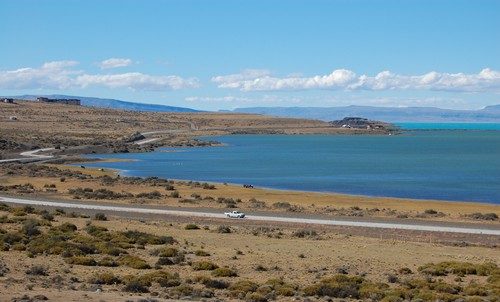
0 — 2 km Fig. 1 · Lago Argentino from the edge of El Calafate, with the road and steppe running down to the turquoise water · Photo: Alekino / Public domain via Wikimedia Commons
Many hotel listings in El Calafate claim to be close to the glacier, and none of the ones in town are. Perito Moreno is 80 km from town along Ruta Provincial 11, about 90 minutes by car, so a room on the main street and a room on the lake are, for glacier purposes, the same distance away. Choosing where to stay in El Calafate comes down to three practical questions. Can you walk to dinner after a long day on the ice? Will the tour bus actually stop at your door? And is the lodge you’ve fallen for open in the month you’re travelling?
This page answers those questions area by area: the centre around Avenida del Libertador, the hillside streets climbing towards Cerro Calafate, the lakeshore along Bahía Redonda, the blocks around the bus terminal, and the lodges and estancias out on the glacier side. It assumes you’ve already decided to see Perito Moreno and are now staring at a map of hotels. For the glacier itself, the tours and the tickets, the El Calafate and Perito Moreno Glacier guide does that job; this one is about the bed.
Lodging details, seasons and operator rules here were checked in October 2026 against the properties’ and operators’ own sites. If you’re still deciding which Patagonian towns to base yourself in at all, start with where to stay in Patagonia and the best towns in Patagonia, then come back.
Where to stay in El Calafate: the short answer
For a first visit without a car, stay in the centre, within a few blocks of Avenida del Libertador. You can walk to restaurants, the tour operators all know the address, and the reception desk satisfies the pickup rules that decide whether a glacier tour collects you at the door. If a view over Lago Argentino matters more than a flat walk home, look up the hillside or along the lake. If you’re catching a morning bus to El Chaltén or Puerto Natales, sleep near the terminal the night before. And only book out of town if you want an estancia stay for its own sake, have confirmed it’s open in your month, and have checked how tours and transfers will reach you.
Here’s how the areas compare on the things that change a trip.
Area
Walk to Libertador
Views
Glacier tour pickup
Best for
Watch out for
Centre (Av. del Libertador)
On it or a few blocks
Mostly street views
Straightforward from any lodging with a staffed reception
First-timers, no car, 2-3 nights
Peak-season noise, older rooms in places
Hillside (Cerro Calafate side)
Downhill there, uphill back
Lake views from higher rooms
Fine from hotels; ask at the edges
View seekers on a mid-range budget
Wind on the walk back, icy slopes in winter
Lakeshore (Bahía Redonda, Laguna Nimez side)
From a few minutes to a ride, depending on the hotel
Water and sky
Fine from hotels with reception
Couples, birders, slow travellers
Some hotels are far enough out to need a shuttle or taxi
Near the bus terminal
A short walk
Some views of Cerro Calafate
Fine from hostels with reception
Backpackers, early buses
Fewer restaurants on the doorstep
Out of town (lodges, estancias)
No
Open country, lake, mountains
Lodge-run transfers; town tours may not come out
An estancia experience, self-drivers
Seasonal opening, gravel roads, transfer rules
Swipe to see all columns
Table 1
How El Calafate is laid out
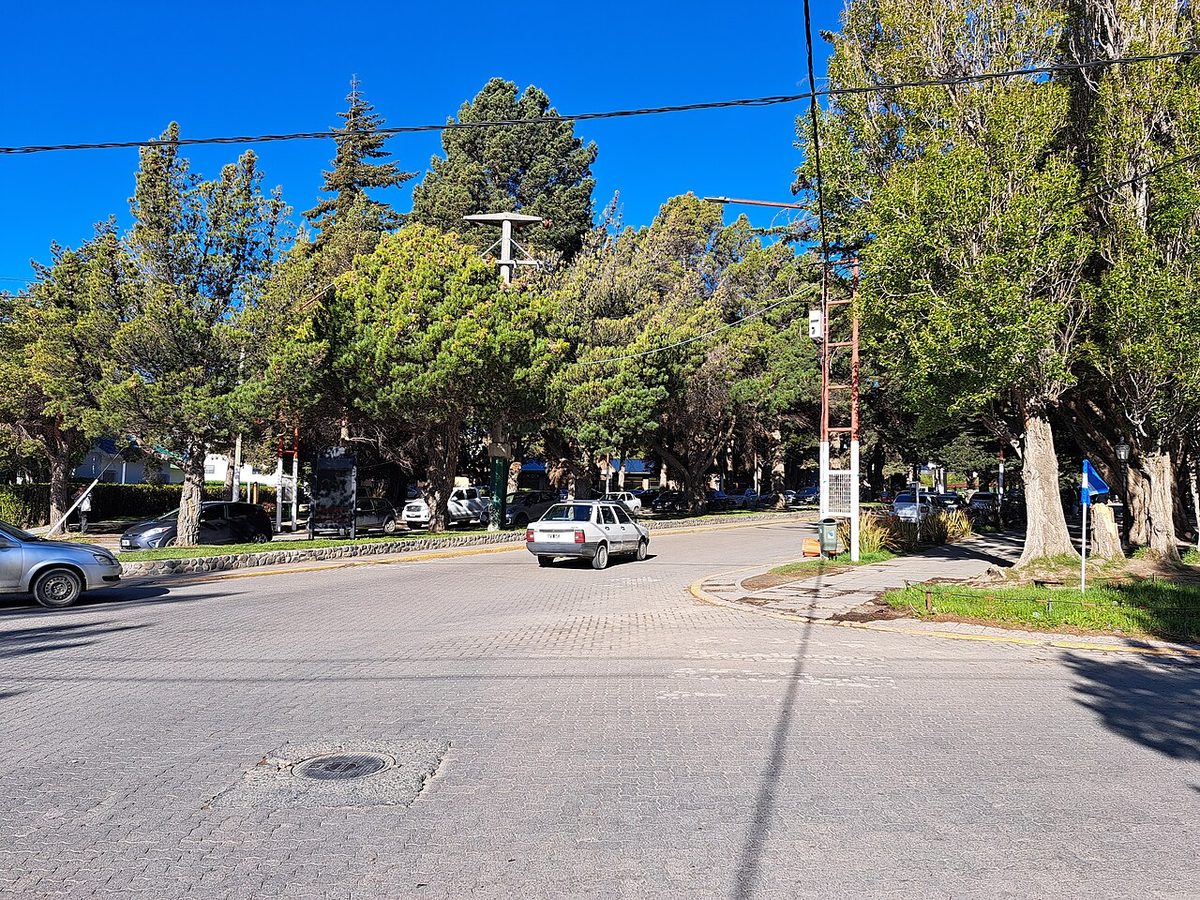
El Calafate is a small town strung along the south shore of Lago Argentino. Avenida del Libertador is the spine: Argentina’s national tourism board describes it as the centre of town, lined with restaurants, souvenir shops and places to stay. The Los Glaciares National Park office, the Intendencia, is on it at Av. Libertador 1302, which makes a handy landmark when you’re trying to place a hotel on the map.
From Libertador the town rises gently to the south towards Cerro Calafate, and drops to the north towards the water: the bay of Bahía Redonda, the lakeside promenade known as the costanera, and the Laguna Nimez bird reserve. Booking sites carve this up with their own area labels, so check the map pin rather than the name when you match the sections below to a listing.
The road to the glacier, Ruta Provincial 11, leaves town to the west. The airport is in the opposite direction, about 16.5 km east-northeast of town as the crow flies by the airport operator’s own reckoning. That geography matters more than it seems: a hotel at the western edge is a few minutes closer to the glacier road, and one at the eastern end is a few minutes closer to your flight, but neither difference will change your day. What changes your day is how you get to dinner and whether the bus stops for you.
The centre: Avenida del Libertador and the blocks either side
If you’re not sure, book here. The centre is where El Calafate works as a town. You can walk from your room to a parrilla, a bakery, a supermarket, an ATM queue and a tour agency in a few minutes. After a glacier day that runs 9.5 hours on Hielo y Aventura’s Minitrekking or 12 hours on Big Ice (both figures include the transfer and the walkways), being able to stroll to dinner rather than call a taxi is a big comfort upgrade.
It also makes the pickup question easy. Tour operators run their pickup loops through the centre, and a hotel, hostería or apart-hotel here will have a reception desk that meets the operators’ rules (more on those below). Caltur, one of the main glacier tour companies, says its guided Perito Moreno tour starts and ends at your hotel, so there’s no need to haul yourself to the bus terminal.
The trade-offs are what you’d expect from a main street in a tourist town. In the peak months it’s busy and can be noisy late, especially on the blocks with bars. Rooms facing the avenue get the traffic; rooms at the back get quiet. Some of the stock is older, and quality varies more within the centre than between areas. The practical fix is simple: sort by recent reviews rather than overall score, and look for comments from the last season about heating, water pressure and street noise.
The centre also holds most of the town’s apartments and aparts. They’re good value for families and longer stays, but read the pickup section before you book a flat with no front desk.
A word on the blocks either side. “Centre” on a booking site can mean anything from directly on Libertador to six or seven blocks up the slope. Look at the map pin, not the label. Within about four blocks of the avenue, you’re in walking-to-dinner territory in any weather. Beyond that, it depends how much you mind wind.
For something with more character than a town hotel without giving up town logistics, Kau Yatún is set inside Estancia 25 de Mayo, which its own site places 600 metres from the centre. That gives you an estancia setting within walking distance of Libertador.
The streets climbing south from Libertador towards Cerro Calafate are where you find lake views without lakeshore prices. Once you’re a few blocks up, rooms on the upper floors look north over the rooftops to Lago Argentino, and on a clear evening the light over the water is the best free show in town. Booking sites tend to file this area under “Cerro Calafate” or “Primeros Faldeos”.
Who it suits: travellers who want a view from the window, don’t mind a walk, and are booking hotels or cabaña complexes rather than private flats. Families often end up here because the cabañas, with kitchens and space to spread out, cluster on the slope and at the edges of town.
What to weigh up:
The walk back. Going down to dinner is easy. Coming back up, into the wind, after a long day, is the bit nobody mentions in the listing. Check the map distance to Libertador and halve your tolerance for it.
Exposure. Higher ground catches more wind. Ask for rooms on the sheltered side if the hotel has a choice.
Winter. Sloping streets get icy. If you’re travelling between June and August, a hillside room with a view is lovely until you’re walking down a frozen street to breakfast.
The far edges. Some properties on the outer fringe are a taxi rather than a walk. That’s fine for a couple of nights if you plan around it, less fine if you expected to stroll.
Pickups work from hotels and staffed cabaña complexes here as they do in the centre. At the outer edges, ask the tour operator whether your address is on the route before you assume it is.
The lakeshore: Bahía Redonda, the costanera and Laguna Nimez
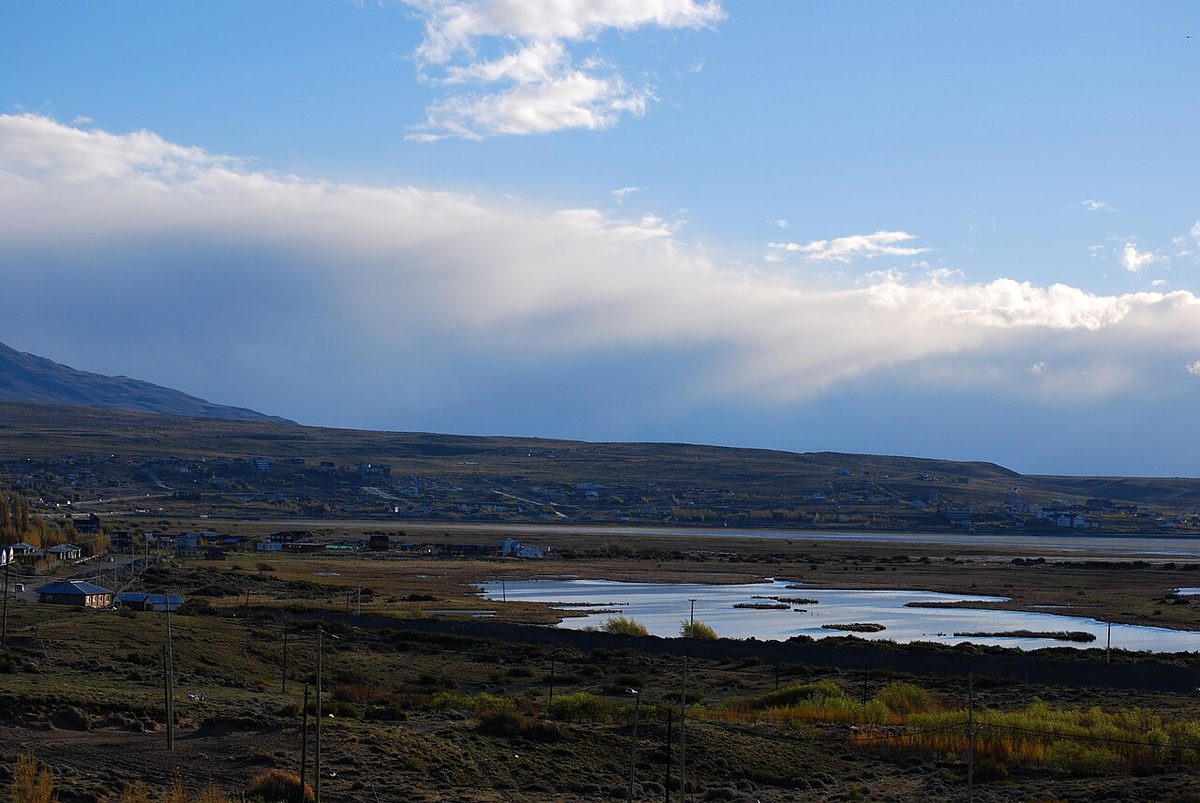
Down on the water, the town meets Lago Argentino along Bahía Redonda, the bay in front of the centre, and the lakeside promenade. North of the centre is the Reserva Natural Laguna Nimez, a small wetland reserve popular with birders. Further out along the shore, east and west of town, the gaps between hotels get wider.
This is the area for couples, slow travellers and anyone who wants to watch the light change on the lake from bed. It’s also the obvious choice for birders, with Nimez on the doorstep. For what to do around the reserve and the costanera, see things to do in El Calafate.
The catch is that “lakefront” covers a wide range of distances. At one end, Hotel Mirador del Lago describes itself as a few metres from the commercial centre, facing Bahía Redonda and Lago Argentino, which makes it about as close as a lake-view hotel gets to the main street. At the other end, hotels such as Xelena Hotel & Suites (René Favaloro 3500), which sells its rooms on the view across Lago Argentino, and Imago Hotel & Spa (Calle 669 No. 40) sit well away from Libertador. If you book one of the outlying hotels, ask whether it runs a shuttle into town and what time the last run back leaves, before you plan on a late dinner.
Two more things to know about the lake side. The wind off the water is stronger, so a lakefront room that looks serene in the photos can feel exposed when you step out. And “lake view” is not the same as “on the lake”. Many of the best views are from the hillside or from upper floors in the centre, looking over the town to the water. If what you want is the view rather than the shoreline walk, the hillside often gives you the same panorama for less.
The bus terminal is a short walk from the centre, and the streets around it are where the hostels cluster. The municipal tourism site lists desks at the terminal for Bus-Sur, Caltur, Chaltén Travel, Andesmar, TAQSA-Marga and Turismo Zaahj, plus a luggage storage service, Bunker, at the terminal café. That last one is useful if you check out in the morning and your bus leaves in the evening.
Sleep here when the next morning starts with a bus. Bus-Sur’s service to Puerto Natales leaves El Calafate at 8:00 on Wednesdays, Fridays and Sundays (arriving about 14:00) and at 16:30 on Tuesdays, Thursdays and Saturdays (arriving about 21:30), and runs from September to April. The 8:00 departure is exactly the kind of bus where a five-minute walk with your pack beats a taxi you have to book the night before. The same logic applies to the morning buses to El Chaltén, about 215 km away; see El Calafate to El Chaltén for the options and Puerto Natales to El Calafate for the cross-border run.
For glacier days, the terminal area doesn’t buy you much. Caltur’s pickup tours collect you from your hotel, so you don’t need to be near the terminal to join them. Its value is for onward travel.
On the budget end, Folk Hostel says on its own site that it’s about 200 metres from the bus terminal and a 10-minute walk from the centre, in a neighbourhood with views of Cerro Calafate. That’s a fair description of the area as a whole: quieter than Libertador, close enough to walk to dinner, and perfectly placed for the 8:00 bus. For how hostels compare with hotels and camping across the region, see camping vs hostels vs hotels in Patagonia.
Out of town: lodges and estancias on the glacier side
This is where most “where to stay” lists go wrong, by mixing lodges close to town with estancias an hour and a half down a gravel road, and by ignoring that some of them close for winter. Out-of-town stays can be the best part of a Patagonia trip. They are also a different kind of trip. You trade restaurants and walkability for space, silence and the lodge’s own programme, and every outing the lodge doesn’t run itself adds a drive.
Between town and the park: Eolo and Explora
Eolo describes itself as halfway between the town of El Calafate and Los Glaciares National Park. It has 17 rooms, which keeps it small. It’s the obvious answer to anyone who wants to wake up nearer the glacier without committing to a remote estancia. Ask Eolo directly, or check its own site, for the months it opens in your year and what transfers are included.
Explora El Calafate is a new name on this side of town. Explora’s own page describes a 20-room lodge on an estancia near Lago Argentino, about 30 km from town. A December 2025 announcement from Explora gave December 2026 as the planned opening; check Explora’s site for confirmed dates before planning a trip around it.
Estancia Nibepo Aike
Nibepo Aike is a working-ranch stay, and its own practical page is unusually honest about the logistics. It’s 56 km from El Calafate on a gravel road, about an hour and a half’s drive. The included transfers run on a fixed schedule and only from hotels within El Calafate’s urban area, not from the airport, and the estancia doesn’t offer private transfers. Check-in is 14:00 and check-out 10:00. The country inn has 10 rooms.
The airport rule is the one that catches people. If you fly in and want to go straight to the estancia, you’ll need to get yourself into town first, which in practice usually means a night in town at one end of the stay. For season dates, ask the estancia when you book.
Estancia Cristina, by boat
Estancia Cristina is reached by boat, and it publishes its 2026-27 season on its own site: lodge stays run from 15 October to 14 December 2026 and from 1 March to 30 April 2027, with a higher-rate period from 15 December 2026 to 28 February 2027. Rates are quoted per person, per programme, in US dollars, and three nights is the suggested stay.
The programme is all-in. It includes shared transfers from El Calafate hotels, the Los Glaciares park access fee, the boat from Puerto Punta Bandera, full board with wine and drinks at meals, guided expeditions and a tour of the estancia’s museum. Not included: premium wines, laundry, gratuities, private expeditions and Wi-Fi. That last one is worth reading twice if you need to work.
Think of Estancia Cristina as a place to stay instead of town, not as a glacier base. You’ll still start and finish in El Calafate, so budget a night in town on at least one side.
The hotel facing the glacier
Older guides and booking pages list Los Notros, which those guides describe as facing the glacier. Its opening dates change, so if you’ve set your heart on it, contact the hotel directly and get written confirmation of a 2026-27 booking before you pay anything. Otherwise, pick a base from the options above.
Out-of-town options at a glance
Lodge
Where
Season
Getting there
Pickup and transfer notes
Eolo
Halfway between town and the national park (own site)
Ask the lodge for your dates
By road
Ask what transfers are included and how town tour operators reach you
Explora El Calafate
Estancia near Lago Argentino, about 30 km from town (own site)
Opening announced by Explora for December 2026: check its site
By road
Check with Explora
Estancia Nibepo Aike
56 km from town, gravel, about 1 h 30 (own site)
Ask the estancia for your dates
Own car or the estancia’s transfer
Fixed-schedule transfers from urban-area hotels only, not the airport; no private transfers
Estancia Cristina
Reached by boat from Puerto Punta Bandera
15 Oct-14 Dec 2026 and 1 Mar-30 Apr 2027; higher-rate period 15 Dec 2026-28 Feb 2027 (own site)
Shared transfer from your El Calafate hotel, then boat
Transfers from town hotels included; plan a night in town either side
Swipe to see all columns
Table 2
Other lodges and hosterías out on the glacier side appear in the municipal tourism directory. Many are seasonal, and season dates move from year to year, so check each one’s own site before you commit. For estancia stays across the region, see Patagonia estancias, and for what the all-inclusive end of the market costs, Patagonia luxury travel costs.
How your location changes glacier pickups, boat trips and airport transfers
This is the section that should decide your booking, and almost nobody mentions it.
Glacier tours
Hielo y Aventura, which runs Minitrekking, Big Ice and the Safari Náutico boat at Perito Moreno, sets out its pickup rule in its terms and conditions. The meeting point for the transfer may only be the address of a hotel, cabin complex or lodging with a reception service operating at the time the pickup is booked. The same terms warn that the pickup itself can take about 40 minutes as the bus works round town.
Three things follow from that.
First, an apartment with no staffed reception is not a valid pickup point. If you rent a flat, find out which nearby hotel lobby you’ll wait in, and walk there the evening before so you’re not hunting for it at dawn. A cabaña complex with its own reception is fine under the rule; a private house is not.
Second, check that the reception is actually staffed when you need it. Glacier pickups are early, and a small hostería whose desk opens at 8:00 doesn’t count at 7:15.
Third, the 40-minute loop means where you sleep decides how early you’re collected and how late you’re dropped back. At the far edges of town, you may be the first pickup in the morning and the last drop-off at night. Over a 9.5-hour or 12-hour day it’s a small thing, but it’s real.
Hielo y Aventura sells the transfer as optional on Big Ice, so you can drive yourself to the port and meet the boat there. The Safari Náutico boat doesn’t include a transfer at all; it boards at the Bajo de las Sombras port on Ruta 11, about 70 km from town. Caltur’s guided glacier tour, by contrast, collects you at your hotel and returns you there. For how the tours compare once you’ve sorted the bed, see Perito Moreno mini trekking vs Big Ice and how to visit Perito Moreno Glacier; for tickets, Perito Moreno Glacier tickets.
How the glacier operators handle lodges outside the town’s urban area is the question to ask, by email, before you book an out-of-town lodge and a town-based tour together. At least one operator that collects guests in El Calafate, the Chilean lodge Estancia Cerro Guido, charges pickups beyond the urban radius as a separate extension on its 2026-27 transfer price sheet. Assume the same may apply elsewhere, and ask.
Boat trips from Punta Bandera
Boat trips on the main body of Lago Argentino, including the boat to Estancia Cristina, leave from Puerto Punta Bandera, outside town. Whether your hotel pickup is included depends on the ticket you buy, so read the inclusions line before you pay. If you’re staying out of town, ask the boat operator how you’re meant to reach the port. The Todo Glaciares tour page covers the boat itself.
The airport run
The airport sits about 16.5 km east-northeast of town in a straight line, and most in-town addresses work for a shared shuttle or taxi. The airport’s own services page lists a shuttle desk in arrivals, taxis and car hire from ten companies, along with a desk for the buses to El Chaltén. Its posted taxi fare comes with a note to reconfirm it with the company, so treat it as a guide and confirm the price before you get in. Some hotels run their own transfer: Esplendor El Calafate, a Wyndham hotel, lists an airport shuttle for a nominal fee on its own page, along with luggage storage and breakfast.
For lodges out of town, the airport is where plans unravel. Nibepo Aike’s included transfer doesn’t serve the airport at all, and Estancia Cristina’s transfers run from town hotels. The safe default is to sleep in town on any night that starts or ends with a flight, and to pre-book your transfer for very early departures rather than hoping for a taxi at 5am. The El Calafate airport guide has the arrivals detail.
If you hire a car
A car changes the whole calculation. The pickup radius stops mattering, the walk-to-dinner problem shrinks, and the hillside fringe, the outer lakeshore and the lodges out of town all become easier. Nibepo Aike says you can drive in with your own vehicle; just remember the last stretch is gravel, and check your rental terms on unpaved roads. See renting a car in Patagonia for what to ask the rental desk.
The season changes the right answer more than most people expect.
Summer, roughly November to March, is high season: argentina.travel gives November to March as high season. Everything is open, days are long, and the mean daily maximum reaches about 19 °C in January and February (Servicio Meteorológico Nacional 1991-2020 averages for the airport). Book early for the centre and the better lake-view rooms; booking Patagonia in advance has the timing.
Shoulder season, October and late March into April, is the sweet spot for this town. Estancia Cristina is running (from 15 October and again from 1 March), Big Ice runs from 15 September to 30 April, and demand is lower. If you want an estancia night, these are the months to aim for. See Patagonia in October for that month in particular.
Winter, roughly May to September, turns El Calafate into a town-only base for most visitors. Mean daily minimums fall to -3.7 °C in June and -4.4 °C in July. Rain and snow totals are low all year (160.8 mm annual average), so the wind and the cold are the comfort issues, not the wet. Estancia Cristina’s published seasons skip the winter months entirely, and you should assume other out-of-town lodges may be closed until they tell you otherwise. Minitrekking and the Safari Náutico boat both run year-round, so the glacier itself is very much on.
Even some town hotels have traditionally closed in winter. In June 2026, the business magazine Mercado reported that Esplendor El Calafate would reopen on 1 July and operate through the winter for the first time, having previously run from August to May. Treat winter opening as a property-by-property question and ask.
For winter stays, three rules:
Stay central. Being able to walk to dinner on icy streets matters more than a view.
Ask about heating and breakfast hours. Pick somewhere that confirms both.
Check park hours before you plan the day. Opening hours at the glacier can change with the season. Check with the national park office on Libertador or the APN site before you go.
The municipal tourism site sorts lodging into categories that you’ll meet in Spanish on booking sites; the table covers the main ones. Here’s what each means on the ground, and how it plays with tour pickups.
Type
What it is
Where it clusters
Pickup friendliness
Hotel
Hotels, from central town hotels to large lakefront properties
Centre, hillside, lakeshore
High: staffed reception
Hostería
Smaller inn, often family-run, sometimes rural
Everywhere, including out of town
High in town; ask out of town
Apart / apart-hotel
Self-catering units with a front desk
Centre, hillside
High if the desk is staffed at pickup time
Cabañas
Cabin complexes, often with kitchens
Hillside, edges of town
Good when the complex has reception
Casas y departamentos
Private houses and flats, including holiday rentals
Scattered
Lowest: no reception, no door pickup with Hielo y Aventura
Albergue (hostel)
Dorms and private rooms
Near the terminal, centre
High: reception
Estancia
Working or heritage ranch, usually full board and multi-night
Out of town, some by boat
Lodge-run transfers; town tours may not come out
Camping
Campsites listed in the municipal directory
Check the directory
Not applicable
Swipe to see all columns
Table 3
For camping options, see Patagonia camping. If you or someone in your group needs an adapted room, the municipal directory lists accommodation with adapted rooms as a separate category; for access at the glacier itself, see Perito Moreno wheelchair access.
What to check before you book
Run through this list before you pay a deposit. Most of it takes one email.
Reception hours. Is the desk staffed at the time your glacier pickup is likely to arrive? If not, which hotel lobby will you use?
Urban radius. If the property is outside town, ask each tour operator you plan to use whether they’ll collect you, and what it costs.
Season dates for 2026-27. Especially for anything out of town. Get them in writing.
Town shuttle. For outlying lakeside hotels: is there one, is it free, and when is the last run back?
Airport transfer. Included or not, and does it cover your actual flight time?
Breakfast versus pickup. Glacier pickups are early. Ask whether breakfast starts in time, or whether the kitchen does a packed breakfast.
Heating, wind and light. Ask for a sheltered room, and look for blackout curtains: summer evenings are long.
Licensing for rentals. For a flat or house, ask the host for its municipal licence (habilitación) number. If something feels off, the municipal tourism office can tell you whether a property is registered.
Payment and cancellation. Read the cancellation terms as closely as the room description. For cards, cash and exchange, see money in Patagonia.
Who should stay where
A few common trips, and the base that fits each.
First visit, two or three nights, no car: the centre, within four blocks of Libertador, in a hotel or hostería with a 24-hour desk. Book a glacier tour with hotel pickup and walk to dinner every night.
Couple wanting a view and a slower pace: the hillside or the lakeshore. If you don’t want to rely on taxis, pick a lake-view hotel close to the centre, such as Mirador del Lago, or a high floor on the hillside.
Family with kids: a cabaña complex with reception on the hillside or the edge of town gives you a kitchen and space, and still counts as a valid pickup point. See Patagonia with kids for planning around younger travellers.
Backpacker heading to El Chaltén: stay near the terminal. Walk to the morning bus, and leave a bag at Bunker if you’re coming back through. Then sort the next bed with where to stay in El Chaltén.
Road trip with a rental car: the world opens up: a lodge out of town, the hillside fringe, or an estancia, as long as it’s open in your month.
Special-occasion stay: an estancia, sandwiched between nights in town. Estancia Cristina’s boat-access programme or a few days at Nibepo Aike are the classic versions; a lodge between town and the park, such as Eolo, is the shorter, easier option.
Winter traveller: the centre, full stop. Confirm heating and breakfast, and leave the estancias for another season.
Remote worker: town, with Wi-Fi checked in recent reviews. Out-of-town lodges are a poor bet for reliable connectivity, and Estancia Cristina lists Wi-Fi as not included.
Common mistakes
Booking a flat with no front desk and a glacier tour with pickup. The rule above will put you on the pavement outside someone else’s hotel at dawn. Either choose a place with reception or plan the fallback lobby.
Trusting “near the glacier” in a listing. No hotel in town is near the glacier. Compare distances to Libertador instead.
Booking an estancia for the night you land. Nibepo Aike’s transfers don’t run from the airport, and most out-of-town programmes start from town hotels. Land, sleep in town, transfer the next day.
Assuming a lodge is open because it was open in an earlier season. Season dates move from year to year. Ask the lodge for the dates covering your exact nights.
Picking the outer lakeshore without asking about transport into town. A beautiful room loses its shine if getting back from dinner means a taxi you didn’t budget for, or a shuttle that stops running at 9pm.
Spending the last night out of town before an early flight or bus. Sleep in the centre or near the terminal before anything that leaves at dawn.
How many nights, and where to sleep before you move on
The town’s own visitor study for September 2022 to April 2023 put the average stay at 2.58 nights, and that matches what most trips need: two nights in town at a minimum, one for the glacier day and one as a buffer for weather or a boat trip. Add estancia nights on top of those, not instead of them; Estancia Cristina suggests three. If El Chaltén is next, spend the last night near the terminal or in the centre. If you’re crossing to Puerto Natales, line your last night up with Bus-Sur’s departure days and then sort the other end with where to stay in Puerto Natales. The day-by-day plan belongs to the El Calafate itinerary; for cheaper ways to string the region together, see the Patagonia budget itinerary and the Patagonia buses guide.
Frequently asked questions
What is the best area to stay in El Calafate?
For most visitors, the centre around Avenida del Libertador. You can walk to restaurants, tour pickups are straightforward, and you’re close to the bus terminal. Choose the hillside or the lakeshore if a lake view matters more than an easy walk, and the terminal area if you have an early bus.
Is it better to stay in El Calafate town or near Perito Moreno Glacier?
Town, for most trips. The glacier is 80 km from El Calafate, about 90 minutes by car, and tours start from town. Lodges on the glacier side are worth it for the experience, not for proximity, and they bring seasonal opening dates and transfer rules you need to check first.
Is there a hotel at Perito Moreno Glacier?
Check before you count on one. Los Notros is the hotel older guides describe as facing the glacier; get a booking confirmed in writing by the hotel before you rely on it. The nearest practical bases are lodges between town and the park, such as Eolo, which describes itself as halfway between town and the national park.
Will glacier tours pick me up from an Airbnb in El Calafate?
Not at the door with Hielo y Aventura. Its terms say the pickup point may only be the address of a hotel, cabin complex or lodging with a reception service at pickup time. If your rental has no reception, arrange to meet the bus at a nearby hotel, and allow for a pickup loop of about 40 minutes.
How far is El Calafate airport from town?
The airport operator puts it about 16.5 km east-northeast of town in a straight line. Shuttles, taxis and car hire are available in arrivals, as listed on the airport’s services page. If your lodge is out of town, check whether its transfer covers the airport: Nibepo Aike’s does not.
Where should I stay for an early bus to El Chaltén?
Near the bus terminal or in the centre a few blocks from it, so you can walk to the morning departure with your bags. Hostels cluster around the terminal, and there’s a luggage storage service at the terminal café if you’re coming back through.
Are estancias near El Calafate open in winter?
Assume not unless they confirm it. Estancia Cristina’s 2026-27 seasons run from 15 October to 30 April, with no winter dates. Other lodges set their own seasons, so ask the lodge directly for your dates.
How many nights should I stay in El Calafate?
At least two nights in town: one for the glacier day and one as a buffer. The town’s own visitor study found an average stay of 2.58 nights. Add any estancia nights on top, since most estancia programmes start and end with transfers from town hotels.
Final thoughts
El Calafate is easy to get right once you stop judging hotels on their distance to the glacier. The ones in town are all about the same distance from it. What separates a good base from an awkward one is the walk to dinner, a staffed front desk at pickup time, and whether the lodge is open when you’re there. For most trips, that points to the centre. For views, the hillside or the near end of the lakeshore. For buses, the terminal. And for a special few days, an estancia, booked with your eyes open about seasons and transfers.